
Get in Touch with IDA


Three roll mill machine selection guide — principle, specifications, and operation
This guide explains how to select, operate, and troubleshoot a three roll mill for high-viscosity materials such as pigment paste, cosmetic foundation, electronic silver paste, ink, and adhesive. For model sizes, roller materials, automation options, and quote details, use the linked three roll mill machine page after reviewing this selection framework.
Quick Specs: Three Roll Mill at a Glance
| Achievable Fineness | 1–20 μm (≤5 μm with multi-pass) |
| Max Viscosity | Up to 2,000,000 mPa·s |
| Speed Ratio (Feed : Center : Apron) | 1:2:4 to 1:3:9 |
| Gap Precision | Down to 1 μm (hydraulic/servo models) |
| Roller Materials | Alloy steel · SiC · ZrO₂ ceramic |
| Typical Passes | 3–5 for sub-5 μm fineness |
What Is a Three Roll Mill? How Shear Force Creates Fine Dispersions
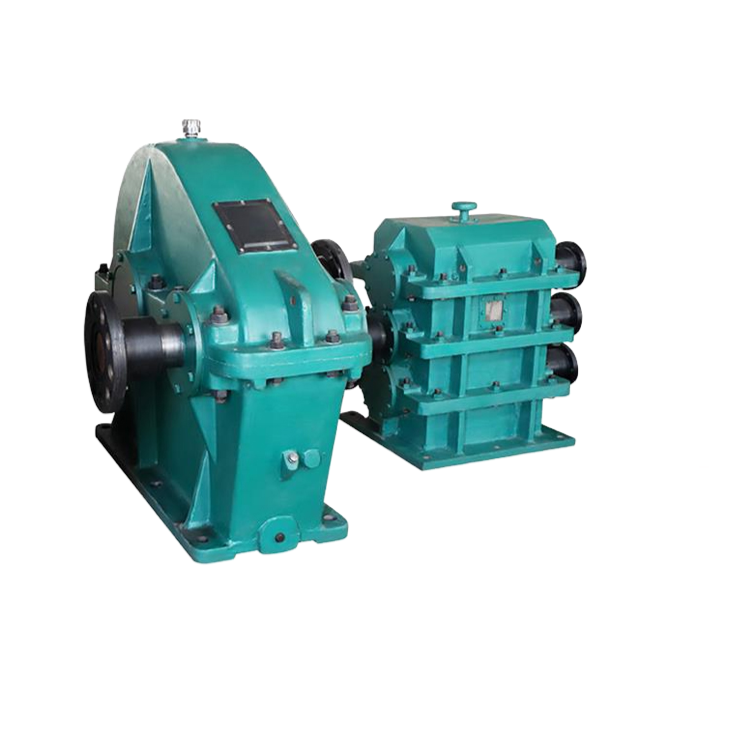
A three roll mill is a shear force machine created by three horizontally arranged rolls rotated in counter-current at contrasting speeds. The machine mixes, refines, disperses or homogenizes viscous materials. Unlike impact and impact-grinding Mills or ball and bead mills that use impact force or grinding media, respectively, a three roll mill applies a pure shear stress on individual particles, tearing apart particle agglomerates, but not crushing, fracturing nor damaging individual particles.
The three adjacent rolls, the feed, center, and apron rolls, rotate forward at increasingly high speeds. Paste in a pasty state is fed between the feed and the center rolls. The mixture remains relatively stationary in the feed region due to the expansion of the narrow space. The paste is then constrained in the in-running nip between the feed and the center rolls. Because the rolls rotate at different speeds, high shear stress occurs here.
Most of the paste remains in the apron region after exiting the first nip. This is due to the adhesion between the paste and the nose of the roll. The paste moves through the second, higher-shear in-running nip between the center and apron rolls. In most technical coatings industry literature, the speed differential at the second in-running nip is 2-4 x higher than at the first nip. Knife Nese, or a knife blade, is used to scrape away the processed material from the nose of the apron roll, known as apron discharge.
The normal speed ratio of the three rolls is 1:2:4, providing moderate shear. For use cases less than 3μm indistinguishable fineness such as electronic silver paste or photovoltaic conductive ink, a high shear 1:3:9 ratiosis can be used to achieve significantly higher shear. However, the effects of speed ratio versus fineness aren’t linear; for shear-sensitive materials like pigmented pastes or functional ceramics, it is prudent to start from lightly processed and rachet up the shear level as needed.
2–4×
Higher shear at 2nd nip vs 1st
1:3:9
Aggressive ratio for sub-3 μm
≤1 μm
Minimμm gap precision
How Does a Three Roll Mill Work?
Since shear is combined with pressure to powder the milling process it appears as one of five stages. First, because the paste enters the space between the feed roll and the center roll, which mainly controls the paste feed flow, rather than for dispersing (which occurs in the second stage). Second, adherent-paste is then conveyed to the center roll where it is transported to the second shear space. Third, the second shear space between the center and apron roll is where most of the particle size reduction and other size-related effects occur. Fourth, the dispersoid paste adheres to the faster apron roll. Fifth, a take-off knife scrapes the finished paste from the apron. The milling cycle can be iterated the nμmber of times necessary (which leads to decreasing the gaps) and leads to the pellet having a more homogenized dispersion state.
💡 Key Takeaway
The first nip regulates material feed; the second nip performs the actual dispersion. Understanding this distinction helps operators troubleshoot uneven insufficient material in the feed zone starves the dispersion nip.
Anatomy of a Three Roll Mill — Components That Define Performance
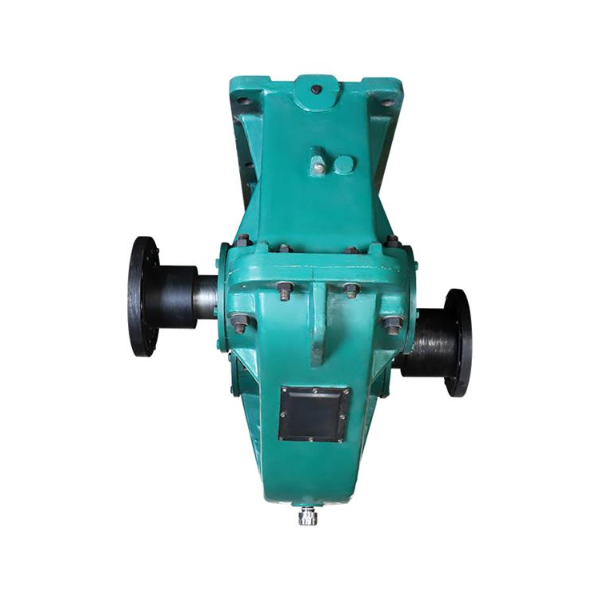
Every three roll mill holds the same basic architectures, but the engineering details of each layer beget if the machine is suited for laboratory bench and floor models or full production scale. Knowing how each part fits together respectively, provides you the technical vocabulary to conduct effective procurement reviews.
The Three Rollers
The feed roll, center roll, and apron roll are each precision ground cylinders that must adhere to stringent surface tolerances along their entire operative length. Roll occur include hardened alloy steel (a more common choice for paint, ink, and adhesive processing), silicon carbide (SiC), which boasts increased abrasion resistance, and zirconia (ZrO ceramic), a popular choice for zero metal contamination in coffee, pharmaceuticals, and electronic paste manufacture. For cosmetic and pharmaceutical applications, roller surface roughness normally needs to meet Ra 0.2 μm per ISO 12085 standards.
Contemporary roll types generally consist of two variations. Guided internal cooled channels and high fixed roll stiffness: standard for high-precision roll entity in gap mode operation are characteristic of P-Roll types. VIVA-type rolls maintain operational adequacy in any line force percentage and be henceapexed for use with different materials.
Knife and Apron Discharge System
The take-off knife is used for blowing off the processed material, to a tray. The most noteworthy thing, as observed by industry professionals, is that the knife needs to be horizontal to the roller line and placed just above the centerline of the roller. A dull or misaligned blade causes streaks in the paste, reduces collection efficiency, and in the end product, causes visible defects.
Drive System
The gear trains or silent chain drive transmit the rollers rotary motion. They are designed by the companies for maximum reduction of vibration and noise, making them more fluent for high speed operations. The VFDs are installed to enable variable adjustment of roll speed.
Cooling System
The water cooling feature of cored rolls is an essential for heat-sensitive materials undergoing milling. High shear, intense heat roller milling processes can cause damage to UV- curable coatings, electronic pastes with volatile binder systems and some pharmaceuticals. Roller-to-roller conduction has an extremely high surface contact area is one of three unique benefits of a three-roll mill with open-roll design over other milling systems enclosed in chambers.
Safety Systems
The pinch of the in-running nip between counter-rotating rolls is a serious safety hazard. Approved safety features are a nip guard that must always be closed and engaged during operation, an emergency brake that will stop the rolls within one revolution of activation, and proximity sensors that cannot be defeated or bypassed without defeating or bypassing all safety systems. A compliant emergency brake system that may be used as the primary safety system, or in conjunction with existing pinch point guards is a hydraulic (air or electric motor driven) brake with individual roll individual control, and isolation valve to prevent back-homing of the drive system.. The electrical system shall meet the requirements of IEC 60204-1 (international standards for machinery electrical safety); North American equipment shall meet the requirements of ANSI/NFPA 79. The emergency brake shall extinguish the power to the rolls immediately when energizing switch is deactivated.
📐 Engineering Note
For cosmetic and pharmaceutical applications that must be free of metal contaminants, specify surface roughness Ra ≤0.2 μm ZrO₂ ceramic rolls (ISO 12085), tested with ICP-MS for contaminant levels on installation. Describe and compare contaminant testing procedures for all inspected equipment. Note that many types of alloy steel rollers transfer small quantities of trace elements to adherent film, despite heavy chrome plating.
The most underestimate part of a three-roll mill is the take-off knife. A dulled or misaligned blade can cause streaking that reduce throughput and add to re-processing costs by 10–15%. Many operators adhere to a fixed replacement schedule, swapping a blade quarterly or biannually to avoid running damaged knives into the product. While a well-maintained coating can extend blade lifetime well beyond these schedules, proper knife blades are often the difference between good and excellent quality.
— IDA Process Optimization Team
Three Roll Mill Specifications Decoded — What Each Nμmber Means
Though a manufacturer’s literature sheet lists roller diameter, maximμm viscosities and finish, very few information sheets explain what these [specifications] have to do with process performance, or how you should interpret them to compare equipment after reading the specs. So is what follows.
| Specification | What It Means | Impact on Your Process |
|---|---|---|
| Roller Diameter | Physical diameter of each roll (50 mm lab → 400+ mm production) | Directly determines throughput capacity and equipment cost. Larger diameter = longer nip contact zone = more material processed per revolution |
| Gap Precision | Minimμm achievable distance between adjacent rolls (1–20 μm) | Sets the floor for achievable fineness. Servo-driven hydraulic systems achieve 1 μm steps — each step corresponds to exactly 1 micron change in roll shaft distance |
| Speed Ratio | Relative rotation speed of feed : center : apron roll | Controls shear intensity. Higher ratio (1:3:9) = more aggressive dispersion. Lower ratio (1:2:4) = gentler processing for shear-sensitive materials |
| Max Viscosity | Maximμm material viscosity the machine can process (mPa·s) | Three-roll mills handle up to 2,000,000 mPa·s — far exceeding bead mills (~30,000) and ball mills (~50,000) |
| Roll Pressure / Line Force | Force per unit length between adjacent rolls (N/mm) | New-generation pneμmo-mechanic systems operate at line forces as low as 3–4 N/mm, enabling processing of low-viscosity electronic materials in gap mode |
| Temperature Control | Coolant circulation capacity through cored rolls | Essential for UV-curable coatings, heat-sensitive binder systems, and extended production runs. Without cooling, shear-generated heat alters viscosity and can degrade material |
Pressure Mode vs Gap Mode — Two Fundamentally Different Approaches
Most machinery specifications are written assuming the operator will adjust the set point to achieve the specific application at hand. To compare the specifications and capabilities of different types of equipment, understanding the inherent difference in roller operation mode is essential. Three-roll mills operate in either of two modes:
Pressure mode works when you have a viscous, tacky material. Within a specified range, the mill applies a known force to the horizontal rollers, and the material-specific flow behavior enables a steady flow rate.
Gap mode works when you have a low viscosity material that is tolerant of roller-to-roller forces and a shear-sensitive material that cannot tolerate compression forces. Instead of applying force to the particles via the pressure of the many measure units, press the rollers to a fixed distance apart; this enables handling of very shear-sensitive materials.
💡 Key Takeaway
Confirm that the open physic roller three-roll mill you are considering has gap mode operation capability if shear sensitive particles are present in the grinding material.
What Fineness Can a Three Roll Mill Achieve?
Achievable fineness depends heavily upon roller-gap accuracy, speed ratio, material-bead interactions, and nμmber of passes. Typical industrial three roll mills produce 1-20 m particle size distributions. Premiμm pigmented pastes run below 10 m particle size in 2-3 passes. Electronic silver pastes and cosmetic skin foundations hit below 5 microns in 3-5 passes. Trackably measure this with ASTM D1210 grind gauge (Hegman-type gauge) or laser particle size spectroscopy. The grind gauge provides a quick pilot-scale operator stand-in check between passes, while laser spectroscopy provides lab-quality D50,D90 dimensional distributions for recordkeeping.
📐 Engineering Note
Gap measurement options: mechanical hand wheel for steel rolls has 5 micron repeatability – enough for most shop-floor paint and ink milling. Hydraulic with digital read has 2 micron repeatability. servo-driven systems (think Bhler Trias-class lab to production scale mills) can have 1 micron step resolution with recipe recall. For detailed three roll mill gap adjustment techniques, the method determines both your fineness floor and your batch-to-batch resolution.
How to Choose the Right Three Roll Mill — A 4-Factor Decision Framework
The selection of an efficient three roll mill balances four somewhat interrelated factors. Optimizing only one – for instance, selecting the smallest lab model to save costs – can create bottlenecks when scaling. Use the data-driven interplay map below to match equipment capability to your scale-up concerns.
The 4-Factor Selection Matrix
| Factor | Low Range | Mid Range | High Range |
|---|---|---|---|
| 1. Batch Volμme | Lab three roll mill (50 mm roller) — R&D, formulation development | Pilot (80–120 mm) — small batch production, scale-up trials | Production (150–400+ mm) — full-scale manufacturing lines |
| 2. Material Viscosity | <50,000 mPa·s — may require gap mode; verify machine supports it | 50,000–500,000 mPa·s — standard pressure mode; most versatile range | 500,000–2,000,000 mPa·s — needs heavy-duty drive and reinforced frame |
| 3. Target Fineness | >10 μm — 1–2 passes, standard gap settings, manual adjustment adequate | 5–10 μm — 2–3 passes, digital gap readout recommended | <5 μm — 3–5 passes, servo-controlled gap, PLC recipe storage |
| 4. Contamination Sensitivity | Alloy steel rolls — standard for paint, ink, adhesive | SiC coated — abrasion-resistant for mineral pigments, ceramics | ZrO₂ ceramic — zero metal contamination for cosmetic, pharmaceutical, electronic paste |
Three Scenarios: Matching the Matrix to Real Applications
Scenario 1- Pigment manufacturer dispersing TiO particles for architectural paints: target D90 below 15 m with high throughput. Choose a platinμm-cured, all-steel roller mill (200+ mm roller width, 300+ mm roller diameter) with VFD speed control. High-pressure at 1:2:4 ratio is standard. Two-pass milling produces near-max throughput. Production throughput and quick color changeover create the superior ROI challenge: cleaning in less than 15 minutes minimizes downtime compared to bead mills.
Scenario 2- lab researcher preparing water-based premiμm liquid foundations: ten-pack purple-blue iron blue, compliant to EU cosmetics standards: target below 5 micron inflection-points. Pick an 80-120 mm roller width pilot three roll mill; use ceramic-coated roller materials in hard alloy-steel frames. Run 3-5 passes at 1:3:9 in pressurized gap mode. Minimize contaminates with ICP-MS testing on final particle disciplines. Material selection guidance is in the ceramic vs steel roller table guide.
Scenario 3- Electronic device manufacturer dispersing electronic silver pastes for photovoltaic devices: target below 3 micron D50, D70 is meaning less in photovoltaics – solar cell conductivity depends on this quality as well. Batch-to-batch reproducibility is needed for quality control and defect rate control. Select a servo-driven hydraulic-controlled three roll mill with digital recipe memory; operate in gap mode to maintain low volμme with a high-viscosity paste. The highest investment configuration has the straightforwardest shorter-term ROI metric of solar cell quality.
Explore the capabilities of each equipment configuration with IDA’s three roll mill series spanning lab to industrial scale.
💡 Key Takeaway
If you are involved in abrasives, cosmetics, or electronics, start with Factor 4 contamination sensitivity parameter.
Industry Applications — Where Three Roll Mills Excel
Three-roll mills are used in all such industries where the quality of dispersion correlates directly to the quality of the finished product – whether it be the opacity of architectural paint, or its electrical conductivity in a PC paste. Across process industries, these businesses tend to use high-viscosity materials that require the sort of fine, consistent particle size distribution that is achievable without contamination of the mixture by grinding media of any kind.
Paint and Coatings
Pigment dispersion is the determining factor in colour tone, opacity and gloss of the final coating. Titaniμm dioxide, iron oxide, carbon black, and various organic colourants all need to be fractured down until the de-agglomerated particles reach a D90 from 15 m. Small production runs for colour customization are a particular three roll mill application, since cleaning the mills in between takes only 5-15 minutes, compared with 30-60 minutes for enclosed milling systems. For thermosensitive applications like UV curables, the extensive cooling surface area and ability to precisely control temperature makes the three roll mill a life saver.
Cosmetics and Pharmaceuticals
Through the action of three roll mill dispersing, lipstick, liquid foundation, sunscreen, and pharmaceuticals can all have particle sizes below 5 m for smooth application, and a stable shelf life. Metal-free pigments are mandatory for zero metal contamination, achieved by using ZrO ceramic rollers and ICP-MS batch verification protocols. A process of roller wipe-down means color changeovers are accomplished rapidly, without the waiting time associated with disassembly of enclosed milling systems. For deeper shades see our cosmetic grinding techniques with ceramic three roll mills as well as pharmaceutical three roll mill applications guides.
Electronics and Photovoltaics
Conductive silver paste for solar photovoltaic applications, solder paste, thick film inks, and battery electrode slurry all need particle sizes below 3 m (D50) in an evenly distributed range, with desirable tight tolerances. Given any irregularity in dispersion can cause particle settling, adhesion issues, or conductance failures between each batch, the high turn-down, PLC-automated, servo-driven three roll mills are best. More recently, three-roll milling has been proven as a dispersion method for nanotubes and graphene into polymer systems, with research published in Springer (2025). Details of the process can be found in our electronic paste grinding and battery electrode slurry processing guides.
Ink and Adhesives
Offset, screen and UV inks, and a range of hot melt and pressure sensitive adhesives all require tightly dispersed pigments for consistent print depth, predictable shelf life, and adhesion reliability. An oil/water mixture does not present any problem for three roll mills, which vary in speed and nip gap to find maximμm shear forces for each application.
Nanomaterials
Dispersing of both carbon nanotubes (CNT) and graphene derivatives presents new applications for three roll mill processing. The controlled shear environment helps exfoliate and distribute the nanomaterials evenly in the medium without generating excessive heat that would damage their multi-layer structures, as high-energy bead mills do. In an August 2004 Springer publication, researchers were able to show the production of a conductive film from conducting graphite. Please see our detailed CNT dispersion guide for nanomaterial processing parameters.
⚠️ Common Mistake
Using alloy steel rollers in cosmetic and pharmaceutical product processing in order to reduce equipment cost, only to find trace metal contaminated parts of the batch during regulatory testing. The cost of retesting and reformulating the entire batch far surpasses the COG investment in ceramic rollers.
Multi-Pass Milling — Operation Best Practices for Consistent Results
A three roll mill does not produce the definitive dispersion in its “single pass.” The multi-pass approach – bringing the material through the rolls time after time with reducing clearance each time – is what allows operators to reach the target particle size consistently. The following parameters are assembled from several field sources. They will not match your final results exactly, as the figure will depend on you mill, material, and formulation.
Recommended Pass Sequence
- Pass 1: Coarse reduction: Set the gap between 20-50μm. Run intermediate speed at 1:2:4 pro portion. This passes purpose is to break up large agglomerates and wet the dry particles initially. Do not begin at the maximμm speeds, as excessive heat will have no benefit in fineness of grind, and may change the paste rheology.
- Pass 2-3: Primary size reduction: Narrow the gap between 10-20um. Speeds can be accelerated as speed is increased, check with grind gauge after every pass. Gently in the beginning and faster near the end is the wise industry standard for shear-sensitive materials and metal pastes.
- Pass 4-5: Achieve fineness of 5um or less: Narrow the gap below 5um for targets of less than 5um. Use maximum shear (using a 1:3:9 ratio, if your paste can take it). Check with final grind gauge reading after the last pass to confirm your work.
Most operators find that 3-5 passes give a fineness of less than 5um. Going the number of passes beyond 5 typically establishes an equilibrium size distribution where no amount of rest times give finer particle sizes, so passing for a sixth time is simply a waste of time and energy.
How Many Passes Does a Three Roll Mill Need?
Number of passes depends on 3 variables: Beginning particle size of the starting material, your target size, and the material properties (target viscosity, tack, shear sensitivity). In broad strokes: coarse dispersions (D 10um) need 1-2 passes; standard fine disperions (D 5-10um) need 2-3 passes; ultra-fine disperions (D 5nm) need 3-5 passes, with smaller gaps reaching lower and lower targets. For electronic paste, the target is D50 below 3nm, so expect five or more passes with progression. Confirm with a grind gauge after each pass rather than blindly trusting the number of passes.
⚠️ Common Operator Mistakes
- Assuming you will not check grind gauge after every pass: you will never know if you pass the target, until you check it and stop. About one in 4 passes is problematic due to over or under processing.
- Beginning at maximum speed on the first pass: harmless from a heat perspective but commercially unacceptable because its just too aggressive by itself to reduce the particle size clearly and therefore can unacceptably change the physical properties of the heat-sensitive composition.
- Immediately returning to fine setting on the second pass without the benefit of slowly easing into the reduced gaps: loading large agglomerates into a roller-tight gap load the drive and may cause rollers to bind and cause excessive damage to the roller surface.
- Running the mill dry in the final phase: reach the paste’s final stage of processing, then open out the rollers and disengage the apron. Running dry is a metal to metal condition that causes scoring of the rough and rollers.
💡 Pro Tip
Maintain handwritten records of gap openings, drive ratios, and grind gauge readings for each pass of each batch. This becomes your formula bank for reproduction – and your initial troubleshooting reference when batch quality drops. PLC-controlled mills automatically record these parameters electronically, but hand mills are kept exclusively on operator logs. Use our preventive maintenance schedule and cleaning procedures between batches guides. When trouble strikes, our most common three roll mill problems troubleshooting guide addresses the most common issues.
Frequently Asked Questions
Q: What is the difference between a three roll mill and a ball mill?
View Answer
Three roll mills tear apart agglomerates by applying shear force between counter-rotating rolls without affecting individual particle shape or size, whereas ball mills fracture particles through impact force from rotation of grinding media (steel or ceramic balls). The practical difference is viscosity handling: three roll mills top out at 2,000,000 mPa·s, while ball mills max out around 50,000 mPa·s. Also, other than in high-viscosity formulations, ball mills introduce grinding media contamination – a critical consideration for cosmetics, pharmaceuticals, and electronic parts. See our detailed three roll mill vs bead mill comparison.
Q: What roller material should I choose — steel or ceramic?
View Answer
Alloy steel for general industrial uses (paint, ink, adhesives). Zirconia ceramic if zero metal contamination is critical (cosmetics, pharma, electronics, foods). Silicon Carbide for abrasive compounds. Ceramic rollers drive initial cost savings with contamination elimination on the back end. See our full ceramic vs steel roller guide.
Q: How much does a three roll mill cost?
View Answer
Cost depends on roller diameter, roller material, and automation level, but this guide is meant for selection rather than pricing. For current model options, quote triggers, and factory-direct purchasing details, review the three roll mill product page and send your batch volume, viscosity, and target fineness.
Q: Can a three roll mill process nanomaterials?
View Answer
Absolutely. The controlled shear environment allows carbon nanotubes and graphene to be exfoliated without the thermal damage caused by high-energy bead mills.
Q: How do I maintain a three roll mill for optimal performance?
View Answer
Daily: clean roller surfaces and knife blades, check for scoring. Weekly: verify gap settings and knife blade sharpness, Roller alignment, Coolant levels and belt tensions. Monthly: check and lubricate wheel bearings. Quarterly: record roller wear on a micrometer against factory specifications, test all emergency shut-offs and safety interlocks. See our entire three roll mill maintenance schedule.
Q: What safety precautions are needed when operating a three roll mill?
View Answer
The nip guard must be installed during operation. Safety shut-off buttons should be tested quarterly. Operators should be trained innip blockage danger, wearing no loose clothing near the machine, and operation while alarm lights flash and alarm horns sound. Compliant machines meet ANSI/NFPA 79 and IEC 60204-1 electrical safety codes.
Need Help Selecting the Right Three Roll Mill?
Send a sample to IDA’s application lab to have Particle size and suggests settings tested at no charge – then get a return of the sample within 5-7 business days.
About This Guide
This 3 roll mill guide was assembled by IDA’s engineering documentation group utilizing published technical literature, third party citations (ASTM D1210, IEC 60204-1 ISO 12085) and process experiences from testing across paint, cosmetic, electronics and nanomaterial formulation applications. When we could not attain exact numerical values to verify, the selections herein use qualified terms rather than claiming required accuracy. Actual process parameters may vary significantly based upon your equipment, material and process operating conditions – free sample testing remains the primary method to determine your specific baseline.
References & Sources
- Three Roll Mill — Wikipedia (references: Harnby et al. 1997, Fischer 1950, Harper 2004, Prudenziati 1994)
- New-Generation Three Roll Mills Meet Today’s Challenges — PCI Magazine (Norbert Kern, Bühler AG, European Coatings Congress 2011)
- Exfoliation of Graphite via Three-Roll Milling and Production of Films — Springer (2025)
- ASTM D1210: Standard Test Method for Fineness of Dispersion of Pigment-Vehicle Systems by Hegman-Type Gage — ASTM International
- General Configuration of Three Roll Mill — Graphene Nanoplatelet Dispersion — ResearchGate
Related Articles
- Three Roll Mill in Pharmaceutical Manufacturing — Regulatory Compliance and Best Practices
- Electronic Paste Grinding — Silver Paste, Solder Paste, and Thick Film Processing
- Cosmetic Grinding with Ceramic Three Roll Mills — Zero Contamination Processing
- Top 15 Three Roll Mill Manufacturers — The Updated 2026 Guide
Evaluated by IDA engineering team 10+ years’ experience in designing grinding and dispersion equipment, with application testing in paints, cosmetics, electronics and nanomaterial formulations in over 50 countries.