Get in Touch with IDA
Top Three Roll Mill Manufacturers: Factory Capability & Selection Guide

Contents
show
Choosing a three roll mill manufacturer is not only about brand lists. Industrial buyers should compare roller material, gap-control method, sample testing, customization range, delivery support, documentation, and after-sales response before requesting a quote. This guide focuses on manufacturer capability and selection criteria, while the dedicated product page covers IDA model sizes and machine configurations.
How to Compare Three Roll Mill Manufacturers
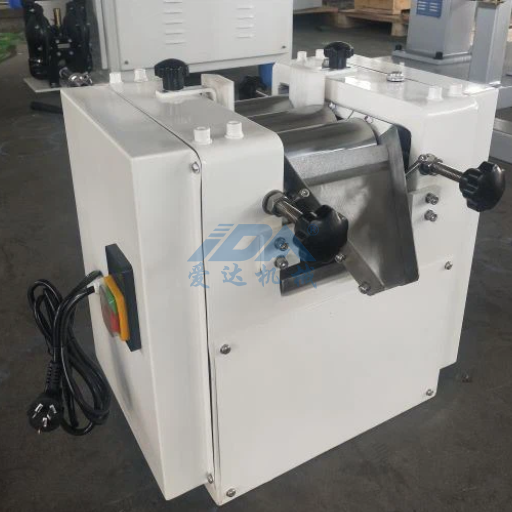
A capable three roll mill manufacturer should prove more than basic machine availability. Compare whether the supplier can provide ceramic or alloy steel rollers, hydraulic or PLC gap control, material sample testing, cooling options, safety documentation, spare parts, and scale-up support from lab trials to production. For IDA model sizes and configurations, see the three roll mill product page.
Factory Capability Checklist
Before choosing a supplier, ask for proof of roller machining capability, gap-control accuracy, material compatibility testing, electrical configuration support, safety interlocks, documentation, and spare-part availability. A manufacturer that can test your viscosity, target fineness, batch volume, and contamination limits is usually safer than a catalog-only seller.
Customization, Testing, and Documentation
For industrial buyers, the most useful comparison points are customization depth and support quality: roller diameter, ceramic versus alloy steel rollers, water cooling, hydraulic pressure mode, PLC recipe memory, explosion-proof requirements, sample test reports, packaging, training, and after-sales response time. These factors separate a real production partner from a simple equipment reseller.
Importance of Selecting the Right Manufacturer
Choosing a trustworthy manufacturer dictates accurately, long-lasting, and after-sales service for important processing results. The purchaser needs to evaluate the materials of the rolls, the cooling, the control of the speed, and the accuracy of the gap; to confirm the ISO certifications; and to check and compare options like apron discharge, hydraulic or automatic controls, and emergency braking. Investigate the laboratory units, refurbishment of used three roll mills, and the availability of parts for Ross, Keith, and Lehmann machines. Strong service, documentation, and training make sure that the mill is fit for the application, that it provides the required consistency, and that it performs safely and efficiently throughout the life of the equipment.
Top Three Roll Mill Manufacturers
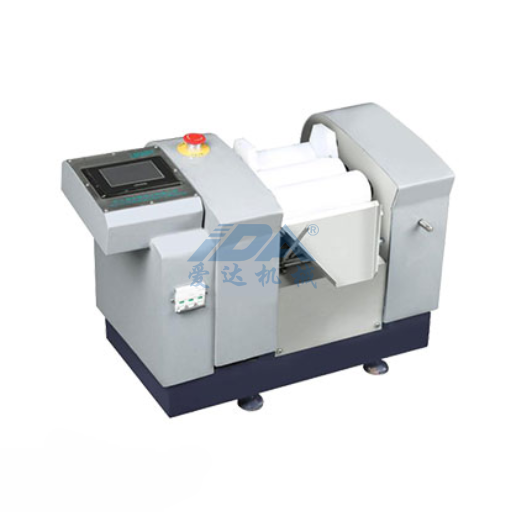
1. IDA Equipment
Year Founded: Not specified
Introduction: A leading manufacturer specializing in high-quality three roll mills and other industrial equipment.
Main Products: Three roll mills, bead mills, and dispersers.
✓ Advantages
High precision, durable materials, and excellent customer service.
✗ Disadvantages
Limited information on global presence.
Website: IDA Equipment
2. Changzhou Zili Intelligent Equipment Co., Ltd.
Year Founded: 2001 (with production experience since 1986)
Introduction: Known for advanced technology and customizable solutions in three roll mills.
Main Products: High-precision three roll mills with advanced control systems.
✓ Advantages
Strong technical support, cost-effective, and good reputation.
✗ Disadvantages
Limited global reach.
Website: Changzhou Zili
3. Buhler Group
Year Founded: 1860
Introduction: A global leader in food processing and advanced materials industries.
Main Products: High-precision three roll mills with automation features.
✓ Advantages
Global presence, precision engineering, and safety features.
✗ Disadvantages
Higher cost due to premium features.
Website: Buhler Group
4. IKA Works
Year Founded: 1910
Introduction: Specializes in laboratory and production-scale equipment.
Main Products: Compact and versatile three roll mills.
✓ Advantages
Easy to clean, reliable, and suitable for small-scale production.
✗ Disadvantages
Limited capacity for large-scale production.
Website: IKA Works
5. Exakt Technologies
Year Founded: 1949
Introduction: Focuses on high-precision grinding and dispersion equipment.
Main Products: Ultra-fine grinding three roll mills.
✓ Advantages
Temperature control, modular design, and specialized solutions.
✗ Disadvantages
Higher cost for specialized features.
Website: Exakt Technologies
6. Ross Mixers
Year Founded: 1842
Introduction: A leader in mixing, blending, and dispersing equipment.
Main Products: High-shear grinding three roll mills.
✓ Advantages
Robust construction, efficient operation, and application expertise.
✗ Disadvantages
Limited focus on ultra-fine grinding.
Website: Ross Mixers
7. Pomini
Year Founded: 1886
Introduction: Known for heavy-duty industrial machinery.
Main Products: High-performance three roll mills.
✓ Advantages
Engineering excellence and customization capability.
✗ Disadvantages
Limited product range.
Website: Pomini
8. Premier Mill Corporation
Year Founded: 1925
Introduction: A pioneer in grinding and dispersing equipment.
Main Products: Energy-efficient three roll mills.
✓ Advantages
Product innovation and customer-centric approach.
✗ Disadvantages
Limited global presence.
Website: Premier Mill
9. Charles Ross & Son Company
Year Founded: 1842
Introduction: A family-owned business with a long history in mixing technology.
Main Products: Custom-built three roll mills.
✓ Advantages
High-quality construction and comprehensive support.
✗ Disadvantages
Higher cost for custom solutions.
Website: Charles Ross & Son
10. FrymaKoruma
Year Founded: 1949
Introduction: Specializes in process technology for food, chemical, and pharmaceutical industries.
Main Products: Hygienic design three roll mills.
✓ Advantages
Industry-specific knowledge and global reach.
✗ Disadvantages
Limited focus on non-hygienic applications.
Website: FrymaKoruma
11. Netzsch Feinmahltechnik GmbH
Year Founded: 1873
Introduction: A specialist in fine grinding and dispersing technology.
Main Products: High-energy grinding three roll mills.
✓ Advantages
Technical innovation and global service.
✗ Disadvantages
Higher cost for advanced features.
Website: Netzsch
12. Wuxi Transocean International Trading Co., Ltd.
Year Founded: Not specified
Introduction: Known for high-quality machinery and excellent customer service.
Main Products: High-precision three roll mills.
✓ Advantages
Innovation and comprehensive after-sales service.
✗ Disadvantages
Limited international presence.
Website: Wuxi Transocean
13. Shanghai Kechuang Chemical Machinery Co., Ltd.
Year Founded: Not specified
Introduction: Specializes in chemical machinery with advanced production equipment.
Main Products: High-efficiency grinding three roll mills.
✓ Advantages
Automation and strict quality control.
✗ Disadvantages
Limited product range.
Website: Shanghai Kechuang
14. Shenzhen JCT Machinery Co., Ltd.
Year Founded: Not specified
Introduction: A high-tech enterprise focusing on innovative grinding equipment.
Main Products: Compact and high-speed three roll mills.
✓ Advantages
Strong R&D and environmental focus.
✗ Disadvantages
Limited capacity for large-scale production.
Website: Shenzhen JCT
15. Keith Machinery Corp.
Year Founded: Not specified
Introduction: A leader in remanufactured three roll mills in North America.
Main Products: ANSI-compliant remanufactured three roll mills.
✓ Advantages
Cost-effective remanufactured options and safety features.
✗ Disadvantages
Focus on used equipment.
Website: Keith Machinery
Specialized Technologies in Three Roll Mills
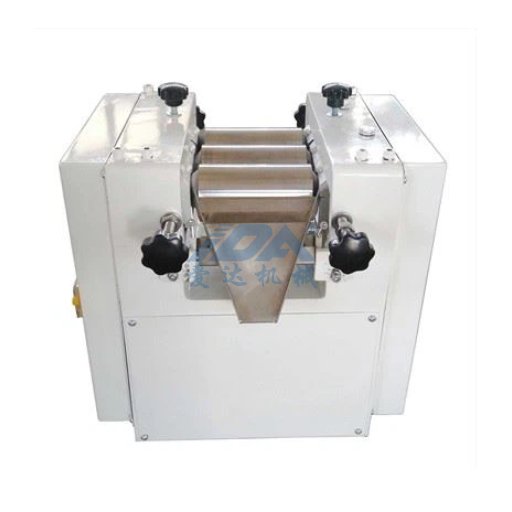
Three roll mill specialized technologies emphasize the precise rotating and speed difference of the three horizontal long rolls that are arranged in a row to disperse and grind viscous materials. The manufacturers intensively work on the roll materials, cooling, and control interfaces developing so that the mixing machine upholding shear stability, clean operation, and uniform particle size. The different methods for rolling include manual, electrical, hydraulic, and automatic with different types of discharge like apron and knife which are adapted to the respective application.
Variations in Roller Materials
The roll materials will surely influence the way the mill is going to refine a mixture and its resistance to abrasion. The hard steel is a kind of material that gives durability without being too costly; but on the other hand, the advanced ceramic material gives wear resistance and cleanliness at a very high level. A few of the manufacturers can supply a hybrid setup that is perfectly suited for particular viscosity and formulation sensitivity. The option made will have an impact on shear uniformity, surface finish, and reliability when three rolls rotate at different speeds. The customers should base their selection of roll materials on the size of the particles they want to achieve, the abrasiveness of the material they plan to process, and the type of cleaning method applied to the triple roller machine.
Cooling Systems and Their Importance
Efficient cooling keeps temperature constant, prevents changes in viscosity and color strength and the like, and makes dispersion more even. The circulation of coolant through the internal roll channels and the jacketed mounts is used to effectively manage the heat produced by the rolling of the different-speed rolls, grinding, and dispersing the material. The state-of-the-art systems incorporate sensors along with hydraulic or automatic controls enabling the mill to maintain the exact thermal balance during the uninterrupted processing of thick materials.
Control Interfaces: User Experience and Functionality
The user experience and final dispersion quality are influenced by control interfaces that manage speed ratios, gap, and safety. Manual suits trials; hydraulic and automatic enhance repeatability and throughput. Digital panels indicate the parameters of speed, torque, and temperature, while recipe storage facilitates the swift transitioning among ink, chemical, and cosmetic batches. Interlocks, nip guard, and emergency braking ensure the safety of the operators even when the three-roll equipment is operating at varying speeds. The integration with apron discharge and knife assemblies guarantees that the apron can thoroughly scrape the processed material, thereby providing a consistent particle size and a reliable, suitable surface finish for various applications.
Industry Standards and Certifications
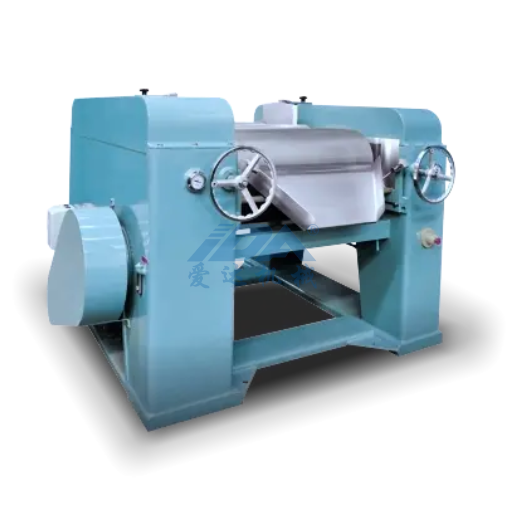
Industry standards along with certifications together provide a three roll mill’s safety, reliability, and consistency from laboratory to plant. To ensure quality, manufacturers document through ISO-aligned processes that include design, long roll machining, assembly, and motor and electrical controls testing. Standards cover emergency braking, nip guard durability, and cleanability for pharmaceutical or cosmetic use. To be compliant, also includes the conformance of materials traceability for steel and ceramic parts and validated methods for dispersion performance. Transparent adherence enables the reliable selection of perfect machines for special applications and very fine particle size requirements.
ISO Certifications for Three Roll Mill Manufacturers
ISO 9001 indicates that there is a controlled design, production, and support system in place for the triple roller equipment. For the pharmaceutical and cosmetic industries, ISO 13485 or GMP expectations along with cleaning validation and documentation requirements can be fulfilled by the ISO 13485 or GMP expectations. ISO 14001 guarantees responsible environmental management in the areas of machining, roll finishing, and coolant handling. These standards also provide for the origin of steel and ceramic roll materials to be traceable, the instruments for gap and speed to be calibrated, and the testing of dispersion performance to be documented. The use of ISO processes gives a signal of irregularity that has been consistently audited and is reliable when evaluating a ross three roll mill alternative or used three roll mill refurbishment.
Understanding Compliance with Industry Standards
The compliance requirements for three-roll mills include mechanical safety, electrical compliance, and hygiene rules. Check the CE/UL listings, the operable emergency brakes, and nip guards, as well as cleaning that has been approved for regulated use. The documents must contain validation procedures for particle size, shear repeatability, and apron discharge efficiency. Correct signage, manuals, and training make it possible for the operators to safely and consistently perform the steps of mounting materials, adjusting the gap, and scraping product.
The Role of Certifications in Purchasing Decisions
Certifications de-risk procurement and permit comparison not only based on price. ISO certifications, safety approvals, and performed factory acceptance tests provide engineers with the information they need to select the equipment according to the application, viscosity range, and desired particle size for dispersion. Certified systems for both laboratories and manufacturing areas guarantee longer uptime, better serviceability, and easier audits. However, while deciding which manual, hydraulic or automatic interfaces to choose, buyers can take into account certified performance in terms of speed stability, gap precision, and apron discharge. This strictness is necessary whether one is replacing old Keith or Lehmann units or picking out a new three roll mill for ink, cosmetic, or pharmaceutical applications.
After-Sales Support and Services
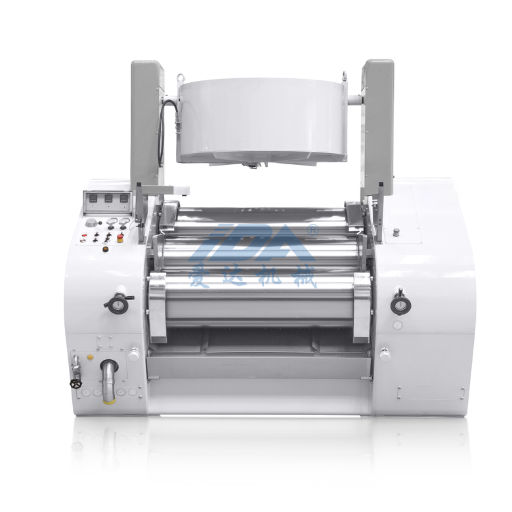
After-sales service will be the parameter that decides the extent to which a three roll mill will be able to disperse and grind viscous materials precisely during its lifetime. The top-notch machinery manufacturers offer a combination of installation, start-up, and operator training which teaches how the three horizontally positioned long rolls rotate in different directions and at different speeds, how the adjustable gap determines the size of the particles, and how the apron and knife can be used to scrape off the product. The preventive maintenance, calibration, and certified parts included in the service packages help maintain reliability in both lab and production settings.
Importance of After-Sales Support
Comprehensive support not only protects the consistency in dispersing, but also assures safety and machine uptime when the machine has to refine the mix evenly under variable viscosity. The experts provide assistance in adjusting the manual, hydraulic, or automatic mode so that the three rolls circulate horizontally at the targeted speed ratios, which in turn protects the shear profiles and quality of the formulations for ink, printing inks, cosmetic ointment, and pharmaceutical and specialty chemical applications. Along with cooling, roll materials like steel and ceramic and apron discharge, the machine is made suitable for advanced technologies that require the utmost care. The training that is done is very effective and it enhances the safety measures in the area of nip guard and emergency braking, while the operating procedures that are standardized maintain clean processing and accurate control over the gap.
Warranty and Maintenance Options
The implementation of structured maintenance and wear tracking not only reduces the downtime but also prolongs the life of the rolls. The preventive schedules cover the inspection of manual roll adjustment, the calibration of hydraulic gap, the verification of automatic controls, and the validation of apron and knife scraping efficiency. Wear tracking on steel and ceramic rolls is a helpful way of planning refurbishments and preventing downtime. Support for the rebuilds of used three roll mills and certified exchanges for models of ross three roll mills, keith and lehmann are offered by several vendors. Service contracts usually entail checking coolant systems, conducting cleanliness audits for pharmaceutical and cosmetic use, and supplying spare parts kits according to the application and duty cycle.
Customer Service and Technical Support Insights
Responsive, data-driven support helps quickly to clear any dispersion problems. On-site support can collect process data for the control system in order to find out how the three-roll machine deals with viscous products at various speeds and loads. Application engineers provide recommendations regarding the formulation, roll materials, and apron discharge setting in order to keep the processed material moving evenly. Global parts warehouses cut down the time needed for the delivery of knives, seals, and electrical components. Obvious escalation routes, multilingual documents, and laboratory experiments are the means through which sellers can install new materials, prove clean operation, and sustain reliability, whether a lab roller mill or a production triple roller is in operation.