Get in Touch with IDA

Basket Mill
Basket Mill: The Complete Guide to Wet Grinding & Dispersion Technology
Get all the basics of basket mills like principle of work and components as well as grinding media selections and industrial applications. Discover how this versatile tool accomplishes a 5-minute color change, a yield of almost 100%, and minimal maintenance when compared to wet grinding processes. Whatever industry you are in – paint, ink, agrochemicals, battery chemicals – this guide will assist you to learn, choose, and execute basket mill technology for your own requirement set.
CE & ISO 9001 Certified
Export to 50+ Countries
Free Technical Support
5000+
Machines Delivered
98%
Customer Satisfaction
24/7
Technical Support
What is a Basket Mill?
A basket mill (immersion mill, submersible mill) is a multi-functional piece of equipment used in wet grinding and dispersing that combines grinding, dispersing, and mixing in a single machine. A grinding basket with holes is filled with grinding media (usually zironia beads) and immersed into the dispersion. The high speed rotating impeller creates a vacuum that draws material through the perforated basket and reduces particles through impact, friction, and shearing. Unlike horizontal bead mills, basket mills are completely self-contained, without the need for any pumps or pipes, enabling color changes in 5 to 15 minutes.
Advantages and Product Introduction of IDA Basket Mill Series
The IDA Basket Mill employs an innovative self-priming impeller. When spinning, it creates a powerful vortex that draws in the material to be ground in the grinding basket. The material finishes high-intensity grinding and is discharged by the high-speed dispersion disc on the bottom. This “Suction → Grinding → Dispersion → Suction” cycle spends less time and ensures materials get ground to a micrometre or nanometre level (<5μm) in a very efficient manner.
Introduction: Fully replicating the grinding principles of industrial-grade machines, these micro-batch processing units serve as essential additives for the development of formulas, the collection of data, and the execution of small sample tests at university, research institution, and corporate laboratory levels.
Core Advantages:
- Linear Scale-up: Experimental data will be directly scalable. This data will guide large-scale production (20L-1000L) and help avoid expansion risks.
- Extreme Flexibility: Designed for rapid modular changes in the lab, the units are easy to dismantle, and are cross-contamination free.
- Fine Grinding: High efficiency of the dispersion discs achieves fineness of <5μm with ease.
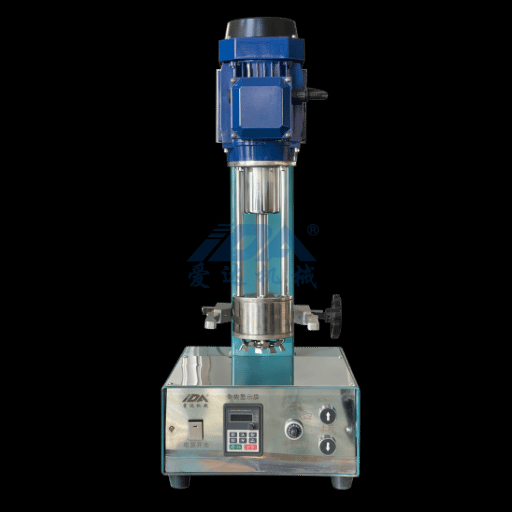 2L Laboratory Basket Mill
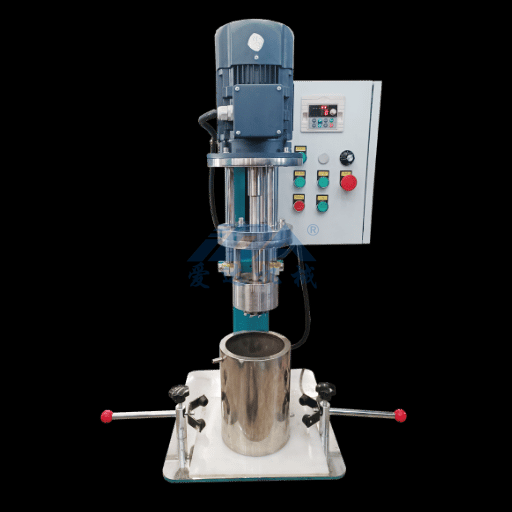 5L Laboratory Basket Mill
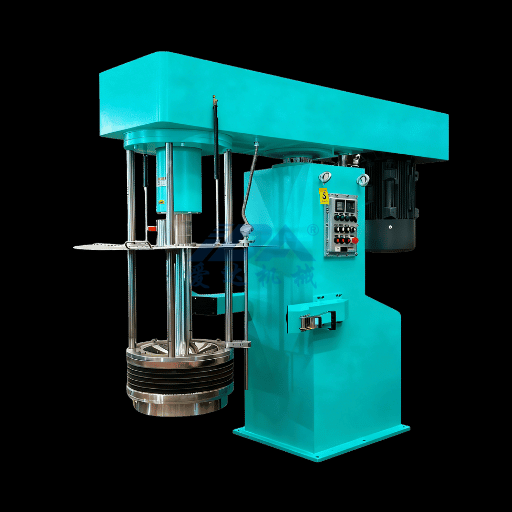
Introduction: The 20L model serves as the perfect small batch production or pilot testing tool and acts as the bridge between the laboratory and mass production. It caters to different price levels and automation requirements as it offers “Electric Lifting” and “Manual Lifting” options.
Core Advantages:
- Electric Lifting Model: The model provides added convenience, and increased levels of automation with the provision of low effort, smooth, and free movements of the lift, thus, reducing the intensity of labor.
- Manual Lifting Model: Provides solid value as it requires no systems based on hydraulic or electric lifting. Simple structures have low failure rates, and this is ideal for budget-oriented projects and sites with no power.
- Flexible Transition: Perfect for “High-Mix, Low-Volume”.
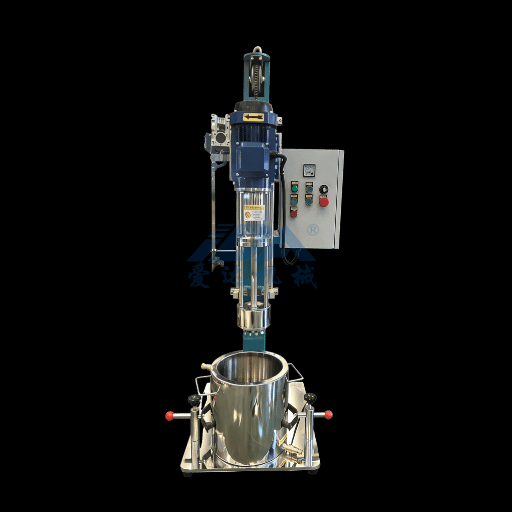 20L Electric Lifting Basket Mill
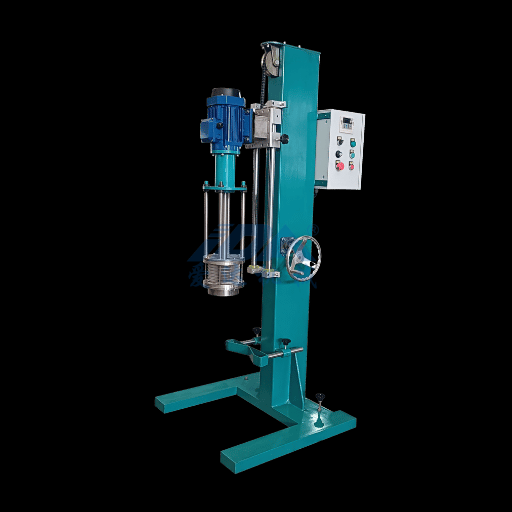 Manual Lifting (Hand-Crank) Basket Mill
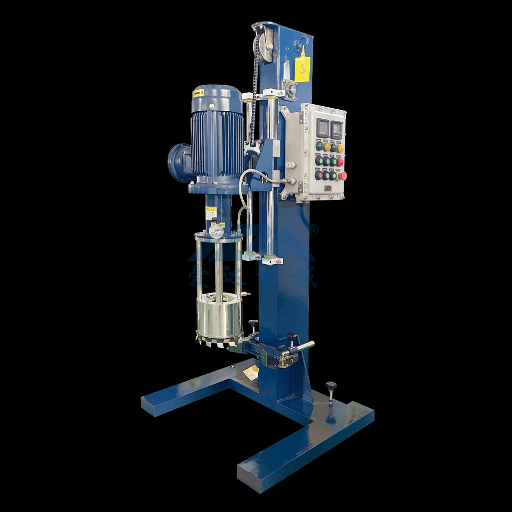 Explosion-Proof Electric Lifting Basket Mill
Introduction: Designed for large scale developments in the coatings, inks, and pigments industries. For burning solvent environments, the Explosion-proof System is standard. The ’Cover’ 1000L model is for sealed cover to contain and eliminate the issues of volatilization and contamination.
Core Advantages:
- High Safety (Explosion-proof): 1000L sealed cover construction is complemented with the Explosion-proof System for environments with burning solvents, which is the standard for the coatings, inks, and pigments industries.
- High Eco & Health Safety (Cover): It protects health and environment with less solvent loss elimination, less odor, and external contamination of the material.
- High Efficiency: It further reduces the batch time with mixers. At Another strong vortex effect for fast circulation of large volumes.
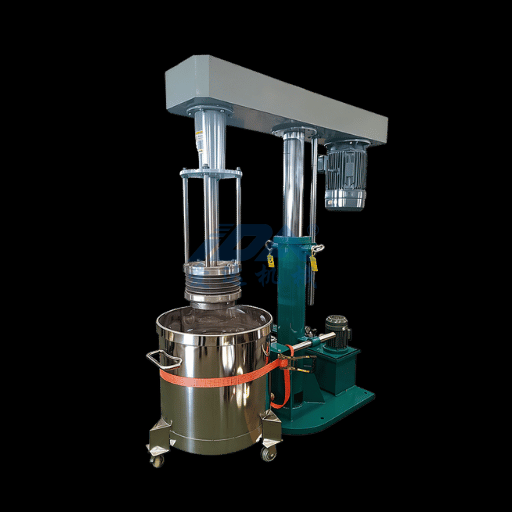 200L Basket Mill
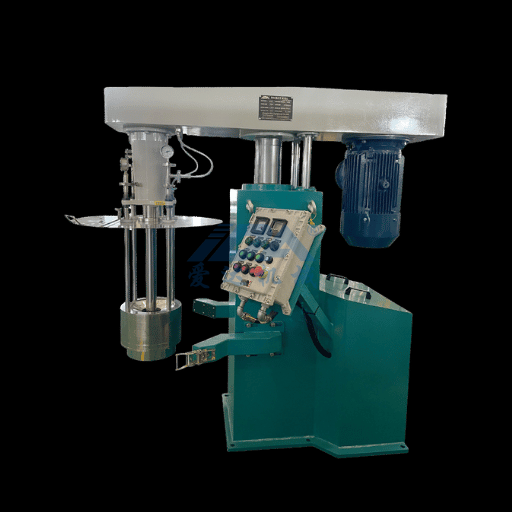 300L Explosion-Proof Basket Mill
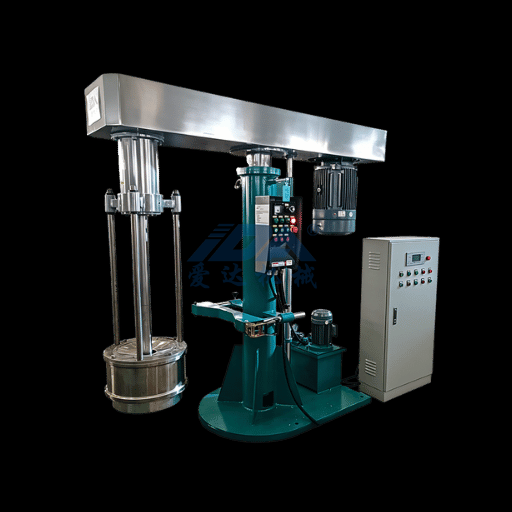 500L Explosion-Proof Basket Mill
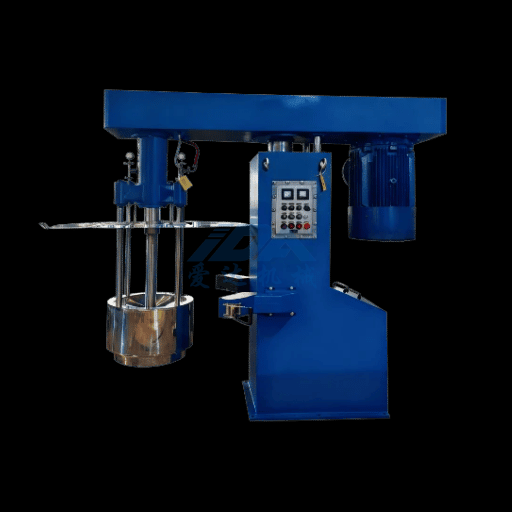 1000L Explosion-Proof Basket Mill
Introduction: Upgraded versions made for specific material properties. The “With Cooling” model solves problems related to heat builds up during the grinding process. The “Screen Type” model employs side or special screen partitioning structures to optimize fluid flow.
Core Advantages:
- Cooling System: Comes standard with a double-walled tank or a cooling jacket compatible with chillers.
- Benefit: Keeps material temperature in check, irrespective of the duration of grinding, thereby preventing spoilage of heat-sensitive materials or excessive solvent evaporation.
- Screen Type Structure: Incorporates high-throughput screen designs (often side-disc).
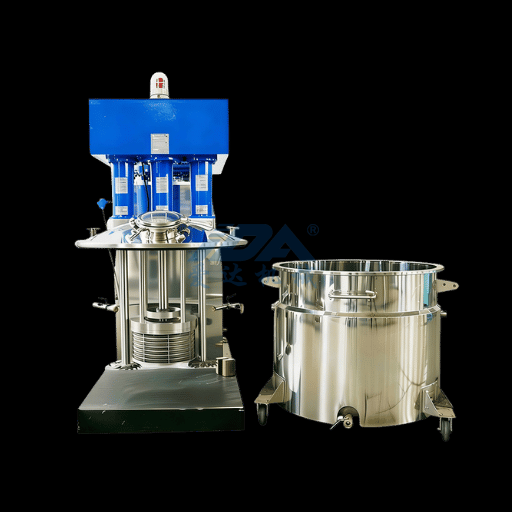 Three Shaft Vacuum Basket Mill
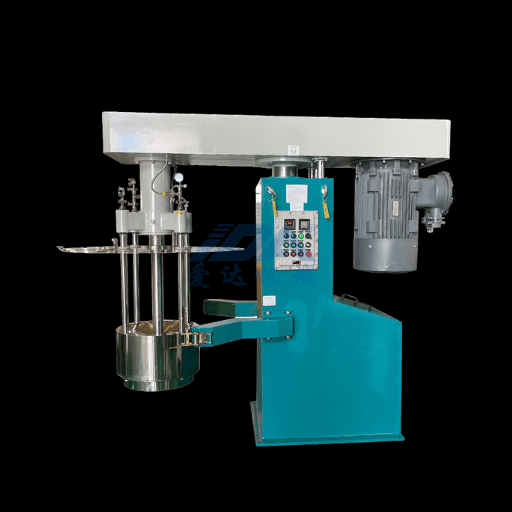 Basket Mill With Cooling System
General Advantages
2-in-1 Functionality
Combines grinding and dispersing in a single machine. No need for separate bead mills and dissolvers, reducing costs and floor space.
Color Change & Easy Clean
Minimal residue design. Easy to clean basket structure. Perfect for multi-product and multi-color production runs.
Wide Range of Applicability
Suitable for batch production of fluids that have a viscosity that is low to medium and that is homogeneous.
Key Features of a Laboratory Basket Mill
Basket mills are tailored for batch processing jobs where flexibility, easy cleaning, and rapid product changeovers are critical. The design removes the need for pumps, pipes, and valves as the entire grinding cycle occurs in one container, reducing material loss and the risk for cross contamination.
Integrated Processing
Wet grinding, dispersion, and mixing are all done in one chamber. No additional equipment is required and there are no transfers between processing steps. This greatly simplifies the production workflow.
Fast Color Change
Complete cleaning and color changes takes 5-15 minutes, as opposed to 30-60 minutes for horizontal bead mills. This rapid changeover is ideal for manufacturers of multi-color paints, inks, and coatings.
No Material Loss
The absence of pipes, pumps, and valves means there are no dead zones where material can accumulate. Every step of the process occurs in one container, resulting in an almost 100% yield.
Reduced Maintenance
A more straightforward mechanical design requires less effort for maintenance, reduce costs for spare parts, and less downtime for production.
Versatile Production
The batch processing design provides the maximum flexibility for switching between different products, formulations, and batch sizes. This is especially beneficial for custom manufacturing.
Quality Assurance
With the ability to take samples during processing, full real-time control of your quality is achievable. Stop the grind at the optimal particle size for product quality consistency.
Grinding Basket Structure
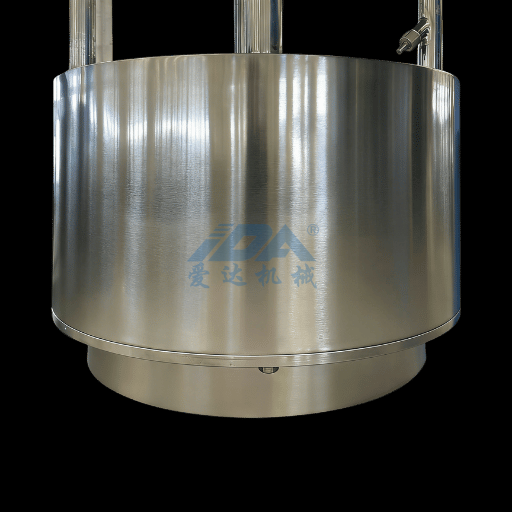
Bottom Circulation Structure
The grinding basket structure of the basket mill mainly consists of bottom circulation structure and side circulation structure. In most application scenarios, the bottom circulation structure of the grinding basket can meet the conventional grinding requirements. Under this structure, the fluid is sucked into the working chamber from the impeller at the top of the interior, and then, under the high-speed stirring action, it comes into contact with the ceramic zirconia beads for grinding treatment. After the grinding process is completed, the fluid will be discharged through the precision screen at the bottom of the chamber, and the high-speed dispersion blades configured below the screen are responsible for quickly and evenly dispersing the particles that have passed through the screen into the surrounding fluid medium.
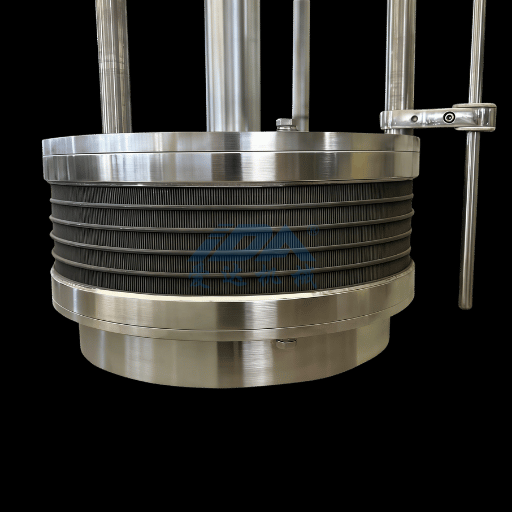
Side Circulation Structure
For grinding baskets with a side circulation structure, their working principle is similar to that of the bottom circulation structure, but there are key differences: the side circulation structure achieves effective separation of liquid and grinding beads through a screen set around the top of the grinding basket, and a pair of symmetrically arranged high-speed dispersion discs are equipped on both sides of the grinding basket to ensure that particles are fully mixed with the surrounding fluid. This design is particularly suitable for grinding and dispersion tasks that require efficient processing of large quantities of materials, although the corresponding equipment cost is relatively high.
Basket Mill Working Principle
One of the important aspects of basket mills is the ability to optimize the grinding process to achieve a desired particle size distribution. The following steps outline the process in detail.
1
Material Loading & Pre-Mixing
Liquid bases (resins, solvents, water) and solid constituents (pigments, powders, fillers) are loaded into the processing container. The dispersing disc, located under the grinding basket, does a first stage, low speed pre-mixing, to wet the particles, and achieve a pre-mix homogeneous batch before the grinding begins.
Low Dispersion
Wetting
Homogenization
2
High-Speed Suction & Material Feeding
The main shaft and self-priming impeller are driven by a motor at a high rotation speed (1,000-3,000 RPM). The resulting strong vacuum vortex created at the top of the grinding basket pulls the pre-mix from the container towards the grinding chamber. This design, which does not incorporate a pump, adds simplicity to the system and guarantees a more even flow of the materials.
Self-priming
Vacuum Suction
No External Pump
3
Intensive Grinding Inside The Basket
The grinding basket contains zirconia beads that are agitated at high speeds by grinding pins attached to the rotating shaft. These beads generate intense multi-directional collisional forces such as impact force, friction force, and shear force. This is because the zirconia beads are rapidly colliding with one another. These forces in collisions help bring about the breakdown of agglomerates and particle size reduction.
Impact Force
Friction Force
Shear Force
Deagglomeration
4
Media Separation & Product Discharge
The grinding beads are retained inside while the ground materials pass through the screen separator (perforated basket wall or bottom screen, slot size 0.3-2.0mm). It is vital that the separator is designed to keep beads from leaking while allowing product flows. The latest designs have anti-clogging mechanisms tailored to specific viscosities.
Bead Retention
Screen Separator
Anti-leakage
5
External Dispersion & Continuous Recirculation
The high-speed dispersing disc positioned below the basket immediately disperses the material that exits the basket. This creates additional shear forces. The material is then recirculated to the top where it is drawn back into the grinding basket. This process is repeated, as it is designed for the material to pass through the grinding zone multiple times. Continuous batch recirculation is achieved through this process.
Secondary Dispersion
Circulation
Multiple Passes
6
Quality Check & Completion
The grinding cycle continues until reaching the desired particle size distribution, which is normally between 1-50 microns for standard applications and 500-800nm for nano configurations. Throughout this process, the double-jacket cooling system maintains temperature. Check samples may be taken to assess progress. At the end of the process, the basket is raised and rotated to centrifuge and remove residual materials.
Quality Control
Temperature Control
100% Recovery
Essential Parts Of A Basket Mill
Being familiar with the major parts of a basket mill will assist you in choosing the right equipment, performing upkeep, and ordering replacement parts.
Grinding Basket
This is the most important part of the mill, which consists of a perforated metal cylinder filled with grinding media to form a high energy grinding zone.
- Material: SS304/SS316L stainless steel
- Available with a ceramic liner (ZrO2, SiC) to achieve zero contamination.
- Screen slot sizes: 0.3, 0.5, 0.8, 1.0, 1.5, 2.0 mm
- Double jacketed for water cooling
- Fast release for quick maintenance
- Ceramic or hardened alloy grinding pins
Dispersing Disc & Impeller
Facilitates material circulation (and pre/post dispersion). The vacuum generating self-priming impeller allows for pump-less operation.
- Impressive wear resistant alloy steel construction
- Guided adjustable blades for varying viscosities
- Patented anti-reflux device to stop bead leakage
- Speed: 0-3000 RPM with continuous adjustment
- Available in several designs: saw-tooth, curved, and propeller.
- Balanced construction for smooth, vibration-free operation
Grinding Media (Beads)
The primary selection criterion for achieving the desired fineness through impact and attrition is the bead selection
- Yttria-stabilized zirconia (95% ZrO2) — best performance
- Cerium-stabilized zirconia — best performance at lower cost
- Zirconium silicate — lower cost for less stringent application
- Glass beads — lowest cost for soft materials
- Size range: 0.1mm to 3.0mm
- Density: 3.7-6.0 g/cm³ depending on material
Cooling System
Double-jacket design allows for heat-sensitive materials to be grinding without overheating. Additionally, the double-jacket design allows for more effective heat removal while grinding.
- Double-wall cooling jacket on grinding basket
- Additional cooling jacket on processing container
- Compatible with water circulation or industrial chillers
- PT100 temperature sensor for real-time monitoring
- Auto-shutdown at preset temperature limit
- Optional heating capability for specific applications
Motor & Drive System
The power source that turns the grinding and the dispersion. The modern system uses VFD for better speed control.
- Premium quality ABB, Siemens, or equivalent motors
- Stepless speed control with a Variable frequency drive (VFD)
- Power: 0.75kW (lab) to 55kW (production)
- Explosive proof versions (ATEX) available
- Some belt drive and direct drive options
- Overload protection and a soft-start function
Control System
From basic to complete PLC automation. For precise operation and data recording, and plant automation integration.
- Digital display: speed, temperature, power, time
- Optional PLC control with HMI touchscreen
- Store recipes and log batch data
- Automated programs for controlling speed and power
- Remote monitoring (IoT)
- Safety interlocks and emergency stop
Lifting System
Raises and lowers grinding head assemblies. Various configurations meet different production needs.
- Hydraulic lifting: smooth and stable for heavy-duty lifting
- Electric lifting: clean operations and precise positioning
- Pneumatic lifting: simple and economical
- Manual lifting: for lab scale only
- Adjustable container lift height
- Safety limit switches at travel endpoints
Processing Container
Holds the material being processed. Can be fixed for permanent installation or mobile for easy transport.
- Construction in stainless steel SS304/SS316L
- Double-wall jacket for heating and cooling
- Sizes range from 1L (lab) to over 2000L (production)
- Mobile tanks with casters for easy transport
- Clamping system for secure positioning
- Vacuum lid for air-sensitive materials (optional)
Basket Mill vs. Other Grinding Mills
How you decide to grind your materials will depend on what you are producing. Let's look at a basket mill and compare it to a horizontal bead mill, three roll mills, and others.
| Feature | Basket Mill | Horizontal Bead Mill | Three Roll Mill | Ball Mill |
|---|---|---|---|---|
| Processing Mode | Batch | Continuous | Batch | Batch |
| Color Change Time | 5-15 min ✓ | 30-60 min | 15-20 min | 60+ min |
| Cleaning Ease | Excellent ✓ | Complex | Good | Difficult |
| Particle Fineness | 1-50 μm (nano: 0.5μm) | Sub-micron to nano ✓ | 5-20 μm | 10-100 μm |
| Throughput | Medium | High ✓ | Low | Low |
| Material Yield | ~100% ✓ | 85-95% | 90-95% | 85-90% |
| Investment Cost | Medium | High | Low ✓ | Low |
| Maintenance Cost | Low ✓ | Medium-High | Low | Medium |
| Viscosity Range | 500-50,000 cps | 50-5,000 cps | High viscosity ✓ | Low-Medium |
| Best Application | Multi-color, small-medium batch | Single product, high volume | High viscosity paste | Coarse grinding |
🎯 When To Choose A Basket Mill?
Basket mills are best when you need any of the following:
- Easy color changes (like with paint or ink, or when making multiple products)
- Small or medium size batches (1-2000 liters)
- Easy to clean and has a lower cross-contamination risk
- Ability to produce multiple products
- Pre-mixing and grinding done in one single operation
- More affordable total cost of ownership than complicated systems that run continuously
🏭 When To Choose A Horizontal Bead Mill Instead?
It is best to use a horizontal bead mill when you need any of the following:
- Continuous high-volume production of a single product
- The finest possible particle sizes (down to < 500 nm true nano-scale)
- The most throughput with the least labor
- Integrated inline with continuous production systems
Common Problems with Industrial Basket Mills & Our Solutions
We appreciate the difficulties faced by our clients in wet grinding operations and have tailored our basket mills to remedy the most frequent pain points.
Problem: Cleaning And Color Change
Horizontal bead mills have complex systems with pipes and dead zones, where materials build up.
- 30-60 minutes to clean out materials between color changes
- Significant material losses in pipes and pumps
- High chances of cross-contamination
- Large volumes of solvents needed for cleaning
- Bottlenecks in production for mills needing multiple color changes
Solution: Self-Contained Pump-Free Design
With basket mills, rapid color changes and clean out can be achieved.
- 5-15 minutes to change colors
- Zero dead zones with our no pump no pipes design
- Quick-release basket for easy cleaning
- Centrifuge discharge gives almost complete material yield
- 70% less cleaning solvent is used
Problem: Sensitivity To Heat
Some materials cannot be used in the grinding process because they may be degraded by excessive heat.
- Active ingredient decomposition
- Efficacy and quality of product degradation
- Changes in viscosity leading to issues in processing
- Potential discoloration of materials
- Results diverging in batch-to-batch production
Solution: Advanced Double-Jacket Cooling
Our advanced cooling system guarantees proper cooling throughout the grinding process.
- Double-jacket cooling on both basket AND container
- Real-time temperature monitoring via PT100 sensor
- Preset temperature limit auto-shutdown function
- Sub-ambient cooling compatible with industrial chillers
- Consistent product batch quality
Issue: Mechanical Seal Failures
Highly negative impactful mechanical seals of horizontal bead mills.
- Seals need to be replaced about every 3-6 months
- Seals wear and product contamination
- Seal failures and consequent unexpected downtime
- Seals wear regular maintenance and spare parts costs
- Safety hazards from material leakage
Solution: Seal-Free Open Design
Our basket mill design optimizes and eliminates mechanical seal concerns.
- Open-top design — no shaft seals required
- Seal wear contamination eliminated
- Patented anti-reflux bead retention system
- Maintenance requirement dramatically reduced
- Enhanced equipment uptime and reliability
Issue: Lab-To-Production Scale-Up
Laboratory results often cannot be replicated at larger production scales, wasting time and resources.
- Grinding dynamics at larger scales differ
- Inconsistent particle size distribution
- Extended product development cycles
- Production batch failures risks
- Production time and raw materials wasted
Solution: Linear Scale-Up Design
Predictable, reliable scale-up from lab to production is what our product line is engineered for.
- Uniform geometry for all sizes of equipment
- All scales utilize same grinding principle
- Lab data can be directly used for production
- Full product line from 1L to 2000L
- Lower development time and risk
Key Benefits of Using a Vacuum Basket Mill
Basket mills are highly beneficial when compared to traditional milling equipment. Here's why manufacturers adopt mills for their wet grinding processes.
Fast Color Change Time
No pump and no piping means color changes can happen in 5 to 15 minutes versus a 30 to 60 minute wait with horizontal bead mills. This means more productivity when it comes to multi-color runs and less solvents are needed for cleaning.
Almost Total Material Recovery
There's no loss of materials in pumps, pipes, or dead zones. Every part of the milling process occurs within one container. When it’s done, the basket is moved up and spun to centrifuge any remaining materials for total recovery.
All-in-One Processing
Pre-mixing, grinding, and dispersion are done in one machine. This means less material transfers, lower chances of cross contamination, and a more streamlined process.
Low Maintenance
Horizontal mills have more moving parts, unsealed pumps, troublesome pipes, and leaky valves. This means your operational costs for spare parts, downtime, and maintenance are all lower.
Immediate Quality Control
Thanks to its open-top design, you can take samples anytime while grinding. You’ll be able to adjust the grinding process to meet your needs. Achieve consistent quality by stopping the grinding process at the right point for each batch.
Smooth Scale-Up
Production size machines and lab size machines operate the same way along with having consistent geometry. This means the data collected during lab testing is valid for the production machine, resulting in less scale-up risk and shortened development time.
Adaptable Batch Sizes
Different batch sizes can be processed using the same machine by swapping out the container. This is great for custom production, product testing, and businesses with multiple product lines that vary in quantity.
Superior Temperature Management
Double-jacketed cooling on both the basket and container ensures efficient heat removal. This is critical for sensitive materials that can be damaged by heat including pesticides, pharmaceuticals, and some coatings.
Reduced Operating Costs
Energy use is less than that of continuous mills. Use up less cleaning solvents. Less material is wasted. Spare part requirements are minimized. All of these contribute to a lower total cost of ownership.
Efficient Use of Space
Impressive compactness versus a horizontal mill, tank, and pump system. The vertical design is less demanding of floor space. Maximize equipment use by offline preparing mobile containers that can be quickly swapped.
How to Choose the Right Basket Mill
Identifying the best basket mill entails examining several important factors. The guidance extended herein is intended to be further refined regarding the best machinery selection for the application under consideration.
Step 1: Define Your Production Needs
Batch Size
- Lab: 0.5-5L For R&D
- Pilot: 10-50L For Testing
- Production: 50-2000L For Manufacturing
Ensure that the capacity aligns with your usual batch volume.
Target Particle Size
- Standard: 5-50μm (Suitable For Most Applications)
- Fine: 1-5μm (For High Quality Coatings)
- Nano: <1μm (For Specialized Applications)
This influences bead size and the use of nano options.
Material Attributes
- Viscosity: Low / Medium / High
- Heat Sensitivity: Critical For Some Products
- Abrasiveness: Influences Wear Rate
- Contamination: Metal-Free Requirements
Step 2: Consider Special Requirements
🌀
High Viscosity Processing
Materials With >10,000 Cps, Such As Adhesives And Sealants, Require A Vacuum Basket Mill To Prevent The Entrapment Of Air.
💥
Flammable Solvents
For Solvent-Based Products With Flash Points Below 60°C, An ATEX Explosion Proof Configuration Is Required.
💎
Zero Contamination
For Pharmaceutical Industries, A Basket Mill With Ceramic, Zirconia, Or Silicon Carbide Lining Is Required.
🔬
Nano Level Grinding
For Sub-Micron Particle Sizes, A Nano Basket Mill Equipped With A Special Separator Is Selected.
Step 3: Selection Checklist
📝 Complete This Before Requesting a Quote
What Is Your Range Of Batch Sizes?
What Is The Target Particle Size?
What Products Will You Process?
How Often Will The Color Change?
What Is The Viscosity (Cps Or MPa·s)?
What Is The Heat Sensitivity?
Any Other Special Considerations?
What Utilities Do You Have?
What Is Your Floor Space?
What Is Your Budget Range?
Basket Mill Technical Specifications
Specifications on the industrial basket mill range are available enabling customerization to suit one's requirement.
| Model | Power kw | Capacity L | Speed rpm | Lift mm |
|---|---|---|---|---|
| ILS0.75 | 1.1 | 0.5 | 0-2800 | 300 |
| ILS1.5 | 3 | 1.5 | 0-2800 | 600 |
| ILS7.5 | 7.5 | 3 | 0-1450 | 800 |
| ILS11 | 11 | 5 | 0-1450 | 800 |
| ILS15 | 15 | 10 | 0-1450 | 900 |
| ILS22 | 22 | 20 | 0-1450 | 1200 |
| ILS37 | 37 | 40 | 0-960 | 1500 |
Interactive Toolkit
Basket Mill Comparison & Calculator Toolkit
Compare basket mills with other grinding mills and calculate your production capacity.
Basket Mill vs. Other Grinding Mills
| Feature | Basket Mill ★ | Horizontal Bead Mill |
|---|---|---|
| Color Change Time | 5-15 min | 30-60 min |
| Cleaning Ease | Very Easy | Complex |
| Particle Fineness | 1-50 μm | Sub-micron |
| Operating Cost | Lower | Higher |
| Grinding Media Usage | 3-8 kg | 50-200 kg |
| Multi-color Production | Ideal | Not Recommended |
✓ Choose Basket Mill When
Frequent color changes, small to medium batch sizes, easy cleaning, lower operating costs.
Choose Horizontal Mill When
Continuous high-volume production with single products and ultra-fine particle sizes.
IDA Advantage
70% faster color change and 40% lower media consumption than horizontal mills.
| Feature | Basket Mill ★ | Three Roll Mill |
|---|---|---|
| Viscosity Range | Wide Range | High Only |
| Throughput | Higher | Limited |
| Labor Requirement | Minimal | Continuous |
| Automation Level | Full Auto | Manual |
| Operation Type | Enclosed | Open |
✓ Choose Basket Mill When
Automation, sealed operation, wide viscosity range, minimal labor requirements.
Choose Three Roll Mill When
Budget is limited, processing very high viscosity pastes, manual control acceptable.
IDA Advantage
3x faster throughput with 50% less labor than three roll mills.
| Feature | Basket Mill ★ | Horizontal Mill | Three Roll Mill |
|---|---|---|---|
| Color Change | Excellent | Poor | Good |
| Cleaning Ease | Very Easy | Complex | Easy |
| Fineness | 1-50 μm | Sub-micron | 5-20 μm |
| Investment Cost | Medium | High | Low |
✓ Basket Mill Wins
Multi-color production, frequent changes, easy cleaning, balanced cost-performance.
Horizontal Mill Wins
Continuous high-volume production requiring ultra-fine particle sizes.
Three Roll Mill Wins
Lowest investment cost with very high viscosity materials.
Not sure which mill type is right for your application?
Production Parameters
Batch Size (Liters)
200 L
50 L
1000 L
Grinding Time per Batch
45 min
15 min
120 min
Working Hours per Day
8 hrs
4 hrs
24 hrs
Color Changes per Day
3
0
10
Estimated Production Results
Based on typical parameters (200L, 45min, 8hrs, 3 color changes)
1,800 L
Daily Output
9
Batches/Day
105 min
Time Saved
+15%
Efficiency Gain
Basket Mill Advantage
With 3 color changes per day, a basket mill saves 105 minutes in cleaning time. This translates to 1-2 extra batches per day compared to horizontal bead mills.
Basket Mill Case Studies: Customer Success Stories and Application Results
CASE STUDY 1
Leading US Coatings Manufacturer Achieves 75% Reduction in Color Change Time
Implementation of an Industrial Basket Mill for Multi-Color Production
THE CHALLENGE
The client runs one of the high-output industrial coating facilities in the United States, making 200 different color formulations each month. The client's previous horizontal bead mill system required 45-60 minutes of downtime for each required color change cycle. The Production team of the client faced the following challenges:
- Cleaning cycle cross contamination between dark and light colors
- 15-20% loss of production capacity high disassembly and manually cleaning grinding flights cost labor gaps in Dead lines for bespoke colors orders large swathes of production materials wasted during color transitions.
OUR SOLUTION
After thoroughly understanding the grinding needs of the client, we suggested the client the ILS-500 Industrial Basket Mill system, with the following custom modifications:
1
Self-Priming Impeller Design
This unique design eliminates the need for external pumps, and lowers cleaning points from 12 to 3.
2
Quick-Release Basket Assembly
With this feature, users can remove and replace the grinding basket in under 5 minutes, allowing for complete color changes.
3
Double-Jacket Cooling System
Keeps the temperature of the materials being ground under 40°C, even during prolonged grinding.
4
316l Stainless Steel Construction
The interior surfaces are mirror-polished which reduces the adhesion of pigments and makes the machine easier to clean.
5
Automated CIP (Clean-in-Place) System
Cleaning can be done by circulating the required solvents without the need to disassemble the machine.
The implementation involves our engineering team for on-site installation and operator training for 2 weeks.
MEASURABLE RESULTS
| Metrics | Before | After | Improvement |
|---|---|---|---|
| Color Change Time | 45-60 minutes | 10-15 minutes | 75% reduction |
| Material Waste | 2-3% per batch | 0.5-0.8% per batch | 70% reduction |
| Daily Production Capacity | 8-10 batches | 14-16 batches | 60% increase |
| Cleaning Labor Hours | 6 hours/day | 1.5 hours/day | 75% reduction |
| ROI Payback Period | N/A | 11 months | Achieved |
CLIENT TESTIMONIAL
"The basket mill has changed the way we do production. We can now do small-batch custom orders that before were not worth doing. Our ability to quickly change colors has given us an edge in the specialty coatings market."
CASE STUDY 2
Overcoming Temperature-Sensitive SC Formulation Challenges
Vacuum Basket Mill Solution for Pesticide Suspension Concentrate Production
THE OBSTACLE
The client specializes in producing Suspension Concentrate (SC) formulations that include temperature-sensitive active ingredients. Their standard grinding system had a series of technical issues:
- Active ingredient degradation due to grinding material temperature rising above 35 ᵒ C
- Air entrainment which resulted in foam causing inconsistent product density
- Difficult to achieve SC stable narrow particle size distribution (D90 < 5μm)
- Grinding results inconsistent from batch to batch resulting in lost product efficacy
- Excessive grinding time of 4-6 hours per batch resulting in thermal degradation
OUR APPROACH
The IZF-500 Vacuum Basket Mill is specifically tailored for SC formulation challenges. Key components include:
1
Vacuum Grinding Chamber
operating between -0.08 to -0.095 MPa which eliminates air entrainment and foam formation.
2
Advanced Cooling System
Triple-jacket design with chilled water circulation keeps the grinding temperature in the 25-30ᵒ C range, even during extensive milling, with intermittent temperature increases.
3
High-efficiency grinding adjustment
Beads are made of zirconia (0.8-1.0mm) for the best size reduction. A screen separator with 0.3mm slots for excel bead retention. A pin design that balances maximum energy transfer with cost-efficiency.
4
Real-time Monitoring
Inline analyzer for particle size. Temperature monitoring with sensors. Parameters that adjust automatically.
5
GMP Design
Complete document package to meet agrochemical production regulatory requirements.
Our application engineers need to fine-tune grinding settings with pilot tests at the client's facility prior to total scale-up.
TANGIBLE OUTCOMES
| Metric | Before | After | Improvement |
|---|---|---|---|
| Grinding Temperature | 45-55°C | 25-30°C | 40% lower |
| Particle Size (D90) | 8-12μm | 3-5μm | 58% finer |
| Grinding Time | 4-6 hours | 1.5-2 hours | 65% faster |
| Foam Content | 5-8% | <0.5% | 90% reduction |
| Active Ingredient Loss | 3-5% | <1% | 80% reduction |
CLIENT FEEDBACK
"The vacuum basket mill helped us overcome our most pressing formulation challenge. We can now SC products with previously impossible to formulate heat-sensitive actives. Consistent particle size has markedly improved the shelf stability of our products."
CASE STUDY 3
Japanese Ink Manufacturer Reports Successful Scale-Up from Lab to Production
Laboratory Basket Mill to Industrial Scale-Up Success Story
THE CHALLENGE
The client creates advanced UV-curable inks used in digital printing. Their R&D struggled with the industry-wide issue of laboratory formulations that were unable to be reproduced at the production scale.
When we moved lab-developed formulations to production equipment, we experienced with formulations being lab tested, production equipment being tested, and multiple production equipment refinements, resulting in extended development cycles. scale-up failures, color consistency complaints. A significant amount of time troubleshooting was diverted from innovation.
OUR SOLUTION
During scale-up, we integrated systems with milled contaminants from baskets lab to production systems:
1
Phase 1: Laboratory System (IDS-2 Lab Basket Mill)
2-liter capacity - Speed variance (0-3000 RPM) - Optimized for process - identical construction to production equipment - in-situ measurement
2
Phase 2: Pilot Scale System (ILS-50 Pilot Basket Mill)
50-liter capacity - 25x scale from lab unit - for customer sample production with identical grinding media and basket configuration
3
Phase 3: Production System (ILS-200 Production Basket Mill)
200-liter capacity - Pilot-system-parameter-per-production system - Recipe control from pilot system - Automated system for integrated quality control checkpoints
The key innovation was our Linear Scale-up Technology ensuring identical PSD (particles size distribution) and dispersion quality across all three scales.
NEGOTIABLE GAINS
| Metric | Before | After | Improvement |
|---|---|---|---|
| Scale-Up Success Rate | 40-50% | 95%+ | Nearly doubled |
| Development Cycle | 6-9 months | 2-3 months | 70% faster |
| Sample-to-Production Match | Variable | >99% | Consistent |
| First-Time Quality Rate | 65% | 92% | 27% increase |
| R&D Productivity | 8 new products/year | 20+ new products/year | 2.5x increase |
CLIENT TESTIMONIAL
"The ability to scale up linearly has changed how we develop products. Our R&D team can now promise customers that what they see in the samples is what they will get in production. This has helped us build our reputation as a dependable supplier of specialty inks."
Frequently Asked Questions (FAQs)
How Vital Are the Bead-Filled Milling Baskets, and What Types of Beads Are Used?
The milling basket used during performances is vital. Because of the bead type, size, material, and fill level, the baskets impact the shear and impact energies used for grinding and dispersion. It also improves the core process engineering involved in achieving the desired particle size and distribution stability, combined with the optimal design and technology for production efficiency.
Do Contemporary Immersion Mills and Jacket Baskets Contain Safety Features?
Yes, contemporary grinding machines possess automatic shutdowns and other integrated safety features. The machines are equipped with basket containment and upper-part interlocks that prevent contact while the basket is in the lowered position and during the automated cycle. These integrated process safety features help protect the personnel and the process.
In What Way Does This Type of Basket Mill Assist a Paint Processor?
Paint baskets are used in some immersion mills to grind paint for dispersing pigments and paint additives in the product stream. This offers fine grinding systems dispermat-level dispersion and excellent color development. Strong suction and containment paint basket design along with machine tools ensures the paint achieves the desired rheology and particle size within the basket for optimal final properties.
What Is a Basket Mill?
A basket mill, also called an immersion mill or a media mill, is a type of wet mill that simultaneously grinds, disperses, and mixes materials. A basket mill's construction consists of grinding media (usually a type of zirconia bead) that is immersed in a perforated basket. This type of mill is especially suited to batch processing, making it ideal for multi-color processing where color frequently needs to be changed.
How Does a Basket Mill Work?
A basket mill uses a self-priming impeller which vacuums out the material and pulls it into the grinding basket. High-speed rotating pins (1000-3000 RPM) cause the zirconia beads to collide with the material and create a mix of impact, friction, and shear forces. After the grinding the material is sent to a screen separator, where it is recirculated until it is ground to the desired size.
What Are the Main Advantages of Using a Basket Mill?
There are many advantages to using basket mills including the time it takes to complete a color change. While horizontal mills can take 30-60 minutes to complete a color change, basket mills can complete a color change in only 5-15 minutes. Additionally they can be used to easily clean the machine with no pipe residue, and they can maintain a precise temperature because of their double-jacket cooling systems. They are especially helpful during prototyping where many small batch productions are required and the product being produced is frequently changed.
Which Industries Use Basket Mill Machines?
Basket mill machines are utilized in numerous industries such as the manufacture of paint and paint coatings, printing ink production, agrochemicals and pesticides (especially SC formulations), battery slurries for new energy applications, cosmetics and personal care products, and pharmaceuticals. Each of these industries benefits from the basket mill's capabilities in batch processing, easy cleanup, and the ability to control particle size.
How Does a Basket Mill Compare to a Bead Mill?
The primary difference in basket mills and bead mills is in their processing modes. Basket mills use batch processing while bead mills use continuous processing. Basket mills are ideal for multi-color production. They quickly change colors (5-15 minute intervals) and are easy to clean. Bead mills are better suited for single-product, high volume, continuous manufacturing operations. They achieve finer particle sizes (sub-micron to nano range) than basket mills.
How Fine Does a Basket Mill Get?
Depending on the design of the basket mill, the particle size it achieves can differ. Standard mills achieve a range of 1-50 microns while more advanced nano design mills achieve 500-800 nanometers. Other than design, the size of the grinding media (0.6-1.0mm for nano level, and 1.2-2.0mm for micron level), the processing time, and the material properties can impact the fineness of the end product.
Which Types of Basket Mills Can Be Found on the Market?
A few of the many types of mills include the laboratory-sized version of the mill which holds 0.5 to 5 liters, vacuum mills which can be used to grind high viscosity materials without air bubbles, and mills that can be used in heavy-duty operations and have hydraulic lifts. Additionally, there are mills that have a sealed/closed system that can be used to manufacture materials that are sensitive to pressure.
What Kind of Grinding Materials Are Used with Basket Mills?
For most basket mill grinding operations, 95 percent ZrO2 zirconia beads are used because of their hardness and high wear resistance. Bead size varies according to the fineness of the grind needed. Smaller beads, 0.6 to 1.0 mm, are needed for grinding to the nano range, while beads in the 1.2 to 2.0 mm range are preferred for grinding to the micron level. For specific applications, ceramic and glass beads can be used.
What Kind of Maintenance Does a Basket Mill Require?
Maintaining a basket mill includes inspecting the grinding beads for wear, checking the mechanical seals to see if there's a leak, and screen separator, while also maintaining the cooling system and checking for separated beads. They should follow the manufacturer's instructions to maximize the mill's performance and lifespan.