
Get in Touch with IDA

Triple Shaft Mixer
Triple Shaft Mixer: Complete Guide to High Viscosity Mixing Solutions
Learn how triple shaft mixers provide unmatched performance with 4,000,000 cP materials and up. Dead space-free arrangement consists of anchor agitator, high-speed disperser, and wall scraper to yield complete homogeneity in adhesives, sealants, battery slurry, and more. Offered with vacuum deaeration to ensure a bubble less working environment.
- Viscosity: 10,000–4,000,000 cP
- Vacuum to -0.1 MPa
- Dead-Spot Free Design
- CE/UL Certified
20+
Years Experience
5000+
Units Installed Worldwide
50+
Countries Exported
24hr
Quote Response
What Is A Triple Shaft Mixer?
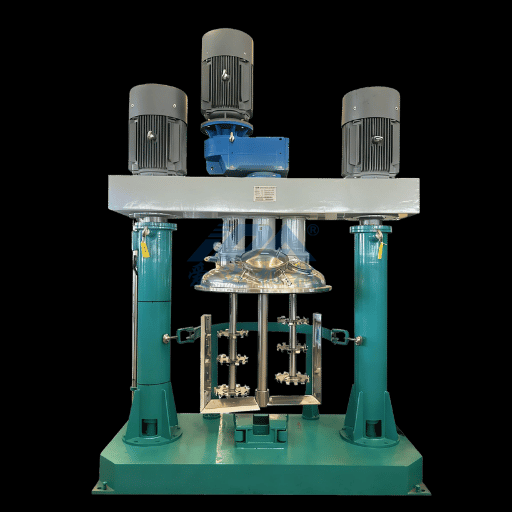
A Triple Shaft Mixer, also referred to as a Multi-Shaft Mixer, or Three-Shaft Disperser is an advanced form of industrial mixing system specifically engineered to handle the mixing of ultra high viscosity materials that traditional single shaft mixers cannot adequately handle.
Unlike traditional mixers that employ a single agitator, the triple shaft mixer employs three independent mixer systems that work in unison within a single vessel:
Low Speed Anchor Agitator
Moves the bulk materials, scrapes walls of the vessel and transfers heat.
High Speed Disperser
Generates and controls shear for particle size reduction and rapid dispersion.
Homogenizer / Emulsifier
Creates a fine emulsion and breaks down agglomerates.
Why Triple Shaft?
The name ‘Triple Shaft’ comes from three independent drive shafts, each coupled to separate motors and speed controllers. This provides the operator the ability to fine tune each mixing action separately from the others, a feature that is not possible in single or double shaft designs.
The IDA triple shaft mixer processes materials across a viscosity range of 10,000 cP to 4,000,000 cP.It Is Ideal For The Following Materials:
- Silicone sealants and structural adhesives
- Li-ion battery electrode slurry
- Polyurethane and MS polymer adhesives
- High-solid coatings and printing inks
- Cosmetic creams and pharmaceutical ointments
IDA Triple Shaft Mixer Product Lineup
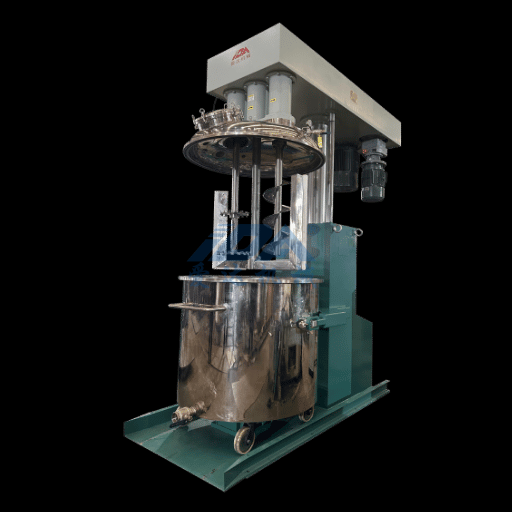
50L Stainless Steel Three Shaft Vacuum Mixing Machine
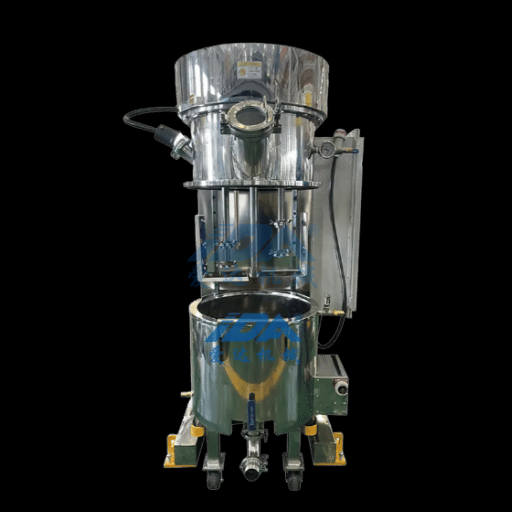
Basic Introduction
Positioning: This machine is built to serve the laboratory R&D and pilot scale production.
Material: The machine is built entirely from Stainless Steel. This includes the parts that come into contact the materials. It meets high cleanliness requirements.
Function: The machine has a Vacuum System, allowing mixing functions to be performed under negative pressure.
Core Advantages- Scale-Up Precision: The 50L machine is capable of perfectly replicating the flow fields of big production equipment. This ensures that R&D formulas can be successfully scaled to industrial production.
- Hygienic and Contaminant-Free: Corrosion-resistant stainless steel construction is easy to be put under GMP standards-clean and so it is always the prime choice for the pharmaceutical industry, food, cosmetics, and leading-edge high electronic materials.
1000L Three Shaft Mixer
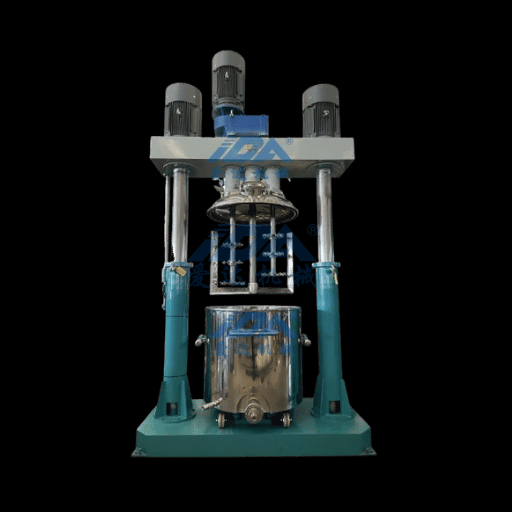
Basic Introduction
Positioning: This is an industrial-grade large-capacity production unit with a design volume of 1000L. It is a member of the High Viscosity Mixer series.
Structure: The machine has a reinforced frame (usually gantry or dual-column hydraulic lift) designed to endure the high torque necessary to drive 1000L of high-viscosity material.
Core Advantages- Large Scale Production Capability: The machine is built for continuous large scale production for the coatings, inks, and adhesives industries. This increases single batch yield.
- Great Stability: The heavy duty design guarantees stability during high stress long consistent operations with high-viscosity materials such as putty, or sealants.
200L Three Shaft Mixer with Electric Heating

Basic Introduction
Configuration: This Mixer is built with one the standard three shaft mixers that is equipped with an Electric Heating System.
Temp Control: Temperature is controlled with an heating jacket or rods on the the tank wall. This eliminates the need for mold temp controllers or boiler systems.
Core Advantages- Integrated Temperature Control: This is ideal for hot melts or wax products which require heating or mixing at certain temperatures.
- Flexible & Efficient: Since this unit self heats, production scheduling is flexible with no down time waiting for external heating sources.
500L Three Shaft Mixer With Propeller Blades

Basic Introduction
Specification: Standard production capacity at 500L.
Special Configuration: This unit is equipped with Propeller Blades (Marine style) instead of the common sawtooth disperser on the high speed shaft.
Core Advantages- Enhanced Axial Circulation: With high speed rotation, the propeller blades create powerful Axial Flow that draws material up from the bottom of the 500L tank, which results in a robust top-bottom convection.
- Targeted Application: This configuration is ideal for rapid macro mixing or solid-liquid suspension systems rather than the high shear force of a disperser.
Multi-functional Three Shafts Mixer

Basic Introduction
Definition: This is the all-in-one flagship platform. It combines low-speed mixing and high-speed dispersing with wall scraping and emulsifying.
Configuration: Highly modular and adaptable to different mixer head types, such as Anchor, Ribbon, Blade, and Rotor-Stator.
Core Advantages- Extreme Viscosity Range: With ability to manage a vast viscosity span, from 10,000 to 4,000,000 CP, including emulsions and ultra-high viscosity pastes, the mixer is truly versatile.
- Thixotropic Material: Optimized design for thixotropic materials, (materials that have low flow rates when at rest) that achieve uniform mixing with no dead zones.
Vacuum Three Shaft Mixing Machine (General Series)
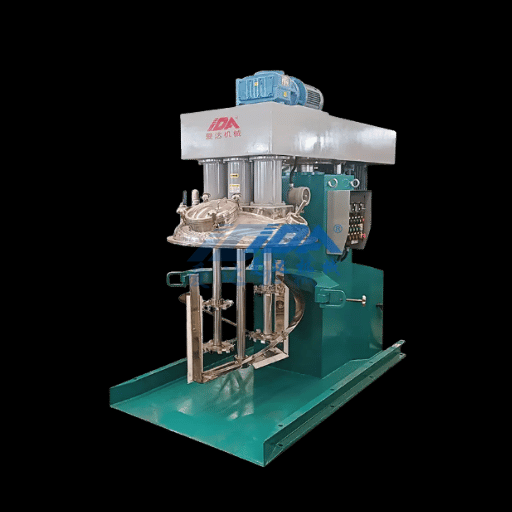
Basic Introduction
All models within this series with vacuum functionality (lab to production scale) are fitted with a vacuum-sealed lid to facilitate mixing under negative pressure.
Core Advantages- Defoaming & Quality Preservation: The vacuum system in conjunction with mixing eliminates bubbles from the material (or in the material) and prevents material oxidation, improving the overall density and gloss (especially for electronic sealants, toothpaste, etc., this feature is a must).
Three Shafts Mixer (Standard Series)
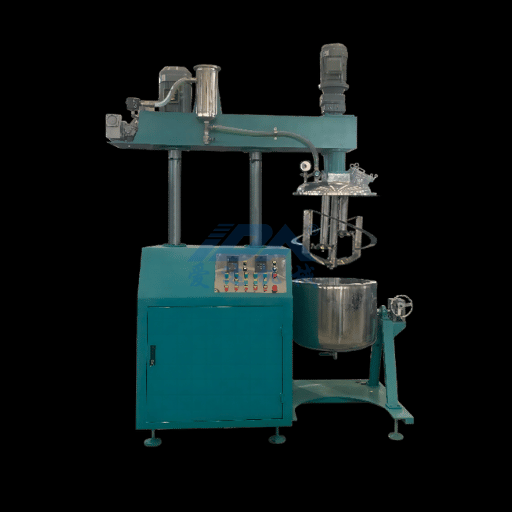
Basic Introduction
The standard series is usually the default for a combination of “Low-speed Ribbon + High Speed Disperser”.
Key Feature: The tank can be tilted by rotating the handwheel for easy discharging.
Main Benefits- Improved Flow: With the ribbon design, the vertical circulation of high viscosity materials is encouraged. This compensates for the localized shearing limitation of standard dispersers. It is the standard equipment for coatings and adhesives industries.
How Does A Triple Shaft Mixer Work?
Three shaft principles explain why this mixer excels in processing difficult high viscosity materials that other equipment cannot handle.
Low-Speed Anchor Agitator
The anchor agitator moves slowly around the perimeter of the vessel. This scrapes the walls and moves a bulk material. A PTFE scraper prevents material from building up on vessel walls which helps keep heat transfer good and dead spots to a minimum.
Speed: 10-60 RPM
Function: Bulk mixing, heat transfer, wall scraping
High-Speed Disperser
The disperser disc with a sawtooth design spins at high speed, shearing and breaking down lumps of agglomerates and reducing particle size while speeding up dissolution. The disc pulls material from the bulk and spreads it throughout the batch.
Speed: 0-1500 RPM (variable)
Function: Dispersion, particle reduction, dissolution
Rotor-Stator Emulsifier
The high shear head of the rotor has both mechanical and hydraulic shear which helps to produce fine emulsions. The emulsifier homogenizes liquids that do not mix and is essential for the production of emulsions with a uniform distribution of droplet sizes.
Speed: 0-3000 RPM
Function: Emulsification, homogenization, and deagglomeration
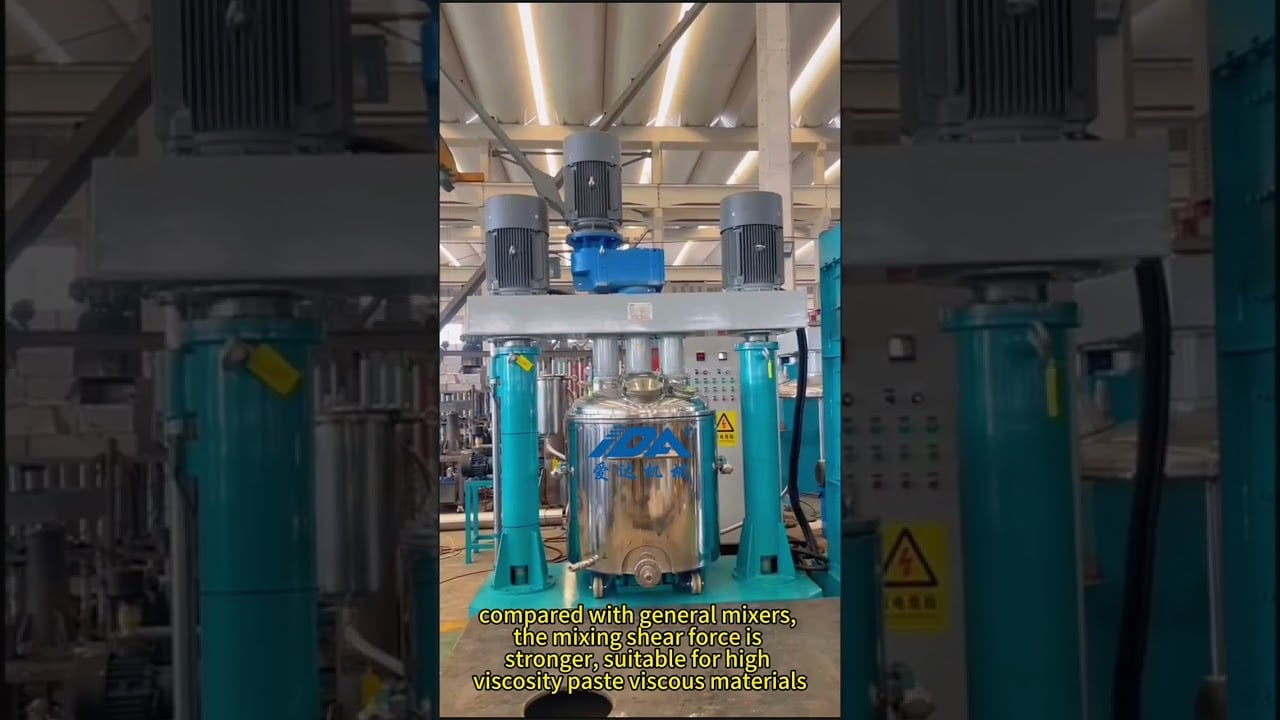
Material Flow Pattern
In the triple-shaft mixer, materials go through a very distinct and engineered flow pattern.
1
Bulk Circulation
The slow circulation from the anchor agitator pulls the material from the wall and move them toward the vessel center.
2
Shear Zone Entry
The material enters the high-speed disperser zone to experience intense shear.
3
Radial Distribution
The material that was dispersed is ejected to the outside by centrifugal force.
4
Wall Return
The anchor retrieves the material that has returned from the walls, scrapes them, and returns them to circulation.
5
Emulsification
If the material is to be emulsified, it can go through the rotor-stator for a final pass and homogenization.
Key Features and Technical Advantages of Triple Shaft Mixer
IDA triple shaft mixers are built for demanding top-tier industrial scenarios, and where quality and precision are necessary.
Multi-Function Integration
All-in-one solution for low speed mixing, high speed dispersing, emulsification, and wall scraping. All functions can work together, or independently.
Ultra-High Viscosity Capability
Mixing materials with viscosities from 10,000 to 4,000,000 centipoise is perfect for materials such as sealants, battery electrode slurry, and high-solids adhesives which other mixers cannot handle.
Modular Impeller Design
Easily changeable between anchor, blade, ribbon, and rotor-stator impellers. Switch out impellers to optimize for various products without needing to buy a new mixer.
Precision Temperature Control
Jacketed heating and cooling vessels. Temperature sensitive materials such as polyurethane and silicone can be kept stable within a range of ±1°C.
Vacuum Deaeration System
Bubble free products for the adhesive and battery slurry industry can be created by achieving a vacuum level of -0.1 MPa.
Plc Intelligent Control
Touchscreen HMI with Siemens/ABB PLC. Monitor parameters in real time, and generate reports for each batch. Automatically save and recall recipes. Remote monitoring and Industry 4.0 features are available.
Explosion-Proof Options
Available with ATEX certification for the processing of flammable or solvent-based materials. Fully EX-rated motors and electrical systems.
Premium Components
Reliability is guaranteed with Siemens Motors, ABB Inverters, SKF Bearings, and German Mechanical Seals. 316L Stainless steel contact parts ensure compliance with FDA and food-grade standards.
Technical Specifications Of Triple Shaft Mixer
The IDA triple shaft mixer holds a capacity of 50L-5000L and can also be customized.
| Model | Dispersing power(kw) | Dispersing speed(rpm) | Mixing power(kw) | Mixing speed(rpm) | Mixing power(kw) | Mixing speed(rpm) |
|---|---|---|---|---|---|---|
| QLF50 | 2.2 | 0-2880 | 1.5 | 0-85 | 2.2 | 0-350 |
| QLF100 | 3.0 | 0-2880 | 2.2 | 0-85 | 2.2 | 0-350 |
| QLF200 | 7.5 | 0-1450 | 4.0 | 0-85 | 4.0 | 0-350 |
| QLF500 | 18.5 | 0-1450 | 11.0 | 0-61 | 11.0 | 0-250 |
| QLF1000 | 37.0 | 0-1450 | 22.0 | 0-52 | 22.0 | 0-200 |
| QLF1500 | 55.0 | 0-960 | 37.0 | 0-41 | 37.0 | 0-160 |
| QLF2000 | 75.0 | 0-960 | 45.0 | 0-41 | 45.0 | 0-160 |
Common High Viscosity Mixer Challenges And Our Solutions
Have you faced these issues when using your current mixing equipment? Below is an explanation of how IDA triple shaft mixers helps solve these issues.
Overheating During Mixing
Problem:
Mixing involves a lot of shear which produces a lot of friction heat. This can lead to heat sensitive materials degrading, curing too soon, or changing their properties.
IDA SOLUTION:
Our precision cooling system with jacketed vessels keeps temperatures within + or – 1 degree celsius. The independent shaft speed control further reduces heat.
Dead Spots & Unmixed Material
Problem:
Materials can build up onto the walls and bottom of the mixing vessel. This causes dead zones where parts of the mix are not fully combined resulting in inconsistencies in your batch.
IDA SOLUTION:
Our PTFE wall scrapers provide continuous vessel surface sweeping. The three-axis mixer guarantees 100% material turnover with our dead-spot free design.
Air Bubbles & Porosity
Problem:
During the mixing step, air can get trapped and create bubbles that weaken surface adhesive bonds and decrease the overall product quality.
IDA SOLUTION:
Our vacuum system can go down to -0.1 MPa for full deaeration. This allows for the sealing, adhesive, and battery slurry products to be free of bubbles.
Fish-Eyes & Powder Clumps
Problem:
Powders can agglomerate into dry core clumps with outsides that are not fully wet causing a loss in quality in the overall mix and wasting materials.
IDA SOLUTION:
Our high shear rotor and stator disperser can instantly break agglomerates. Our SLIM powder induction system is optional, and allows for powders to be added beneath the liquid surface.
Weissenberg Effect (Rod Climbing)
Problem:
Climbing up the agitator shaft of viscoelastic materials reduces mixing efficiency and may damage seals.
IDA SOLUTION:
A robust shaft seal construction that accommodates climbing materials, in combination with counter-rotating dispersers, creates flow patterns that eliminate climbing rods.
Long Mixing Cycles
Problem:
Productivity loss and increased energy consumption occur because single shaft mixers take hours to suite high viscosity batches.
IDA SOLUTION:
The mixing time is reduced by 40 to 60 percent by the synergistic action of three agitators by integrating scraping, in addition to stirring and dispersing, in one system.
Common Industry Applications for Vacuum Triple Shaft Mixer
The IDA triple-shaft mixer provides solutions for a variety of industries that require specialized adhesive mixing, and it does so with reliable quality.
Lithium Battery
Cathode Slurry
Anode Paste
CNT Dispersion
Solid Electrolyte
Silicone Sealant
Structural Sealant
Weatherproofing
Electronic Potting
Adhesives
Epoxy
Polyurethane
MS Polymer
Hot Melt, PSA
Solder Paste & Ink
SMD Paste
Conductive Ink
UV Ink
Screen Printing
Cosmetics
Cream, Lotion
Mascara, Lipstick
Sunscreen
Hair Gel
Paints & Coatings
High Solid Coating
Texture Paint
Anti-corrosion
Pharmaceutical
Ointment
Topical Cream
Gel
Transdermal Patch
Food Industry
Cream Cheese
Mayonnaise
Chocolate
Peanut Butter
Triple Shaft Mixer vs. Other Mixing Technologies
Know about a comparison of the triple shaft mixers with any other solutions for high viscosity applications.
| Feature / Capability | Triple Shaft Mixer | Double Planetary Mixer | Sigma Kneader | Single Shaft Disperser | Ribbon Blender |
|---|---|---|---|---|---|
| Maximum Viscosity | 4,000,000 cP | 5,000,000 cP | 10,000,000 cP | 50,000 cP | 100,000 cP |
| High-Speed Dispersion | ✓ Excellent | ✗ Limited | ✗ None | ✓ Good | ✗ None |
| Dead-Spot Elimination | ✓ Complete | ✓ Good | ~ Moderate | ✗ Poor | ~ Moderate |
| Vacuum Capability | ✓ -0.1 MPa | ✓ -0.1 MPa | Limited | Optional | Limited |
| Emulsification | ✓ Excellent | ✗ Poor | ✗ None | ✓ Good | ✗ None |
| Heat Transfer | ✓ Excellent | ✓ Good | ✓ Good | ~ Moderate | ~ Moderate |
| Mixing Efficiency | ✓ High | ~ Moderate | ✗ Low | ✗ Low for high visc. | ~ Moderate |
| Easy Discharge | ✓ Yes | ✓ Yes | ✗ Difficult | ✓ Yes | ✓ Yes |
| CIP Cleaning | ✓ Available | Limited | ✗ Difficult | ✓ Easy | Limited |
| Scale-Up Reliability | ✓ Excellent | ✓ Good | ~ Moderate | ~ Moderate | ✓ Good |
| Best Application | Adhesives, Sealants, Battery Slurry, Cosmetics | Ultra-high viscosity, rubber compounds | Dough, rubber, plastics | Low-medium viscosity liquids | Dry powders, granules |
When to Use a Multi-Shaft Mixer
The triple shaft mixer may be the right solution for your application if you need for:
Combined mixing and dispersion
Products that require bulk mixing as well as high-shear dispersion (adhesives, sealants, battery slurry)
Medium to high viscosity
Materials ranging from 10,000 cP to 4,000,000 cP
Full de-aeration
Bubble-free products that require vacuum processing
Temperature control precision
Temperatures required by heat-sensitive materials, which may need heating or cooling during mixing
Flexibility for multiple products
Ability to modify the mixer for different product types by changing the impellers
Consider something else if:
the material exceeds 4,000,000 cP (consider double planetary); for the simpler processing involving no dispersion (consider a ribbon blender); or if your viscosity falls below 50,000 cP (where a single shaft may be tolerated).
How to Choose The Three Shaft Mixer
Adhere to a step-by-step consideration process to figure out the most suitable mixing apparatus for your application.
01
Viscosity Definition
Determine your material up to a given viscosity level (in cP) at the given hot-processing temperature.
02
Capacity Calculation
Determine your batch size as per the needs of your production setup.
03
Specification Requirements
Do these include the vacuume, heat, cool, explosion-proof, or sanitary nature of the project?
04
Request for Lab Test
Request a free mixing trial on your processed material to substantiate selected choice.
Interactive Tools
Triple Shaft Mixer Calculator Suite
Professional Engineering Calculators for Equipment Selection, ROI Analysis, and Production Planning
Mixer Selection Guide
Answer a Few Questions to Find the Perfect Triple Shaft Mixer for Your Application
1
Industry
2
Material
3
Viscosity
4
Capacity
5
Results
Adhesives & Sealants
Battery & Energy
Cosmetics & Personal Care
Paints & Coatings
Pharmaceutical
Food Processing
Viscosity Guide: Low viscosity (10K-100K cP) for inks and light coatings. Medium (100K-500K cP) for creams and pastes. High (500K-1M cP) for heavy sealants and battery slurries.
Capacity Tip: Select based on your typical batch size. The working volume is usually 70-85% of total vessel capacity to allow for mixing action.
TSM-300
Recommended for your application
Ready to get started? Request a customized quote for your specific requirements.
Get Instant QuoteROI Calculator
Analyze Your Return on Investment for Triple Shaft Mixer Equipment
Investment Parameters
Analysis Results
Total ROI
—
Payback Period
—
Net Profit
—
Annual Benefit
—
Impressed by the ROI? Let us help you maximize your investment returns.
Get Instant QuoteBatch Size & Power Calculator
Calculate Batch Size Requirements, Motor Power, and Production Capacity
kg/day
hours
minutes
kg/m³
liters
cP
kg/m³
mm
rpm
rpm
liters
kg/m³
minutes
minutes
hours
days
Case Studies: Triple-Shaft Mixers For High-Viscosity Applications
Lithium Battery Cathode Slurry Mixing: Achieving Zero-Contamination Production For A Korean EV Battery Manufacturer
Customer ChallengeA leading Korean battery manufacturer, who supplies cells to the major automotive OEMs in Europe, suffered critical quality degradation from his first high-viscosity mixer. Their planetary mixer legacy caused numerous issues that jeopardized their automotive customer’s quality compliance:
- Metal Contamination: The planetary mixer metal components caused adhesion of trace metal particles to the Slurry Cathode, increasing the risk of micro-shorts in the finished cells, generating a 3.2% rejection rate slip.
- Dispersal Inconsistency: The modification with extra Carbon Nanotubes (CNT) additives caused the dissipation of CNT; therefore, imbalanced conductivity in the coating of the electrode was triggered.
- Dead Zone: Accumulation of unprocessed materials at the vessel walls caused unmixed zones that triggered a batch variability of slurry viscosity (±15% deviation)
- Long Cycle Time: Achieving a satisfactory homogeneity of a 2000L batch took 4.5 hours, causing a limitation in the daily throughput.
After studying customers’ needs and evaluating the mixer at the customer’s site, we took it upon ourselves to design and manufacture a lithium battery slurry mixer, incorporating our state-of-the-art triple shaft mixing technology:
- One-of-a-Kind Mixer Design: 316L stainless steel for all contact parts, electrode polished to smooth out surface to Ra ≤ 0.4μm. FDA-approved PTFE shaft seals, with nitrogen and PTFE to seal out lubricants.
- Three-Shaft Synergy System: Disperser in the center and anchors positioned at the bottom of the mixer at 0-60 for CNT de-agglomeration.
- State-of-the-art Vacuum System: Vacuum de-aeration (-0.098 MPa) to eliminate air entrapment, thus eliminating coating defects and disabling bad cell performance.
- Controlled Temperature: Double-jacketed vessel with internal glycol at 25±1°C to prevent NMP evaporation and viscosity drift during extended mixing cycles.
- Clean Room Compliant: Mixers with fully enclosed design and HEPA-filtered breathing system are compatible with Class 10,000 clean room environments.
| Model | QLF-2000V (Vacuum Triple Shaft Mixer) |
|---|---|
| Working Capacity | 2000 Liters |
| Viscosity Range | 10,000 – 800,000 cP |
| High-Speed Disperser | 37 kW, 0-1500 RPM (VFD controlled) |
| Low-Speed Agitators | 2 × 15 kW, 0-60 RPM |
| Vacuum Capability | -0.098 MPa (absolute) |
| Temperature Control | Jacket Cooling/Heating, 10-80 degree celsius range |
| Material of Construction | 316L SS, electropolished (Ra ≤ 0.4μm) |
| Control System | Siemens S7-1500 PLC with HMI touch screen |
| Certifications | CE, ATEX Zone 2, KOSHA |
Our engineering team collaborates with the customer closely.
- Free Lab Testing: Customer sent 50kg of their actual cathode materials to our application laboratory, where we perform mixing trials on the pilot scale QLF-50 unit, and we optimize parameters while documenting the results.
- Custom Engineering: We configured the agitators and customized the disperser blade geometry for optimal dispersion of the CNT, as per the trial results.
- FAT at Our Facility: Factory Acceptance Test at our facility with customer’s engineers present, for validation of all performance parameters.
- On-Site Commissioning: Service engineers perform the installation supervision, SAT, and operator training.
| Contamination Level | 5 ppb metallic contamination (previously 45 ppb) |
|---|---|
| Rejection Rate | 3.2% to 0.4% Improvement |
| Batch Consistency | viscosity deviation ±15% to ±2% Improvement |
| Cycle Time | 4.5 hours to 2.8 hours per batch Reduction |
| Daily Throughput | Increase of 60% Improvement |
| CNT Dispersion | D90 particle size 8μm to 2.5μm Improvement |
“Our cathode slurry production has been greatly improved by the QLF vacuum triple shaft mixer. We are able to comply with the strictest automotive industry quality standards thanks to their mixer’s contamination-free design and reliable mixing. The engineering support during integration was outstanding; they really grasped our process needs.”
— Dr. Kim, Process Engineering Director
— Dr. Kim, Process Engineering Director
Silicone Sealant Production: Eliminating Air Bubbles And Dead Zones For A Global Construction Materials Supplier
Customer ChallengeOne of the largest US manufacturers of construction-grade silicone sealants faced severe quality and productivity challenges with the integration of a dual-shaft mixer system. This problem became most apparent with the integration of construction-grade silicone sealants into major home improvement retailers. This integration has led to increased pressures to enhance the product quality while lowering the costs.
- Persistent Air Bubbles: silicone sealant mixer trapped air during the incorporation of the filler leading to the product finish with the incorporation of noticeable bubbles. The complaint rate increased by 40% compared to the previous year.
- Wall Buildup & Dead Zones: Vessel walls of the system would accumulate high viscosity material (2,500,000 cP) requiring manual scraping. This created a build-up of material that restricted flow (known as dead zones) and caused batch-to-batch cross-contamination with different colored product streams.
- Controlling The Temperature: The friction heat created during the mixing causes the temperature of the material rises above 45°C which causes premature crosslinking making the products shelf-life shorter.
- Filler Dispersion Problems: Fish-eyes and agglomerates formed from calcium carbonate filler negatively influenced the appearance and mechanical properties of the cured sealant.
We built an all-inclusive mixer machine solution for silicone sealant that addresses every pain point.
- Triple Shaft Mixing Configuration: The first of its kind, with central high-shear disperser for filler de-agglomeration, plus two wall-scraping, PTFE, blade, and adjustable anchor agitators ± 2mm, for dead-spot free mixing.
- Deep Vacuum Deaeration: Unique -0.1 MPa vacuum system with automatic cycling during the degassing phase. Silicone vapor trap keeps silicone volatiles away from the vacuum pump.
- Advanced Thermal Management: Three independently controlled temperature zones. During high shear dispersion, material temperatures are glycol-cooled to 35°C.
- Powder Induction System: Using our SLIM (Solid-Liquid Injection Manifold), sub-surface powder injection draws fillers into the high-shear zone to eliminate dust and ensure instant wetting.
- Clean Discharge System: Pneumatic scraper ring, affixed to a bottom-mounted discharge valve, minimizes waste and maximizes material recovery to 99%.
| Model | QLF-3000V (Vacuum Triple Shaft Mixer) |
|---|---|
| Working Capacity | 3,000 Liters |
| Viscosity Capacity | 50,000 – 4,000,000 cP |
| High-Speed Disperser | 55 kW, 0-1200 RPM |
| Low-Speed Anchor Agitators | 2 × 22 kW, 0-45 RPM |
| Wall Scraper Clearance | < 2mm (PTFE blades) |
| Vacuum Ability | -0.1 MPa (with vapor trap) |
| Cooling Capacity | 200,000 BTU/hr jacket system |
| Discharge | 12″ pneumatic bottom valve with scraper |
| Control System | Allen-Bradley PLC with recipe management |
| Air Bubble Defects | Eliminated: (previously 8% of production) |
|---|---|
| Customer Complaints | 95% reduction |
| Batch Changeover Time | 45 minutes to 12 minutes |
| Material Yield | 96% to 99.2% improvement |
| Batch Cycle Time | 3.5 hours to 2.2 hours |
| Energy Consumption | 25% reduction per batch |
| Mixing Temperature | 32±2°C (previously 45-55°C) |
“Before choosing this triple shaft mixer solution we evaluated multiple high viscosity mixer manufacturers. The mixer’s vacuum deaeration feature along with the dead-spot design have solved all of our bubble issues. We have been able to significantly decrease our QC rejection rates and now we can guarantee our customers extended shelf lives.”
— James Miller, VP of Manufacturing Operations
— James Miller, VP of Manufacturing Operations
Premium Cosmetic Cream Production: GMP-Compliant Emulsification For A French Skincare Brand
Customer ChallengeAn emulsifier mixer manufacturer for cosmetics that her company had to deal with the formulation and scale-up of its new product line, premium anti-aging creams, because of its active ingredients:
- Stability of Cosmetics Emulsion: The emulsions produced with the mixer were phasically emulsified and separated within 30 days, when the goal was for 24+ months stability.
- Active Ingredient Degradation: Temperature spikes during emulsification were degrading expensive peptide actives, reducing efficacy by 40%.
- Emulsion Texture: Poor texture and skin feel of the end product was due to the inconsistent emulsification and, within the 5-25 μm range, droplet size increasing to D50 of 25 μm.
- GMP compliance: The new production line needed to comply with EU GMP cosmetics manufacturing regulations. In particular, the production line needed to have validated CIP procedures.
We provided fully GMP compliant emulsifier for cosmetics system for sensitive formulation emulsions:
- Inline high-shear (rotor/stator) emulsifier: with adjustable gap (50-500) microns for precision homogenization, that achieves D50 droplet size of < 2μm, offers a silky feeling and superior stability for emulsions.
- Gentle Bulk Mixing: the unique Triple shaft design with low-shear anchor agitator and wall scrapers is the ideal construction for the balanced scrapes and cooling phase emulsion disruption prevention.
- Cold Emulsification Capability: our controllable cooling system allows for the emulsification of heat sensitive actives at 35-40°C. This is in contrast to the industry standard of 70-80°C
- Vacuum Processing: an environment free of oxygen is created to protect the oxidation sensitive ingredients and a micro bubble removing system is in place for a smooth texture.
- GMP Design Features: constructed of 316L SS with a Ra ≤ 0.5μm surface finish and validated CIP/SIP systems. Fully documented IQ/OQ/PQ protocols.
| Model | QLF-500V (GMP Cosmetic Emulsifier) |
|---|---|
| Working Capacity | 500 Liters |
| Viscosity Range | 1,000 – 500,000 cP |
| Homogenizer | Rotor/stator, 15 kW, 0-3600 RPM |
| Anchor Agitator | 7.5 kW, 0-80 RPM (with PTFE scrapers) |
| Surface Finish | Ra ≤ 0.5μm (316L SS, electropolished) |
| CIP System | 5-step validated cleaning cycle, automated |
| Temperature Range | 10-90 °C (control accuracy ±0.5°C) |
| Documentation | Full package IQ/OQ/PQ validation |
| Certifications | CE, FDA 21 CFR Part 11 compliant controls |
| Emulsion Stability | Extended from 30 days to 36+ months |
|---|---|
| Active Ingredient Retention | Improved from 60% to 95% |
| Droplet Size (D50) | 1.8±0.3μm (previously 5-25μm) |
| Batch Reproducibility | < 2% variation between batches |
| Processing Temperature | 75°C to 38°C |
| CIP Validation | 100% pass on microbial testing |
| Production Capacity | 40% increase |
“With the QLF cosmetic emulsifier it is possible to create formulations that were previously impossible using other equipment. The ability to cold emulsify has transformed our processing of sensitive peptides and botanical extracts. The GMP documentation package streamlined the regulatory approval process.”
— Dr. Sophie Laurent, R&D Director
— Dr. Sophie Laurent, R&D Director
Frequently Asked Questions (FAQs)
Q: What is a triple-shaft mixer, and how does the triple-shaft design improve mixing?
A: A triple-shaft mixer is a multi-shaft mixer with three independently driven shafts, each with a different type of mixer – usually a high-speed mixer, a mid-speed high shear or anchor agitator, and a low-speed sweeper or scraper. They are used to combine dry and liquid ingredients, improve dissolution and mixture uniformity, especially with sticky or high viscosity products. The three shaft design enables different levels of mixing: The high-speed shaft does size reduction and dispersion. The mid (or rotor-stator) shaft improves emulsification and does high shear. The low-speed shaft drives bulk flow and wall scraping to improve dead zone flow, which improves the overall efficiency of the process and the quality of the product.
Q: How does a triple-shaft mixer handle high viscosity materials and different viscosity formulations?
A: A triple-shaft mixer manages high viscosity materials by using a combination of low-speed anchor or three-wing anchor agitators with helical sweep blades and high-speed dispersers. The low-speed shaft promotes bulk flow and heat and the Teflon or stainless steel scrapers keep the product moving on the walls of the mixing vessel. The high-speed disperser and rotor-stator mixer apply localized shear to provide rapid dispersion and improve mixture uniformity. This design enables the processing of a diverse range of viscosity materials without overloading a single agitator.
Q: Can a triple-shaft mixer include a mixer with powder induction manifold or powder induction system?
A: Yes. A number of triple-shaft mixers come with powder induction systems (also known as injection manifolds) which allow for a quick and clean way to introduce dry ingredients (such as pigments, fillers, or binders) into liquid. A high-speed blade or disperser located by the manifold creates a vortex to draw the powder below the surface to assist with wetting the powder, which helps to minimize clumping (agglomeration), thereby improving the dispersion and reducing the amount of air trapped in the mixture.
Q: What are some of the designs for shaft mixers and triple-shaft systems that are most often requested, as well as options for customization?
A: These systems are designed based on modular components, which allow for a high degree of customization. For example, features such as independently driven components (high-speed dispersers, rotor-stator mixers, anchor agitators, sweep blades) along with hydraulic or pneumatic lifts (for the disperser), powder induction manifolds, dished/flat bottom mixing volumes, Teflon scrapers, modular stainless steel construction, and varying discharge arrangements can all be requested. Customers can also specify the design of rotor blades (helical, sweep blade, high-speed blade), design of the stator, and the control system, all of which can be optimized for thermal and viscous characteristics of the materials and scaled to meet desired production levels.
Q: What is the mixing and dispersing capability of a rotor-stator with triple-shaft mixer high shear elements?
A: High-speed dispersers and rotor-stator mixers create shear and turbulence for dispersion and emulsification. The rotor-stator mixer provides fine homogenization and decreases (size reduction) the dispersive and emulsifying agent’s particles. Then, the surrounding mid and low-speed shafts encourage bulk flow and prevent vortexing. This multi-layered shear creates a balance of high shear with gentle processing for the desired dispersion while avoiding overheating or excessive air entrainment.
Q: What sealing and maintenance considerations help tripple-shaft mixers operate for a long time?
A: Regular inspections of the mechanical seals or hydraulic sealing systems, lubricating the gearboxes, and timed replacements of the wear parts like the rotor/stator sets, nonscratch scrapers, and Teflon parts are necessary for maintenance. Sealant and adhesive are best applied with heavy-duty seals that withstand abrasive and viscous mixes, or those that contain solvents. Not time-consuming cleaning is made more possible with a well-conceived outlet and good access to the mixing vessel.
Q: What performance metrics are crucial in scaling processes from a lab triple-shaft mixer to production?
A: When scaling up, there is a need to preserve bulk flow patterns, shear rates, and dispersion energy similarity. Key metrics to consider are: tip speed of the high shear disperser, power per unit volume, residence time, and viscous (centipoise) and heat transfer. Analyze a typical multi-shaft mixer scale up, retaining rotor-stator geometry and relative (high speed vs low speed) speeds, effective powder induction and large volume vortex induction, and consistent performance with respect to mixing and dispersion geometry discharge systems and vessel geometry (dished bottom, sweep blade reach).