
Get in Touch with IDA
Ink Production Line — Complete Dispersing, Grinding & Filling Systems
IDA Equipment builds full ink production lines from batching to automatic filling. Annual capacity from 500 to 100,000 tons. PLC-controlled, built for gravure, offset, UV, water-based, and digital printing ink.
500-100,000 Tons/Year
PLC Controlled
Full Automation
Multi-Ink Types
Request a Quote

Complete Solution
What Is an Ink Production Line?
An ink production line is a complete system of manufacturing equipment turning raw materials—pigments, resins, solvents, and additives—into finished printing ink products ready for packaging. Instead of taking a single machine run separately, a production line joins each process with piping, pumps, and a PLC control system, thus the whole system of production process can operate with little staff.
The Six Core Functional Modules
IDA Equipment provides complete turnkey lines where each of these modules is designed to operate in concert with one another—from the floor plan design to the PLC programming.
Raw Material Storage & Automatic Feeding
High-Speed Pre-Mixing & Dispersion
Wet Grinding for Particle Size Reduction
Color Matching & Quality Control
Filtration
Automatic Filling
How Printing Ink Is Made — The Manufacturing Process
Printing ink manufacturing has a set order of operations, however the respective details of each necessarily vary with the ink type with which working and the ultimate use to which is has been designed to be applied. This is how a typical ink production line works, for example the process that IDA has been using in dozens of factory installations:
→
→
→
→
→
1
Raw Material Preparation and Automatic Feeding
resins are kept in liquid tanks with level sensors and weighed with the flow meter. solvents are weighed by the same process. Powders – pigments, fillers and extenders are fed by pneumatic conveyor, screw feeder or pipe chain conveyor to a metering bin with a load cell in order to verify the exact dosage ratio before releasing the batch.
Once calculated the bulk additives (wetting agents, defoamers or other low volume additives) are usually added by hand dosing or a metered micro feeder. All weigh fed parameters are stored by the PLC to ensure a full batch traceability.
2
Pre-Mixing and High-Speed Dispersion
Once the ingredients are checked by the Plc against the formula stored in memory, the resin , solvent and powder are fed into a high-speed mixing vessel. a disperser, running at a pre-selected RPM controlled by a frequency converter, disperses the pigment agglomerates and introduces them into the binder system.
At this stage, the objective is not so much fineness as to produce a uniform lump-free slurry which the grinding mills will readily accept. Dispersion time and RPMs are formula specific; a medium-viscosity offset ink base might require a cycle of 20-40 mins at 800 1.200 RPMs.
3
Grinding and Particle Size Reduction
This is where the fineness is achieved. Slurry from the mixing vessel enters the series of horizontally mounted bead mills. They are interconnected with a series of mills. These equip each mill with the zirconia beads (0.3-2.0mm diam.), which are spun at hypervelocity by the rotor resulting in colossal shear forces capable of disintegrating pigments to the desired target fineness. For the majority of printing inks, the desired particle size is between 5-15 microns. For specialty digital printing or inkjet application inks, the ideal grinding to be much finer – the IDA INW turbine type of nano mill can achieve a D50 below 50nm.
Slurry level sensors, linked to the PLC, trigger diaphragm pumps to feed the slurry from each mill in succession. Segregated transfer tanks linked between mills allow uninterrupted flow even when a given mill is down for service. Philosophically, operation of 2x IDA IWS-30 series horizontal bead mills with a 3,000L circulation tank will grind circa 2-3 tons finished slurry per 8-hour shift, being dictated by pigment hardness, IWS series semi-batch process flow, target fineness etc.
4
Color Matching and Quality Testing
Post grinding, the slurry enters the color mixing vessel. Dosing of color concentrates and final additives take place; usually starting at 80% of the formula target, then fed down incrementally until spectrophotometer readings are as close as possible to the spectrometric reference standard. This all-encompassing color mixing unit with scraper blades prevents pigments adhering to vessel walls and minimizes settling for in-process color matching.
In-process quality checks involve viscosity (a rotational viscometer, ASTM D2196), pigment fineness (grindometer, ISO 12634), gloss, color deviation (using Delta E standard), opacity and adhesion. Prolonged stability testing may be performed to check for skinning, sedimentation and color shift over storage periods.
5
Filtration
Finished ink then passes through the filtration system before being pumped to the filling station and out to the filling machine. Self-scraper type filter vessels (for example IDA DFX series) are capable of continuous production without manual screen manipulation which is hand for when operating 24-hour shifts.
6
Automatic Filling and Packaging
Once filtered, the ink flows into the finished-product storage tank or directly to the filling machine. In the case of the filling machine, each container is weighed to a standard (commonly 0.5%) and capped automatically. Typical filling capacities range from 1-liter cans to 200-liter drums, selectable on the touch screen.
Types of Ink Production Lines by Ink Category
Not all inks are formulated identically. Raw material chemistry, the viscosity in the end product, and the particular application method have each been considered here in determining what configuration is best suited to the application.
Water-Based Ink Production Line
Water-based inks use water as the major solvent, and are therefore the most environmentally friendly. Such a production line requires stainless steel contact surfaces (Grade 304 or 316) at all metal-to-metal contact points in order to prevent oxidation. Water-based inks are well suited to horizontal bead mills – typically IWS disc-style for flexographic inks – after which the slurry is cooled during the grinding process to below 45 C.
Solvent-Based and Gravure Ink Line
Solvent-based inks — both gravure and flexographic types — require explosion proof motors, load grounded piping, and vapor extraction in the production area. Gravure ink production relies on fast-drying solvent systems, so closed loop processing with solvent recovery is required for environmental compliance. grinding fineness of 5-10 micron is necessary.
UV Ink Production Line
UV curable inks polymerize with ultraviolet light, so the production line must be kept free of stray UV components. Production uses heat-sensitive grinding and all seals and gaskets must resist reactive chemistry of acrylate-based compositions. For UV lines, IDA configures uv ink systems with PSI pin type bead mills with improved cooling at the discharge end.
Offset Ink Production Line
Offset printing inks are viscous pastes, with viscosity from 5,000 to higher than 20,000 cps. High viscosity means the production line must use both pinpoint bead mills (for initial particle size slurry reduction) as well as three-roll mills (for final correction and sheen) on each line. The three-roll mill is practically synonymous with offset ink processing.
Digital and Inkjet Ink Line
inkjet inks are required to have the tightest particle sizes of any composition, typically D50 below 200 nm and no particles above one micron. This requires IDA’s INW turbine nano horizontal bead mill, which routinely achieve D50 as low as 50 nm. Clean production environments and multisystem filtration (0.5 micron absolute as a minimum) are obligatory.
Industrial Applications of Ink Production Lines
Printing inks are the most widely-used of all inks for industrial applications. Over 60% of all printing inks are used for flexible packaging, driven by food and medical-application film printing.
Other key sectors include a diverse range of specialized printing needs, each requiring specific manufacturing configurations.

Key Industrial Sectors
- Flexible packaging
- Gravure and flexographic inks on plastic, foil, and laminated sheet and bag materials.
- Carton and corrugated printing
- Direct-print and pre-printed water-based inks.
- Label and narrow-web
- Pressure-sensitive and shrink-label uv inks.
- Fabric printing
- Digital and conventional Screen printing inks.
- Security printing
- Anti-counterfeit, certificates, secure documents.
- Electronics
- Conductive and ceramic inks for printed circuit boards, solar elements, and displays.
- Coating crossover
- Many paint and coating production lines use the same core equipment dispersers, bead mills, and filling machines as ink-lines.
Ink Production Line Project Case Studies
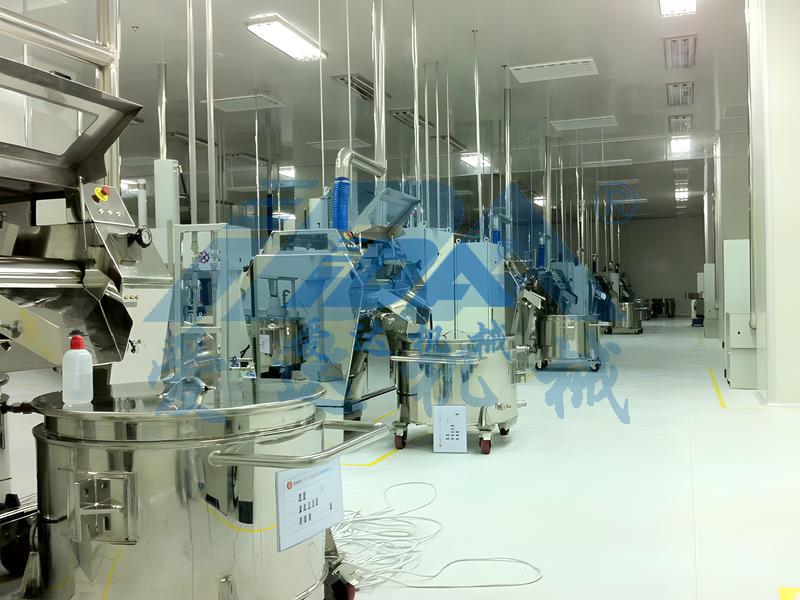
Case 1: Large-Scale Water-Based Flexo Ink Line — Southeast Asia
📍 Location: Vietnam
⚙️ Capacity: 30,000 T/year
Equipment: 4× IWS-50 bead mills + 2× IGF-90 dispersers + PLC EPC system
A packaging ink producer seeking to double their water-based flexo ink production capacity made it a goal to control particle size at less than 10 microns for all batches. Our team recommended a dual-line array of four IWS-50 horizontal bead mills each running in a pair that share a 5,000 L circulation tank. 120 formulas are stored in the PLC, which automates adjustment of grinding roll speed and pump flow based on out-time viscosity measurements.
Project Results
The factory achieved its target capacity within three months of commissioning, with batch-to-batch variation (fineness) of under 0.8 micron. Automatic feeding reduced material waste by about 3%, compared with previous manual batches.
“We went from 14 operators per shift to 6, and our color consistency got better too. The PLC recipe system was the biggest single improvement.” — Production Director, packaging ink division

Case 2: UV Ink Specialty Line — Eastern Europe
📍 Location: Poland
⚙️ Capacity: 3,000 T/year
Equipment: 2× IBS-15 pin-type bead mills + IZF vacuum disperser + explosion-proof PLC
This customer produces UV-curable label inks for the European market. All components must be ATEX explosion-proof, while grinding slurry temperature must be below 40 C. IDA provided IVMS-15 pin-type bead mills – double-cooling jackets (for cylinder body and discharge end), and a vacuum disperser for bubble-free pre-mixing. The electrical system is entirely ATEX Zone 2.
Project Results
The line achieved the customer’s 3-5 micron UV ink goal on the first commissioning run. In-line vacuum dispersion step eliminated micro-bubble defects seen in the customer’s previous batch run. Those bubbles caused pinholes in the cured ink, resulting in a 4% rejection rate that fell near zero.

Case 3: Multi-Product Flexible Line — Middle East
📍 Location: Saudi Arabia
⚙️ Capacity: 8,000 T/year
Equipment: IWS-30 + ILS-22 basket mill + IS three-roll mill + auto filling
A newly constituted ink factory needed a single production line versatile enough to produce offset inks, screen (printing inks), and water-based flexo inks on the same line with minimal changeover downtime. IDA configured a modular layout: the IWS-30 bead mill accepts water-based inks and low-viscosity solvent, while the ILS-22 basket mill accepts small-batch specialty colors, and the IS three-roll mill produces paste-style offset inks. All three grinding streams feed into one mixer and filler section.
Project Results
The PLC automatically directs slurry to the correct grinding stream, depending on the selected recipe. Change-over takes around 45 minutes and includes a CIP (clean in place) rinse. The factory launched with 35 SKUs in Year 1; it now offers over 80 formulations on the same line.
Quality Standards and Certifications
Quality control begins at raw materials inspection, and continues through every production step.
Key Quality Test Parameters
| Test Parameter | Method / Standard | Instrument | Typical Acceptance Range |
|---|---|---|---|
| Fineness of grind | ISO 12634 / ASTM D1210 | Grindometer (Hegman gauge) | ≤ 15 μm (flexo), ≤ 5 μm (offset) |
| Viscosity | ASTM D2196 | Rotational viscometer | Per formula spec ±5% |
| Color deviation | ISO 13655 | Spectrophotometer | Delta E ≤ 1.0 |
| Gloss | ISO 2813 | Gloss meter (60°) | ≥ 80 GU (high-gloss inks) |
| Adhesion | ASTM D3359 | Cross-cut tape test | Rating 4B–5B |
| Stability (skinning) | GB/T 14624 | Visual / accelerated aging | No skin at 12 months |
Equipment and Facility Certifications
-
CE Marking
All IDA machinery sold to Europe carries CE certification for machinery safety (Directive 2006/42/EC).
-
ATEX / Explosion Proof
Optional ATEX-rated electrical components for uv ink and solvent production areas (Zone 1 / 2).
-
Multiple Utility Model Patents
Patent-pending rotor design, separation system also for horizontal bead mills.
R&D and Academic Collaborations
On the R&D front, IDA collaborates with Wuhan University of Science and Technology, Nanjing University of Science and Technology, Southeast University, and the China Academy of Engineering Physics Material Research Institute for ongoing grinding and dispersing research.
Ink Production Utility Hub
Precision tools designed for ink production line configuration, cost estimation, and equipment selection.
System Design
Configuration Calculator
Calculate precise system parameters and optimize line configurations for your specific ink production requirements.
Access Tool →Investment Planning
Project Cost Estimator
Estimate capital expenditure, operational costs, and projected ROI for your new milling and dispersion equipment.
Estimate Costs →Evaluation
Equipment Comparison
Side-by-side technical evaluation of bead mills, three roll mills, and dispersers for informed procurement.
Compare Now →Procurement
Mill Selector Guide
Input your ink viscosity and throughput requirements to find the exact milling machine for your batch size.
Start Selection →Frequently Asked Questions About Ink Production Lines
An ink production line is a complete set of industrial equipment that transforms raw materials — pigments, resins, solvents, and additives — into finished ink products.
A typical line includes storage tanks, automatic feeding systems, high-speed dispersers, horizontal bead mills or three-roll mills for grinding, multi-functional color mixing machines, filtration units, and automatic filling machines, all governed by a PLC control system.
The production process follows six stages:
(1) Raw material storage and automatic feeding by weight.
(2) Pre-mixing and high-speed dispersion to create a uniform slurry.
(3) Grinding through horizontal bead mills to reduce particle size below target fineness.
(4) Color matching and quality testing for viscosity, fineness, and opacity.
(5) Filtration to remove oversized particles and contaminants.
(6) Automatic filling into containers with precision metering.
A properly configured ink production line can produce water-based inks, solvent-based inks, UV-curable inks, offset inks, gravure inks, flexographic inks, screen printing inks, and digital inkjet inks.
The equipment configuration varies by ink type — for example, UV ink lines require explosion-proof components and temperature-controlled grinding.
Pricing depends on annual output capacity, ink type, and automation level. Contact IDA Equipment for a detailed quotation based on your specific requirements.
Bead mills use zirconia beads as grinding media inside an enclosed chamber, achieving particle sizes down to sub-micron levels (D50 = 50nm with turbine-type mills). They handle low to medium viscosity materials and run continuously.
Three-roll mills use mechanical shear between three counter-rotating rollers to grind paste-like materials. They work best for high-viscosity, paste-type inks where extremely fine dispersion is needed. Many production lines use both in series.
IDA ink production lines scale from 500T to 100,000T per year. Output depends on the number and size of grinding mills, the mixing vessel capacity, and the operating schedule.
A line with two IWS-30 horizontal bead mills running two shifts can produce approximately 8,000–12,000T annually.
For a standard mid-range line, equipment delivery takes 60–90 days after order confirmation. On-site installation typically requires 2–4 weeks depending on plant readiness. Commissioning and trial runs add another 1–2 weeks.
IDA provides on-site engineers during the entire installation and commissioning phase, plus operator training before handover.
Key in-process tests include: viscosity (rotational viscometer), fineness of grind (grindometer per ISO 12634), gloss, color matching (spectrophotometer), opacity, and adhesion.
Yes. IDA production lines feature PLC-stored recipe management — operators select a formula on the touch screen, and the system automatically adjusts feeding ratios, dispersion speed, grinding parameters, and color-addition sequences.
The multi-functional mixing design with scraper blades makes color changeover and cleaning straightforward. One line can produce dozens of different formulations.
Consider four factors:
(1) Ink type — water-based, solvent-based, UV, or specialty inks determine equipment materials and explosion-proof requirements.
(2) Target annual output — drives the number and size of grinding mills.
(3) Fineness requirements — offset inks need finer grinding (below 5 microns) than some flexo inks.
(4) Automation level — from semi-automatic to fully automated PLC-controlled lines.
IDA offers free consultation and lab testing to help match the right configuration to your production goals.