
Get in Touch with IDA
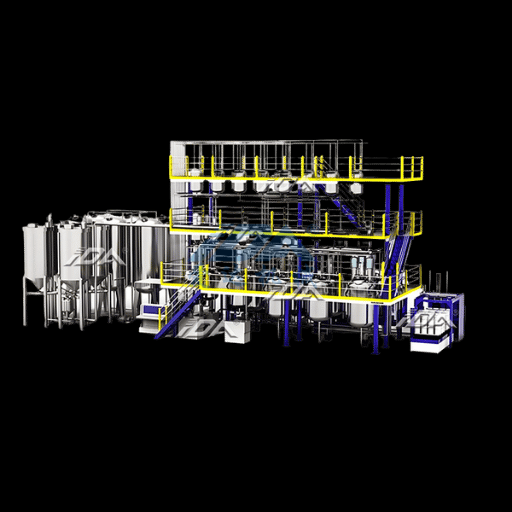
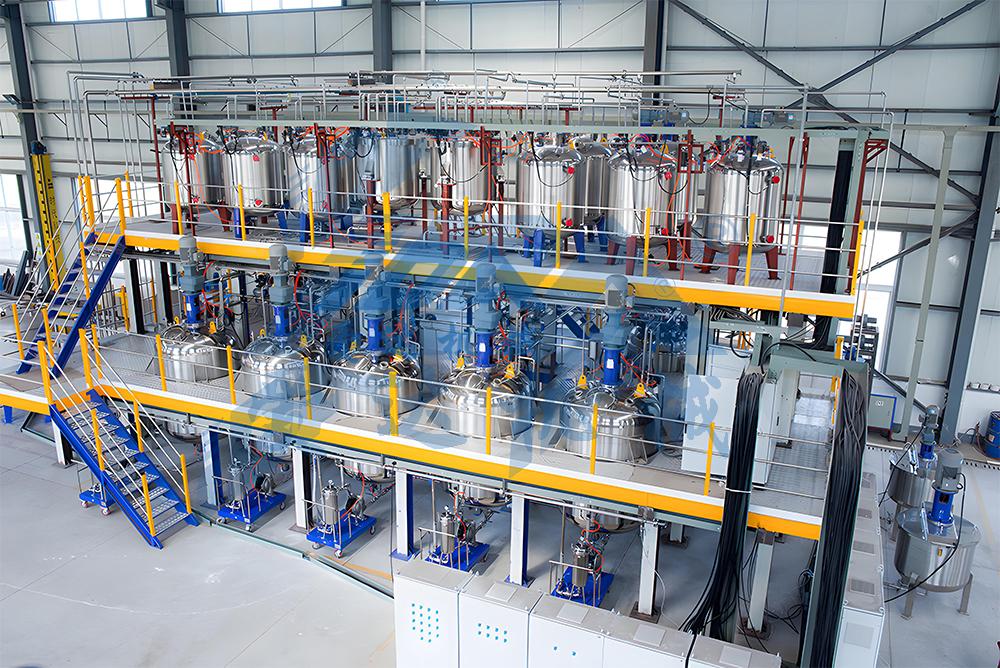
Paint Production Line — Complete
Dispersing, Grinding & Filling Systems
IDA Equipment builds full paint production lines from batching to automatic filling. Annual capacity ranges from 500 to 100,000 tons. One manufacturer, one integrated system designed for water-based, solvent-based, and industrial coatings.
500–100,000 Tons/Year
20+ Years Exp.
PLC Controlled
Full Automation
Complete Solution
Key Machines in a Complete Paint Production Line
A paint production line comprises six categories of machinery. Each performs a different manufacturing stage, influencing output quality, production capacity, and unit operating cost.
High Speed Dispersers — Pre-Mixing & Wetting
This stage wets out pigment and filler powder into the liquid medium immediately after resin feeding. Incorrect execution causes downstream wear on media by up to 50% more cycles.
Disc Speed
0–1,500 RPM
Batch Size
100–5,000 L
Power
7.5–75 kW
Horizontal Bead Mills — Fine Grinding
The key manufacturing stage. IDA bead mills reduce particles from 30-50 microns down to 5-15 microns (architectural) or below 1 micron (automotive).
Chamber Vol.
5–500 L
Fineness
≤1–30 µm
Flow Rate
50–3,000 L/hr
Basket Mills — Batch Grinding
Optimized for 30+ short-run color packs per year. Clean-up takes only 15-20 minutes, saving significant time compared to horizontal mill flushes.
Basket Vol.
10–150 L
Capacity
100–3,000 L
Motor
7.5–55 kW
Mixing Kettles — Blending & Tinting
Triple-shaft systems for products up to 500,000 cP (textured coatings/putties). Handles complex blending after the grinding stage.
Volume
100–10,000 L
Shafts
2–3 Options
Viscosity
Max 500k cP
Filtration Systems — Quality Assurance
Eliminates lumps and foreign bodies. 80-120 mesh for latex paint; 25-50 micron self-cleaning canisters for automotive-spec coatings.
Mesh Range
25–200 µm
Type
Bag/Cartridge
Safety
Self-Cleaning
Automatic Filling — Packaging
High-accuracy gravimetric or volumetric metering (±0.5%). Designed to exceed mill throughput by 10% to prevent holding tank backlogs.
Accuracy
±0.5%
Container
1–1,000 L
Speed
600 Unit/hr
Not sure which machine configuration fits your facility?
Get Expert Equipment AdvicePaint Production Process — From Raw Materials to Finished Product
Paint production carries through six defined phases; each phase is dependent upon the previous and the programmable logic PLC control system ensures the transition between the phases continually.
Stage 01
Batching
Resin, solvent, pigments, and additives weighed and fed via metering system.
Stage 02
Dispersing
High speed disperser wets and breaks pigment clusters at 800–1,500 RPM.
Stage 03
Grinding
Bead mill or basket mill reduces particle size to target fineness spec.
Stage 04
Mixing & Tinting
Multi-shaft kettles blend paste with resin and tint to formula spec.
Stage 05
Filtration
Inline filters remove gel lumps and oversized particles for quality assurance.
Stage 06
Filling
Automatic filling machine doses accurately into cans, drums, or IBC containers.
*All stages are monitored by IDA’s integrated smart control systems.
Download Production Line LayoutTypes of Paint Production Lines by Application
Equipment configuration is determined by your specific formula. IDA Equipment assembles four broad types of production lines tailored to viscosity, carrier medium, and industrial requirements.
Water-Based Paint Production Lines
Utilizes water as the primary carrier, eliminating explosion-proof requirements. SUS304 vessels and no solvent flushing needed. Ideal for global architectural paint.
Key Specs
SUS304 Vessels | Water-Only
Solvent-Based & Alkyd Resin Lines
High-safety systems for flammable carriers. Requires sealed piping, grounding, and specialized ventilation for EX-rated environments.
Electrical Rating
ATEX | EX d IIB T4+
Emulsion Paint & Latex Production
In-house resin dispersion systems. Features high-shear emulsifiers to create stable particle sizes (0.1-0.5 micron) at 3,000-6,000 RPM.
Processing
3-6k RPM High-Shear
Industrial Coating & Specialty Lines
High-value solutions for epoxy and PU. Built for fine grinding (<10µm) and high-viscosity handling with chemical-resistant parts.
Materials
SUS316L | Ceramic Internals
Configure Your Industry-Specific Line
Whether you need architectural scale or industrial precision, our engineering team provides full plant layouts.
Get a Customized Solution QuoteINDUSTRIES & APPLICATIONS SERVED
IDA paint and coating production lines provide consistent equipment reliability across diverse sectors, each tailored to specific formulation tolerances, production scales, and regulatory constraints.
1
Architectural Coatings
Interior and exterior wall paints, wood finishes, and decorative coatings. Designed for the largest volume production needs.
Target Fineness: 20-30 µm
2
Automotive Coatings
Primecoats, basecoats, and clears for OEM and Refinish. Features nano-grind capabilities in a dust-free environment.
Target Fineness: < 5 µm
3
Industrial & Protective
Anti-corrosive paints for steel structures, bridges, and marine vessels. Specialized for high-build epoxy and PU systems.
Heavy-Duty Systems
4
Printing Ink
Offset, flexo, and gravure ink manufacturing. Requires ultra-fine dispersion and precise color matching control.
Finishing: 1-5 µm
5
Adhesives & Sealants
High shear mixing for construction glues, silicones, and sealants. Planetary mixers designed for ultra-high viscosity.
Viscosity: > 500,000 cP
6
Color Paste & Tinting
High-precision rich paste for in-store tinting machines. Produced in specialized dust-free environments.
Precision: 3 µm
Technical Specifications & Production Capacity
Our scalable production lines are engineered to meet specific capacity demands. Below is a baseline configuration matrix for our paint manufacturing systems.
| Configuration | Annual Output | Disperser | Bead Mill | Mixing Kettle | Automation |
|---|---|---|---|---|---|
| Small Batch | 500–2,000 T/yr | 1 × 22 kW | 1 × basket mill 30 L | 1 × 500 L | Manual + basic PLC |
| Mid-Range | 5,000–20,000 T/yr | 2 × 37 kW | 1 × horizontal 60 L | 2 × 2,000 L | Semi-automatic |
| Large Scale | 20,000–50,000 T/yr | 3 × 55 kW | 2 × horizontal 100 L | 4 × 5,000 L | Fully automatic + SCADA |
| Mega Plant | 50,000–100,000 T/yr | 4 × 75 kW | 3 × horizontal 200 L | 6 × 10,000 L | Fully automatic + MES |
* Customized configuration available upon request. Equipment sizes may vary based on specific material viscosities.
Case Studies & Installation References
All paint production lines we supply are designed to order to the customers’ product range, factory layout, and production targets. Here are recent installations where different requirements produced distinct line configurations.
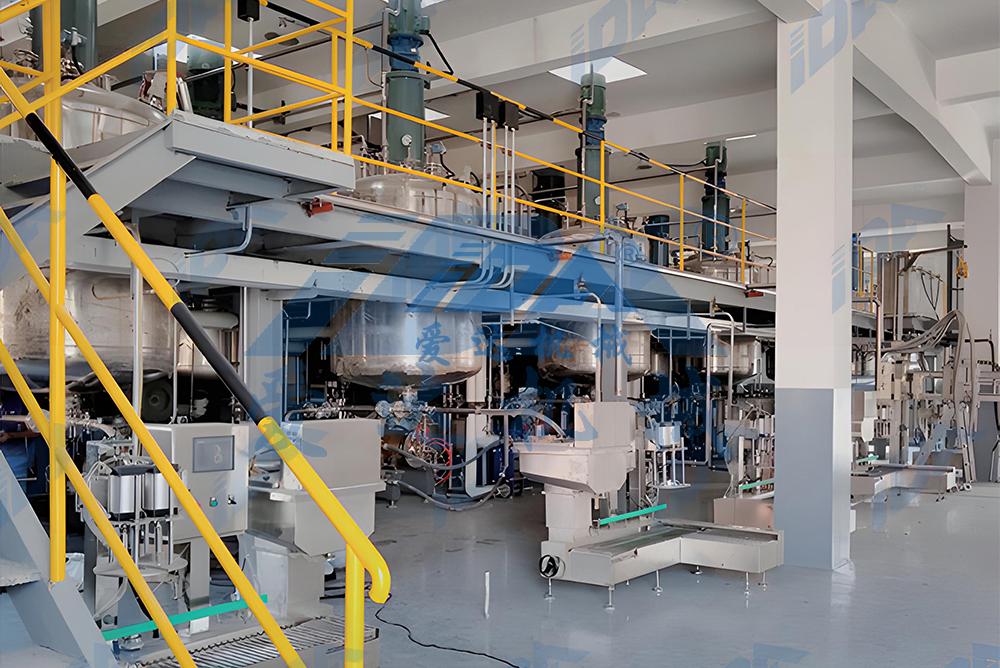
Case 01 — Architectural Latex Paint
10,000 T/Year Interior & Exterior Wall Paint — Southeast Asia
A paint company manufacturing building materials required a medium-scale production line for interior matte and exterior weatherproof latex paint. We provided 2 platform-type high-speed dispersers (37 kW), a 60L horizontal bead mill, 4 double-shaft mixing kettles (2,000L each), and an auto-cans filling line (200 cans/hr). The entire line features SUS304 shafts.
“We went from zero to full production in four months. IDA’s team stayed on-site for three weeks during commissioning and trained our operators until they could run batch changes independently.”
— Production Director, Building Materials Group
4 MonthsInstall-to-production
10,000 TAnnual output achieved
6 WorkersPer shift (vs. 14 originally)
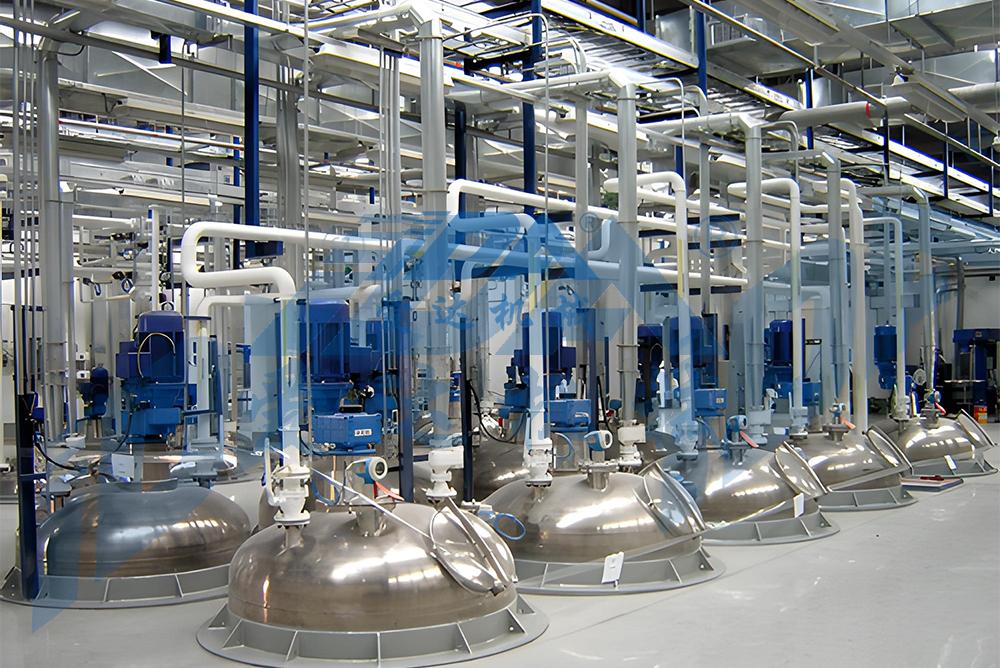
Case 02 — Industrial Anticorrosive Coatings
PLC-Controlled Epoxy & Polyurethane Line — Middle East
A project for 2-component epoxy resin primers and PU topcoats for oil & gas infrastructure. The challenge was handling high viscosities (Epoxy: 15,000 cP; PU: 8,000 cP) while achieving fineness < 10µm. We supplied a two-way grinding system (100L pin-type bead mills) flowing into mixing kettles with 3-shaft dual-blade agitators. The PLC stores 24 recipes and records batch parameters for ISO 9001 compliance.
≤8 µmFineness achieved
24 RecipesStored in PLC
50% LessChangeover time vs manual
Case 03 — Water-Based Ink & Color Paste
Nano-Level Grinding for Printing Ink — East Africa
A regional ink manufacturer needed to bring grinding in-house to hit sub-3 micron targets for CMY process colors. We provided a 30L Horizontal Bead Mill with 0.3mm yttria-stabilized zirconia beads for maximum nano-grinding surface area. To accommodate small batch tanks (500-800L), we integrated a basket mill for quick color tests and a single-shaft disperser for premixes.
“The fineness consistency eliminated our color drift problem. We went from 3% rejects to under 0.5% within the first quarter.”
— Technical Manager, Ink Production
≤3 µmGrinding fineness
0.5%Reject rate (down from 3%)
6 MonthsPayback on equipment
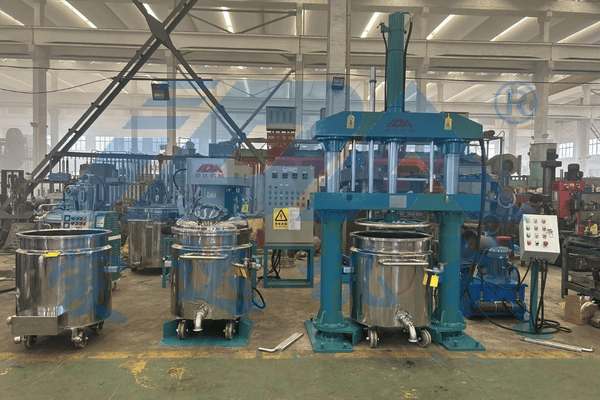
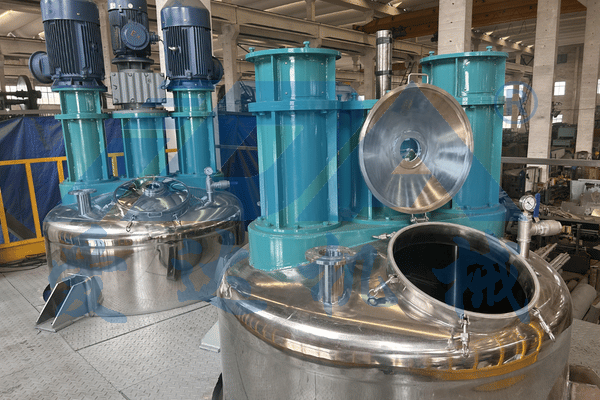
Advanced Manufacturing Facility
Take a look inside our state-of-the-art production base where precision meets industrial scale.



×
![Zoomed View]()
Frequently Asked Questions
A full paint production line means an integrated machine system to process the entire spectrum of manufacturing all the way from raw material feeding, premixing, high-speed dispersing, fine grinding, blending, filtration, automatic filling etc. A typical paint production line comprises a set of high speed dispersers, horizontal bead mills or basket mills, multi-shaft mixing kettles, filtration units and filling machines working in collaboration with various pipe lines and a central PLC panel.
Essential equipment for paint manufacturing includes high speed dispersers for pre-mixing, horizontal bead mills for fine grinding, basket mills for batch grinding, multi-shaft mixing kettles, inline filtration and automatic filling machines. Supporting equipment includes tanks, metering systems and PLC controls.
The principal equipment used in the manufacture of paint is as follows. dispersers or breaks up pigment aggregates, bead mills or fines particle grinds, hand or drum mixers or for mixing base at resins, solvents and additives, filters for quality control purposes, and filling machines for final packaging. IDA Equipment manufactures all of these as single units or as part of the fully integrated paint production line.
A paint production line is processed in 6 steps: (1) batching, in which the raw materials like resin, solvent, pigment and other additives are weighed and metered into the process equipment. (2) pre-mixing, in which the high speed disperser wets the pigments into the liquid resin base at 800-1,500 RPM. (3) Grinding, in which a horizontal bead mill or basket mill grinds the slip to the desired end point, the particle size always needs to be about 10-30 microns for architectural paints or below 5 microns for an automotive coating. (4) Mixing and tinting, in which multi-shaft kettles mix the already ground paste with additional resin plus tinting systems. (5) Filtration, in which the process flows through inline filters which remove oversized particles and (6) Filling, in which a filling machine doses the paint into cans, drums or IBC containers.
paint production is profitable with proper to market segmentation and investment of tools. Gross margins in architecture paint is always 25% to 40% while specialty industrial coatings is 45-55%. Cost of raw material contributions (resin and titanium dioxide accounting 60-70% of formula cost) production flow (automated lines cuts down 50-70% of labor expense as compared to batch manual process) and product features worked for will be the major inputs to determine purpose of solid profits for a properly arranged line of 5,000 T/year can repay over 2 years in a growth construction industry.
Water-Based paint production lines use stainless vessels (SUS304 or SUS316L) and standard motors on cleaning lines since the medium is water, one does not need an explosion-proof rating. Solvent-based lines require explosion-proof motors, sealed piping, electro-static grounding and ventilation systems since the solvent system is flammable. The grinding media used in water-based lines is often zirconia beads in the bead mill with solvent-based lines requiring chemically resistant media. Water-based lines will be more simple and less costly than solvent-based lines but solvent-based lines provide a greater breadth of resin system types such as alkyd and epoxy base systems.
Production line capacity is also a function of the equipment configuration, and of the actual product to be manufactured. A single high speed disperser with a 500L tank can make about 2-4 batches per shift for a small-batch operation (500-2,000 T/year). A mid scale line using horizontal bead mill and 2,000L mixing kettles can operate in the range of 5,000-20,000 T/year. Large turnkey plants with multiple parallel grinding and mixing lines are in the range of 50,000-100,000 T/year. IDA Equipment manufactures production lines through the entire range, and can specify capacity to meet your market demand.
Setting up a paint manufacturing plant requires these steps: 1) Market survey and selection of product types (architectural, industrial, automotive) to be produced. 2) Plant layout and engineering, including utility requirements for power, water, compressed air, and environmental controls. 3) Equipment purchase and dry run. 4) Plant installation and commissioning through factory engineers and running test batches. 5) Operator training on machines, recipes and maintenance schedule. IDA Equipment undertaking turnkey EPC would take care of steps 2-5.
Yes. Every IDA paint production line is customized around its intended product line-up and list output. For instance, an automotive basecoat plant is programmed with a multi-stage ultra-fine grind of less than about 5 microns, which is achieved with a high performance horizontal bead mill and zirconia beads. A production line for thick-film industrial coatings receives larger blender kettles combining slow-running primary and secondary anchor mixers with wall scraping facilities. An emulsion paint process provides a dedicated emulsification stage. The disperser type, size of mill, kettles, filtration mesh and filling-machine-through-put rate are customized to the formula, anticipated batch size and annual throughput.