
Get in Touch with IDA

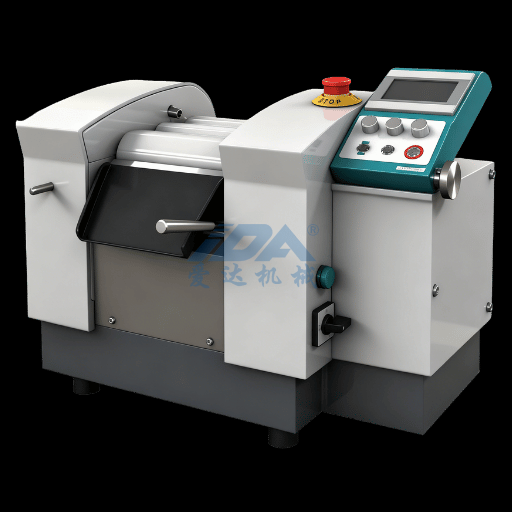
Three Roll Mill Series — From Lab to Production
IDA produces a full series of 8 three roll mill designs to take you from laboratory R&D stages to pilot-scale mixes for scale-up to final production. The design theme is the same: precision ground rollers, adjustable gap setting, durable construction – the right size for your process scale and throughput.
Lab
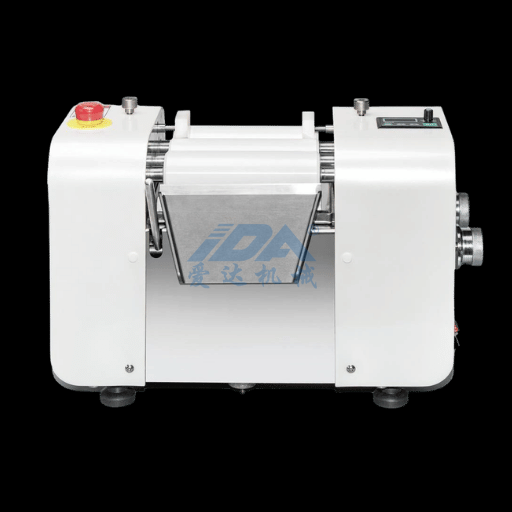
ES50 Lab Three Roll Mill
- Roller Diameter
- 50 mm
- Fineness
- 1–20 μm
- Max Viscosity
- 2,000,000 mPas
- Gap Precision
- ≤1 μm
- Speed Control
- VFD
- Roller Material
- Ceramic
- Cooling
- None
Ideal for:
R&D experiments, formulation development, small-batch laboratory testing
Pilot
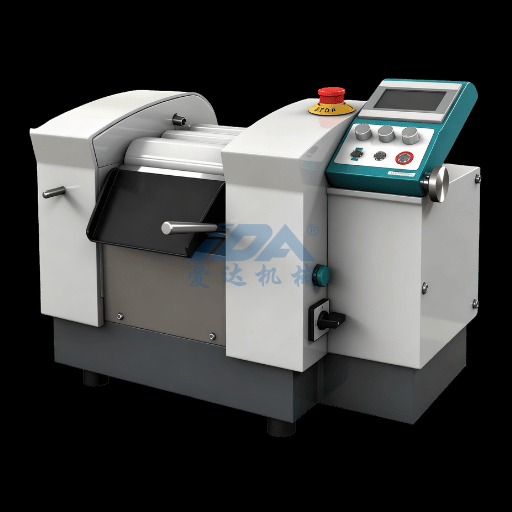
ES80 Pilot Three Roll Mill
- Roller Diameter
- 80 mm
- Fineness
- 1–20 μm
- Max Viscosity
- 2,000,000 mPas
- Gap Precision
- ≤1 μm
- Speed Control
- VFD
- Roller Options
- Ceramic available
- Cooling
- Water cooling
Ideal for:
Small batch R&D, pilot-scale production
Production
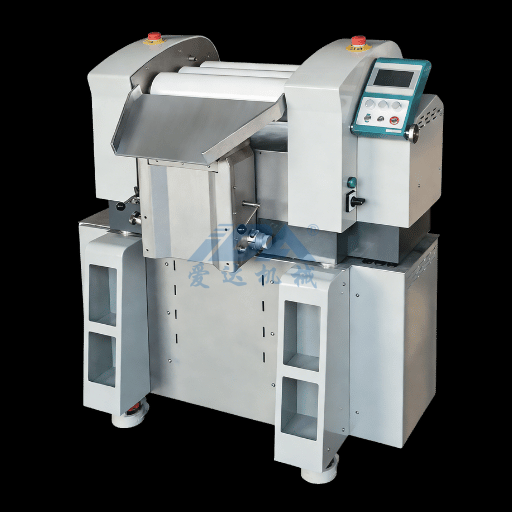
ES120 Small Production Three Roll Mill
- Roller Diameter
- 120 mm
- Fineness
- 1–20 μm
- Max Viscosity
- 2,000,000 mPas
- Gap Precision
- ≤1 μm
- Speed Control
- VFD
- Cooling
- Water cooling
Ideal for:
Small-scale production, cosmetics, ink, pigment paste batches
Industrial
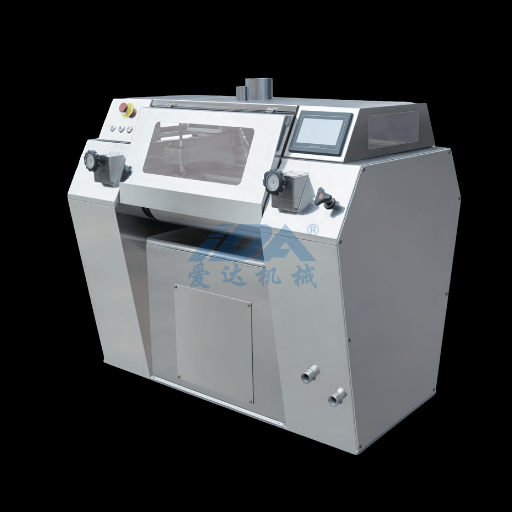
DYS Series Industrial Three Roll Mill
- Transmission
- Chain drive
- Rollers
- Water-cooled hollow
- Throughput
- High capacity
- Roller Sizes
- Multiple available
- Construction
- Heavy-duty cast
- Cooling
- Water cooling
Ideal for:
Large-scale paint, coating, and pigment production lines
Hydraulic
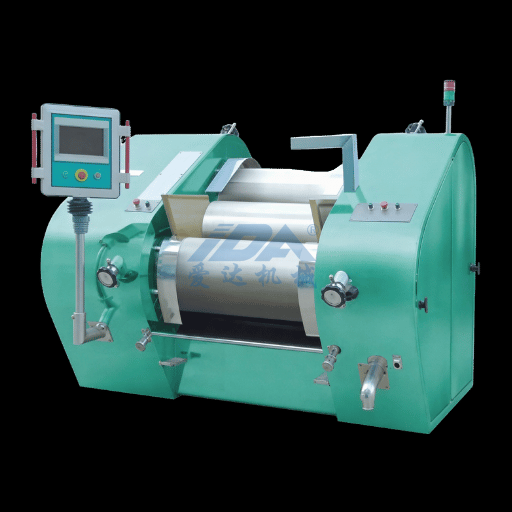
YS Series hydraulic Three Roll Mill
- Control System
- PLC automation
- Gap Adjustment
- Servo-controlled
- Speed Control
- VFD
- Max Viscosity
- 2,000,000 mPas
- Output vs Conv.
- 3× higher
- Cooling
- Water cooling
Ideal for:
High-precision automated production, electronic paste, advanced coatings
Hydraulic
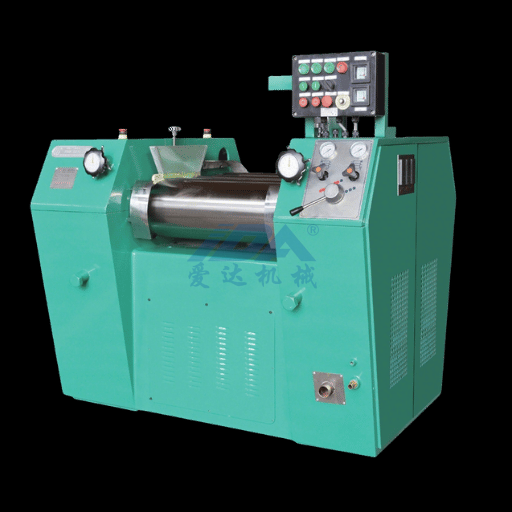
YSP Series hydraulic Three Roll Mill
- Control System
- PLC automation
- Gap Adjustment
- Servo-controlled
- Speed Control
- VFD
- Max Viscosity
- 2,000,000 mPas
- Output vs Conv.
- 3× higher
- Cooling
- Water cooling
Ideal for:
High-precision automated production, electronic paste, advanced coatings
Applications & Industries
In every industry where the degree of particle sizing, dispersion uniformity, and batch consistency are critical, the three roll mill has a direct impact on processing operations.
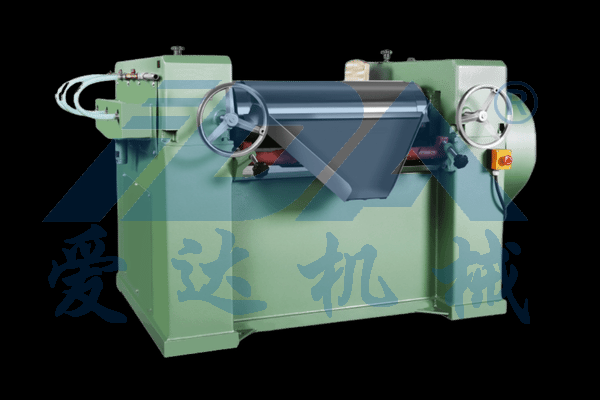
Three Roll Mill for Pigment Grinding & Paint
In paint and coating manufacturing, the three roll mill provides state-of-the-art pigment dispersion technology. Pigments such as titanium dioxide, carbon black, iron oxide, organic colorants, and dyes must be broken down into de-agglomerated particles before they will provide adhesion, opacity, and vibrancy. In practice, the three roll mill is used to produce identical dispersions each batch, utilizing specific nip gap settings and shear force to stress the particle de-agglomeration process. These mill bases are then used as the primer ingredients for the coat or the final colorants. Pigment dispersion quality is key to the coating consistency of color tone, pigment development, and gloss of the finished product. As pigment dispersion quality greatly influences product quality, established paint manufacturers will seek D90 particle sizes below 15μm in their paint film. IDA-built mills are run once during the experimental stage. Operators monitor the color walk during the compounding phase, passing the material during the initial set-up to check the milling process, then during production engineers measure the developing color in each batch to prevent batch-to-batch variation.
Inquire Solution
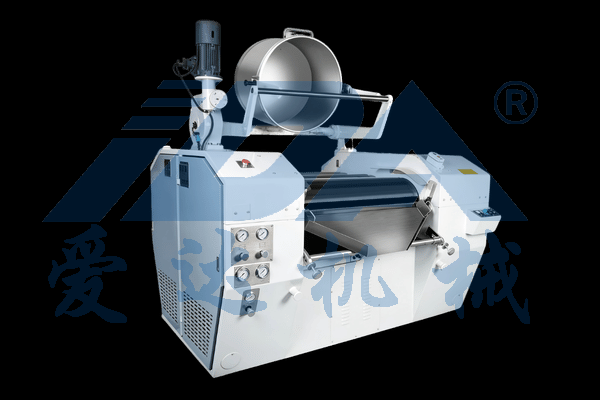
Three Roll Mill for Cosmetics & Pharmaceutical
Ensure both particle size and contamination-free product in cosmetic manufacturing through the reliable de-agglomeration capacity of the ceramic three roll mill, regardless of viscosity. Lipstick, liquid foundation, sunscreen, eye shadow, and skin care products all require smoothly homogeneous textures that only exist when particles are thoroughly de-agglomerated below 5μm. When producing pharmaceuticals, reduction of API particles size through the milling process maintains an even drug location onto the patches. A fully ceramic roller assembly prevents metal contamination (does pass a magnet between runs). When outsourcing the mill batch production, simple roller wipe-down procedures can be implemented between treatments to control cross-contamination without the added expense of traditional batch cleaning involving roller dismantling.
Inquire Solution
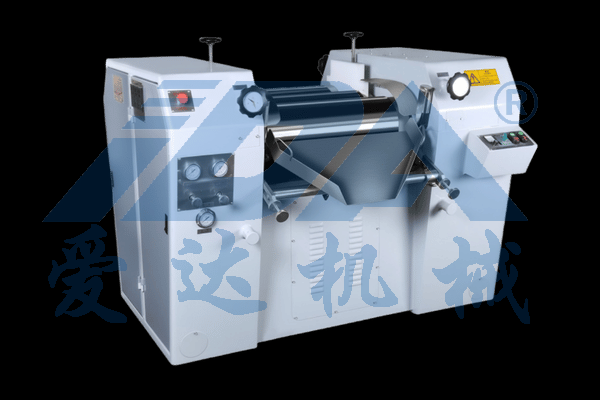
Electronic Paste & Photovoltaic Silver Paste
Electronics is one of the most rigorous applications for three roll mills. Conductive silver paste used in photovoltaic solar cell manufacture needs particle sizes below 3μm as measured on their D50 with extra tight distribution control. Solder paste, battery electrode slurry and thick-film technology pastes all require this level of particle dispersion. IDA’s hydraulically driven three roll mill with PLC automation and servo-driven gap setting is ideally suited to these applications where batch to batch reproducibility directly translates into electrical conductivity and device performance. Even minute inconsistencies in particle size dispersion can cause print defects, adhesion failures or conductivity drops in finished electronic components. Water-cooling during processing avoids heat buildup which could affect paste viscosity and rheology or degrade heat sensitive binder systems.
Inquire Solution
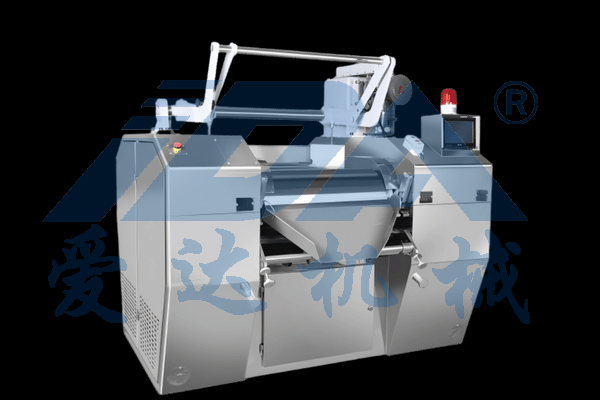
Ink, Adhesive & Nanomaterial Dispersion
Screen print ink, UV ink, offset ink and specialty adhesives comprise another large segment of three roll mill applications. Ink manufacture requires very tight pigment dispersion to give consistent color depth and a predictable shelf life. Adhesive makers use three roll mills to uniformly disperse filler particles in high-viscosity coating and adhesion systems. They are now using three roll mills for nanomaterial applications such as dispersing carbon nanotubes (CNT), and graphene nanoplatelets into polymers or functional coatings. Controlled shear force environment allows for nanomaterial exfoliation and even dispersion without excess heat buildup which degrades nanostructures in high-energy bead mills. Both oil-based and water-based formulations are efficiently handled, and the applied speed and nip gap adjustment settings can maximize shear force for each formulation.
Inquire Solution
Case Studies — Real-World Results
Of course these three case studies, will show how IDA three roll mills solve genuine production problems from all industries. Each story below features special points of the performance quoted with data from our customer’s production site.
Photovoltaic Silver Paste Production — Achieving Sub-3μm Consistency
The problem: A solar cell producer based in South-East Asia faced a persistent problem with the particle size of a silver paste it was using on a ball mill process. Their D50 particle size (measured in 3μm) turned out to be 8.2μm with a very unpredictable spread. This was causing line breakage when screen-printing, so the efficiency of solar cells was affected. Rejection from their existing process ran about 12% and their paste producer’s quality specifications asked for their product to contain D50 below 3μm.
Solution: They tested the silver paste sample on IDA’s laboratory centers. They adopted a silver paste two-stage grinding process, the first using IDA’s small production ES120 three roll mill followed by the final grinding on a Hydraulic three roll mill connected to a PLC (that automatically adjusted the gap to 2μm). Servo-driven features adjusted parameters to get the best batch-to-batch reproducibility.
“The combination of our ES120 three roll mill for dispersion, then the final finishing in the hydraulic three roll mill gave us a reproducible value that we couldn’t get using our ball mill, our rejection rates dropped from 12% to close to 2%” — Production Manager, Solar Cell Manufacturing Plant, Vietnam
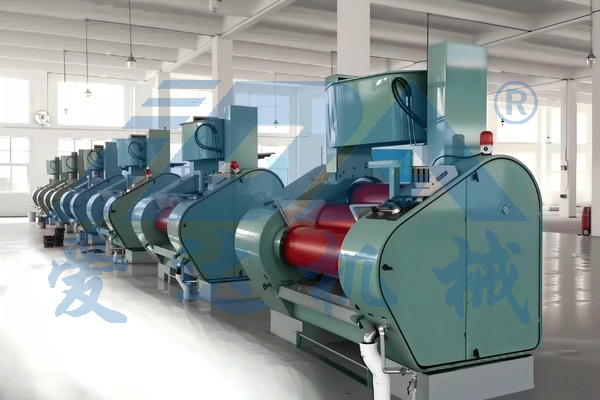
Cosmetic Foundation Line — Zero Metal Contamination with Ceramic Rollers
When a European cosmetic company was about to put a new premium liquid foundation product on the market, the formulation team ran into an immediate problem. They found out that they had excessively high levels of metal contamination (trace levels of metal particles showing up in the finished foundation). Their old roller mill with alloy steel rollers was leaving particles of metal in the product.
What they also found out was the new Rouge Liquid Foundation needed a process with zero contamination as very strict heavy metal testing according to EU regulation was introduced and had to be passed.
The brand’s R&D department sent foundation samples to IDA’s trial lab in Jiangyin. After testing the ceramic zirconia IDS50 and IDS80 three roll mills, the results were conclusive: as predicted, 1:3:9 speed ratio on the IDS80 achieved the fine-particle target of < 5 microns in just 3 passes, while it took 5 passes on the IDS50. Even more significantly, the (metal-free) zirconia ceramic rollers resulted in a zero metal contribution in ICP-MS testing, significantly below all EU legislation limits.
After testing, the brand set up to use the IDS80 in their plant just outside of Lyon. They had the capacity to produce the amount they wanted at 50 kg per batch (3 passes) with the luxury of an ultra-smooth mouth-coating texture demanded by their elite consumers. Easy clean rollers meant that they could change from one color shade to another in less than 15 minutes, compared to 45 minutes in their previous enclosed grinding system. Only a year in to the production and the foundation line was their fastest growing product line!
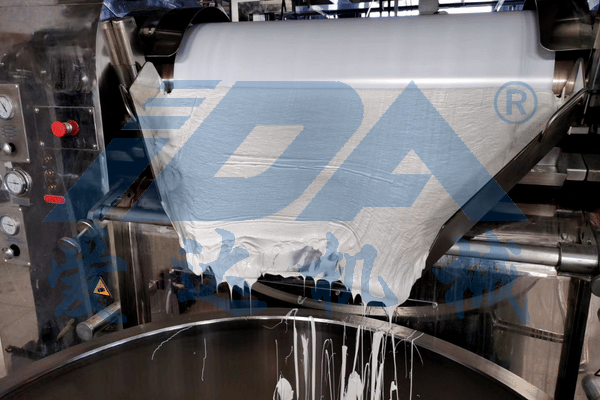
Industrial Pigment Grinding — Ball Mill to Three Roll Mill Conversion
A South American paint manufacturer grinding titanium dioxide pigment for architectural paints sought to look at an alternative to their aging ball mill system. Here is what happened when they moved to the IS Series industrial three roll mill:
Before — Ball Mill
- Inconsistent particle distribution
- 2-hour batch processing time
- D90 varied between 18–25μm
- Grinding media contamination
- High energy consumption per batch
- Difficult to clean between colors
After — IS Series
- Consistent, repeatable distribution
- 45-minute batch cycle
- D90 consistently below 15μm
- Zero media contamination
- Lower energy cost per kg
- 15-minute color changeover
In the end, the sum of effects from shorter cycle, lower rejects and reduced power consumption per batch of pigment grinding, generated complete return on investment in 8 months. Production staff also saw an improvement in batch to batch color matching, with less customer complaints.
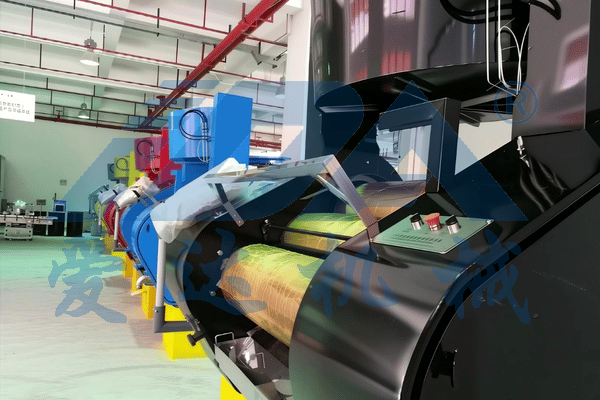
Three Roll Mill vs Ball Mill vs Bead Mill
Selecting the appropriate milling technology is a function of your material viscosity, desired particle size, throughput constraints and level of contamination you can accept. This data-based comparison summarizes the important performance considerations of all three grinding technologies.
| Feature | Three Roll Mill | Ball Mill | Bead Mill |
|---|---|---|---|
| Fineness Range | 1–20 μm (≤5 μm typical) | 5–50 μm | 0.1–10 μm |
| Viscosity Handling | Up to 2,000,000 mPas | Up to 50,000 mPas | Up to 30,000 mPas |
| Throughput | Medium (batch process) | Low–Medium | High (continuous) |
| Contamination Risk | Very low (no media) | High (grinding media wear) | Medium (bead wear) |
| Cleaning Time | 5–15 minutes | 30–60 minutes | 20–40 minutes |
| Energy Efficiency | High | Low | Medium |
| Best For | High-viscosity pastes, pigments, cosmetics, electronic paste | Coarse grinding, mineral processing, ceramics | Low-viscosity suspensions, nano dispersion, inks |
| Limitations | Lower throughput than continuous bead mills; requires operator skill for manual models | Cannot handle high viscosity; slow; high contamination | Clogs with high viscosity; bead separation issues; higher maintenance |
Industry Insight
“If you’re processing anything above 100,000 mPas, a three roll mill is really your only practical option. Ball mills can’t handle that viscosity, and bead mills will clog. For thinner materials under 1,000 mPas, bead mills give you faster throughput. Where the three roll mill truly shines is in the 10,000–2,000,000 mPas range, especially when you need quick color changes or zero media contamination. Many of our customers in paint and cosmetics actually run both — a bead mill for high-volume base grinds and a three roll mill for final dispersion and premium-quality products.”
Why Choose IDA
IDA Three Roll Mill Advantages
The combination of engineering excellence and application expertise results in a grinding performance that is second to none.
Reproducible Results
The digital recipe storage and PLC control allow for uniform quality from one batch to the next. Grind and recall parameters to get perfect reproducibility.
Touch Screen Interface
The easy-to-use graphical interface shows the real-time gap spacing, pressure, and roller speeds. Operators can quickly learn and monitor operations.
Variable Frequency Drive
The ability to change roller speeds makes it possible to work with materials of different rheological properties. Adjust grinding parameters for optimal dispersion.
Three Working Modes
Easily switch between mixing, grinding, and cleaning modes. In cleaning mode, the reverse function ensures thorough and safe equipment cleaning.
Safety First Design
Emergency stop instantly opens rollers to maximum position. Electrical and mechanical overload protection meets international safety standards.
Rapid Delivery
Quick shipment with standard models in stock. Custom configurations available with competitive lead times. Global shipping to over 50 countries.
Certifications, Safety & Quality Standards
All IDA three roll mills are designed, manufactured, and tested to the highest international safety and quality standards.
CE Certification
Full CE compliance to satisfy European market standards, including machinery safety and electromagnetic compatibility directives.
ANSI Compliance
Electrical design and safeguards provided to comply with ANSI/NFPA 79 (Standard for Electrical/Electronic/Electromechanical Safety for Industrial Machinery) requirements.
Emergency Stop Systems
All models have a prominent emergency stop button, safety interlocks and guards around the operator.
IEC 60204-1
All three roll mills’ electrical equipment conforms to IEC 60204-1, the international standard for safety of machinery electrical equipment.
Three Roll Mill Price Guide — Factors & Ranges
Price Factors: Roller Size, Material & Automation Level
Roller Diameter
Cost driver. A laboratory 50mm three roll mill is only a small fraction of the cost of the 400mm+ machines used in industry. Larger rollers dictate larger frame sizes, larger motors and much finer machining processes; all of which contribute to the cost increase.
Roller Material
Alloy Steel rollers are the cheapest solution for most industrial applications. SiC rollers at a small additional cost provide a significant increase in wear resistance. ZrO2 ceramic is the most expensive solution but does not introduce metal contamination – necessary for cosmetics, pharmaceutical and electronic paste.
Automation Level
Lowest priced are manual three roll mills (hand-wheel gap adjustment). Next up, non-stop automatic three roll mills with motorized gap control are also available. Hydraulic models with PLC automated processing, servo gap control, and recipe memory sit at the top of the price range due to their premium build quality.
Cooling & Controls
Cooling water can be an added expense, but is required for temperature sensitive materials, or extensive production runs. VFD speed control, digital gap readouts or PLC interface are further options to increase capability and cost.
Quote Triggers: Match the Mill to Your Material
For an accurate three roll mill quote, send your material, viscosity, target fineness, batch volume, roller material preference, and whether the line requires manual, hydraulic, or PLC-controlled gap adjustment.
| Buyer Need | Recommended Direction | Quote Trigger |
|---|---|---|
| Lab testing / formulation | ES50 or small lab model | Small batch size, material trial, R&D use |
| Pilot production | ES80 / ES120 direction | Scale-up from lab to repeatable batches |
| Industrial production | Hydraulic or PLC-controlled model | Higher throughput, stable gap control, cooling demand |
| Contamination-sensitive material | Ceramic roller configuration | Cosmetics, pharma, electronic paste, silver paste |
| High-viscosity dispersion | Hydraulic pressure / controlled gap setup | Paste, pigment, ink, adhesive, ointment |
Engineering Utility Hub
Precision tools designed for Three Roll Mill optimization, planning, and maintenance.
Conversion
Viscosity Unit Converter
Instantly convert cPs, Pa·s, and Poise with integrated TRM suitability markers.
Access Tool →
Configuration
Roller Material Selector
Select ideal materials (Zirconium, Alumina) based on chemical resistance needs.
Start Selection →
Production
Throughput Calculator
Estimate hourly output capacity based on roller speed, size, and viscosity.
Calculate Now →
Maintenance
Cooling Water Calculator
Compute flow rates and chiller sizing for optimal temperature control.
Size System →
Frequently Asked Questions
Shear stress developed between the rollers which are rolling at different rates literally tears agglomerates to bits. Material is fed to the nip between the feed roll and center roll, then passed across to the second nip between the center and apron roll where the increased shear rate breaks up the dispersion finer still. Gap widths can be gradually reduced after every pass. Three to five passes will usually yield a fineness of <5μm. Operators typically use a grind gauge after each pass to track progress and decide when to tighten the gap further.
IDA three roll mills achieve 1-20μm depending on model, material, passes, and gap adjustment. Typical high-end pigmented pastes reach below 10μm within 2-3 passes. Electronic silver paste and cosmetic skin foundation reach below 5μm within 3-5 passes. Gap adjustment ranges from 20μm down to 1μm. Results are assured by ASTM D1210 grind gauge testing, laser particle size measuring, etc.
The three roller material choice is offered by IDA to suit need: commonly manufacture alloy steel (precision ground, hardened), the most inexpensive and used industrially for the paint, ink, glue industry where some mild contact is accessible; better is SiC for wear resistance in abrasives, ceramic or mineral pigment processing; best is zirconia ceramic used for zero contamination required for applied cosmetic, pharma, food, electronics where any contamination must be documented and verified and tested for. Ceramic are more expensive but certifying to regulations for quality permits less cost on contamination test.
Think these four points: (1) Batch volume- 50mm for R&D, 80-120mm if Pilot/Demo or Small batch, IS or Hydraulic if industrial; (2) viscosity of medium- any material up to 2 million mPas can be processed; (3) particle size desired- IDA can provide sub-5μm; (4) suitability of product contamination concern- ZrO2 Ceramics for cosmetics, pharma, electronics, and food; alloy steel for paint, ink, or adhesive contact materials. IDA will provide free test with sample. Provide batch size, viscosity, and subject product to receive data.
Pricing depends on roller diameter, roller material, automation level, cooling design, and application sensitivity. For a factory-direct quote, send your batch volume, viscosity, target fineness, and material type so IDA can recommend a lab, pilot, or production model.
Yes. IDA offers free testing of your material at its Jiangyin lab center. Send in a sample and IDA grinding engineers will operate the selected mill model, run grinding trial, determine optimum gap, speed, and passes, and ship back the processed result with a corresponding analysis report. Expect a 5-7 business day turn-around.
IDA provides a 2-year full warranty on rollers, drive, and electrical motors. You also get 24-hour response technical support, no-cost remote video troubleshooting, free lifetime technical consultation, roller and knife blade spare parts from a central warehouse, and fast 5-working-day worldwide spares shipment.
Daily: wash and wipe roller surface and knife blade, then dry; look for scoring and surface damage. Weekly: check gap setting, knife blade edge sharpness and alignment, cooling water levels, and belt tensions. Monthly: inspect bearings and check lubrication. Quarterly: measure roller wear with a micrometer and compare against factory specifications. Also test emergency stop buttons, safety interlocks, and bearing cooling lines each quarter.
Keeping a written maintenance log helps catch wear patterns early and prevents unexpected downtime. One thing many operators overlook is knife blade replacement — a dull blade leaves streaks in the paste and reduces collection efficiency. Proper roller alignment should also be verified after any roller replacement — even a 0.02mm misalignment shows up in the product.