
Get in Touch with IDA

Quick Specs: Chemical Reactors at a Glance
| Operating Temperature | −²0 °C to ³50 °C (jacketed vessels); up to 900 °C (tubular/petrochemical) |
| Operating Pressure | Atmospheric to ³00 bar (high-pressure catalytic reactors) |
| Vessel Volume | 1 L (laboratory) to 100,000+ L (industrial production) |
| Common Materials | SS304, SS316L, Hastelloy C-²76, glass-lined carbon steel |
| Key Standards | ASME BPVC Section VIII Div 1, PED ²014/68/EU, ATEX (hazardous areas) |
In any chemical process, the chemical reactor is by far the most important piece of equipment. It is the vessel in which raw materials are transformed by a controlled chemical reaction into the product of interest, with everything else in the plant, from heat e×changers to separation columns, e×isting solely to serve this task. This paper discusses common chemical reactor types, including their construction and typical operation, and gives a simple mechanism to choose an appropriate type of reactor for your process.
What Is a Chemical Reactor and Why Does It Matter?
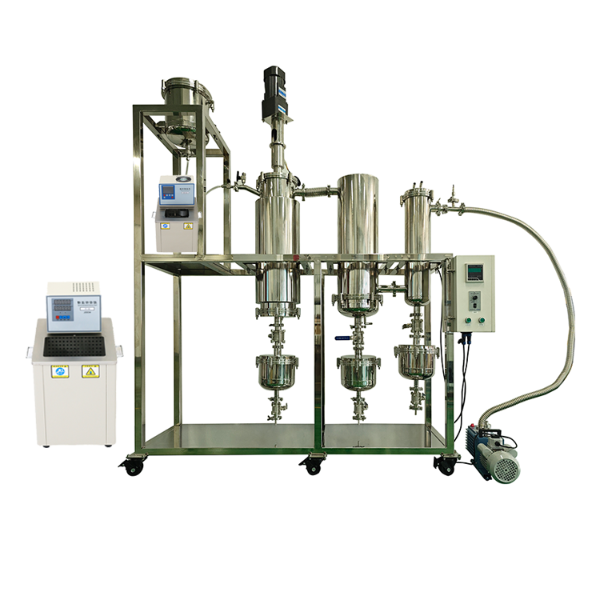
In chemical engineering, a chemical reactor is a vessel, floor or enclosure in which chemical reactions take place under controlled conditions of temperature, pressure and concentration and over a specified residence time, converting raw materials or ‘reactants’ into some desired product.
Chemical reactors are a major focus of chemical engineering because the details of their design, construction and operation effect the safety, economy, fle×ibility and energy efficiency of every single chemical process. A poorly conceived reactor design is wasteful, difficult to operate and potentially dangerous; a good design enables an efficient, highly profitable process that can be run safely within the bounds of environmental legislation.
Globally, the market for chemical reactors (excluding fittings, instruments, controls etc.) was worth c. USD711.63million in 2025 and is forecast to reach c. USD951.89million by the end of the next decade. Growth is driven by is the rise in the market for specialty chemicals, battery technology and pharmaceutical manufacturing. Published figures from different sources show very wide variation – from c. USD700million for just vessel sales to several billion dollars for complete packaged reactor systems incorporating pipe work, automation, instrumentation and other ancillary equipment; buyer be warned! Always check whether ‘market size’ estimates relate to vessels alone, or the entire reactor ‘system’.
An ethylene o×ide manufacturing facility located on the U.S. Gulf Coast utilises a multi-tubular fi×ed bed catalyst injection reactor operating at ²50 °Celsius. Should a catalyst bed show signs of excessively hot spots, uneven flow distribution and a 15 degree temperature rise in the catalyst, a computerised control system intervenes and gradually reduces catalyst feed by 10%. This simple control prevents a potential runaway from occurring, protecting lives, the environment, and the investment. Output exceeds 200,000 tonnes/year of ethylene oxide, for which even a 2% gain in production can result in enormous profit.
Types of Chemical Reactors: Batch, CSTR, Plug Flow & Beyond
There are two basic operational modes for chemical reactors: batch, in which a discrete load of raw materials is fed into the vessel, run to completion, then emptied and prepared for the next load; and continuous, in which a steady flow of materials is continuously fed into and out of the vessel so that a stable state of operation is maintained. Within these broad categories there are many different types of chemical reactor which have different shapes, sizes and internal configurations. An understanding of these different types is a good starting point for matching a suitable reactor to your process.
What Are the Four Main Types of Chemical Reactors?
There are four categories of the most generally found reactors in a factory processing chemicals:
Batch reactor, Continuous Stirred Tank Reactors (CSTR), Tubular1 or Plug Flow Reactors (PFR), and Fluidized Bed Reactor. Batch Reactors provide the ability to process discrete “batches” of reactant with a full ability to control the residence time; CSTRs provide a steady state process with the input and output occurring at a matched rate, under steady state conditions, with a mixed reactor; plug flow (tubular) Reactors run the reactant through a tube without back-mixing producing a high rate of conversion from a predictable a gradient of concentration as you go along the tube; Fluidized Bed Reactors suspend the catalyst particles in a head of upwards moving hot go or liquid providing excellent heat transfer and bulk temperature control. Each type of reactor overcomes a different set of process constraints, the following table shows the engineering parameters.
| Reactor Type | Flow Mode | Typical Volume | Temp Range | Conversion | Primary Application |
|---|---|---|---|---|---|
| Batch Reactor | Discrete charge | 50–5,000 L | −20 to 250 °C | Variable (operator-controlled) | Pharma APIs, specialty chemicals, coatings |
| CSTR (Stirred Tank) | Continuous, perfect mixing | 100–100,000 L | 50–300 °C | 60–80 % per vessel (series cascades improve) | Polymerization, wastewater treatment |
| Plug Flow Reactor (Tubular) | Continuous, no back-mixing | 1–1,000 L effective | 200–900 °C | >90 % (single pass) | Petrochemical cracking, gas-phase reactions |
| Fluidized Bed Reactor | Continuous, particles suspended | 500–500,000 L | 400–700 °C | High (uniform temp eliminates hot spots) | Fluid catalytic cracking, combustion |
| Packed Bed (Fixed-Bed) | Continuous, gas through catalyst | 10–50,000 L | 150–600 °C | 85–95 % (Haber process) | Ammonia synthesis, methanol production |
| Semi-Batch Reactor | Hybrid (one reactant added gradually) | 50–10,000 L | −10 to 200 °C | High (controlled addition limits side reactions) | Exothermic reactions, emulsion polymerization |
Slides5 to see all columns on your mobile. Temperatures and volumes are representative of often-encountered industrial installations, custom designed reactors go outside of these ranges.
Batch reactors provide the increasing flexibility required for multi-product chemical plants, where changeover between chemicals is very frequent. Reactants are placed in the reactor, the desired reaction run at an adjustable and controlled residence time, temperature and other parameters; the finished batch2 is taken from the reactor. This process is used extensively in the pharmaceutical industry, where every API3 may be manufactured using a different set of solvents, temperatures, reaction times, and other parameters.
A CSTR reactor is operated at steady state, with a constant feed rate of reactant, and constant removal rate of product. Perfect-mixing ensures no temperature or concentration gradient is developed within the reactor, which provides an easier to control process with minimized equipment but limits single pass conversion, therefore multiple CSTRs are cascaded in series to get the same effect with high overall conversion whilst still operating at steady state.
Tubular4 reactors operate by pushing reactant through a long tube where the reactant concentration drops from a starting concentration at the inlet, through a grade to a very low concentration at the output. This is the minimum size step in reactor design, and the vast majority of petrochemical applications, such as steam-cracking hydrocarbons at 800 C, occur here. One trade-off is that with minimal feed switching or rerouting, this reactor type can only run once.
In either a packed or a fluidized-bed reactor the solid catalyst is used to bring and keep conditions suitable for the production in mind of the chemical steps to occur. in a packed bed5 each catalyst particlestays where they are placed while the reactant streams pass over the surface. I.e.: The Haber process for ammonia production is predominantly run using a packed bed under high pressure (150-300 bar ) and temperature 400-500 C. A fluidized-bed6 reactor suspends catalyst particles in a hot up of gases under high header velocities. The high velocities produces agitation which eradicates hot-spots and develops lateral heat conduction in addition to longitudinal.fluid catalytic cracking7 is the classical application of this type of reactor.
How Chemical Reactors Work: Reaction Kinetics & Process Control
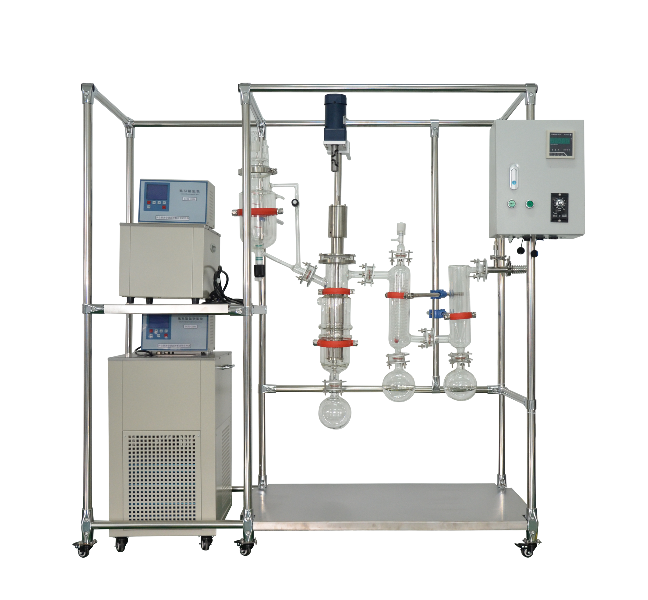
Ultimately, every chemical reactor is aimed at the creation and maintenance of condition to produce a desired chemical reaction at a specified rate of production, efficiency, and safety. These conditions include various combinations of temperature, pressure, concentration, mass flow rates, tubing geometry, residence time, and catalysts.
Reaction Kinetics and Residence Time
Reaction kinetics is the study of rate of chemical reaction. Factors affecting reaction rate include reactant concentration, temperature (via the Arrhenius equation- increasing temperature 10C will approximately double the rate), and presence of a catalyst. Residence time is the amount of time reactants stay in the reactor: for a continuous stirred tank reactor, residence time=volume rate of flow (V/Q) while in a plug flow reactor, residence time=length of tube/velocity of fluid. Increasing residence time generally increases conversion, but also leads to larger, less economical equipment.
Temperature Control and Heat Transfer
Temperature control is the most important factor in the design and operation of a chemical reactor. Endothermic reactions require input of heat, while exothermic reactions generate heat that must be removed to prevent runaway- a hazardous feedback loop where rising temperature accelerates the reaction, which generates more heat, raising temperature further.
📐 Engineering Note
Sizing of jacket heat transfer area can be determined from the equation A=Q/(UTlm), where A is heat transfer area, U is overall heat transfer coefficient, Tlm is the log-mean temperature difference between jacket and reactor contents in Kelvin, and Q is the heat transfer rate. Typical values of 150-500W/(mK) can be used as upper estimate for stainless steel vessels, while GMM Pfaudler technical data at 453W/(mK) were used for glass-lined reactor jackets with half-coil configuration.
A manufacturer of specialty adhesives attempted to cross-link epoxy resin in a 500L jacketed batch reactor. During the exothermic step, the heat generated was 10-20x greater than the heat that could be shed through the installed baffling and jacket external heat exchanger, causing temperature spikes 15C above the 80C setpoint. The completed batch gelled early, producing off-downstream product. Installing a redesigned jacket with additional baffling, and an external heat exchanger reduced temperature excursions to under 3C. The problem was not chemistry- it was heat transfer.
Mixing and Catalysis
Mixing ensures the even distribution of reactants, temperature, heat and catalysts. Operator error in impeller choice- Rushton turbine when low viscosity, or ribbon or anchor when high- lead to incomplete mixing and poor heat transfer. Dead zones of unreacted reactants, high temperatures near the vessel walls, and poor dispersion of gases all contribute to batch failure concerns asserted by processing plants much more than chemical incompatibility issues.
Catalytic reactors use catalysts to depress the required activation energy so reactions can be conducted at less extreme conditions. Fluids-solid catalysts are employed in most of the chemical industry- in the Grand Banks in the 1950s, reactor crushed catalyzed bitumen in a packed bed, while oil refinery FCC units use catalyzed char in a fluidized bed. Deactivation of catalysts requires ongoing management, including re-oxidization and loss management.
Process Control Systems Engineering
Today chemical reactors are fitted with process control systems, such as temperature sensors, pressure transmitters, flow meters and PID controllers, are used to make sure the conditions within the reactor are maintained to the desired setpoints. Safety interlocks (pressure relief valves, rupture discs, emergency shut down systems, rated to IEC61511 SIL standards), are the final safeguard against runaway reactions or vessel over pressure.
⚠️ Common Mistake
It’s common to underestimate the heat removal needed for exothermic reactions. For instance, an engineer may select a jacket area based solely on the steady state heat duty and overlook the initial transient heat spike; take that heat duty estimate to be at maximum reaction rate, rather than simply average rate.
Chemical Reactor Design: Materials, Heat Transfer & Scale-Up
Reactor design has traditionally focused on the process specification as translated into a vessel to contain the chemical reaction in a safe and efficient manner. Three key challenges in this translation are: choice of materials of construction; designing the heat transfer system; and scaling-up from the laboratory to production without performance loss.
Materials of Construction
| Material | Max Temp | Corrosion Resistance | Typical Use Case | Relative Cost |
|---|---|---|---|---|
| SS304 | ~300 °C | Moderate (not for chlorides) | General-purpose, non-corrosive media | 1× (baseline) |
| SS316L | ~350 °C | Good (chloride environments) | Pharmaceutical GMP, corrosive reactants | 1.3–1.5× |
| Hastelloy C-276 | ~1,000 °C | Excellent (strong acids, HCl, H2SO4) | Aggressive acid service, high-temp reactions | 5–8× |
| Glass-Lined Steel | ~230 °C | Excellent (most acids except HF) | Pharma purity, dyes, fine chemicals | 2–3× |
There is also a material consideration; what the chemical process is, i.e. which reactants and which products will be in contact with the reactor wall, and for how long and at what temperature. For benign media the default material is SS304, up to 10-20% can be added to improve corrosion resistance. SS316L is similar but has molybdenum added to provide chloride resistant properties and is viewed as the medical/ pharmaceutical standard.
In the most corrosive of conditions Hastelloy C-276 is the 5-8 times more expensive, corrosion resistant alternative to stainless steel. Glass lined reactors would be used as an inert barrier between the corrosive reactants and the other stages, but glass can also suffer from thermal shock where rapid temperature changes crack its coating.
Scale-Up: Why Bigger Is Not Just Larger
Scale-up is where plant design becomes real problem. One main difficulty is that most important parameters are not directly scalable on vessel size. For example, as vessel size increase ratio between its surface area and volume falls and heat transfer capacity of a large reactor drop while ratio of volume remains the same.
In a 50L lab reactor surface to volume ration might be 20m/m but in 5000L application it is below 5m/m.
A graphene dispersion start-up scales out from a 50L lab reactor to a 1,000L facility. With a 50L size, the high speed disperser results in a well, even particle dispersion at 2,880rpm. Running the 1,000L at that same rpm shears the graphene into pieces rather than sheets.
The engineering team, doing batch operations for the first time, works their way back down based on equal tip speed (not rpm), drops to 960rpm on the larger impeller, and gets the target particle distribution within 5%. As process engineers on Reddit semposts “Most challenges at scale are actually physical- fluid mechanics, process control, reactor design- even catalyst design poses more problems than the chemistry itself.”
Scale-up isn’t just about enlarging the vessel. The relationships between mixing intensity, heat removal and mass transfer all change at each scale. Engineer that don’t Pilot scale test are effectively writing a party to gamble with product quality and plant safety.
— Thomas Post, “Understand the Real World of Mixing,” Chemical Engineering Progress (AIChE)
A standard “scale-up” method calls for constant tip speed (impeller tip velocity = diameter rpm), rather than constant rpm, a variable power per volume ( P / V) and qualification at an intermediate pilot scale prior to production. The American Society of Mechanical Engineers (ASME) BPVC Section VIII Division 1 rules specify the design rules for pressure vessels used in chemical reactors throughout the US and much of the rest of the world; Europe has the Pressure Equipment Directive (PED 2014/68/EU).
How to Select the Right Chemical Reactor for Your Process
Reactor selection is an engineering decision, not a catalog exercise. Volume alone does not determine which type of reactor to use – you must think about how the reaction behaves, what phases are involved and what your facility limitations are. We propose five questions that help you make the decision in a logical manner:
The Five-Question Reactor Selection Framework
- Batch or continuous? – Usually batch under 10tonnes/year. A continuous process is usually favoured over 100tonnes/year. 10-100 tonnes/year consider both.
- What phases do you have? – Liquid-liquid CSTR or batch. Gas-liquid bubble column, trickle-bed reactor. Gas-solid with catalyst packed bed or fluidized bed reactor.
- How much heat? – Mildly exothermic jacket cooling. Strongly exothermic jacket plus external heat exchanger. Endothermic fired heater or hot oil system.
- What viscosity range? – Under 1,000cP standard impeller (Rushton turbine). 1,000-100,000c P anchor or helical ribbon. Over 100,000c P multi-shaft chemical reactor or double planetary mixer.
- What standards affect your design? – Pharmaceutical, glass-lined or 316L, all with complete documentation. Food grade 316L, CIP processing. Petrochemical, ASME Section VIII, +ATEX for hazardous areas.
This is a simple framework because each question rules out reactor families rather than specific designs. When all 5 questions are answered, the select few remaining design types are generally 2 or less of which to choose. From there, volume, heat transfer area and impeller power calculations are just ordinary engineering problems.
| Scenario | Recommended Reactor | Why |
|---|---|---|
| Paint manufacturing (50,000+ cP paste) | Multi-shaft batch reactor with high-speed disperser | High viscosity requires dual mixing (low-speed sweep + high-speed dispersion) |
| Continuous polymer production | CSTR cascade (2–3 in series) | Steady-state operation; series cascade raises total conversion above 95 % |
| Pharmaceutical API synthesis (GMP) | Glass-lined batch reactor, 100–500 L | Chemical inertness, easy cleaning, full batch traceability for regulatory compliance |
⚠️ Common Mistake
Choosing a reactor just on volume capacity while ignoring viscosity and heat load. A 1,000L vessel with a standard impeller will not mix a 50,000c P adhesive formulation – a multi-shaft design will be necessary to provide dispersion and wall scrapers. For volume, viscosity and heat load; what reactors you need not what volume you need.
Chemical Reactor Applications Across Industries
Chemical reactors are used across all areas of industry – from high volume, simple batch reactors in oil refineries to low volume, sophisticated pharmaceutical reactors. Reactor type, materials of construction and level of automation differ industry by industry but the engineering principles do not.
| Industry | Dominant Reactor Type | Key Challenge |
|---|---|---|
| Petrochemical | Tubular (cracking), fluidized bed (FCC), packed bed (reforming) | Extreme temperatures (800 °C+), catalyst deactivation |
| Pharmaceutical | Glass-lined batch reactor (50–500 L) | GMP compliance, batch traceability, cleaning validation |
| Battery Materials | Multi-shaft batch reactor (50,000+ cP electrode slurry) | Ultra-high viscosity mixing, particle distribution uniformity |
| Coatings & Adhesives | Multi-shaft batch reactor with dispersion blade | Pigment wetting + resin reaction in single vessel |
| Food & Biotech | Bioreactor (stirred tank, airlift) | Sterile conditions, gentle mixing for cell cultures |
| Emerging: Flow Chemistry | Continuous flow microreactors | Miniaturization, rapid heat transfer, pharma continuous manufacturing |
In the battery materials industry, electrode slurry mixing has some specific reactor challenges. Cathode and anode pastes occasionally have viscosities in excess of 50,000c P and are a very abrasive slurry with dopant and polymer additives that must be dispersed and transferred without over-shearing the system. Multi-shaft batch reactors with combined low-speed wall scraping and high-speed dispersion have been the standard in battery slurry production lines. Paint production lines and adhesive production lines are similar in that they rely on reactor vessels capable of handling both pigment dispersion and subsequent chemical reaction in one vessel.
How Are Chemical Reactors Used in Pharmaceutical Manufacturing?
Pharmaceutical reactors are typically batch units because each API has its own specific solvent requirements, temperature range and reaction sequence. Glass-lined reactors are the standard because the glass surface acts against contamination and is relatively easy to validate for cleaning between batches (GMP process). Typical vessel sizes are in the range of 50-500L as opposed to Petrochemical equipment which can be enormous in the order of thousands of m³ (compare the 1,100m³ Junglevia natural gas reformer to the 48m^3 largest dedicated pharmaceutical reactor, use 3D Excel chart). An increasing fraction of the pharmaceutical chemical processing industry is adopting flow chemistry reactors as a route to higher throughput of lower volume synthetic batch products (>40L but typically <3000L). Microreactors remove mass transfer limitations to achieve more rapid heat transfer and increased productivity from specific reaction steps, and deliver the same product in a continuous flow process rather than a synthetic batch process.
💡 Key Takeaway
The reactor, of course, does not stand alone. It is typically part of a process flowsheet which incorporates upstream feed preperation and downstream separation. All factors should be considered when choosing a reactor, even if it means selecting more than one type.
Frequently Asked Questions About Chemical Reactors
Q: How does a chemical reactor work?
View Answer
A chemical reactor exists to provide a controlled set of conditions- a specific pressure, temperature, concentration, catalyst, etc – under which raw materials (reactants) undergo a chemical change to give one or more desired products. Reactants are loaded as a batch or a continuous feed into the reactor. Process control systems will maintain the ideal conditions throughout the course of the reaction process by means of heated/cooling jackets, variable amounts of agitator rpm, variable amounts of feed flow and heat removal rate etc. The process proceeds and the resulting products are discharged.
Q: What are chemical reactors made of?
View Answer
Common materials of construction include SS304 to general standards, SS316L which is able to take corrosive conditions or pharmaceutical standard requirements, Hastelloy C-276 for severely aggressive acid services, glass-lined carbon steel for pharmaceutical standards.Choosing the right materials depends on chemistry and operating temperature conditions and cleaning cycle requirements.
Q: How are chemical reactors heated and cooled?
View Answer
By far the most common method is a jacket around the reactor vessel with heating or cooling fluid flowing through it. Heating fluids can be steam, hot oil or hot water, cooling fluids can be chilled water or glycol, For reactions with very high heat loads, a supplementary external heat exchanger can be used by means of a heat transfer coefficient equation A = Q / (U Tlm). For jacketed stainless vessels, overall heat transfer coefficients can average from 150-500 W/(mK).
Q: What is the difference between a batch reactor and a CSTR?
View Answer
Batch and continuously stirred tank reactor (CSTR) is whether the contents of the vessel are being continuously cycled through or whether the batch process is discrete. In batch operation, reactants are charged in, the reaction proceeds to give products, the vessel is emptied. In CSTR operation, reactants are continuously fed through to give a mixture of reactants and products flowing out unchanged for the batch duration. Batch processes will typically have a wider range of conditions within the vessel throughout the process cycle and be specialized per batch whereas CSTR processes will be maintained at steady state conditions.
Q: What safety systems do chemical reactors require?
View Answer
Essential reactor safety systems include pressure relief valves, rupture discs, emergency shutdown systems or redundant temperature/pressure/flow sensors with SIL-rated interlocks according to IEC 61511.
Q: How much does a chemical reactor cost?
View Answer
Reactor costs (excluding transport, piping, additional equipment) are: lab reactors (1-10L) cost $5,000-$30,000. Pilot reactors (50-200L) are valued between $30,000 and $150,000. Commercial scale reactors (500-2,000L) cost $80,000-$500,000 or higher.
Depending on materials used, this varies: glass-lined (most expensive)costs 2-3 times stainless steel; Hastelloy is 5-8 times stainless steel. The volume rating affects cost: higher pressure ratings, automation, and custom designs can each increase the total by 20-40%. These are vessel-only costs; the complete reactor system, with piping, controls, and start-up, generally doubles the equipment price.
Need a Chemical Reactor for Your Process?
IDa Equipment produces multi-shaft batch reactor systems from 50L through 2, 000L for paints, battery materials, inks and adhesives. Let us know what you need to do, and we can tell you our configuration.
About This Analysis
This was produced by the IDA Equipment engineering department, which since 2005 has been producing multi-shaft chemical reactor systems. We have been designing reactors for the paint & coating, battery and adhesive industry for 20 years and for 30+ countries and the originating context of this information is from the batch style multi-shaft reactors we produce. The scope of the following information covers all of the varieties of chemical reactors at all of the different scale ranges in order that an engineer or procurement team can make up their minds as to the correct choice no matter what equipment they eventually choose.
References & Sources
- ASME Boiler and Pressure Vessel Code (BPVC) — American Society of Mechanical Engineers
- Heat Transfer in Glass-Lined Jacketed Reactors — GMM Pfaudler
- Chemical Reactors Market Industry Analysis & Forecast — ReAnIn Research
- Jacketed Vessels — Thermal Design — Thermopedia
- Chemical Reactors — Essential Chemical Industry (York, UK)
- Understand the Real World of Mixing — Thomas Post, Chemical Engineering Progress (AIChE)
Related Articles
- What Is a High Speed Disperser? — Working principles and applications in chemical processing
- Industrial Mixing Equipment for Coatings — Reactor and mixer selection for paint manufacturers
- How to Choose the Right Mixer for High Viscosity Materials — Multi-shaft vs planetary vs sigma mixer comparison
- Optimizing Battery Slurry Production with Nano Bead Mills — Electrode slurry mixing and grinding workflow
Reviewed by IDA Equipment engineering team. IDA Equipment (Jiangyin, China) manufactures multi-shaft chemical reactor systems, high-speed dispersers, and wet grinding equipment for industrial chemical processing applications worldwide.