Get in Touch with IDA

Vacuum Triple Shaft Mixer: Complete Deaeration Mixing Solution

Contents
show
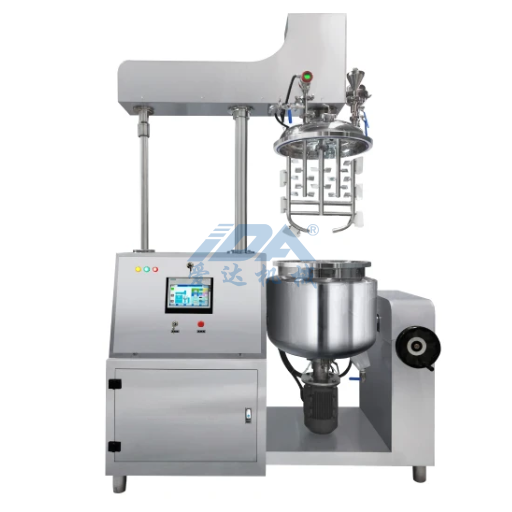
The Vacuum Triple Shaft Mixer is an absolutely peerless innovation for industries that need the highest standards in mixing-intensive processes. Designed for performance, this most recent mixing apparatus has its own in-built complete gas dehydration system, unlike many contemporary mixers. The Vacuum Triple Shaft Mixer gives whole homogeneity, and therefore no destruction and better quality, in applications of higher viscosity materials or fragile formulations.
Key Takeaway
This post goes over the salient features, advantages, and application tips onto the vacuum-triple mixing technology, telling of how that will transform your production processes. If you keep reading, you will come to understand that this particular choice is the most fitting of all for extraordinary mixing results that can be achieved.
Understanding the Vacuum Triple Shaft Mixer
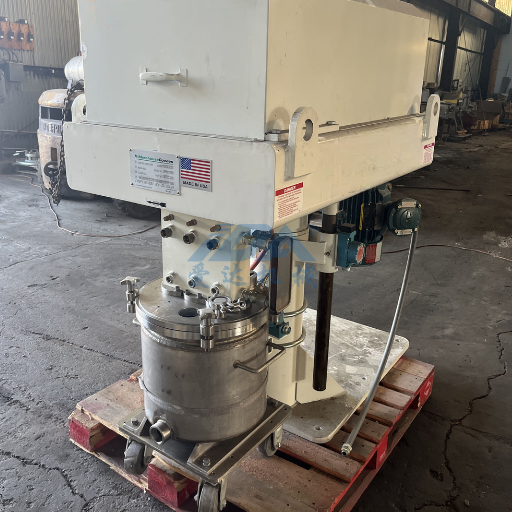
What is a Vacuum Triple Shaft Mixer?
A vacuum triple shaft mixer is a high-tech blending contrivance designed at operating an assortment of jobs, calling for perfect and effective admixture, emulsification, and homogenization. Particularly effective for handling the processes connected with highly viscous materials such as creams, paste, adhesives, imparting uniform mixing with uniform consistency. The equipment operates under vacuum conditions removing air and entraining bubbles that advance the quality of the finished product.
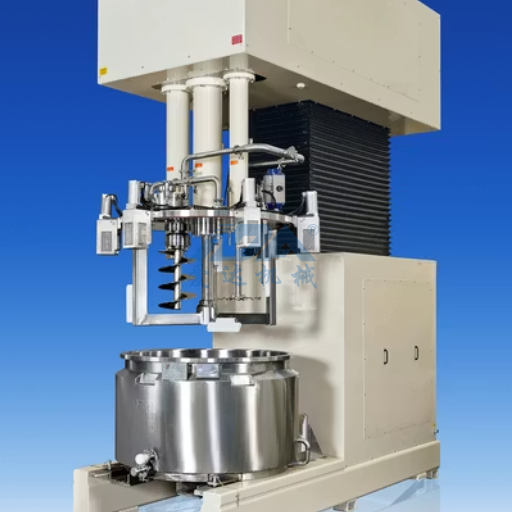
The mixer is equipped with three different stirring apparatuses including a high-speed disperser, low-speed agitator, and high-shear emulsifier. These shafts operate as an integrated component for several mixing activities ranging from gentle folding and blending to high shear cuts that are intended to break down the particles and create a smooth emulsification. The integrated application of these devices leads to thorough and quick mixing of the material irrespective of the properties of the material.
The triple vacuum shaft mixer stands apart due to its adaptability: it is frequently used in the cosmetics, pharmaceuticals, food, and chemical industry, wherever precision mixing and air-free formulation are vital. The vacuum environment further aids in product stability and prolongs the shelf-life of a product by effectively preventing oxidation and contamination. Completing the totally different environment, it always answers the needs of vital and determined industries.
Components of a Vacuum Triple Shaft Mixer
The vacuum three shaft mixer has three main mixing apparatuses working together at the best level for an optimum heat mixing process. They include high-speed, slow-speed and high-shearing rotatory-stator jet impulses. Hence these adjusted equipments have been best placed for the smooth and accurate mixing of most tough formulations.
- •
High-Speed Disperser: This is designed to rapidly break down and disperse solid particles within a liquid. This guarantees that the mixing action that takes place distributes particles over the three dimensions so that the materials are homogeneously and most effectively mixed. - •
Slow-Speed Anchor: The anchor is used to continuously move the bulk ingredient, halting the possibility of settling, with the main aim being complete mixing process. Scrapers attached to the anchor will automatically clean the inner walls of the mixing tank while at the same time increasing even temperatures and reducing wasted product. - •
High-Shear Rotor-Stator: High-shear rotor-stator emulsifiers are indispensable or fine emulsions and dissolutions; with their high-shear action, they ensure the smooth admixture of immiscible substances and generate stable emulsions.
Indeed, while on the strength of vacuum triple-shaft mixers, together, they ensure peak performance for the most demanding applications in various industries—batch after batch—performance and certainty are guaranteed.
How a Triple Shaft Mixer Operates
A triple shaft mixer functions by employing three mixing mechanisms designed to mix and process various materials efficiently. These mechanisms would be high shear, slow speed anchor, and disperser blades. Each of these provides a unique function and work in succession to handle materials with a wide range of viscosities and produce reasonably uniform mixtures.
The high shear force mainly performs most of the mixing operations like particle size breakdown, liquid emulsifying, and impurity homogenizing. Simultaneously, the anchor agitates the mixture at low speed to transport the flow, scrape the walls, and stop buildup of materials. The disperser blades are used for the mixing of solids such as powders or other such ingredients in the liquid and ensuring they are distributed evenly without maintaining a whisker load.
💡
Vacuum Integration
Under vacuum, mixers increase the effectiveness by also evacuating the air from the mixing chamber. This limits impingement, helps pack the ingredient particles more snugly, and results in smooth stable final products. Together, these triple-shaft mixers bring high versatility to accomplish myriad industrial processing applications: emulsions and dispersions to pastes and creams.
Applications of Vacuum Triple Shaft Mixers
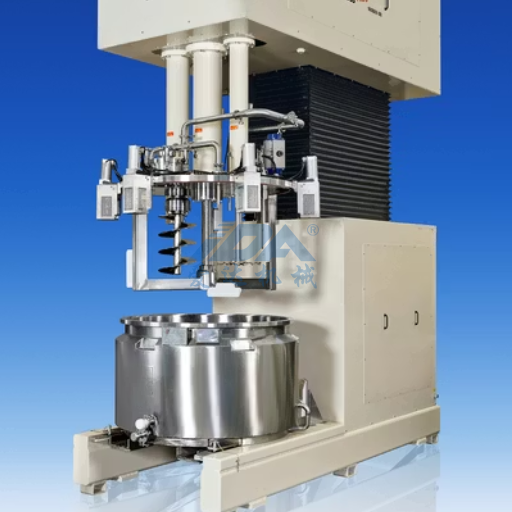
Industries Utilizing Vacuum Mixers
The vacuum triple-shaft mixers are extensively used in various industries since they handle complicated formulations and deliver consistent results. A great instance is the pharmaceutical industry, which uses these mixers for the manufacture of semi-solid ointments, creams, etc. The vacuum processing ensures an even mix and air-free applications, stable, excellent pharmaceutical products.
In the food and beverage sector, the food emulsions, sauces, and other viscous substances are prepared using vacuum mixers. The textures and consistencies are perceived to improve with some air incorporation and better ingredient blending when the vacuum is applied. This was proved to give batch-to-batch consistency, which is quite crucial for food production standards.
The comixers are also instrumental in the cosmetics and personal care industry, as they are often employed to make lotions, gels, and makeup requiring placing certain elements in powder, solution, or suspension. The vacuum actually keeps any contamination and oxidation away and is the secret to maintaining product stability and extending shelf life. Like the other two processing steps, the vacuum makes triple-shaft mixers all the more valuable in quality-conscious and consistency-centric industries.
Specific Applications in Chemical and Pharmaceutical Industries
While engaging in the production of quality products, the triple-shaft mixers play a critical role in the chemical and pharmaceutical industries. Because of their use in blending materials of different viscosities effectively, mixers should in fact produce a material that is consistent and reasonably uniform. Their capacity to handle viscous formulations while nonetheless mixing with precision renders these mixers indispensable in the manufacture of adhesives, sealants, and other chemical compositions that require uniformity.
In the pharmaceutical industry, triple-shaft mixers play a crucial role in the development of creams, ointments, and liquid medications. Their versatile design provides them the capability to delicately incorporate both the active ingredient and excipient, while vacuum operation ensures a sterile product free of any contamination. By properly blending the mixtures, the mixers contribute directly to efficacy and quality in the final pharmaceutical formulations.
The triple-shaft mixer is a technique that is well performed at the speedy procurement of raw materials without chancing drawbacks to its valuable ingredients. Due to these attributes, the efficiency promotes more dimensional capability for speedier processing to shorten development time when dealing with complicated formulations, therefore enabling the product to meet a higher demand in no time. The credibility on high quality stakeholders continues to be held in compliance with stern regulations to assure product safety and reliability. It finds wide application in acidic and other hazardous chemicals due to their high viscosity and in the pharmaceutical industry as a multipurpose processing tool.
Technical Specifications and Features

Key Features of the Vacuum Triple Shaft Mixer
- ✓
Versatile Mixing Functions: The triple narrow vacuum mixer can accommodate a broad range of tasks, including blending, dispersion, and emulsification. - ✓
Advanced Vacuum Technology: Ejects air trapped during the process for a denser and more stable final product. - ✓
Efficiency and Scalability: Three mixing processes shorten batch time and offer many production configuration options. - ✓
Sturdy Construction: Composed of highly durable, corrosion-resistant materials for harsh working environments.
Performance Metrics: Viscosity and Mixing Efficiency
A Triple Shaft Vacuum Mixer is well known for its ability to handle various viscosities which lends itself for any type of production requirement. The particular design of a multi-shaft incorporates mixing elements specially developed for high and low shear processes; hence, the machine will perform efficient blending of different texture ingredients at the same time. This adaptability, in return, ensures uniform texture and homogeneity even at high viscosities.
Meanwhile, the mixing efficiency is further achieved by the vacuum operation that removes air pockets and thus reduces contamination in the mixing process. The three mechanically complementary shafts optimize mixing dynamics for the product while minimizing mixing time.
These capabilities therefore make the Vacuum Triple Shaft Mixer an intriguing option to consider as a solution to challenging manufacturing environments. The upheld capability of dealing with and manipulating variable viscosities and high operational effeciency results in impeccable product quality and higher throughputs. While remaining reliable under difficult operating conditions, these machines help to instigate steadfast production outputs.
Specifications of the Myers Tri Shaft Vacuum Mixer
Myers Tri Shaft Vacuum Mixer is designed for the treatment of a wide range of viscosities and this requires certain complicated mixing actions: high speed dispersing, helical sweep agitating, and high shear rotor/stator action for all around blending. It is provided with the exotic combination of these sophisticated techniques for the assuredly combined mixing principles of high and low viscosity products while maintaining uniformity and constancy for the entire process.
This series of mixers with vacuum-sealed environment assures product quality, suppressing the trapping of air inclusions during mixing for uniform texture: thus, no burden of product contamination comes into affect—a typical sought out feature for sectors like pharmaceuticals and cosmetics as well as adhesives and sealants. The vacuum system in this kind of portable plant allows for sustained process under a controlled atmosphere enabling the mixer to handle, where critical formulations require certain isolated environmental cleanliness.
And that too is made out of top-quality materials. The construction is directed towards ensuring that the device is corrosion-resistant and has a long service life. The vacuum mixer also integrates user-friendly controls enabling fine-tuning of speed and timing during operation. These specifications, along with their efficient design, make this a versatile tool toward improvements in production functions across a variety of industries.
Benefits of Using Vacuum Triple Shaft Mixers
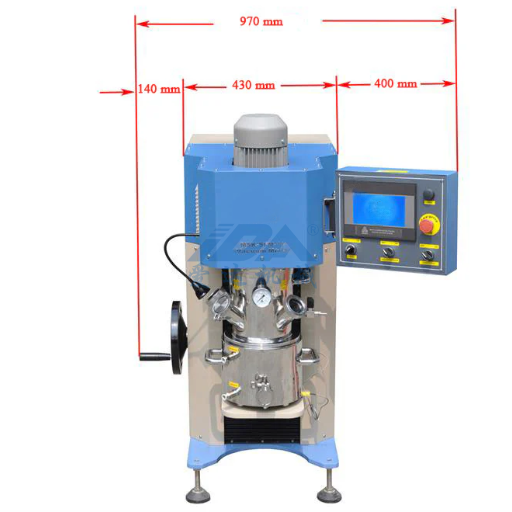
Advantages of Deaeration in Mixing Processes
Deaeration in mixing procedures presents various advantages mostly in improving the quality of the final product and assuring homogeneous results resulting in good outcomes. Elimination of oxygen from the mixture reduces the risk of air pockets and bubbles forming, and these divisions may deteriorate the integrity, texture, and performance of various materials; the requirements are much more stringent in sectors such as pharmaceuticals, adhesives, and coatings.
Improving the mechanical properties of these compositions is another advantage of deaeration, unrelated to the surface effects. The total removal of air ensures a denser, highly homogeneous mixture that strengthens and hardens a resulting mold more thoroughly. In the absence of an air exposure to air, oxidation was greatly reduced to preserve the chemical stability of formulations with occasional sensitivity.
Deaeration ultimately aids in the efficiency and exactness of the mixing process itself; thus, it facilitates improved thermal conductivity, which are essential for more effective mixing and simpler work operation, thus speeding up the production process and lessening waste. This also directly induces higher productivity while promoting sustainable manufacturing practices that conserve resources.
How Vacuum Mixers Enhance Product Quality
The vacuum triple shaft mixers in question are rather characterized by achieving better product quality-building and mixing by providing a full and uniform mix. A vacuum environment ejects air and secures the product against contamination, resulting in flawless consistency. Such an arrangement is inherently useful in formulating high-performance products where the prerequisite is consistency, like drugs, adhesive, and cosmetic products.
The other advantage is related to the fact that they actually have the possibility of performing effectorily at multiple viscosities. The already existing multifunctionality of various kinds of mixing shafts—with the capabilities of high-shear mixing, propeller mixing, as well as anchor blending, among others—allow differing complex challenges in the mixing process to be coped with by the mixer. This means that materials’ viscosity or delicacy do not set limits, provided better texture of a product and stability from the processing times.
Other than promoting heat transfer and cutting mixing time, Batch mixers also minimize air as vacuum conditions assist in effective transfer of thermal energies can improve the consistency of the products and also minimize cycle times, as making better use of the energy materials, thereby reducing costs and enabling extended sustainability through more efficient practices.
Cost Efficiency and Process Optimization
Vacuum triple-shaft mixers represent a considerable cost efficiency by offering energy-saving benefits along with high-quality mixing technology. These mixers trim unnecessary bottlenecks existing in the process line and combine several processes in one automated operation to ease the throughput and saves on processing time. The removal of the need for major post-processing unit operations in a vacuum atmosphere tends to reduce labor and material expenses.
Efficiency
Vacuum conditions prevent air entrapment, resulting in component-free products with stable textures, cutting waste and enhancing production yields.
They are eco-efficient because they decrees the energy and material consumption, reduce cycle times by optimizing heat transfer, and promote an increase in resource utilization. The net effect is lower operating costs, which also mesh with current sustainability ambitions, all things considered—thus making the purchase of vacuum triple shaft mixers a wise and praiseworthy investment for companies that are looking into long-term efficiency and environmental bearing.
Maintenance and Troubleshooting
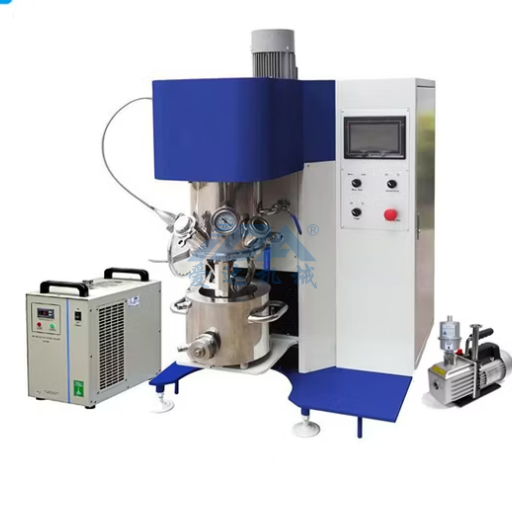
Regular Maintenance Practices for Optimal Performance
Proper maintenance of a vacuum triple shaft mixer ensures sustained performance and prevents potential downtime. Begin with a routine inspection. Inspect seals, bearings, and moving components for wear and damage periodically. Make absolutely certain that all fasteners are tight and check for any leaks in the vacuum system, as these may compromise mixing efficiency. Thoroughly clean the mixer after every use to prevent a buildup of residue at the risk of interfering with the quality of future batches.
Yet another very critical aspect concerning optimal performance is lubrication. Make sure all moving components have proper lubrication following the manufacturer’s instructions. This has the benefit of reducing the ill effects of friction and thus, wear. Use the right lubricants, as putting incompatible stuff can ruin the machinery or impair its working mode.
Run periodic calibration and testing for the appliance to see how it is balanced and properly operated. It is suggested to inspect the motor, controls, and evacuation system, replacing a filter or a consumable part, as the situation may call for. Such a number of guidelines should result in an increase in the asset’s longevity, effectiveness, and dependability rather than the need for constantly mending the system.
Common Issues and How to Resolve Them
| Issue | Probable Cause | Resolution |
|---|---|---|
| Wrong Mixing Results | Misaligned blades or wrong settings | Re-align blades; calibrate speed/timing |
| Vacuum Seal Failure | Wear on seals or gaskets | Check for cracks; replace deteriorated seals |
| Motor Overheating | Prolonged operation; under-lubrication | Check lubricants; allow breaks; ensure ventilation |
When to Consult with Equipment Specialists
Consulting with equipment specialists becomes necessary when the vacuum triple shaft mixer exhibits recurring problems in its performance or is driven into failure by over-cleaning processes. In a case where the mixer is not producing the desired consistency of product or undergoes frequent motor overheating even after regular checks, a professional intervention may be necessary. The experts can use sophisticated tools to probe into complex issues and prescribe the best, appropriate remedies to set things right.
When there are unusual noises, vibrations, or leaks, bringing in the help of an expert becomes essential. These are signals for underlying mechanical or structural problems that could deteriorate over time. The specialists conduct extensive scrutiny to locate the worn-out parts and accordingly suggest an appropriate course for dealing with repairs or a replacement to negate Long-term damage.
Finally, it is recommended that one get expert advice for an upgrade, modification, or optimization process, specifically with this application. The professionals will ensure that any fine-tuning is carried out properly so as not to adversely affect the mixer’s performance and physical strength. By taking care of the conditions quickly and with expert advice, you can extend your mixer’s lifetime while enhancing overall performance.
Frequently Asked Questions (FAQ)
Q: What is a Vacuum Triple Shaft Mixer and how does it differ from a vacuum planetary mixer?
A: The Vacuum Triple Shaft Mixer operates as a multi-shaft mixer which uses three shafts to execute mixing, material dispersion and vacuum-based material deaeration. The shaft system includes three components which operate at different speeds to achieve operational mixing through their respective functions: a low-speed anchor agitator which handles bottom scraping tasks, a medium-speed blade which performs blending through scraping and a high-speed disperser system which delivers high shear dispersion results. The tri-shaft design handles high viscosity slurries effectively while creating gas-bubble free suspensions and producing highly uniform products which include phosphors ceramic slurry toothpaste and lithium battery pastes which contain LiFePO4 and LiCoO2.
Q: What typical components and features does a Vacuum Triple Shaft Mixer include?
A: A standard Vacuum Triple Shaft Mixer often includes a stainless steel jacketed vessel for heat transfer, a vacuum mixer with vacuum pump for deaeration, a high speed disperser or second high speed disperser for dispersion, an anchor agitator with bottom for scraping the walls, PLC touch panel control (Siemens PLC for automation is common), hydraulic or hydraulics systems for lifting/removal, and options like a water chiller, HP motor or container and PLC touch panel for production of viscous materials and suspensions in the cosmetic and pharmaceutical industries.
Q: Can a Vacuum Triple Shaft Mixer handle highly viscous and complex materials under vacuum?
A: Tri-shaft mixers show their best performance when they work with high-viscosity materials and complex substances under vacuum conditions. The mixer combines an anchor agitator with a scraper and a high shear disperser to dissolve binders while creating slurries through solid dispersion and achieving material uniformity. The products can be used to create suspensions for cosmetics and toothpaste and phosphors and ceramic slurry and electrode pastes used in LiFePO4/LiCoO2 production which need complete uniformity and bubble-free dispersion.
Q: How does vacuum improve the mixing and dispersion process in a tri-shaft mixer?
A: The application of vacuum during the mixing process creates complete gas-free products which enable better particle-to-binder contact. The vacuum process enables better wetting of materials while it accelerates the removal of air from slurries and it protects delicate substances from oxidation. The combination of high speed disperser and effective scraping with vacuum system delivers improved material distribution which results in lower material porosity and consistent control of product thickness.
Q: What industries commonly use vacuum triple-shaft mixers and for what applications?
A: The industrial sector produces battery manufacturing which includes production of LiCoO2 and LiFePO4 electrode pastes and the sector produces pharmaceuticals and cosmetics and ceramics which include phosphors and ceramic slurry and adhesives and sealants and toothpaste and specialty chemicals. The standard applications include emulsifying and homogenizing different formulations and creating thick suspensions and conducting high shear pigment dispersion and mixing materials with different viscosities to reach complete uniformity.
Q: What automation and safety controls are available for these mixers?
A: The contemporary vacuum mixers utilize PLC systems to control their mixing processes which operators can manage through either the PLC touch panel system or Siemens PLC system that enables them to operate pre-defined recipes while controlling vacuum operations and synchronizing high speed disperser and anchor agitator and hydraulic systems. The CE certified models include safety interlocks and pressure and vacuum gauges and controls which operators use to manage water chiller integration for precise temperature control during high viscosity processing.
Q: How do jacketed vessels, water chillers and heat transfer affect processing in a vacuum triple shaft mixer?
A: The jacketed stainless steel vessels provide accurate temperature regulation through their system which circulates heat transfer fluid. The jacket system connects to a water chiller or heating unit which enables cooling during both high-speed dispersion and exothermic reactions to prevent thermal degradation while controlling viscosity. Proper temperature management improves dispersion efficiency, aids dissolution of binders, and supports consistent production of temperature-sensitive products like pharmaceutical suspensions and battery slurries.
Q: What maintenance and operational considerations ensure long life and consistent performance of a vacuum triple shaft mixer?
A: The maintenance process involves testing seal integrity and vacuum pump operation together with conducting assessments of hydraulic systems and lifting equipment and monitoring the wear of scrapers and high speed disperser blades and checking that PLC and touch panel controls have received their required updates. The application of stainless steel wetted components together with CE certified parts decreases the risk of corrosion. The recommended cleaning procedures must be followed to prevent cross-contamination during different product productions and the mixing parameters (speed profiles vacuum level jacket temperature) must be validated to achieve reproducible dispersion and homogenization of different materials.
References
- Experimental Investigation of a Vacuum
This academic thesis explores vacuum pressure and its effects, which could provide insights into vacuum mixer operations.
Read more here -
Mechanical Design of Mixing Equipment
This paper focuses on the design aspects of mixing equipment, including shaft design, which is relevant to triple shaft mixers.
Read more here -
SiC Webinar February 2023 – On Demand
This source mentions a tri-shaft planetary vacuum mixer, which might provide specific product-related insights.
Read more here - Triple Shaft Mixer: Complete Guide to High Viscosity Mixing Solutions