Get in Touch with IDA

Top 15 Basket Mill manufacturers to Watch in 2026

Contents
show
Modern grinding equipment depends on basket mill technology because industrial needs require machines that operate with maximum efficiency while allowing simple cleaning and producing high-quality grinding outcomes. This article introduces the core concepts behind the basket mill and sets the stage for evaluating leading manufacturers shaping milling technology in 2026. Our study demonstrates that basket mills represent the optimal choice for ink and coating and chemical applications through our analysis of immersion mill design which combines dispersing and grinding functions into a unified system. The basket design and control systems and modular basket mills enable various configuration options which achieve uniform particle size reduction throughout all stages from pilot testing to complete production methods.
Key Takeaway
Basket mill technology is revolutionizing the wet grinding industry by integrating dispersing and milling into a single, immersion-based process that maximizes efficiency and simplifies maintenance.
Understanding Basket Mill Technology
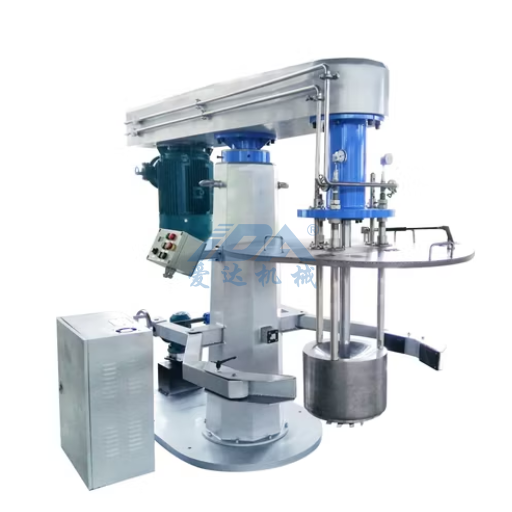
Basket mill technology combines dispersing and fine grinding in one compact immersion mill, where the milling basket filled with beads performs wet grinding directly in the batch. The basket design uses a dispersion disc to move millbase through the basket which helps achieve even bead distribution while maintaining controlled particle size reduction. Operators use adjustable parameters with advanced control systems to achieve optimal grinding fineness and dispersion quality. The grinding media together with basket geometry and mixer integration produce excellent grinding results while providing simple cleaning procedures. This highly efficient approach reduces raw materials waste while it enhances coating and ink consistency and speeds up production across multiple applications.
What is a Basket Mill?
A basket mill operates as a small-scale bead mill which uses its grinding basket to submerge grinding media into a product batch for simultaneous grinding and dispersion. The dispersion disc drives circulation which causes the millbase to move through the milling basket multiple times until it reaches the wanted particle size and dispersion results through efficient processing. The immersion mill operates as a mixer system which keeps contents uniform while beads deliver energy needed for efficient fine grinding operations. The customizable basket design and adjustable operating conditions enable manufacturers to achieve excellent grinding fineness from pilot plant operations to industrial machinery. The innovative basket provides easy cleaning capabilities which decrease changeover times while offering enhanced control throughout the production process.
The Principles of Wet Grinding
Basket mills use wet grinding to transmit energy from moving beads to the suspended particles in liquid which leads to their dispersion and reduction of particle size. The milling basket filled with beads creates intense shear and impact as the dispersion disc circulates the millbase through the basket. Key considerations include the following:
- ✓
Critical parameters: Grinding media size, bead loading, mill speed, and residence time, all controlled to achieve the desired fineness. - ✓
Material selection: Choosing suitable raw materials, stabilizers, and viscosity to ensure stable dispersion and excellent grinding results. - ✓
Outcomes: Efficient processing for ink and coating formulations, with uniform grinding and dispersing, consistent product quality, and rapid throughput.
Comparison with Traditional Milling Techniques
The basket mill provides better cleaning efficiency through its immersion processing method which requires fewer transfer procedures than traditional bead mills and other grinding machines. Basket mill technology enables a combined process which eliminates the need for separate grinding and dispersing activities that traditional milling methods require. The modular basket mills and customizable basket design allow quick swaps for different products, which improves equipment availability because it requires less time than fixed systems. The operators can achieve precise control of grinding fineness and dispersion through the system because they can adjust parameters and use advanced control technologies. The new equipment process provides faster product transitions and better operational adaptability for inks and coatings and chemicals when compared to older grinding machines.
Top Manufacturers in the Basket Mill Industry

| Manufacturer | Key Advantage | Focus Area |
|---|---|---|
| Netzsch | High-Energy Technology | Global Dispersion Leader |
| Hockmeyer | Robust Construction | Heavy-Duty Industrial |
| VMA-Getzmann | German Engineering | Lab & Pilot Scale |
-
1. IDA Equipment
Founded: 2004
Introduction: A professional manufacturer specializing in fluid and powder equipment, including basket mills.
Main Products: Basket mills, horizontal sand mills, high-speed dispersing machines.
Advantages: High-quality manufacturing, innovative designs, and excellent customer service.
Disadvantages: Limited global presence compared to larger competitors.
Website: IDA Equipment
- 2. Pengyi Intelligent
Founded: 2008Introduction: A high-tech enterprise focusing on intelligent machinery and equipment.Main Products: Advanced basket mills with intelligent control systems.
Advantages: Customization services, cost-effective solutions, and excellent after-sales support.
Disadvantages: Limited brand recognition outside Asia.
Website: Pengyi Intelligent
- 3. Netzsch Feinmahltechnik GmbH
Founded: 1873Introduction: A global leader in grinding and dispersing technology.Main Products: High-energy basket mills, bead mills.
Advantages: Technical expertise, high-quality assurance, and easy cleaning designs.
Disadvantages: Premium pricing.
Website: Netzsch
-
4. Bühler AG
Founded: 1860
Introduction: A global leader in food processing and manufacturing technology.
Main Products: Food-grade basket mills.
Advantages: Sustainable solutions, scalability, and compliance with food-grade standards.
Disadvantages: Focused primarily on food and beverage industries.
Website: Bühler
-
5. FrymaKoruma AG
Founded: 1949
Introduction: Specialist in mixing, homogenizing, and grinding technology.
Main Products: Basket mills for homogeneous dispersion.
Advantages: Low-noise operation, modular design, and innovation-driven.
Disadvantages: Limited product range.
Website: FrymaKoruma
-
6. IKA Works GmbH & Co. KG
Founded: 1910
Introduction: Renowned for laboratory and production equipment.
Main Products: Compact basket mills with precise control systems.
Advantages: User-friendly design, safety features, and strong educational support.
Disadvantages: Limited capacity for large-scale production.
Website: IKA
-
7. Eiger Torrance Inc.
Founded: 1979
Introduction: Manufacturer of high-energy basket mills.
Main Products: High-energy density basket mills.
Advantages: Application-specific solutions, advanced sealing technology.
Disadvantages: Higher maintenance costs.
Website: Eiger Torrance
-
8. Ross Mixing Equipment Co., Inc.
Founded: 1842
Introduction: A pioneer in mixing, blending, and dispersing equipment.
Main Products: Integrated basket mills.
Advantages: Long-standing reputation, custom engineering.
Disadvantages: Higher initial investment.
Website: Ross
-
9. Hockmeyer Equipment Corporation
Founded: 1940
Introduction: A leader in mixing, dispersing, and grinding equipment.
Main Products: Heavy-duty basket mills.
Advantages: Robust construction, in-house manufacturing.
Disadvantages: Limited global distribution.
Website: Hockmeyer
-
10. VMA-Getzmann GmbH
Founded: 1972
Introduction: German manufacturer specializing in dispersing and grinding equipment.
Main Products: TORUSMILL® basket mills.
Advantages: German engineering, eco-friendly operation.
Disadvantages: Focused on laboratory and pilot-scale applications.
Website: VMA-Getzmann
-
11. Premier Tech Systems & Automation
Founded: 1923
Introduction: Known for industrial automation and processing solutions.
Main Products: Versatile basket mills.
Advantages: Global presence, compliance with international standards.
Disadvantages: Limited focus on basket mills.
Website: Premier Tech
-
12. Franli Machinery
Founded: 2000
Introduction: A growing manufacturer of grinding and dispersing equipment.
Main Products: Basket mills for coatings and inks.
Advantages: Cost-effective, energy-efficient designs.
Disadvantages: Limited innovation compared to larger players.
Website: Franli
-
13. Tipco Engineering
Founded: 1985
Introduction: Manufacturer of industrial mill machines.
Main Products: Hydraulic lifting basket mills.
Advantages: Compact design, high ROI.
Disadvantages: Limited global reach.
Website: Tipco Engineering
-
14. Shanghai ELE Mechanical and Electrical Equipment Co., Ltd
Founded: 1996
Introduction: A Chinese manufacturer of grinding and dispersing equipment.
Main Products: Basket mills for industrial applications.
Advantages: Competitive pricing, strong presence in Asia.
Disadvantages: Limited after-sales support in other regions.
Website: ELE
-
15. Rucca Technology
Founded: 2010
Introduction: Specializes in high-efficiency grinding and dispersion tools.
Main Products: BM series basket mills.
Advantages: Advanced cooling systems, minimal material residue.
Disadvantages: Focused on coatings and inks industries.
Website: Rucca
Innovations in Milling Technology
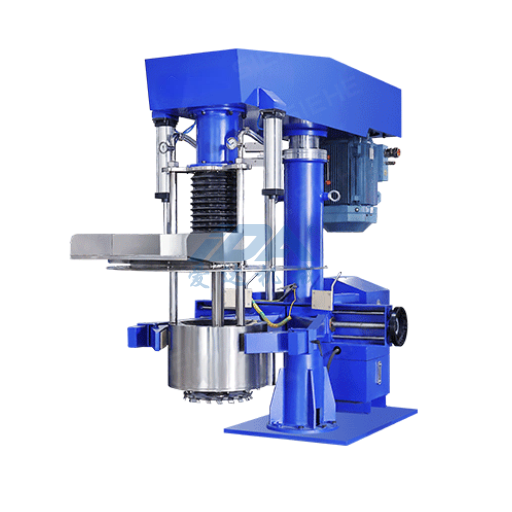
Milling technological advancements create new methods which manufacturers use to process complex material formulas through basket mills and immersion mills. The newest grinding systems combine their advanced control technologies with a customizable basket design and modular basket mill components to achieve both high operational efficiency and consistent performance. Engineers improve wet grinding performance by optimizing the bead-filled milling basket which enables them to control dispersion stability and reach specific particle size requirements with decreased material usage. The new equipment combines a high-torque mixer with a precision dispersion disc which drives the millbase through the basket multiple times to achieve superior grinding performance that simplifies cleaning and enables smooth transitions from pilot plant testing to industrial production.
Advancements in Bead Mills
The latest bead mill technology improvements provide better energy transfer through improved bead movement control and advanced grinding control systems which boost both grinding efficiency and production capacity. The contemporary basket mill design uses specific grinding basket shapes and optimized bead placement to achieve maximum contact with materials while eliminating all dead space. Intelligent control systems monitor torque, temperature, and viscosity to automatically adjust speed and residence time, which enables the system to achieve optimal grinding results for both inks and coatings. The enhanced dispersion disc profiles improve circulation through the millbase, which allows for better operational efficiency. The combination of these advancements creates a system that achieves efficient wet grinding, shorter cycle times, and consistent dispersion quality across multiple grinding machines.
Integration of Modular Basket Mills
Manufacturers can quickly change their milling operations by using modular basket mill systems which their operations require to process different recipes and viscosities and batch sizes. Operators can control their grinding results by using milled products which include swappable milling basket modules and grinding media packages and dispersion disc options. The machine allows operators to switch between three product types while maintaining effective ink and coating and specialty chemical grinding operations and simple cleaning procedures. Advanced control systems automatically identify all installed modules while loading pre-existing validated parameters to maintain dispersion stability during testing. The modular approach enables pilot plant validation to proceed from testing through production until operators achieve predictable energy-efficient results during grinding and dispersing operations.
Efficiency in Fine Grinding Processes
The process of fine grinding achieves its highest efficiency when the immersion mill’s mixer design and basket configuration and grinding media choices work together to produce the desired particle size with the least energy consumption. The development of milling basket designs which enhance circulation allows millbase materials to move through the grinding basket at a consistent rate while adaptive controls maintain shear rates within the optimal range needed for effective dispersion. Operators achieve faster dispersion and grinding results while conserving raw materials and producing tighter grinding fineness through their selection of bead size and loading. The implementation of automated cleaning protocols reduces the time needed for equipment maintenance which results in increased equipment usage. The following practices provide outstanding grinding results which enable effective operations at high capacity throughout coatings and inks and chemical manufacturing production facilities.
Applications of Basket Mills Across Industries
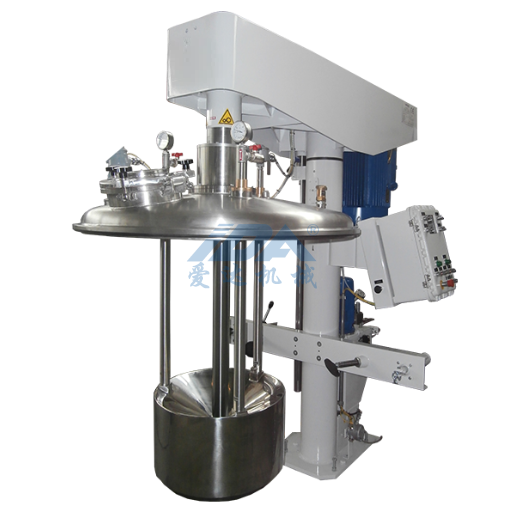
Basket mill technology serves as a versatile platform across industries requiring precise dispersion and fine grinding. By immersing a milling basket filled with beads directly into the batch, operators can grind and disperse with high efficiency while maintaining adjustable parameters through advanced control systems. The immersion mill integrates a mixer and dispersion disc to move the millbase through the basket, ensuring uniform particle size reduction and excellent grinding results. Manufacturers deploy modular basket mills to handle diverse viscosities, accelerating the production process from pilot plant trials to industrial machinery. Easy cleaning, customizable basket design, and predictable grinding fineness make this grinding equipment highly efficient for varied formulations.
⚠️ Industrial Note
Modern immersion mills serve as an all-in-one workstation, drastically reducing the total footprint and clean-up time compared to traditional sand mills.
Use in Paints and Coatings
The basket mill in paints and coatings performs fast wet grinding which maintains pigment and extender and additive dispersion until the desired particle size and stable gloss finish are achieved. The grinding basket and grinding media work together with the dispersion disc to move millbase through the basket which keeps particles from sticking together while maintaining their original color strength. The system achieves superior grinding performance through its adjustable speed and bead loading system which reduces material waste while operating in low-VOC and high-solids environments. The modular basket mills enable fast color changes because their basket design allows for simple cleaning and their basket design can be modified. The immersion mill method combines dispersion and grinding processes to improve fineness measurement which leads to better coating results in challenging industrial environments.
Role in Inks Production
Ink manufacturers use basket mill technology to achieve exact grinding of carbon black and organic pigments and functional fillers while maintaining control of rheological properties and printability through jetting. The immersion mill uses a milling basket filled with beads to provide controlled particle size reduction that produces better hue and transparency and stability in all solvent-based and water-based and UV-curable systems. Intelligent control systems manage temperature and torque while maintaining dispersion parameters within narrow limits which enables consistent achievement of specific fineness levels. The system allows for quick shade adjustments and batch corrections through its easy cleaning system and fast basket replacement system. The grinding equipment achieves high efficiency through its integrated high-torque mixer and optimized basket design while reducing raw material usage and maintaining superior grinding performance across digital and flexo and offset ink lines.
Impact on Chemical Manufacturing
Chemical manufacturers use basket mills to create uniform and stable products which require them to disperse and grind additives together with agrochemicals and catalysts and ceramic slurries. The grinding technologies operate through a system that combines a customizable grinding basket with specific grinding media which produces exact particle size measurements. The millbase creates a controlled reaction behavior which affects both the reaction process and the coating material that creates the basket through its repeated movement. The modular basket mills allow laboratories to switch between different chemical processes because they can easily clean equipment while using certified production methods. The immersion mill method increases production speed while reducing energy use and enables the transition from pilot plant production to industrial equipment development which guarantees outstanding grinding performance and dependable operational processes.
Future Trends in Basket Mill Development

The upcoming basket mill development will use advanced control systems together with new milling methods and eco-friendly designs to achieve maximum efficiency and superior product output. The new basket designs will create bead paths that enable quick fine grinding while using less power. Data-driven grinding technologies will use sensors to measure torque and temperature and viscosity which will enable automatic grinding adjustments that occur during operational processes. The market will see modular basket mills which provide different dispersion disc and media package options for various particle size requirements. The production process will achieve environmental sustainability through its focus on simpler cleaning procedures and decreased consumption of raw materials. The combination of these advancements will enhance the predictability and scalability and cost efficiency of grinding and dispersing processes.
Emerging Technologies and Innovations
The current research work studies emerging technical innovations that develop artificial intelligence control systems which optimize grinding processes through learning appropriate parameters for different material compositions. The new coating material applied to grinding media products effectively reduces contamination while extending the operational lifespan of beads which results in better grinding performance. The new dispersion disc profiles of advanced technology will create stronger circulation effects which will move millbase material through the basket system at a faster rate to achieve particle size reduction. The hybrid immersion mill system includes inline sensors and closed-loop dosing which will maintain dispersion stability during operations. The additively produced milling baskets will provide custom flow channel options while energy-efficient drives will enhance machine performance without reducing product quality or production volume.
Predictions for Market Growth
Market growth for basket mills will track rising demand in coatings, ink, and specialty chemicals that require tighter particle size control and faster changeovers. The worldwide deployment of modular basket mills will lead manufacturers to make capital investments in scalable immersion mill platforms that have adjustable configurations. Sustainability programs will select grinding equipment that achieves high efficiency and simple cleaning because it minimizes solvent consumption and energy usage and raw material waste. Advanced bead mills will be adopted by regions which need better packaging solutions and infrastructure development to maintain quality standards. The market will grow until 2026 because end users require exceptional grinding performance and maximum machine availability and digital process improvement tools.
Commitment to Quality and Customer Support
The leading manufacturers will establish their market position through two main strategies which include maintaining strict quality control and providing complete customer assistance throughout their application laboratories and pilot plant testing and product support services. The company will conduct technology validations by testing customer mill bases which will help them determine the optimal grinding media and basket design and control settings needed to achieve specific fineness targets. The training programs will instruct learners about the most effective methods for dispersing and grinding materials through their complete process from bead loading until residence time evaluation. The combination of remote diagnostics and spare parts logistics will provide equipment maintenance solutions which will maintain equipment uptime. The innovative basket designs which suppliers develop will deliver exceptional grinding outcomes while their responsive service and straightforward cleaning methods will help them build permanent business relationships with clients in inks coatings and chemical industries.