Get in Touch with IDA

Types of Basket Mills: An In-Depth Look at Basket Mills

Contents
show
The industrial sectors—including paints, coatings, chemicals, and pharmaceuticals—now depend on basket mills because these machines deliver unmatched performance for dispersion and grinding tasks. This article provides a detailed examination of all the basket mill types that exist in the present market. This guide will help you understand the differences between basket mills while choosing the right equipment for your needs, whether you are an experienced industry worker or someone who wants to learn about this new technology.
The study will cover how basket mills, from their basic designs to their most modern types, are transforming manufacturing processes in various sectors. The upcoming content will deliver all essential information about these multipurpose machines.
Key Takeaway
Basket mills are versatile, “all-in-one” solutions that combine mixing, centrifugal dispersion, and media milling into a single operation, significantly reducing production footprints.
Introduction to Basket Mills
Definition of Basket Mills
Basket mills serve multiple purposes as they function as efficient machines that operate in the paint, ink, coating, and chemical industries to perform mixing, grinding, and milling tasks. The equipment produces fine particles through its dual functions of dispersion and grinding, which create high-quality output. The mills achieve their processing target by using a rotating agitator which operates a basket-shaped system that holds grinding media.
The primary mechanism of a basket mill relies on the circulation of materials. A product enters the grinding basket through a pump—or the suction created by the impeller—which draws material into the basket where it mixes with the grinding media. The basket undergoes a shearing and grinding process, reducing particle sizes as it operates. The design enables precise control of the milling operation, which produces consistent results while using less energy. The production process benefits from a self-contained system which keeps the operation area clean; even when contaminated materials appear, they will stay at lower levels.
Basket mills offer operational flexibility because they provide user-friendly features which enable operators to process both small and medium-sized production runs. The machines provide exceptional operational capacity because they enable users to scale their output from research and development activities. The compact design enables space-saving storage, which facilitates fast and simple cleaning processes that enhance usability across different industrial settings.
Importance of Grinding and Dispersing in Industry
Grinding and dispersing processes serve essential functions across various industries because these processes enable the creation of products that meet exact specifications. The processes operate by breaking down particles into smaller parts, which they distribute evenly to produce fine dry material that maintains a uniform composition. This functions as a fundamental step in industries requiring product components to maintain consistent quality throughout their entire production process, including pharmaceuticals, chemical manufacturing, paint production, and food processing.
The process of grinding and dispersing must operate effectively because it controls the product development process through the production of equal particle size distribution. The product development process depends on these elements because they determine how the finished product will function and maintain its structural integrity. Proper pigment dispersion in the coatings industry produces both smooth surface finishes and bright color results, while the pharmaceutical industry requires constant particle sizes to achieve effective drug administration and absorption.
Organizations gain advantages through these processes, which help reduce operational expenses while improving overall productivity. The production process reaches optimal performance when manufacturers obtain required outcomes without using excessive power or generating unnecessary waste, resulting in decreased material wastage. The industry uses grinding and dispersing techniques to achieve product standards, helping companies meet customer demands and stay competitive in the current market.
Applications of Basket Mills
Basket mills are utilized by multiple industries because they provide effective grinding and dispersion capabilities. The paint, coatings, and ink industries use these machines to produce uniform particle sizes and stable dispersion patterns. The process establishes high-quality finishes which maintain consistent product performance that meets customer needs.
Basket mills serve a vital function in manufacturing cosmetics and personal care products. The machines process creams, lotions, and additional formulations which need exact pigment and active ingredient dispersion. Basket mills enable these industries to produce uniform products while allowing for customized formulations between small and medium batch sizes.
Basket mills serve an essential function in chemical production and pharmaceutical manufacturing. The machines enable precise grinding of materials used in adhesives, resins, and pharmaceutical production to meet strict quality requirements. The equipment produces fine and homogeneous dispersions while generating minimal waste, establishing its worth as a vital resource for contemporary manufacturing operations.
Types of Basket Mills
Immersion Mills
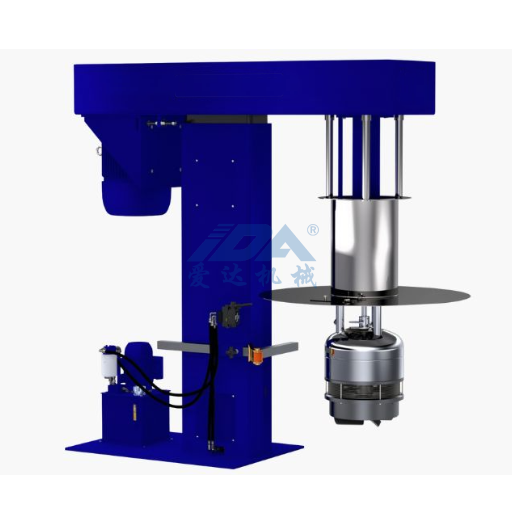
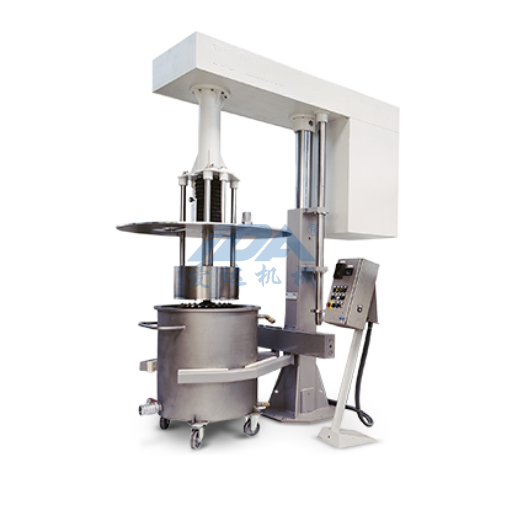
The immersion mill functions as a basket mill that efficiently combines three functions—mixing, grinding, and dispersing materials—within a single compact system. The mills operate by submerging a basket containing grinding media into the material to achieve complete contact and uniform particle size reduction. The equipment design enables high-shear mixing together with fine dispersion, making the system ideal for industries that need to achieve precise material consistency.
The key benefit of immersion mills depends on their ability to handle multiple applications. The system can process different types of materials, including both thick substances and lightweight liquid materials. The system provides essential benefits to paint and coating manufacturers, pharmaceutical companies, and chemical producers because they need different processing methods for their specific product formulations. The operational footprint of immersion mills requires less space while their energy usage remains lower compared to other dispersing technologies.
The operational process of immersion mills provides an important advantage because they operate as simple systems. The mills operate with basic installation requirements which enable quick cleaning to decrease operational breaks while enhancing work efficiency. The system’s capacity to execute multiple operations through one device enables manufacturers to save costs while achieving dependable output which meets their production standards.
Vacuum Basket Mills
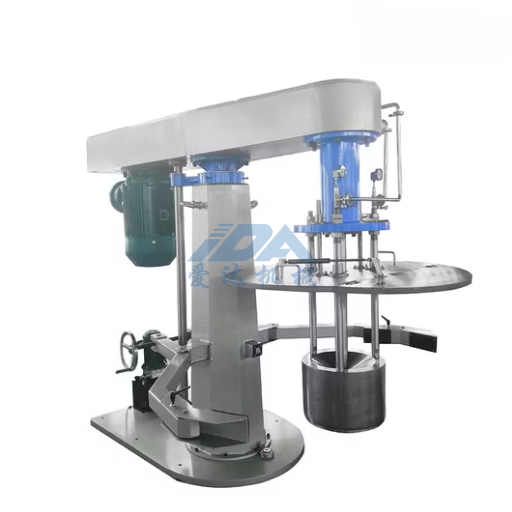
The vacuum basket mill functions as advanced equipment that operates within a vacuum space to achieve fine grinding and dispersion tasks. The milling machines use vacuum systems to remove air from the process, which improves the quality of dispersed materials through better consistency. This feature is particularly beneficial for products requiring high-quality finishes or those prone to defects caused by air bubbles, such as coatings, inks, and cosmetics.
The vacuum environment in basket mills reduces the presence of microbubbles within the batch, which can weaken the structural integrity of the final product. The controlled vacuum process increases material density, which improves particle interaction while maintaining continuous material flow. The process produces a product that meets industrial standards through uniform output distribution, enhancing color strength, gloss, and stability.
Vacuum basket mills establish themselves as operational systems that enable users to perform multiple tasks because they integrate both grinding and dispersion functions within one machine. The system provides straightforward cleaning and maintenance procedures, which lead to higher productivity through reduced operational interruptions. The system provides industries with a flexible solution because it can handle different batch sizes while maintaining product quality and reducing both production costs and time.
Lab Basket Mills
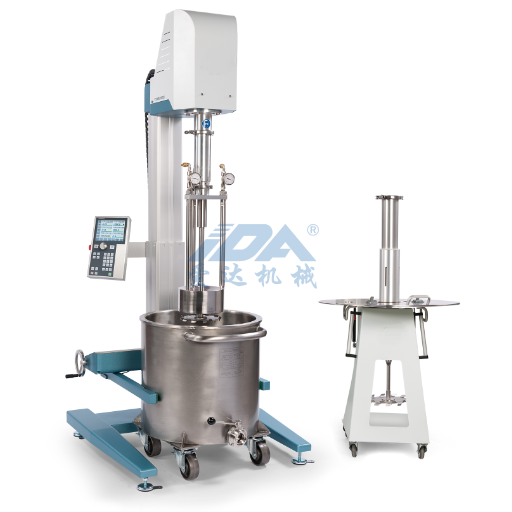
The laboratory basket mill serves as a multipurpose instrument which achieves exact and effective particle size reduction. The system operates best in laboratory environments which need to produce dependable results from small test batches. The mills produce efficient results through their combined grinding and dispersion operations which maintain product quality across all material types, ranging from low to high viscosity and complex use cases.
One of the primary benefits of lab basket mills is their adaptability across various industries, such as pharmaceuticals, coatings, and chemical formulations. The system enables users to test different formulas while reducing waste through its capacity to produce optimal outcomes. The system permits researchers to conduct testing because it supports various batch sizes, which helps control research and development expenses.
Lab basket mills are also user-friendly, offering simple cleaning procedures and ease of operation. The system enables quick product changes which increase operational efficiency while decreasing equipment downtime. The mills operate as dependable instruments which help laboratories achieve their stringent operational requirements through their strong design and exact functioning capabilities.
Advantages of Basket Mills
Efficiency in Fine Grinding
Basket mills demonstrate superior performance in fine grinding because of their exceptional efficiency. The unique design of the system enables effective product movement throughout the grinding chamber, which leads to uniform particle size reduction. Users who control grinding parameters through speed and duration settings will achieve their desired results with exact precision.
💡
Pro Tip
When aiming for sub-micron particle sizes, always ensure your grinding media (beads) occupy approximately 60-80% of the basket volume for optimal collision frequency.
Basket mills provide their main benefit because they enable users to complete work tasks at a faster rate. The system performs direct grinding which decreases the requirement for extra machines and prolonged operational time, thus resulting in decreased expenditure for both time and energy. The system proves especially useful in laboratory environments where researchers need to obtain results quickly for their development work.
Basket mills provide a method for distributing particles throughout a material while maintaining consistent temperature control, which traditional grinding systems fail to achieve. The system provides two benefits: better product quality and protection of delicate materials. Basket mills provide dependable and practical solutions for enterprises that need powerful grinding equipment.
Reduced Production Time
The basket mill system enables more efficient production operations through its ability to perform both milling and mixing simultaneously in one integrated process. This eliminates the need for multiple production steps required by traditional systems. The system enables operators to process materials at higher speeds because it removes the necessity of transferring them from one machine to another. The system achieves productive results because its grinding process operates at high speeds to deliver efficient results.
The basket mill system uses high-speed dispersion together with effective particle distribution to achieve required consistency results faster than traditional grinding methods. Companies can meet production deadlines because their manufacturing process maintains required quality standards throughout the entire cycle. Furthermore, the system provides advantages because it enables users to clean equipment quickly and switch between different production processes or materials.
The user-friendly design, together with flexible capacity, enables businesses to complete maintenance tasks and product transitions without experiencing operational interruptions. The system provides manufacturing companies with an effective solution which enables them to boost production speed while delivering accurate results and maintaining high standards of product quality.
Versatility in Various Applications
Basket mills provide multiple benefits which extend across different industrial applications. The main advantage of these machines lies in their capability to process different types of materials, ranging from low-viscosity materials to highly viscous substances. The technology enables processors to achieve precise results because it operates in different industrial settings requiring various formulation techniques, such as those used in paint production, coating application, ink development, and cosmetic manufacturing.
The efficiency of the system serves as its primary advantage because it enables effective material grinding and material dispersion processes. Basket mills use high shear forces together with advanced particle size reduction techniques to produce a final product which maintains uniformity throughout its entirety. The system achieves optimal efficiency by enabling production processes to operate without needing extra processing stages which consume both time and resources.
The compact design of basket mills, together with their simple operating system, makes them highly desirable for industrial applications. The equipment provides simple cleaning procedures which allow operators to conduct maintenance work without delaying production activities. The equipment enables operators to adjust system settings according to production needs, enhancing both equipment flexibility and production efficiency.
Disadvantages of Basket Mills
Limitations in Material Types
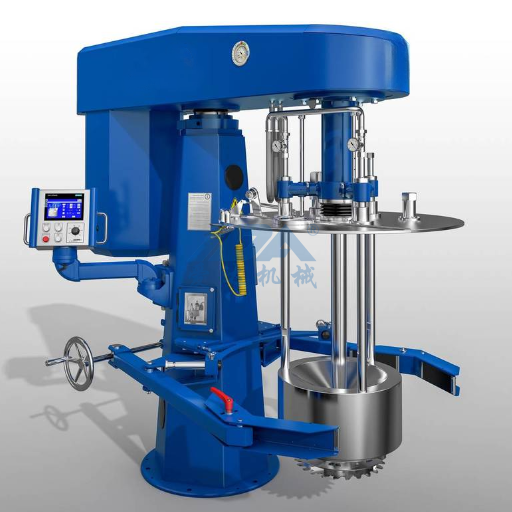
Basket mills, despite their versatility, may not be suitable for processing all types of materials. The first constraint exists because these machines can fail to operate effectively with materials that have high abrasive properties. The intense grinding action required for such materials can lead to excessive wear on the mill components, which results in reduced equipment lifespan and an increased need for maintenance activities and component changes.
Basket mills also encounter difficulties when they need to process materials that have high viscosity. Such materials create an obstacle that prevents the grinding media from moving freely through the system, resulting in decreased operational performance and uneven distribution. The milling process requires extremely thick formulations to use different technologies which have torque capacities that exceed standard operational limits.
⚠️ Important Note
Standard basket mills typically struggle with materials exceeding 50,000 centipoise (cP). For high-viscosity pastes, consider a planetary mixer or a three-roll mill instead.
The system has capacity restrictions which create another important limitation. Basket mills operate primarily between 55-gallon to 260-gallon production capacity, which makes them unsuitable for massive-scale industrial manufacturing processes. For operations necessitating production at a massive scale, higher-throughput equipment should be used because it offers greater efficiency than existing options. Making an informed choice requires knowledge about these operational restrictions.
Maintenance and Operational Costs
The use of basket mills in production processes results in specific operational and maintenance expenses. The primary issue with these systems is that they demand constant operational watch, and system components need to undergo routine maintenance procedures. The design of basket mills can lead to material accumulation problems because they must maintain operations during the processing of high-viscosity content, which results in cleaning and equipment repair needs. This increase in operational expenses occurs because productivity decreases over time.
Basket mills suffer from another major problem which restricts their ability to expand production capacity easily. The process of upgrading basket mills for manufacturers needing to boost capacity can become an expensive and time-consuming task. Additionally, the equipment may require more energy for operation than competitors performing similar functions, resulting in increased operational costs for extended periods of use.
The operational costs of equipment maintenance increase because certain components need replacements throughout their service period. These ongoing expenses, together with potential inefficiency at massive scales, make them less suitable for industrial production requiring high-throughput processes. Businesses must assess these requirements before selecting milling equipment.
Potential for Overheating
Milling equipment faces two main threats: overheating issues and friction generated between components. The equipment requires operating at specific temperatures because any increase will result in product quality decline, causing problems with texture, consistency, and chemical makeup. The situation becomes even worse when operators handle materials requiring special temperature control, as excessive heat can destroy the final product.
The first reason for equipment failure during milling operations results from insufficient cooling solutions and poor equipment heat management. Continuous operation without temperature control creates a situation where equipment generates excessive heat, damaging both the product and equipment durability. Overheating causes breakdowns which increase maintenance needs and create unexpected production halts that interrupt workflows.
Preventing overheating requires both efficient cooling solutions (like jacketed tanks) and ongoing checks of system temperature. The implementation of correct maintenance procedures together with manufacturer instructions help organizations reduce these risks. Companies should evaluate their production requirements and ensure the milling equipment they choose is capable of managing heat efficiently, especially during extended operations.
Technological Advancements in Basket Milling
Innovations in Milling Machines
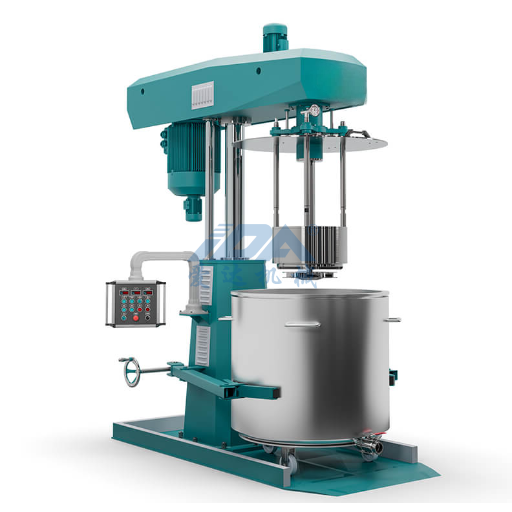
Milling machine technology has developed new standards which provide increased operational performance and precise machining capabilities. Modern basket milling machines now feature advanced automation systems together with real-time monitoring capabilities. Production processes achieve higher efficiency because automation eliminates manual work requirements, creating better operational speed, uniformity, and precise results. Operators use real-time monitoring to identify and solve problems, including temperature changes and equipment performance issues.
Energy efficiency is another critical innovation. New design approaches establish power consumption requirements that use minimum energy for maximum operational capacity. This produces operational cost reductions while decreasing environmental damage resulting from industrial activities. Advanced heat management systems maintain equipment temperature within safe limits, protecting equipment from damage and ensuring product quality during long production runs.
Digital technology implementation has made milling machines smarter, allowing them to adapt to changing operational requirements. Manufacturing processes can be customized through programmable settings, data analytics, and remote control capabilities. Modern milling machines maintain their operational flexibility and productivity because of these technological developments, satisfying new industrial requirements and achieving sustainable development goals.
Future Trends in Grinding Technology
Advancements in automation and artificial intelligence (AI), together with sustainable practices, will shape the future of grinding technology. Automated systems and AI will make grinding processes more efficient while decreasing errors and system downtime. These technologies enable production facilities to monitor operations in real-time and make instant adjustments, resulting in improved product quality and reliability. Machine learning integration enables systems to automatically forecast maintenance requirements.
30%
Projected energy savings in next-gen basket mills utilizing AI-driven motor synchronization.
Sustainability has become an essential guiding principle. Manufacturers are prioritizing eco-friendly solutions by developing energy-efficient equipment and adopting processes that reduce material waste. Industries are exploring recyclable and biodegradable abrasives together with new coolant management solutions to meet stricter environmental regulations while decreasing operational expenses.
The aerospace, automotive, and medical technology industries require more precise grinding services to produce components meeting higher tolerance standards. New grinding techniques and tools have developed through material science advancements to effectively process high-strength materials. The future of grinding technology will develop through these trends, producing faster and more sustainable methods for contemporary manufacturing.
Impact on Industry Standards
The development of new grinding technologies leads to improved manufacturing processes creating higher precision and better efficiency. Advanced grinding methods produce better results because they enable more precise control of material dimensions and provide higher quality surface finishes—essential for aerospace, medical device production, and automotive manufacturing. The requirement for components to enable high-performance operations demonstrates the increasing demand for advanced machinery.
The adoption of sustainable grinding methods establishes higher standards for environmental sustainability and resource management. The manufacturing sector increases its commitment through the implementation of energy-efficient technologies and waste-reduction methods. The industry will embrace these innovations because they help companies meet regulatory standards while lowering expenses.
The need for rapid grinding processes enables manufacturers to produce goods at shorter intervals while satisfying rising consumer needs. Manufacturers achieve steady product generation through automation and real-time monitoring while enhancing their quality assurance processes. The industry now achieves better standards through advanced technologies which create more accurate, environmentally friendly, and efficient production methods.
Frequently Asked Questions (FAQ)
Q: What are the main types of basket mills used in milling and grinding?
A: The main types include traditional basket bead mills, high-speed basket mills, stirred media mills with vortex design, and custom-configured dispersing equipment combining basket chambers and impeller systems. Selection depends on basket volumes, agitation methods, and cooling setups for batch or continuous workflows.
Q: How does the working principle of a basket mill differ from other grinding machines?
A: The basket mill combines bead agitation with a rotating impeller to produce shear and impact forces. It uses hydraulic lifting and vortex flow to achieve effective milling and high-efficiency dispersing, often reaching smaller particle sizes with higher precision than other machines.
Q: Which kinds of grinding media are used and when are zirconia beads preferred?
A: Common media include glass, ceramic, and zirconia beads. Zirconia beads are preferred for applications requiring maximum contamination control and superior performance in high-end ink, cosmetics, and advanced dispersing due to their high density and hardness.
Q: How do the basket volume and basket chamber design impact performance results?
A: Throughput, energy transfer, and residence time depend on these factors. Optimized chamber geometry and scrapers enhance mixing efficiency and eliminate dead zones, maintaining constant bead motion for narrower particle size distribution.
Q: For ink production, which basket mill is best and what features matter?
A: A high-efficiency basket mill with precise impeller control and a robust cooling system is best. Key features include scrapers to prevent buildup, adjustable hydraulic lifting, and compatibility with zirconia beads to ensure low contamination and uniform color distribution.
Q: Can basket mills handle a wide range of applications beyond ink manufacturing?
A: Yes, they are used for paints, coatings, pigments, cosmetics, pharmaceuticals, and specialty chemicals. They handle various slurries by utilizing selectable basket sizes and media options to achieve required uniformity and particle size control.
Q: What maintenance factors ensure excellent performance?
A: Regular inspection of impeller wear, bead condition, scrapers, seals, and cooling system upkeep is vital. Efficient processing is achieved through proper pre-dispersion of slurry and appropriate bead size selection.
Q: How do basket mills achieve narrow particle size distribution and homogenization?
A: They achieve this through intense shear and impact generated by bead motion and controlled impeller agitation. Pre-dispersion steps remove oversized agglomerates while optimized bead selection (like zirconia) produces high-level homogenization.
References
- Dispersion of Low Viscosity Water-Based Inks: This study touches on media size and shaft speed in mills, including basket mills.
Superfine and Ultrafine Grinding—A Literature Survey: Discusses mill feed size distribution and media separation.
Basket Mill: The Complete Guide to Wet Grinding & Dispersion Technology