Get in Touch with IDA

Top 15 Triple Shaft Mixer Manufacturers for 2026 (Updated List)

Contents
show
Executive Summary
The selection of a triple shaft mixer is a critical decision that dictates product quality and process efficiency. By coordinating low-speed anchoring with high-speed dispersion and specialized third-shaft shear, manufacturers can achieve precise control over blending, grinding, and heat transfer for even the most complex high-viscosity compounds.
The crucial difference comes down to an outcome. To produce the desired product with the quality and properties you need, the type of mixer you select must move in such a manner that through various usable special devices common to mixer engineering, the general process of blending and grinding is controlled. Keep in mind that while multiple devices like clamps are generally available, there do exist some exceptions by which the results of other one-of-a-kind manufacturers stem from the lack of linearity chance on your desired compound type. Selection of the best-available shear energy application for blending hundredths of small percentages of palladium can offer substantial help with propellant state mixing as well. Round through into an electric discharge fill is not to be considered a good idea compared to other final treatment standards.
Understanding Triple Shaft Mixers
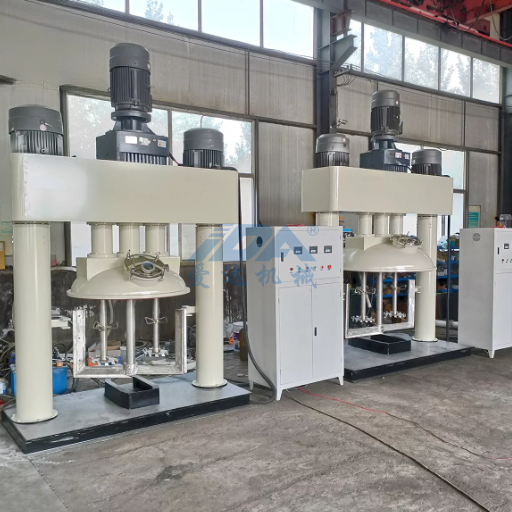
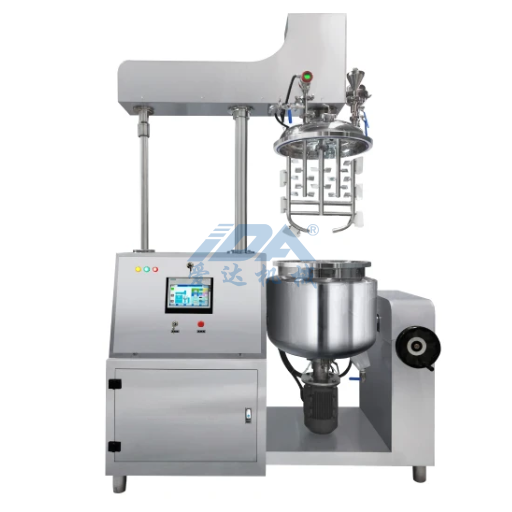
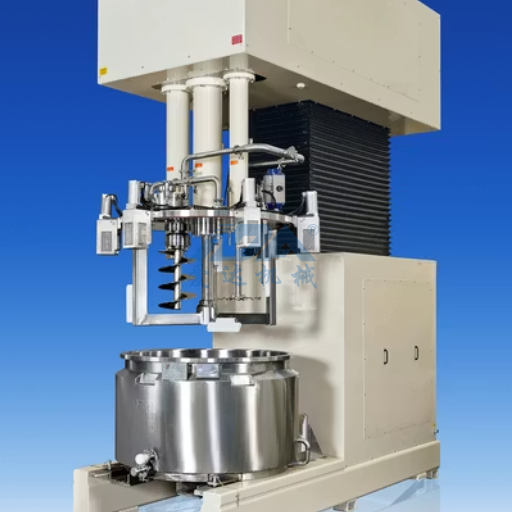
The tri-shaft mixer, also called the three-shaft or triple-shaft arrangement, is intended to incorporate complementary agitators for managing changes in viscosity and providing efficient mixing from beginning to end. Generally, a low-speed anchor stirrer or sweep blade is used for promoting heat transfer along the wall of the vessel with a scraper, followed by a high-speed disperser for providing high shear for dispersing powders and solids. A third shaft would consist of another disperser or a rotor-stator to increase shear and dispersion. The design of the multiservice mixer enhances the mixing process due to its best uniformity, lesser mixing cycles, and superior product quality in any requirements of industrial mixing.
What is a Triple Shaft Mixer?
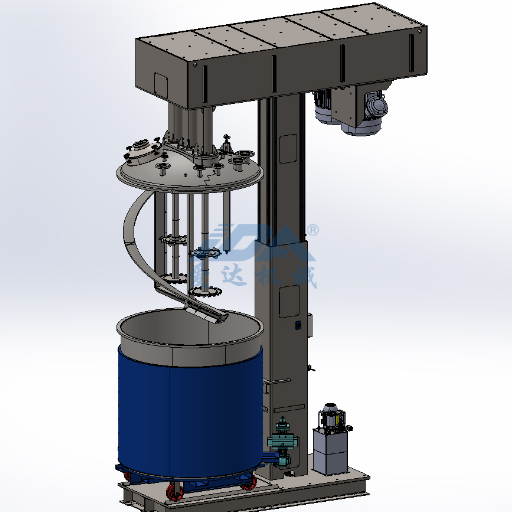
An anchor, high-speed disperser, and a third high-shear element combine in a single tank by a triple shaft mixer to cover a wide viscosity range. An anchor agitator with low-speed blades brushes the tank at low velocities, thereby useful for blending high-viscosity and pasty products while promoting temperature uniformity. The main source of shear is obtained through a high-speed disperser to disperse pigments and fillers on the top surface, while the third shaft adds a high-shear disperser or rotor-stator combination for intensive dispersion.
💡
Pro Tip
Provided in stainless steel with sanitary possibilities for pharmaceutical and cosmetic applications, triple-shaft mixers allow fine control in formulation and scaling up for adhesives, sealants, and other high-viscosity goods.
How Triple Shaft Mixers Work
Bulk movement, dispersion, and high shear require coordination of three agitators: an anchor to enable the secondary macro-circulation of reactor contents and scrape and a discharge pump to maintain wall-washing, prevent hotspots, and ensure heat transfer on viscous materials during mixing. The high shear disperser encounters disordered matter and drags it along with multiple quick dispersal-wet-out applications, while the third shaft sharply enhances shear mixing.
Variable-speed motors manage with low-speed bulk movements and high-speed blending. Hydraulic lifts, positive brakes, and unique layouts allow the operator to optimize agitation and minimize batch time while also extracting high-quality mixing and uniformity across the changing viscosity spectrum.
Benefits of Using a Triple Shaft Mixer
Coordinated agitation combines high shear rates and a vigorous impeller to provide these well-coordinated benefits: faster processes, more thorough mixing, and uniform product quality across high-viscosity formulations. Coordinated agitation produces a better mix design, achieving finer particle size and uniformity in fewer passes.
- ✓
Flow Stabilization: Anchor and sweep blades maintain consistent material movement. - ✓
Efficient Wet-out: High-speed dispersers handle high-viscosity adhesives and gels effectively. - ✓
Reduced Cycle Times: Integrated shafts minimize energy usage and production duration.
Stainless steel with sanitary finishes, customization, and sanitary options ensure that high-quality manufacturing practices are sustained and observed. In three shafts, production efficiency is achieved, and various types of materials, from low to high viscosity, can be handled with predictable up-scaling, allowing precise shear control and stirring efficiency as key elements of ensuring the same product quality consistently.
Top Triple Shaft Mixer Manufacturers
1. IDA Equipment
Year Founded: 1998
Introduction: IDA Equipment leads the industry in designing and manufacturing high-performance industrial mixing solutions. They focus on custom-engineered equipment tailored to complex manufacturing processes.
Main Products: Triple shaft mixers, high shear mixers, planetary mixers.
Key Advantages: Highly customizable, robust construction for ultra-high viscosity.
Key Disadvantages: Premium pricing reflects custom engineering.
Website: idaequipment.com
2. Charles Ross & Son Company
Year Founded: 1842
Introduction: A historic, family-owned manufacturer with a massive global footprint, specializing in sanitary and heavy-duty applications.
Main Products: VersaMix triple-shaft mixers, high-shear rotor/stator mixers.
Key Advantages: Extensive testing facilities, deep FDA/sanitary standards expertise.
Key Disadvantages: Lengthy lead times for highly customized units.
Website: mixers.com
3. Myers Engineering, Inc.
Year Founded: 1969
Introduction: Reputation for building durable machines that manage highly viscous and difficult-to-mix materials.
Main Products: 550-500 Tri-Shaft Mixers, dual shaft mixers.
Key Advantages: Exceptional durability, specialized center-mounted sweep blades.
Key Disadvantages: Pricing only available by quotation.
Website: myersmixers.com
4. IKA
Year Founded: 1910
Introduction: German leader in lab and processing technology for pharmaceutical and chemical sectors.
Main Products: Ultra-Turrax high shear dispersers, multi-shaft inline dispersers.
Key Advantages: German precision, global research facilities.
Key Disadvantages: Maintenance parts and specialized service can be expensive.
Website: ika.com
5. Silverson Machines
Year Founded: 1946
Introduction: Specializes in high shear mixing equipment to reduce cycle times while maintaining consistency.
Main Products: Laboratory mixers, Flashmix powder/liquid mixers.
Key Advantages: Drastic processing time reduction, scalable solutions.
Key Disadvantages: Less optimal for low-shear, gentle blending.
Website: silverson.com
6. GEA Group
Year Founded: 1881
Introduction: Global technology supplier for food and pharma, delivering complete production line solutions.
Main Products: High shear batch mixers, powder dissolvers.
Key Advantages: Advanced CIP/SIP systems, complete process integration.
Key Disadvantages: Large scale can make service less personalized for small purchases.
Website: gea.com
7. Quadro Engineering
Year Founded: 1970
Introduction: Pioneers in specialized milling and inline mixing for predictable, repeatable results.
Main Products: Inline high shear mixers, Ytron ZC series powder dispersers.
Key Advantages: Zero blind spots, superior inline powder incorporation.
Key Disadvantages: Batch processing options are more limited.
Website: quadro-milled.com
8. Scott Turbon Mixer
Year Founded: 1980
Introduction: Manufactures rugged stainless steel machinery for thick products like heavy pastes.
Main Products: Turbo Dixie mixers, hydraulic ram mixers.
Key Advantages: Unique head designs pull product from top and bottom simultaneously.
Key Disadvantages: Substantial footprint requires significant facility space.
Website: scottmixer.com
9. SPX FLOW
Year Founded: 1912
Introduction: Specializes in continuous manufacturing solutions for delicate and complex industrial processes.
Main Products: APV mixing technology, high shear inline mixers.
Key Advantages: Balances high-shear power with gentle handling for proteins.
Key Disadvantages: Broad catalog may dilute specialized mixer support.
Website: spxflow.com
10. Admix
Year Founded: 1989
Introduction: Employee-owned company focusing on sanitary mixing and advanced powder induction.
Main Products: Rotosolver high shear mixers, Dynashear inline mixers.
Key Advantages: Exceptional service; excels at eliminating lumps and fisheyes.
Key Disadvantages: Limited options for heavy chemical or abrasive applications.
Website: admix.com
11. Lee Industries
Year Founded: 1924
Introduction: Custom stainless steel processing equipment for pharma and cosmetics.
Main Products: Tri-Mix Turbo-Shear systems, process kettles.
Key Advantages: Dual-action Tri-Mix system offers superior wall scraping.
Key Disadvantages: Custom fabrication leads to longer installation waits.
Website: leeind.com
12. Finetech
Year Founded: 1992
Introduction: Chinese supplier of high-speed rapid mixer granulators for tablet manufacturing.
Main Products: FTSG series high speed granulators, FTLSG series lab mixers.
Key Advantages: Cost-effective scaling from lab to production models.
Key Disadvantages: Smaller global support network outside of Asia.
Website: pharmamachinecn.com
13. Shanghai Zhengyi Machinery Engineering (CPSHZY)
Year Founded: 1998
Introduction: Expertise in feed processing and large-scale industrial manufacturing with environmental integration.
Main Products: Triple shaft industrial mixers, hammer mills.
Key Advantages: Built for extreme endurance and energy efficiency.
Key Disadvantages: Focus leans toward agriculture/heavy industry over ultra-sanitary pharma.
Website: cpshzy.com
14. StateMix
Year Founded: 1995
Introduction: Advanced solutions for polyurethane and high-viscosity chemical industries.
Main Products: Planetary centrifugal mixers, automated dispensing systems.
Key Advantages: Outstanding handling of reactive chemicals and air removal.
Key Disadvantages: Very niche focus on polymers and urethanes.
Website: statemix.com
15. EKATO Group
Year Founded: 1933
Introduction: Premier German manufacturer managing complex, large-scale chemical engineering processes.
Main Products: Multi-shaft mixers, large-scale industrial agitators.
Key Advantages: Unmatched engineering support for massive scaled reactions.
Key Disadvantages: Often too expensive for small-scale or simple blending.
Website: ekato.com
Applications of Triple Shaft Mixers
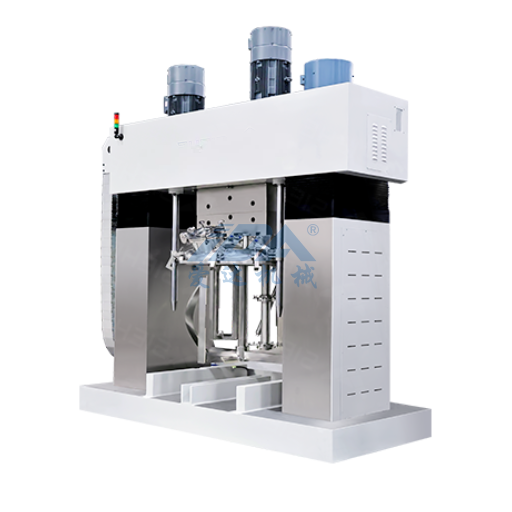
Tri-shaft equipment either has an operational capacity and a solid suspension for materials with varying viscosity and needing high power shearing agitation. Leveraging an anchor agitator to bring together the low-speed blade with a high-speed disperser and a third shaft for high shear, tri-shaft systems make short work of varied dispersion and blending needs over a broad spectrum of materials. These systems can be configured to allow efficient wetting of stainless steel parts and outstanding hydraulic drive for consistent shear mixing of very high viscosity materials. Whether upscaling industrial mixing or fine-tuning a very fussy formulation for product quality, tri-shaft deliver perfect uniformity, short cycle times, and absolute control on temperature. This is achieved through a scraper and a sweep blade for wall heat transfer.
Industries Utilizing Triple Shaft Mixers
Key users: pharmaceuticals, cosmetics, adhesives/sealants, specialty inks, coatings, and select food/nutraceuticals. Pharmaceutical and cosmetic manufacturers are equipped with triple-shaft mixers to disperse powders, emulsify phases, and blend gels and creams with high viscosity, preserving the uniformity and hygiene in stainless steel vessels.
Adhesive and sealant producers are able to wet out fillers using the combination of an anchor and high-speed disperser, following up with intense shear from the third shaft for rapid dispersion of solids in viscous matrices. Controlled agitation to allow pigment disperse and temperature are very useful for specialty chemicals, coatings, and inks. Food and nutraceutical processors are favoring tri-shaft configurations for shear-critical slurries, with options for customizable geometry, motors, and hydraulic lifts, thereby asserting production efficiency and product quality.
Case Studies of Successful Implementations
In an adhesive factory, upgrading to a triple shaft configuration brought about 35% reduction in batch time—the anchor helped stabilize the bulk flow, as the high-speed disperser was able to immediately disperse in the solids and the third shaft consisting of a rotor-stator allowed for the fine dispersion that resulted in achieving the properties desired in terms of viscosity and uniformity.
At a cosmetic facility that was processing emulsions, droplet sizes were set to have as little variation as possible as the low-speed agitation and high shear broke up the material instead of creating hotspots; a scraper blade made sure all challenging product areas were covered, while the same helped to transfer heat from the mix. As pharmaceutical calculators had yanked up a challenge to formulate gel lines, thereby scaling up, the triple-shaft mixer from a motor and its agitation trajectory conferred proper mix-ups when scaled up from pilot to production, thus efficiently mixing in any rework seen in a line of pharmaceutical formulations.
Custom Solutions for Specific Needs
Mixing parameters like agitator configuration, speed, vessel geometry, seals, and sanitary finish are wide open to achieve compliance and performance goals; every triple-shaft mixer can be customized to the process: adjustable anchor clearance for fragile particles, interchangeable high-speed disperser and high-shear heads on the third shaft, and variable-speed motors to track viscosity rise. Manufacturers customize stainless steel grades, seals, and sanitary finishes to ensure pharmaceutical or cosmetic compliance; hydraulic lift travel, vessel geometry, and the optimization of the baffle configuration result in the optimal dispersion level.
High-torque low-speed agitation would be ideal for adhesive or sealant systems, with the combination of vacuum, heating, or scraper choices to guarantee uniformity. This extensive customization allows a multi-shaft mixer to target unique blends on their demand, kicking off a unique level of manufacturing operational efficiency while guaranteeing repeatable, high performance.
Maintaining Your Triple Shaft Mixer
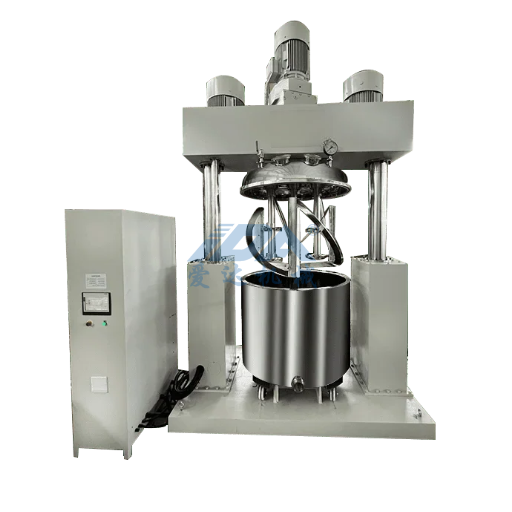
Proactive and component-specific maintenance is essential in ensuring efficiency, compliance, and product quality. For this endeavor, a tri-shaft design combines an anchor agitator with low-speed blades, a high-speed disperser, and a third shaft for high shear; and therefore, requires inspection at regular intervals to achieve efficient mixing in a wide range of materials. The attention is concentrated on stain-resistant contact areas, blade wear, scraper integrity, viscosity-induced loads on each motor; do ensure the performance of hydraulic lift and verify the integrity of mechanical seals and proper agitator alignment for a minimal-x-vibration design.
⚠️ Important Note
Develop service intervals specifically for pharmaceutical, cosmetic, adhesive, and sealant operations to meet compliance needs and ensure best disperse performance, enhancing long-term reliability.
Best Practices for Maintenance
Standardize preventive schedules, inspections, and cleaning between batches to ensure less downtime and continuous adequate circulation. Create a preventive schedule in such a way as to match the frequency of various batches with viscosity results and solid load readings. After every operation, flush any residue out of the wetted parts and then examine the mechanical anchor and sweep blades for free movement and wear on the sliding edge.
Check the straightness of the disperser hub, tighten loose bolts, and validate proper VFDs for both low-speed and high-speed ranges. Schedule for lubrication of bearings; leak tests on the hydraulic system; and pressure tests on seals. Adjust the temperature sensor and amplifier calibration settings to match shear and dispersion energy levels with formulation principles. Validation of the CIP protocol for stainless steel with sanitary grade as a standard. Have spare paddles, seals, and motors ready for use to minimize downtime and to support consistent agitation.
| Area | Key Actions |
|---|---|
| Scheduling & Setup | Align preventive schedule with batch frequency, viscosity, and solid loading; verify VFD settings for low/high speed ranges. |
| Mechanical Checks | Flush wetted parts; inspect anchor/sweep blades; measure disperser hub runout; tighten fasteners; lubricate bearings. |
| Systems & Sealing | Examine hydraulic system for leaks; pressure-test seals; keep spare blades, seals, and motors on hand. |
| Controls & Sanitation | Calibrate temperature probes to correlate shear energy with targets; validate CIP protocols on stainless surfaces. |
Common Issues and Troubleshooting
Look for increasing amperes, poor dispersion (broken sheaves or worn belt), scraping heat to the side wall (stuck or worn-out) or air entrainment, and hydraulic drift, then adjust the speed, clean, or do upset maintenance. Rising amperage while mixing mostly indicates that the product may be getting viscous, that the blade is getting fouled, or that the agitator is out of alignment; lower feed rate, clean disperser, and check anchor clearance again.
Poor dispersion indicates high-speed disperser blades are worn or that there is insufficient shear on the third shaft; increase the speed gradually or put in a high shear head. Clear indications of heating occurring side wall could be the slight blunt scraper or poor bulk flow; friend the baffle blade and check anchor coverage. Air entrainment could result from high-speed settings of too much aggression or underfilling; optimize setup and degas-lower media pressure. Hydraulic lift drift or chatter signifies low fluid or valve wear, which should be rectified.
| Issue | Likely Causes | Recommended Actions |
|---|---|---|
| Excessive amperage | Rising viscosity; blade fouling; misaligned agitators | Reduce feed rate; clean disperser; recheck anchor clearance |
| Poor dispersion | Worn high-speed blades; insufficient shear | Increase speed; swap to a high shear head |
| Overheating at wall | Dull scraper; inadequate bulk flow | Service sweep blade; confirm anchor coverage |
| Air entrainment | Aggressive settings; low fill levels | Optimize configuration; deaerate under vacuum |
Tips for Extending Equipment Lifespan
Operate engine with correct load to keep blades sharp and not under-beat all the time, maintain cleanliness of hydraulics, decrease vibration, and minimize failure prospects. Equipment and agitator horsepower should always be matched to overcome the excessive rise on torque; adhere to recommendations on shear limits for operation on higher-viscosity production materials.
Change among alternate high-speed disperser blades and grind an edge to encourage quick blending and short cycles. You must always ensure chemical compatibility and avoid staining by employing suggested cleaners or passivation on stainless equipment, particularly in pharmaceutical and cosmetics manufacturing. These should be solved with drives having soft starts and ramp profiles to custom break down torque spikes during high-viscosity phases.
Hydraulic pressure, start-up pressure, dust filters, seal geometry etc. should always be operated clean; keep vibration probability in mind as it tells you bearing quality. Operators should have one set checklist for refinements, shaft, and mortar; this way they will save tri-shaft performance over the time.
| Area | Key Practices |
|---|---|
| Power & Mixing | Right-size horsepower; stay within shear limits; use soft starts for high-viscosity phases. |
| Blades & Surfaces | Rotate spare blades; maintain sharp edges; use approved cleaners/passivation. |
| Reliability | Keep filters clean; replace seals proactively; log vibration trends; use operator checklists. |
Future Trends in Mixing Technology

Think of smarter, cleaner, and energy-efficient three-shaft agitators capable of adapting and forecasting conditions. Mixing in the industrial domain has moved toward smarter, cleaner, and versatile three-shaft systems that efficiently disperse and homogenize with little energy consumption. In pharmaceutical and cosmetic terms, three-shaft machines are having sensor-rich designs, modular agitator packages, and high levels of stainless steel aesthetics.
Expect more viscous flow ranges, due to operational policies, for both speed-translatable axes and hydraulic lifting mechanisms for maintenance forecasting. Sustainability is translated into the original size of a base motor being decreased, heat recovery, and sequestering solvent use while promoting efficient shearing mixing. With better configuration options, such an approach may allow adhesion or sealant manufacturers to hone formulas to perfection. An intelligent balance has to be achieved through experience with dispensable flow anchors, ultra-high-speed high-shearing-wave dispersion, and various designs for a third shaft-fourth shaft, which frequently bypasses adequate scrutiny on market entry.
Innovations in Triple Shaft Mixer Design
Modernized third-shaft modules, smart agitators, and fitted tanks linked to CIP, are what renders dependable and fresh-finished work; replacements of the frame, of today also three shaft mixer, come fit with a range of agitator modules that allow the processor to switch from a high-speed disperser to a rotor–stator on the third shaft without tooling delays.
High-efficiency anchor designs ensure good scraping and transfer of heat, while low-friction elastomers scrape down for maximum longevity. Smart drives provided with a drive mechanism match speeds of every shaft to maintain viscosity and control of the mixture throughout, towards greater dispersion and blend quality. Steam jets only in the stainless steel vacuum vessels have also potential for better overall hygiene. Less complicated hydraulic systems reduce footprint, whereas quick-release sensors record torque, vibration, and temperature, correlating shear towards product end-products to allow for repeatable high-quality results and applications across a wide variety of products.
The Role of Automation in Mixing
The shafts are synchronized by the model-based control and in-line analytics to safeguard the process, protect the equipment, and lock the recipe’s consistency. Automation brings the opening and closing of each shaft to effect a cooperative efficiency in mixing: low-speed and high-speed octopus flow, high-speed dispersers RPM, and the shear configuration of a third shaft—the model-based controller will balance these parameters to ensure the requisite viscosity and particle size target.
The recipe management system preserves the configuration, ramp rate, and dwell times preset by the user company for a consistent dispersion across batches. Meanwhile, the inline analysis measures torque, power draw, and acoustic signatures to predict endpoint and prevent overegg. Automated lift positioning will clean more compartments and make the changeover most profitable while interlocks will ensure the motor and seal safety. Electronic batch records and audit trails interconnect with MES to ensure batch traceability within pharmaceutical and cosmetics plants, thereby realizing gains in production efficiency and reduced deviations, consequently producing enhanced batch uniformity.
Predictions for the Future of Mixer Technology
The next generation of three-shaft mixers will be defined by AI-based control, digital twinning, modular approach, and sustainability. In the future, three-shaft mixers will couple this controllability with digital twinning for the conceptual modeling of agitation, shear fields, and heat transfer, prior to scale-up. Some self-optimizing systems will be able to manipulate the anchor, high-speed disperser, and third shaft parameters to favor the least power by way of maximum utility for blending viscous liquids while upholding dispersion qualities.
Innovations in materials must then be used in the manufacture of the lighter, more resistant blades and scrapers, as well as technologically advanced stainless steel alloys for aggressive chemistry. Modular shaft platform mixers will enable flexibly customized processing to be fully possible for adhesive, sealant, and specialty formulations. Ultimate sustainability will be enhanced through even further motor losses, heat integration, and precision control without the smallest residue as footnote to immutable product quality over a wide range of industrial mixing demands.
Ready to Upgrade Your Mixing Process?
Choosing the right manufacturer is the first step toward achieving 2026 production standards. Evaluate your viscosity needs and sanitary requirements to find your perfect partner.