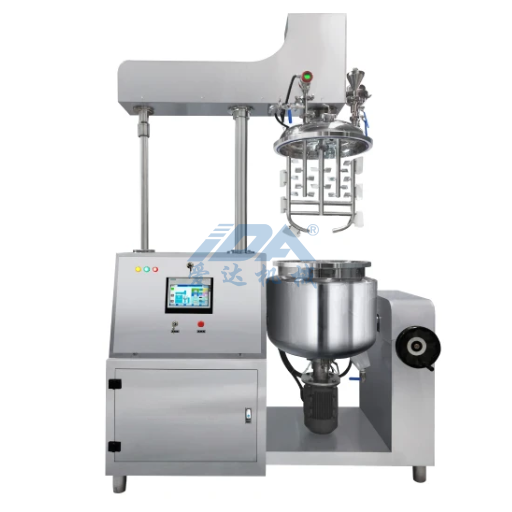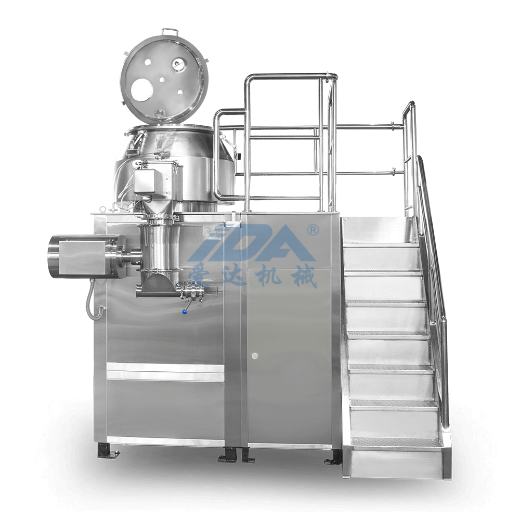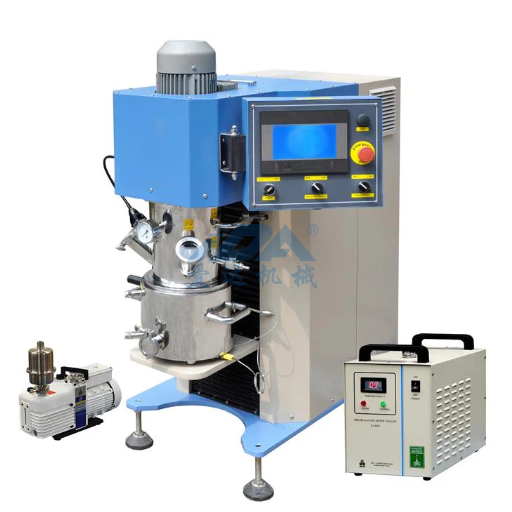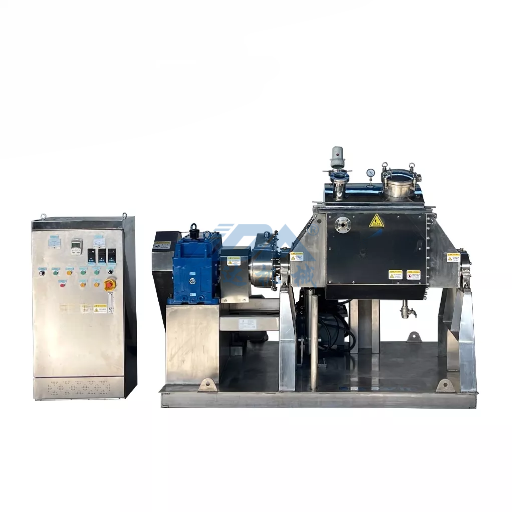
Get in Touch with IDA

What is a Triple Shaft Mixer?

Contents
show
The Triple Shaft Mixer is a versatile, highly efficient unit meant for mixing, blending, and processing a wide range of materials at various viscosities and complexities. Unlike other mixers, the Triple Shaft Mixers have three distinctly different sets of mixing tools operating concurrently with the common goal of producing consistent and uniform mixing for a gamut of applications. The Triple Shaft Mixer further involves precision, speed, and flexibility to meet all levels of manufacturing needs in the food, pharmaceutical, cosmetics, or chemical industries. This blog will further review the distinctive features and benefits of Triple Shaft Mixers, while showing how these enhance process efficiency and product quality. By the end of these revelations, one will see why these mixers are perfect solutions for manufacturers looking for the ultimate solution to their mixing needs.
Key Takeaway
The Triple Shaft Mixer is the ultimate solution for high-viscosity processing, combining high-speed dispersion, low-speed scraping, and intermediate homogenization to eliminate dead zones and ensure total product uniformity.
Technical Definition of a Triple Shaft Mixer
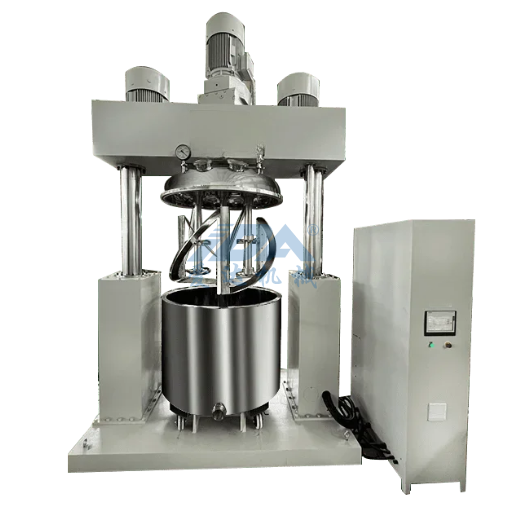
Understanding the Triple Shaft Mixer Concept
Triple Shaft Mixer is a versatile mixing system for handling products that require good mixing with precision. It is furnished with three different agitators that do different jobs in ensuring good mixing, blending, emulsifying, or dispersing for assorted applications. The combination helps in handling the unique requirements of such products that are higher in viscosity or those handling multi-phase products.
The three shafts would most commonly include a fast high-speed disperser, a slow anchor agitator, and an intermediate-speed agitator that could be of numerous different forms such as a rotor-stator or a supplementary high-shear. The high-speed disperser creates intense turbulence necessary when breaking up solids and dispersing it homogeneously, while the anchor agitator such that the material is always sheared from side to wall, eliminating the dead zones. Meanwhile, the intermediate agitator enhances homogenization, ensuring a consistent texture and uniform product.
The design of the Triple Shaft Mixers makes them the ideal solution for the formulation of high-quality stable products across the food processing, pharmaceutical, cosmetics, and chemical industries. With an extremely high level of efficiency and flexibility, operators can mix materials with viscosities quite different from one another and still achieve the desired level of product consistency and uniformity.
Key Characteristics of Triple Shaft Mixers
- Versatility and Adaptability
Triple Shaft Mixers are well-suited to handle a wide range of materials with differing viscosities – from low-viscosity liquids to highly viscous paste. This versatility renders them perfect for a variety of applications within the food, pharmaceuticals, cosmetics, and chemical industries. Always, the consistency of the operation gives the same results no matter how intricate the formulation may be. - Efficient Mixing Technology
The combination of three different mixing shafts of typically a high-speed disperser, a high-shear rotor-stator, and a low-speed anchor provides a for superiorly efficient mixing operation. Working in harmony, these components ensure intense mixing, efficient particle size reduction, and even ingredient distribution, even in materials under difficult formulations. - Accuracy and Consistency
When you have a Triple Shaft Mixer, be sure of a good replicability, clear-cut product characteristics, a controlled level of temperature, and the mixing system’s disturbances. It is a must to remember that when the idea comes down to equipment, precision is the name of the game. It must be low-friction–undoubtedly–so as to provide the facility of integrating low-torque systems with relatively long process areas. Its layers of low non-conventional mixing ensure full view of the entire batch, simply translating as mixers being used with no “dead weight.” At the same time, guaranteeing some value engineering yet to be further improved by the use of powder-digging elements.
Comparison with Other Mixing Technologies
Triaxial rotation is exceptionally different from other available methods of mixing in that about it conformity and efficiency of blending are guaranteed with all kinds of substances. In contrast to conventional mixing discouragements, Triaxial mixers welcome multi-axis moves to create a more unified final product. Consequently, there is a homogeneous final product and the uniformity of distribution can be critical in numerous applications.
In this mixing method the advantages are extended to a number of applicable products regardless of powders, granules, or liquids, with varying viscosities. In various instances, the traditional machines are quite restrictive on the different materials they can be able to extract, and in some cases they would probably take more multiple machines or alternatively powerful procedures to substitute spare. On the other hand, less consumption of several equipment factors ensures an easier run of operations, time savings, and operating costs.
Also, tri-conveyor blenders are recognized for significantly reducing blending times when contrasted with single-axis or planetary blenders. By maximizing material movement and intake, waste is minimized, and the process is completed efficiently, with little bloatage but using less energy. Tri-conveyor blenders thus in effect set themselves up as an effective and ecologically responsible industrial solution for furthering procedure quality to meet environmental regulations.
Key Components of a Triple Shaft Mixer
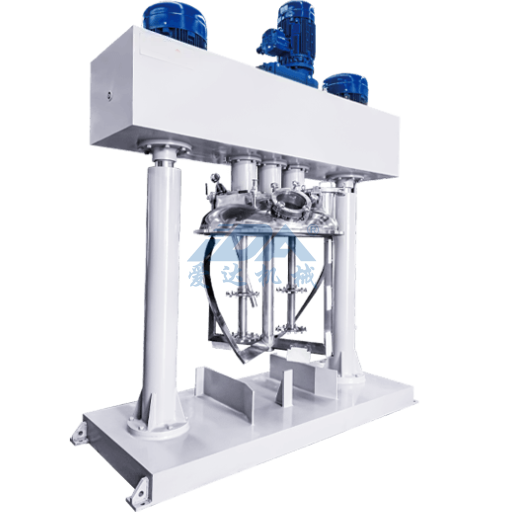
Main Shafts and Their Functions
- 1
High-Speed Disperser Shaft
First crushes the feed opening down into material, letting it create a well-mixed lather. It spins at high velocities to uniformly disperse powders and other solids throughout the mixture. - 2
Slow-Speed Anchor Shaft
Helps maintain consistency by turning materials along the sides of the mixing vessel, preventing material from building up on the walls and ensuring thorough dispersion of all ingredients. - 3
Rotor-Stator / High-Shear Emulsifier
Functions to reduce particle sizes and enhance the uniformity of mix required for preparation of emulsions. It is essential for shearing products to a particular texture.
Mixing Tools and Their Roles in Formulation
Mixing tools determine the right consistency, texture, and uniformity in formulations. Each tool is capable of carrying out a specific task, ensuring that the final product conforms to quality and performance standards as needed for its application. With optimal functioning, these tools facilitate the proper mixing of ingredients to avoid any sort of inconsistency or unequal distribution across the system.
Three shaft mixers and high shaft mixers have a combination of three processes in one single tool, consisting of a high-speed disperser, a slower agitator, and a high shear. This type of equipment could be adapted to carry out the manufacturing of various products such as viscous pastes, gentle emulsion due to varying consistency in formulation. At high speeds, the solid particles are dispersed into the liquid conservatively, while the slow drive ensures the suspension of particles, so that they do not settle. Homogenizer demonstrates a prominent function as it deals with the final processes of producing smooth textures and adequate mixing of immiscible liquids.
Inclusion of these multipurpose tools into an interlinking set is seen to set a new benchmark for production techniques with regard to flexibility and productivity. These tools do permit preservation of those product parameters: shear, mixing speed, and temperature, which will be varied as suited for the particularization of each texture-paste recipe. In fact, the formula-specific fitting of mixers is mandatory for the efficacy and the advancement of the cosmetic, pharmaceutical, or food industry itself.
Seals and Discharge Systems in Triple Shaft Mixers
Seals and discharge systems help the functioning and versatility of triple-shaft mixers. The right sealing is highly important when it comes to keeping the product integrity intact from contamination and preventing leaks, while discharge guarantees emptying operations. Examples of seals are mechanical seals and lip seals. These two different types of seals can be operable based on different aspects such as pressure, viscosity, and temperature. Depending on the specific application and the materials being processed, the appropriate seal type is chosen to ensure hygienic processing and reliability in the operations.
It is considered to be an important discharge system, which ensures a simple removal of the finished product from the mixer. Many triple shaft mixers have bottom-mount discharge valves that allow the finished product to flow efficiently and directly, minimizing loss. These systems can be engineered for handling high-viscosity materials thereby ensuring complete evacuation of dense and sticky products. This type of discharge should fit the processing needs and adequately increase productivity minimizing downtime.
⚠️ Important Note
Well-designed seals and discharge systems guarantee the efficacy of triple shaft mixers in various industries. The several components need to be maintained, checking with regular inspection, for the increased life of equipment and highest product quality.
Working Principles of the Triple Shaft Mixer

Overview of Mixing Mechanisms
Three-shaft mixers work patentably by integrating three separate mixing assemblies, each with several functions doing their part to bring about the required results. The three mixing assemblies most prominently are as follows-a high-speed disperser, which allows rapid iteration through high shear breaking down the material to the core and distributing the solids uniformly; a blade which also happens to have an arrangement for heat transfer, constantly touching at points with the vessel walls; a slow-speed agitator-an engineer’s flirt-with the product mixing while helping to maintain the same viscosity.
The high-speed disperser causes turbulent mixing within the vessel, ensuring quick dispersion of solids into liquids or breaking down large particles. The consequence of this is that the material dwell times increase, thereby assuring all components are evenly distributed without any clusters; hence, the slow-speed agitator would only fold the thus-mixed product gently so as to avoid overheating issues or the conversion of sensitive formulations into worse scenarios.
The fourth mixing tool is expected to ensure that all products are homogeneously mixed by preventing any material to be deposited on the vessel walls. The scrapping blade more effectively works along with blending mechanisms for all kinds of products having different viscosities, therefore becoming a versatile and reliable solution across a multitude of uses-from food and cosmetics industries to pharmaceuticals.
Viscosity Management during Mixing
Viscosity management is a decisive aspect to the effectiveness and efficiency of a mixing process. The material viscosity affects its flow and thus its mixing; it consequently demands varying degrees of energy efficiency and a certain quality of the final product. Standard mixing mechanisms work well for low-viscosity fluids, which in a more usual sense are water or oils. However, for viscous materials, specifically, such tools as scrapers or high-shear mixers may often be required to avoid problems such as uneven mixing or material build-up on surfaces.
It is vital to monitor the viscosity during mixing so that the rest of the batch remains uniform. It may be incorporated in online systems such as inline viscometers or live-action sampling alerts for manual adjustments of mixing speed, duration, or temperature. Temperature manipulation could mean a great deal in the realm of viscosity management, as altering the temperature will result in swelling to distortion to a few of these materials’ flow behaviors, affecting how well the mixing will happen.
For optimum product performance and quality, effective viscosity management is needed. Ingredients that require careful management of their texture and viscosity, like cream, paste, or gel, further adequately establish how important it is to monitor viscosity. Viscosities stay in their spaces when food is made, cosmetics are prepared, or pharmaceuticals are formulated, for which they can be manipulated right to secure the product properties while eliminating avoidable waste due to rework or variation.
Vacuum Cover and Its Importance in High Viscosity Applications
A vacuum lid is a crucial feature for managing high viscosity applications and this influences product quality and efficiency across observed industries. High viscosity stuff, like creams, gels, and pastes, is troublesome during processing, thanks to resistance to any flow whatsoever as well as their apparent propensity for air entrapment. This is where devastation is caused. With vacuum lid is prepared an environment that is sealed from the outside world.-an air-free setup that is highly operative in terms of product integrity, against air bubbles or voids that would later mar their palatability and performance.
Mixing and homogenization are further improved by using vacuum lids. This is because that helps in the continuous blending of materials in a consistent and uniform manner. The elimination of air pockets permit smoother ingredient distribution, leading to an improvement of the consistency of the final product. This is especially useful in the food processing, cosmetic, and drug producing industries, where the strictest measures towards accuracy and consistency are vital to their performance and customer satisfaction.
Also, running these vacuum lids will aid in diminishing spoilage and achieving maximum efficiency in production performance. In the absence of air, industrial problems like delays in production, rework due to faulty batches, and the cycle of material wastage etc. can be substantially reduced, almost eliminated altogether. This not only aids minimal material wastage but equally enhances overall productivity. High-viscosity materials get fed smoothly through the vacuum system, among many other benefits, thus ensuring that the quality is assured consistently while wasting unnecessary suffering costs due to errors or irregularities in the production process.
Applications of Triple Shaft Mixers Across Industries

Use in the Chemical Industry
A triple shaft mixer is of critical importance in the chemical industry with its capabilities of handling complex formulations with varied viscosities. It is extensively used in manufacturing adhesives, sealants, resins, and other chemicals which demand efficient mixing and dispersion. It combines high-shear mixing, slow agitation, and counter-rotating blades and guarantees uniformity, reliable dispersion, and a consistent product right up to the most difficult formulations.
Their significant feature is their ability to mix both liquid and semi-solid material, making these mixers highly versatile in terms of application. For example, triple shaft mixers secure the appropriate mixing of various components like pigments, binders, and solvents in the makeup of compounds for the manufacturing of paints or fillers to supply stable and high-quality products. The vacuum feature in combination with triple shaft mixers also eliminates air from the mixture thereby avoiding the creation of defects such as air bubbles in the finished product, and hence maintains the integrity of the product.,.
Another considerable benefit of three-tier mixers is that they can be scaled upward from very small batches to huge industrial processes. This very attribute renders these machines useful for an extensive range of applications, including R&D and high-production chemical operation. The high precision and adaptability of these mixers, meeting the exacting requirements of the chemical industry, guarantee smooth, satisfactory quality in each phase of the production process.
Role in Pharmaceutical Manufacturing
Three-tier mixers play a crucial role in pharmaceutical manufacturing by ensuring consistent mixing and processing of ingredients. They are employed in the manufacture of quite a number of pharmaceutical drug products, including tablets, capsules, and creams, for which precision and uniformity are needed. These mixers provide the required uniformity within the process and adopt a batch homogeneity approach to minimize the occurrence of irregularities that may compromise the safety and efficacy of a drug.
Now, regarding pharmaceutical applications, the size of some of the materials used may be quite small, if not micro in comparison to their formulation of the active pharmaceutical ingredient. Accordingly, three-tier mixers can very softly and gently treat products with very careful handling that requires respect in order to sustain the essence and efficiency of the active ingredient. These mixers successfully achieve a soft, controlled method of mixing, working for the end goal of high consistency, which is also valuable in the manufacturing of powders and liquids.
Thirdly, the scalability of three-tierage mixers makes them indispensable for pharmaceutical production. Flexibility to adapt to smallscale research and development to very large scale manufacturing is given by those multi purpose machines giving pharmaceutical companies operational advantages as far as first steps in formulation testing and in the full-scale production or manufacturing phase of cost-effective application with the strictest of quality standards.
Applications in Food Production and Adhesive Formulations
In the food industry, triple mixers perform an eminent job in food production by providing an opportunity for the uniform and homogeneously blended ingredients, machinerising, and quality in the final product. Specifically these machines are too useful pertaining to production of an array of products such as sauces, dressings, spreads, and beverages where uniform texture and flavor are paramount. By ensuring homogeneity, they uphold the standards of the product by increasing its shelf life and meet consumer expectations effectively.
In any case, for glue-formulations, three-tiered mixers are a necessity to provide good consistency and high-performing products. In glue-formulation, the choice of polymers, resins, and additives might matter extremely well for the glue to possess preferred adhesive properties. These mixers are equipped to handle anything from high to low viscosity, generating strong and reliable adhesive solutions for industries from construction through to packaging.
The versatility of three-tier fluid processing goes a long way into the various applications, and this seeps from strategic control over process variables in terms of speed, heat, and mechanical mixing strength. The versatility in design allows these industries to cover any production protocols to suit their requirements while remaining cost-effective and wrapping standards of robust quality. They stand as those tools that bridge innovation with an added efficiency towards food and adhesive products advancement and credibility.
Advantages of Using a Triple Shaft Mixer
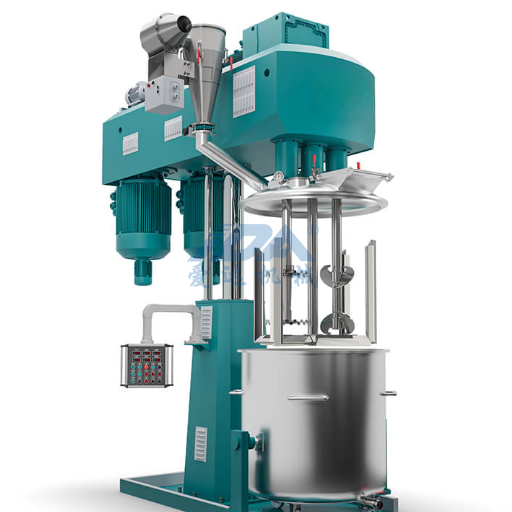
Efficiency in Mixing High Viscosity Materials
Triple shaft mixers efficiently mix high viscosity materials, and are an indispensable tool in industries such as adhesives, food production, and coatings. High viscosity materials, by virtue of their thicker consistency, need a mixing process that should ensure homogeneity and should ward off inconsistencies in the final product. In this regard, triple shaft mixers combine three different mixing actions-typically a high-speed disperser, a low-speed anchor, and a secondary agitator-to provide the most thorough blending with minimal shear stress.
Working in tandem, multiple mixing paddles address specific challenges related to high-viscosity ingredients. The high-speed blade shears powders and additives quickly and down any particles in process. On the other hand, the low-speed loop ensures continuous flow in the mixing and mixing of high-density portions. The additional beater enhances the texture and consistency further in blending. This combination of motions enables the mixer to tenderly spread the ingredients evenly in the preparation of samples, making sure the product is manufactured to quality standards in terms of viscosity and homogeniety.
The great advantage of triple shaft mixers resides in their versatility. These mixers are designed to process a wide range of viscosities, from semisolids to highly concentrated mixtures, with no compromise in their performance. Their delicate control allows operators to adjust the stirring intensity as well as the speed anywhere within the feasible range according to the production needs. This enhances process efficiency and maintains the first quality standards of the mixed materials.
Improved Product Quality and Homogeneity
An essential benefit of the triple shaft mixers is the additional quality of the end product obtained by providing a combined mechanism that adequately and uniformly unites components. The interaction of several mixing machines at work at the same time makes this machine so remarkable in produce highly homogenous products in the end. Furthermore, this certainly assists in controlling variability or separation of materials, especially in complex formulations.
Another obvious advantage of the triple shaft mixer, which is its ability to handle diverse materials with different viscosities, is without a doubt the most desired function by industry whether dealing with liquid, semi-solid or high-viscosity formulations. The existence of this feature makes the mixer adaptive, which realty compliments the overall product quality, hence meeting extreme industry standards.
Moreover, precise setting of the mixing parameters of speed and temperature foster qualitative outputs of the system. The system offers ready customization in line with various system topologies to suit the unique requirements of the formulations. This not just fosters bottleneck efficiency but promises unison-across batches. The triple shaft mixer is instrumental in industries targeting high-quality outputs.
Explosion-Proof and Self-Contained Features
Features like being explosion-proof and self-contained are key to ensuring safety and operational efficiency for sensitive environment while it can minimize the risk of handling hazardous or volatile materials. In view of strict safety standards, the explosion-proof drum means there is a minimal chance of any incident while flammable substances are being handled. This would make the mixer highly reliable and safe, even in demanding working conditions.
Being self-contained, the system simplifies its operation and maintenance. Since all necessary components are integrated into one unit, the necessity for external accessories or attachments is done away with, thus making setup and operation easier. This design prevents operational or cross-contamination issues while ensuring consistent quality across production processes. Every point of reduced maintenance scope and set-up ease saves key expenses.
The safety and workability of the triple shaft mixer make it highly useful for many industries where demand is high. With protection and user-friendliness combined, this system ensures industries can work toward meeting their production goals without jeopardizing both the safety of workers as well as the quality of the product.
Frequently Asked Questions (FAQ)
Q: What purposes do a triple shaft mixer, or a three-shaft mixer can serve?
A: A triple-shaft mixer uniformly mixes, disperses, and homogenizes viscous products with the application of three separate shafts – typically low-speed blades (anchor feeds), a middle-speed rotor stator or stator mixer, and a high-speed disperser. This configuration also includes the processes of powder induction, dissolution, emulsification, and homogenization that assure the uniformity of the product greatly in the slurry form, inks, and medium to high viscosities.
Q: How does the rotor-stator design in triple-shaft mixer work?
A: Rotor-stator units give high shear and hydraulic shear via product flowing through tightly tapered gaps between the rotor and stator, i.e. they can emulsify and homogenize dispersions. In triple-shaft mixers, the rotor-stator typically pre-wets and degasses materials for feeding into the high-speed disperser, forming the mixing orbit, thus assisting in the dispersion or dissolution of powders and pigments.
Q: What do the low-speed blades and ancher feeds do?
A: Low-speed blades and the taught anchor feeds are integrated—even the sidewall they overflow through to create a sub-surface vortex. Their purpose is to create the mixing pattern that moves the product floor toward the vortex where the remaining mixing can act with mid- and high-speed devices. These will ensure that all of the batch as a whole is being circulated while preventing the product from sticking to the wall and assisting in the flow of viscous products, slurries, etc., toward the rotor-stator or the high-speed disperser for the proper dissolution, dispersion, or emulsification.
Q: Do triple-shafts mixer can serve powder induction and degas at the same time?
A: Yes, some triple-shafts mixers manufacture industrial designs that support efficient powder induction by “suction” from the liquid phase without entrainment of air; they accomplish degassing during the mixing-and-dispersion phase. It is to be acknowledged explicitly that the combined work of the anchor feeding, stator action, and high speed dispersal can help mix powder in a very short time, stopping the air entrainment causing poor quality.
Q: How hydraulic shear relates to high speed disperser shearing in these mixers?
A: There is differentiation between hydraulic shear and high-speed disperser shear in these mixers. Hydraulic shear is the shear induced by fluid flow between a rotor and a stator or a rotor and the wall; the high-speed disperser provides shear directly through the fast blade rotation. In the triple-shafts mixer, they are combined; hydraulic shear involved in the rotor-stator and the vortex action aids in the shearing of emulsification and homogenization, while the high-speed disperser provides a concentrated shear for particle breakdown and size reduction.
Q: What industries and products commonly use triple-shaft mixers?
A: Triple-shaft mixers have been utilized in the paints or ink industry while being featured also in advanced areas such as emulsification and homogenizing activities in adhesives or sealants, food or cosmetics, some chemical slurries and viscous products where product uniformity is critical. The Ross Versamix VM-600 is an excellent variable to apply when processes need phase dispersal or dissolution, inductive powder processes, and strict recourse of the mixing vessel locations for guaranteeing the repeatability of the results.
Q: How are suppliers assisting control devices and customization for triple-shaft mixers?
A: Leading manufacturers offer integrated control equipment everywhere that manages shaft speeds, torque limits, hydraulic lifts, and the sequencing between stator, disperser, and anchor. Customizations available include, for example, different stator geometries to accommodate high-shear blade types that rotate at high speeds and extend to the sidewalls, different hydraulic systems for lifting or lowering propellers for substrata mixing, and perfect emulsification, dissolution, or degassing cycles for your product.
References
-
Power Measurements And Optimization Of Mixing – Lehigh Preserve – A study focusing on power measurements and optimization in mixing processes.
-
Exploration of Parameters for the Continuous Blending of … – MIT – Research on blending parameters and mixer performance.
- California Polytechnic State University Digital Commons:Demonstration Triple Spool Turbine and Controls
-
Triple Shaft Mixer: Complete Guide to High Viscosity Mixing Solutions