Get in Touch with IDA

High Shear Mixer vs. Triple Shaft Mixer: Understanding the Differences

Contents
show
A popular choice to meet unique application needs includes high shear mixers and triple shaft mixers, but how does one know which is the best for the process? This blog post delves into the important differences between these powerful mixing technologies, thereby providing examples on how they work with some recommendations and ideal case uses. If you are operating in the pharmaceutical, food production, cosmetics, or another industry, this guide will surely offer you the needed insights to make an informed decision. Follow along as we highlight the high points of both mixers and ponder over the considerations and preferences for one rather than the other.
Introduction to Industrial Mixing Equipment
Importance of Mixing in Manufacturing
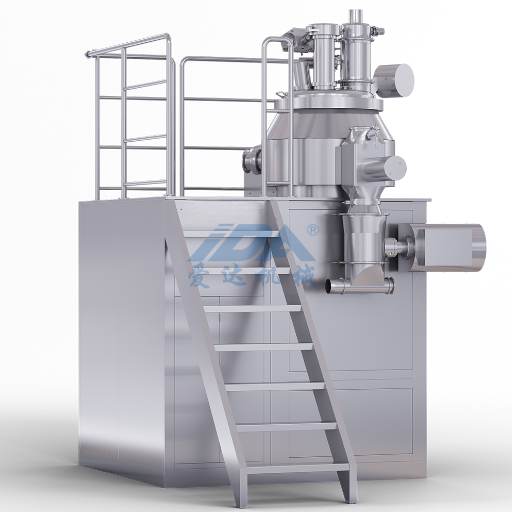
Mixing is fundamental while making manufacturing things, which ensures homogeneity and consistency in the quality of goods. Whether it is blending raw materials, combining liquids, or mixing substances, proper mixing should guarantee efficacy as well as quality while maintaining efficiency. In industries such as pharmaceuticals, food processing, and cosmetics, consistency is a must due to relative appropriateness and safety.
A successful mixing process contributes directly to the quality of the manufactured product by increasing the even distribution of ingredients, which is necessary for precise chemical reactions or the same texture. An inefficient batch could result through inadequate mixing leading to the production of substandard products, contamination, or waste of resources, increasing operational costs. By using the right mixing equipment, manufacturers can help drive for increased effectiveness in the process in order for all batches to meet the quality requirements.
The mixing process not only ensures quality control but also makes production flexible and scalable. The latest mixing technologies allow manufacturers to vary the kind of settings that would cater to the different kinds of formulations of a product or help in increasing production capacity, amongst other advantages. Such versatility is important for those companies looking for ways to innovate and yet keep up with customers’ expectations into a deep dialogue over the importance of mixing in relation to the choice of correct equipment.
Overview of High Shear Mixers
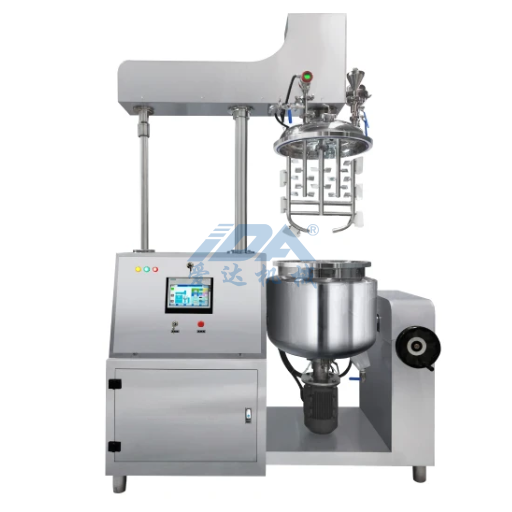
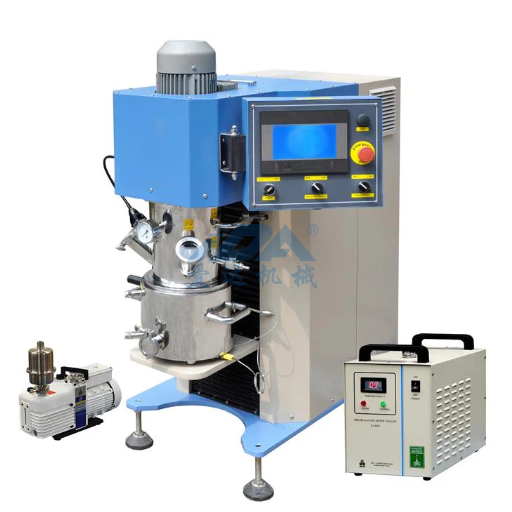
These specialized mixing equipment are made to mix, emulsify, homogenize, and/or disperse materials very efficiently. Operating by means of a very strong downward shear force, the mixing chops and merges materials to ensure uniformity or consistency at the end of the process. In all sorts of food and beverage, pharmaceuticals, cosmetics, and chemicals industries, where precision and efficiency are important, there is a high demand for high shear mixers.
High shear mixers work with the basic rotor-stator system outcome. The rotor generates high-speed motion to pull the material into the mixing head, while the stator shears by forcing the material through small gaps. Through cutting and dispersing the particles, they homogenize, mix, and produce an emulsion with perfect smoothness among all things. Performance of this kind is why these mixers are specifically effective for making fine dispersions or stable emulsions.
Key Takeaway
A major virtue of high shear mixers is that they can help cut down on processing time and get consistent results at the same time. As a versatile lot, they can take a slew of materials, from pastes to liquids, rendering them valuable for lots of applications. To boot, their precision provides very less material waste and improved product quality, making it convenient for the manufacturers out there to easily adhere to rigid industry specifications.
Overview of Triple Shaft Mixers
Several shaft mixers are highly efficient mixing systems that are engineered to carry out applications in a variety of industries, including, but not limited to, the chemicals, cosmetics, pharmaceuticals, and food-processing industries. Specifically designed to work through complex formulations, involving a combination of several mixing processes, these machines guarantee and produce the best outcome. Material of different viscosities are blended with spinnerets-blended machines with extraordinary consistence and accuracy for that purpose.
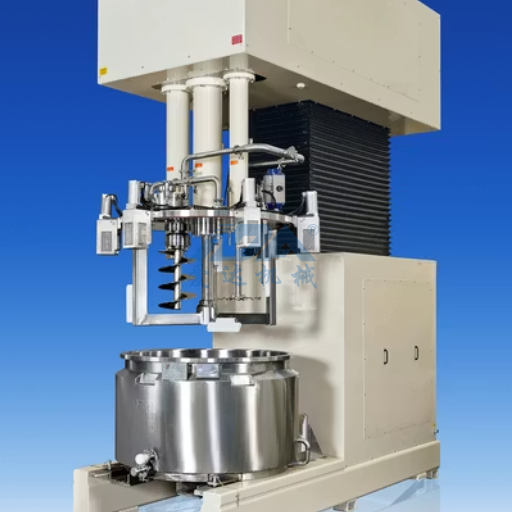
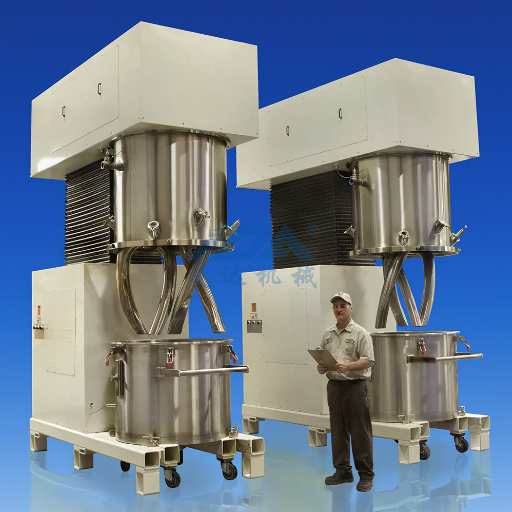
Three shafts usually consist of a high-speed disperser, a high-shear rotor-stator, and a low-speed anchor assembly, and serve three different purposes. The high-speed dispersers provide a faster breakdown of particles in the liquid or proper dispersion of powders in the liquid, whereas the rotor-stator provides fine emulsification and a smooth texture. On the opposite side, the low-speed pair- or anchor agitator wil;l sweep the product from the vessel walls for an even distribution of heat and material in the whole vessel. By this combination, any combination of tasks such as blending, emulsification, homogenization, and heating are cumulative.
Minimizing processing time without diminishing product quality is one of the main advantages of a triple-shaft mixer. These mixers are capable of manufacturing uniform compositions, even with high-viscosity materials; and with difficulty in handling materials that have a tendency to clump or separate, they operate efficiently and minimize the occurrence of the same. The mixer alleviates material waste and ensures scaling up effectively into commercial manufacture. They tend to be widely used, as they can treat every type of product with precision and efficiency, not to mention the fact that they are very versatile for making consistent products, which is why quality-conscious industries find them a real boon.
Mechanisms of Mixing
High Shear Mixer Mechanism
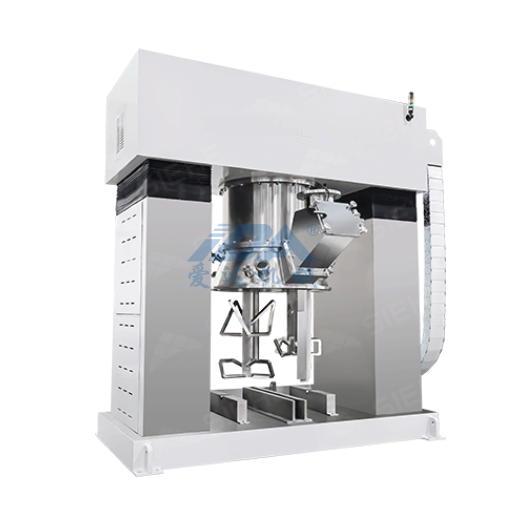
High Shear mixers function by having high-speed rotors spinning at high velocity producing strong centrifugal forces. Carried by this centrifugal force as materials go through the extremely narrow barrier between the rotor and the stator, the phenomenon is called high shear mixing. This accelerated movement directly catalyzed breaking of the particle, dispersion of the ingredients, and thus homogenizing completely, rendering the mixer perfect for a wide range of product consistencies and extreme uniformity.
It can be characterized as a way of interacting force such as shear force, turbulence, and cavitation. Shear force will be generated when materials enter the gap in the small gap within the wrong gap. This is generating a reduction in particle size by blending them. Turbulence helps create an additional chaotic mix by bubbling up within the material, therefore, ensuIng a parity of recirculation. Cavitation is produced during the formation and breakdown of vapor bubbles by pressure difference, ensuring quick mixing and dispersion.
Used for only anything from manufacturing foodstuffs to pharmaceuticals or cosmetics, where uniformity and precision are all-important, a process comparable to mixing is being widely applied. Especially to the scope of emulsification, dissolving solids sampled within liquids from the other ingredient, or breaking agglomerates, it must run high shear mixers so that the product receives uniform quality. Pertaining to today’s manufacturing culture, high shear mixers are an indispensable item.
Triple Shaft Mixer Mechanism
The triple shaft mixer is an innovative solution in the mixing industry that can undertake a wide assortment of requirements where consistency and uniformity are crucial. Its three different mechanisms optimize blending, emulsification, and homogenization. One shaft is usually active at high speed with a dispersing blade to break the product into fine particles and dissolve materials swiftly. This type of mechanism makes it particularly suited to blending applications needing the creation of fine and uniform mixtures.
The low-speed sweep blade on the second shaft is added to clear up the vessel walls while moving more significant and heavier materials. This avoids product buildup while permitting uniformity in mixing through an even temperature and ingredient distribution. This second function, apart from high-speed dispersing, handles those materials uniting to rather better mixing, exhibiting positive improvement.
A major vertical mixer’s screw is used to generate the homogenization of concentrations and the radial uniformity of independently mis-matched: the characteristics are highly dissipative flows.unifu calligraphy and Displacement Reagents a The concentration and azimuthal sizes are randomized by the molar-mixing action whereby the axial and radial velocities are dissipated.
Comparison of Mixing Mechanisms
Though high shear and triple shaft mixers are frequently employed in industrial applications, they actually serve separate purposes and excel under different circumstances. High shear mixers are engineered for the fast dispersion and emulsification of products under extreme mechanical and hydraulic conditions. They are particularly good in particle breakdown, and emulsioning stabilities can be formed instantly. On the other hand, triple shaft systems involve three distinct mixing animations at low shear, high dispersion, and medium shear, thus creating a versatile option for use with numerous viscosities and material complexities.
One of the primary contrasts between them—so far, their young career in physical reality-is their behavior in relation to material consistency and viscosity. Low to medium-viscosity products enjoy the luxury of high shear mixers at rapid homogenization. Rotor-stator configuration, with a resulting technical revelation of uniformly distributed particle size and dispersion making uniform sizes, therefore plays a crucial role in making this possible. But through time, considering the existence of multiple mixing actions, triple shaft mixers are in a better position to handle materials with low to extremely high viscosities, making a decent drive for formulations as complex as adhesives, or one could say thick creams and coatings, where precision control and uniformity are most crucial.
The choice between a high speed mixer and a triple shaft mixer will hinge on a variety of factors including the specific application, material properties, and production targets. A high shear mixer is suitable for processes where fast emulsification and particle reduction is required. The triple shaft though may be applied across a much more flexible range of product recipes. Understanding the needs of the material to be processed will ensure that the mix performance and efficiency remain optimal.
Applications of High Shear and Triple Shaft Mixers
Industries Utilizing High Shear Mixers
- •
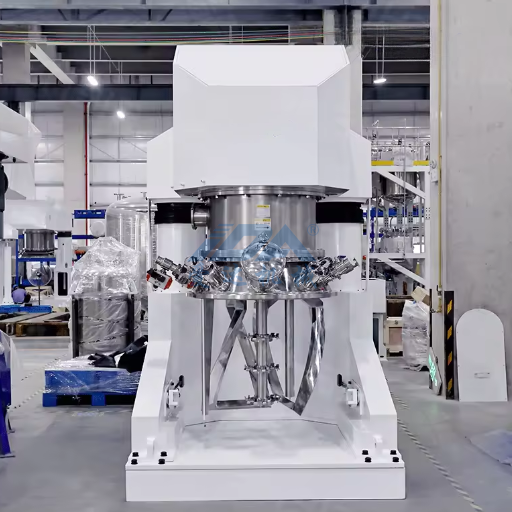
Pharmaceuticals: Crucial for manufacture of creams, ointments, and formulations needing consistent homogeneity. - •
Food & Beverage: Processing of sauces, dressings, dairy products, and stable suspensions. - •
Cosmetics: Used for shampoos, conditioners, and creams to achieve stability and set consistency.
Industries Utilizing Triple Shaft Mixers
Triple- shaft mixers are famous in many industries where accurate mixing and a uniform finish are sought. One of them is the food and beverage industry where these mixers are substantially sought with respect to operations like sauce, dressings, spreads, and the finished product. Some materials are mixed within these mixers so that they are consistent in texture and the same flavor profile, and this is very time-saving for chemical engineers. Their ability to permit different viscosities from low to high up shows that triple shaft mixers are the most resourceful machines across food industrial processes.
The second major sector or industry making use of the production and enterprise of triple shaft mixers is the chemical industry. Triple shaft mixers are useful in producing practically every type of chemical product, such as adhesives, sealants, coatings, and lubricants. Since they are capable of mixing highly viscous and low-viscosity materials with complex formulations without much trouble, they are superb vehicles for manipulating the end products’ desired chemical properties.
In the areas of cosmetics and pharmaceuticals, triple shaft mixers are becoming indispensable. They are instrumental in producing creams, lotions, and other emulsions, ensuring uniform consistency and stability. There is a range of applications that have shown triple shaft mixers to be an excellently manifold in the combining of diverse types of ingredients and on the basis of coordination, while maintaining the quality, in contrast to exceptional and monotonous applications in the pharmaceutical and cosmetics industry. Application in various industries has simply demonstrated how pivotal triple shaft mixers are in modern manufacturing processes.
Advantages and Limitations
Benefits of High Shear Mixers
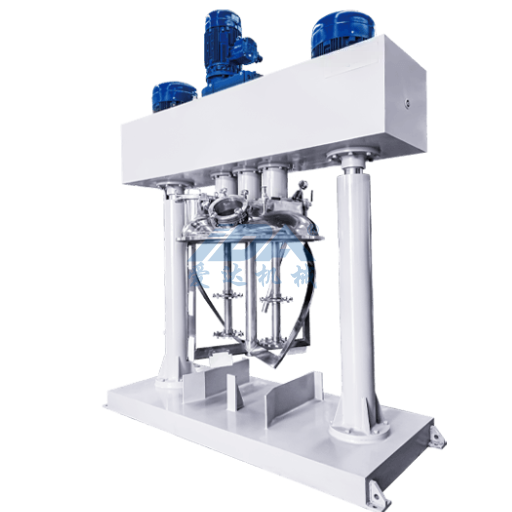
High shear mixers are extremely useful in blending and making emulsions of various materials, important activities for any industry demanding a uniform mixing operation. The main advantage of this high shear work is that the particles are broken down to very small sized ones and some fine emulsions are obtained.
Furthermore, one enjoys quicker process times with these mixers. They operate at far higher speeds than traditional mixers, facilitating a situation where results can be arrived at much quicker. This directly reduces production costs, saving money for the manufacturers and increasing overall outlet volumes.
Furthermore, high shear mixers are flexible for a variety of ingredients to be accommodated that have different viscosities. So elegant are their liquid and semi-solid admixtures, which they manage according to the needs of various industries. One of the reasons why they are prized with various products is their varied ranges in handling different formulations while maintaining standards in quality, functionality, and adaptability across several industries.
Benefits of Triple Shaft Mixers
Triple-shaft mixers offer several benefits that make them indispensable in industries needing amalgamation of different materials efficiently. Triple-shaft mixers are known for handling tough formulations swiftly, owing to their combined capabilities of three mixing mechanisms such as a high-speed attritor, an anchor gear at slow speed, and one midere blade for mixing. This combination allows greater control over their mixing process, unlike any of their direct competitor mixers. Furthermore, in the presence of a challenging mix scenario, the peculiarities of resultant mixing are different, uniform consistency, and so on.
One of the most important maximums applicable to triple mixer design is the versatility of these machines, created for the processing of a wide group of substances. They can handle handling materials with a wide range of viscosities, ranging from thin liquids to highly viscous materials, to yield itself highly versatile; this is important in various industries, such as food processing, pharmaceuticals, cosmetics, adhesives, etc. Multi-functional aspect is equally essential to cut time-consuming procedures and improve processing effectiveness, whereas it carries out these 3 functions at once: mixing, dispersing, and homogenizing.
They also facilitate enhanced productivity along with energy efficiency. The triple shaft mixer ensures uniform mixing and avoids air pockets, excessive heat, and potential product quality deterioration. Compliance with unique manufacturing demands is possible thanks to the exactness of speed and direction. These factors combine to make a triple shaft mixer a feasible and dependable option in competitive situations with a precise and fine-tuned system to ensure accuracy and efficiency in mixing processes.
Limitations of Each Mixer Type
⚠️ Important Considerations
High Shear Mixers: Heavy and viscous batches can become a problem to work with, and the intense torque will limit the size of the batch, resulting in heat build-up over prolonged activity. Moreover, the heavy vortex can push air into the product.
Triple-Shaft Mixers: They are more complex in design and maintenance, demanding meticulous calibration. They also suffer from slower speeds compared to high-speed mixers, leading to longer mixing times in certain conditions.
Choosing the Right Mixer for Your Needs
Factors to Consider in Mixer Selection
When choosing between a high shear blending machine and an agitator-based machine, one must consider the specific application, and what the operation needs in terms of processing. High shear blending machines are best when requiring rapid pulverization, emulsification, or homogenization. The machines are particularly great if dealing in any applications of liquid or semisolid materials where uniform and consistent texture is important. Consequently, the most important characteristic of high shear blending is the acceleration in speed and efficiency, for reasons largely related to the industries it serves, as industry pharmaceuticals, cosmetics, and food, which is where its attention stay.
The three-shaft mixer, on the other hand, solves more difficult mixing tasks effectively, and can be adjusted to process various materials. It is very efficient in mixing high-viscosity products or materials with varying textures. It is a common choice in applications where good mixing operations, heat transfer, and scraping off vessel walls are of prime importance. Normally, it is well suited for the production of adhesives, sealants, and other viscous pastes.
What it comes down to is the nature of the material to be processed, volume of the batch, the target consistency, and the processing time. High shear mixers have a good place in jobs involving high speeds and low viscosities, while the triple-shaft mixer configuration is apt for heavy-duty, high-viscosity applications that demand perfect homogeneity. Careful consideration of these important factors will leave you confident in your choice of the plant that will give superior mixing performance according to your need.
High Viscosity vs. Low Viscosity Applications
| Application Type | Preferred Mixer | Key Examples |
|---|---|---|
| High Viscosity | Triple Shaft Mixer | Adhesives, sealants, heavy creams |
| Low Viscosity | High Shear Mixer | Paints, clear coatings, fluid solutions |
Cost Considerations and ROI
In terms of cost analysis, especially in relation to high shear versus triple-shaft mixers, it is important to look into the upfront investment and running expenses in the long run. It can be seen that high shear mixers have lower pricing for most fabricators. These are all initial costs, though, as these are heavy on power and would cost pretty high when put into a running environment where speed is too high.
Now, a triple-shaft mixer would demand that the builder should muscle their way through the bigger share of money, owing to a more complex design and an overnight comfort zone concerning viscosity. Nonetheless, this mixer makes sense over the long haul for certain applications because of its tremendous energy efficiency and ability to produce a consistent structure for a very thick formulation. Fantastic versatility is thrown in so that upwards of 1,000,000 centipoises of formulations could be characteristically processed. This in turn would lead to much-needed savings.
Ultimately, the Return on Investment (ROI) depends on the particular needs of your business. High shear mixers show a faster return for low-viscosity materials that require fast mixing; inexpensive and effective in homogenizing finer dispersions, they show an initial cost advantage. On the other hand, works that deal with high-viscosity materials or complex formulations will gain a better ROI with triple-shaft mixers by ensuring consistency in quality and reduced rework, yield wasting, and interfering in servicing a work request. It is hence worthwhile that a detailed study makes sure you get the best option for your production; consider these areas: your production requirements, material properties, and budget.
Frequently Asked Questions (FAQ)
Q: Discuss the main differences between the High Shear Mixer and Triple Shaft Mixer?
A: On a broad scale, comparing High Shear Mixer versus Triple Shaft Mixer is about shaft design, system function, and operating speed: High Shear mixers involve extreme shear and have a high rpm range that is good for size reduction and dispersing solids. Triple shaft mixing is essentially a batch system having scrapers and dual or triple shaft drives, suitable for medium to high viscosity.
Q: When should you choose a high-shear mixer over a triple-shaft mixer?
A: One would go for a high-shear mixer for fast particle size reduction thereby achieving dispersion of rapid solid. Triple-shaft mixers are preferably chosen for conditions where mixers are considered to take care of thick pastes where scrapers and low-speed shakes help keep mixer clean.
Q: What constitutes the difference between impeller types and scraper design between mixers?
A: High shear mixers have a rotor/stator and an impeller-like rotor that create a high shear zone. Triple-shaft mixers consist of scraper blades and two or more impellers or paddle elements on separate shafts for moving material and preventing wall build-up.
Q. Is it feasible to swap the function of triple shaft mixers or planetary mixers for viscous products?
A: Mixers are task-specific. Triple shaft and planetary mixers are best suited for medium- to high-viscosity products. Planetary mixers provide localized kneading, while triple shaft mixers blend together low speed and high shear shafts for continuous homogenization.
Q: What role do mixer drives and shaft design play in performance?
A: High-shear mixers yield the use of high rpm drives for the creation of a high-shear zone. Triple-shaft mixer uses beefy low-speed, high-torque drives to move very viscous masses with scrapers.
Q: Can in-line mixers replace batch mixers for industrial production?
A: In-line mixers ensure continuous high-shear dispersing capabilities. Batch mixers are selected for operational flexibility and for medium to high viscosity products that need special finishing steps.
Q: How do these mixers fare when formulating for ink and coatings?
A: High-shear mixers are preferred for inks and coatings due to the high RPM and strong shear that causes wetting of pigments. Triple or multi-shaft mixers suit formulations with higher solid or viscosity where scrapers prevent agglomeration.
Q: What operational factors need consideration for choosing between the two?
A: You must consider the viscosity of the product, the size of particle reduction desired, content of solids, heat sensitivity and the capacity of production.
References
-
Mixers – Chemical Engineering Equipment
This source provides general information about different types of mixers, including equipment design, usage examples, and their advantages/disadvantages.
Link to source -
Examining the Effects of Mixer Type
A detailed PDF document discussing the viability and applications of high shear mixers and other types in the ready-mix industry.
Link to source -
Comparative CFD Analysis of Mixer Blades
This academic paper compares mixing quality and performance of different mixer blades, including high shear mixers, using computational fluid dynamics (CFD).
Link to source - Triple Shaft Mixer: Complete Guide to High Viscosity Mixing Solutions