Get in Touch with IDA

Top 15 High-Speed Disperser Manufacturers for 2026 (Updated List)

Contents
show
High-speed dispersers are essential equipment for contemporary process industries because they enable precise particle dispersion which directly impacts product quality and production efficiency. The article presents information about major manufacturers while demonstrating how high-speed dispersers operate and explaining that high shear and controlled viscosity function as essential performance factors. We investigate design options which include bench top laboratory high speed disperser units and hydraulic production-scale systems and explosion proof configurations to showcase disperser blades and saw-tooth disperser designs which achieve effective powder incorporation into liquid and particle agglomerate breakdown and stable emulsion and coating development.
Introduction to High-Speed Dispersers
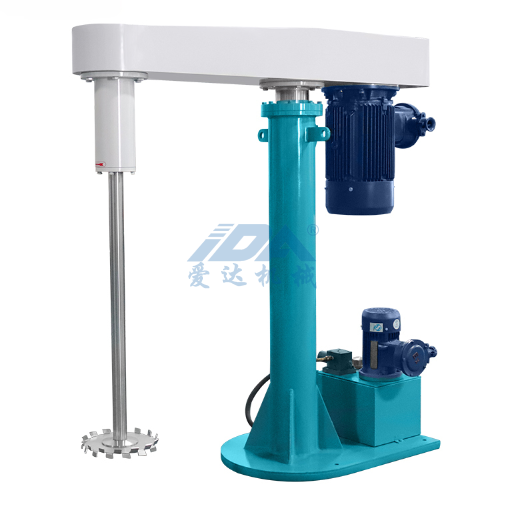
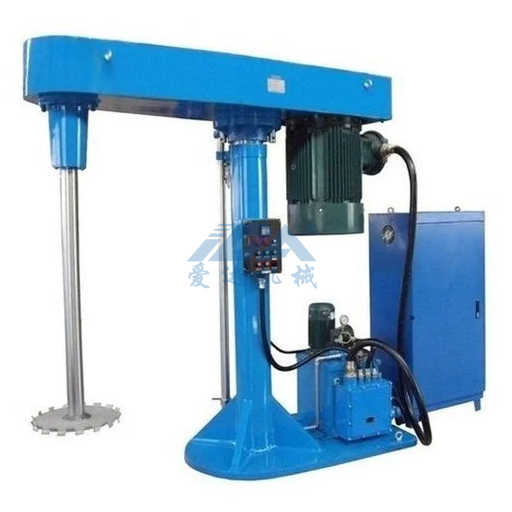
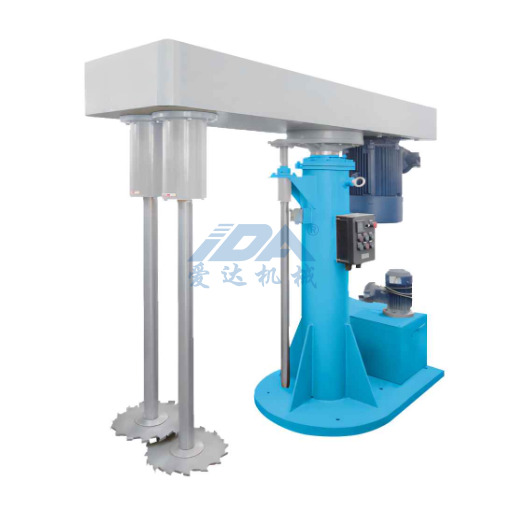
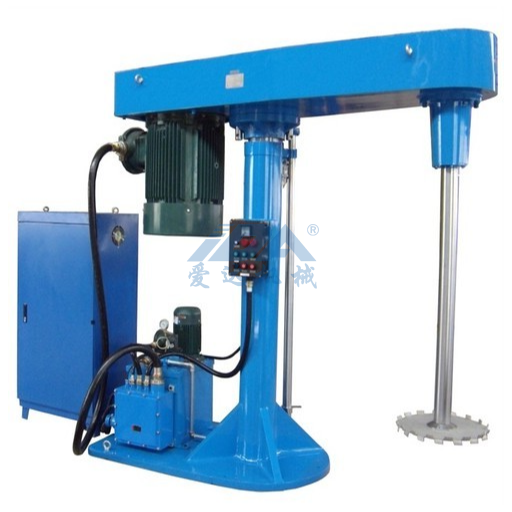
The High-Speed Disperser functions as a rotor-driven mixer which generates powerful shear forces through its saw-tooth disperser blade that operates at high rotational speeds to create a strong vortex. The process draws powder and pigment materials into the wet phase which results in fast dispersion and complete breakdown of solid particles. Dispersers use shear forces to separate particle agglomerates while milling machines and other milling equipment use media for the same purpose. They exist in multiple forms which include laboratory high-speed disperser units and bench top testers and hydraulic lift production dispersers that offer explosion-proof motor options designed for solvent-based paint processing and ink processing and adhesive processing.
Definition of High-Speed Dispersers
High-speed dispersers function as high-speed mixers which use their rapidly turning saw-tooth blades to distribute and moisten powders within liquids. The disperser blade creates high shear forces through its blade tip which generates a vortex that drives powders downward for particle dispersion and deagglomeration. A typical high speed disperser design uses blade diameter, tip speed, and viscosity range to determine processing capabilities while its variable speed controls allow users to optimize solid particle dispersion and emulsification processes. The system includes a complete range of equipment which starts from small bench top mixers and extends to hydraulic lift production platforms that contain ross high speed dispersers which offer durable construction and economical performance through their saw-tooth disperser operation.
Importance of High-Speed Dispersion in Manufacturing
The process of high-speed dispersion achieves effective powder mixing while creating consistent pigment results and maintaining constant viscosity which determines the color strength and gloss properties and durability of paint and coating products. The implementation of high shear mixing results in shorter processing times which decreases energy consumption for each batch and reduces the operational burden on milling systems including mills and other milling machines. The high-speed disperser achieves improved product consistency through its ability to efficiently disintegrate particle agglomerates while decreasing the amount of work that needs to be redone. The explosion proof and hydraulic systems enable operators to handle flammable solvents and heavy materials safely while the precise shear control system allows users to scale their laboratory results to manufacturing.
Applications of High-Speed Dispersers in Various Industries
High-speed dispersers serve diverse industries which require their specialized ability to create fine dispersion while maintaining control of rheological properties. The equipment disperses pigment while the equipment combines powders with liquid for paint and coating and ink applications to achieve desired color and flow properties. Adhesive manufacturers need high shear mixers to create uniform emulsions through the process of resin and filler dispersion. Chemical processors use high speed dispersers to disperse solid particles within their additives and sealants and composites which have different viscosity levels. Laboratories and cosmetics and pharmaceuticals use bench top units to develop their products before they move to hydraulic lift systems for production. Ross high speed disperser systems and other high speed mixers work together with mills to perform post-dispersion particle size refinement.
Paint & Coatings
Adhesives
Ink Processing
Pharmaceuticals
Cosmetics
Chemical Processing
Adhesives
Ink Processing
Pharmaceuticals
Cosmetics
Chemical Processing
Overview of Top 15 High-Speed Disperser Manufacturers
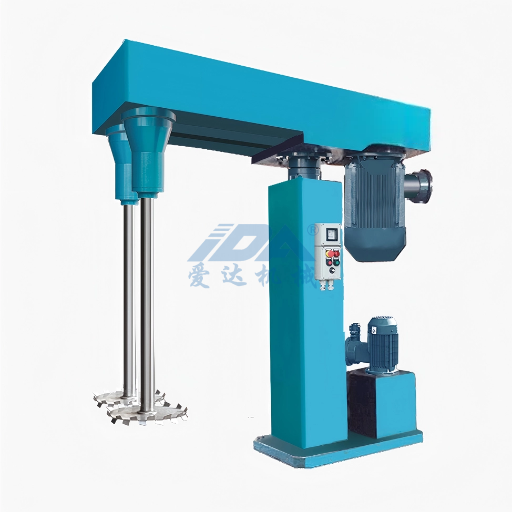
The top makers of high-speed dispersers create industry standards which determine shear performance and operational reliability and safety requirements for paint and coating and adhesive and ink applications. Their product range includes laboratory high speed disperser systems and bench top testing equipment and hydraulic production systems which come with explosion proof features. The company distinguishes its products through unique high speed disperser designs and specific disperser blade shapes and saw-tooth disperser functionality and its control systems and its capability to disperse solid particles and control viscosity and connect with milling machines for efficient fine dispersion and steady material flow.
#01
IDA Equipment
Est. 2018
Official Website
IDA Equipment stands out as a premier manufacturer of fluid and powder processing machinery. They specialize in research, development, and the manufacturing of high-tech industrial equipment. The company provides complete sets of production lines that meet strict industrial standards for industries ranging from paint and coatings to lithium battery materials.
Main Products
- — High-speed dispersers
- — Mixing equipment
- — Grinding equipment
- — Emulsifying equipment
✓ Key Advantages
They offer advanced, highly reliable technology with ISO 9001 certification. Their robust R&D capacity ensures highly customized solutions for specific fluid and powder mixing needs.
✗ Key Disadvantages
Because they are a newer company compared to some legacy brands, their global service network is still actively expanding.
#02
Ginhong Mixer
Est. 2002
Ginhong Mixer is a leading industrial mixer manufacturer based in Jiangsu, China. The company uses advanced mixing technology to serve various industries worldwide. Their equipment complies with cGMP regulations, making them a top choice for cosmetic and pharmaceutical applications.
Main Products
- — FS High-Speed Dispersers
- — Vacuum Emulsifier Homogenizers
- — High Shear Mixers
- — Laboratory Mixers
✓ Key Advantages
All products feature CE certification and cGMP compliance. They offer dispersers with working capacities from 15kw to 75kw that are easy to clean and maintain.
✗ Key Disadvantages
International shipping and customs processing can increase lead times for clients located outside of Asia.
#03
Wahal Process Technologies
Est. 1979
Official Website
Wahal Process Technologies specializes in liquid and semi-solid processing equipment. They have developed a strong presence in over 160 nations. The company relies on cutting-edge sheer force principles to design highly efficient wet processing machinery.
Main Products
- — High Shear Homogenizers
- — High Shear Inline Mixers
- — Liquid Powder Mixers
- — Bead Mills
✓ Key Advantages
Their machines consume low amounts of power while delivering high performance. All equipment conforms to local and international manufacturing codes.
✗ Key Disadvantages
Their premium, heavy-duty product lines can present a high initial cost for smaller startups.
#04
Admix Inc.
Est. 1989
Official Website
Admix Inc. is a 100% employee-owned company located in the United States. They engineer, build, and customize innovative mixing machines for the food, chemical, and pharmaceutical sectors. They are well known for solving complex homogenizing and dispersing challenges.
Main Products
- — High-shear in-tank mixers
- — Bottom Mouth Dispersers
- — High Shear Emulsifiers
- — Pilot Plant Mixers
✓ Key Advantages
They provide a highly hands-on customer experience, including a 14-day trial machinery program and extensive maintenance training for your staff.
✗ Key Disadvantages
Their specialized customization processes can lead to longer manufacturing timelines for highly tailored equipment.
#05
Chem-Maco
Est. 1971
Official Website
Chem-Maco is a highly experienced Indian manufacturer and exporter of chemical processing machines. They primarily serve the paint, leather adhesive, and ink industries. With five decades of experience, they have built a reputation for ethical business practices and high-quality deliverables.
Main Products
- — Dispersers
- — Mixers and Blenders
- — Paint Milling Machinery
- — Laboratory Mixers
✓ Key Advantages
Their machinery features sturdy construction, low maintenance requirements, and excellent corrosion resistance.
✗ Key Disadvantages
They focus heavily on regional markets, which may limit their direct on-site support capabilities in Western countries.
#06
Ross Mixers
Est. 1842
Official Website
Ross Mixers is a legendary name in the process industries. They manufacture a vast array of high shear mixers, storage vessels, and advanced mixer control systems. Their saw-tooth dispersers are standard workhorses for producing chemicals, polymers, and food products.
Main Products
- — Conventional High Speed Dispersers
- — High Shear Mixers
- — Multi-Shaft Mixers
- — Ribbon Blenders
✓ Key Advantages
They offer incredible scalability, from bench-top laboratory models to production models holding several thousand gallons. Their machines feature explosion-proof motors up to 500HP.
✗ Key Disadvantages
The massive scale and premium build quality mean their equipment requires a significant capital investment.
#07
Reynolds Industries
Est. 1975
Official Website
Reynolds Industries designs powerful mixing equipment for adhesives, sealants, silicones, and specialty chemicals. They pioneered large high-powered dispersers with lifting and traversing capabilities, making it much easier to change out batches during heavy production runs.
Main Products
- — High Speed Dispersers (RHSD models)
- — Coaxial Mixers
- — Dual and Triple Action Mixers
✓ Key Advantages
They offer strong column designs with lifting capabilities and adjustable supports. Their systems handle effective fluid viscosities up to 50,000 centipoise.
✗ Key Disadvantages
Complex dual or triple-action systems require specialized maintenance and well-trained operators to run efficiently.
#08
Hockmeyer Equipment Corporation
Est. 1930
Official Website
Hockmeyer Equipment Corporation provides custom-designed process equipment for the coatings, ink, and chemical industries. They focus on continuous improvement and reducing process times for their clients through innovative rotor-stator designs.
Main Products
- — High Speed Dispersers
- — Immersion Mills
- — Drum Mixers
✓ Key Advantages
They excel in highly customized engineering solutions and offer excellent domestic customer service and field support.
✗ Key Disadvantages
Their highly specialized product line offers fewer off-the-shelf options for immediate delivery.
#09
Schold Manufacturing
Est. 1949
Official Website
Schold Manufacturing builds rugged, reliable mixing and dispersion equipment. They pride themselves on creating robust machines that endure decades of heavy industrial use.
Main Products
- — Variable Speed Dispersers
- — Horizontal Mills
- — Co-axial Mixers
✓ Key Advantages
Their machines feature exceptionally heavy-duty construction, minimizing downtime and maintenance costs over the equipment lifespan.
✗ Key Disadvantages
The heavy materials used in construction make their equipment difficult to relocate or reconfigure once installed.
#10
Myers Mixers
Est. 1946
Official Website
Myers Mixers develops some of the most powerful mixing and dispersing technology on the market. They are highly regarded for their multi-shaft dispersers capable of handling extremely viscous materials.
Main Products
- — Single, Dual, and Triple Shaft Mixers
- — High Speed Dispersers
- — Hydraulic Presses
✓ Key Advantages
They offer unmatched performance for ultra-high viscosity products, utilizing powerful hydraulic systems and durable blade designs.
✗ Key Disadvantages
These systems consume significant amounts of energy and require substantial floor space.
#11
Netzsch
Est. 1873
Official Website
Netzsch is a global technology leader in wet and dry grinding, mixing, and dispersing. Their engineering precision makes them a top choice for high-end nanotechnology and pharmaceutical applications.
Main Products
- — MasterMix Dispersers
- — Agitator Bead Mills
- — Planetary Mixers
✓ Key Advantages
They provide industry-leading precision, state-of-the-art automation integration, and an expansive global service network.
✗ Key Disadvantages
Their high-tech integration requires highly skilled technicians to operate and troubleshoot effectively.
#12
VMA-Getzmann
Est. 1972
Official Website
VMA-Getzmann is a German manufacturer famous for its highly innovative laboratory and production dispersers. They are the creators of the widely used Dispermat series.
Main Products
- — Dispermat Dissolvers
- — Bead Mills
- — Vacuum Dispersers
✓ Key Advantages
Their laboratory equipment is incredibly precise, allowing for seamless scale-up from research and development directly to full production.
✗ Key Disadvantages
Sourcing replacement parts outside of Europe can occasionally cause minor production delays.
#13
EKATO
Est. 1933
Official Website
EKATO specializes in advanced mixing technologies for the chemical, biotechnology, and cosmetics industries. They handle everything from laboratory scale to the largest industrial agitators in the world.
Main Products
- — Industrial Agitators
- — High-Speed Dispersers
- — Hydrogenation Plants
✓ Key Advantages
They offer superior computational fluid dynamics (CFD) modeling to guarantee optimal mixing results before the machine is even built.
✗ Key Disadvantages
Their thorough, data-driven engineering process means a longer lead time from initial consultation to final delivery.
#14
IKA Works
Est. 1910
Official Website
IKA Works provides laboratory equipment, analytical technology, and process machinery. They are well known for their sleek designs and highly intuitive user interfaces.
Main Products
- — Inline Dispersers
- — Batch Mixers
- — Kneading Machines
✓ Key Advantages
Their equipment features modern digital controls, excellent data logging capabilities, and superior user ergonomics.
✗ Key Disadvantages
The digital interfaces and complex electronics require strict environmental controls to prevent damage in harsh chemical plants.
#15
Silverson Machines
Est. 1948
Official Website
Silverson Machines specializes strictly in high shear mixing equipment. They serve the food, pharmaceutical, and cosmetic industries with exceptionally fast processing times.
Main Products
- — High Shear Batch Mixers
- — In-Line Mixers
- — Bottom Entry Mixers
✓ Key Advantages
Their unique rotor-stator workheads drastically reduce processing times, often cutting mixing times by up to 90%.
✗ Key Disadvantages
Their strict focus on rotor-stator technology means they offer fewer traditional saw-tooth disperser options compared to competitors.
Comparative Analysis of High-Speed Dispersers
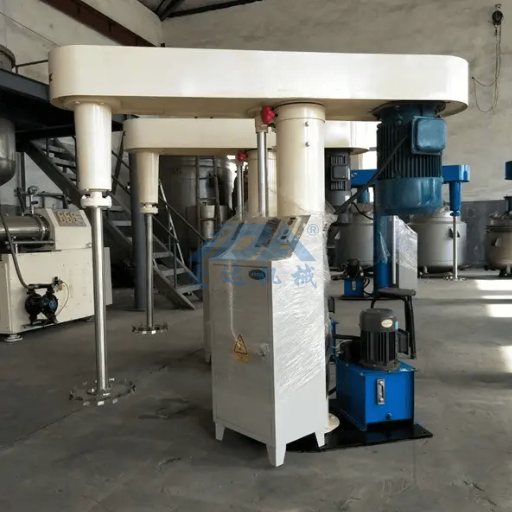
Engineers use high-speed disperser testing results to determine which mixers can best serve paint and coating and adhesive and ink production requirements. The research evaluates high speed disperser design and disperser blade geometry and available shear and viscosity handling and milling equipment integration. The research demonstrates how scale affects vortex formation and powder dissolution into liquid through a comparison between laboratory high-speed disperser alternatives and hydraulic production systems. The assessment examines three factors which include explosion proof compliance and high speed dispersion control systems and maintenance procedures that enable sustained fine dispersion results.
Comparison Table of Key Features and Specifications
The evaluation of high-speed dispersers requires testing their tip speed range and horsepower and torque curve and saw-tooth disperser diameters which should be tested at different batch sizes and viscosity levels. The study should measure maximum solids loading and estimate shaft speed turndown needed for wet-out and test blade compatibility between bench top and hydraulic systems. The study should show if the mixer can operate under vacuum conditions and if it has explosion proof features and data logging connection options. The specifications for disperser blade metallurgy and seal type and lift travel and vessel compatibility provide information about a unit’s ability to disperse pigment and break down particle agglomerates at different rheological states.
| Category | Key Items to Assess |
|---|---|
| Performance & Sizing | Tip speed range, horsepower, torque curve, saw-tooth blade diameter vs. batch size/viscosity, maximum solids loading |
| Operation & Flexibility | Shaft speed turndown for wet-out, blade interchangeability (bench top to hydraulic units), vacuum operation, explosion proof ratings, data logging connectivity |
| Construction & Fit | Blade metallurgy, seal type, lift travel, vessel compatibility for consistent dispersion and deagglomeration across changing rheology |
Performance Metrics of Leading Dispersers
The assessment of performance needs to use three measurement components which include time-to-vortex and powder feed rate without flooding and agglomerate elimination speed that enables target particle size achievement before the mill. The study also uses additional indicators which include torque stability during high shear ramps and temperature rise control and the batch-to-batch repeatability of solid particle dispersion. High speed mixers achieve their best performance when they demonstrate fast wet-out and maintain shear force at the blade tip while producing an even emulsion and slurry. The verified process from laboratory testing to production scale shows that fine dispersion achieves consistent results.
| Performance Metric | Focus |
|---|---|
| Time-to-vortex | Rapid vortex formation |
| Powder feed rate | No flooding during addition |
| Agglomerate elimination speed | Reach target particle size pre-mill |
| Torque stability | Stable during high shear ramps |
| Temperature rise control | Limit heat during processing |
| Batch-to-batch repeatability | Consistent solid dispersion |
| Mixer performance traits | Rapid wet-out, sustained tip shear, minimal air entrainment |
| Scale-up | Laboratory to production with consistent fine dispersion |
Price Range and Value Assessment
The value measurement establishes a balance between the acquisition cost and the total expenses throughout the entire product lifecycle which includes energy consumption during high speed dispersion operation and the operational life of economical saw-tooth disperser blades and the functional availability of hydraulic lifts. Entry bench top dispersers offer economical trials while mid-range high-speed dispersers with robust controls suit frequent color changes in paint and ink. The premium systems offer explosion proof protection together with high-torque advanced mixers and automated systems which enhance both vortex development and powder mixing processes. The combination of reduced cycle times and lower rework expenses creates more savings than the initial costs for all cases except when dealing with high viscosity pigment-rich products.
Future Outlook for High-Speed Disperser Market
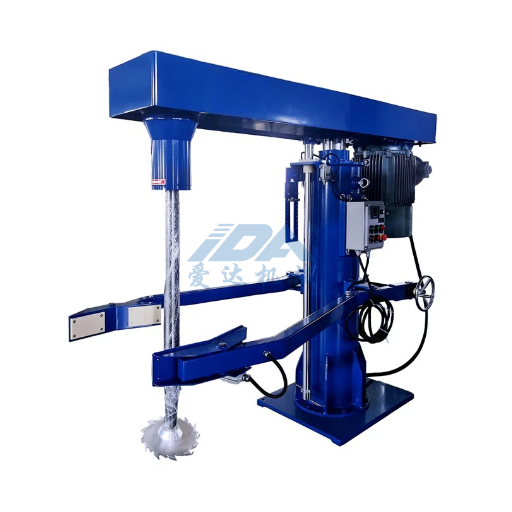
The future of high-speed dispersers will be shaped by digitalization, sustainability, and stricter safety and quality expectations in paint, coating, adhesive, and ink manufacturing. High speed disperser design will increasingly combine high shear with precise control of viscosity and vortex behavior which enables faster pigment and powder wetting while maintaining particle characteristics. Integration with milling equipment and sensors and analytics will enhance high speed dispersion while modular hydraulic platforms and explosion proof enhancements provide flexible production capabilities for worldwide operations.
Trends Influencing High-Speed Dispersion Technology
Smart mixers use torque and vibration analytics to detect agglomerates which enable them to control tip speed while they create a stable vortex that achieves uniform solid particle dispersion. The combination of advanced saw-tooth geometries with cost-effective saw-tooth disperser blades will enable better wet-out results while reducing energy requirements for particle agglomerate breakdown. Sustainability creates a need for smaller operational areas which require efficient motors and disperser blade alloys that can be recycled. Digital twins will improve the complete process from laboratory high speed disperser testing to bench top trials and production hydraulic units which will enhance fine dispersion and process transfer.
| Area | Details |
|---|---|
| Smart mixing | Torque and vibration analytics detect agglomerates, adjust tip speed, and stabilize the vortex for consistent dispersion. |
| Blade technology | Advanced saw-tooth geometries and cost-effective saw-tooth disperser blades improve wet-out and break down agglomerates at lower energy. |
| Sustainability | Smaller footprints, efficient motors, and recyclable disperser blade alloys. |
| Scale-up and digitization | Seamless scale-up from lab and bench trials to production hydraulic units supported by digital twins for enhanced dispersion and process transfer. |
Market Growth Projections and Opportunities
The requirements from architectural paint plus industrial coating plus specialty ink plus adhesive will drive the use of high-speed dispersers which can mix powders into liquids while keeping their viscosity under control. The company offers opportunities through its services which include upgrading existing mixers to use high shear controls, installing explosion proof protection for solvent-based systems, and providing integrated skids that combine a mixer with a mill to speed up formulation processes. Emerging markets require durable and affordable dispersers while premium market segments use advanced data platforms to monitor dispersion and pigment development and particle deagglomeration at all times.
Challenges Facing High-Speed Disperser Manufacturers
Manufacturers need to find a balance between increased shear strength and their need to protect against excessive processing which results in particle structure damage and temperature rise during production. The delivery process for high-speed mixers at scale faces challenges because of unpredictable supply chain issues that affect motors, drives, and specialty blade metallurgy. The need to comply with various regional regulations for explosion-proof standards and safety certifications increases both expenses and operational difficulties. The process of achieving consistent high-speed dispersion throughout different rheological conditions and vessel designs and powder delivery methods demands comprehensive control systems and staff education and proven methods to transition from bench testing to hydraulic production systems.
Summary of Key Findings
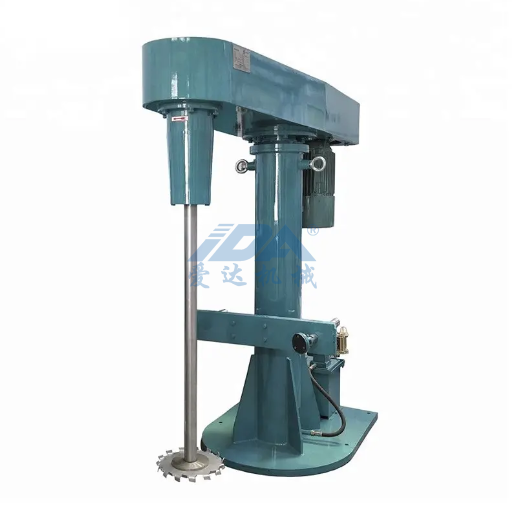
High-speed dispersers achieve quick wetting and particle distribution through their saw-tooth disperser blade design which operates at maximum tip speed and creates high shear forces to help users break down particle agglomerates. The leading manufacturers establish their unique market positions through their high-speed disperser design and their durable hydraulic systems which meet explosion-proof standards and their control systems that monitor torque and temperature and vortex stability. The production process achieves scale-up accuracy from laboratory high-speed dispersers and bench-top pilots because the system uses a mill to produce both particle size and surface finish properties.
Final Thoughts
On High-Speed Dispersers
The high-speed disperser operates as the primary mixer for maintaining uniform high-speed dispersion which manufacturers require to handle increasingly complex paint and coating and adhesive and ink product lines. Blade metallurgy and smart drive technology and modular system designs have made progress which supports sustainability efforts and enables manufacturers to achieve stricter requirements for controlling viscosity and particle dimensions.
Engineers should use shear range and blade versatility and data connectivity as their main evaluation criteria when selecting either ross high speed dispersers or other high speed mixers to achieve solid particle dispersion results which match their desired production rate.
Call to Action
For Industry Professionals
Engineers together with production managers must conduct an evaluation of existing dispersers to assess their shear capacity and vortex control capabilities and their ability to resist explosions before comparing their performance to top high-speed disperser products. The laboratory and bench top experiments will determine the powder feed rates and tip speed ranges and temperature increases which will confirm the scaling process to hydraulic systems.
Our team will work with mixer and mill manufacturers to create complete production lines which will use predictive maintenance systems and implement low-cost saw-tooth disperser enhancements that improve wet-out and shorten cycle times while improving product quality across all formulations.