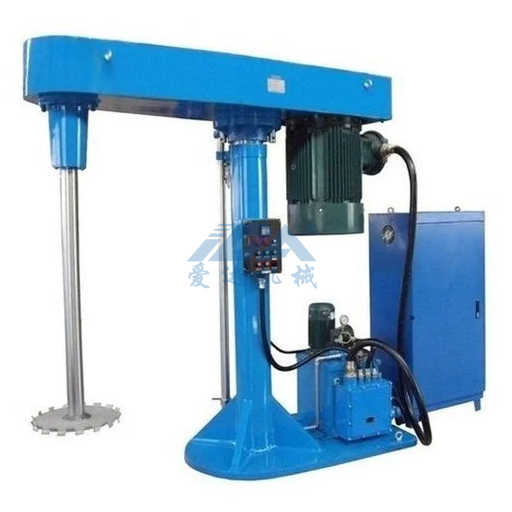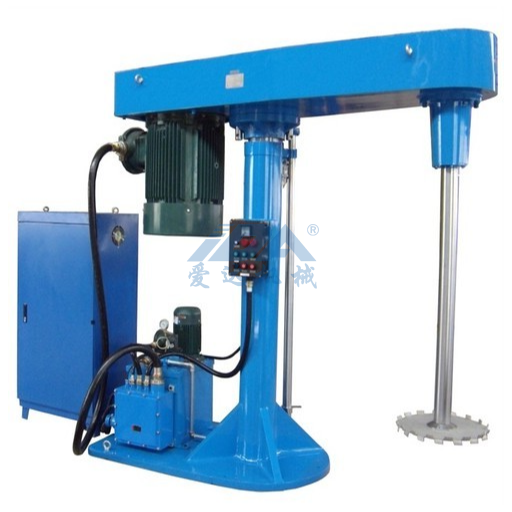
Get in Touch with IDA

How Does a High Speed Disperser Work?

Contents
show
In a wide variety of industries, high-speed dispersers have been invaluable tools providing precise and efficient mixing, dispersing, and homogenizing of materials. Understanding how such machines work can lead to an upsurge in productivity and product quality, no matter whether you are dealing with paints, adhesives, or some other complex types of materials. The present article comprehensively deals with various components and functions of high-speed dispersers to look into the aspects of how their operation is taking place and defined roles in critical applications. Hopefully, by the end of this article, you will know better how this technology works and why it is crucial for any manufacturing industry.
Understanding High-Speed Dispersers

Definition of a High-Speed Disperser
We consider a high-speed disperser mixing device for combining materials quickly and efficiently without remaining holes like powders, liquids, or viscous compounds. At rotating speeds of up to 4,000 rpm, the blade imparts energy levels 1,000 times higher than the energy of the fluid. This energy causes breakdown of the kinetic energy of the particles, thus evenly distributing them while the medium remains liquid. A good mix leads to aggregation of fine particles and ensures proper product formation through the process.
The essential unbroken job of a high-speed disperser is the creation of a vortex within the mixing vase. As the blade spins, it forces materials around the top of the vessel downwards and outward, intermingling them with intense shear forces that introduce thorough deagglomeration of materials, eliminating any lumps or inconsistencies that may have existed. Because its technology is applicable to a wide range of viscosities, the high-speed disperser is widely used in the paint, coating, adhesives, and like industries.
High-velocity dispersers are regarded for their efficacy, reliability, and adaptability to a variety of applications. They are especially helpful for processes that require even particle size reduction and fine dispersion. The ability to manipulate swiftly, and thereby uniformly, renders improvements to product quality, in addition to saving time and energy during the process. Hence, today the high-speed disperser is a very important tool for modern manufacturing.
How High-Speed Dispersers Differ from Agitators
High-speed dispersers and agitators both play an important role in the mixing operation but do so with different aims and methods. To break solid particles apart and disperse them uniformly in liquids, the high-speed disperser is specifically designed to do that. This is why it is very useful in the paint, ink, and coatings industries. On the other hand, agitators are good for mixing or blending two plus liquids in a batch in order to reach a consistent state, but they will not give the kind of severe cutting action required for particle size reduction.
The high-speed disperser utilizes a fast rotating blade to produce high shear forces that disperse and prevent the cohesion of the solid particles. This shear behavior, therefore, results in the reduction of the particle size and promotes a fine dispersion of the other substances throughout the material. The agitator, instead, rotates at lower speeds and uses paddles, propellers, or other impellers to circulate and mix any liquid substance present. While an agitator is exceptionally effective at maintaining homogeneity and mixing ingredients, it is not designed with the high speed needed to break down solid particles.
Another major point of difference is in their applications. High-speed dispersers usually find applications where the formation of any emulsion/suspension is needed-most where uniformity, stability of particles and speed are important. In contrast, agitators may be better suited for applications like mixing liquids in a reactor, maintaining uniformity in a tank, or handling any large physical material that does not need fine dispersion. These distinctions ensure the correct choice of equipment depending on the specific need of the process, ultimately promoting a highly efficient and improved quality of the final version.
Applications of High-Speed Dispersers in Various Industries
High Speed dispersers are employed within various industries where efficient mixtures and dispersions of ingredients hold significant prominence. Primarily, they play a significant role in the paint and coatings industry, where these machines are utilized for the mixing of pigments, binders, and other additives. High Speed dispersers are used to assure a uniform color and appropriateness. Their capability to work on a wide variety of viscosities has made such machines highly suitable for the production of high-quality paint with a lasting consistency.
High-speed dispersers are largely used in industries producing adhesives and sealants because they can incorporate specific filling agents, resins, and additives optimally, such that the end product reflects a particular performance. High speed and accuracy largely decrease production time, thereby reducing manufacturing costs.
Additionally, the high-speed disperser is a crucial equipment for cosmetics and personal care products industries. This device is employed to make sure that emulsions and dispersions are uniform in products such as creams, lotions, and gels. After all, consistent texture and stability are crucial for the satisfaction of all customers in this industry by means of proper operation of this equipment. Not to mention empowering these sectors with achievable high-end and consequent possible-embedding-with-theinary end-product features, in terms of production speed and product quality.
Key Components of High-Speed Dispersers
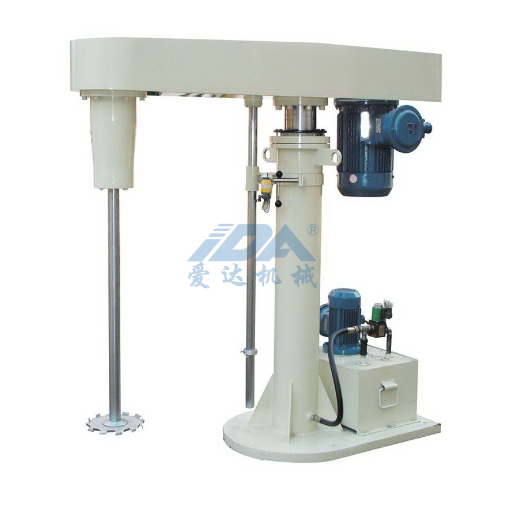
Main Parts of a High-Speed Disperser
Several parts are observed to constitute and co-operate in a high-speed dispersion system, other most essential being the motor. It is the motor that drives the machine and also runs the mixing shafts at different speeds. This is what gives efficiency and consistency to the mixing. The power of the propeller to blend against the motor’s power and control over speed will affect mixing efficiency and consistency greatly.
Another essential part is the mixing shaft which conveys rotational energy from the motor down to the dispersion blade. It would have to be built strong to withstand high speeds. This is crucial to running stable and inline alignment for precise operation. Length and alignment of the shaft are important for it to operate correctly.
Uniform mixing relies greatly on whether the definitively placed dispersion impeller is ultimately suitable for creation of homogeneity. The teeth, or other features, of this impeller are intended to shear heavily, thereby comminuting solid particles and refining liquid. The design, size, and materials of dispersion are tailored to the purpose, ensuring equally good results among different products.
Importance of the Mixing Blade Design
The design of the mixing blade is crucial as it impacts directly with affectivity and quality in the mixing process. A blade well designed contributes to the consistent and uniform mixing, essential to achieving the desired product attributes. The shape, angle, and size of the blade determine the movement of materials inside the container, affecting the speed and completeness of their mixing.
Moreover, the material of the blade plays an important part as well. Blades made from materials lasing are wear-proof and resistant to impact, hence conserving efficiency and performance through time and operation, regardless of the adverse working conditions. Blades should be able to sustain themselves when dealing with tough and abrasive, as well as high viscosity, substances. Proper selection of materials ensures that the unit will last long, requiring lesser replacements amounting to increased efficiency.
Consequently, suitable design of the agitating blade or blades in the reactor reduces energy consumption and maximizes performance. By reducing perturbing drag, they adroitly flow the materials, holding energy requirements in sufficient check while retaining sufficient mixing power. Such a balance is crucial for cost-friendly operations, particularly in large-scale production fields. A well-structured blade ensures reliability, efficiency, and good performance results across various applications.
Motor and Drive Systems in High-Speed Dispersers
High-speed Disperserhas motor and drive systems that wok in companion with one another to provide optimum performance for the users to discharge various applications most efficiently. The motor, working in conjunction with the drive system, drives the disperser’s shaft and blades, thereby delivering power to handle high-viscosity materials and attaining a uniform dispersion. Speed and torque are critical motor abilities for effective material mixing, especially in industrial production.
While the motor is responsible for driving disperser’s be it shaft or blade, the drive system is involved in proper speed control and regulation depending upon the material being processed. High-speed Dispersers usually have variable speed drives incorporated; they allow control over maintaining the speed and ensuring uniform results irrelevant of the viscosity of the material. This adjustment flexibility reduces the operational impact and thus increases the life of the equipment.
In summary, the important motor and drive systems are vital to high-speed dispersal reliability and versatility. These systems render energy-efficient services and ensure enhanced and fine control during mixing, essential to process results in the industrial sector. The durability and efficiency of these systems are betrothed to the necessary routine checks and maintenance as these become sources of motivation for better work.
Principles of High-Speed Dispersion
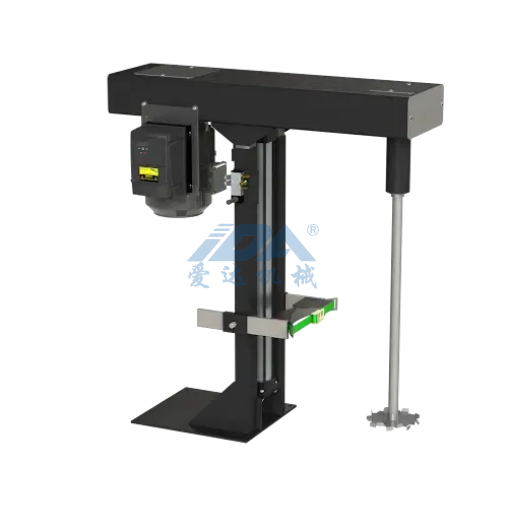
Mechanical Principles Behind High-Speed Dispersion
High-speed dispersion accounts for one of the mechanical principles where material is effectively dispersed and evenly distributed in a liquid medium due to the combined forces of shear or centrifugation exerted by a stirring blade in high-speed rotation. That blade creates a vortex aimed towards the ingredient to disperse and distribute it homogeneously within the system. The end goal is to encourage the best interaction among these components, which paves the path for total homogeneous mixing.
Much hinges on the speed and design of the disperser blade in a mechanical operation. High rotation speeds increase the shear forces needed for the reduction of particle sizes and improvement of dispersion quality. The blade angle and localization are highly important for improving the contact between materials which in turn enhances mixing efficiency and uniformity. Well-designed systems will maintain complete stability at varying viscosities and be basically insensitive to critical changes in material physical properties requiring the presence of differential response compared to those of the other components.
Motor power is an important factor for high speed disperser. Besides the design of the motor, another important consideration is the design of the vessel. With the amount of liquid dynamics affected by the size and shape of the vessel, the turbulence makes a big difference in the integrated process. Such designing of mechanical elements needs to be accomplished if the high-speed disperser is to be adapted to so many industries delivering its best results in repetitious manner under the right set of operational conditions.
Fluid Dynamics in High-Speed Dispersers
Fluid dynamics are an influential concept for improving the performance of a high-speed disperser. The impeller’s rotation, influences, and is influenced by the liquid surrounding it, setting up attendant fluid dynamics and making an ample impact on the efficiency of mixing, the magnitude of turbulence, and the distribution of particles. Consequently, becoming aware of these flow-related factors naturally leads to ensuring the final aim to be achieved in terms of homogeneity or controlled particle size reduction in a wide range of volume applications.
Balance between shear forces and turbulence is another key factor. It is high-speed dispersers that generate shear forces that are applied to break down agglomerates. These shear forces intensify the incorporation of powders into the liquid. At the same time, controlled turbulence does the job of mixing the contents correctly without producing any dead zones or interacting disturbingly with the flow patterns. The shape and design of the impeller and vessel system must be calculated in order to optimize their best compromise, as a careless design could lead to inconsistent product efficiency and inept energy usage.
Fluid dynamics, which are influenced by operational parameters, like impeller speed, fluid viscosity, and volume of fluid in the vessel, demand higher scrutiny when engineering technical prerequisites into consideration. For example, at higher viscosities, the mixing would call for changes in speed, a change in impeller type, or the consideration of other options. By adjusting designs and instructions to the specifics of the processing requirements, suppliers can guarantee the performance of such a construction that is dependable, repeatable, and production-worthy while also avoiding…resource waste.
The Role of Shear in the Dispersion Process
Shear operates as a fundamental element for dispersion because it determines how aggregates disintegrate and how particles spread throughout the mixture. Manufacturers employ high shear forces to generate the energy needed for uniform particle dispersion which prevents clumping and produces a consistent end product. This aspect holds particular significance for pharmaceutical companies, paint manufacturers and food production facilities because they must maintain uniformity in both their product texture and its chemical makeup.
The effectiveness of shear depends on the processing conditions, including the viscosity of the medium and the type of materials being dispersed. Low-viscosity systems often require less shear to achieve dispersion, while higher-viscosity systems demand stronger forces to achieve similar results. Equipment selection requires balancing energy efficiency against product quality through appropriate blade and mixing speed choices which directly influence final dispersion results.
Insufficient shear results in incomplete dispersion therefore producing defects that create uneven textures and decrease product efficiency. Product damage occurs when manufacturers apply excessive shear because it harms delicate materials, destroys particle structures and produces excessive heat which alters product characteristics. The selection of shear force and processing settings determines whether materials maintain their original state while producing consistent high-quality outcomes.
Operational Process of High-Speed Dispersers
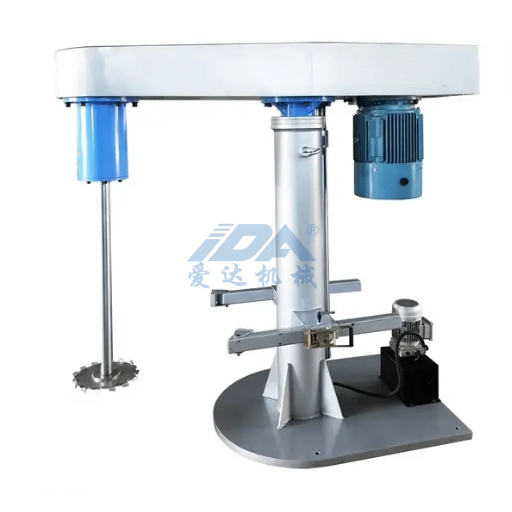
Step-by-Step Operation of High-Speed Dispersers
Equipment and Material Setup:The operation of high-speed dispersers begins with the preparation of materials and equipment. The complete raw material inventory must be measured and prepared for processing. The tank of the disperser needs to be cleaned completely to ensure no contaminants will enter the mixture. The tank needs its disperser blade installed at a height which enables optimal material movement to occur.
Disperser Activation:The operators need to add raw materials to the tank in a controlled manner while they maintain proper solid and liquid distribution throughout the tank system. The operators should begin the disperser at its lowest speed setting to stop any material from splashing outside the equipment while achieving uniform mixing. The operators should increase the speed of the equipment after they complete initial mixing. The blade will use its high shear force to create a uniform mixture by breaking apart particles. The operators need to observe the mixture during this time because they want to maintain a steady pace of material breakdown.
Adjustment and Quality Control:The operators need to modify speed settings after the first dispersion process to achieve their target consistency. The operators must check the mixture temperature because extreme heat will damage sensitive components. The quality checks will verify whether the blend meets all required specifications. The operators should decrease the speed when they achieve the desired results before they execute the machine shutdown process. The finished product needs to be safely removed while the equipment needs to be completely cleaned for the upcoming work phase. The cleaning process ensures that the disperser maintains its operational effectiveness while protecting the quality of products during upcoming production periods.
Setting Up a High-Speed Disperser for Optimal Performance
The first step for effective operation of a high-speed disperser requires equipment placement into a secure and stable area. The personnel need to follow all safety protocols which require them to wear protective gear while they check whether the disperser has proper ground connections. The operator needs to examine the disperser for visible damage while checking that all parts of the machine including the mixing blade and motor operate as they should.
The operator must select the correct mixing blade for the material which needs to be processed and then set the blade height at its ideal level inside the mixing vessel. The blade needs to be positioned at a height which places it just below the surface of the liquid to achieve proper dispersion. The machine needs to start only after the operator has confirmed that the vessel remains tightly secured and all fasteners maintain their clamped position to stop any movement during operation.
The operator needs to increase the disperser speed while checking if the mixture reaches a consistent state. Starting operations at full speed creates two problems which include splashing and uneven processing of materials. The disperser maintains its operational speed until the required mixing time ends after operators reach their intended level of material consistency. The system requires continuous performance tracking which leads to necessary operational changes that keep people safe while maintaining system productivity.
Common Challenges and Solutions in High-Speed Dispersion
High-speed dispersion processes experience multiple challenges which include material splashing and energy inefficiency and uneven mixing. These problems occur because operators set up equipment incorrectly and position blades incorrectly and materials show different viscosity levels. The first step to solving these problems requires operators to maintain proper disperser speeds during startup operations because this prevents material splashing and helps operators control material consistency better.
Another common challenge is the buildup of heat during the process, which can negatively impact material quality. Operators need to monitor temperature levels and implement cooling systems while adjusting processing speeds to resolve this issue. The system performance improves when proper ventilation exists and operators execute shorter controlled operation cycles.
Last, researchers must find a way to create consistent material dispersion when dealing with materials that possess different characteristics. The solution involves testing material samples throughout the processing phase to verify that the output remains consistent. Equipment that provides operational flexibility together with scheduled maintenance procedures enables the system to function properly across different mixing operations.
Comparative Analysis of Dispersers
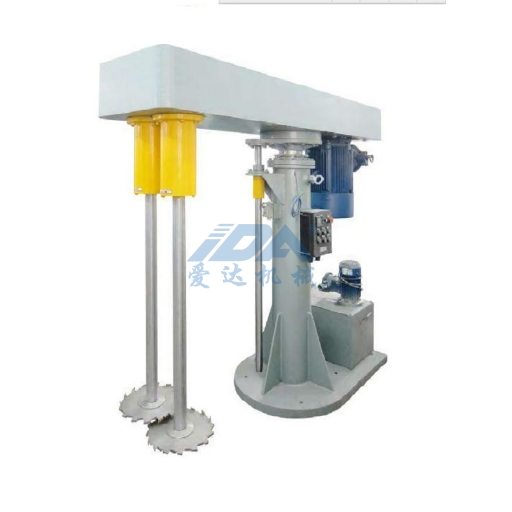
High-Speed Dispersers vs. Traditional Mixers
High-speed dispersers are superior for fast, efficient blending of materials, while traditional mixers are better suited for larger-scale, less time-sensitive operations.
| Key Point/Parameter | High-Speed Dispersers | Traditional Mixers |
|---|---|---|
| Speed | High | Moderate |
| Efficiency | Excellent | Average |
| Scaling | Limited | Large-scale |
| Energy Use | Moderate | Low |
| Maintenance | Moderate | Low |
| Mixing Precision | High | Moderate |
| Setup Time | Short | Long |
| Use Case | Specialized | Versatile |
When to Choose a Disperser Rather Than an Agitator
The deciding factor between using a disperser or an agitator depends on the specific mixing requirements of the particular task. Dispersers perform best when they need to achieve precise results through fast mixing operations which involve combining solid materials with liquids or breaking up solid clusters to obtain smooth fine distributions. The machines demonstrate their best performance in processes which require them to create paints and inks and coatings and adhesives because these materials need to have consistent texture and particle distribution throughout.
Agitators function better when they need to combine different components or preserve uniformity in extensive liquid systems. The devices serve their main function by creating mild mixing and transferring heat and maintaining solid materials in suspension throughout the liquid without needing exact measurements. The devices find broad application in fermentation processes together with chemical mixture uniformity maintenance for extended durations.
Choose a disperser if speed, precision, and achieving fine particle distribution are your primary goals. An agitator should be selected for operations which involve handling huge material volumes because it provides benefits through energy savings and extended operational time and operational flexibility. Your process needs require specific equipment evaluation which helps you choose equipment that will improve your work efficiency and production output.
Market Availability: Types of High-Speed Dispersers
Industries require specific high-speed dispersers which manufacturers provide through multiple available disperser types. The most common types include single-shaft dispersers, dual-shaft dispersers, and vacuum dispersers. Single-shaft dispersers operate effectively with low to medium viscosity materials which need basic mixing operations. The dual-shaft dispersers enable users to mix and disperse materials which have medium to high viscosity through their dual function. The vacuum dispersers use their air-free mixing capability to create uniform products which prevent air from being trapped inside the final product.
Industrial applications benefit from high-speed dispersers because they can operate in both portable and fixed configurations. Portable dispersers become essential when production operations need to move between different locations or when small production batches need to be processed. Fixed units, on the other hand, are engineered for large-scale operations and high-volume production, offering increased stability and power for intensive mixing needs. Businesses gain operational advantages through these features which allow them to choose dispersers based on their exact production needs.
The selection of a high-speed disperser requires assessment of batch size and material viscosity and power needs and operational conditions. A proper assessment of these elements enables the organization to achieve its operational efficiency goals while attaining the desired production results. The correct disperser type shows value through resource savings and reduced downtime and improved product quality and uniformity.
Frequently Asked Questions (FAQ)
Q: How Does a High Speed Disperser Work?
A: The functioning of a high-speed disperser establishes its operational method through its high-powered mixing system which uses energy transfer as its primary operational principle. The mixing system uses a disc blade which rotates at extremely high RPMs to create a vortex that pulls materials downward while subjecting them to strong shear forces. The tip speed indicates the blade edge speed which determines the shear forces that break particles and wet solids, producing optimized dispersion for various dispersion applications.
Q: What is the principle of high-shear disperser action?
A: High-shear disperser operation uses a basic principle which shows how disperser blades create high-speed tip rotation together with a slow-moving vortex that moves into the blade’s high-speed area. The high-speed disc system first draws material into its core which then sends out particles through radial movement that results in turbulent shear forces which break down particle agglomerates. The energy transfer principle transforms mechanical horsepower from high-shear dispersers into shear forces and turbulent flow to create required dispersion durations.
Q: What blade diameter and blade speed matters should I know about high-speed dispersers?
A: Blade diameter and blade speed are critical because larger blade diameter increases the area handling material while high-shear dispersers use blade speed to determine shear strength. Dispersers use feet and inches to display their diameter which is different from tip speed that measures peripheral velocity for performance assessment. The operational specifications of high-speed machines require users to connect blade diameter and blade speed and horsepower settings of high-shear dispersers with the viscosity and solids content of their mixing work.
Q: How does a disperser compare to an agitator and when are additional mixing shafts used?
A: A disperser and an agitator serve different roles: the disperser will generate the shear needed to break particles, while an agitator provides bulk mixing and circulation. Dispersers in various systems provide extra mixing shafts which combine with the disperser or with both systems to operate as a disperser blade and separate impellers for gentle bulk flow. The hybrid system increases a disperser’s operating range while achieving better dispersion results and complete homogenization.
Q: Where should the disc-type blade be positioned in the vessel and can the disperser blade extend or be adjusted?
A: The disc-type blade is mounted near the bottom end of the mixing shaft but above the vessel bottom to avoid dead zones. Many designs allow you to raise and lower the blade to optimize dispersion and prevent scraping. The disperser blade can extend or be fitted in different diameters to handle changing batch sizes and to maintain the correct tip speed for efficient dispersion.
Q: What does “tip speed is peripheral velocity” mean and why is it important?
A: The tip speed of a blade moves at its edge which operates at peripheral velocity and this speed establishes the shear rate that the blade delivers to materials. The combination of high tip speed and high shear rate will create shorter dispersion times yet it will also generate additional heat and power requirements. A guide to high-speed dispersers recommends calculating tip speed to compare machines and to set appropriate blade speed for the dispersion application and material sensitivity.
Q: What performance factors like horsepower and operating range should be considered?
A: When selecting a disperser consider horsepower of a high-shear disperser, blade diameter, and operating range of a disperser to ensure you have enough power to maintain tip speed under load. The power ratings of dispersers span a wide range but the effective blade speed of high-shear dispersers under load and vessel geometry will decide whether the disperser can create the necessary shear for optimal dispersion without stalling.
Q: Are high-speed dispersers suitable for all dispersion applications and what is the need to know about high-speed maintenance?
A: High-speed dispersers are suitable for many dispersion applications—from inks and coatings to adhesives—but not all. A high-shear disperser but still three times more effective than gentle mixers for breaking particles; however, for extremely high-viscosity systems other technologies may be better. The required knowledge for maintaining high-speed dispersers includes three maintenance tasks which are necessary to check seals and bearings and shaft alignment and to monitor dispersion times and to use a practical guide for high-speed maintenance which will help maintain performance while extending equipment lifespan.
References
-
Preparation of Coal-Water Slurry Using a High-Speed Mixer-Disperser
This academic paper discusses the working principles of high-speed dispersers in preparing stable coal-water slurry through cavitation effects.
Read more here -
Stock Preparation Part 1 – Pulp Treatment
This document explains the use of high-speed dispersers in pressurized units for pulp treatment, operating at high temperatures.
Read more here -
High Shear Mixer Standard Operating Procedure
A detailed standard operating procedure for high shear mixers, including specifications and operational details.
Read more here - High Speed Disperser – Industrial Mixing Equipment from Leading China Manufacturer