Get in Touch with IDA

How to Choose the Right High Speed Disperser

Contents
show
When dealing with mixing, dispersing, and emulsifying applications, the high-speed disperser selected could be a deal-breaker. There are so many options from which one may choose that, upon the weights of performance, efficiency, and budget effectiveness, it is possible to merely become confused by which high-speed disperser would be a right fit. This article should uncomplicated the process for you and I hope that, though in rating paints, coatings, adhesives, or even food processing, one of these key reasons outlined would represent the perfect high-speed disperser for your specific application need. It is production time, then. You are about to make an informed decision that improves the production processes and output!
Understanding High-Speed Dispersers
Definition and Functionality of Dispersers
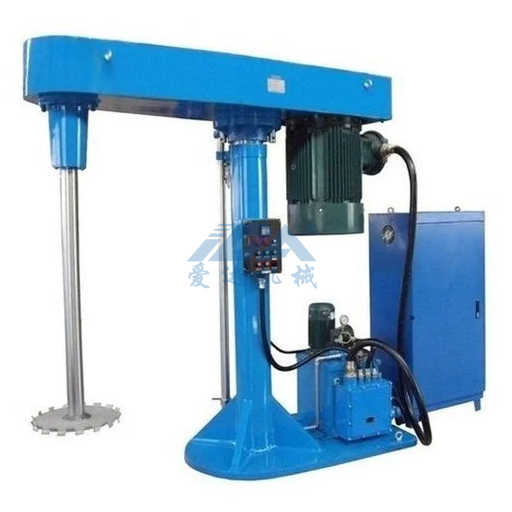
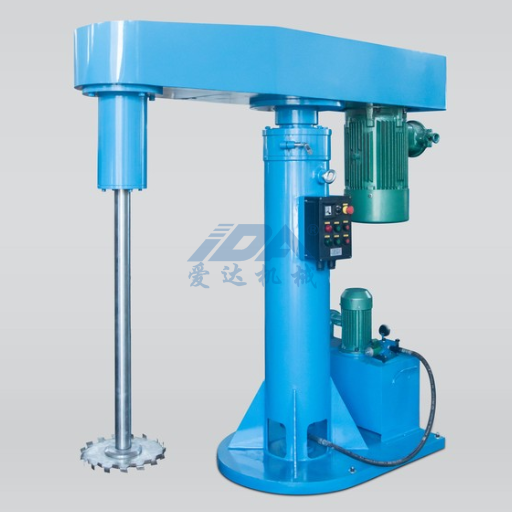
Dispersers are a kind of high-speed industrial equipment for blending, dissolving, or dispersing materials in a liquid. They do so via an impeller. The latter operates to create high shear that disintegrates and equally distributes the solid phase. The process is an efficient one for preparing a homogeneous mixture in performance coatings, chemical processing, and adhesives industries.
In its core purpose the high-speed disperser is geared towards increasing the product quality owing to a shorter process time. The dispersions formed on the impeller create a mechanical vortex, which sucks in the solid materials to ensure in keeping them distributed evenly through the liquid. This process not only gives the final product a better quality but also makes production more efficient by minimizing waste and cutting down mixing cycle times.
High-speed dispersers offer adaptability and deliver on reliability. They perform well with high range viscosity and supply materials diversity. This equipment has become irreplaceable in a vast range of industries. Whether it is combining pigment into paint emulsions or blending smooth adhesive for the binders, dispersers make use of precision and quality that would be difficult to obtain through conventional methods of mixing. These machines are reliable and efficient, hence are important components in today’s manufacturing techniques.
High-Speed Dispersers vs. Agitators
High-speed dispersers and agitators serve different purposes in industrial mixing, each designed for specific uses. High-speed dispersers ease down lumps; facilitate thoroughly uniform dispersion; and produce extremely fine particle size in all mixtures. Their professional performance comes from exceedingly high circulating velocities at levels that deliver the force needed to unite materials with great precision, above all in sectors like paint, adhesive, and finish coating. Such machines are excellent in cases where getting uniform consistency and effective mixing characteristics of solid-liquid systems is a must.
Agitators, on the other hand, are best used for minor-level stirring and retaining homogeneity in liquids. They often operate at lower speeds than high-speed dispersers and concentrate more on blending liquid with liquid or suspending solid materials that need not be finely dispersed. Agitators are usually used in industries such as food processing, pharmaceuticals, or chemical production for processes where mild mixing is acceptable without any need for intense shearing.
💡
Pro Tip
For choosing between the two, the first consideration ought to be the mixing requirements. With an aim to blend components with uniformity into their solid or liquid phase without causing a breakdown of the particles, an agitator is more suitable. On the other hand, when proper mixing and size reduction of the particles are the requirement for the end product, an efficient high-speed disperser should be used. It is very interesting to thoroughly evaluate the viscosity of the materials and the purpose of the process to be able to choose the right equipment for a job.
Key Components of a High-Speed Disperser
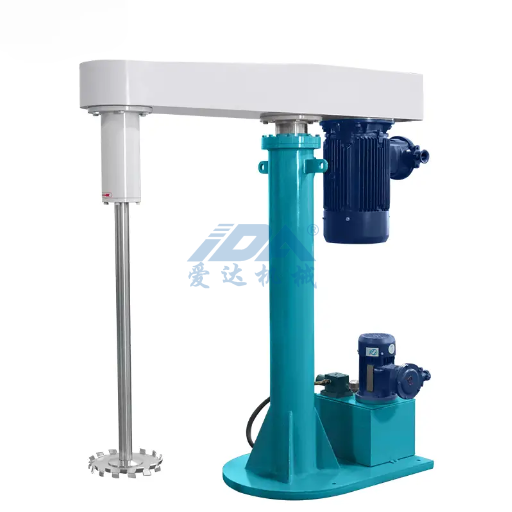
A high-speed disperser comes with essential different parts without which it wouldn’t be able to perform any of the functions for which it’s designed. The first part is the engine, as it carries the power that makes the disperser function and the speed at which it should run. The superior engine will need the disperser to handle different viscosity and volume of material, giving constant outcomes.
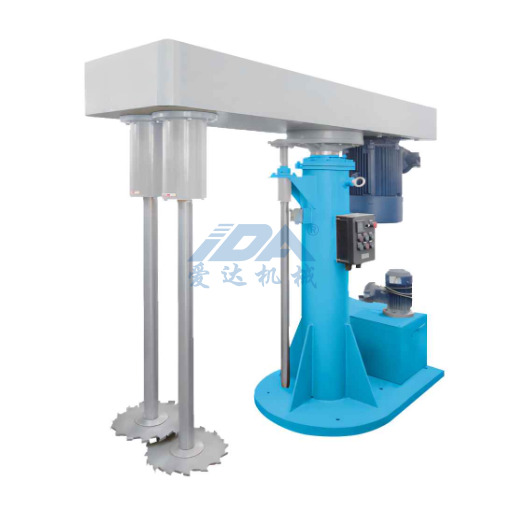
Another principal part of the disperser is the combination of the shaft and blade, together making up the disperser tools. The dispersing blade, most often designed by special applications, creates immense shear forces to break down the particles and ensure good mixing. Blade design and placement play a vital role in bringing even distribution and saving time on processing.
The variable speed control system eventually plays an important role in managing the performance of the disperser which it does by adjusting the rotational speed of the stirrer so that the mixing process can be adapted to the properties sought by the involved material and the hoped-for results. Therefore, they jointly act as one for the betterment of efficient functioning of the disperser, bringing about high quality and stable mixing results.
Performance Metrics for High-Speed Dispersion
Viscosity Measurement and Management
The need for measurement of viscosity is very important when it comes to high-speed dispersion processes as it directly improves mixing efficiency and product quality. Viscosity-governing factors; those that cater to the matter once it has been dispensed. “Viscosity” involves the resistance to flow of a fluid and has implications for how the materials interact during the mixing process. Proper control of viscosity will enable the dispensation to function as required to ensure there is no under-mixing or overload on equipment.
The correct measurement of viscosity involves the use of equipment such as viscometers or rheometers to determine the flow behavior of the small quantity of material to be monitored. Regular monitoring will allow operators to adjust the operating conditions—the speed of rotation or mixing time regulated. In the end, this makes a difference to the even distribution of particle size and, hence, product stability.
Managing viscosity will help increase energy efficiency and reduce wear and tear on the equipment. Pushing viscosity to stay in the desired range will unlock the potential for smooth operation of the disperser and hence extends its life while keeping operational costs to the minimum. In short, understanding the viscosity-graphism and its management leads to improved results and more reliable operations in the dispersing process.
Mixing Efficiency and Uniformity
Efficiency and homogeneity are indeed the most important aspects of dispersion in achieving consistent and quality products. The proper mixing should ensure the universal spread of all the ingredients mate in the complete homogeneity of the final product. Missing or ineffective mixing can lead to sure deviations, at the same time render texture, power strength, ineffective process or even stability.
The key for enhancing efficiency is based on this situation: speed of mixing, shear rate, and that processing time; timings need to be adjusted accordingly as per the nature of the materials consumers are using for manufacturing to reach blending perfection. This is in addition to the fullest advantages of the proper configuration of equipment and periodic inspections that assure utilization of the mixing utensils. Maintenances at equipment lowest Allocations mixed are overcome.
One of the most significant variables, or primary determinants of product performance, is generally uniformity in mixing. An experimentally governed inspection techniques such as monitoring factors and measuring what might be controlled, in terms of particle size distribution, a vanishing constituents uniformity, for example, may ultimately vouch for products meeting the same level of performance scenarios. Simultaneous dotting effective mixing with great concern for consistency would rid the channel of unreliable product performances, hence minimum wastages and, at the same time, increased production.
Energy Consumption and Cost Considerations
Energy consumption and efficiency in costs are very crucial in the high-speed dispersion systems. Improving these factors can have a significant impact on the profitability of operations and environmental sustainability. One of the steps in saving energy is to choose equipment that is conducive to energy-savings and electric motors that are technologically advanced to reduce electrical use while maintaining the desired production outputs. Maintaining equipment through routine maintenance endeavors to keep motors performing at optimum efficiency to avoid unnecessary wasteful energy consumption.
Those responsible for the manufacture should monitor energy performance indicators such as (kWh per production unit) in order to identify weaknesses and enhance the efficiency of the system. Careful analysis of performance data by the makers can aid in generating drop-out actions for improvement or upgrades for enhancing energy-to-output ratios. The use of appropriate automation in these systems will further improve energy performance through precise control of speed and loading requirements during the dispersion process.
Other than energy costs, the costs could include maintenance, materials, and operational downtimes on account of inefficiencies. Accordingly, durability while also encompassing high-quality inputs with predictive maintenance strategies will lower long-term costs. Moreover, permit the minimization of reworks or wastage of materials that result from efficient dispersion. It results in minimum repetition of the step, as well as material wastage, thus saving valuable time and resources. By its focus primarily upon embedded energy and costs, the road to sustainability and sustainable production solutions should be consensual and profitable.
Applications of High-Speed Dispersers
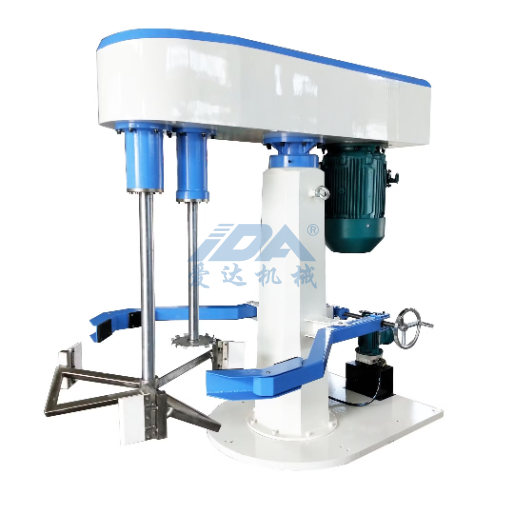
High-Speed Dispersion in Paint Manufacturing
High-speed dispersal is indispensable when preparing paint in order to achieve efficient and uniform mixing of pigments, resins, and other materials. Dispersion is a condition of paint production in terms of obtaining uniform color, texture, and quality. When a paint manufacturer uses the high-speed dispersion mixer for grinding, the best possible decrease in particle size is achieved, considerably resulting in the appearance and performance of the paint being altered.
One chief benefit of high-speed dispersion in paint production is the significant reduction in lead time. The heavy mechanical action of the equipment allows fast mixing and coat disintegration, thus improving the efficiency of the operation, lowering energy use, which is indirectly compliant with the industry’s drive toward more sustainable procedures.
Using high-speed dispersers, manufacturers can produce paints of reliable and repeatable qualities. The fabrication parameters are controlled to perfection through the exact dispersion process to maintain batch uniformity and cut down on deviations and re-works. Thus maintaining a quality product is important for meeting customer expectations and a sustained advantage over the competition in marketing.
Coating Applications and Benefits
Due to their efficiency and versatility, high-speed dispersers are extensively utilized in the coating production for various industries. They provide rapid mixing and pigment dispersion and the addition of various components into the basic fluid, which helps in the uniform formulation of coatings that are essential for any application where uniformity means quality-critical areas such as for automotive, construction, marine and industrial sectors.
One great advantage of coatings formulated from high-speed dispersers would be their resistant surface protection coatings. For instance, anti-corrosion coats specially formulated for marine and industrial uses protect metal structures from degradation resulting from environmental hazards such as rust or chemical exposure. Concurrently in the constructions sector, high-performance coatings shield walls and surfaces from abrasion, weathering, and humidity, hence contributing to the elongation of the life of buildings and infrastructure.
Besides shielding things from damage, coatings confer object properties. A coat on a car gives it a nice sheen, guards the body from scratches, and protects it against the elements. Specialty coatings can even be formulated to cater to very specific needs that range from heat resistance to antibiotics, offering custom solutions to a wide spectrum of demands. Impellers are the final frontier in translating these properties onto a quality product by maximizing blending and performance.
Dispersers in the Cosmetic and Pharmaceutical Industries
Dispersers are heavily required in production lines of the cosmetic and/or pharmaceutical industries for getting the homogenous distribution of all of the ingredients within a formulation. These machines become very handy in mixing structures with differing consistencies and give a pretty stable and homogenous mixture, which in turn provides desired quality and performance for an annular mix of creams and lotions to liquid medications.
Dispersers play a vital role in the formulation of emulsions, suspensions, and other cosmetic products requiring extremely fine particle size and stability. Various materials, like pigments, oils, and thickeners, need to be dispersed uniformly to give the final texture, appearance, and functionality of the product they want. When properly dispersed, cosmetics offer not only the possibility for enhancing their aesthetic aspect, but are also easier in terms of permitting active ingredients to be absorbed through the cosmetic layer.
The pharmaceutical industry uses dispersers for the uniform mixing of active and inactive substances for products comprising syrups, ointments, and tablets. Proper distribution of the substances in these formulations renders the dosages accurate and ensures the efficient action of the active compounds. The application of dispersers can further increase the bioavailability of some drug formulations by absorbing certain drugs more efficiently by the body. Indeed, dispersers contribute to the achievable production of high-quality, consistent, and safe products for these central components of industry.
Choosing the Right High-Speed Disperser
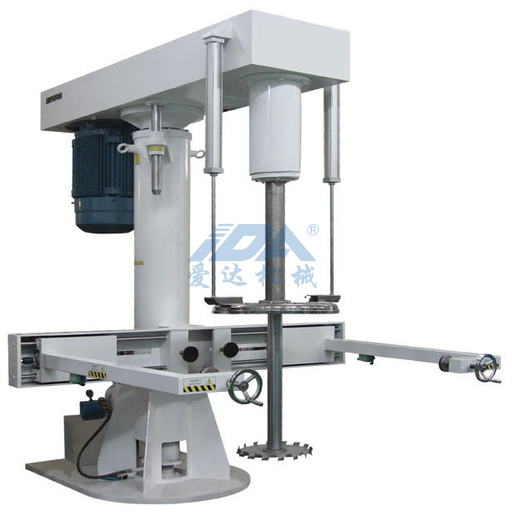
Assessing Specific Mixing Needs
When picking a high-speed disperser, the most important concern is to obtain clarity on your specific mixing requirements. Think of the materials you will be working with, such as the viscosity and density and other unique characteristics that have an effect on the mixing process. The problems of low-viscosity liquids or high-viscosity pastes will need varying cutter designs and motor power capacities if complete homogenization is necessary.
Next, you should look for the kind of volume you need to handle in a production scale. Benchtop models may be suitable for small operations, while heavier industrial dispersers are meant for high-volume production scales and therefore have higher motor power and bigger mixing vessels. A clear value on your volume of production targets will assist in choosing an appropriate piece of equipment that can carry out production duties at an appropriate pace without under-working or overloading capacity.
Another aspect of the mixer that might be worth considering would be some extra special feature or parameter allowing further control over the action of the mixer, such as varying speed. Notice also such common issues as how easy each model is to clean or compliance with certain safety standards. By marrying the choice of the disperser with the specific operational requirements, including both momentary and extended running, it avails a maximum performance, virtually no downtime, and high output levels.
Factors Influencing Your Decision
There are many significant factors which will affect selection of a disperser for the best performance together with its concord to the specific needs. Primary among these are materials’ viscosities. High-viscosity materials usually request the use of more powerful dispersers with robust motors, while low-viscosity applications will require less stringent specifications. Understanding your material’s property translates into the benefits of energy efficiency and making certain that the disperser can still work under its strain.
Another relevant aspect is the expected output frequency or volume. For high-volume or continuous operations, it is a disperser engineered to handle long-term running without overheating and wear. Irregular-running a period or intermittent is okay for a disperser that may be simpler, possessing low maintenance requirements. Also, of paramount importance are sound protective provisions, such as things like automatic cut outs and away from all industrial regulations or safety standards, which are very vital for safe working environment.
Ease of cleaning and maintenance should be underscored for a smooth operation. A quality disintegrator offering easy disassembly for cleaning would certainly save time on maintenance and cleaning. Go for the one offering the cleanliness in design in all the gaps to reduce downtime and for longevity of accompanied equipment. By looking after these factors such as viscosity of the fluid, production throughput, safety criteria, and maintenance concerns, one can make a personalized decision fitting to that production requirement.
Evaluating Manufacturer Reputation and Support
When looking at High-Speed Dispersers, reputation and support from the manufacturer are two key considerations. A trusted manufacturer is the one that delivers quality products consistently, with certifications to back them up, including clear and comprehensive documentation. Checking the historical profile of industry within which the maker operates, customers’ reviews, and third verifications, carries meaningful insight into the trustworthiness of them and into the quality of equipment.
Customer support is but another important measurement. High-speed dispersers often require technical support when installing, operating, and maintaining the equipment. Furthermore, the manufacturer should assist you promptly on things like complete operating manuals, a responsive technical team, and genuine spare parts. Training offered with the equipment’s operation or other in-depth guides underline the significance of high consideration the manufacturer gives towards customer satisfaction.
A warranty of strength could be such a testimony to the manufacturer’s trust in their products. That is the reason why an ideal warranty is extended to most major parts and is so detailed, giving students a chance to understand the path of recourse in the event their units stop working. By so doing, customers could find it ever more comforting to located manufacturing companies with renowned, unbroken records regarding superb after-sales service and an official backing.
Practical Guide to High-Speed Dispersion
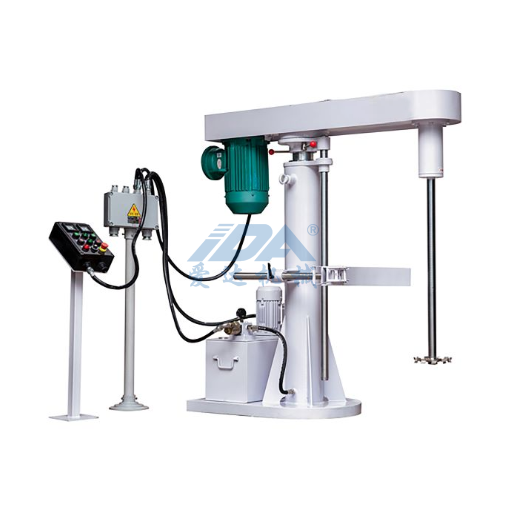
Setup and Operation Tips for Optimal Results
Proper setup is essential to achieving fast and effective high-speed dispersion. This includes securely placing the disperser and seeing to it that such vibrations are prevented through stabilization of the vessel while in operation. The disperser blade must be sized to match the level of material being dispensed. The ideal location of the blade is one-third into the depth of the vessel, both to maximize the efficiency of mixing and improve air entrapment.
During dispersion operation, start the disperser at a slow speed and gradually increase to the required RPM to prevent spillage. Batch consistency should be checked during operation. Uniformity is the key to acquiring the intended result. Trying to maintain a balance cautiously so that the blade speed and the viscosity of the material may stand together to ensure effective dispersion without overheating.
It is essential to clean the disperser blade and the vessel with a toothbrush after usage to prevent the process material buildup which may be the source of contamination in future batches. It follows that preventive maintenance must be performed to preserve the longevity of the equipment-routine Blade wear inspections and motor function checks are also important. Safely following those guidelines guarantees high performance and quality dispersion deserved by the excellence of the process each time.
Maintenance Practices for Longevity
Proper maintenance of the high-speed disperser ensures its long-term benefit, reliability, and efficiency. The machine should be cleaned regularly immediately after each use. This is to avoid any residue accumulation that may lead to contamination or inhibiting further performances. Use a brush or some soft material to wipe off any remaining product material, ensuring cleanliness is maintained and the equipment’s surface is left unscathed.
The blades and the motor have to be inspected regularly to warn ahead in any wear or potential issues. As the blades wear out, the mixing efficiency and consistency of the disperser turn nose down, therefore an immediate replacement of the worn blades is fundamental. The motor also needs to be checked for any weird sound, heating, and vibration to prevent the major malfunctions and prolong its own life too.
Accordingly, consummate lubrication present in the various moving parts, and following the manufacturer’s maintenance recommendations provide the gold standard for optimal performance and life of the disperser. Making copious notes and maintenance history becomes a primary goad to ensure the completion of those sundry tasks so that the identification of any repeating issues becomes viable. With these suggestions only, operators can considerably increase the lifespan of their high-speed disperser while keeping the quality high in finished products.
Common Issues and Troubleshooting Techniques
While using high-speed dispersers, there may be some common problems leading to inefficiency or deterioration in product quality. Below are some common problems and ways to troubleshoot them:
⚠️ Troubleshooting Guide
- Problem: Poor Dispersing Capacity
One common kind of problem is poor dispersion-not blending of the material uniformly. It might be due to the incorrect speed of the blade, improper loading, or worn disperser blades. If that is the case then, ideally, allow the blade to have a speed that operates with the mixing demands of the material. Try to load the materials in small quantities over time in the order that is correct using the disperser blades which must be checked for wear and replaced accordingly. - Problem: High Vibration During Operation
Imbalance, incorrect blade alignments, and motor issues can prompt excessive vibrations. Ensure the disperser blade is correctly mounted and aligned. Make sure to fill the tank with the appropriate amount of material until the load is balanced. If this vibration remains, the motor should be checked for wear or mechanical problems, and experienced technicians should be engaged for maintenance when necessary. - Issue: Motor Overheating
Motor overheating mainly results from prolonged exposure to high speeds, inadequate cooling, or a blocked ventilation system. Prevention includes not running the disperser for long periods without a break, providing good airflow for the motor, and also cleaning the ventilation system occasionally to avoid blockages. Keeping an eye on motor temperature to check for irregularity in heating can prevent damages or expensive motor overhauls.
By recognizing these common faults and taking appropriate troubleshooting steps, the operator can continue to perform well without too much downtime for maintenance, which ensures top-quality results from his machinery. In other words, attending regularly to the machinery and constant maintenance is a very good way to prevent mishap.
Frequently Asked Questions (FAQ)
Q: How do you set the correct one for the type of lots and their batch size?
A: Selecting the best performing high-speed, high-speed disperser is a function of batch size; with larger batches, you would require more horsepower machineries or high-shear dispersers. Larger blade extend towards the wall inside the tank to ensure proper mixing. Small to mediums batch size among them will need a disperser which has adjustable adjustable blade speed; to optimize tip speed and the speed at the very tip. A very large batch size, on the other hand, will call for extra mixer shafts either with disperser blade or disperser-agitator combination to continue high continuance and pump material from the bottom of the tank to the periphery of the rotating disk.
Q: When Do I Use a Stirrer over an Agitator for High Viscosity Material?
A: In many high viscosity applications a disperser can be a high-powered and much more effective option to have in place of a standard final stirrer because the disperser blade’s high-shear dispersing action along with its high dispersing pumping, around the tank walls and back to the pump’s location; in contrast, a single shaft stirrer or simple stirrer may not add enough shear; that being said, one can contemplate the use of a disperser together with an agitator for combining bulk circulation with intense local shear.
Q: What influence does blade design have on the performance of a High-Shear Disperser?
A: Letting it into high-shear disperser blade design such as a rotating disc on a high-shear disperser toothed blade the amount of shear is produced. The best shear is consequently produced at the outer face or tip and the periphery of the rotating disc, and the upper shear is the most desired for a faster blade speed of the high-shear dispersers. When blades become too worn out, the users should carefully change the blade to ensure the shear remains constant and avoid an undesirable decrease in performance.
Q: With respect to high-speed dispersers, what is the normal operating range of these devices?
A: The disperser normally operates at a low tip speed, basin the range of the very high out to the very low tip speed and is to be chosen as per what feet per minute shearing speed you expect with respect to your products viscosity. The ultimate criterion of high speed dispersers is that you should choose one that can move either half of the normal blade with just a typical inboard disc speed processing the other formulations, so that all outcomes are postulated carefully.
Q: How Important Is Horsepower and Shaft Design When Picking a Disperser?
A: Horsepower is central with respect to a high shear disperser, owing to a food NIR component on pumping energy, named shear rate. A disperser compares to a high-powered tool for optimized performance of dispersal in demanding tasks and high viscosity with appreciable shear rate, but must it be efficiently powered to generate shears. Shaft design also matters, as looking for sturdy shafts, and means of adding support mixing shafts to the disperser in order to handle torque and minimize deflection that the disperser blade would not be pulled out and break toward the wall of the vessel.
Q: Can I combine mixer with other mechanical devices for better consumption?
A: Yes, combining a disperser with other types of vessels or auxiliary devices, like a disperser hellbent on turbulence and an agitator or additional mixing shafts with disperser blades, will greatly improve circulation and dead zones at the bottom of the vessel. This approach leverages high-speed dispersing for particle break-up, while the agitator or shaft mixer maintains bulk flow and resists sedimentation near the inner wall of the vessel or at the bottom of the vessel.
Q: What are features that should be seen as for layman servicing and adjusting such machinery?
A: Think about Purchase of aerators with adjustable blade speed and easy-disconnection disperser blades; simple servicing prolongs the life of the disperser and maintains shear consistency and blade speed performance measured in feet per minute. It can help in design models with replaceable high-shear disperser blade components, provide easy access to the rotating disc, and guide the blade speed of high-shear dispersers to optimize life performance.
References
-
Dispersion Techniques for Carbopol Polymers
Discusses mechanical dispersers and their principles, including high-velocity eductors and inline homogenizers, which are relevant for choosing dispersers.
Read more here -
Methods for Estimating Air Emissions from Paint, Ink, and Coating Manufacturing
This document includes details about high-speed dispersers used in paint and ink manufacturing, providing context for their applications and considerations.
Read more here -
High Speed Disperser – Industrial Mixing Equipment from Leading China Manufacturer