Get in Touch with IDA
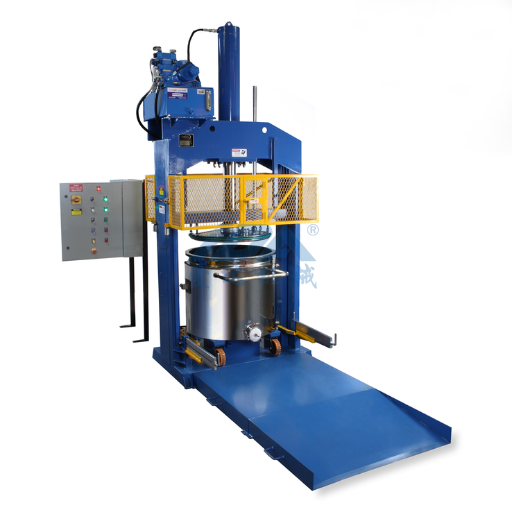
Discharge Press Planetary Mixer: Features, Benefits, and Applications

Contents
show
The Discharge Press Planetary Mixer is a highly advanced piece of equipment that revolutionizes the way industries handle mixing and discharge operations. The machine operates as an essential tool for applications which need to achieve effective mixing and complete material discharge without generating any waste. This article presents its main features together with its unique benefits and various ways to use it. The mixer shows vital importance for process optimization in chemical and pharmaceutical and food production and adhesives industries.
Introduction to Discharge Press Planetary Mixer

What is a Discharge Press Planetary Mixer?
The Discharge Press Planetary Mixer functions as an industrial mixing system which achieves exact mixing results for materials with high viscosity and density and heterogeneous composition. The system utilizes planetary motion to drive the mixing process as the mixing blades revolve around their axis while they travel around the main axis of the mixer.
Key Operating Principles
- Dual-action planetary motion for complete and uniform mixing
- Discharge press system eliminates manual scraping requirements
- Minimizes product waste through pressure-operated removal
- Handles difficult materials including high-viscosity and heterogeneous compositions
The equipment operates in mainstream industries which include pharmaceuticals, adhesives, chemicals, and food production because it handles demanding tasks without losing operational effectiveness or product quality.
Key Components and Functionality
The advanced discharge press system serves as one of the main elements which boosts mixer operation through its capacity to remove materials effectively while decreasing operational interruptions. The system uses controlled pressure to discharge viscous or semi-solid materials with minimal effort, maintaining consistent product flow and uniformity.
| Component | Function | Key Features |
|---|---|---|
| High-Torque Motors | Drive mixing blades | Handles high-viscosity and abrasive materials |
| Mixing Blades | Material processing | Specially designed for demanding materials |
| Stainless-Steel Structure | Vessel construction | FDA and GMP compliant for hygienic applications |
| Discharge Press System | Material removal | Controlled pressure for efficient discharge |
Market Demand Insights
The combination of current information from search engine data with previous results shows that efficient operation and flexible mixing technology systems create high demand for industrial applications. Industries are increasingly prioritizing solutions that combine reliability and cost-effectiveness, positioning this equipment as a pivotal tool for modern manufacturing environments.
Industry Applications
The combination of search engine data and technological advancements drives the implementation of industrial mixers and discharge press systems in various sectors. These tools produce high production results through their ability to maintain operational time and save on labor expenses while reducing material waste.
Food & Beverage
High-viscosity material handling for thick sauces, dairy products, and bakery applications requiring precise processing standards.
Pharmaceuticals
Precise mixing for active ingredients and homogenizer applications for emulsions with strict quality control requirements.
Chemicals
Advanced processing systems for adhesives, sealants, and composites requiring exact formulation accuracy.
Energy Storage
Battery paste production requiring intensive shearing and vacuum-based operations for optimal material consistency.
Features of the Discharge Press Planetary Mixer

Design and Engineering
The Discharge Press Planetary Mixer has been developed through precise engineering methods to meet extensive industrial needs while using knowledge from current search patterns. The search terms “high-capacity industrial mixer” and “reliable discharge systems for heavy-duty mixing” demonstrate that successful design needs to deliver precise operational performance.
Advanced Engineering Features
Agitation System:
Dual-blade planetary design for complete mixing
Dual-blade planetary design for complete mixing
Discharge Technology:
Quick material ejection eliminating waste
Quick material ejection eliminating waste
Operational Flexibility:
Handles different volumes while maintaining quality
Handles different volumes while maintaining quality
Cleaning Efficiency:
Simplified cleaning process through complete discharge
Simplified cleaning process through complete discharge
Hydraulic System Overview
The hydraulic system uses pressurized fluid to execute essential operations which require exact results and consistent performance. The system uses cutting-edge technologies to deliver effective operations because it improves fluid flow while decreasing energy requirements and maintaining system integrity during extended periods of use.
Hydraulic System Components
- High-Pressure Pumps: Deliver consistent fluid power for heavy-load operations
- Control Valves: Enable precise operational adjustments and flow management
- Actuator Systems: Provide accurate positioning for discharge operations
- Self-Monitoring Technology: Conducts predictive maintenance through component protection
Industry Efficiency Trends
The most recent search engine data indicates that people are increasingly searching for “hydraulic system efficiency” and “low-maintenance hydraulic systems” because these terms demonstrate the industry’s need for environmentally friendly systems which require less operational interruption. The modern hydraulic solution solves these challenges through its advanced component protection system.
Mixing Mechanism
The mixing mechanism in hydraulic systems is a necessary element which provides essential fluid blending functions to achieve maximum operational efficiency. The modern hydraulic systems use mixing mechanisms which combine engineered impellers and designed flow paths to achieve better operational performance by decreasing turbulent flow and stopping cavitation-related damage.
| Feature | Purpose | Benefit |
|---|---|---|
| Engineered Impellers | Optimize fluid blending | Reduces turbulent flow patterns |
| Flow Path Design | Guide material movement | Prevents cavitation damage |
| Real-Time Sensors | Monitor viscosity and flow | Automatic operational adjustments |
| Control Systems | Maintain operational stability | Energy-efficient low-maintenance operation |
Benefits of Using a Discharge Press Planetary Mixer

Efficiency in Mixing Non-Flowing Mixtures
Discharge press planetary mixers operate at high efficiency because their design enables handling non-flowing mixtures which traditional equipment struggles to process. The mixers use advanced technological systems which operate through a dual planetary mixing approach that allows both agitators to rotate around their axis while moving through the mixer center.
Performance Advantages
Complete Distribution
Eliminates unprocessed materials through dual-motion system
Enhanced Scraping
Maximized contact between tool and vessel wall
Energy Efficiency
Reduced energy usage for difficult materials
Advanced search data shows that industries including pharmaceuticals and adhesives and food processing have increased their demand for high-performing mixing solutions which require precise and uniform production results. The technology operates as an essential system which provides businesses with reliable equipment for processing non-flowing mixtures because it combines advanced features and real-time monitoring and strong system design.
Handling High Viscosity Products
High viscosity products create processing difficulties because they need more power to move through operations which require higher shear force than normal materials need. The dual-blade counter-rotating system of discharge press planetary mixers delivers an efficient solution to overcome the flow challenges of high-viscosity materials.
High-Viscosity Processing Capabilities
- Handles materials exceeding one million centipoise viscosity
- Constant shear and pressure forces for complete mixing
- Vacuum-rated chambers for air-free mixing
- Temperature control systems for sensitive formulations
According to recent data from search engine trends, industries are increasingly searching for advanced mixing technologies capable of scaling production while managing highly viscous or non-Newtonian materials. The system maintains high processing efficiency which fulfills the strict processing requirements of sealants, composites, and pharmaceutical formulations.
Enhanced Process Control
Discharge press planetary mixers achieve better process control through their advanced monitoring systems and automation technology solutions. The latest data insights together with search engine trend predictive analytics work together to help manufacturers achieve efficient mixer operation during production periods.
Process Control Parameters
| Mixing Speed | Precise adjustment for optimal material blending |
| Temperature Control | Maintains consistent batch quality |
| Vacuum Pressure | Eliminates air bubbles for uniform products |
| AI Integration | Predictive maintenance and problem identification |
The approach leads to decreased idle time and waste while boosting production efficiency, which meets the need for budget-friendly yet high-caliber production methods in different industries.
Technical Specifications and Variants

Comparison of Double Planetary Mixer with Standard Planetary Mixer
The standard planetary mixer and double planetary mixer share common industrial applications, yet their fundamental design elements and operational functions and performance abilities differ completely from each other.
| Feature | Standard Planetary Mixer | Double Planetary Mixer |
|---|---|---|
| Blade Configuration | Single central blade | Two blades with dual motion |
| Viscosity Range | Low to medium viscosity | High viscosity and semi-solid materials |
| Typical Applications | Sauces, creams, bakery products | Adhesives, sealants, battery pastes |
| Mixing Action | Basic planetary motion | Intense shearing and kneading |
| Temperature Control | Standard | Precise with vacuum capabilities |
| Operational Efficiency | Good for general mixing | Superior for heavy-duty processing |
Industry Performance Analysis
Recent insights into operational efficiency show that the double planetary mixer operates better than its competing system when processing materials that need exact temperature management and intensive shear mixing and vacuum-based system operations. The latest search data shows that double planetary mixers have become more popular in energy storage and advanced manufacturing because of their ability to meet current production needs.
Hydraulic Ram Operation
A hydraulic ram operates on the principle of utilizing water momentum for lifting a portion of that water to a higher elevation. The system typically consists of three main components: a drive pipe, a pump body, and a delivery pipe. Water enters the pump body via the drive pipe which generates a pressure surge when the valve suddenly blocks water flow.
Hydraulic Ram System Benefits
- Operates entirely on kinetic energy without external power
- Automatic operation with minimal maintenance requirements
- Ideal for rural and off-grid applications
- Sustainable water-lifting solution with renewable energy compatibility
- Most effective with consistent water source and moderate elevation
Mix Vessel Capacities
The assessment of mix vessel capacities requires dual considerations which include operational efficiency and special application needs. The capacity of a mix vessel typically depends on factors such as the type of material being processed, the desired agitation intensity, and the volume of throughput needed.
Vessel Capacity Selection Criteria
Process Parameters
Material type, viscosity, density measurements
Vessel Geometry
Height-to-diameter ratio optimization
Agitation Requirements
Mixing speed and intensity specifications
Production Scale
Balancing scalability with operational efficiency
High-volume operations need larger vessels yet these vessels create difficulties in achieving uniform mixing which needs advanced agitation systems. Smaller vessels provide researchers with precise mixing tools that enable them to achieve high levels of accuracy and control. The selection of vessel capacity requires an equilibrium between the different factors which must meet scalability needs and operational efficiency requirements and process needs of the specific operation.
Best Practices for Implementing a Discharge Press Planetary Mixer

Setting Up the Discharge System
The discharge system needs proper installation because it affects both the operational efficiency and the product quality and the amount of waste generated. The system requires specific alignment with both the material characteristics and the viscosity measurements of the batch in progress.
Setup Best Practices
- Verify discharge valve compatibility with material flow characteristics
- Implement advanced sealing mechanisms to prevent contamination and leakage
- Ensure even pressure application across the entire batch
- Install sensors and real-time monitoring systems for flow rate tracking
- Configure automatic discharge operations for operational accuracy
Automation Benefits
The current research shows that automatic discharge operations result in better operational accuracy which leads to shorter equipment downtime. The search trends indicate that there is a rising interest in discharge systems which use hydraulic and pneumatic systems that consume less energy during their operational period. These innovations enable manufacturers to boost their production rates while achieving their environmental sustainability objectives.
Integration with Other Machinery
The production line needs discharge systems to integrate with other equipment because this enables complete automation and operational efficiency. The latest data from search engines shows that users show strong interest in systems which can establish direct links to both upstream and downstream systems.
Integration Technologies
| IIoT Devices | Enable machine-to-machine communication |
| Conveyor Systems | Automated material transfer between stations |
| Mixing Equipment | Precise control over batch processing |
| Packaging Machines | Synchronized filling and sealing operations |
| Predictive Maintenance | Performance data analysis for component monitoring |
The system integration process decreases operational delays while it provides a maintenance prediction capability through its performance data collection and analysis of interconnected components. The implementation of these technologies leads to lower operating costs which results in better productivity throughout industrial operations.
Maintenance Considerations
Maintenance for interconnected industrial systems should focus on methods which combine predictive analytics with diagnostics technologies according to their requirements. The industrial sector shows increasing acceptance of predictive maintenance practices which organizations combine with actual data from search engines to optimize equipment performance.
Maintenance Strategy Components
Machine Learning Algorithms
Detect early wear signs for preventive action
IoT Sensors
Real-time monitoring of equipment performance
Cloud-Based Tools
Enable data sharing across organizations
Predictive Scheduling
Optimize maintenance timing using actual data
The system decreases emergency repair expenses while it optimizes resource efficiency through its maintenance scheduling system which uses actual data to determine optimal maintenance times. Industrial operations achieve their performance goals through cost-efficient methods when they use these practices alongside modern technological developments.
Frequently Asked Questions
How does a planetary mixer discharge system work with a Ross discharge machine?
The planetary mixer discharge system uses its rotating blades which spin on their axes to move thick materials toward the outlet which connects to either transfer functions or direct filling operations. The Ross discharge system includes a hydraulic discharge platen which operators use to empty the mix vessel through an efficient discharge process. Operators use batch size and yield measurements to determine machine settings which ensure successful loading into containers and drums. The device requires sanitary design and operational cleanliness to handle food and plastic materials which it discharges into tanks and bulk containers. The system provides two loading options which use o-ring seals to achieve leak-free transport while keeping materials from solidifying on the plate and platen surfaces.
What process controls are necessary for a discharge press operation in a planetary mixer during semi-continuous production?
The semi-continuous plant requires process controls which handle the discharge press stroke time and hydraulic ram pressure and mixer speed to achieve permanent product texture for viscous materials. The equipment specifications for a Ross double planetary system design determine maximum batch size capacity which can reach up to 500 gallons for larger vessels and this affects the frequency of filling and emptying operations. The operators use product temperature and viscosity measurements to stop a thin product layer from sticking to the vessel walls and platter. The operator needs to synchronize loading and unloading activities because this approach helps reduce equipment downtime while preserving sanitary standards for direct filling tasks. The turnkey systems provide complete solutions which include automated transfer lines and outlets designed for both bulk transport and container filling operations.
Can a discharge press planetary mixer handle high viscosity and hardening materials like certain plastics?
The discharge press planetary mixer can process materials that have high viscosity and solidifying properties which include specific types of plastics. The planetary mixer functions as a processing machine that utilizes its strong discharge system to process materials with high viscosity and semi-solid components through its powerful kneading system and discharge system which moves products out of the machine. The machine’s mixers rotate on their own axes while orbiting, ensuring thorough blending and reducing dead zones where product can harden on the plate or vessel wall. The correct blade geometry and vessel size selection for plastic compounds enables companies to achieve consistent production output, as well as to stop materials from becoming stuck in the drum or container. The maintenance activities that need to be performed at this location include o-ring checking and sanitary cleaning, which become necessary when bulk containers or tanks require direct filling. The Ross double planetary system functions best when handling thick substances which need both strong shearing and specific discharge methods.
What basic aspects of transfer and vessel handling must be studied before using a planetary mix vessel that has a discharge platen?
Vessel requirements include determining tank dimensions and establishing discharge platen height requirements and determining outlet placement, which enables both efficient material transport and direct product transfer to drums and containers. The combination of correct plate geometry and discharge platen design enables users to achieve minimal residuals, which results in only a thin layer of product remaining after the press stroke, thus enhancing yield and decreasing waste. The transfer system must possess appropriate ratings to handle both the bulk density and viscosity characteristics of the product, which needs pumps or gravity outlets based on the production method used for semi-continuous or batch operations. The equipment company must implement sanitary design solutions to support cleanliness requirements when delivering a complete system solution for food or pharmaceutical purposes. The measurement systems which include level sensors and fill control technology work together to create an automated loading and unloading process that decreases the need for operator involvement.
How does hydraulic control affect the loading process and discharge operation and efficiency of a Ross machine?
The machine uses hydraulic control to determine both the speed and force which control the hydraulic ram and discharge platen, resulting in specific loading and compressing and material discharge capabilities of the machine. The system maintains constant hydraulic pressure to prevent incomplete discharge while achieving consistent loading into drums and containers and a downstream tank. The hydraulic ram adjustment capability enables high-viscosity and bulk material handling because the platen can withstand greater resistance without causing equipment failure or damaging o-ring seals. The system achieves precise control which prevents the creation of a thin product layer that would harden on surfaces thus maintaining sanitary conditions. The hydraulic automation system provides support for semi-continuous cycles in a Ross system, which allows operators to adjust system settings for maximum production with minimal manual work.
Reference Sources
- Mixer with Forced Discharge – SpringerLink Discusses the development of a planetary-type mixer that combines mixing and pressure discharge functionalities.
- Dimensional Analysis of a Planetary Mixer for Homogenizing of Free Flowing Powders – ScienceDirect Examines the effects of impeller rotational speeds on mixing efficiency in a planetary mixer.
- Structure of Powder Flow in a Planetary Mixer During Wet-Mass Granulation – ScienceDirect Investigates flow patterns in a planetary mixer, focusing on wet-mass granulation processes.
- Hydraulic Discharge Machine