Get in Touch with IDA

Ram Press vs Pump Comparison: A Detailed Analysis of Hydraulic Systems

Contents
show
Hydraulic systems serve as essential power sources for various industrial applications which include both heavy machinery operations and advanced precision manufacturing equipment. The most frequently used hydraulic systems in industrial applications consist of two different types of hydraulic systems which include ram presses and pumps which perform distinct yet matching essential functions. The engineers and technicians together with decision-makers require knowledge about technology differences because this understanding will help them achieve better system performance and efficiency and cost savings. The article evaluates two technologies through a detailed comparison which assesses their design principles and operational efficiencies and their most suitable application fields. The material you study will provide you with technical knowledge which enables you to select the system that meets your particular needs because it prepares you for making decisions about intricate matters.
Introduction to Hydraulic Systems

What is a Hydraulic Press?
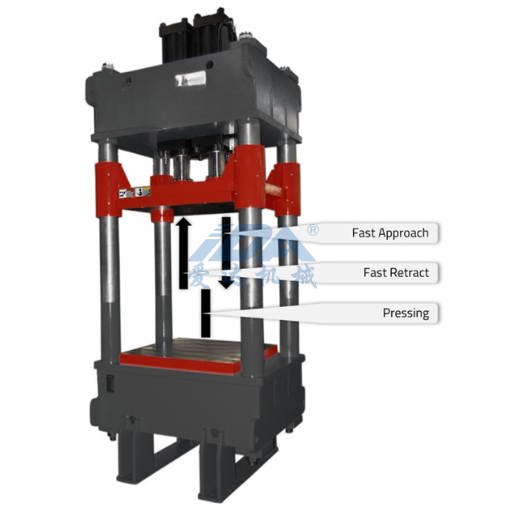
A hydraulic press operates as a mechanical device which uses Pascal’s law to function because the law states that pressure which acts on a confined fluid will move through the fluid in equal strength throughout all directions. The press operates by applying force through a hydraulic cylinder which uses pressurized oil as its powering fluid. The press system uses its design to create force which operators can use for tasks such as forging and molding or punching and compressing of materials.
Modern hydraulic presses use advanced components which include precision pumps and control valves and actuators to achieve better operational efficiency and precise performance results. These systems provide essential uniform pressing force which manufacturers and automotive and aerospace industries require because of their ability to deliver constant force throughout their operation. The system provides customizable solutions which can be modified to match specific operational needs and different load capacities, making it suitable for specialized tasks.
Understanding Ram Pumps
The functioning of a ram pump depends on hydraulic pressure because it needs only flowing water as its sole energy source. The system uses downhill water flow to create kinetic energy which it uses to lift a portion of that water to a higher altitude. The system operates through four main components which include the drive pipe and waste valve and delivery pipe and pressure chamber to produce continuous pressure surge cycles. The waste valve closes temporarily when downhill water enters the pump because the water flow creates enough kinetic energy to force some water through the delivery valve into the pressure chamber. The system uses pressurized water which moves upward through the delivery pipe to reach the selected destination. Ram pumps serve as effective and environmentally friendly systems which farmers use to irrigate their fields while providing remote areas with water and supporting off-grid operations.
Key Components of Ram Pumps:
- Drive Pipe
- Waste Valve
- Delivery Pipe
- Pressure Chamber
Overview of Pump Types
The classification of pump types requires understanding their operational principles which define their uses and show their benefits. The two main categories of pumps include positive displacement pumps and dynamic pumps. The system uses positive displacement pumps which include gear pumps and diaphragm pumps and peristaltic pumps to move fixed volumes of fluid through the system by mechanical means. The pumps excel in delivering precise flow control while maintaining high pressure which makes them suitable for chemical dosing and hydraulic system applications.
Dynamic pumps use centrifugal pumps and axial flow pumps to create continuous fluid movement through the system by applying kinetic energy that results from impellers which rotate and transmit their energy to the fluid. Centrifugal pumps operate efficiently in industrial and municipal settings because they can manage large fluid volumes while producing low pressure. The design of axial flow pumps makes them suitable for applications which require high flow rates and low head pressure such as flood control and seawater circulation.
| Pump Type | Operation Principle | Primary Applications |
|---|---|---|
| Positive Displacement | Traps and mechanically displaces fixed fluid amounts | Chemical dosing, hydraulic systems |
| Centrifugal | Kinetic energy via rotating impellers | Industrial, municipal applications |
| Axial Flow | High flow rates with low head | Flood control, seawater circulation |
The development of search analytics technologies and recent market trends have pushed industries to shift their attention toward pumping systems which use less energy during operation. The public adoption of solar-powered pumps and VFDs which control electric pumps marks a growing trend which helps organizations achieve their sustainability goals. The combination of traditional pumps with renewable energy systems creates hybrid systems which boost efficiency for operations located in remote areas or off the main power grid, which demonstrates how pumping systems adapt to handle contemporary demands.
Mechanical Differences Between Ram Presses and Pumps

Design and Construction
The design and construction of ram presses and pumps differ fundamentally based on their intended applications and operational mechanisms. Ram presses operate in agricultural and industrial settings through their piston-driven mechanism which generates pressure to process materials and extract oils and compact substances. Their construction is typically robust, with essential components including a ram piston, cylinder, and frame designed to withstand high compressive forces. The mechanism achieves operational efficiency through maintenance-free operation and prolonged service life which functions under extreme conditions.
Pumps which include centrifugal and diaphragm and rotary types throughout their design process use pressurization and flow control methods to transport fluids and gases. Key design elements include impellers, diaphragms, rotor assemblies, and housings made from materials tailored to specific fluid properties and operating environments. Current design frameworks include sensor and control system elements which combine with variable frequency drive (VFD) technology to increase operational precision and energy-efficient performance.
Key Distinction:
Ram uses basic mechanical systems to accomplish his tasks because they enable him to perform static high-force work while their pumps deliver advanced systems that convert liquid from one operational state to another. The two technologies have developed to their present state because they now use current technological advancements which include renewable energy solutions.
Working Mechanisms
The operational systems of ram presses and pumps depend on separate engineering methods which engineers developed to meet their specific operational needs. Ram presses operate through direct mechanical force application which drives a piston or ram to create pressure against materials or mediums. The system generates unidirectional force through a screw or hydraulic cylinder or equivalent device to maintain constant pressure during static processes such as metal forming or material compaction.
Pumps operate by transferring energy to fluids which enables their movement throughout systems. Pumps achieve fluid movement through centrifugal or positive displacement methods which use either rotational motion or pressure changes to operate impellers or diaphragms or pistons. Modern pumps commonly use sensors and control systems which follow algorithms to enable automatic flow rate and pressure modifications throughout their operation.
Public interest in renewable energy technology implementation which includes solar-powered pumps and hydraulic presses that focus on energy recovery shows continuous growth according to analysis of search engine data. The two fields of engineering research maintain their essential importance because scientists develop new technologies that improve operational efficiency and environmental sustainability and automated systems.
Comparison of Valve Systems
Industrial facilities require valve systems which function as fundamental components to control their fluid movement processes. The current search engine data demonstrates a significant rise in search queries which compare gate valves with globe valves and ball valves. Operators can use gate valves to manage flow control because their straight path design results in low pressure loss from complete closure to total opening. Globe valves provide effective control of flow because their intricate design enables operators to adjust flow through precise throttle settings. Ball valves demonstrate exceptional durability and dependable performance in extreme high-pressure and high-temperature conditions together with their ability to operate at high speed.
| Valve Type | Key Features | Optimal Use Cases |
|---|---|---|
| Gate Valves | Linear path design, minimal pressure drop | Open/closed positions |
| Globe Valves | Precise adjustable throttling | Flow regulation control |
| Ball Valves | High durability, fast operation | High-pressure, high-temperature environments |
Recent advancements show that more people now investigate how these valve systems work with automated systems and their energy-saving processes. Advanced valve monitoring capabilities emerge from the integration of smart sensors together with IoT-enabled control systems which provide accurate system management and increased equipment lifespan. Research trends show that material innovation drives industry progress with a focus on developing corrosion-resistant alloys and composite materials which meet requirements for durability and sustainable design. The selection and use of valve systems across sectors such as water treatment, oil and gas, and renewable energy infrastructure continues to be shaped by technological and market-driven developments.
Performance Metrics
Pressure Generation and Efficiency
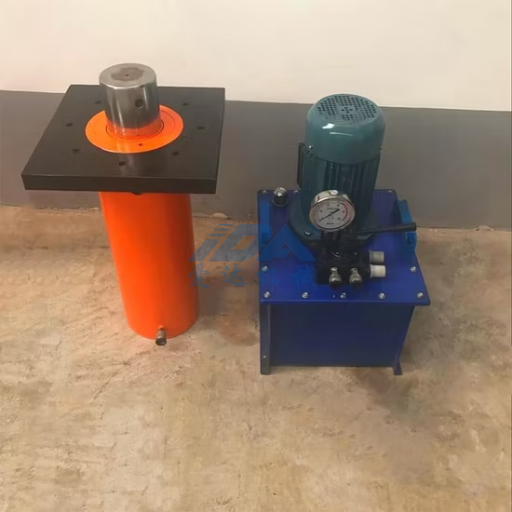
The assessment of pressure generation and valve system efficiency serves as essential performance indicators which determine both operational efficiency and power usage in multiple industrial sectors. According to recent data and insights, modern advancements in computational fluid dynamics (CFD) modeling enable accurate assessment of flow behavior and pressure distribution within valve systems. The simulations function as a key tool for optimizing design elements which achieve both decreased pressure losses and increased system efficiency. The ongoing efficiency improvements target both turbulence reduction and the maintenance of laminar flow which proves essential in water filtration systems and petrochemical processing operations. Current market trends demonstrate how organizations adopt intelligent sensor technology which enables ongoing pressure monitoring while delivering predictive insights that help identify potential system breakdowns. Industries achieve their best operational results by using new material development together with improved control technology while meeting their environmental obligations and energy regulations.
Critical Performance Factors:
CFD Modeling
Accurate flow behavior assessment
Turbulence Reduction
Optimized laminar flow maintenance
Sensor Technology
Predictive monitoring capabilities
Speed and Output Rates
Modern industrial systems achieve their best operational results through their ability to combine production speed with output rates and their use of advanced monitoring systems. According to the latest data aggregated from comprehensive industry analysis, including insights from search engine trends, systems that implement real-time analytics and adaptive optimization, particularly through AI-enhanced control mechanisms, are demonstrating superior performance. The systems produce more output while keeping their operational accuracy at the same level. For instance, 80% of high-output manufacturing units leveraging predictive technologies report significant reductions in downtime, which leads to faster production rates and lower operational outages. The systems use data analysis to support decisions which help them achieve both higher processing speeds and precise results.
Key Industry Statistics:
80% of high-output manufacturing units using predictive technologies report significant downtime reductions
Energy Consumption
Industrial systems which operate at maximum capacity require energy consumption assessment because it affects both their operational performance and environmental sustainability. Intelligent energy management systems have become essential to modern manufacturing operations because they help manufacturers reduce waste while increasing their resource efficiency. Organizations that adopt energy-saving technologies achieve an average energy consumption drop of 15-20 percent according to data from sustainability reports and search engine research. The system achieves its objectives through dynamic load balancing which enables real-time monitoring and energy prediction algorithms that modify operations according to anticipated demand. The advancements produce both financial advantages for businesses and operational benefits which support worldwide environmental sustainability initiatives by decreasing greenhouse gas emissions.
| Energy Management Feature | Impact | Benefits |
|---|---|---|
| Dynamic Load Balancing | 15-20% | Reduced energy consumption |
| Real-Time Monitoring | High | Optimized resource efficiency |
| Predictive Algorithms | Significant | Demand-based operational adjustments |
Cost-Efficiency Analysis
Initial Investment Costs
The assessment of initial investment costs for energy-efficient technology implementation requires evaluation of both physical and nonphysical costs. The tangible costs include expenses needed to acquire hightech equipment which includes smart sensors and renewable energy systems and real-time monitoring software and optimization software. The latest search analytics data trends show that different industries require an initial investment between $50,000 and $500,000 which depends on their business size and their choice of technical solutions.
Although the expenses appear to be high existing research shows that organizations recover their costs within three to five years through energy savings and lower operational costs. The initial expenses for businesses seeking to improve energy efficiency through sustainable investments can be reduced by government subsidies and tax benefits that support environmentally friendly projects.
Initial Investment Range
Typical Industry Investment
$50K – $500K
Payback Period: 3-5 Years
Operational Costs Over Time
The assessment of operational expenses throughout their duration needs to involve three elements which are initial costs for building assets and continuous upkeep and power usage throughout the period. The latest research results demonstrate that businesses which adopt energy-efficient solutions achieve lower operational expenditures throughout their entire operational period. The use of LED lighting and advanced HVAC systems leads to energy savings between 20 and 40 percent which results in major financial benefits. The latest data shows that organizations which implement smart energy management systems can significantly decrease their extra energy consumption which leads to financial recovery within their first few years of using the system.
Organizations that wish to manage their operational costs effectively must adopt AI and machine learning technologies for their predictive maintenance needs. The system enables preemptive detection of potential system failures which results in reduced downtime and repair expenses while maintaining efficient operational performance. The introduction of these technologies leads to stabilization of operational expenses which helps organizations achieve their sustainability objectives through efficient resource management. The research shows that organizations reach sustainable cost control by decreasing operational expenses which they accomplish through data analysis that directs their business decisions.
| Technology | Energy Savings | Additional Benefits |
|---|---|---|
| LED Lighting & HVAC Systems | 20-40% | Substantial financial benefits |
| Smart Energy Management | Significant | Rapid financial recovery |
| AI/ML Predictive Maintenance | Variable | Reduced downtime, lower repair costs |
Return on Investment (ROI)
Return on Investment (ROI) serves as financial analysis tool which assesses investment performance by comparing investment profits to total expenses. The formula for calculating ROI uses the equation (Net Profit / Investment Cost) × 100. Current research data from search engines shows that investors and enterprises use ROI as their primary method to evaluate technology implementation results and business strategic plans.
The analysis of current industrial patterns shows that companies which invest in data-driven technologies such as predictive maintenance or AI-based analytics will achieve returns on investment that exceed standard expectations because these technologies enhance their operational efficiency while decreasing their costs. Businesses that use advanced analytics achieve not only a productivity increase of 20 to 30 percent but also major decreases in their resource waste. The path to competitive advantage through innovative informed solutions requires business leaders to set ROI as their top priority which contributes to their longterm business development and environmental responsibility.
ROI Calculation Formula
ROI = (Net Profit / Investment Cost) × 100
Expected Outcomes with Advanced Analytics:
- Productivity increase: 20-30%
- Significant resource waste reduction
- Enhanced operational efficiency
- Long-term competitive advantage
Real-World Applications and Use Cases

Industries Utilizing Hydraulic Presses
The hydraulic press functions as an essential tool for multiple industries because it produces exact results through its capacity to generate high operational power. The latest data and trends show that automotive manufacturing and aerospace and construction and metal fabrication represent the main industries that use hydraulic press technology.
The automotive sector uses these presses to shape and mold and assemble different parts which provide both accuracy and long-lasting strength to their vehicle manufacturing process. The aerospace industry requires hydraulic presses to create aircraft parts from titanium which needs to be shaped into strong materials. The construction industry uses hydraulic presses to create beams and metal plates which need to have consistent quality and strong characteristics for safety requirements. The metal fabrication industry uses hydraulic presses for punching and blanking and deep drawing operations which enable them to produce complex designs with precise duplication.
The current hydraulic press technology together with its advanced automation system and energy efficiency features enables industrial companies to achieve required production standards at reduced manufacturing expenses. The industrial sector depends on hydraulic presses to complete its production operations because these machines have become essential to all industrial operations.
Automotive Manufacturing
Shaping, molding, and assembling components with precision and durability
Aerospace Industry
Creating aircraft parts from titanium and other strong materials
Construction Sector
Producing beams and metal plates with consistent quality
Metal Fabrication
Punching, blanking, and deep drawing for complex designs
Applications for Ram Pumps
Ram pumps function as efficient and simple water transport systems which enable users to lift water to higher ground without requiring traditional powering methods. The agricultural irrigation systems use these pumps to lift water from streams or rivers to irrigate their fields located at higher elevations for reliable hydration of their crops. The kinetic energy from moving water allows ram pumps to operate as reliable water supply systems for remote communities which lack access to electricity or fuel sources.
The latest search engine data shows that ram pumps have started to gain use in sustainable water management initiatives. Environmental conservation groups increasingly deploy ram pumps to reduce energy consumption and carbon footprints in water distribution processes. The infrastructure-limited areas choose ram pumps as their cost-efficient and environmentally friendly option which requires minimal upkeep for permanent water supply systems.
Primary Applications:
- Agricultural Irrigation: Lifting water from streams and rivers to higher elevation fields
- Remote Community Water Supply: Providing water access in areas without electricity or fuel
- Sustainable Water Management: Reducing energy consumption and carbon footprints
- Environmental Conservation: Off-grid water distribution with minimal maintenance
Case Studies and Examples
Case Study 1: Rural Southeast Asia Water Delivery System
Location: Rural community in Southeast Asia
Challenge: Limited electrical power supply in elevated residential areas
Solution: Implementation of ram pump systems using hydraulic energy
Results:
- Clean water delivered to 300 elevated households
- 85% reduction in traditional fuel-based pump usage
- Major cost reductions achieved
- Decreased carbon emissions
Case Study 2: Sustainable Agriculture Initiative in Sub-Saharan Africa
Location: Sub-Saharan Africa
Challenge: Irrigation needs for 50-acre farm in resource-limited area
Solution: Ram pump irrigation system implementation
Results:
- 40% increase in crop yield
- Permanent water access established
- Low operational expenses maintained
- Enhanced agricultural productivity
- Demonstrated viability of off-grid water systems
| Project | Key Metric | Primary Benefit |
|---|---|---|
| Southeast Asia Water Delivery | 300 households served | 85% reduction in fuel-based pump usage |
| Sub-Saharan Africa Agriculture | 50-acre farm irrigated | 40% increase in crop yield |
Frequently Asked Questions
What are the differences between hydraulic pumps and hand pumps for use with a ram press system?
The hydraulic pump provides continuous hydraulic pressure together with higher flow rate capacity, which makes it suitable for performing tasks that require constant movement of equipment with rapid operational periods. The hand pump serves as a practical solution for infrequent work and small component tasks because of its straightforward design and low upkeep requirements yet it demands human labor to operate while providing reduced pressure and output. The system requires both appropriate hoses and valves together with a reservoir that matches the system requirements to store hydraulic fluid and stop cavitation from occurring. Pump manufacturers describe their products through three primary specifications, which include stroke measurement and flow rate performance and maximum pressure capability, so checking those specs helps when selecting the right pump. A two-stage pump together with a pump that includes a pressure gauge delivers multiple operational options which enable users to effectively manage their pressure and force requirements in different workshop tasks.
What are the differences between a ram press and a bottle jack or ton press in vertical applications?
The ram press together with the bottle jack and ton press both create downward pressure through their cylinder or plunger structures, but the ram press uses an integrated pump and valve system to enable operators to manage its functions, while the bottle jack operates through its basic design that includes only one active component for lifting and pressing functions. Vertical metal forming presses and shape straightening presses require double-acting cylinders or adjustable stroke systems to handle reverse load conditions. Bottle jacks provide users with both portability and durability, yet they lack the extended stroke capacity and multiple operational functions found in specialized hydraulic presses equipped with pressure gauges and reservoirs. The selection process requires you to assess three factors which include force requirement and psi capacity and operational height. The manufacturers recommend regular inspections of the shaft and bearing and seal components to decrease maintenance needs while extending the equipment’s operational lifetime.
What are the benefits of using a double-acting hydraulic cylinder compared to a single-acting hydraulic cylinder for my press operation?
Double-acting hydraulic cylinders use hydraulic fluid to apply force in both directions through their piston system, which delivers rapid and precise movement control for tasks that require repeated motion, while single-acting hydraulic cylinders return their piston through either spring or gravity method, which makes them simpler to operate at reduced costs. Double-acting cylinders provide the optimal solution for operations that require exact control of both downward and upward movement, such as table movement and workpiece repositioning tasks. The use of single-acting cylinders together with bottle jacks works effectively in construction tasks that require heavy compression when speed of return is not a critical factor. The selection of a hydraulic system affects both the required pump specifications and the proper hose dimensions together with determining whether a 2 stage pump or reservoir capacity is necessary to maintain hydraulic pressure. The system requires assessment of three elements which include maintenance needs and energy efficiency needs and system complexity requirements because double-acting systems use multiple valves together with seals to operate.
How does air hydraulic (compressed air) compare with hydraulic pumps for pressurizing a ram or press cylinder?
The study compares two methods for pressurizing a ram or press cylinder through the evaluation of air hydraulic systems which use compressed air to operate hydraulic pumps and intensifiers whereas hydraulic pumps establish a continuous flow of hydraulic power at higher efficiency during heavy-duty operations compared to the simpler and more transportable design of air hydraulic systems. The use of air systems introduces less precision because air can be compressed which creates challenges for precise control during metal forming processes that require fine control and deep drawing operations with complicated designs. The operation of air hydraulic equipment requires all hoses and valves and gauges to be suitable for system psi while the reservoir and pump types need to match cylinder displacement and stroke requirements. The manufacturers recommend operators to use air-hydraulic systems for tasks that require intermittent operation while they should use standard hydraulic pumps for their industrial applications which demand high-frequency operations and substantial force.
What maintenance and setup considerations should I follow for hydraulic presses and ram pumps?
The optimal setup needs correct pump selection together with proper hose routing and secure connection installation and reservoir sizing which maintains hydraulic fluid cleanliness and supports effective cooling functions; a gauge needs installation to track both psi measurements and flow rate. The regular maintenance tasks require personnel to check fluid levels and filter replacement and seal and bearing and shaft inspection and valve and gauge testing to verify operational correctness. The selection of durable components should be applied to repetitive operations while 2 stage pumps and gear pumps should be evaluated for efficient performance and all moving components need to be checked for proper lubrication and absence of debris. The maintenance log needs to record all activities while the manufacturer suggests specific times for fluid replacement and system pressure tests. Basic preventative measures lead to major reductions of operational disruptions which extend the operating life of mechanical and hydraulic presses.
How do I select the right pump, valve, and cylinder configuration for bending, punching, or straightening metal?
The selection process needs to begin with an assessment of required force and required stroke length and the need for dual-direction control through double-acting cylinders or single-acting cylinders which provide downward force only. Match the hydraulic pump and valve to the required flow rate and maximum psi so the cylinder reaches the needed speed and force; include a gauge to verify system performance during operation. The design needs to establish both hoseLength and hoseDiameter specifications which will achieve pressure maintenance while the reservoir design must include sufficient storage space and effective filtration systems to eliminate metalworking waste. The system must use hydraulic systems because they provide better precise control compared to air hydraulic systems when operations demand high accuracy during their complex shape and deep drawing processes. The selection of equipment needs to follow both manufacturer requirements and industry standards which will produce safe equipment that performs reliably at an affordable cost.
Reference Sources
- Efficiency of Hydraulic Ram Pumps Made with Alternative Materials – Evaluates the cost and efficiency of hydraulic ram pumps using alternative materials.
- Enhancing Pumping Capacity Through Pressure-Gravitational Forces Combination – Studies the pumping capacity of ram pumps compared to other systems.
- Predicting the Output of a Hydraulic Ram Pump – Develops empirical correlations to predict the performance of hydraulic ram pumps.
- Hydraulic Discharge Machine
Conclusion
The basic characteristics of ram presses and pumps need to be understood because this knowledge enables industrial processes to operate at their most efficient state while producing cost-effective and environmentally friendly results. The two technologies provide different benefits which continue to develop through contemporary progress in automation and energy-saving methods and the use of renewable energy sources. Engineers and decision-makers can choose the best hydraulic system for their specific needs through their analysis of design principles and performance metrics and application requirements which ensures operational success and environmental sustainability.