Get in Touch with IDA

Vacuum Mixer Discharge: Understanding the Functionality and Applications

Contents
show
Vacuum mixing is an essential component of many businesses that need accurate procedures when dealing with mixed media. This comprehensive guide explores the operation of vacuum mixer discharge systems and their many uses across industries, helping you understand why they are a vital part of present-day manufacturing systems. Whether you’re a professional in the field or simply curious about this advanced mixing technology, this practical outlook will illuminate the relevance and functionality of vacuum mixer discharge.
Introduction to Vacuum Mixing

What is a Vacuum Mixer?
A vacuum mixer is a modern industrial equipment constructed machine which is used to blend different materials in vacuum regulated conditions which ensure the optimal process of blending through eliminating air and minimal allowance of incorporation of any unwanted elements. A vacuum serves several purposes including homogenization, removal of bubbles or air pockets and attainment of high material density. Such devices find their application in places which cannot compromise on quality such as pharmacy, cosmetics, food, chemicals and other such industries.
Furthermore, vacuum mixers integrate potent mixing systems with the creation of negative pressure inside a vessel. Thus, the results of mixtures are characterized by high sensory durability and functionality, complexity, and uniformity throughout the entire mixture. On this basis, they are indispensable assets in this 21st century which increase the productivity of any process that requires large-scale production.
Primary Industry Applications
Pharmaceuticals
Creams, ointments, gels, emulsions, and suspensions requiring precision and purity
Cosmetics
Lotions, serums, sunscreens, and beauty products with smooth textures
Food & Beverage
Mayonnaise, sauces, dressings, and emulsified foods with extended shelf life
Chemicals
Adhesives, sealants, coatings, and specialty chemical formulations
Principle of Vacuum Mixing
Vacuum mixing is achieved through the combination of mechanical mixing and exposing the product to a restricted low pressure environment. At its very heart, the mixing area has been rendered airless by the use of powerful evacuators which completely nullify the presence of air bubbles and minimize the chances of oxidation. This means that there is an improvement in the taste, purity and duration of the end product.
Additionally, mechanical components either in the form of high shear mixing blades or planetary mixers help in material blending, facilitating even distribution of the ingredients in the mix. Lack of air in the chamber enhances the process of heat transfer and there is exhaustion of any gases that may be present in the mixture, which is very helpful in industries like pharmaceuticals and food where accuracy is required. Furthermore, vacuum mixing also acts in favor of suppressing the release of volatile substances which help in maintaining integrity of formulation.
Vacuum Mixing Process Benefits
Air Elimination
Removes bubbles and prevents oxidation for enhanced stability
Heat Transfer
Improved thermal control for temperature-sensitive materials
Gas Removal
Degassing capabilities ensure product purity and consistency
Volatile Control
Suppresses volatile substance release maintaining formulation integrity
Combining principles of advancing technology and vacuum processing, innovations have come in vacuum mixers, which shows real-time managing of parameters such as viscosity, temperature, pressure and more. The augmentation in this area owing to the latest inputs and creativity explains the reason for vacuum mixing being so important in the manufacture of products that are drawn from different kinds of industries.
Components of a Vacuum Mixing System
A vacuum mixing system consists of various significant components that are aimed to enhance the accuracy and effectiveness of the mixing function. These components work together to create an efficient and accurate mixing system to address the varying needs of each industry.
Essential System Components
| Component | Function | Importance |
|---|---|---|
| Vacuum Chamber | Main vessel where mixing occurs under vacuum conditions | Enables air-tight processing and uniform mixing |
| Mixers/Agitators | Mechanical blending elements (blades, propellers, spinners) | Ensures thorough ingredient distribution |
| Vacuum Pump | Creates and maintains negative pressure in chamber | Removes air and improves product quality |
| Control System | Digital controls for speed, temperature, pressure, time | Optimizes operations with data analytics and AI |
| Temperature Control | Heating/cooling mechanisms for thermal management | Protects heat-sensitive materials |
| Discharge Unit | System for removing mixed product efficiently | Minimizes waste and maintains cleanliness |
Functionality of Vacuum Mixer Discharge
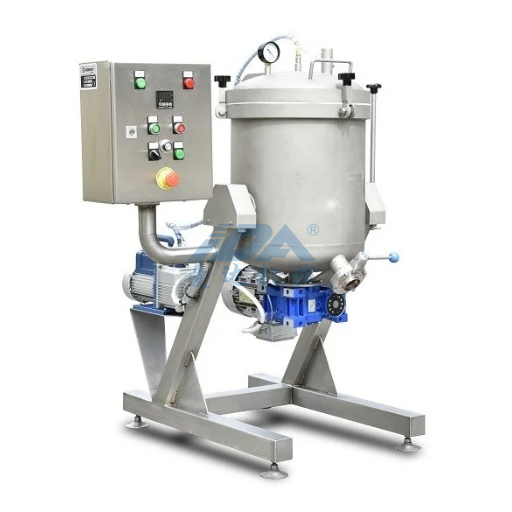
Understanding the Discharge Process
The discharge process is a critical stage in complete vacuum mixer operation, functioning to safely and smoothly release the homogenized product from the vacuum mixer. Contemporary equipment utilizes technological devices such as bottom valves or side outlets to facilitate controlled discharge of materials. Pneumatic cylinders and/or hydraulic cylinders can be used to open and close discharge valves in Vacuum Mixer Discharge systems for accuracy control and safety reasons.
According to recent statistics, the latest versions of vacuum mixers often incorporate modifications that make it possible to empty the chamber without leaving much of the mixed product in the system. This includes additional features such as chambers that slope to the open end, and valve arrangements for improving the discharge system and ease of cleaning. These bring major benefits to process industries especially the pharmaceutical or fine chemical sectors where batch independence and hygienic aspects are critical.
Best Practices for Efficient Discharge
1
Maintain Vacuum Seals
Regular inspection of seals prevents pressure drops and ensures consistent product quality
2
Optimize Valve Settings
Automated valve systems increase accuracy and reduce material attachment
3
Implement Real-Time Monitoring
IoT sensors detect bottlenecks and enable immediate operational adjustments
Why Efficient Discharge is Critical in Mixing Operations
Increasing the effectiveness of discharge in any mixing action is important for production flow enhancement as well as the quality of the finished product. Recent studies show that effective discharge devices help to avoid product cross-contamination, reduce waste of materials and drastically increase the effectiveness of the equipment. Manufacturing systems that are enhanced with automatic discharge functions are advantageous for increasing products crafted while ensuring legal practices and standards of manufacturing such as those of FDA and ISO are not violated.
Enhanced discharge efficiency reduces time wasted in cleaning and changing products, thus helping reduce operational costs at the same time increase output in such competitive industries as pharmaceuticals, foods, or advanced materials like nanomaterials. This justifies the importance of optimization of discharges in the context of technological progress and competition in manufacturing.
Critical Benefits of Efficient Discharge
- Cross-Contamination Prevention: Maintains product purity between batches
- Material Waste Reduction: Minimizes residue and product loss
- Equipment Effectiveness: Increases throughput and operational capacity
- Regulatory Compliance: Meets FDA and ISO manufacturing standards
- Cost Reduction: Decreases cleaning time and changeover expenses
Common Challenges in Vacuum Mixer Discharge
When a vacuum mixer discharge occurs, it can be more challenging than other advanced process operations due to its high potential for complications. The first problem that can be experienced is material buildup around the mixer’s surface which may contribute to waste, non-homogenous product, and difficult cleaning. Such difficulties of the design are increased by sticky heterogeneous products such as adhesives, medicinal products or specialty food products, which seldom discharge through regular methods.
Additionally, the process of mixing can cause air to be trapped leading to a foamy structure that interferes with the consistency of the material being expelled. Another regularly encountered problem consists of the accurate control and automation of the discharge process itself. When there are changes in temperature, consistency, or size distribution of the particles in the material being discharged, the system is required to be dynamic in order to sustain the flow rates and keep it free of clogging.
Common Challenges and Solutions
| Challenge | Impact | Solution |
|---|---|---|
| Material Buildup | Product waste and cleaning difficulties | Scraper blades and sloped chamber design |
| Air Entrapment | Foam formation and inconsistent discharge | Vacuum-assisted discharge systems |
| Flow Control Issues | Clogging and inconsistent discharge rates | Smart automation and real-time monitoring |
| Component Wear | Mechanical damage from abrasive materials | High-performance materials and routine maintenance |
Since abrasive or corrosive materials are handled during the process of discharge, the main components including seals, valves and couplings suffer mechanical damage. Therefore, the system cannot operate without investing in routine checks, thus augmenting the cost of operation and causing some downtime. The use of real-time monitoring systems combined with intelligent automation technologies helps to improve and maintain the Vacuum Mixer Discharge processes with consistent efficiency.
Applications of Vacuum Emulsifying Mixers
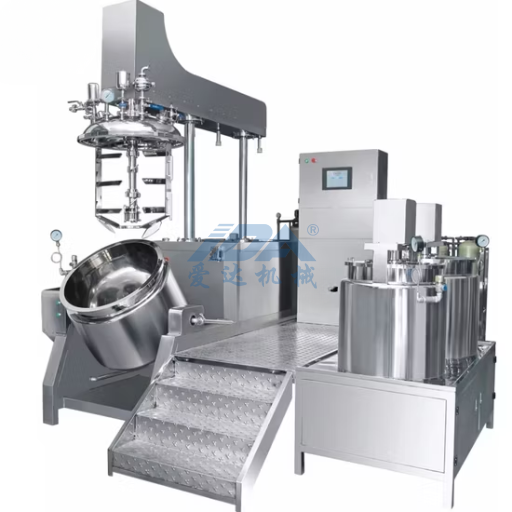
Industries That Utilize Vacuum Mixer Discharge
Vacuum emulsifying mixers make usage possible across different professional sectors, providing crucial output of complete homogeneity in content and quality. These advanced systems serve multiple industries with specific requirements for precision and purity.
PHARMACEUTICAL INDUSTRY
In the pharmaceutical industries, creams, ointments, gels, emulsions, and suspensions are produced using these mixers. The mixers work under complete vacuum to avoid air contact with products, facilitating production of formulations with no contamination and very high stability. The vacuum environment reduces contamination and oxidation of active compounds, helping improve shelf life according to high quality standards and regulatory requirements.
COSMETICS INDUSTRY
These devices devoted to cosmetic production are particularly efficient in skin lotions, body lotions, facial serums and sunscreen production. The vacuum mixers make the dispersion of ingredients efficient with minimal air incorporation and smooth blending, ensuring superior texture and product stability.
FOOD & BEVERAGE SECTOR
The application includes high-quality production of mayonnaise, sauces, dressings, and other emulsified foods. Their capability to regulate temperature changes during processing helps ensure that taste and nutrients remain intact while extending shelf life.
CHEMICAL INDUSTRY
Such equipment is a core component in the production of many chemicals including resins, glues, paints, additives, and modification agents. It also ensures that any part can be mixed in an appropriate way and makes it possible that the output is always acceptable even with very challenging agent formulations.
BIOTECHNOLOGY & LABORATORIES
Vacuum mixers are utilized for advanced applications that require contamination-free arrangements and precise control. They work within clean and controlled environments essential for research and development applications.
Vacuum Mixer Discharge for Food and Beverage Applications
Vacuum emulsifying mixers are deeply ingrained in food and beverage manufacturing, mainly for products that require either a high level of emulsification and smoothness or a stable emulsion. Its use spans a wide spectrum of products starting from sauces such as mayonnaise and salad dressings, all the way through to desserts where exact thickness is required, along with stability and mixture tightness of ingredients. These mixers incorporate real-time automation and enhanced emulsification principles for large batch production to facilitate hygiene and reduce wastage.
There is an increasing consumption of plant-based and other alternative proteins as identified through recent trends, and these are often a new area of use for vacuum emulsifying mixers. They help to resolve formulation issues like the ability to mimic animal-based textures and mouthfeel through incorporation of plant oils, proteins and water under control. Moreover, their operation in a controlled environment allows minimizing oxidation, thus increasing the shelf life of the product and preserving the desired taste.
Pharmaceutical Applications of Vacuum Mixers
Vacuum mixing technology occupies an important place in the pharmaceutical industry, especially in the production of emulsions, suspensions, creams, and ointments. Since such systems operate at reduced pressure, much less air is trapped in the mixture, the density of which is necessary for the manufacture of certain compositions. As a result, the drugs are homogeneous and devoid of any variation, which is crucial for their effectiveness and acceptability.
Moreover, when heat-sensitive or volatile ingredients need to be processed, vacuum mixers are advantageous as processing can be done at lowered temperatures. Some of the more advanced models combine automatic control and sensing capabilities for real-time measurement of parameters such as viscosity, temperature and mixing speed, hence ensuring proper formulation of products.
Modern Pharmaceutical Applications
Most recent and positive development is the increase in application of vacuum emulsifying systems in devising modern drug delivery systems including:
- Liposomal Carriers: Uniform particle size distribution for enhanced delivery
- Transdermal Patches: Consistent formulations for controlled release
- Injectable Formulations: Precise texture and bioavailability control
- Topical Applications: Stable emulsions with extended shelf life
Benefits of Using Vacuum Mixing Technology

Advantages of Vacuum Emulsification Process
The use of vacuum emulsification technology has significant advantages that are particularly relevant in the manufacturing of industrial and pharmaceutical products involving the need for high quality emulsions, dispersions and suspensions. Vacuum mixers, by operating at reduced pressures, are able to minimize the amount of entrapped air within the resulting matrix, which plays a role in enhancing the overall stability and shelf life of products. In addition, the uniform shear stress which contributes to particle size during emulsification ensures that the particles are uniformly strained; this is especially important in preparing medications, topical lotions, or creams for injectables that take texture and bioavailability into consideration.
Key Technology Benefits
Enhanced Product Stability
Minimized air entrapment extends shelf life and maintains product integrity over time
Superior Quality Control
Uniform particle size distribution ensures consistent product quality batch after batch
Process Optimization
Reduced processing times through efficient mixing dynamics and automation
Material Handling
Capable of processing even viscous non-thixotropic materials with precision
Hygiene Standards
Strict cleanliness measures essential for regulated industries
Cost Efficiency
Reduced waste and improved yield maximize return on investment
Enhanced Mixing Efficiency and Product Quality
In certain businesses, for instance, those dealing with cosmetics and food processing, better mixing and better product quality cannot be compromised. Vacuum emulsification devices are beneficial, as they are efficient methods of production alongside their improved shear forces and energy distribution, which maximize the emulsification process. Search data shows an increasing trend of industry adoption of automation and IoT (Internet of Things) technology. Enhancements allow users to measure and manage parameters of mixing while manufacturing, hence providing higher quality control and lesser raw material wastage problems in industries using the technology.
Advanced Technology and Cost-Effective Processes
Nowadays, improvement of automation and IoT systems is strongly required to lower the operating costs and control the processes of production. Based on recent surveys in relation to search activities, many industries that turn to automating functions are driven by a need for reduced expenses especially on an enduring basis. Employing Artificial Intelligence among other data-infused tools to analyze processes, companies are able to bring down costs on power, production materials and trimming manpower without sacrificing the standards of the product.
Additional advantages include technology for managing assets preemptively where production is not halted necessarily for repair or maintenance interruptions caused by equipment downtime. Such a consolidated strategy could be applied for increasing productivity at the core ensuring proper management of resources in line with the trend towards green production systems around the globe.
Tips for Optimizing Vacuum Mixer Discharge

Best Practices for Discharge Systems
It is important that manufacturers ensure that the final product is closely metered and properly discharged during the vacuum mixer discharge process. This is achieved by implementing the following practices:
Optimization Checklist
- ✓
Check Vacuum Seals Regularly: Perform regular inspection to prevent pressure drops when discharging - ✓
Adjust Discharge Valves Carefully: Set valves correctly to reduce material attachment and improve flow - ✓
Optimize Mixer Position: Position to allow gravitational flow for easier product discharge - ✓
Implement Real-Time Monitoring: Use IoT-enabled sensors for immediate operational adjustments - ✓
Establish Cleaning Protocols: Schedule regular cleaning with CIP systems to prevent buildup
In order to improve processes, manufacturers will increasingly implement modern data and predictive analytics. Predictive analytics identify new technological and engineering improvements regarding material handling, exploding the use of mixers and the need for automation and data based processes. Such help them to refine their discharge process in a useful and cost effective manner which improves performance.
Troubleshooting Common Issues
A Vacuum Mixer Discharge system, for instance, is vulnerable to operational challenges due to the variability of the materials being mixed and is prone to possible neglect from the operators. This can be circumvented by encouraging the manufacturers to embrace maintenance practices in which they clean and restore key components to any of their clearances that are likely to be impeded by blockages. Another challenge faced is the wrong reading of the discharge level in most cases, very often it could be because of erroneous sensor calibration, mechanical vibrations, or aged equipment. This issue can easily be avoided by employing maintenance programmes and new technology.
Common Issues and Solutions
| Issue | Cause | Solution |
|---|---|---|
| System Blockages | Material buildup and neglected maintenance | Regular inspection and cleaning protocols |
| Incorrect Readings | Sensor calibration issues or old equipment | Predictive maintenance and modern sensors |
| Energy Inefficiency | Outdated systems and poor monitoring | Energy-efficient designs and real-time monitoring |
| Mechanical Failures | Unexpected breakdowns and component wear | Predictive algorithms and automation solutions |
Attention is shifting towards energy inefficiencies associated with discharge systems. One way of addressing this is through leveraging energy-saving mixer designs and the use of real-time monitoring tools. Automation solutions which are based on prediction algorithms allow for lower costs and, more importantly, eliminate possibilities of having downtimes in the event of any unforeseen mechanical breakdowns. Such techniques help manufacturers to combat any challenges before they arise by predicting trends with the help of vacuum mixer discharge data, reducing downtime, and increasing performance efficiency.
Extending the Lifespan of Your Vacuum Mixer
Working to extend the lifespan and increase the efficiency of a vacuum mixer involves employing methods based on scientific and evidence-based approaches. The following are recommended in accordance with established practices and new trends:
Maintenance Best Practices
1
Lubricate Moving Parts
Apply lubricant to bearings and seals based on recommended intervals to prevent damage
2
Maintain Cleanliness
Adopt proper cleaning protocols after every production run to prevent contamination
3
Use IoT Sensors
Monitor pressure, temperature, and motor efficiency to identify issues before failure
4
Calibrate Parameters
Recalibrate cycling time and vacuum pressure regularly to prevent performance drift
5
Stock Critical Spares
Maintain inventory of seals, o-rings, and filters to avoid production halts
It is notable that without reduction in the performance and the quality of products, manufacturers can increase the working life of their Vacuum Mixer Discharge systems by adopting the maintenance strategies highlighted above and by taking advantage of modern technologies and data analysis systems.
Frequently Asked Questions
Reference Sources
- 2nd Annual Graduate Student Symposium – Discusses vacuum chamber discharge and its applications in research and industrial processes.
- Engineering Research Center for Plasma-Aided Manufacturing – Explores ionization and discharge processes in vacuum systems for advanced manufacturing.
- Research Activities of the School of Engineering, Oregon State University, 1961-62 – Includes studies on vacuum systems and discharge mechanisms in mixer-settler equipment.
- Hydraulic Discharge Machine
Conclusion
Vacuum Mixer Discharge system is a vital assembly for pharma, cosmetic, food and chemical industries. By referencing this document and appreciating the functionality, use and also comparing the various optimization approaches, firms are able to enhance the quality of their products, minimize wastes, and increase the efficiency of their operations while adhering to legal requirements as well. The enhanced capabilities of mastering the art have seen the incorporation of IoT monitoring systems, predictive maintenance, and automation in all vacuum mixing systems where such advances will be in the industry for many years to come.