Get in Touch with IDA

Three Roll Mill vs Bead Mill for Paste & Ink: How to Choose the Right Mill

Contents
show
Making the right choice of equipment is crucial wherever there is a need for sufficiently reducing the size of particles or getting them uniformly dispersed. The Three Roll Mill and Bead Mill are one of the best solutions for this. They both work completely well but have specific uses that are very material- and target-dependent. This article makes it easy to differentiate between and highlight the uses of both methods and then select the correct milling solution that can match-your-material-needs best. One cannot overlook the various working principles of these systems in making an informed decision to enhance efficiency, ensure high-quality products, or cut considerably on operational costs.
💡 Quick Reference
For a side-by-side overview of three roll mill, ball mill, and bead mill specifications, see our complete comparison table on the Three Roll Mill product page.
Introduction to Milling Technologies
Overview of Milling in Industrial Manufacturing
Milling technologies represent an essential ingredient in the industrial manufacturing by way of material size reduction and fabrication per definite size and texture requirements. The three-roll mill and the bead mill are the two most frequently used milling systems, performing pretty much the same – reducing particle sizes – and function through different principles and applications.
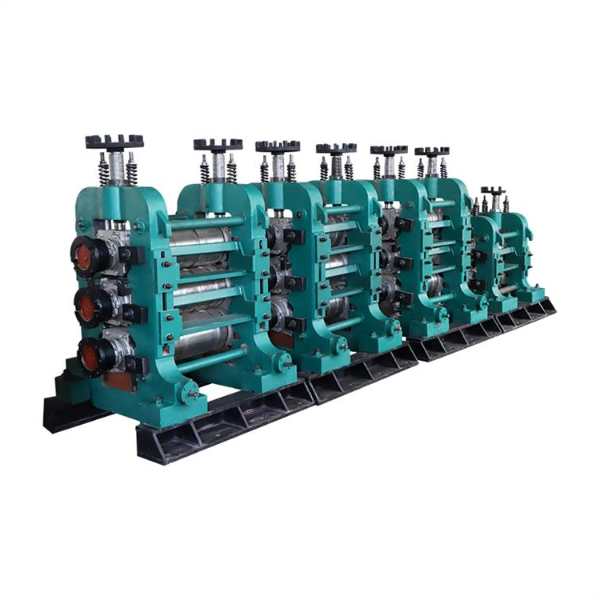
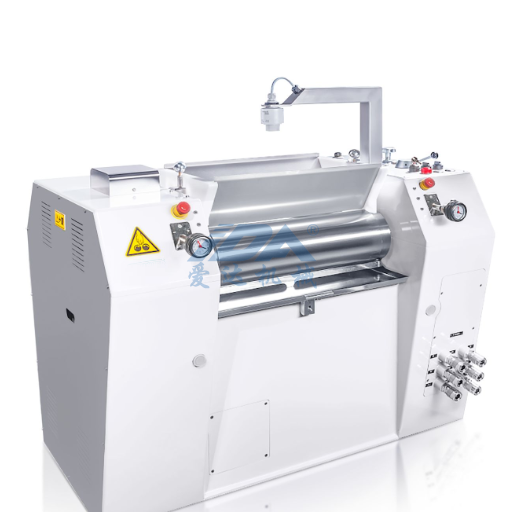
A three-roll mill employs three horizontally positioned rollers, rotating at different held speeds in opposition to one another. The material is supplied to the rollers, which further shear and mix the particles to form an uniform consistency. The application of this mill is for high-viscosity matter like pastes or thick emulsions and the popular choice for the production of ink, paint, and cosmetics. These systems are easy to maintain because their working principle is materially simple.
In contrast, a bead mill is designed with a grinding chamber containing relatively small, spherical grinding media, or beads with high-speed agitation. Bead mills are optimized for handling low to medium viscosity materials and are desired for applications that require ultrafine particle sizes such as nano-dispersions or high-performance coatings. Therein lies a much higher capacity to work with larger volumes and consistently work on finer materials. In the end, whether to use the three-roll mill or the bead mill depends on factors like material viscosity, desired particle size, and production size.
Significance of the Three Roll Mill and Bead Mill
This is a post contributing to the industries, where accuracy and quality in particle processing are important. The three-roll mill can adequately handle high-viscosity materials. It then can also enfold high functionality for producing superuniform dispersions and ultrafine particles. This working in tandem thus has applications like printing ink, cosmetic, and pharmaceutical manufacturing, where controlled and uniform processing is foremost primary, the primary objective.
Whereas bead mills are vastly preferred for better handling of low-viscosity materials and high-volume production. They make nanodispersion for particles by using grinding media small enough to mill to extremely fine sizes. Bead mills are a popularly employed submicron particle production application in high-performance coatings, paints, electronic materials, and the like, in some of which fine point and repeatable processes become mandatory.
Apart from improving the planet, these machines are the reason behind product quality improvement, fulfilling specific industry requirements, and overall production efficiency enhancement. The determination to select one or the other can heavily rely on factors like the material being processed, the desired particle size, and the level of production volume. However, each machine stands out for its unique advantages, making it indispensable for certain companies to achieve optimal performance tailored to their specific needs.
Key Differences Between Milling Technologies
Among the many aspects of comparison between three-roll mills and bead mills, the primary act of operations, applicability, and throughput capacity concerning specific materials is the most significant.
Three-roll mills feed the material in between the three horizontally arranged rolls that turn at different speeds hence guaranteeing fine-particle-size reduction and uniform particle distribution while being suitable for applications requiring better surface finish-such as inks, cosmetics, and paints. The rollers put immense pressure on the fluid and produce shear to plasticize high-viscosity materials into a good polish.
Beside this the bead mill includes smaller beads, being of ceramic, glass or steel, and herein the arrangement of effecting fast shakes to mix and disperse materials in a liquid medium. This method is best used for the reduction of particle size within a broader spectrum of suspensions that have low viscosity. It is especially suited for industries like pharmaceuticals, coatings, and electronics that demand superfine grinding or within the range of size distributions.
The two technics are being used for almost similar applications; however, the reason for the preference for one over the other is often the viscosity and kind of a material, the particle size to be got, and the requisite production efficiency. A three-roll mill boasting high precision is used to process in smaller batches and is used for extremely thickening types of materials whereas the bead mill is more suitable for use at a larger scale, with lower viscosity, for ultrafine grinding.
Technical Comparison of Three Roll Mill and Bead Mill
Operational Features of the Three Roll Mill
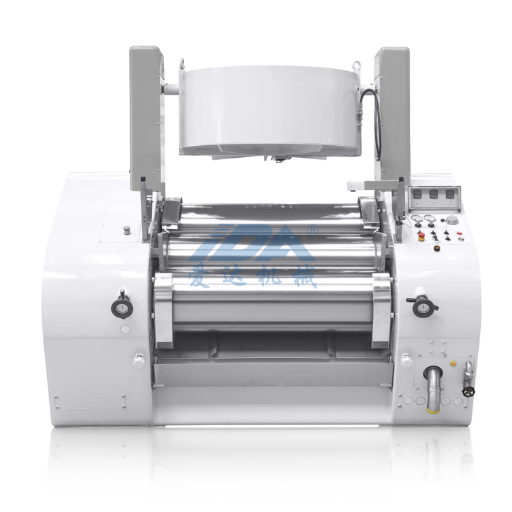
The three roll mill works on the principle of shear force with three rolls positioned horizontally. The three rolls rotate in opposite directions and at different speeds. This allows the material to be successfully sheared and compressed as it is passed through the space formed by the rolls. The unit grinds out a fine dispersion and mixing of particles, with the process especially designed for high-viscosity materials.
The first roll picks and feeds, the second roll cuts, and the third roll gathers the refined material. The tolerances can be set precisely, enabling three roll mills to provide excellent service in uniform particle size preparation and aggregate dissolution.
Industries functioning on cosmetics, pharmaceuticals, and electronics are most commonly known for the requirement of the highest degree of mixing and dispersion precision as seen with three-roll mill. While the three-roll mill functions effectively in small-scale production having relatively thick materials, it is less versatile in handling low-viscosity materials or large-scale production, which directly suggests the use of alternatives like bead mills under conditions where it may be more justified.
Operational Principles of Bead Mill
The bead mill consists of a media-generating mechanism and a dynamically tailored agitation system that is generated by a rotating shaft, disk, or any other suitable configuration devised to operate from suitable velocities. Dispersion or mixing using shear forces between beads or grinding media is an integral part of the process. Within the mill, small grinding or whipping of materials is seen due to such dispersion through the combined effect of mechanical breakdown with uniform particle distribution within media.
This sort of milling is carried out while moving the feed material within the chamber. The grinding movement that is constant gets supported by a shearing action in smear this enables beads to separate agglomerates and ensures whatever else until reaching the final particle size. Bead mills have high efficiency when handling low- or medium-viscosity materials, and therefore, they are frequently employed in the manufacture of coatings, inks, and pharmaceuticals that demand very fast and consistent batch quality.
One of the many attractive attributes of the bead mills is their ability to conduct uninterrupted operations for upscaling. The machines are capable of handling variations in the formulations, thereby giving room for the processing of a broad range of particle sizes and viscosities. These types of bead mills get themselves a preference in most cases in terms of high-volume operations, where precision, efficiency, and repeatable are of primary concern.
Comparison of Efficiency and Output
The correspondence between the efficiency and output, valid for the above-cited two machines, totally depends on the manner in which the designers have laid them out for particular applications. For example, three-roll mills are intended for the purpose of creating even dispersions in instruments that necessitate strict control, such as in fine paste or slurries production. Their operation is essentially constant—a case of three protracted rollers being rotated horizontally to effect shearing and spreading of material itself—making them ideally suited for low- to medium-volume batch operations focused on uniformity and quality.
In contrast, bead mills operate under high-volume, continuous conditions and are a competent resource for reducing particles to sizes in the nano-range. This process relies upon mechanical agitation, where beads perform the functions of being able to grind and dispersing a material in suspension. This makes it possible to obtain a wide array of pigment dispersions because bead mills are fundamentally efficient for rapid production of a tremendous range of viscosities and particle sizes. Bead mills are also advantageous in terms of the feasibility at higher production scales.
The choice between the two machines accordingly depends on specific production needs. If uniformity in texture precision, and the ability to produce small to medium batch sizes to a high standard is most important, the three roll mill will be ideal. However, the use of bead mills may be judged as a favorable option whenever there prevails the need for speed, scalability, or ultrafine particle size production all at a higher production scale. Prior knowledge regarding production goals and material properties would need to facilitate the selection of the right instrument.
Applications of the Three Roll Mill and the Bead Mill

Industries Utilizing Three Roll Mill
Three-roll mills are versatile devices widely used in industry for mixing, dispersing, and homogenizing various products. Many industries rely on the efficiency of three-roll mills for mixing, including:
Pharmaceutical Industry
Three-roll mills play superb roles in the pharmaceutical industry for accurately blending ointments, pastes, and other similar drugs, especially in small-batch production. Homogeneity to a significant degree is needed in mills and guarantees consistency in drug dosage and product quality. The increasing importance of new novel topical drugs keeps the emphasis on these machines.
Cosmetics and Personal Care Industry
The cosmetic producers are prone to employing three-roll mill to prepare a uniform and smooth consistency of product bases producing commodities like lipsticks, mascaras, or foundations. They get rid of any clumps during color dispersion that would otherwise separate from the suitable pigment from the base thus keeping a ‘high-quality’ status to its products.
Food Industry
In food-related patterns, malt mills are used for the refining of chocolate to induce certain tastes from mixing flavorings and dispersing certain chemicals. Herein, malt mills combine rich and delicate ingredients, resulting in a fine texture. Equal mixing raises the necessity of various components to go well with each other. When chocolate is subjected to the malt mills, it is not met with severe force but is ground out while maintaining the consistency and flavor of the chocolate.
Chemical and Adhesives Industry
In this industry, a trio mill is employed for the development of coatings, sealants, and adhesives. There is a critical need for the proper dispersion of materials like pigments and fillers for optimal performance and durability of the intended product.
The adaptability and precision of three-roll mills make them indispensable in many fields, as large-scale production and quality control are central to various industries.
Industries Utilizing Bead Mill
Bead mills find wide profits in the myriad of industries because they are efficient in grinding and dispersion. These machines are indispensable for breaking technology for ultra-fine particles and optimization of material performance, hence preferred for industries with effective production needs. The industry sectors sharing commercial power with bead mills are:
Paint Industry
Bead mills are widely employed in the manufacture of coatings due to the fact that bead mills ensure vigorous dispersion of pigments, fillers, and various additives. Worldwide coatings sales clearly illustrate a market in 2028 about to crest $204 billion. Grinders and disintegrators, such as bead mills, have enabled various manufacturing needs to fulfill jobs within this sector, giving both luster most sought-after white-wears, long-lasting goods.
Pharmaceutical Industry
The pharmaceutical industry makes use of bead mill technology for efficient drug formulation, comprising nano-dispersion and high-potency drugs. Bead mills are ideal for delivering homogeneous mixtures capable of increased bioavailability of the active ingredients. Industry developments indicate that nano-grinding technology will see high growth and applications in the creation of targeted drug-delivery systems.
Cosmetics Industry
Bead mills play an essential and critical role in the cosmetic industry for the particle-breaking dispersion required for smooth and good formulations. From foundation to lotion, bead mills enhance the cashmere-like smoothness of the products and make them more stable. With a global cosmetics market that is expected to exceed U. S. 560 billion in 2030, the use of this innovative machinery like bead mills would help meet the consumer’s demand for high-end products.
Food and Beverage Industry
The food and beverage industry uses bead mills for the production of finely ground emulsions and suspensions, among them various sauces, condiments, and beverages. The fine control of bead mills guarantees the maintenance of product consistency, improved flavor, and prolonged shelf-life.
Electronics Related Industry
Bead mills are indispensable for their role in processing raw materials that are eventually incorporated into the production of electronic devices, for example, ceramic slurries, conductive pastes, and inks. These characteristics of bead mills effectively control particle-size distributions of materials for application in complex electronic products. Utilizing an increase in the demand for energy-saving products such as wind turbines and electric vehicles, there is fast-paced expansion of the utilization of bead mills in this field.
Agricultural Chemicals Industry
Bead mills have become an essential part of the production process. The increase in volume has been significant for pesticides, herbicides, and fertilizers. It will go on to complement the refined mixture of agrochemicals which implies a positive organoleptic effect on the environment, the protection of crops and a finer quality has always engendered higher crop yields. More investment in sustainable agriculture in conjunction with bead mill technology is one of the latest trends.
Bead mills, with an unmatched design and epitomizing excellence in craft, are considered the backbone of improvement in product quality and production efficiency across multiple horizontal sectors.
Advantages and Limitations
Key Advantages of Three Roll Mill
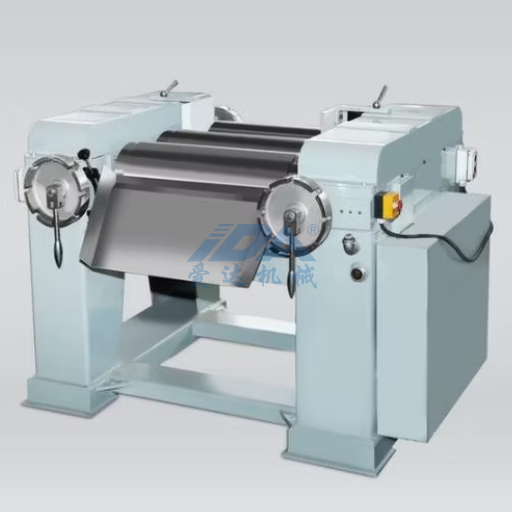
Three Roll Mills have been given high consideration for their ability to create an ideal and consistent dispersion of particles in different applications. The way their constructed is achieved an even dispersion of particles that work very well for industries such as paints, inks, cosmetics, and pharmaceutics. The accuracy enhances production quality and process without a single hassle.
One of the major strengths of three roll mills is their straightforward but efficient operation. Mechanically stacking three rollers puts an all-important force that can smash, mill, and disperse materials- all efficiently. Their basic design draws from and guarantees very low maintenance and cleaning,- making them a chunk for working with-it is as simple enough! But only to mask their reputation for high cost-effectiveness over time.
Further advantage comes in with their versatility, as they are able to handle a wide array of products from very viscous sludge to super trap. By adjusting the gap between the rolls, users may adjust the dispersion level to suit the specific requirements. Such adaptability makes three roll mills suitable for a wide range of applications in different industries while maintaining high productivity and continuity.
Key Advantages of Bead Mill
The most significant advantage of bead mills is their incredibly high efficiency in particle-size reduction and dispersion operations. An additional good point to them is the ability of dense sub-micron grinding with utmost accuracy. Use of small grinding beads with powerful agitation guarantees that particle distribution is homogenous, which is good for industries wanting consistency in quality.
Bead mills can handle a plethora of materials. They go well with a wide gamut of substances that include pigments, dyes, chemicals, pharmaceutical compounds, and so on. They just do a great job be it thick volatilizing liquids or low-viscosity fluids. Through the parameter tweaking techniques (bead size and operating speed), the inducible performance varies depending upon the nature of materials worked upon.
The fact that the bead mills are adored for their impressive efficiency and scalability. The bead mills are expected to prepare premium dispersions really fast offering a reduction in costs and power consumption. To the best of its knowledge, the sizes come in many grades, from very small laboratory designs to the household units that the consumer may find useful for scaling up their process design.
Potential Limitations of Each Mill Type
When considering a comparison between three roll mills and bead mills, each has certain limitations that make them less or more suitable according to the application being attempted. Three-roll mills are generally suitable for materials which require very fine particle dispersion. However, they are less efficient in working with highly viscous materials or large-volume processes, because their original design does not permit very high throughput. Furthermore, their operation can be labor-intensive, with some adjustments and careful watching required in order to keep getting consistent outcomes.
However, to build this more exactingly fine, bead mills could require very skilled precision. Maintenance would be required with each usage of a bead mill to counteract the wearing of beads and any of its elements, which can be especially costly with such high and prolonged usage. Like I said beforehand, it is the choice of beads which is the paramount aspect in order to minimize loss and give value for money. This for sure complicates the operation of less experienced users.
As intended, the need for either a three-roll mill or a bead mill entirely drifts away at first, depending in the character of the material and the final outcome. The author concludes that in settings which require smaller and more highly-precise formulations the employment of a three-roll mill becomes necessary while thrusting a bead mill into service for large-scale operations with high throughput, assisted by a greater variety of materials. Furthermore, a proper evaluation of process requirements and constraints will ensure efficient and effective results.
Choosing the Right Milling Technology
Scenarios Favoring Three Roll Mill
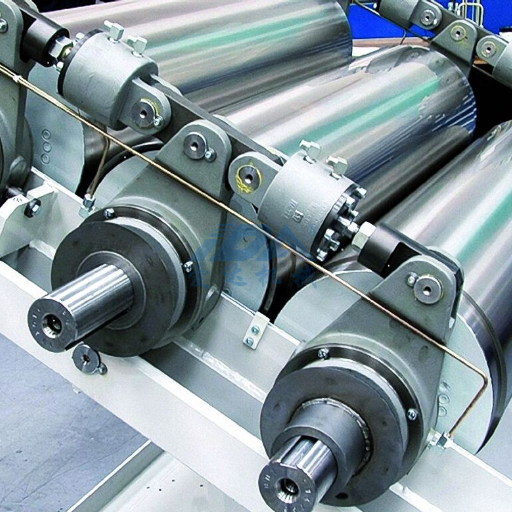
The three roller mill enjoys a major degree of preference wherever extreme particle size reduction, particularly where precision and uniformity are required. This has made it the best option in all such industries where any product differentiation could affect the standard expectations such as cosmetics, pharma, fine arts. Generation of ointments, pigments, inks would be appropriate examples which demand controlled processing operations more adequately deliverable through this format. The challenge is on the method of taking care of the materials and helping ensure that there is shearing and dispersing of the materials between the rollers to yield optimum results.
The small quantities of formulation that flow through the three-roll mill lineometer tend to be problematic. It might be important output for this industry but certainly a large input for bespoke operations that require the strictest tolerances. The specialist precision work of roll cylinders is quite appealing in an environment where increased output is never truly thought about. Nonetheless, the mill management staff in small labs or production shops may also find its advantages appealing, especially straight-forwardness of maintenance and operation in smaller working units.
Yet, this three-roll mill becomes relevant for operations dealing with high-viscosity formulations because of its unique action in processing thick, pasty materials with absolute uniformity, something almost impossible for anybody to imagine with other milling technologies. Its unique mechanism also ensures uniform dispersion at all times, particularly in those demanding high-viscosity situations. The net result is enhanced physical properties, which in tum effect increased reliability and negligible waste. Thus, an exceptionally good level of control over the texture and quality makes this a crucial tool for specialized manufacturing operations.
Scenarios Favoring Bead Mill
Up to precision and identical particle distribution, in several applications bead mills own great properties. Wet milling and grinding work done in very well dispersed modes would be sure to lead quickly to better yields of better product performance improvements and effective stable formulations in the pharmaceutical, chemical, and coating industries. In these cases, the bead mill is what ensures quality through process control.
A major advantage is that the bead mills easily handle highly viscous compounds. The design can cover the entire versa-tile spectrum from working heavily high toward thick which otherwise could never blend while keeping a homogenous texture. Such skill is why bead mills are sometimes marked indispensible in the industry whose ultimate main goal of production is anything with creams, gels, inks, or any applications unusually high in viscosity.
Bead mills are also acknowledged for being judicious and highly efficient with minimal loss for the desired outcome. Bead mills are, therefore, uniquely designed to do this-such a way that ensures a minimal requirement of resources to minimize waste of raw materials and an optimum production output for a specified product. It is this expected then efficiency that is admired by economic and ecological principles. Therefore. Bead mills are known as the first choice for the manufacturers focusing on green admissions.
Frequently Asked Questions (FAQ)
Q: What are the main differences between a three roll mill vs bead mill?
A: The main difference between a three roll mill vs bead mill is in their way of grinding, in that a three roll mill (or triple roller mill) utilizes three horizontally positioned rolls that shear and disperse material between the gap in-between the rollers, forming products with a consistent texture and a high degree of dispersion; a bead mill (like a horizontal laydown bead mill) employs small grinding media, known as beads, to grind and disperse material through agitation, achieving high efficiency as regards size reduction and dispersion. Three roll mills are favored for higher-viscosity materials and applications with stringent surface finish requirements, while bead mills find applications in various industry sectors for wet grinding for a greater degree of aggressive control of particle size distribution.
Q: How do particle size distributions compare between bead mills and three roll mills?
A: Bead mills usually have a more consistent and fine particle size distribution than three roll mills, with controls over particle size reduction and dispersal much more precise. The extensive number of contacts between the grinding beads within the mill causes bead milling to reach certain miniscule points of fineness. A three roll mill can disperse nicely and give a smooth finish for many formulations, especially for pastes and highly viscous materials, but the bead mill is often preferred for rather fine particle sizes and narrow distributions.
Q: Which is better for high viscosity materials; triple roller mills or horizontal bead mills?
A: Triple roller mills are favored for high viscosity materials, as the basic central roll has been designed in such a way that it pushes the viscous paste through the gaps. However, intense shear and compression are required by three roll mills to deform the product and produce smooth pasty materials. Three roll mills are especially known for being consistent in producing smooth, even pastes while preventing aggregate inclusion in viscous systems. However, there could still be a need for bead mill applications when higher degrees of media milling and dispersion are required, under wet operating modes; materials will determine the viscosity, preparatory fineness, and final production equipment.
Q: What are the key advantages of the bead mill over the three horizontally placed rolls?
A: Bead mills are very suitable for achieving very fine fineness due to their excellent particle size reduction and dispersion and are suitable for continuous wet milling. Bead mills are a good alternative for scale-up operations since they efficiently handle a range of materials from ceramics to pigments. Compared to three horizontally placed rolls, bead mills provide better control and also dominate throughout the industry, where ultrafine particles are required.
Q: How does a roll mill require cleaning and maintenance, but in contrast, a bead mill does?
A: Roller mills (three roll mills) demand meticulous cleanup in between runs with cleaning of the roller surfaces and clearance through the slots, operations simple but tedious. Bead mills, too, need to clean the grinding chamber to recover or replace the beads while inside components pose a more complex scenario to service. On the other hand, both require stainless steel and easy disassembly; bead mills might have a slight edge in thus needing more cleanup by virtue of having beads and seals inside.
Q: What about the cost of ownership and the initial purchase of triple roller mills and bead mills?
A: Initial purchase and ownership costs are primarily a function of the scale and the intended application. A roller mill is simpler and sometimes cheaper for small and medium production runnings, although the triple roller mill or three-roll mill may be worth considering. Perks for your roller mill include a simpler build and greater economies of scale, which may justify the choice as cheaper for low production. Initial costs might well be a problem for bead mills inasmuch as beadle handling, motor, and feed devices are virtually all such large costs – however, beads will recover these costs by achieving superior fineness and therefore affect the advantages of bead mills with its extra costs at the back end. Operating costs for bead mills will consider bead wear and electricity, but a three-roll mill may consume less power but also require more manual feeding and labor for cleanup.
Q: Can both the mills be used for dry and wet grinding? Which is better for wet grinding?
A: Bead mills are specifically designed to operate efficiently in the wet grinding scenario, where it provides better options for wet pigment, ceramics, and general material dispersion. Ball mills are occasionally used for wet or dry grinding in certain applications, while three-roll mills are used for most wet or paste-like systems rather than true dry grinding. For wet grinding, the more commonly used option is an in-line horizontal bead grinder or wet mill, which ensures particle size and dispersion.
Q: In what industries are three roll mills and bead mills largely use, and for which materials are they use to grind and disperse?
A: Both are used in diverse industries: three roll mills are used in inks, coatings, cosmetics, pharmaceuticals, and specialty chemicals because of the need to blend and grind materials in high viscosity; likewise, bead mills (including horizontal mills) are applied to pigments, ceramics, paints, and advanced materials when achieving tight particle size distribution is critical. Ball mill setups with an obvious ball mill might also form a part of a production equipment line, but bead mills are generally used when trying egregiously hard to achieve ultrafine particles.
References
-
Ink Manufacturing and the Dispersion of Pigment into Printing Ink – Discusses the use of three roll mills in dispersing pigments for high viscosity inks.
-
An Investigation Of Viscous Fluid Flow Between External Rolls – Explores the design and application of roll mills, including three-roll configurations.
-
Efficient Mixing Design for a Ceramic and Acrylate-Based Process – Investigates the impact of milling beads and three-roll mills in mixing processes.
- Professional Three Roll Mill Manufacturer