Get in Touch with IDA

Ceramic vs Steel Rollers for Three Roll Mills: Material Science Comparison

Contents
show
When thinking about choosing the best rollers for the three-roll mill, they usually have two materials to choose from: ceramic and stainless steel. Both materials have distinct advantages that are weighed down by some disadvantages—all depending on the required output and specific application. This write-up will help review the merits and demerits of using ceramic and steel in relation to costs, lifespan, performance, and suitability of application to various industries. All in all, if you work for cosmetics, print and publishing houses, pharmaceuticals houses, or any other industry with stringent requirements for milling precision in regard to selecting the right material which makes your process work smoothly, this article will help you with some answers. Let’s cast some light on the variables that will guide you to decide on the most suitable material for your business.
Introduction to Ceramic and Steel Rollers

Definition of Ceramic Rollers
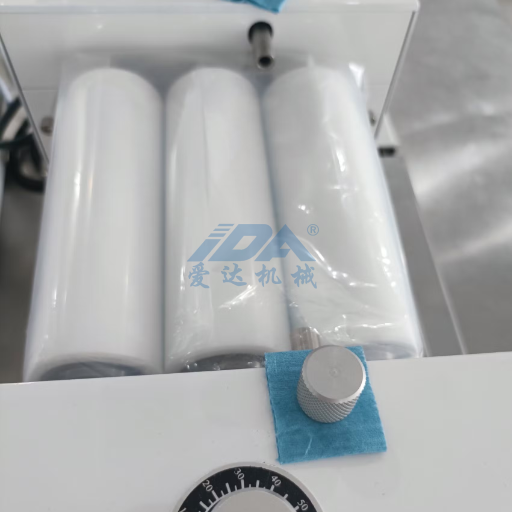
Compressed of advanced ceramic materials for their high temperature resilience, the ceramic rollers in the three-roll mill are indeed one fine example of unique cylindrical components ready to face any extremity of an unpredicted condition. Zirconia or alumina or similar highly stable materials are so durable that they resist flex damage and erosion from extraordinary hardwearing abrasive materials. This makes ceramic roller applications best for handling fine material, finely precise operations, or high-abrasive scenarios that will ruin standard rollers.
The special advantage of ceramic rollers is their long-lasting unchanged properties, suitable for the most part for long life and nondegraded operational performance. They rank the highest in heat resistance, corrosion resistance, and resistance to mechanical stress. Examples of practices for their utilization can be found in the pharmaceutical production, cosmetics, and food industries. Small or no contamination of the products is the primary condition for these industries. Consequently, the ceramic rollers are used by such industries to maintain their qualities straight out from “consistent”. The smooth and shiny surface of the ceramic rollers provides exacting and even grinding which is a must to get the required particle size or range of quality.
When used in oil mills, ceramic rollers enhance milling performance and become useful for tough substances. The pigment- or particle-spreading effect of ceramic rollers is a positive factor in producing superior texture and color uniformity in the end products. Ceramic rollers are known to be precision instruments in the milling system, enabling manufacturers to achieve significant quality control and responsiveness to process requirements. They are well suited to the needs of running businesses, particularly those looking for durability and high-quality performance with an absolute need for precision in their capillary manufacturing processes.
Definition of Steel Rollers
Steel rollers are components with cylindrical shape made of different types of steel, and these are designed for heavy industrial applications. These rollers are also used in manufacturing systems for processing operations such as flattening, crushing, or shaping in certain sizes. Steel is selected as the main material because of its high tensile strength, long life and wearability, and resistance against deformation when subjected to loads.
Steel rollers’ purpose is central in three roll mills, designed to break the fine dispersion and thorough mixing of pastes, inks, and coatings into parts. In this mill, meanwhile, the rollers, are generally made of steel, rotate in opposite directions at various speeds, subjecting material to shear force causing the breakup of particles to the point of homogenously uniform consistency. Lesser contamination is reflected in steel roller surfaces, ultimately leading to more efficient, precise processing.
An analysis of the information is required by the modeling strategy to accurately predict the rest of the operational efficiency for new, unreleased new applications. Scientists are just beginning to study this range of operations for good reason. Simulation of the reject mechanism is one way in which the scope for solving the greatest number of pathogens can be significantly increased.
Overview of Bearing Types
Bearings are very important component with respect to diminishing friction and providing motion to mechanical applications. It is a requirement and it can adapt for many types according to loads, velocities, or technical conditions appropriate for these various sorts. Common bearings are ball bearings, roller bearings, and thrust bearings that play indispensable roles in any piece of machinery to make operations sound good and go smooth.
The overriding title goes to the ball bearings as the most frequently used, with hundreds of variations-mostly for all applications. Whatever advantages are theirs to exploit aliquot-they not only create a situation whereby the balls roll to lessen friction but can fend off to a right extent both the axial and the radial forces, which eventually find use in revolving equipment like electrical motors, business equipment, and household appliances. Despite this, they appear to influence, more effectively in large or moderate load and velocity situations.
On the contrary, roller bearings are using cylindrical or cone-shaped rollers, the latter being ideal for withstanding relatively higher loads than in the case of ball bearings. This makes roller bearings most suitable for heavy applications like conveyor systems, gearboxes, industrial machines, and other similar items. Thrust bearings, which are built exclusively for thrust loads, play a major role in rotating devices like turbines and car transmissions. Each bearing especially supports the particular machinery’s intended performance and has thus to be carefully selected for a particular purpose.
Key Differences Between Ceramic and Steel Rollers
Material Properties
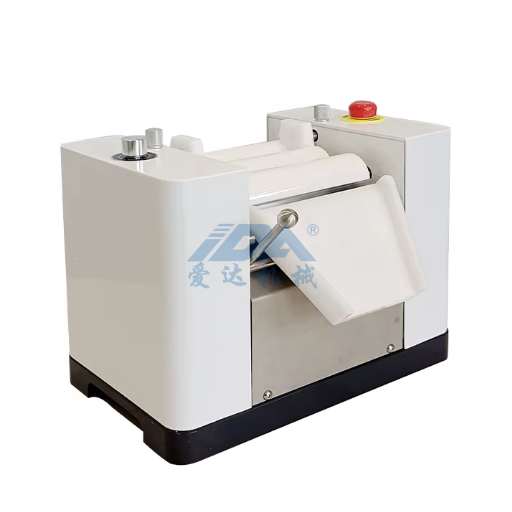
Ceramic rollers are composed of ceramic materials that over time have taken on a particular reputation for their tough nature, lightness, and resistance to heat and corrosion. These extraordinary properties confer upon the ceramic rollers their service and application for demanding environmental conditions. The ceramic rollers also contain very less density, which keeps the wear on the machines minimal and makes the application more resistant to corrosion.
Steel rollers, which are intended to accomplish the same purpose, are made from several steel grades that exhibit great tensile strength and hardness. Steel, as opposed to ceramics which in turn are light and weak, is heavy and resistant to the impact load, and is thus employed for certain applications in heavy-duty situations requiring absorption of shock loads and a high load capacity. Furthermore, I think steel rollers are relatively less brittle and would not crack under sudden stress or high impacts.
The choice of three-roll mill’s roller material generally depends on the specific needs of applications when there is a need to choose between ceramic and steel. Clean operations are historically a very important consideration for industries dealing with cosmetics, pharmaceuticals, and electronics, so ceramic rollers, due to their smooth nature, are commonly used. The steel rollers are used elsewhere in heavy manufacturing, where strength and longevity are given first preference.
Heat Resistance
When appraising the heat resistance of three roll mills, the roller material is of the utmost importance. Ceramic rollers are one material that is highly heat resistant suitable for processes that may take place at extremely high temperatures. Their heat resistance assures that they will give consistent service even in the severest working conditions without distorting or diminishing the expected productivity.
As for steel rollers, they must surrender to some extent to heat. At high temperatures, they tend to expand, and over time there will be a very slight change in dimension depending on the nature of the wear, which can somewhat detract from the accuracy of a few critical applications. Nevertheless, many mature industries use these materials to solve the key mechanical problems under thermal conditions that do not vary much or are not particularly critical.
Material selection relies largely upon the demands of a given application for heat resistance. Industries that work with high temperatures would work well with ceramic rollers. Steel rollers are required whenever durability and mechanical strength are more important than thermal stability.
Surface Finish and Performance
Two ceramic and steel rollers, at least in the three-roll machine, behave in a very different way, with respect to surface finish and performance, on account of their different material properties. While ceramic rollers tend to have a smoother surface and could result in better dispersion of materials in the case of fine or sensitive particles, another obvious asset is that they reduce risks resulting from different particle sizes, an attribute particularly beneficial for the production of ingredients and coatings used in cosmetics. Also, the nature of the ceramic material being non-porous, now less to potential contamination, ensures that the product remains completely pure.
In contrast, steel rollers are known for very good durability and mechanical properties. They are great for handling material for aggressive grinding or materials that are too abrasive to be handled by other rollers. Steel rollers are best suited for rugged industrial operations. Like, when grinding small particulate materials which are susceptible to abrasion. However, the rougher surface of steel will not provide the consistent surfaces of ceramic rollers for some material types that require very fine dispersion.
We can come up with too many applications for this choice between ceramic and steel rollers. For enterprises that demand aromatic separation and consistence, and keeping their production clean, ceramics offer a better option. On the contrary, for processes that need high performance and durability which have to be carried out under high pressures, steel rollers are a more sound dedicated solution.
Advantages and Disadvantages
Advantages and Disadvantages of Ceramic Rollers
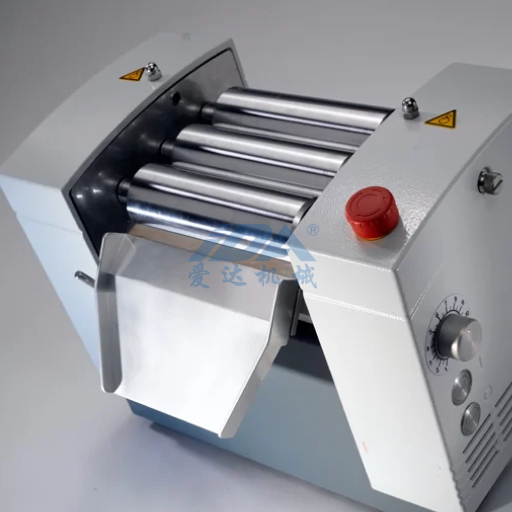
Making a direct application as a sequel to the three-roll mill, ceramic rollers are seen bearing certain advantages. To begin, they are considerably high when it comes to wear resistance, and almost indestructible for purposely abrasive substances. With secondly the arrogance to remain non-reactive to sensitive products such as cosmetics, pharmaceuticals, or foods; ceramic rollers are able to maintain their performance through ages by being resistant to thermal expansion and deformation under heat.
Advantages
- Considerably high wear resistance
- Non-reactive to sensitive products
- Resistant to thermal expansion and deformation under heat
Disadvantages
- Comparatively less ductile than steel rollers
- Subject to risks including chipping under mechanical stress or sudden shock
- Cost more at manufacture and need more replacements
- Require specialized handling and maintenance
Ceramic rollers are generally preferred for applications requiring precision, purity, and minimum contamination risks, but they would not be recommendable in high-pressure applications or applications where cost efficiency is a paramount concern-when should one choose to run with ceramic rollers depends on the specific characteristics of the process and the material being treated.
Advantages and Disadvantages of Steel Rollers
Rollers made of stainless steel are widely available in various industries owing to their durability and flexibility-in-use. A main advantage is their high-pressure capabilities, with rollers handling applications successfully thus far. They are also down-to-earth in terms of cost and are always preferred for jobs requiring dependable and economical solutions. They are much better in resisting wear and distortion, making steel rollers endure carefreely in harsh conditions or with abrasive materials.
Advantages
- High-pressure capabilities
- Down-to-earth in terms of cost
- Better in resisting wear and distortion
- Endure carefreely in harsh conditions
Disadvantages
- More susceptible to corrosion compared to ceramic rollers
- Higher potential for contamination of sensitive materials
- Surface is less inert compared to ceramics
Regarding Three Roll Mill, the choice between steel and ceramic rollers can be largely pinned down to suit the specific demands of the process. Evidently, steel rollers are apt for high-pressure/low-cost operations needing moral toughness and durability. On their part, ceramic rollers come into the pic when work demands precision, purity, and contamination risk reduction. Possession of requisite knowledge about advantages and shortcomings of each material will ultimately help to engender an informed decision consonant with what the specific work entails.
Applications of Ceramic and Steel Rollers
Industry Use Cases for Ceramic Rollers
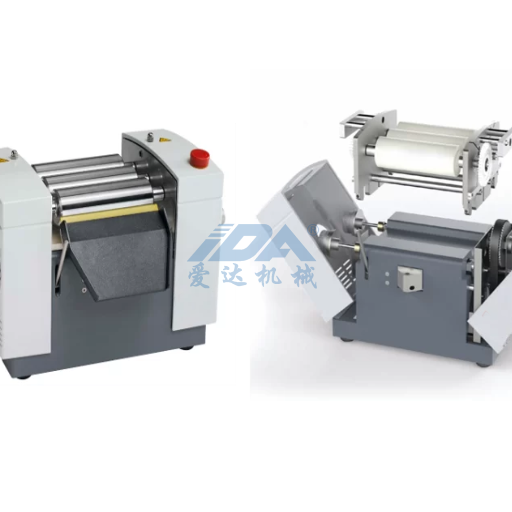
Ceramic rollers are quite popularly utilized in the three roll mills for virtually any sort of procedures requiring precision and cleanliness. These rollers find a very suitable standing in industries like pharmaceuticals, cosmetics, and fine chemicals, where contamination is always considered terrible. The chemical inertness of the material ensures that the quality of the product remains pristine, hence becoming truly indispensable for talented formulators.
Durable and smooth, the ceramic rollers are incredibly resistant to wear. They are therefore extremely well-suited for handling abrasive or corrosive products, which can usually eliminate relatively soft rollers. In industries that make inks, electronic pastes, or special coatings, ceramic rollers are gaining much fame as a result of their increased durability and trustworthiness. These rollers certainly reduce the frequency of maintenance and improve productivity.
Rollers can also be used in critical applications where temperature stability is of the essence. Their lower heat conductivity makes them maintain uniform performance even in circumstances where the materials being processed are sensitive to temperature. Thus, it will be an advantage to the manufacturer where products like nano-dispersions or superconductive slurries are concerned, as it will better its products undercontrolled conditions and thus lower losses.
Industry Use Cases for Steel Rollers
Thanks to its durability and capability, steel rollers are suited to all industrial applications. Which such attributes, applications include use in the printing and packaging industries, where steel rollers provide even pressure and smooth performance while the processes occur: such as laminating, embossing, or coating. The strength of steel empowers its rollers to withstand any strenuous pressure and yet be able to perform effectively with minimal disruptions, even when managed on large operations or at high speeds. The reliability of steel rollers is paramount to keeping product quality up while ensuring a minimum of downtime.
An important application of steel rollers in process industries is in relation to the three roll mill. By using these steel rollers, the three roll mill breaks down materials into precise particle sizes and disperses them. This application is entirely important in the pharmaceutical, cosmetic, and electronics sectors, where variability in particle dispersal or dispersion of fine powder, milled crystals, or thick pastes is unacceptable. Owing to the exceptionally stable and great wear resistance of these steel rollers, the three roll mill can be used to implement a rather controlled process pattern to give consistently good results in either texture or composition.
Steel rollers have become an essential component in the maintenance of high accuracy of produced goods under high pressure, with a wide range of utility to industries including steel forming, sheet rolling, and textile production. 示用位置. This interpreter here in Ohz, Sinama (Ohz orthography spelling: Oh) derived from the Kentish dialects and his translation was the original prose of his conversion to Sinama from English. German and English have influenced the termology of steel rollers.
Choosing the Right Roller for Specific Applications
While selecting a three roll mill, it is important to consider the materials and the nature of the products being processed. The main function of the three roll mill is in the dispersion of semi-solids like pastes, emulsions, and very small solid particles. In essence, this machine operates by shearing laminate-type mixings with three horizontally positioned rolls of equal diameter thus dispersing and reducing particle sizes homogeneously to form uniform mixings. They play a critically important role in industries dealing with printing inks, cosmetics, electronics, and food processing.
Several key considerations include what the rollers are primarily composed of, which significantly affects durability and performance. Steel rollers are most commonly used for their resistance to wear and pressure, while ceramic rollers are an appropriate choice whenever a nonreactive surface and high precision are required. For optimum performance it is also necessary to have provision for the adjustment of gap settings between the rollers. It can provide the flexibility required to work with different particle sizes and formulations. Such adaptability ensures optimal performance between diverse applications.
Besides, you closely examine the operational needs such as ability to handle a variety of loads, earlier designed speeds of operation, and cleaning requirements. High production volume lines may call for big size mills with efficient cooling systems to prevent overheating during continuous operation. Further, applications in the laboratory will need compact and precise models to carry out small scale tests. With this in mind, industries are provided with necessary sizing of the mill to fit application requirements for steady, high-grade results with minimal waste or down time.
Conclusion: Making an Informed Decision
Recommendations for Engineers and Procurement Managers
In choosing between ceramic and stainless steel rollers for a three roll mill, it may be logical to first review the specification of your own process carefully. For the processes that have a requirement for non-reactive and wear-resistance materials, ceramic rollers are most suitable. Industries like pharmaceuticals and cosmetics, where contamination is under high concern, are typical. The compromise made with the brittleness, which is against aggressive mechanical forces and more prone to crack, makes them ill-fit for applications where very high pressures or loads prevail.
On the other hand, stainless steel rollers are known for durability and strength, which makes them perfect for high-pressure applications and environments like with mechanical stress. This material, compared to ceramic rollers, is also resistant to corrosion, although it is less chemical inert. Imagine wear-and-tear applications such as industrial or heavy-duty processes: it is practical and versatile.
In the end, engineers and procurement managers will need to consider material compatibility, implications of durability, maintenance alignment, and costs-constraints. Whereas ceramics are great for precision industries demanding a high purity of outputs, stainless steel rollers shall offer long-term reliability in rough applications. Weighing the priorities and constraints of your specific production process will allow you to make a good decision that lines up with your own operational goals.
Final Thoughts on Ceramic vs Steel Rollers
While choosing between ceramic and stainless steel rollers for a three-roller mill, it is essential to have a rational discourse around the weaknesses and strengths each of them has to offer. Ceramic rollers are unique in their chemical resistance, making them good for situations in which sacrificial corrosion is a problem or in high-purity-applications. They are non-reactive in nature, so as to play seamless in sensitive processes while their hardness allows fine particle dispersal applications. However, ceramics may be more fragile than steel rollers, making them less appropriate for instances of heavy-duty or uncompromising operations.
On the contrary, on the list of the most durable and versatile substances in existence, steel rollers are supreme in areas wherein toughness and longevity are principal. On account of their toughness, they can run a high-pressure and high-volume operation without any wear or failure. They are the more durable than any other roller and, thus, need less care under use and are common from point of view of simple maintenance. However, they are not inert like ceramics-something that could cause mild corrosion if left without treatment or if doused consistently in moisture.
In the end, choosing between the two options entirely rests upon what you specifically want out of your production. If what matters more to you is precision, chemical resistance, and Ever Barbore with ceramic rollers will get you there whereas in the case of heavy-dele quality and resistance to extreme conditions-high perturbations over extended application and penetration,-stainless steel rollers could be the wise choice. The material and impact on operation of each should divine the optimal solution.
For a quick overview of roller material options and pricing, see our three roll mill price guide.
Frequently Asked Questions (FAQ)
Q: What are the differences in materials between ceramic roller and steel roller?
A: The difference between ceramic rollers and steel rollers typically lies in the materials: ceramic rollers often use silicon nitride and other advanced ceramics, while steel rollers are made from various bearings of steel or hardened steel. Ceramics offer superior corrosion resistance, and the hardness of a ceramic surface is higher than that of steel ones, whereas steel counterparts typically provide toughness and a lower cost.
Q: What are the features determined by ceramic ball bearings versus steel ball bearings?
A: Ceramic ball bearings are usually above steel ball bearings in terms of weight, stiffness and speed with reduced friction. Applications with ceramic rollers in silicon nitride are important under high-speed conditions in view of the reduced centrifugal forces and improved chemical stability in comparison with steel rollers, but the latter still might be preferable in durable uses and/or budget-constrained applications.
Q: Is a ceramic roller suitable for extreme heat and environments?
A: Yes, ceramic rollers are normally better suited to extreme temperatures and extreme environments since the ceramics maintain their ‘hardness’ at high temperatures and resist chemical attack upon them. Ceramic or steel rollers in any specific conditions would have no important comparisons, ceramics are characterized by longer uptime and reliability with the effect of coating in aggressive chemical media.
Q: Do ceramic rollers have different lubrication requirements than steel rollers?
A: Lubrication requirements may vary, and generally ceramic rollers have lower friction and sometimes may run without much lubrication. Lubrication still needs to be replenished for extending life and dependability. When choosing between ceramic or steel rollers, the lubrication regime needs to be factored in—ceramics tend to be more intermediate in their lubrication wor1d, but it is of extreme necessity to evaluate compatibility with and effect of lubricants, must be kept clean from contamination.
Q: For high-speed applications, do you prefer ceramic or steel roller bearings?
A: Ceramic roller bearings ordinarily perform better than steel in high-speed roles because of their lighter weight and silicon nitride material that reduces both rotational mass and heat generation. This inertia and heating reduction makes ceramic bearings most suitable for high-speed applications, yet final judgment comes after relentless load, shock, and cost evaluations, perhaps favoring steel because of its reliability.
Q: How do the hardness and durability of ceramic and steel rollers compare with each other?
A: In general, hardness is higher in ceramics than in steel, which causes in increased wear resistance while giving a longer life to ceramics in many instances. On the other hand, steel maintains a comparatively greater impact resistance and forgiveness to misalignment. On comparing ceramic rollers against steel rollers, one has to find a perfect balance between the hardness benefit and the unnecessary brittleness at the face of sudden knocks.
Q: As for ceramic, are the qualities of corrosion and chemical stability superior?
A: Ceramics generally have very superior corrosion resistance and excellent chemical stability than steel. Ceramic rollers have a stronger resistance to most chemicals and do not corrode compared to normal steel rollers; therefore, they are always preferred for usage in corrosive or humid environments. Steel may need to have coatings or used in stainless steel forms to retain similar performance qualities.
Q: How I would choose between ceramic and steel rollers to find the best solution?
A: Assess the key factors for optimum roller selection: load, speed, environment (extreme temperatures or corrosive media), provision of lubrication, cost, and reliability. Often, comparing a steel roller with a ceramic roller aims at surroundings where ceramic bearings made of silicon nitride can perform better when it comes to load speed and cost. On the contrary, steel bearings would better cope with resistance to impact, a low nagging front cost, or compatibility with the existing ones.
References
-
Silicon nitride tools for hot rolling of high-alloyed steel
This source discusses the suitability of silicon nitride ceramics as a tool material for rolling steel wires.
-
Engine Testing of Ceramic Rollers
A detailed study on the performance and wear-out testing of ceramic rollers compared to steel pins.
-
Rolling Bearing Life Prediction, Theory, and Application
This document provides insights into the stress values and performance of rolling bearings, which may include ceramic and steel materials.
- Professional Three Roll Mill Manufacturer