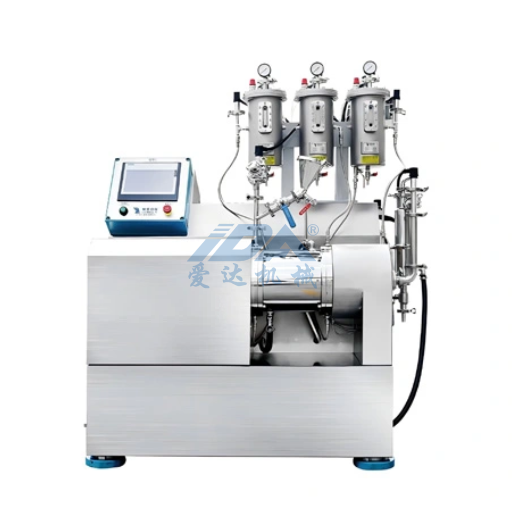
Get in Touch with IDA

Optimizing Battery Slurry Production with Nano Bead Mills

Contents
show
The production of battery slurry serves as an essential process which enables the creation of high-performance batteries. Manufacturers search for methods which will enhance their ability to produce slurry with increased efficiency, exactness, and expanded production capacity because the demand for energy storage solutions keeps rising. The introduction of nano bead mills has revolutionized industrial processes by providing businesses with consistent results while achieving optimal distribution of materials at the nanoscale.
This article presents an investigation into the impact of nano bead mills on the current methods used for producing battery slurry. The article will identify main benefits, challenges, and effective methods which help you enhance your manufacturing operations through two processes which will help you understand your production methods better.
Key Takeaway
Nano bead milling is the gold standard for achieving the sub-micron particle distribution necessary for high-density, high-safety lithium-ion electrodes.
Introduction to Battery Slurry Production
What is Battery Slurry?
Battery slurry serves as an essential material that manufacturers use to create electrodes in lithium-ion rechargeable batteries. The substance exists as a semi-fluid composition that combines active components with binding agents, conductive materials, and liquid solvents into a complete homogeneous mixture. The mixture gets used to coat electrode sheets, which function as the primary elements that store energy in batteries.
The active materials in the slurry, which include lithium compounds, function as energy storage components that operate during the charging and discharging cycles of a battery. The mixtures require binders to maintain their structural integrity while enabling the material to stick to the current collector, and the conductive additives boost electrical conductivity, which helps achieve optimal results. The solvents function as viscosity control agents since they enable easier processing of the slurry during its application on the electrode material. The application process requires solvent application, which disappears during drying to create a working electrode surface.
The production process of battery slurry demands exact measurements and consistent procedures because both factors determine the battery performance and reliability. The process of material distribution requires uniformity because any distribution pattern that differs from this standard will result in decreased operational efficiency, which leads to shorter battery operational time and potential safety hazards. Nano bead milling serves as a standard method that manufacturers use to create precise particle dimensions and uniform distribution, which solves the problems of creating slurries while producing excellent electrodes.
Importance of Slurry in Battery Manufacturing
Battery production depends on slurry because it determines how well the electrodes will function and their overall quality. The slurry consists of active materials, binders, conductive agents, and solvents which technicians must mix together to form a unified liquid suspension. The electrode performance needs this uniformity because uneven material distribution causes variations in conductivity which decrease battery performance.
The prepared slurry enables electrodes to maintain their required thickness and density during the coating process which serves as the essential requirement for optimal energy storage and discharge performance. The electrodes will show irregular patterns when inconsistencies exist in the slurry composition which will result in decreased battery safety and lifespan. The reliability of final products depends on precise slurry preparation procedures.
The manufacturing process needs slurry formulations because they determine how well operations can scale and how much they will cost. Production efficiency improves when an optimized slurry decreases material waste and production defects which results in enhanced operational efficiency and environmental sustainability. The production of high-performance batteries for various industries requires quality control together with slurry preparation refinement to remain essential manufacturing processes.
Overview of Lithium-Ion Batteries
Rechargeable lithium-ion batteries serve as preferred power sources because they deliver efficient performance together with high energy density and versatile usage capabilities. The batteries operate through their main parts which include anode, cathode, electrolyte, and separator components that enable lithium ion movement during battery charging and discharging processes. Their compact design and lightweight build make them suitable for a wide range of applications, from portable electronics to electric vehicles.
The high energy storage capacity of lithium-ion batteries which exists in their compact size creates a major benefit for these batteries. This technology enables devices to operate at full capacity while extending their time between charging sessions. The batteries provide better long-term performance because they exhibit reduced self-discharge rates in comparison to other types of rechargeable batteries. The system needs minimal upkeep, and it operates without needing users to perform periodic discharge activities or priming procedures to maintain its ongoing capacity.
Lithium-ion batteries include several important challenges which need resolution. Their performance decreases through time because multiple factors which include battery charge cycles and extreme temperature conditions impact their functionality. The process of creating and disposing these batteries creates environmental problems because it requires mining of lithium and cobalt together with safe recycling methods. The solution of these problems becomes crucial for maintaining both sustainability and operational efficiency of lithium-ion battery systems which face growing demand from various industrial sectors.
Understanding Bead Mills and Their Functionality

What is a Bead Mill?
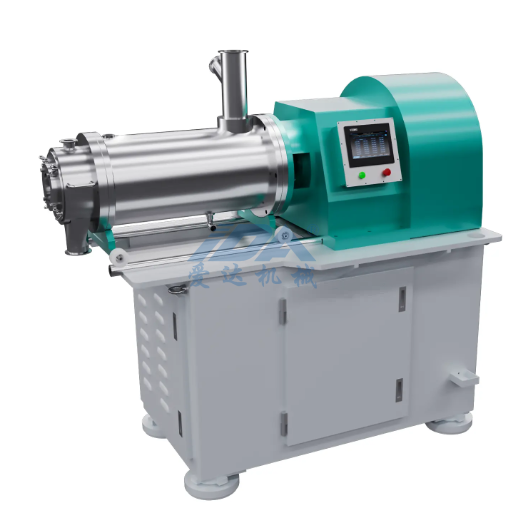
A bead mill functions as a grinding machine which uses its equipment to grind solid materials that exist as suspended particles in a liquid. The equipment operates by using small round beads which the mill’s rotor moves to create smaller more consistent particles from the material. Bead mills achieve this function through their ability to produce powerful shear forces which generate bead collisions that the material undergoes during processing.
Bead mills find applications in numerous industries including pharmaceuticals, paints, coatings, chemical manufacturing, and cosmetics production because their equipment delivers exceptional capabilities for mixing and dispersing materials and reducing particle size. The mills possess grinding capabilities which reach sub-micron dimensions thus enabling precise operations which require exceptional quality standards. The equipment demonstrates its versatility through its ability to process materials that have different viscosity levels and physical characteristics.
Bead mill operations depend on their efficient design which enables the system to produce uniform outcomes while using less energy and generating less waste. Bead mills enable better product performance because they optimize particle size which leads to higher product quality. The tool functions as an essential resource for businesses which require their products to demonstrate consistent quality and high performance standards. Companies achieve operational efficiency through correct knowledge of how to operate and maintain their equipment which extends the equipment’s service life in industrial environments.
How Bead Mills Work in Wet Grinding
Bead mills serve as valuable instruments for wet grinding operations because they produce fine particle distribution through their grinding methods. The device operates through its use of tiny spherical grinding balls which the system moves through its rotating shaft and disc elements. The grinding media collide with the material to be processed which creates smaller particles that spread evenly through the liquid medium.
The wet grinding process takes place inside a sealed chamber which contains the material that needs grinding together with grinding beads and suitable liquid medium. The agitation process produces continuous movement of beads which generates strong shearing and impact forces. These forces produce smaller particles while preserving the final product’s original quality and texture. This process produces highly stable suspensions and fine emulsions through its effective production method.
Bead mills provide wet grinding systems with their main advantage because they generate ultra-fine powder which maintains uniformity throughout various industrial applications that include coatings, pigments, pharmaceuticals, and cosmetics. The grinding process operates under controlled conditions which enable operators to adjust processing variables such as speed, bead size, and processing duration. The system permits efficient operation through its adjustable features while generating precise results which make bead mills essential for industries that need effective methods of producing fine particle dispersions.
Types of Bead Mills Used in Battery Production
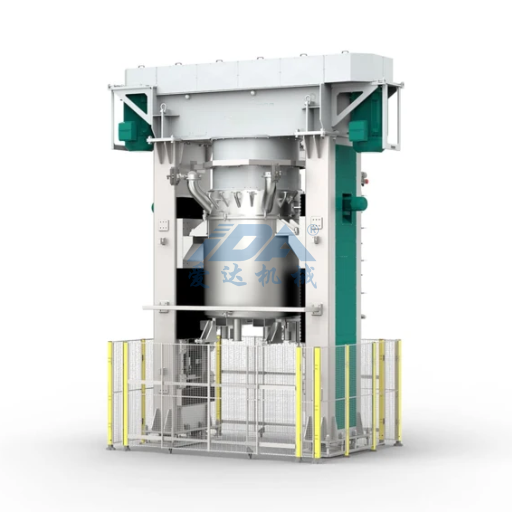
Bead mills function as essential equipment for achieving particle distribution because battery production requires this method to create batteries with optimal performance. The process uses three different kinds of bead mills which include horizontal bead mills, vertical bead mills, and high-energy bead mills. The production process needs different mill types to accomplish two tasks: particle size reduction and mixing efficiency.
| Mill Type | Best Use Case | Main Advantage |
|---|---|---|
| Horizontal Bead Mill | Primary battery production | Uniform dispersion & cooling |
| Vertical Bead Mill | Basic mixing / Low energy | Cost-effective operation |
| High-Energy Bead Mill | Nanoscale particle reduction | Advanced battery tech ready |
Battery production facilities select horizontal bead mills as their primary equipment because these machines deliver successful results while enabling flexible usage. The system provides uniform particle size reduction together with outstanding material dispersion abilities which makes it suitable for processing fine materials used in battery production. The system design enables efficient cooling operations while maintaining high processing efficiency, which protects material integrity throughout the operation.
Vertical bead mills function as a suitable equipment option for basic mixing tasks, which do not require high energy consumption. The system processes particular materials with lower expenses when compared to horizontal bead mills, despite having less processing power. High-energy bead mills, on the other hand, require special equipment to produce ultra-fine particle dispersions. The systems use powerful energy to disrupt particles, which enables them to reach nanoscale particle sizes that advanced battery technologies need. The complete set of bead mills enables battery manufacturers to produce different products needed for their production operations.
The Role of Grinding in Battery Slurry Production
Grinding Techniques for Optimal Slurry Consistency
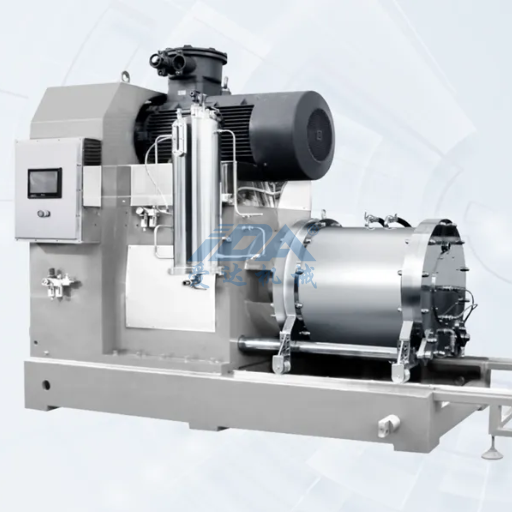
The process of achieving optimal slurry consistency for battery production requires the selection of suitable grinding methods. The primary goal is to ensure that the particle size of the materials is uniform, promoting better performance and efficiency in the final battery product. A consistent slurry ensures even coating during electrode production and enhances the battery’s overall electrochemical characteristics.
The two main grinding methods used are wet grinding and dry grinding. Wet grinding, which involves the use of liquids like water or solvents, is widely favored due to its ability to minimize heat generation and prevent particle agglomeration. This method produces particles with fine dispersion and uniform size, which is essential for creating high-performance battery slurries. Dry grinding, while less common in slurry preparation, is typically employed for coarser materials where liquid dispersion is unnecessary.
Grinding needs advanced equipment which can maintain exact operational conditions. Key considerations include the selection of the grinding media, the speed of operation, and the duration of the process. The system requires precise control of all variables to achieve stable output results. Systematic improvement of these techniques enables manufacturers to produce better quality battery slurries which lead to the development of more sustainable battery products.
Effects of Grind Size on Battery Performance
The grind size of a material determines how well batteries function because it affects the uniformity of the slurry which results in different electrode qualities that determine battery performance. The distribution of active materials within an electrode increases when particle sizes decrease because finer particles enable better material distribution, which leads to better electrochemical performance. Energy storage systems need higher energy density levels combined with rapid charge and discharge capabilities to meet their operational requirements.
⚠️ Important Note
Grinding materials to extremely fine sizes can increase slurry viscosity. If not balanced, this makes electrode coating difficult and can lead to uneven surfaces.
The process of grinding materials to extremely fine sizes creates multiple problems because it produces slurries with higher viscosity, which makes it harder to apply coatings on electrodes. High viscosity creates challenges for manufacturing because it results in uneven coatings which decrease product quality, leading to inconsistent battery performance. The optimal shear thinning properties for slurry preparation require a specific balance between grind size and material distribution to be achieved.
The stability and durability of the battery depend on the selected grind size for its components. The process of grinding materials to a uniform size creates better contact between active materials and conductive agents and binders, which enables efficient pathways for ion and electron transport. The process of grinding materials causes defects in electrodes because it produces irregular particle sizes that create defects which decrease their operational lifespan and dependability. When manufacturers optimize grind size together with all other process parameters, they achieve batteries that deliver superior performance and extended product life.
Dispersing Cathode Materials Effectively
The effective dispersion of cathode materials determines battery performance and lifespan. The active materials, binders, and conductive agents need to be distributed throughout the electrode because correct distribution allows continuous ion and electron movement. The material distribution pattern maintains operational efficiency because it prevents localized overcharging which damages equipment performance.
Manufacturers achieve effective dispersion through advanced mixing techniques that include high-shear mixing and ultrasonic dispersion to eliminate agglomerates while achieving uniform particle distribution. The combination of ideal mixing techniques with suitable solvent systems maintains dispersion stability, which directly influences the quality of electrode coating. The control of mixing parameters, which includes speed, duration, and temperature, prevents defects that occur when particles cluster together.
The rheological properties of slurry need to be monitored because they determine the success of electrode coating application. The slurry requires a specific viscosity level because it needs to flow evenly during application while preventing cracks and irregularities during drying. The implementation of proper dispersion techniques together with constant process parameter control enables manufacturers to achieve better cathode performance and increased energy density and longer battery cell life.
Slurry Mixing Techniques and Equipment
Essential Mixing Equipment for Battery Slurries
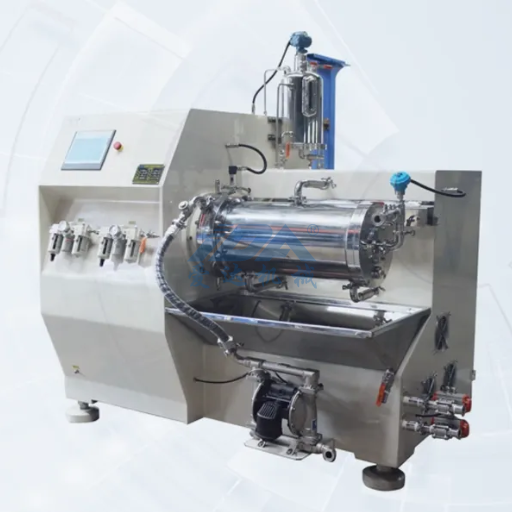
As far as electrodes for batteries are concerned, with their guarantee of uniform distribution of active materials, binders, and conductive additions, mixing slurries stands as a vital cog in the entire process of obtaining high-quality ones. The process of selecting appropriate mixing machines for mixing ensures that the end product has the desired consistency and homogeneity.
High-shear mixers are used often in slurry production on account of their ability to disperse materials most effectively and to keep the particles from forming small agglomerates. They operate under intense shear forces that simply break up particle clusters to a uniform mixture level. Their extremely high energy inputs are particularly effective in processing slurries with high fluid viscosities.
Adopted by many practitioners, these planetary mixers can perfectly cope with very high viscosity slurry. The mixing tools the planetary mixers mainly employ are dual, rotational as well as orbital, to ensure a thorough mixing from all points in the vessel. The design developed provides a synergistic mechanism that prevents air entrapment within the slurry, which, in turn, enhances the performance of the final electrode coating.
Best Practices for Slurry Mixing
Best practices are important in slurry mixing to ensure consistency, quality, and performance in the final product. The first critical practice is to weigh the raw materials accurately and add them to ensure the correct ratio required for that slurry. If the materials are weighed and mixed correctly, homogeneity will take place and segregation is prevented during mixing.
Temperature control is the next considered factor. A mix that generates considerable heat has the tendency to change the properties of the slurry, while extreme cold does not provide ease to disperse the materials in proportions. The optimal temperature range is a must in order to guarantee the stability of the slurry, and with the right viscosity control, it operates properly throughout the mixing.
Considerably, monitoring and adjusting the speed of mixing play a major role in furthering the quality of slurry to get the desired properties or performance in their specific end uses. High mixing speed can cause foaming or degrade labile entities, and low mixing speed often entails partial mixing. It is possible to obtain uniform distribution of all components present in a mixture to form the slurry with a consistent speed with infinitely adjustable capacity with respect to the viscosity and constitutive properties of the materials in the slurry. Refinement of the mixing speed shall develop the slurry to have the necessary properties and performance for its application.
Challenges in Slurry Mixing and Solutions
When working with slurry, one of the foremost issues is achieving consistent homogeneity while working with different variables of material composition and fluid viscosity. Lack of uniformity can lead to an improperly mixed slurry; this would result in reduced performance or failure in the intended application. The solution to this challenge is to optimize mixing conditions by adjusting speed, varying the impeller design, and making sure everything gets well mixed.
With respect to that, another problem arises: the tendency of particles to settle or coalesce during mixing because these two things could lead to a lack of uniform dispersion, thus affecting the end product. This can be alleviated by ensuring uniform suspension through continued agitation and by using selected surfactants or thickeners to keep the disperse from settling.
Other than the additional expenditure, inefficient handling of energy during the mixing process can complicate environmental matters. Mostly it evolves from incorrect equipment choices or incomplete physical mastering of process configurations. The use of an appropriate energy-efficient mixer by the manufacturer, with process automation to keep monitoring viscosity, shear rate, and other relevant parameters, provides a cost-effective way to reduce energy input in the making of slurry while maintaining the same quality.
Future Trends in Battery Slurry Production and Bead Mill Technology
Emerging Technologies in Battery Manufacturing
Wide-ranging developments in the battery manufacturing sector are emphasizing a sustainable approach, reliability, and enhanced power and performance. Technological breakthroughs are also continuing to aid advancements in solid-state batteries, persistently requiring enormous energy levels and safety enhancement in the absence of liquid electrolytes. Furthermore, lithium-sulfur and lithium-air batteries are the subject of ongoing research seeking to simultaneously increase energy storage capacities while mitigating raw material limitations. Collectively, these advancements aim to expand the application scope of batteries in electric vehicles and renewable energy generation systems.
The embedded AI and machine learning (ML) in the battery production process is truly helpful and insightful. By processing massive real-time data in this process, these technologies provide a performance burst well beyond normal human capabilities. This becomes something like efficient material selection, optimum performance, and minimum defects and cost. Furthermore, if the systems can automatically learn, AI can help monitor battery production forever, with continuous improvements in quality. This definitely improves overall manufacturing performance, fast-tracking the industry to realize next-generation solutions.
Sustainability represents another key area of battery development. With cobalt being scarce and with its environmental concerns, the industry is naturally trying to switch to more available materials. As the industry moves towards recycling battery models, the circular economy is being increasingly valued, thereby reusing waste materials and providing an essential recycling-sector circuit for the recovery and reuse of valuable materials. This is a clear indication of the industry’s concern about finding the right balance between performance enhancement and environmental justice.
Impact of Nanotechnology on Slurry Production
Significant headway in the production of all kinds of slurries in different industries has been made by nanotechnology. Leaders look to nanoparticles when seeking advances in the way dispersion is controlled, viscosity is maintained, and stability is given to the slurries. This produces a homogeneous quality that suits a particular need in production, coupled with an added edge from nanoparticle usage: a very specific control over particle size and distribution, thereby raising productivity but significantly reducing loss.
Furthermore, nanotechnology assists in sustainable slurry production. With this technology, the efficient use of raw materials and the minimal consumption of resources can be made part of eco-friendly manufacturing that leads to environmental benefits. For example, industries can employ smaller volumes of nanomaterials to substitute bigger quantities of traditional additives to create fewer issues with the environment. Implications bound up with such movements into the reductions of pollution are increasingly becoming the vogue in industry while also preserving the highest level of performance.
On the other hand, the much-applauded nanotechnology era has revolutionized slurry formation, making it possible for scientists to venture into new territories for additional uses and functionality. The latest slurries infused with nanotechnology in construction, in the electronics industry, or within the energy sector are tailor-made for a certain function, such as electrical conductivity or permeability. This way, industries can play an evolving role, catering to respective demands, with nanotechnology benefits pertaining to enhanced efficiency and environmentally friendly slurry-making mechanisms.
Predictions for the Future of Lithium-Ion Batteries
In their future, lithium-ion batteries seem to be looking at improvements in energy density, charge speed, and their overall efficiency. Improvement in the energy storage capacity of these batteries would mean that these batteries stay on duty for a prolonged time of use, thus improving the profitability of electric vehicles and consumer electronics. Some findings indicate that the inclusion of solid-state electrolytes may help not only in enhancing the capacity but also safety, making them safer against overheating or combustion.
2030
Target year for many manufacturers to achieve high-volume solid-state battery production.
Another significant opportunity for advancements lies in the sustainable future of lithium-ion batteries. Many efforts are being launched to create environmentally friendly production processes and efficient recycling systems. These programs seek to harness the growing demand for battery energy-storage solutions while minimizing the use of scarce resources such as cobalt or lithium and protecting the environment.
The costs of lithium-ion cells are anticipated to decrease and consequently make battery packs commercially feasible over time, as the electric vehicle and renewable power storage industries rise. The occurrence of technology breakthroughs together with mass production would also lead to further cost reductions, thus making it much easier for technology access to become extended to users in various industries. That very evolution is key in hastening the worldwide change to clean energy systems.
Frequently Asked Questions (FAQ)
Q. What is Battery Slurry produced by Nano Bead Mills for Optimization, and why is it important in optimizing battery performance?
A. From the beginning to the slurry production, researchers use nano bead mills, laboratory scale bead mills, and industrial milling equipment; they form an amalgam by establishing certain uniformity in particle size ranging from nm to µm and m^2 area, up to the process of the homogeneity of the small slurry. This is one factor that is crucial for the battery performance in applications. The process ensures a improvement in the field, weaponry, slurry viscosity, and other material characteristics are optimized to ensure a consistent level of quality for the electrodes, and enhanced electrochemical properties, and long-term cycling performance for the lithium battery electrode scenario such as lithium iron phosphate and other cathode materials.
Q: How do nano sand mills compare with ball mills and miscellaneous equipment for making slurries?
A: Nano sand and laboratory sand mills use fast small media to guarantee perfect and uniform control over particle size, unlike the traditional ball mill. This control of particle size and surface area has a direct impact on electrode performance and overall battery quality by effecting high quality, uniform performance materials setting better electrode thickness and density, and,more importantly, enjoying an extended cycle life, making it a favorite for conventional-scale production and battery material developments at every stage.
Q: Which key factors are closely monitored along the production line when optimizing slurry for battery electrodes?
A: Slurry properties and characteristics and milling performance (mixing) hold as key factors for battery operation. Identifying the correct operational variables in matrix scale studies by monitoring slurry properties results in large-scale homogeneity. By controlling temperature and the use of different solvents and dispersants, thus also achieving a more homogenous slurry with lesser viscosity and good race productivity, the productivity and quality of a more trustworthy product that is composed of smaller particles is improved.
Q: How does slurry viscosity and homogeneity control electrochemical properties and long-term cycling performance?
A: Slurry viscosity and homogeneity determine the uniformity of the electrode coating, which in turn affects electrode thickness and density, pore structure, and ion-exchange pathways. With appropriate slurry viscosity and a homogeneous slurry, one will gain uniform electrode thickness and density, ensuring more effective electrical contact and better electrochemical properties in turn. These parameters are used in the battery market to guarantee continuous electrochemical performance and overall battery quality.
Q: Can nano bead mills help scale production from laboratory bead mill to full production line while maintaining consistent battery quality?
A: Yes, nano bead mills offer scalable process parameters that can be translated from a laboratory bead mill to industrial mixing to large-scale milling equipment. I mean, keeping in mind the prospective replication of key parameters including energy input, bead-to-slurry ratio, and milling time can help maintain slurry quality, matching electrode quality and hence, quality in the whole production process. So, in a real sense, we can meet the battery industry’s needs for consistent, reliable, enhanced battery performance.
Q: How important is the control of particle size and surface area to enhance the battery material and battery cathode performance?
A: Controlling particle size and increasing surface area will increase the utilization of the active material, optimize ionic and electronic transport, and enhance the physical and electrochemical properties of electrode slurry. This control paves the way for better battery material performance in enhanced battery cathode capacity retention, improved cycle life—critical in maintaining consistent electrochemical performance, and an improved overall battery.
Q: How do material characteristics and milling equipment selection affect slurry properties and final electrode quality?
A: Material characteristics such as particle hardness, morphology, and chemical composition meet the choice of milling equipment, such as nano-bead mills against ball mills, the sizes of such beads, and centrifugal types. Viscosity, quality of dispersion, and homogeneity are produced through milling using appropriate types of equipment. Selecting the right mill based on major considerations would ensure slurry characteristics, which are imperative for uniform electrode slurry coatings, uniform electrode thickness, and density, as well as predictable electrochemical properties during all battery manufacturing stages.
References
-
Capillary suspensions as beneficial formulation concept for…
Read the publication
This document discusses ultra-thick electrodes and their role in reducing inactive materials in battery production. -
Bioinspired Nanocomposites for Structural Energy Storage by Ahmet…
Read the research
Explores lithium-ion battery cell production and the compatibility of nanocomposites with lithium-ion cells. -
Processing Nano Graphene Plates (NGPs) and NGP…
Read the thesis
Discusses ball milling as a method to reduce particle size and its implications for high surface area materials. - High-Efficiency Horizontal Sand Mill Series