Get in Touch with IDA

Manual vs Hydraulic Three Roll Mill: When to Upgrade Your Grinding Line

Contents
show
Manual vs Hydraulic Three Roll Mill: When to Upgrade Your Grinding Line
Once mastering the selection, operation, and interworking with meaenting, refining, and dispersion of diverse materials, not all 3-roll mills are equal with regard to whether the mill is hydraulic or manual. The decision between hydraulic and manual mills is so critical to the working pace, productivity, and end product. This guide offers some comparative articles to peruse on the differences between the two machines, defining the most distinguishing key features, advantages, potential applications, and stumbles. This detailed assessment is something for any professional who tinkers with any given machinery; meanwhile, even a novice to the machinery would also benefit just for the background.
For detailed specifications of IDA’s hydraulic three roll mill models, visit our hydraulic three roll mill product page.
Introduction to Three Roll Mills
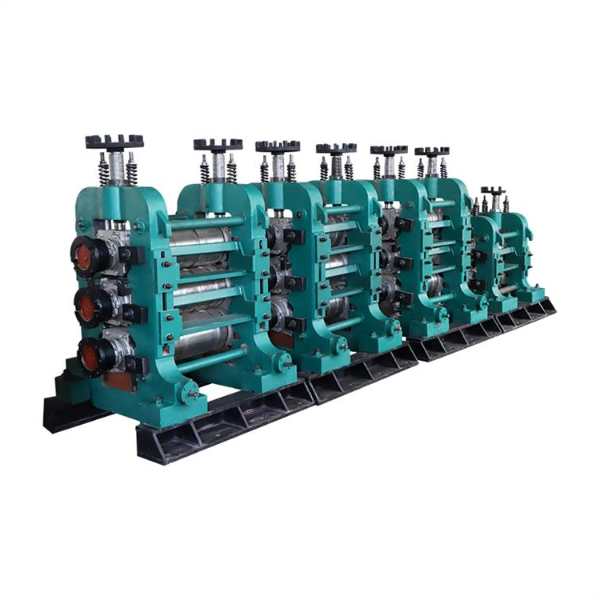
What is a Three Roll Mill?
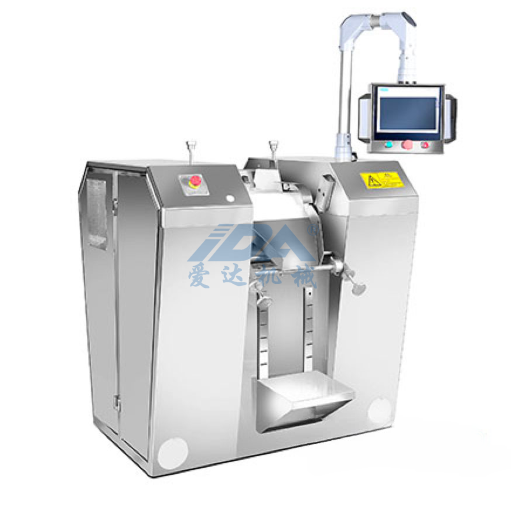
A three roll mill is a tool developed for premixing, refining, and dispersion of materials, as is the case with, for example, paints, inks, and coatings, and others demanding high consistency. It works by forcing the material between three horizontal rotating rollers- which can be moved at different speeds relative to one another. The setup works by applying the shear force to grind each particle down and combine the materials together. It results in a smooth homogeneous mixture.
Hist advantages include mixing of extremely fine dispersion. With this machine design, the rollers could be adjusted thereby controlling shear to be applied to the material, depending on whether it is also suitable for the processing of materials with varying viscosities. Thus, it remains graduates. High applicability of this product is common in various industries like cosmetics, pharmaceuticals, and electronics to supply uniform particle size for perfect product performance.
Three-roll mills are distinguished for more than their efficiency-they are versatile in a number of aspects, permitting easy operation. The rollers’ material or size may be modified to ensure optimal performance of the materials being processed. Being highly suitable for large-scale, plant operation, three-roll mill technology is correspondingly flexible with small lab-scale tests. So surely, three-roll mills are one of the basic manufacturing tools in today’s fabrication technologies.
Applications of Three Roll Mills
Three-roll mills are widely employed in diverse industrial and research settings, the primary role being the processing of materials and pastes, suspensions, and slurries. They are particularly suitable for those sectors needing particle refinement and homogenization like the chemicals, pharmaceuticals, cosmetics, and food industries. Homogenization and deagglomeration are completely done by the help of three precisely positioned rollers.
Paints, inks, and other film coatings are among the key industry segments requiring three-roll mills. In large part, this is to help disperse pigments and other additives properly so that the desired color is consistently produced with a uniform surface texture. They are also key in the manufacture of high-performance inks for the printing industry by providing the required extra particle fineness for the desired print quality.
Three-Roller Mill is also advantageous for the making of electronic materials in the form of conductive pastes, polymers presenting advanced technology, etc. The tactile capabilities to process fine ‘or rather’ highly advanced compounds make certain that the tool meets the most stringent requirements of the modern-day electronics industry and other high-tech industries. Three-roll mills, with their workable versatility, support a must-have system to achieve exactness and reliability in manufacturing technology in myriad fields.
Overview of Manual vs Hydraulic Models
Manual and hydraulic three-roll mills each exhibit benefits but show to best application in different zones of operational requirements, budget, and expectations. Hence, understanding them would be the first requirement to choose a proper model.
The manual three-roll mill uses mechanical means to control the gap and is operated by the manual turning of settings for achieving precise outputs. They are often the cheapest and are best employed in small operations where changes happen less often. These might demand more expertise in handling operators and prove less efficient for more sophisticated products or large-scale operations.
Hydraulic three-roll mills offer automated means to regulate the rolling clearances and maintain consistent pressure. These systems are more accurate and efficient, making them perfect for making high-quality compounds in performances only. Also, one hydraulic model can handle numerous material types without many changes, helping reduce downtime and increase overall operational productivity. Even though they would have the higher upfront expenses, these specialties and uniformity would thereby render profits of substantive importance in high tech industrial processes in the long term.
Working Principle of Hydraulic Three Roll Mills
How Hydraulic Systems Operate
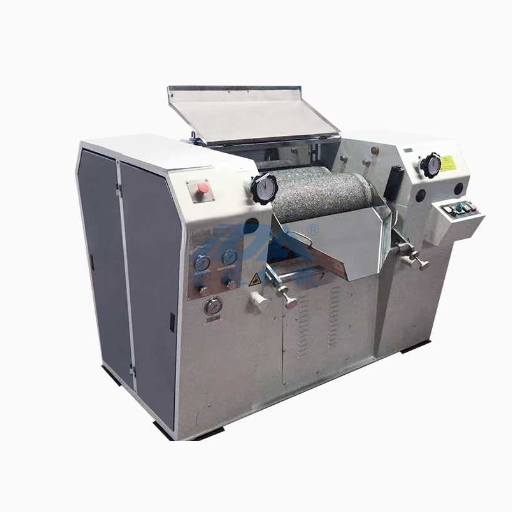
Hydraulic systems run in three roll mills using hydraulic pressure to control the movement and spacing of the rollers. In this setup, the systems work with a hydraulic fluid pressurized by pumps to maintain uniform force applications. This ensures the rollers are maintained in perfect alignment and have pressure toward efficient mixing or grinding of material.
The key advantage to using a hydraulic system is its extremely fine adjustment capability. The mere touch of a finger by the machine operator will regulate the roller gap to satisfy required process demands. This suggests that these mills are flexible for handling a long list of material viscosities and particle sizes. Furthermore, the hydraulic systems are constructed for dependable operation at all times, unbroken under varied load conditions from steady to very stressful.
A three-roll roller mill with hydraulic movement seems to offer a better level of safety and less shut down of operations. Given that automation and control features will be enhanced, there will be less intervention by the operator, which will lessen the chances of inaccuracy. These units are also made robust, needing less maintenance compared to its mechanical peers, hence, reducing the operating costs further down the line. These details sufficed into making up for all features that have helped hydraulic three-roll mills to become an indispensable tool for its duty in those industries needing constant and excellent material processing operations.
Mechanics of the Three Roll Process
The fiction of the applying of three longitudinally plodded rolls that rotate at rationally diverse speeds is engaged. The furnished matter is conveyed to the opening amid the feed roll and center roll, where it is well-ground by the labour of the shearing forces. Shearing ensures that the particles are uniform in their dispersion, and for the achievement of uniform mixing. The center roll transfers the dispensed matter to the apron roll in order for the completion of the last performance.
The function of each roll in the running of the mill is of distinctiable notice. The service of the feed roll is to draw material in; the center roll is used principally for dispersal, applying shearing and pressure. The final function of the three-roll mill is divided onto the apron roll, as it takes in the processed mixture and assures a constant production. Together, these working fractions provide the operator with great versatility and control in terms of particle size and blending, making it a wellsuited method for tough situations where fine dispersion of pigments, inks, or cosmetics is required.
In essence, the three-roll forming process is a successful process in its utmost efficiency, high in accuracy, and capable of addressing the toughest processing requirements. These machines hand down uncertainties together with shearing at controlled pressures through three steps that enforce material uniformity to achieve mechanical properties that are quite difficult to replicate through other mechanical processes. Given this, there are many who prefer the three-roll processes in the industries that have concerns about consistency or producing superior products.
Key Components of Hydraulic Three Roll Mills
Advanced mechanical mechanisms have been crafted to control the Hydraulic three-roll mills to bring about the ultimate goal of treating the material consistently and attaining the maximum level of performance with precision. Important components of a hydraulic three-roll mill need all of these to ensure intense precision in the service that they render for numerous industries.
- Hydraulic System:
The highest form of power in this machine is with the hydraulic system-where the main power is transmission-there is a provision to ensure that the system can play an optional role to bring useful pressure to the appropriate strength, as the case may be, in order to keep the three rolls in the same line to each other, giving their due in leading control. This is in the case with the advanced hydraulic system, which can accurately adjust as well as firmly control the hydraulic force to ensure that the material is working in the right way. Most hydraulic systems utilize automatic control to allow for precise adjustment in the most convenient manner and sustain operational stability.
- Three Precise Rollers:
The core of the machinery are its three rollers, which are almost invariably of hardened steel/plastic or similar wear-resistant materials capable of standing high friction and pressure. The rolls are counter-rotating to impart shearing forces for effective blending and dispersing of materials. Roll diameters range from 50m to over 300mm, depending upon processing requirements. Surface finishes can vary from glossy to specific textured finishes, according to the material behavior such as handling high viscosity pastes, suspensions, etc.
- Cooling System:
In order to ensure temperature control during operations, a cooling system is vital because excess heat can degrade product material quality. Water or oil-based cooling channels are normally present within the rollers to manage informal temperatures. That is especially crucial for industries that rely on temperature-sensitive crops such as pharmaceuticals, cosmetics, or chemicals.
- Feeding and Discharge Mechanism:
Hydraulic three roll mills come equipped with feeding mechanisms and discharge hatch systems to ensure that material handling is done efficiently and employs the need for a good operation of the mill. Modern, state-of-the-art designs do well to include automatic feeding mechanisms with adjusted discharging capabilities that allow the operator to go greater distances in batch processing. Improved likewise in the design-construction, the addition of a cleaning mechanism between the two provides for easier, more convenient material changes with minimized production downtime.
- Safety Features:
Hydraulic three-roll-mill technology is designed to ensure that safety is the topmost priority. They feature developed systems that take full advantage of automatic stops, emergency stops control, and protective enclosures aimed at ensuring that every operator in the plant has his safety and well-being safeguarded against any form of harm. The modern day incident-loaded mill equipment industry complies with a high level of internationally set safety standards to enable working conditions that absolutely beef up safety.
- User-Friendly Interfaces:
Some hydraulic three-roll mills come with touch screen operating systems, or digitalized displays. These features give operators high ease of operation as they can continually fine-tune roll settings. The newly introduced controllers give the feeling of real-time visibility of roller speed, pressure, and temperatures to ensure more precise duplication again and again. Some give tele-monitoring capability to increase operation efficiency.
Reports from the industry admit these machines are gaining popularity globally. Some markets, for instance, pharmaceutical formulations and high-tech coatings, are now making extensive use of the equipment because of advantages of improved energy efficiency and refined performance. Hydraulic three roll mills are also sustainable because the entire efficiency leads to such benefits, making it a top choice for industries that need to comply with environmental regulations.
Advantages of Hydraulic Three Roll Mills
Precision Pressure Control for Consistency
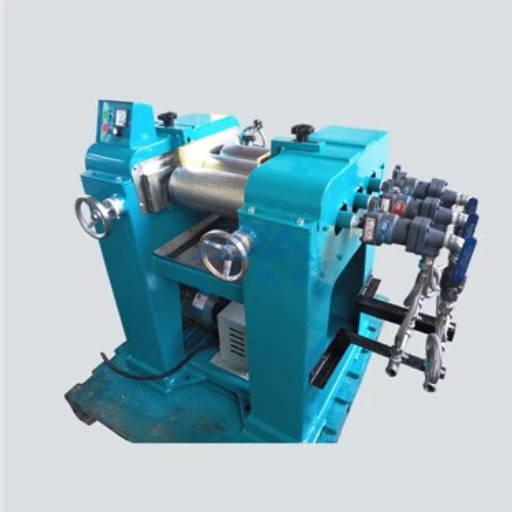
Hydraulic three roll mills excel in precision control of pressure by assuring consistent and reliable results for various industrial applications. The pressure exerted upon the rollers could be minutely adjusted such that the operator could achieve homogenous dispersion and particle size reduction for a wide variety of materials. This level of fineness is key to maintaining product quality, especially when requirements include control tolerances for such formulation-related industries as cosmetics, pharmaceuticals, and specialty chemicals.
With the utmost of precision, it may also help minimize material waste and exploit production efficiency. Hydraulic equipment can maintain exact force distribution across a range of conditions to optimally prevent batch-to-batch variations and the ensuing production of either under- or over-processed materials. This contributed consistency contributes to increased throughput and reduced downtime; it allows for continuous productive activity since one would be able to fine-tune processing around consistent results conducive to producing a product with the highest quality.
Control is attained by precision-designed hydraulic systems enabling balance and stability in the process of operation. The versatility to change pressures finely ensures the process can take place in altering properties of materials and other processes. This versatility in the three-roll mill widens its application in industries, where the priority is on accuracy, efficiency, and repeat-ability.
Improved Dispersion Quality
For better dispersion quality, hydraulic three-roll machines are designed to get optimal particle distribution during the grinding process. This is achieved through controlled roller speed, spacing, and pressure that guarantees the material of uniform distribution on each roller. There will be no more agglomeration, which results in smaller particle size and good consistency of the end product.
Well-designed controlled system can adjust the pressure appropriately, furthering elasticity in the grinding program to grind efficiently. This enables the machining of a vast array of materials with high viscosities, pastes, pigments, and/or adhesives employed without compromising in the dispersion quality; precise control of the process ensures reduced waste, hence, cost-effective- and environmentally-friendly production cycles.
Moreover, for the hydraulic three-roller grinders maintaining consistent and reliable performance, these play a productivity-boosting role. They complemented by their indispensability in industries whose specifics would require a accruement of remarkable flow characteristics; these industries would be such that precision and high-quality dispersion are prerequisites. Hence, these machines add up more to the best of quality products with the ability to render excellent results repeatedly under high-pressure conditions.
Increased Operational Efficiency
Hydraulic three-roll grinding machines undoubtedly enhance the operational efficiency through its high accuracy and high reliability. Besides, because the machines can be adjusted at a micro scale, operators can end up with the desirable particle sizes and zero-dispersion qualities. With precision-engineered hydraulic systems maintaining uniform pressure on the rolls, the machines guarantee smooth, consistent results while reducing the mean time for material-shaping processes.
Other favorable qualities of hydraulic three-roll grinding machines involve having profound capacities of material throughput meaning impeccably on output quality. A sturdy makeup coupled to some state-of-the-art functions makes hydraulic three-roll grinders an ideal choice for jobs with continuous, high-pressure operations. This contributes to a rise in productivity with time-saving engagement as the energy-savvy machines do not fall prey to maintenance needs and are built to last with constant care.
Hydraulic three-roll systems minimize discrepancies during operational processes. Their automation and settings ensure smooth operations and consistent results with minimal human intervention. This efficiency saves money, as it reduces waste of materials and errors in processing. So the paramount importance of the hydraulic three-roll system is in precision and reliability for sectors.
Comparative Analysis: Manual vs Hydraulic Three Roll Mills
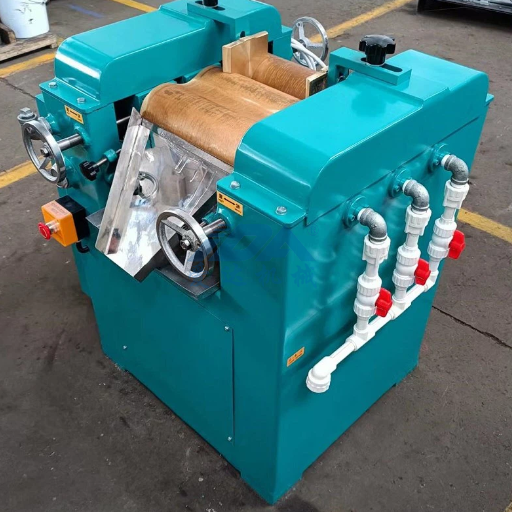
Efficiency and Time Savers
Ease of operation, precise control over pressure and roll setting, and fewer adjustment periods are some of the most significant events that contribute to making the hydraulic three-roll refiners more efficient than the manually operated mills. All of the above contribute to lessened milling time because of lesser strain put on the op erator. The automation will allow the operator to concentrate on product quality and other activities in the plant, rather than lose sight of the rolling process. Producing time enhances and downtime is wiped out, as a result.
Time-retention is another winning point in the hydraulic mill. Automation minimizes manual error per batch, increasing overall production output uniformity, lessening manual time to load material, to turn placements, and to mill. Faster processing times leave less chance for human errors and operator fatigue, as well as milling delays, hence that operators can execute more batches in a single plant unit period compared to manual systems.
Another main distinguishing design feature of hydraulic systems lies in their dependability and maintenance issues in their ongoing operations. Arguably, this dependability does not necessitate repeated re-setting or interruption of maintenance-the performance bundle actualized by major core marginal benefits heavily, on the other-avenue manual mills require a certain degree of routine recalibration in the quest for precision, hydraulic mills are quite autonomous in that respect. Garner reliable results by ensuring that those little decisions are left for the operator for the completion while ripple savings in time and resources towards the end.
Consistency and Quality of Output
As far as consistency and quality of output go, manual versus hydraulic three-roll mills appear have differentiating features, each corresponding to its peculiar operational requirements. Manual mills are highly dependent on the operator’s skill when it comes to maintaining uniformity during processing. Very often, operators are compelled to calibrate the machines and adjust them in order to ensure a predictable outcome, leading to a lot of variation in the final output depending on the operator’s expertise and attentiveness.
Hydraulic three-roll mills are designed, by contrast, to produce sharp accuracy and consistent results with very little manual intervention. Automated pressure control systems in hydraulic mills ensure that the three rollers maintain steady and uniform pressure at all stage of the operation; arguably such automation is very crucial in helping to repeatedly produce a reliable and good consistent output, making hydraulic mills the first choice for industries demanding repeatable quality-output.
While manual mills may still find value in smaller-scale operations or situations where budget constraints are a priority, hydraulic mills are more suited to high-volume production environments. The improved quality in performance, less reliance on operator skill, and time-saving tips offered by hydraulic mills usually outweigh the initial investment and provide great long-term value for businesses focusing on quality and productivity.
Cost Considerations and Long-Term Benefits
When considering cost implications, hand-driven Three-Roll Mills primarily start on a relatively lower note, thereby attracting smaller operations or even those that work on tight budgets. However, they demand more labor expertise and manual force. This situation necessitates additional manning and produces increased running costs throughout operational time due to lower rate of production and the possibility of wrong results. Manual mills can still ensure themselves a little application by focusing on saving their initial costs rather than production efficiency.
Hydraulic three roll mills suffer an initial capex outlay, but claiming in terms of ultras-high throughputs, much-reduced labor, and product uniformity requirements appreciably. Automatically on, enhanced on, they out there. Over time, these benefits can significantly offset the increase in gas costs relative to that of non-augmented mills long after the initial setup costs are forgotten. Especially in high production something like clients kept awake by their plans, they can provide very high returns on erstwhile few investments done.
At last, the choice of using a manual or hydraulic three-roll mill should be under direct consideration of these counterpart factors-managing corporate expenses, the level of output in the mill, and the vision-performing manual mills for the smaller scale or experimental operations while proposing hydraulic mills for large production runs, the running of which requires better precision and efficiency. The cost-effectiveness that should concern businesses go so that both precision and cost efficiency may be met.
When Does Hydraulic Upgrade Pay Off? ROI Scenarios

Standard Hydraulic Three Roll Mills
Standard Hydraulic Three Roll Mill is usually the type of equipment used in several industries for the consistency it provides in fine dispersion. It consists of three rollers aligned horizontally for rotation. They are manually regulated by hydraulic pressure to ensure that an equal force is applied to the rollers during operation. These are very useful for blending, spreading, homogenizing, etc., used in applications like paints, inks, and various coatings.
The convenience of the standard hydraulic three roll mills is the most superior because they provide high-performance output with reclaimoperation. There are advantages associated with operating the mills: the operator can control roller speed, hold, set, and apply pressure with the least effort for predictable end-product quality per production batch. This workhorse is very versatile in its tolling capacity with variable viscosities, giving its users a range of product possibilities.
Three-roll mills have become the standard in the industry because they are reliable when it comes to price-performance balance. With their rugged construction, they contribute little towards unplanned downtime and maintenance periods and provide optimized performance. These mills are key in minimizing maintenance downtime and ensuring product quality.
High-Viscosity Hydraulic Three Roll Mills
High-viscosity triple rollers with hydraulic function were specifically introduced to process those materials with extremely high viscosity and stand as the backbone for thick pastes. It is widely used in industries adhesives, sealants, industrial coatings. The main task is be too evenly disscribe materials with a thin, stable dispersivity. Built on a robust design and precise engineering, heavy-duty work can be carried out with accuracy described in-processing severely viscous materials.
The most important characteristic in three roll mills is the extensive shear forces built up by the closely-positioned rolls. These are the forces responsible for amazing refining and homogenizing of a material, which brings about very complete separation and uniformity. Among other distinctions, the high shearing machines have enhanced cooling capacity to handle large amounts of heat produced during processing, thus protecting heat-sensitive components in the material.
The following are two primary reasons why high-viscosity applications could benefit from efficiencies with the help of three roll mills: to avoid waste and optimize their processing. Advanced control systems and maneuvering devices offer easy flexibility in customizing different roll pressures and speeds, thus tailoring the milling process with great precision. This flexibility and reliability in high-viscosity hydraulic three roll mills become preferred due to their unparalleled ability to obtain steady high quality in a very severe environment.
Custom and Specialized Hydraulic Models
Unique for various industrial applications, a custom-made and specialized hydraulic three-roll mill can be catered to suit particular requirements. With features catering to specific needs, manufacturers are free to handle special materials and to meet production targets. The hydraulic three-roll mills offer an added dimension of flexibility and control over milling by adjusting their own roll size, speed range, and pressure set.
One of the major benefits of specialized hydraulic models is their capacity to address difficult materials, that can have unique or irregular viscosities or other peculiar features. Such manufactured goods such as adhesives, ceramics, or unusual coatings need a corresponding set of criteria. Such characteristics guarantee uniformity of products in their entirety. They are further meant to upgrade space efficiency by removing any bottlenecks caused by downtimes, while a fully automated nonstandard hydraulic model having advanced appurtenance actually solves the matter at the most optimal space- and time-scale.
Another feasible move is to incorporate the models with cutting-edge mastering control systems and other automated features, which will obviously target areas where extreme precision has to be maintained, like in the pharmaceutical and electronics industries. In sum, custom-built and specialized hydraulic three-roller mills are noticeably excellent for adjusting to various production timetables and properties that match ultraprecise results.
Frequently Asked Questions (FAQ)
Q: What is a three roll mill and how does the mill consists of three rolls?
A: A three-roll mill grinds and disperses materials, made up of three rollers mounted horizontally in the mill; each roller runs at different speeds to shear and blend raw materials. These three horizontal rolls work together: the front roller is fast-moving, the middle one is medium, and the rear roller is slow. The high shear between the rolls creates a better grinding effect.
Q: The advantages in a hydraulic three-roll mill over manual-controlled ones?
A: Seriously, let us face the facts: hydraulic control permits adjustment of the roll gap with higher precision reliably, ensuring less maintenance costs by automating roll-gap adjustment. Besides the manual versus hydraulic three-roll mill case, hydraulic systems present the merit of high pressure clamping,^18 a matter of better repeatability, and the facility for further adjustment to meet high expectancy of particle size distribution with the general principles applied to produce prime quality products.
Q: How does roll gap and gap between the rolls affect grinding and dispersing??
A: The roll gap is the single most decisive determinant of the grinding effect and particle size distribution; the smaller the roll gap, the more the shear and less of the particle size, but with higher pressure. Hydraulic systems give you the ability to very precisely spaces of the rollers to provide the best dispersion for low viscosity or high-viscosity material, by providing a smooth texture and high-quality production.
Q: Which materials and industries ought the mill favor?
A: If the Mill is suited for paints, incks, carbons dispersed in color, sheaths by ceramics, adhesives, and other high viscosity material applications, then the roles played by the mill would be to grind materials so that their particle size comes by smoothly along with high-quality products, if necessitating any texture too.
Q: How do varying speed rollers affect performance?
A: As rollers of different speeds create differential shear—the greater differential in diameter between the front and rear rollers facing, the higher the shear forces. This setup strengthens the grinding effect and raises dispersing efficiency that allows for effective processing of low- and high-viscosity materials. Shortening of the time spent in operations also improves the particle size distributions.
Q: What maintenance and operational considerations affect production quality?
A: Regular scrapping, monitoring roller wear, and hydraulic control maintenance all help lower maintenance cost and ensure consistency in the quality of production. Cleaning is necessary to prevent contamination when switching grinding materials; however, substitution of mills with durable ceramic or metallic roller surfaces that extend the service life and defer machine down-time.
Q: Will a Three Roll Mill handle high-and low-viscosity raw materials equally well?
A: Yes, once set up appropriately, the Three Roll Mill can handle both low-viscosity and high-viscosity materials. The adjustment of roll gap, roller speed differential, and hydraulic pressure gives the Three Roll Mill the incredible capability to undertake much variation of raw materials ranging from thin inks to thick, colored carbon black pastes, and still remain smooth on the texture and uniform on the particle size distribution.
Q: What is the function of the scrapper? How does it affect the grinding mechanism?
A: The scrapper removes material from the front roller and returns it back for further pass through and thus ensures contact with the other rollers. If designed properly, the scrapper augments the efficiency of throughput and effect of grinding, enables proper dispersion, and is instrumental in meeting the very high precision required by industries that populate high-quality efforts and demand.
References
-
The development of the theory of metal rolling and its application
Oregon State University Library
This document discusses the control and behavior of rolling machines, which is relevant to understanding manual and hydraulic rolling mills.
-
Precision ring rolling technique and application in high-performance bearings
This paper introduces precision rolling techniques, which can provide insights into the differences between manual and hydraulic systems.
-
Equipment for bearing housing change of work rolls in a rolling mill
This document explores the use of hydraulic cylinders in rolling mills, offering a comparison point for manual systems.
- Professional Three Roll Mill Manufacturer