Get in Touch with IDA


Updated November 2026
Chemical paint refers to liquid or paste coatings that are formulated with binders, pigments, carriers, and additives to solidify to barriers that guard against moisture, UV light, abrasion and/or corrosive reagents. Buyers searching this term will encounter two distinct product categories: protective industrial coatings and chemical paint strippers used before recoating. This guide covers both categories through U.S. regulations, international standards, dispersion equipment, and solids-adjusted applied cost.
Quick Specs: Chemical Paint Engineering Benchmarks
| Four Core Formulation Groups | Binder/resin, pigments & fillers, liquid carrier (when used), and specialty additives |
| Field-Applied IM VOC Caps | 450 g/L (3.8 lb/gal) federal (40 CFR Part 59 Subpart D) vs. 100 g/L (SCAQMD Rule 1113) |
| RCRA Ignitable Waste Criterion | Discarded liquid with flash point < 60 °C (140 °F) per 40 CFR 261.21(a)(1), subject to stated aqueous-alcohol exclusions |
| Theoretical Coverage Constant | 1,604 ft²·mil/gal (1 US gal = 231 in³ = 0.1337 ft³) |
| Dispersion Fineness Method | ASTM D1210-05(2022) Hegman-type gage (0 = 100 µm, 8 = 0 µm; 1 mil = 25.4 µm) |
| High-Viscosity Paste Milling | 1–20 µm fineness up to 2,000,000 mPa·s on water-cooled hydraulic three-roll mills (IDA published specs) |
What Is Chemical Paint and What Are the Primary Materials Used in Paint Production?
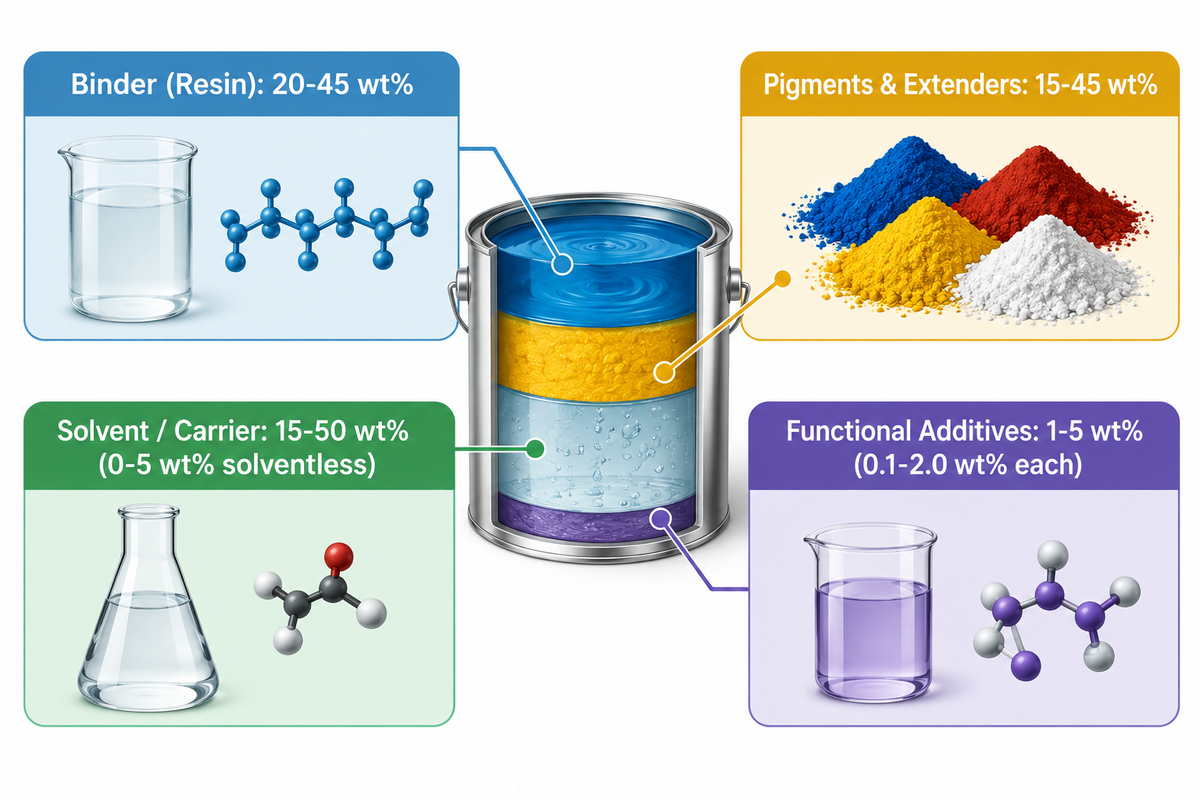
Conventional liquid industrial and architectural paints combine four material groups: binders (20–45 wt%), pigments and fillers (15–45 wt%), liquid solvents or water carriers (15–50 wt%), and additives (1–5 wt%). Epoxy linings of high solids reduce volatile carrier mass below 10 wt%, and in 100%-solids systems, the volatile carrier is eliminated altogether.
In a wet paint can, each chemical plays a distinct physical or reactive role. Think of wet paint like liquid reinforced concrete: the resin binds solids like cement glue, while pigments and extenders act as graded aggregate. The liquid carrier controls flow onto the surface, and additives prevent settling, foaming, and spoilage. Because buyers searching for paints and coatings often encounter stripping gels online, separating film-forming coatings from removal products is necessary before reviewing any Safety Data Sheet (SDS).
| Material Group | Typical Weight Share | Primary Chemicals Used | Core Functional Role |
|---|---|---|---|
| Binder (Resin) | 20–45 wt% (higher in solventless epoxies) | Acrylics, alkyds, bisphenol-A/F epoxy, aliphatic polyurethane, polyvinyl acetate (PVAc) emulsion binders | Creates the continuous film-forming polymer network, locks pigment particles in place, and sets adhesion and chemical barrier limits |
| Pigments & Extenders | 15–45 wt% | Rutile titanium dioxide (TiO₂), iron oxides, zinc phosphate, calcium carbonate (CaCO₃), barium sulfate (BaSO₄), talc | Provide color, opacity, UV shielding, active corrosion inhibition, and mechanical film reinforcement |
| Solvent / Carrier | 15–50 wt% (0–5 wt% in solventless systems) | Deionized water, mineral spirits, xylene, toluene, acetone, glycol ethers, butyl acetate | Dissolves or disperses the resin to target spray or brush viscosity, then evaporates during drying |
| Functional Additives | 1–5 wt% total (0.1–2.0 wt% each) | Polymeric dispersants, coalescents, silicone defoamers, associative thickeners, UV stabilizers, biocides, metallic driers | Prevent pigment settling, suppress air entrapment, lower film-forming temperature, and stop in-can biological spoilage |
The listed weight ranges describe conventional liquid coatings; 40 CFR Part 59 Subpart D prescribes federal VOC limits for covered architectural coatings, while regional rules may set more stringent limits.
A request for “chemical paint” can refer to either a chemical-resistant coating or a stripping agent for recoating prep. Barrier coatings build crosslinked dry film thickness to protect steel and concrete from corrosive liquids. Stripping agents do the reverse; they swell and crack the bonds of aged polymers to allow crews to scrape old paint.
Is Painting a Chemical or Physical Change?
Painting is a physical change that occurs when thermoplastic water-based latex or solvent lacquer dries strictly by carrier evaporation and coalescence. It becomes a chemical change when two-component epoxies or polyurethanes crosslink to form a rigid polymer network. Once cured, a crosslinked epoxy will not re-dissolve in its original thinner.
That determines the level of chemical resistance and the kind of recoating work required. Physical-drying acrylic emulsions soften when wiped with polar solvents such as acetone or methanol because their chains stay linear rather than covalently bonded. Oxidative alkyds react with oxygen via metallic driers. Two-part epoxies react epoxide rings with amine or polyamide hardeners to form a rigid thermoset matrix that resists splash exposure and later requires aggressive chemical or blast removal.
Pigments, Extender Fillers, and Functional Additives in Paint Formulations
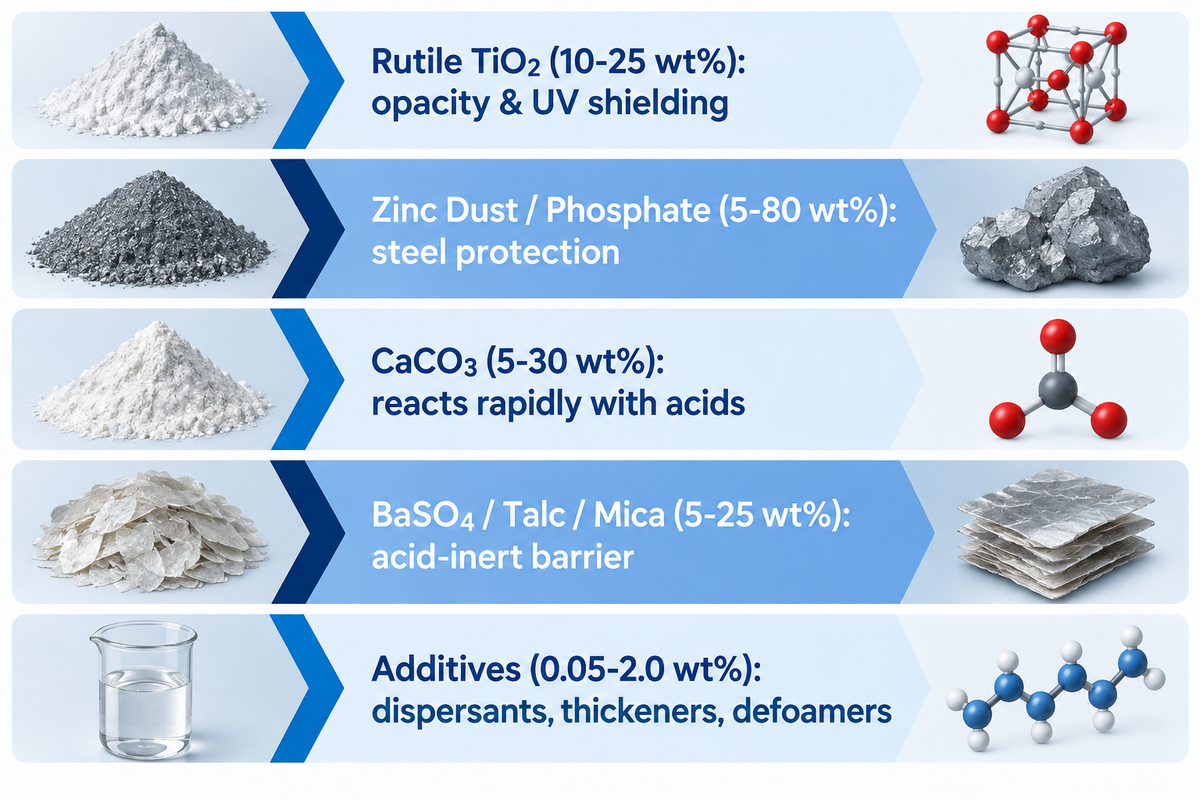
Prime pigments, mineral extenders, and additives make up 16-50 wt% of a typical liquid coating, and choosing the wrong mineral filler degrades chemical resistance faster than choosing a mid-grade resin. Calcium carbonate reacts quickly with dilute mineral acids. For such acid service, industrial primers may use barium sulfate or micaceous iron oxide instead of calcium carbonate.
Formulators group particulate solids into three functional tier groups. Prime pigments such as rutile titanium dioxide (refractive index ~2.7, loaded at 10–25 wt% in opaque white coatings) scatter light for a hiding effect and shield resins from UV rays. Metallic zinc dust provides sacrificial protection when electrically connected to steel, while zinc phosphate inhibits corrosion through phosphate-based passivation. Extender fillers control sheen and build cost, while specialty additives at 0.1-2.0 wt% prevent wet-state and curing defects.
| Ingredient Class | Common Chemical Example | Typical Dosage | Primary Function | Defect Prevented or Service Limit |
|---|---|---|---|---|
| White Prime Pigment | Rutile titanium dioxide (TiO₂) | 10–25 wt% | Opacity, brightness, UV absorption | Prevents poor hiding and resin chalking; avoid anatase grade outdoors |
| Color & Barrier Pigment | Synthetic iron oxides, phthalocyanine blue/green | 1–15 wt% | Provide color and UV-stable tinting | Prevents premature fading in exterior industrial finishes |
| Anticorrosive Pigment | Zinc dust, zinc phosphate | 5–80 wt% (zinc-rich) | Galvanic (zinc dust) or inhibitive (phosphate) steel protection | Slows underfilm rust creep; zinc corrodes in strong acid or strong alkali |
| Carbonate Extender | Calcium carbonate (CaCO₃) | 5–30 wt% | Low-cost bulk filler and matte sheen | Reacts rapidly with acids; unsuitable for acid-resistant linings |
| Acid-Inert Extender | Barium sulfate (BaSO₄), talc, mica | 5–25 wt% | Chemical barrier and lamellar moisture path extension | Slows electrolyte permeation in chemical-resistant primers and midcoats |
| Wetting & Dispersing Agent | Polyacrylate or polyurethane block copolymers | 0.2–2.0 wt% | Deflocculates pigment agglomerates | Prevents flooding, floating, color drift, and hard settling in storage |
| Rheology Modifier | Fumed silica, HEUR thickeners, organoclays | 0.2–1.5 wt% | Builds thixotropic shear-thinning viscosity | Prevents vertical sagging on tank walls and pigment settling in cans |
| Coalescing Agent | Glycol ethers, ester alcohols | 3–4% on binder weight (~0.6–2 wt% on paint) | Temporarily plasticizes latex particles | Prevents mud-cracking during cool-temperature drying |
| Defoamer / Air Release | Silicone or mineral-oil hydrophobic droplets | 0.1–0.5 wt% | Destabilizes entrained air bubbles | Eliminates micro-pinholes that cause holiday spark-test failures |
| Biocide & Drier | Isothiazolinones; cobalt/zirconium carboxylates | 0.05–0.5 wt% | Prevents in-can bacterial growth or accelerates alkyd cure | Stops aqueous batch spoilage and surface wrinkling during oxidative drying |
Additive balance is critical during scale-up of a plant. Overdosing a silicone defoamer by as little as 0.3 wt% causes localized surface tension reduction and leaves fisheye defects on a smooth metal surface. Too little dispersant can leave coarse agglomerates that reduce gloss. ASTM D1210-05(2022) measures dispersion fineness with a Hegman gage, while coating specifications set the acceptability limit.
Industrial Resin and Binder Chemistries: Epoxy, Polyurethane, Acrylic, and Alkyd Systems
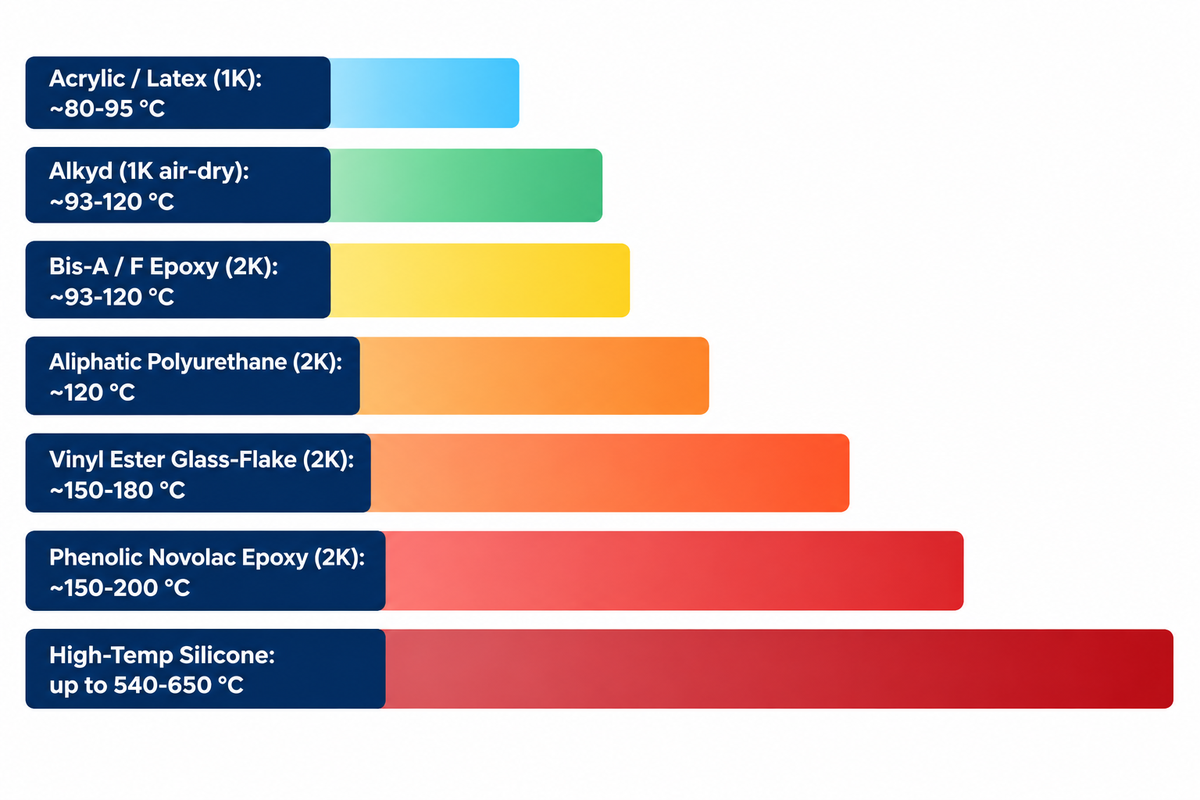
Resin backbone chemistry controls a coating’s maximum dry-heat ceiling, ultraviolet weathering life, and chemical barrier performance, from standard aromatic epoxies (~93–120 °C dry heat) to novolac epoxies (~150–200 °C) and high-temperature silicones (up to 540–650 °C). Some industrial lines use standard aromatic epoxy resins (~93 to 120 °C dry heat) for general splash duty, while novolac epoxy resins (~150 to 200 °C) deliver higher chemical resistance and high-temperature silicone resins (~540 to 650 °C) target extreme dry heat.
Every binder family pairs a core strength with a predictable chemical boundary. Aromatic bisphenol-A epoxies bond tightly to blasted steel because polar hydroxyl groups form strong links with metal oxides. Outdoors, these aromatic rings absorb UV photons and fade quickly. Standard alkyds dry economically on primed steel, yet applying an alkyd directly to alkaline concrete triggers saponification: ester bonds hydrolyze into soapy residue and peel off. For that reason, ISO 12944-5:2019 protective systems pair an epoxy primer/midcoat with an aliphatic polyurethane topcoat outdoors.
| Resin Family | Cure Mechanism | Typical Dry-Heat Limit | UV & Gloss Stability | Limitations / Not Suitable For |
|---|---|---|---|---|
| Acrylic / Latex Emulsion | 1K physical coalescence | ~80–95 °C (175–200 °F) | High color and gloss retention | Softens in continuous immersion and strong polar or aromatic solvents; cracks below MFFT |
| Alkyd (Oil-Modified) | 1K oxidative air-dry | ~93–120 °C (200–250 °F) | Moderate; yellows indoors | Saponifies on alkaline concrete or galvanized zinc; weak acid and solvent resistance |
| Bisphenol-A / F Epoxy | 2K amine/polyamide crosslink | ~93–120 °C (200–250 °F) | Poor outdoors; rapid UV chalking | Swells in strong polar solvents (MEK, acetone) and degrades in concentrated mineral acids |
| Phenolic Novolac Epoxy | 2K dense multi-functional crosslink | ~150–200 °C (300–390 °F) | Poor outdoors; interior lining use | Lower flexibility under thermal shock or flexing; short working pot life in warm ambient air |
| Aliphatic Polyurethane | 2K polyol + isocyanate | ~120 °C (250 °F) | Benchmark exterior UV & automotive gloss | Not for continuous chemical immersion; isocyanate respiratory controls required during spray |
| Vinyl Ester (Glass-Flake) | 2K peroxide free-radical cure | ~150–180 °C (300–355 °F) | Low; tank and scrubber interiors | Higher cure shrinkage (requires glass flake); styrene vapor controls and deep blast profile |
| High-Temp Silicone | Ambient dry + heat cure (~200 °C) | Up to 540–650 °C (1,000–1,200 °F) | High thermal & UV stability | Soft and solvent-sensitive until heat-cured; excessive dry film thickness causes early cracking |
Thermal ceilings reflect typical published manufacturer product datasheet ranges for dry, non-immersion service; the maximum continuous operating temperature for immersion service must be taken from the coating’s chemical-resistance data for the specified reagent and exposure conditions.
💡 Pro Tip: Match Resin Viscosity to Plant Mixing Regimes
High-solids novolac epoxies and glass-flake vinyl esters exhibit steep viscosity changes during processing. It is important to consider industrial mixing viscosity regimes when sizing agitators before constructing an industrial paint production line to avoid air incorporation and incomplete catalyst homogenization.
How to Choose Chemical Resistant Paint for Industrial Steel, Concrete Floors, and Corrosive Chemicals
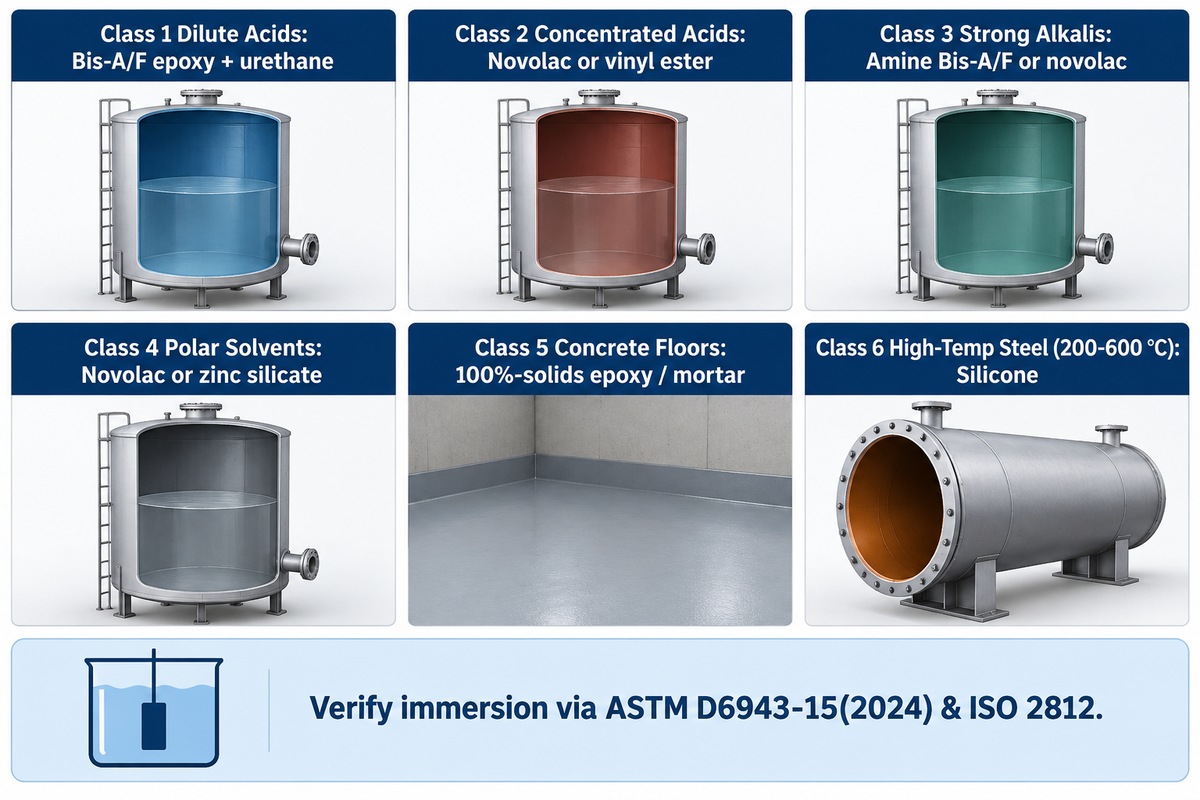
When specifying chemical-resistant industrial steel and concrete floors, it is necessary to specify the coating system by exact reagent identity, concentration, operating temperature, temperature gradient, pressure, and splash versus continuous immersion. Pair substrate cleanliness and profile, such as ISO 8501-1 Sa 2.5 abrasive blasting on immersion steel or shot-blasted ICRI CSP concrete profiles when specified by the lining datasheet, with verified immersion test data.
One specification trap catches plant engineers off guard every year: citing ISO 12944 alone on a chemical storage tank purchase order omits chemical resistance. ANSI notes that rust buildup can disrupt protective films; ISO 12944 addresses corrosion protection of steel structures rather than chemical resistance in tank service.
To close that specification gap for chemical tanks and secondary containment, pair ISO 12944 with dedicated chemical resistance tests: ISO 2812 (liquid resistance of paints and varnishes), ASTM D1308 (chemical spot effect), and ASTM D6943-15(2024). ASTM D6943 specifically covers industrial protective coatings and linings under isothermal immersion, cold-wall temperature gradients, pressurized service, and cargo contamination prevention. Cold-wall gradients matter because hot fluid inside a cool-walled tank drives vapor permeation straight toward the steel interface.
The 6-Class Exposure-to-Resin Routing Table
| Exposure Class | Representative Reagents | Candidate Resin System | Typical Surface Prep | Limitations / Not Suitable For |
|---|---|---|---|---|
| Class 1: Dilute Acids & Salts (Splash) | Dilute mineral acids, brine, fertilizer dust | High-build Bis-A/F epoxy + aliphatic urethane topcoat (outdoors) | Blast-cleaned steel (often Sa 2.5); profiled concrete (CSP 3) | Fails under hot continuous pooling or unwashed acid evaporation that concentrates salts; verify exact concentration/temp chart |
| Class 2: Concentrated Mineral Acids | Concentrated sulfuric, hydrochloric, or oxidizing acid blends | Phenolic novolac epoxy or glass-flake vinyl ester (selected by exact acid, temperature, and product datasheet) | Near-white steel blast (Sa 2.5 / SSPC-SP10); heavy concrete profile (CSP 4–5) | Standard Bis-A epoxies blister and char rapidly; never extrapolate one acid concentration or temperature across grades |
| Class 3: Strong Alkalis & Caustics | Sodium hydroxide, potassium hydroxide, alkaline washdowns | Amine-cured Bis-A/F or novolac epoxy | Blast-cleaned steel; profiled concrete with moisture control | Alkyds saponify rapidly; avoid unmodified phenolics in hot concentrated caustic service |
| Class 4: Polar & Aromatic Solvents | Acetone, MEK, methanol, xylene, toluene | High-functionality novolac epoxy or inorganic zinc silicate (neutral solvents) | Near-white steel blast per lining datasheet | Thermoplastic acrylics, alkyds, and standard epoxies swell and soften; zinc fails in acidic or strongly alkaline service |
| Class 5: Concrete Containment Floors | Process washdowns, forklift abrasion, oil and chemical drips | 100%-solids epoxy or urethane cement mortar (hot washdowns) | Shot-blasted concrete (ICRI CSP 3–5); verify slab moisture per system datasheet | Impermeable 100%-solids epoxy blisters when concrete vapor pressure exceeds the coating’s moisture limit |
| Class 6: High-Temperature Dry Steel | Exhaust stacks, reactors, steam headers (200–600 °C) | Silicone-acrylic or pure silicone aluminum finish over inorganic zinc | Blast-cleaned steel free of oil and mill scale | Excessive dry film thickness triggers mud-cracking and peeling during thermal ramp-up |
Is Epoxy Paint Chemical Resistant to Concentrated Acids and Solvents?
Bisphenol-A epoxy coatings are used for water and alkaline washdowns; concentrated mineral acids and strong polar solvents such as acetone and methyl ethyl ketone can attack standard formulations. Severe acid or solvent immersion requires densely cross-linked phenolic novolac epoxy or glass-flake vinyl ester linings verified against exact reagent-temperature charts.
The difference comes down to crosslink density. Bisphenol-A-based epoxy resins typically have two terminal epoxide groups per molecule, while curing chemistry and crosslink density govern solvent resistance. A novolac epoxy resin, with three to six reactive sites, results in a much denser, three-dimensional network, and reduces solvent swelling.
Water-Based vs. Solvent-Based Chemical Paint: Curing Chemistry, Durability, and VOC Limits
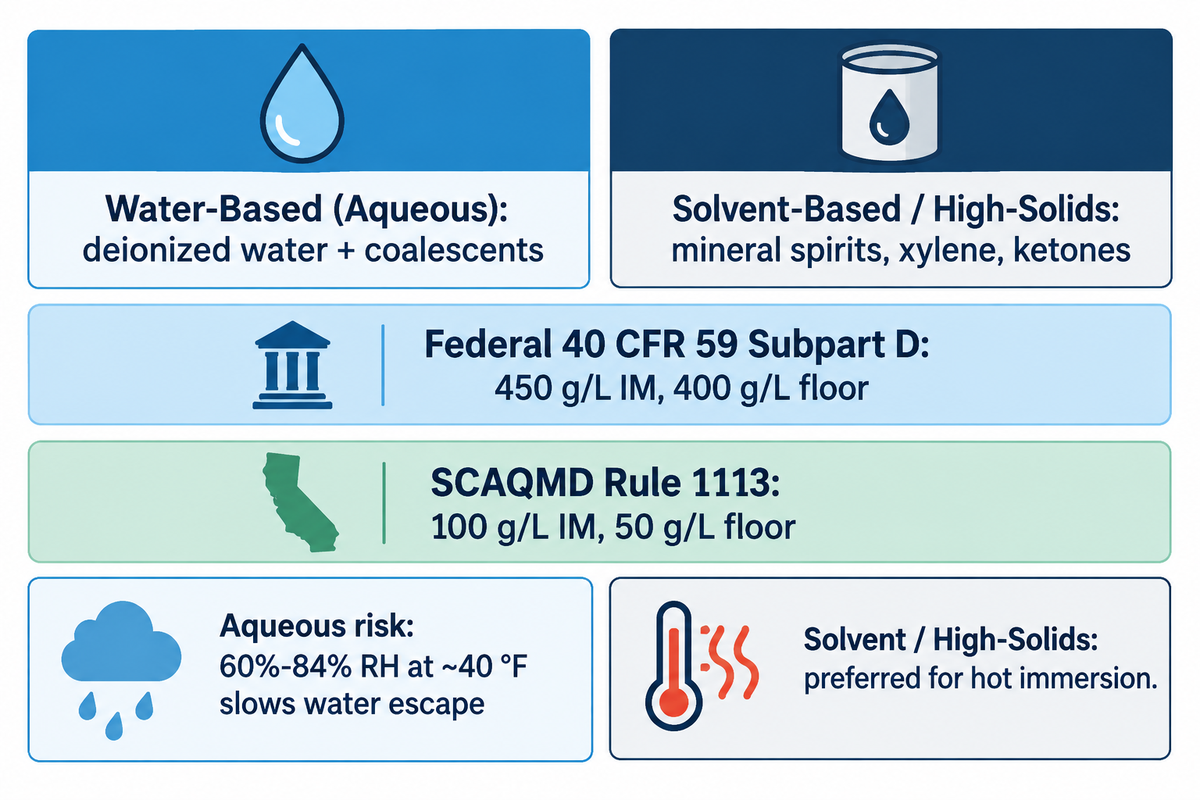
Under U.S. federal 40 CFR Part 59 Subpart D, field-applied industrial maintenance coatings on stationary structures are capped at 450 g/L (3.8 lb/gal) VOC, whereas California’s South Coast AQMD Rule 1113 cuts that ceiling to 100 g/L. That regulatory pressure has expanded waterborne use, yet water-based and solvent-based paints still fail under opposite ambient conditions.
Check statutory scope before applying federal architectural numbers to factory lines. 40 CFR 59.401 regulates field-applied coatings on stationary structures and their appurtenances, specifically excluding factory-applied OEM finishes and mobile equipment such as aircraft, ships, and railcars. Second, don’t misinterpret “low-VOC” or “water-based” as non-toxic. Photochemical ozone precursors are the main targets of VOC regulation; thus, VOC-exempt solvents can still be present and may remain an inhalation concern. Even two-component water-based polyurethanes contain isocyanates that can cause occupational asthma during spray application.
| Evaluation Dimension | Water-Based (Aqueous) Paint | Solvent-Based / High-Solids Paint |
|---|---|---|
| Carrier Chemistry | Deionized water + coalescing co-solvents (glycol ethers, ester alcohols) | Mineral spirits, xylene, toluene, ketones, esters, or reactive diluents in solventless systems |
| Film Formation Mechanism | Water evaporation + polymer particle coalescence (plus 2K crosslinking in WB epoxy/PU) | Solvent flash-off + oxidative alkyd cure or 2K epoxy/urethane crosslinking |
| Federal VOC Ceiling (40 CFR 59 Subpart D) | Same federal caps apply by category (450 g/L IM, 400 g/L floor, 650 g/L high-temp); aqueous paints typically formulate far below these caps | 450 g/L (3.8 lb/gal) IM; 400 g/L (3.3 lb/gal) floor & rust preventative; 650 g/L (5.4 lb/gal) high-temp |
| SCAQMD Rule 1113 Ceiling (California) | Each product must individually verify compliance with 50 g/L flat/nonflat/floor or 100 g/L IM limits | 100 g/L IM & zinc-rich IM primers; 420 g/L high-temp IM (> 400 °F) |
| Ambient Cure Vulnerability | High humidity (e.g., 60%–84% RH at ~40 °F / 4.5 °C in PCI lab tests) slows water escape and risks cracking or flash rust on bare steel | Less sensitive to ambient moisture during flash-off, but emits flammable vapor requiring ventilation |
| Chemical & Abrasion Durability | Strong exterior UV color retention; 2K waterborne urethanes serve light-to-moderate industrial exposure | Preferred for continuous hot-solvent or concentrated acid immersion (high-solids/100%-solids linings) |
Two laboratory and field findings overturn common assumptions about water-based paints and field thinning. First, Spektrochem tested a styrene-acrylic binder (Tg ~75 °F / 24 °C, 50 wt% solids, bare MFFT 57 °F / 13.9 °C) and published the results in Paint & Coatings Industry (PCI) Magazine. A 3% dose of TMPDMIB or TMPDDIB passed ASTM D2354 MFFT testing at 32 °F (0 °C), yet failed to form a continuous film in ASTM D7306 low-temperature coalescence tests at ~40 °F (4.5 °C) and 60%–84% RH over 18 hours (requiring 4%). In the same PCI Magazine test series, water-miscible BDG (995 g/L miscibility) wicked into unsealed absorbent substrates and cracked. Yet BDG still posted the top wet-scrub score at 610 cycles to failure, ahead of TMPDDIB (500 cycles), WS (480 cycles), and PMA (280 cycles).
Second, unmeasured field thinning can also compromise a compliant solvent specification. Carboline’s VOC calculation shows what happens when crews add 10% thinner (100 gal at 7 lb VOC/gal) to 1,000 gal of 75%-solids low-VOC epoxy (1.8 lb VOC/gal protecting ~200,000 ft²). Total VOC emissions jump from 1,800 lb to 2,500 lb, a 38.9% surge. Clare’s architectural VOC labeling guide also notes that most untinted “zero-VOC” base paints still hold under 5 g/L, and conventional colorants can push the tinted gallon higher.
What Chemical Is Paint Thinner and Can Thinner Remove Cured Paint?
Standard paint thinner is aliphatic mineral spirits distilled from petroleum to reduce wet alkyd viscosity, but it cannot remove fully cured crosslinked epoxy or latex films. Mineral spirits softens fresh uncured oil paint and cleans wet brushes, but it is far less effective on cured coatings, which require polar strippers or mechanical abrasion.
Different coating chemistries demand matched reducing solvents. Mineral spirits or gum turpentine thin oil-based alkyds, while xylene and toluene thin solventborne epoxies and chlorinated rubbers. Acetone and methyl ethyl ketone thin high-build vinyls and flush spray guns, whereas deionized water thins aqueous emulsions. Aliphatic mineral spirits on a cured epoxy floor merely wipes away surface grease because hydrocarbons lack the polarity to swell a thermoset network.
Formulation Metrics That Govern Film Performance: PVC, CPVC, Volume Solids, and Failure Diagnostics
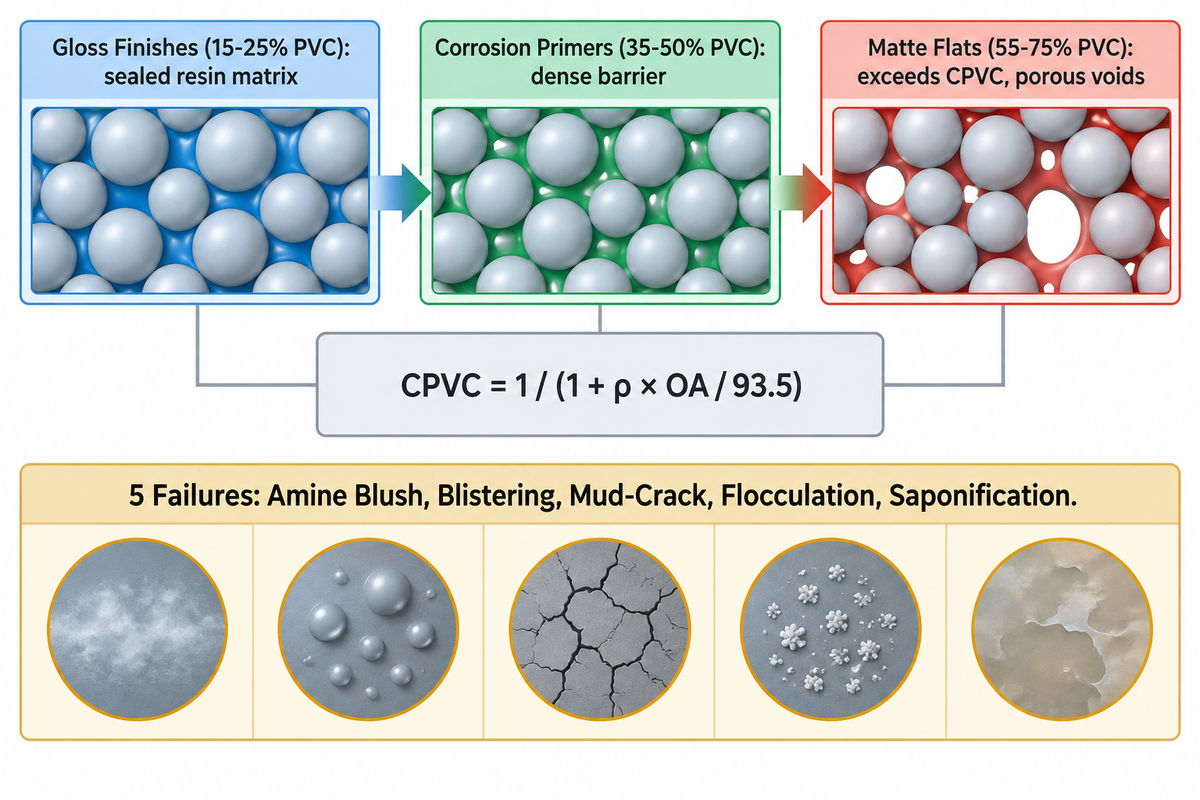
Pigment Volume Concentration (PVC) relative to Critical Pigment Volume Concentration (CPVC) influences film porosity and permeability; above CPVC, there is insufficient binder to fill all the spaces between pigment particles. High-gloss industrial finishes formulate at 15–25% PVC and corrosion primers at 35–50% PVC to stay below CPVC, whereas matte architectural flats often exceed CPVC at 55–75% PVC for dry-hiding opacity.
The CPVC-to-Porosity Permeability Cliff
Below CPVC, liquid binder fills the interstitial voids between packed pigment particles. As explained in ScienceDirect’s coatings engineering reference and Professor Steven Abbott’s oil-absorption model, CPVC is calculated from pigment density (ρ, g/cm³) and linseed oil absorption (OA, g oil per 100 g pigment, oil density 0.935 g/cm³): CPVC = 1 / (1 + ρ × OA / 93.5). Pushing PVC past that threshold leaves too little resin to fill the voids. Microscopic air pockets replace polymer, coating density drops sharply, gloss falls, and corrosive electrolytes penetrate faster even when dry film thickness meets gauge targets.
Volume solids dictates wet-to-dry film shrinkage. A 50% volume-solids coating loses half of its wet thickness as the carrier evaporates, requiring a wet film thickness of 10 mils to yield a dry film thickness of 5 mils. Dispersion fineness is measured on a tapered Hegman gage using ASTM D1210-05 (2022) to determine the largest remaining agglomerates. Reviewing pigment grinding fineness targets on a three-roll mill assists plant chemists to define grind specifications based on gloss and barrier life.
Industrial Chemical Paint Failure Diagnostics
| Field Defect | Visual Symptom | Chemical Root Cause | Prevention & Remediation |
|---|---|---|---|
| Amine Blush (Exudate) | Waxy, sticky, or hazy film; topcoat peels cleanly off epoxy | Free amine reacts with air H₂O and CO₂ to form carbamate and ammonium bicarbonate salts; worsened by skipping induction time or cool humid curing | Observe full sweat-in time and keep steel > 3 °C above dew point; wash cured blush with warm water and light abrasion before recoating |
| Osmotic Blistering | Fluid-filled domes over steel or concrete under immersion | Trapped soluble salts (chlorides/sulfates) or retained water-miscible solvent draws water through semi-permeable film | Test soluble salts prior to priming; enforce full solvent flash-off between coats; blast and recoat blistered zones |
| Low-Temp Coalescence Cracking | Fine mud-cracking or chalky film on waterborne latex | Substrate temperature drops near MFFT or water-miscible coalescent wicks into porous masonry before film fusion | Seal porous substrates first; validate coalescent dose via low-temperature coalescence testing (ASTM D7306), not MFFT alone |
| Pigment Flocculation | Streaked color float, low gloss, rub-up shade shift | Insufficient dispersant adsorption or thermal shock during let-down causes milled particles to re-agglomerate | Verify dispersant-to-surface-area ratio, control mill discharge temperature, and run rub-up QC tests |
| Alkyd Saponification | Soft, soapy, peeling paint on concrete or fresh galvanized steel | Alkaline substrate moisture hydrolyzes alkyd ester bonds into water-soluble metal soaps | Strip degraded film, neutralize surface alkalinity, and switch to alkali-resistant epoxy or acrylic primer |
Both flooring applicators and coating failure labs attribute two-part epoxy delamination to amine blush. Contractors applying floor epoxies in cool, damp garages frequently encounter waxy surface contamination before recoating. Sticky topcoats often peel even after sanding. Sanding can smear waxy amine-blush residues instead of removing them. According to KTA coating forensics, FTIR confirms amine exudate qualitatively; however, pH swabs can yield false positives from alkaline concrete dust, making warm soapy water washing mandatory before abrasion.
VOC Emissions, Chemical Safety, Storage, and International Coating Standards
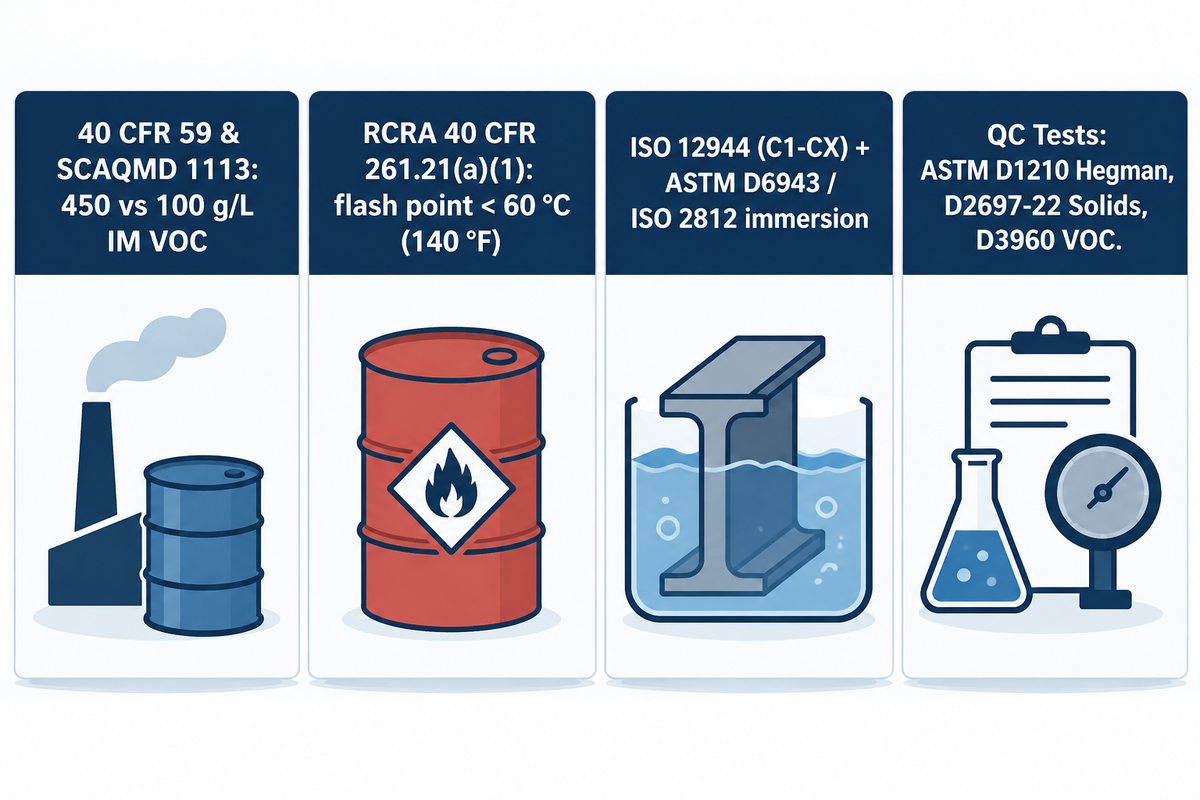
Discarded liquid paint and cleaning solvent waste with a flash point below 60 °C (140 °F) is regulated as RCRA ignitable hazardous waste under 40 CFR 261.21(a)(1). Aqueous mixtures containing under 24% alcohol by volume and at least 50% water by weight are excluded. Prior to staging solventborne coatings, facilities must verify storage codes, workplace toxicology controls, and licensed disposal.
Solvent vapors, including xylene, toluene, methyl ethyl ketone, and acetone, are heavier than air and settle in floor trenches, tank bottoms, and sump pits. That settling creates both acute inhalation exposure and explosive vapor zones near sources of ignition. Industrial flammable-liquid storage follows OSHA 29 CFR 1910.106 and NFPA 30 cabinet limits, plus bonding and grounding rules during flammable-liquid transfer, paired with OSHA 29 CFR 1910.1200 Safety Data Sheet controls and engineered spray-booth exhaust ventilation.
| Standard / Regulation | Issuing Authority | Verified Scope or Threshold | Where Specifiers Apply It |
|---|---|---|---|
| 40 CFR Part 59 Subpart D & E | U.S. EPA | IM 450 g/L, floor 400 g/L, high-temp 650 g/L (stationary structures); Subpart E covers aerosol coatings separately | U.S. federal architectural, maintenance, and aerosol coating compliance |
| SCAQMD Rule 1113 | South Coast AQMD | 100 g/L IM & zinc-rich primers; 50 g/L flats/nonflats/floors; 420 g/L high-temp IM (> 400 °F) | Southern California and strict state ozone-nonattainment procurement |
| 40 CFR 261.21(a)(1) | U.S. EPA (RCRA) | Discarded liquid flash point < 60 °C (140 °F) via SW-846 1010B/1020C (excluding < 24% alcohol / ≥ 50% water) | Classifying spent solvent flush, thinners, and leftover solvent paint for licensed disposal |
| ISO 12944-1:2017 to -9:2018 | ISO / ANSI | C1–CX atmospheric & offshore steel corrosion protection (excludes chemical/fire/microbial attack) | Structural steel bridges, pipe racks, and offshore platforms |
| ASTM D6943-15(2024) & ISO 2812 | ASTM / ISO | Immersion testing of industrial protective linings (ASTM D6943) and liquid resistance of paints and varnishes (ISO 2812) | Tank linings, process vessels, and secondary chemical containment |
| ASTM D1210-05(2022) | ASTM | Hegman-type gage fineness of pigment-vehicle dispersion | In-process paint manufacturing QC after bead milling or three-roll milling |
| ASTM D2697-22 & ASTM D3960 | ASTM | Volume nonvolatile matter measurement and analytical VOC determination | Verifying supplier solids claims and comparing bids on equal dry film thickness |
⚠️ Important: Isocyanate Respiratory Controls Apply to Waterborne 2K Finishes Too
Switching from solventborne to water-based two-component polyurethane systems eliminates flammable solvent vapor. However, spraying polyisocyanate hardeners still presents a respiratory sensitization hazard. Require positive-pressure supplied-air respirators and air-monitoring controls per the product SDS rather than relying on an organic-vapor cartridge mask alone.
When you need to dispose of leftover industrial coatings, never pour solvent residue or wash thinner down plant drains. Dried latex paint often qualifies as municipal solid waste according to local rules, whereas liquid solvent paint and ignitable flush solvents must be manifested through a licensed waste contractor under RCRA. Dried latex paint often qualifies as municipal solid waste under local rules, whereas liquid solvent paint and ignitable flush solvents must be manifested through a licensed waste contractor under the Resource Conservation and Recovery Act (RCRA).
Surface Preparation and Chemical Paint Stripping Before Recoating
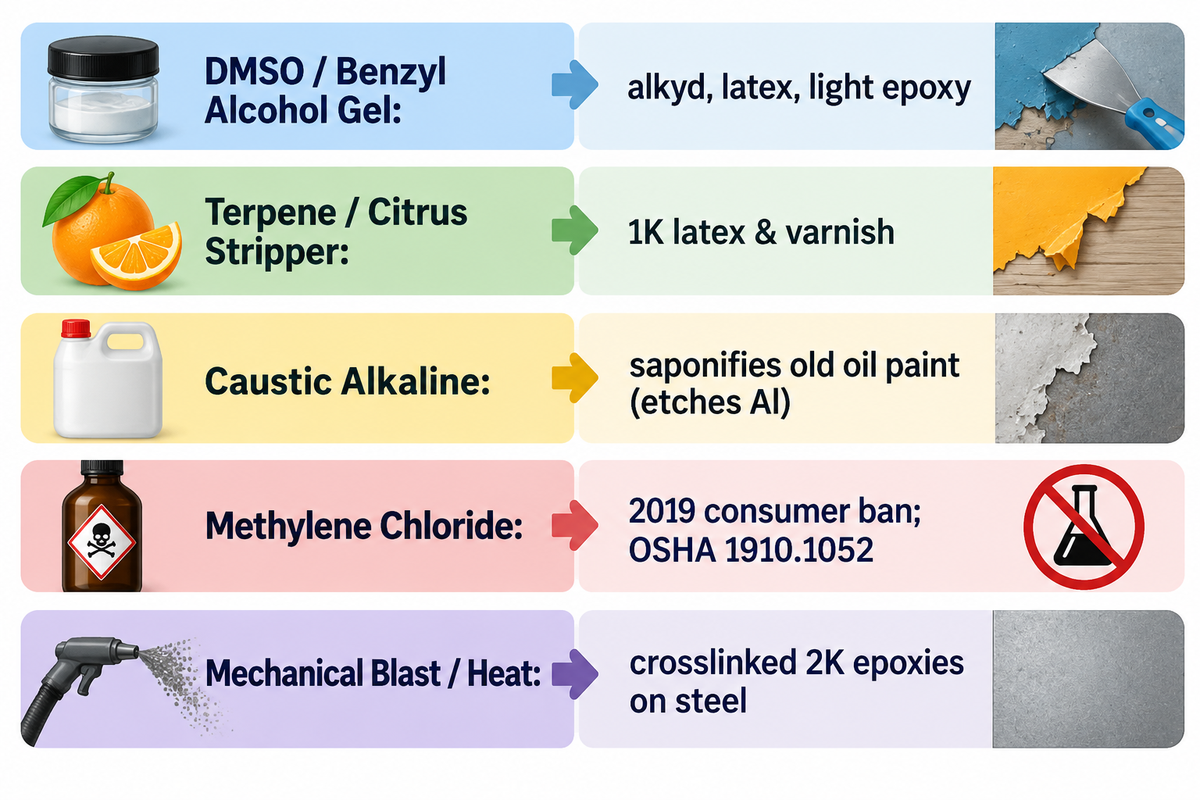
Chemical paint strippers soften degraded coatings by inflating polymer films with solvent gels (dimethyl sulfoxide, benzyl alcohol, or terpenes) or by hydrolyzing oil binders with caustic alkaline removers. On industrial steel tanks, abrasive blasting works faster on crosslinked 2K epoxies than liquid paint removers.
Choosing among ways to remove paint using strippers designed to remove aged coatings begins with assessing the existing film chemistry and substrate. Single-component alkyds and latex films swell and clean up with brushed gel strippers. After dwell time, crews lift the softened films with a putty scraper. This cuts manual elbow grease compared with dry scraping or sanding when removing old coatings. Fully crosslinked two-component automotive or industrial epoxies resist consumer citrus removers (like Citristrip) and often need multiple solvent-gel dwell cycles to strip paint, controlled heat-gun softening on non-lead surfaces, or blast cleaning.
How Do EPA Methylene Chloride Restrictions Affect Chemical Paint Strippers?
In late 2026, EPA’s 2019 consumer paint-removal ban and OSHA workplace exposure limits under 29 CFR 1910.1052 remain in force, while the Fifth Circuit vacated EPA’s broader 2024 TSCA methylene chloride rule in September 2026. Retail shelves remain closed to methylene chloride strippers, and the 2024 industrial phase-out bans no longer apply.
In September 2026, the U.S. Court of Appeals for the Fifth Circuit vacated EPA’s 2024 methylene chloride rule. The ruling (No. 24-60227) vacated the bans, phase-outs, and other restrictions in the 2024 rule.
Consumer methylene chloride paint removers remain banned under EPA’s unaffected 2019 rule (effective November 22, 2019). Industrial methylene chloride use is subject to OSHA exposure limits in 29 CFR 1910.1052, with exposure-control and medical-surveillance duties applying when the standard’s conditions are met. Ventilation and medical-surveillance duties apply when standard exposure thresholds are met. Most contractors and OEM maintenance lines continue to use dimethyl sulfoxide (DMSO), benzyl alcohol, and dibasic ester gel strippers or dry abrasive blasting.
| Removal Method | Active Chemistry / Action | Best Target Layers of Paint | Substrate & Post-Strip Precautions |
|---|---|---|---|
| DMSO / Benzyl Alcohol Gel | Polar solvent swelling; clings to vertical surfaces | Multiple coats of alkyd, latex, polyurethane, light epoxy | Low evaporation loss; rinse paint residue thoroughly before priming |
| Terpene / Citrus Stripper Product | Bio-derived solvent used to loosen soft films | 1K latex, varnish, single-coat architectural enamels | Longer dwell time; struggles on aged 2K crosslinked industrial epoxy |
| Caustic / Alkaline Stripper | Sodium/potassium hydroxide saponifies oil binders | Thick layers of old oil-based paint on masonry or carbon steel | Etches aluminum and darkens hardwood; neutralize alkaline residue per datasheet before recoating |
| Methylene Chloride (Industrial) | Rapid deep solvent penetration (consumer sale banned 2019) | Heavy multi-coat industrial and aerospace coatings | Subject to OSHA 29 CFR 1910.1052 exposure limits and required ventilation/PPE controls |
| Heat Gun / Mechanical Blast | Thermal softening or abrasive impact | Crosslinked 2K epoxies on steel; trim removal on wood | Avoid high-temp heat guns on lead-containing paint to prevent toxic lead fumes |
- ✔ Test for lead paint first: For buildings erected prior to 1978, and for other older types of steel, test for lead prior to disturbance. Where lead is present, wet chemical paint strippers designed to remove coatings can limit dust compared with uncontained dry scraping or sanding, while high-heat guns can create inhalation hazards.
- ✔ Neutralize alkaline removers per datasheet: After caustic coating removal, neutralize alkaline residue per the stripper and primer datasheets and rinse thoroughly so leftover alkali doesn’t cause alkali-sensitive primers to fail prematurely.
- ✔ Allow full substrate drying: Solvent-laden pores and damp wood or concrete trap vapor beneath new coats; check moisture before applying the replacement primer.
Industrial Chemical Paint Manufacturing: Four-Stage Process, Leading Producers, and Dispersion Equipment
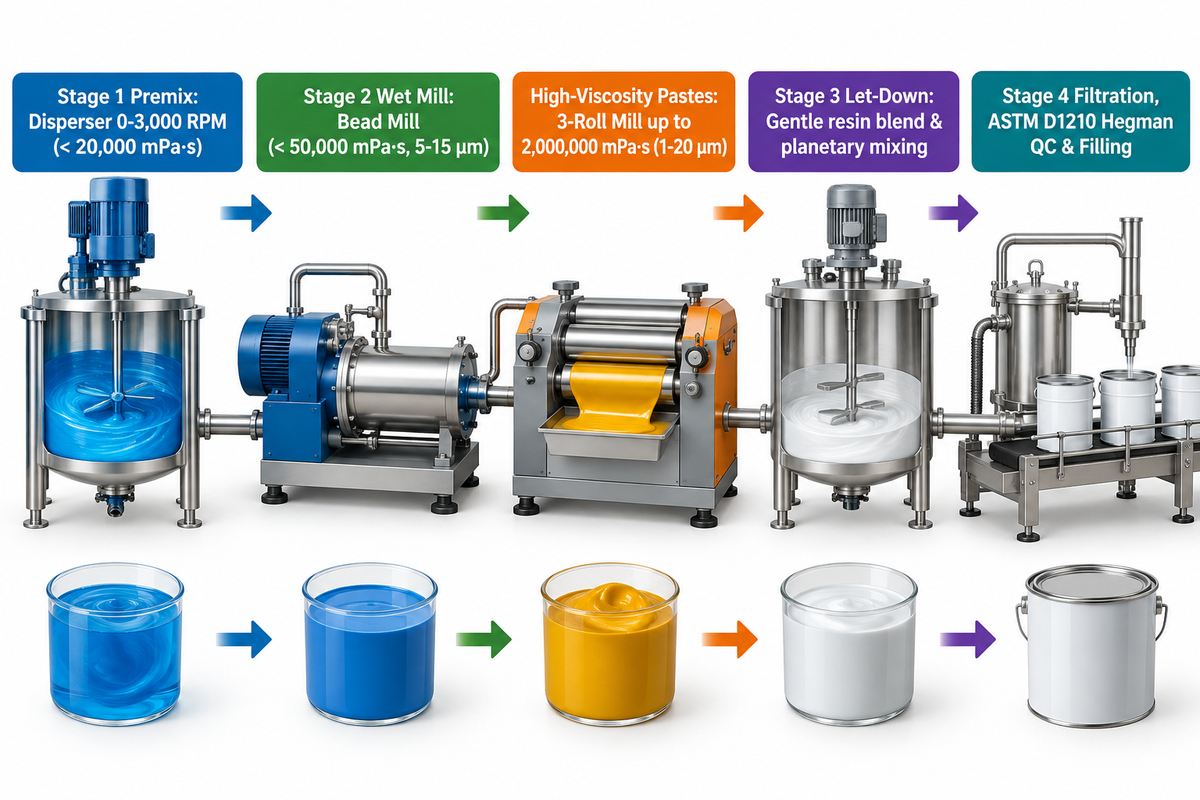
Before any coating reaches recoating prep or plant floors, factories manufacture chemical paint in four stages: premix wetting, fine wet grinding, let-down stabilization, and filtration/filling. Plants route batches by viscosity from high-speed dispersers (0–3,000 RPM, 0.5–500 kW) to horizontal bead mills (< 50,000 mPa·s) or hydraulic three-roll mills (1–20 µm fineness up to 2,000,000 mPa·s).
At the global supply level, the 2026 PCI 25 ranking (July 20, 2026, based on 2025 coatings sales) places Sherwin-Williams #1 in North America alongside global leaders PPG, RPM International, AkzoNobel, Axalta, Nippon Paint, BASF, and Jotun. Across heavy industrial applications, raw pigments arrive as agglomerates held by electrostatic forces and moisture bridges, so dispersion machinery determines whether a factory delivers a high-quality final product or a grainy batch.
As documented in granted USPTO Patent US9234107B2 for ambient-polymerizable vinyl coatings, commercial pigment dispersion pairs high-speed water-cooled pre-stirring with horizontal bead-mill grinding to prevent premature monomer polymerization and thermal degradation. An industrial paint line links four sequential production stages: premix and wetting; fine wet grinding; let-down and tinting; and filtration, quality control, and filling.
- Stage 1 — Premix & Wetting: Dry pigments, extenders, and dispersing additives are charged into resin and carrier inside a tank driven by a high-speed disc disperser to create a doughnut-vortex mill base (~30–50 µm).
- Stage 2, Fine Wet Grinding / Milling: Pumpable slurries move through horizontal bead and sand mills (or a batch basket mill for multi-color batches). Jiangyin IDA Equipment Co., Ltd.’s published specifications list a hydraulic three-roll mill for pigment pastes up to 2,000,000 mPa·s and 1–20 µm fineness, verified with an ASTM D1210 Hegman gage.
- Stage 3: Let-Down & Tinting: The milled base is blended with the remaining resin, solvents, rheology modifiers, and tinting pastes under gentle agitation to avoid air entrainment and thermal shock. Air isn’t allowed to be entrained and thermal shock is avoided.
- Stage 4: Filtration, QC & Filling: The finished paint passes through bag or cartridge filters to remove skins and grit, clears viscosity and gloss QC checks, and enters pails via gravimetric fillers. It undergoes checks for viscosity and gloss and is filled in pails using a gravimetric filler. Jiangyin IDA Equipment Co., Ltd.’s published Liquid Filling Machine handles 5–30 kg pails at 150–300 containers/hr within ±0.2% weight accuracy.
| Equipment Type | Viscosity Window | Typical Fineness | Published IDA Equipment Specs | Best Coating Application |
|---|---|---|---|---|
| High-Speed Disperser | Low to medium (< 20,000 mPa·s) | 30–50 µm (premix) | 0–3,000 RPM, 0.5–500 kW, VFD/PLC speed control | Premix wetting, architectural latex, primer mill bases |
| Horizontal Sand / Bead Mill | Pumpable slurries (< 50,000 mPa·s) | 5–15 µm (Hegman ~6.8–7.6) | Continuous water-cooled grinding chambers; see horizontal vs. vertical sand mill selection | High-volume automotive finishes, high-gloss industrial enamels, fine tint bases |
| Batch Basket Mill | Low to medium (< 30,000 mPa·s) | 5–20 µm | Combined premix and immersion media milling in one vessel | Small-to-medium multi-color batches requiring rapid solvent changeovers |
| Hydraulic Three-Roll Mill | High-viscosity pastes up to 2,000,000 mPa·s | 1–20 µm | ES50 (50 mm), ES80 (80 mm water-cooled), ES120 (120 mm water-cooled) | Concentrated pigment pastes, UV inks, heavy epoxy mastics where bead mills cavitate |
| Double Planetary / Butterfly Mixer | Heavy pastes & putties (50,000–1,000,000+ mPa·s) | Homogenization & de-aeration | Double Planetary XJB-5 (1.5 kW) to XJB-2000 (90 kW); Triple-Shaft 50–1,000 L | 100%-solids epoxy mortars, sealants, and high-viscosity paint mixing with a butterfly disperser |
Equipment parameters reflect Jiangyin IDA Equipment Co., Ltd.’s published product specifications; IDA validates scale-up viscosity and fineness targets through a 6-step customer laboratory sample trial before quoting full production lines.
Chemical Paint Cost Breakdown, Solids-Adjusted Pricing, and 2025–2026 Regulatory Shifts
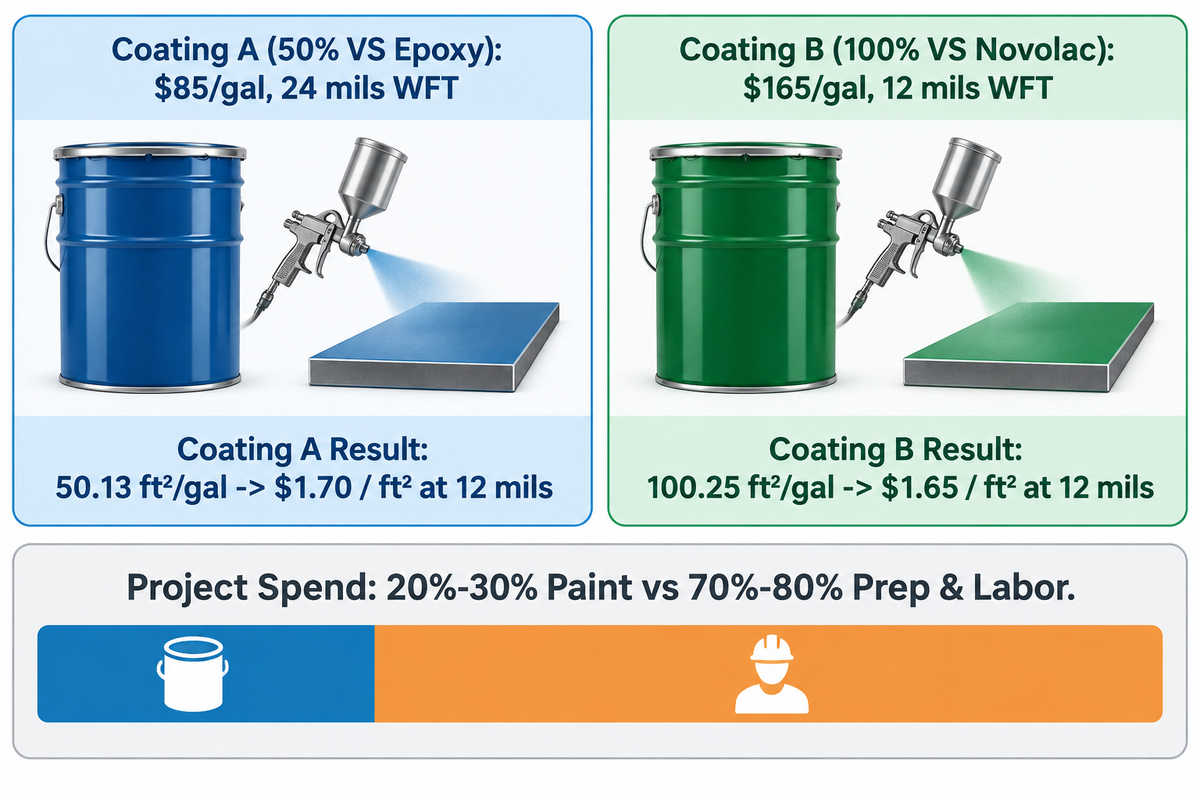
Once a coating batch leaves the dispersion line, paint materials represent only 20%–30% of an industrial painting project while surface preparation, labor, and overhead consume 70%–80%, according to William Hansen and Michael Brown in Plant Services. Comparing bids by wet gallon price instead of solids-adjusted cost per square foot routinely inflates project spend.
Solids-Adjusted Cost-per-Dry-Mil Formula and Worked Example
One U.S. gallon occupies 231 cubic inches (0.1337 ft³), spreading over exactly 1,604 ft²·mil/gal (1,604 square feet at 1 mil / 25.4 µm) if 100% of the gallon becomes solid film. Using volume solids measured under ASTM D2697-22, theoretical coverage equals 1,604 × Volume Solids (fraction) / Target DFT (mils). Projects then deduct transfer losses: Plant Services cites 5%–15% loss for brush and roller work and 15%–50%+ for spray application. Dampney’s coverage guide adds a 10% baseline waste deduction on smooth steel and up to 50% first-coat deduction on heavily pitted steel or porous masonry.
Hansen and Brown’s polyamide epoxy benchmark illustrates the trap cleanly. A $20/gal paint at 45% volume solids yields 722 ft²·mil/gal ($0.0277/ft² per mil), whereas a $25/gal paint at 75% volume solids yields 1,203 ft²·mil/gal ($0.0208/ft² per mil). At equal dry film thickness, the lower-priced gallon already costs 33.3% more in material per square foot. When the lower-solids specification requires 4 mils DFT ($0.111/ft²) versus 3 mils DFT ($0.062/ft²), material cost per square foot rises by 77.8%.
To isolate volume solids cleanly at an identical 12-mil tank-lining thickness, run this side-by-side calculation. Assumed inputs: Coating A is a 50% volume-solids epoxy at $85/gal, while Coating B is a 100% volume-solids novolac epoxy at $165/gal. Both target 12 mils DFT at 75% spray transfer efficiency (25% overspray and can loss). Coating A delivers (1,604 × 0.50) / 12 = 66.83 ft²/gal theoretical and 66.83 × 0.75 = 50.13 ft²/gal practical coverage, costing $85 / 50.13 = $1.70/ft² across 24 mils wet film (two to three coats). Coating B delivers (1,604 × 1.00) / 12 = 133.67 ft²/gal theoretical and 133.67 × 0.75 = 100.25 ft²/gal practical coverage, costing $165 / 100.25 = $1.65/ft² in one to two coats. That beats the cheaper gallon on material cost before counting potential labor savings; these figures isolate applied material cost only and exclude blasting, scaffolding, and disposal.
| Calculation Metric | Coating A (50% VS Epoxy) | Coating B (100% VS Novolac) |
|---|---|---|
| Assumed Wet Gallon Price | $85 / gal | $165 / gal |
| Wet Film Needed for 12 Mils DFT | 24 mils WFT | 12 mils WFT |
| Theoretical Coverage (1,604 × VS / 12) | 66.83 ft² / gal | 133.67 ft² / gal |
| Practical Coverage (75% Transfer) | 50.13 ft² / gal | 100.25 ft² / gal |
| Applied Material Cost at 12 Mils DFT | $1.70 / ft² | $1.65 / ft² (0–2 fewer coats depending on pass DFT; labor cost excluded) |
RFQ checklist — copy these parameters into your chemical paint or dispersion line quote request:
| Parameter | Recommended range | Why it matters | How to verify |
|---|---|---|---|
| Chemical exposure profile | Reagent name, exact wt%, max °C, gradient, splash vs. immersion | Prevents specifying Bis-A epoxy in concentrated acid or polar solvent duty | ASTM D6943-15(2024) or ISO 2812 immersion report |
| Volume solids & target DFT | Confirmed volume solids (%) and target DFT (mils) per service | Allows apples-to-apples applied cost per ft² at equal film thickness | ASTM D2697-22 certificate & DFT gauge audit |
| Jurisdictional VOC limit | Match the coating category, sales jurisdiction, and mixed as-applied limit (e.g., 450 g/L federal IM vs. 100 g/L SCAQMD) | Prevents air-permit stop-work orders after field thinning | Product SDS + ASTM D3960 mixed VOC calculation |
| Surface preparation spec | Steel cleanliness (e.g., ISO 8501-1 Sa 2.5) + anchor profile; concrete CSP per datasheet | Surface prep, labor, and overhead together account for 70%–80% of project cost; surface prep affects adhesion | Visual cleanliness check, replica tape profile & slab moisture test |
| Dispersion fineness (plants) | Target Hegman reading per coating spec (pastes 1–20 µm on 3-roll mills) | Coarse agglomerates drop hiding power, gloss, and barrier integrity | ASTM D1210-05(2022) Hegman gage batch log |
| Batch viscosity & cooling | < 50,000 mPa·s (bead mill) vs. up to 2,000,000 mPa·s (3-roll mill) | Prevents bead-mill cavitation and resin heat degradation during grinding | Pre-purchase lab sample trial with outlet temperature log |
| Waste & safety documentation | Flash point vs. 60 °C (140 °F), waste status, and isocyanate hazards | Waste status and flash point inform RCRA ignitability; spray formulation and exposure conditions govern ventilation and PPE | OSHA 29 CFR 1910.1200 SDS Sections 2, 8, and 9 & local waste audit |
2025–2026 Regulatory and Formulation Shifts Shaping Paint Chemistry
PFAS additive phase-outs and tightening regulatory limits, not commodity pricing, are the fastest forces reshaping industrial paint formulations heading into 2027. Writing in the American Coatings Association’s CoatingsTech, Crystal Morrison (The ChemQuest Group) reports that 3M, Clariant, and Micro Powders committed to phasing out PFAS-containing additives by the end of 2025.
Bio-based industrial resins have also moved from academic labs into marine vessel qualification. A 2025 peer-reviewed review in Polymers (MDPI) documents an ISCC PLUS-certified bio-based marine epoxy (CMP NOVA 2000 Bio, by Chugoku Marine Paints and Mitsui Chemicals) selected for a liquefied ammonia tanker scheduled for 2026 delivery. Renewable alkyd, acrylic, and UV-curable feedstocks from soybean oil, corn, sugarcane, and algae continue expanding in parallel. For aerosol coating products specifically, EPA’s 40 CFR Part 59 Subpart E reactivity limits transition prior to January 17, 2027. Teams qualifying 2026–2027 industrial coatings should request written PFAS-free confirmation and current VOC sheets upfront to avoid mid-project reformulation delays.
Frequently Asked Questions About Chemical Paint
Q: What chemicals are used in paint?
Paint combines four chemical groups: binders, pigments, solvents, and additives.
Typical liquid formulations contain 20-45 wt% synthetic polymer resins (acrylic, alkyd, epoxy, or polyurethane) and 15-45 wt% prime pigments and mineral fillers (such as titanium dioxide or barium sulfate). Water or organic solvents (such as mineral spirits or acetone) account for 15–50 wt%, while functional additives including dispersants, coalescents, defoamers, and biocides make up 1–5 wt%.
Q: What is the most non-toxic paint?
For occupied interiors, certified low-emitting water-based acrylic paints with compatible zero-VOC colorants can help reduce solvent emissions. Zero-VOC colorants are also available and help to further lower solvent emissions. For occupied interiors, certified low-emitting water-based acrylic paints paired with zero-VOC colorants help minimize solvent emissions, and For occupied interiors, certified low-emitting water-based acrylic paints paired with zero-VOC colorants help minimize solvent emissions, and Clare’s VOC guide notes most untinted zero-VOC bases contain less than 5 g/L of VOCs.
Always check the finished tinted VOC sheet and Safety Data Sheet for antimicrobial biocides, isocyanates, and solvents exempt from VOC regulation. Low-VOC labels regulate ozone precursors rather than every indoor inhalation irritant, and environmentally friendly bases can gain VOCs from conventional colorants. Low-VOC labels regulate ozone precursors rather than every indoor inhalation irritant, and environmentally friendly bases can gain VOCs from conventional colorants.
Q: What chemical melts or dissolves cured paint?
Acetone, dimethyl sulfoxide (DMSO), and benzyl alcohol can soften some cured thermoplastic films, depending on the resin chemistry.
Caustic sodium or potassium hydroxide strippers chemically break down oil-based alkyd resins through saponification, and crosslinked two-component industrial epoxies resist household solvents and require gel strippers or abrasive blasting. In the USA, consumer methylene chloride paint strippers remain banned under EPA’s 2019 rule even after the Fifth Circuit vacated EPA’s 2024 rule in September 2026.
Q: Is paint classified as hazardous chemical waste?
Discarded liquid solvent paint or spent thinner with a flash point below 60 °C (140 °F) meets EPA’s RCRA ignitability criterion in 40 CFR 261.21(a)(1) unless a stated exclusion applies.
Water-based latex paint without heavy-metal pigments typically falls outside federal ignitability criteria once dried solid, although local disposal regulations still govern liquid cans.
Q: What is the chemical formula for paint?
Paint has no single molecular chemical formula because each can is a physical mixture of distinct compounds, including solid metal-oxide pigments, high-molecular-weight organic polymers, volatile carriers, and trace surfactants, rather than one pure substance.
Rather than rely on a single chemical equation, coatings chemists define a batch using its formulation and Safety Data Sheet (SDS). A single industrial coating might suspend titanium dioxide (TiO₂) inside bisphenol-A epoxy resin cured with a polyamine hardener and thinned with xylene (C₈H₁₀) or water (H₂O). Changing pigment volume concentration by five percentage points alters permeability, gloss, and barrier life without changing any ingredient’s molecular formula.
Q: Can paint chemical fumes cause health problems?
Yes. Inhalation of high solvent vapor concentrations causes headache, dizziness and irritates the respiratory system.
Long-term workplace exposure to aromatic solvents or sprayed polyurethane isocyanates triggers neurological effects or occupational asthma, making exhaust ventilation and SDS-matched respirators mandatory.
Q: How do factories test whether paint pigments are properly dispersed?
Paint production plants test dispersion fineness during and after wet milling using a calibrated stainless-steel Hegman grind gage under ASTM D1210-05(2022), drawing wet paint down a tapered 0–100 µm groove to locate the largest remaining agglomerates.
0 on the Hegman scale corresponds to 100 µm, and 8 indicates particles that are below visual detection; high-gloss automotive and industrial enamels normally target 6.5-7.5 (~6-19 µm) on the Hegman scale. Quality teams perform Hegman checks along with rub-up color strength tests to determine if there’s any pigment flocculation. If pigment flocculation occurs then batch releases are denied. If sub-micron pastes do not meet the paint’s specification or the painter’s gloss requirement, the batches are also denied release.
References & Sources
- 40 CFR Part 59 Subpart D, National Volatile Organic Compound Emission Standards for Architectural Coatings U.S. Electronic Code of Federal Regulations (eCFR)
- Rule 1113 Architectural Coatings Table of Standards (VOC Limits) South Coast Air Quality Management District (SCAQMD)
- Risk Management for Methylene Chloride (Updated November 2026) U.S. Environmental Protection Agency (EPA)
- 40 CFR § 261.21, Characteristic of Ignitability (RCRA Hazardous Waste) U.S. Electronic Code of Federal Regulations (eCFR)
- ISO 12944 Standard Series Overview (ISO 12944-1:2017 to ISO 12944-9:2018) American National Standards Institute (ANSI)
- ASTM D1210-05(2022), Standard Test Method for Fineness of Dispersion of Pigment-Vehicle Systems by Hegman-Type Gage ASTM International / iTeh Standards
- Critical Pigment Volume Concentration (CPVC), Engineering Reference ScienceDirect
- Bio-Based Marine Epoxy and Sustainable Coating Formulations (Polymers 2025, 17(24), 3266) MDPI
- Global Megatrends Shaping the Paints and Coatings Industry (CoatingsTech) American Coatings Association (ACA)
- Water Miscibility Differences in Coalescing Agents and the Influence on Latex Paint Properties Paint & Coatings Industry (PCI) Magazine
- 2026 PCI 25: Top Paint and Coatings Companies (July 2026) Paint & Coatings Industry (PCI) Magazine
- How Much Does That Can of Paint Really Cost? Plant Services
- USPTO Patent US9234107B2, Ambient-Polymerizable Vinyl Coating Compositions and Bead Mill Dispersion United States Patent and Trademark Office
Scale Your Chemical Paint Dispersion Line with Confidence
Dispersion fineness of high-solids epoxies and waterborne acrylics, as well as concentrated pigment pastes, must be verified at the lab scale in order to establish process control for full scale production. Send us your viscosity range and preferred Hegman number to schedule a 6-step material test run.
About This Technical Analysis
This guide examines chemical paint formulation, VOC and RCRA compliance thresholds, pre-recoating paint stripping safety, and viscosity-based pigment dispersion. This is geared toward industrial plant engineers and buyers. Regulatory figures were verified against live November 2026 U.S. eCFR, EPA, and SCAQMD texts alongside published Jiangyin IDA Equipment Co., Ltd. disperser, bead mill, and hydraulic three-roll mill specifications. This was reviewed by the Jiangyin IDA Equipment Co., Ltd. technical team.