Get in Touch with IDA

How to Choose a Butterfly Disperser: A Comprehensive Guide to Butterfly Mixing and Dispersing

Contents
show
The process of selecting the butterfly disperser is of great significance, and if it is done right, it can bring about the desired mixing and dispersing in many industries such as the paint and coating industries, the adhesives and sealing industries, etc. The market indeed offers a broad range of options to choose from, but if you do not have a clear idea of application needs, material properties and process requirements, you might easily get confused with the selections. This comprehensive guide will lead you to acquire the required knowledge and capabilities to recognize the primary traits, technical specifications, and performance criteria that should be considered in a butterfly disperser. Whether you are enhancing your current system or buying new machinery, the information provided in this article will undoubtedly facilitate your choice, and the result will be secure and productive.
Introduction to Butterfly Dispersers
What is a Butterfly Disperser?
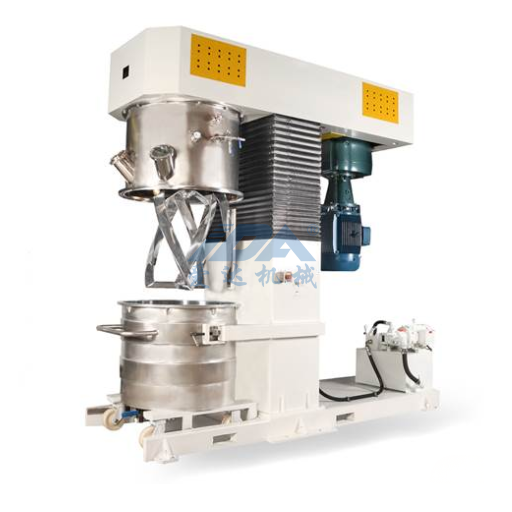
A butterfly disperser is an industrial device made specifically for the purpose of dispersing and emulsifying in the pharmaceutical, food, and beverage industries among others. Its distinct shape, which is likened to a butterfly, is one of the main characteristics of this product that enables it to produce the maximum shearing forces and turbulence during the operation. This quality leads to the quick and effective mixing of liquid with solid, thus producing a homogenous mixture with the same texture and quality all through. They are able to handle both thick and liquid materials which is the reason for their wide acceptance and use in many production lines. Apart from these, a butterfly disperser is quite easy to use since its performance-affecting parameters can be regulated, and the similar impacts can be obtained for different types of mixtures, thus reducing the possibility of user error significantly.
Applications of Butterfly Dispersing Mixers
The application of butterfly dispersing mixers can be found in numerous industries, and they are valued for their capability to handle difficult mixing jobs quickly and efficiently. In paints and coatings manufacturing, these mixers are mostly used for pigment, binder, and additive dispersion to the desired consistency and proper finish. At the same time, they have been incorporated into the cosmetics industry in producing creams, lotions, and gels because the high accuracy of mixing is a main quality feature of the product.
The drug and food sectors are gaining the most out of these mixers in the course of preparing pastes, syrups, and other types of viscous materials by complying with the stringent regulations regarding purity and consistency set by the authorities. Moreover, their capability of handling high-viscosity materials makes them ideal for adhesive production where the uniformity of the particle size distribution is of direct importance to the bonding performance of the adhesive. The versatility and adaptability of these mixers, together with the ongoing development of blade configurations and computational fluid dynamics (CFD) simulations, keep on confirming their status as a very important piece of equipment in modern manufacturing processes.
Importance of Choosing the Right Disperser
The selection of a suitable disperser is a key factor of the efficiency, consistency, and quality of the end product in manufacturing processes. Current trends in market research and industry analyses suggest that there is a growing recognition of the importance of understanding the specific application requirements and the material characteristics when making a choice of dispersers. The viscosity of the material, the particle size, the shear requirements, and the scale of production, are among the most important factors. The cutting-edge dispersers which are capable of altering blade configurations and are equipped with very precise control systems are designed to respond to these variables, thus driving energy consumption and the quality of output to the maximum. Moreover, the aforementioned technologies are in the performance assessment process, which allows producers to cut down on downtime and keep the quality of their products the same across the batch. Subsequently, choosing the right disperser is a key element that directly impacts operating costs, environmental policies, and the overall competitiveness of a production line, thus underscoring its importance in the industrial sphere.
Understanding Viscosity and Its Impact on Dispersing
Defining Viscosity and High Viscosity Materials
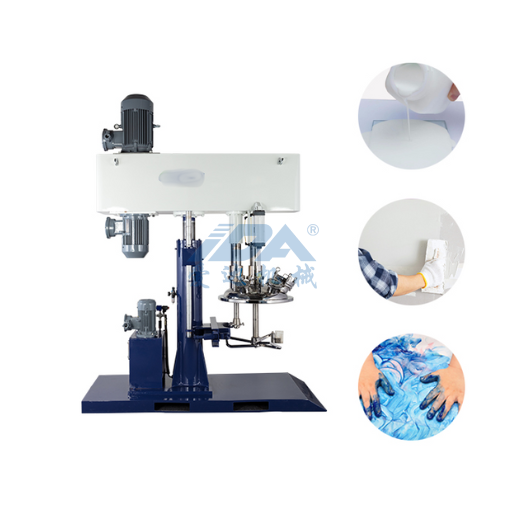
Viscosity is considered as one of the key physical properties and it indicates how much a liquid opposes its flow internally. The scale of viscosity is determined by the characteristic of the product to change shape or flow under shear or tensile stress and this is represented in different units like centipoise (cP) or Pascal-seconds (Pa·s). Water, for instance, is a low viscosity liquid that moves freely, while honey and industrial polymers are substances with high viscosity due to the great intermolecular attractions that flow very slowly. In the coating, adhesive, and cosmetic industries, high viscosity materials are of great importance as they permit accurate handling and processing and thus the production of goods with the expected performance characteristics.
Viscosity affects mixing efficiency, energy consumption, and equipment selection in dispersing operations. Dispersing technologies that are able to create enough shear to break down particles and achieve uniform distribution must be employed for processing high viscosity materials. This is crucial in areas where consistency of processing under controlled conditions is necessary for material integrity, homogeneity, and final product properties. So, knowing viscosity is a must for optimizing dispersing workflows and achieving industrial effectiveness.
How Viscosity Affects Mixing Efficiency
The influence of viscosity in the mixing process has been considerable and it is one of the determinants of the mixing efficiency in almost all industrial applications. High-viscosity fluids that resist flow heavily, need to be given more mechanical energy and specialized mixing equipment in order to realize the target uniformity of blending. Recent data state that a pattern of search trends reveals that there is considerable introspection into the use of advanced shear mixers with specific designs that can cope with high-viscosity materials. Those mixers provide enough torque and shear forces during the process. On the contrary, low-viscosity fluids are easily stirred and mixed with comparatively lesser power inputs which makes them inclined to be treated with simpler mixing technologies.
There is a non-linear interaction between viscosity and mixing that efficiency is very much affected by parameters like shear rate, temperature, and mixing system geometry, among others. Take, for instance, the case of heating systems being used in the mixing efficiency of high-viscosity materials. Mixing by elevating the process temperature can reduce viscosity thereby optimizing; or by using a dynamic rotor-stator assembly that creates localized high shear zones. The search data further highlights the rising importance of CFD (Computational Fluid Dynamics) simulations in the optimization of mixing parameters that are specific to particular viscosity ranges, thus increasing efficiency whilst maintaining product quality and consistency.
💡 Key Insight
Understanding and overcoming the obstacles posed by viscosity will allow the manufacturer to not only speed up the process, but also to save energy and achieve a higher overall system output, thereby integrating their practices with both operational and environmental sustainability goals.
Choosing a Disperser for Different Viscosity Levels
In order to select the right disperser for different viscosity levels, one must examine not only the material’s rheological properties but also the particular process requirements. For low-viscosity materials, high-speed dispersers with fine blades are the best choice since they create enough shear to disperse the aggregates and give a uniform distribution of the particles. High-viscosity materials, on the other hand, require a stronger impellers or specially designed dual-shaft or planetary mixers that can bear the increased resistance while still operating efficiently.
The most recent data gathered from search insights suggest companies often consider scalability, energy efficiency, and maintenance ease as top priorities when assessing dispersers for high-viscosity applications. Today’s technology is equipped with features such as variable speed control and torque monitoring which allow for very accurate adaptations to the specific material’s response thereby guaranteeing the same product quality even if the batch conditions change. Another solution that is becoming popular is the real-time viscosity monitoring using sensor-based systems that allows the manufacturer to automatically change operating parameters and attain optimal dispersion performance. Therefore, the combination of the right disperser with material characteristics and using the latest technical innovations can lead to great improvements in operational efficiency and product quality.
Technical Specifications of Butterfly Dispersers
Essential Features to Consider
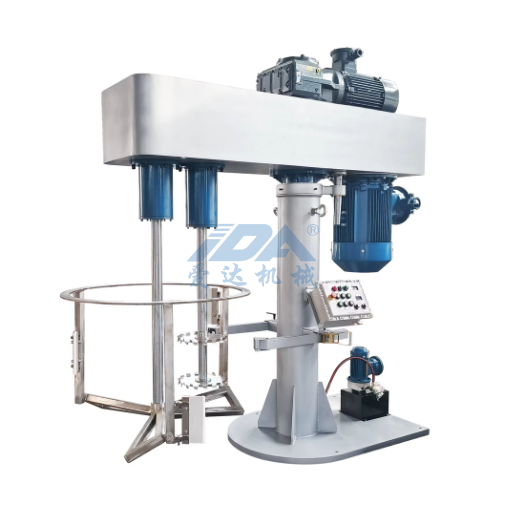
Analyzing crucial features is a must when evaluating butterfly dispersers to confirm they are appropriate for a certain material’s properties and operational requirements. The blade design and configuration are the main aspects that are considered since they have a direct impact on the shear forces that are applied during the dispersion process. In fact, many of the advanced models come with an option for adjusting the blades, which allows very precise tuning depending on viscosity and particle size distribution. The motor power is another factor that is very important, as the use of more horsepower makes it possible to have a more efficient handling of high-viscosity materials.
Consequently, it is usual for present-day dispersers to have automated control systems and occasionally even Human-Machine Interfaces (HMIs) incorporated that grant the ability to monitor and change the process in real-time. Safety precautions like overload protection, interlocked housings among others are a must for the alignment with the safety of the industry standards. Besides, energy efficiency and easy maintenance are the main issues for both cost control and operational time loss. Along with their strong data integration potential, these attributes not only help the makers to fulfill their dreams of high performance and scalability compatible with the most current industry trends.
✓ Essential Features Checklist
- ✓ Blade Design & Configuration: Adjustable blades for precise tuning based on viscosity
- ✓ Motor Power: Sufficient horsepower for handling high-viscosity materials
- ✓ Automated Control Systems: HMI for real-time monitoring and adjustments
- ✓ Safety Features: Overload protection and interlocked housings
- ✓ Energy Efficiency: Cost management and reduced operational downtime
Motor Power and Speed Requirements
The power and speed of the motor are the major factors that influence the optimization of industrial machines and equipment. The motor power is mainly determined by the load the motor has to handle, the operational efficiency desired, and the environmental conditions in which it will be working. A case in point is high-speed motors that are ideal for applications where speed and uniformity are the main requirements, like in centrifugal pumps, compressors, or high-speed conveyor belts. On the contrary, low-speed motors are generally preferred in the torque-demanding heavy-duty lifting or pressing operations.
Based on the latest data gathered through search engine insights, a trend of increasing adoption of advanced motor technologies like variable frequency drives (VFDs) can be observed. These VFDs allow the motors to alter their speed precisely based on the application’s operational demand and simultaneously ensure that no energy is wasted. Moreover, the industry search habits continue to reflect a preference for the energy-saving motors that would comply with the IEC 60034-30-1 and NEMA premium standards regulations, thus highlighting the market’s dedication to eco-friendly practices.
During the motor selection process, the first step for engineers is to determine the required torque and speed of the respective assignment and then to check if they are compatible with other mechanical components like gearboxes or transmission systems. Adhering to these requirements improves not only the performance of the system but also the lifespan of the equipment which is a significant factor in reducing maintenance and downtime costs. Today’s trend is to analyze specifications thoroughly to match motor characteristics with both the functional needs and the energy objectives.
Materials and Build Quality
The evaluation of materials and build quality for mechanical and electrical components should be based on the three following considerations: durability, performance, and ability to adapt to the operational conditions. The selection of materials such as high-strength alloys, corrosion-resistant metals, and advanced composites gives the guarantee of structural integrity and resilience throughout the entire operational life cycle. Modern techniques such as precision machining and additive manufacturing, among others, help to improve the accuracy and the reliability of the product that is sold at the end.
Recent search engine data has indicated that there is significant attention given to the sustainable and eco-conscious materials. This is a clear indication of the industry striving to come up with materials that will be able to perform as required while at the same time having no negative impact on the environment. For example, the use of recycled or biodegradable materials, if and where possible, can result in a sustainable supply chain without lowering the quality. The combination of robust materials and advanced construction techniques is the reason behind the production of tools that can meet the high demands and at the same time be energy-saving as well as eco-friendly.
Comparing Different Blade Configurations
Types of Blades for Butterfly Dispersers
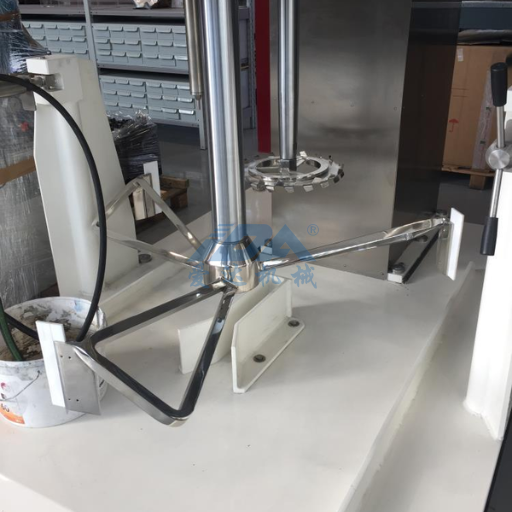
Butterfly dispersers depend upon different configurations of blades which are specially designed for the effective mixing and dispersing of materials. The different types of blades basically include single-blade design, dual-blade system, and high-efficiency hybrid blades.
The choice of blade configuration is made on the basis of the above-mentioned factors such as viscosity of the material, speed of processing, and the quality of the end-product that is to be obtained. Recently, blade technology has made impressive strides that go hand in hand with data from computational fluid dynamics (CFD) simulations underscoring the technical merit of engineering blades that not only consume energy efficiently but also have a longer life. By employing contemporary innovations, the manufacturers can set both performance objectives and operational sustainability limits.
Impact of Blade Design on Dispersing Efficiency
Blade design has a direct impact on the dispersing efficiency as it lays down the rate of shear, flows patterns, and energy transfer in the mixing medium. Recent data, together with insights from search engine, asserts the importance of blade geometry in getting maximum dispersion. It is in particular, the blade’s angle, tip speed, and edge profile that determine the material shearing and mixing uniformity. For example, a correctly contoured blade can eliminate dead zones, which means that all material will be subjected to shear forces and thus, it will be effective even in case of high-viscosity or non-Newtonian fluids. At the same time, introducing advanced materials and coatings into the making of blades not only results in less wear during operation but also makes the blades last longer, and this is actually what the industry demands in terms of cost efficiency and sustainability.
By performance data monitoring and blending CFD findings with real evidence, manufacturers can work on the improvement of the blade designs to combat the issue of specific dispersing. This kind of methodology not only consumes less energy but also results in the improved quality of the final product — this is a very important consideration in all industries, from coatings to pharmaceuticals.
Choosing the Right Blade for Your Application
The process of selecting the right dispersing blade for a specific application involves very deep and thorough understanding of material properties, process requirements, and desired results. As per the most recent news, the parameters like viscosity, shear requirements, and particle size reduction needfuls are the most influential ones in blade selection. Usually, for low-viscosity liquids, best results will be obtained through the use of high-shear blades with fine edges, whereas for high-viscosity materials notched or serrated blades may be required to attain good flow and dispersion. In addition, the speed and torque ratings of the mixing equipment must be matched to the design of the blade in order to prevent inefficiencies or wear in operation. By using the mentioned parameters in conjunction with computational modeling tools and performance data, the users can take well-informed decisions that lead to high dispersion and processing consistency.
Types of Dispersers: Vacuum vs. Hydraulic
Vacuum Type Dispersers: An Insight
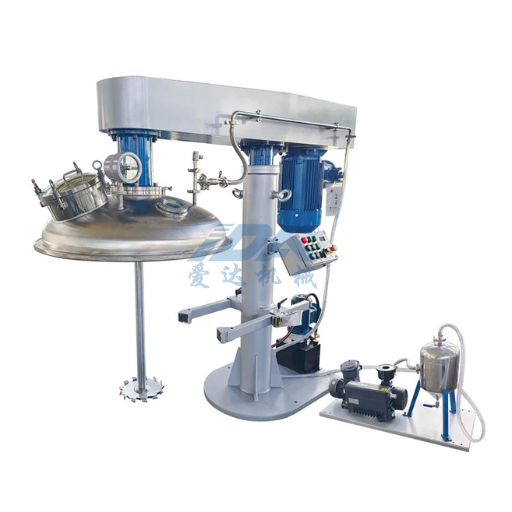
The vacuum type dispersers are a kind of mixing system that works on the basis of the vacuum. They process the materials in the controlled environment of vacuum where the materials get mixed perfectly, and no air bubbles get trapped in the process. By using the vacuum technology, the quality and the stability of the final product are greatly increased as the mixing of the viscous materials is done very well, and the air is not allowed to get in.
The latest statistics show an increasing requirement for vacuum dispersers in the pharmaceutical, coatings, and adhesives industries where air elimination is necessary for maintaining the product’s quality. This demand is mainly due to the fact that they are able to deal with high-viscosity materials with a very low risk of contamination or degradation. Modern vacuum dispensers are also provided with sensors and control systems that can be automated, thus having precise control over such parameters as temperature, pressure, and mixing speed. These advancements not only promote processing efficiency but they also make it possible to comply with the stringent quality standards of the highly regulated industries.
When evaluating a vacuum disperser, the power needed, the size of the container, and the compatibility with some material properties should be taken into account. Having the most up-to-date technical specifications and industry data readily available can be very helpful in making the right choice and guaranteeing that the machine fits in with the difficult production needs.
Hydraulic Dispersers’ Advantages
In modern industrial scales, hydraulic dispersers still provide numerous vital advantages that render them indispensable. Their power to deal with high-viscosity materials has always been their strongest point. Up to now, while working with such tough forms as adhesives, sealants, or even pigmented coatings, no mixing and dispersion can be thorough if not done with the hydraulic dispersers. Their advanced hydraulic systems are always giving consistent power which enables accurate control over shear forces and agitation speeds. This leads to particle size reduction and homogeneity that are coadunate and therefore it eventually translates to maintenance of product quality and performance.
The energy-saving attribute of hydraulic dispersers has been one of the major aspects in the latest thorough industrial data which was gotten from the review of new techniques justifying their further progression in softening the process and making it more adaptable. The modern temperature control units and energy-efficient motors are the means by which hydraulic dispersers minimize their power usage while keeping the output at top quality. They can also be designed to fit the specific process requirements for example, the production system could be made applicable for either batch or continuous production by making it scalable. This level of flexibility and efficiency makes hydraulic dispersers the most sought-after solution in various industries that require high and reliable performance as well as strict adherence to production standards.
Vacuum vs. Hydraulic Dispersers: Quick Comparison
Vacuum Dispersers
- Eliminates air bubbles
- Ideal for pharmaceuticals and coatings
- Precise temperature and pressure control
- Prevents contamination
Hydraulic Dispersers
- Superior for high-viscosity materials
- Consistent power delivery
- Energy-efficient operation
- Scalable for batch or continuous production
When to Use Each Type
The hydraulic disperser selection is based on the needs of the application including material characteristics, size of the batch, and output. High-speed dispersers are perfect for those cases where rapid mixing and particle size reduction are needed like in the areas of production of paints, coatings, or adhesives. They can take on and process low and medium-viscosity materials and also perform in uniform and efficient dispersions.
On the other hand, dispersers that operate at a slower speed are used preferably in the case of an ultra-viscous material and when gentle mixing is necessary for the sensitive components not to get damaged. They find their use mainly in cosmetic products, sealants, and thick emulsions.
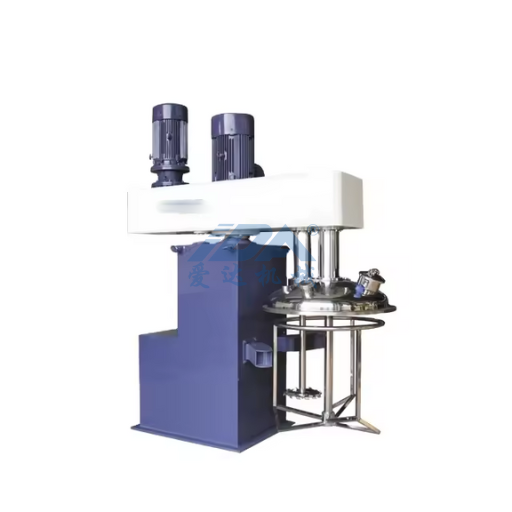
For the cases where there is a need for flexibility, dual-shaft or multishaft dispersers can be regarded as a convenient solution. They can do high-speed dispersing and low-speed stirring at the same time, thus giving the best out of complicated processing situations that involve ingredients not only with different viscosities but also with different temperature sensitivities. If the disperser type is in accordance with the particular production parameters, manufacturers are able to maximize their operational efficiencies and remain consistent with quality standards.
Frequently Asked Questions (FAQ)
❓ When should I choose a high-speed disperser instead of a butterfly disperser?
A high-speed disperser is the best option for you if you want to achieve quick shear and eliminate pigments and agglomerates very fast, particularly for low to medium viscosity formulations where speed dispersers do the best job. Usually, a butterfly dispersing mixer or planetary dispersers are the ones that are capable of handling higher viscosity or thixotropic materials with ease since their techniques of merging like scraping and rotating are the ones that are really-required in such cases to ensure that wall scraping is done and a mixture that is the same is obtained. Think about whether you need high speed or ultimately power, as units of high-speed dispersers provide the benefits of speed dispersers but butterfly mixers give better mixing action for products that are putty-like. It is a good idea to review the production process requirements to figure out if speed or gentle but thorough dispersion is the priority. The choice of vacuum type configurations can also be a factor that influences the decision based on emission control and quality requirements.
❓ What is the difference between a high-speed disperser, a shaft mixer, and a planetary mixer in terms of their respective roles?
Planetary mixers have a three-dimensional intensive mixing feature and are specifically applied in the case of viscous, paste-like materials where mixing needs to be done homogeneously and hence, planetary dispersers or planetary mixer action is used. When compared to a high-speed disperser, planetary mixers had a more thorough mixing of materials because of the scraping mechanism that reduced dead zones and improved wall scraping, consequently making them suitable for extremely high viscosity products. Shaft mixers and single shaft designs are less complicated and more cost-effective but may not deliver the same mixing impact or uniformly required for sophisticated formulations. Find out if the application is vacuum type or scraper-equipped agitator for maximum results. Industrial mixing decisions should also consider the trade-off between maintenance, safety, and the ability to mix and disperse across different viscosity ranges.
❓ When choosing a disperser, how significant is the architecture of the shaft and the disc for dispersing?
Shaft design and dispersing disc influence the shear distribution, the mixing action, and the processing of materials with different viscosities considerably. A well-designed shaft disperser with the right dispersing disc can process a wider range of viscosities and increase the dispersion in the ink and coating industries. Analyze if it is necessary to have a shaft with attached scrapers or a disc with the stylus mixer design to avoid the material accumulation and to ensure the mixing quality through wall scraping. The option affects the speed and power requirements and the overall capacity to mix and disperse the materials in line with the production process requirements. Besides that, check for compatibility with safety measures, and do you need valve or vacuum integrations for your flow?
❓ Will a vacuum type butterfly mixer be able to process thixotropic or sensitive materials better?
The application of the vacuum type butterfly mixer can lead to very good results in the case of thixotropic and sensitive materials as it not only cuts down on the air incorporated but also helps to achieve the uniformity of the viscous formulation. The operation under vacuum facilitates the elimination of bubbles which spoil the appearance and properties of the product and this is particularly important in putties, glues, and specialty inks. The butterfly mixer’s actions of scraping, dispersing, and mixing together with vacuum de-airing are all major factors leading to a consistent mixture and optimal mixing effect. It is essential to consider whether the equipment available can adjust the speed and pressure to match the production requirements. Having safety features like emergency stop buttons and secure valves is very important when working with vacuum systems in industrial mixing.
❓ What specifications should I check before buying a butterfly disperser for industrial mixing of viscous materials?
You should look for a system that gives you the possibility to select a power level and speed is adjustable according to the viscosity range, sturdy construction of the shaft and disc to withstand the abrasion, and a good scrapper or wall scraping type that comes with the machine to keep the mixture homogeneous and free of buildup. You will avail of the advantages such as the vacuum, safety features, and emergency stop buttons for the butterfly disperser that will make it more fit for the production process and also give you safer operation. The selection of a planetary mixer over a single shaft mixer will influence the mixing of the materials you process and the machine’s compatibility whether it is for thinning or extremely high viscosity products. The equipment’s extensive use in your sector for instance ink or coatings will guarantee that you are relying on an established performance. In addition, consider the maintenance needs and the availability of valves or fittings that coincide with your workflow.
📋 Pre-Purchase Specifications Checklist
- Power and Speed Adjustability: Ensure variable settings match your viscosity range
- Shaft and Disc Construction: Check for abrasion-resistant materials and robust design
- Scraping Mechanism: Verify wall scraping capabilities for homogeneous mixing
- Safety Features: Confirm presence of emergency stop buttons and overload protection
- Vacuum Compatibility: Assess if vacuum functionality is needed for your application
- Mixer Type Selection: Determine between planetary, single shaft, or dual-shaft based on material characteristics
- Industry Track Record: Research equipment performance in your specific industry (inks, coatings, etc.)
- Maintenance Requirements: Evaluate ease of maintenance and availability of replacement parts
- Additional Fittings: Check for necessary valves, pipes, and integration options
Conclusion
The choice of the best butterfly disperser is a very important decision which has a decisive influence over product quality, efficiency of operation and the overall success of the manufacturing process. By taking into consideration all the application requirements that apply to your particular case, such as the viscosity of the material, processing needs and production size, you will be able to point out the disperser type that would be the best fit for your needs. In case you choose a vacuum-type system designed for air-free processing, a hydraulic one for high-viscosity materials, or a specially designed blade for even shear distribution, the main thing is to correlate the capabilities of the equipment with your business goals.
Present-day butterfly valves fitted with state-of-the-art control systems, energy-saving motors, and customizable impeller designs provide unparalleled accuracy and performance. The combination of computerized fluid dynamics (CFD) simulations, real-time monitoring, and automatic adjustments has converted these systems into highly skilled devices that can deal with difficult mixing problems with lower energy use and higher consistency production.
While proceeding with your equipment selection or upgrade, it is important to first consider the features of adjustable speed control, good construction materials, good safety systems, and easy maintenance. Investing time in a proper evaluation process and having the latest technology will result in a factory with greater productivity, better quality of products, and a longer-lasting competitive edge in your industry.
📚 Reference Sources
- A Meta-Analysis of Dispersal in Butterflies
Wiley Online Library – Comprehensive analysis of butterfly dispersal behaviors and ecological implications - Dispersal Behavior and Its Implications for Reserve Design in a Rare Oregon Butterfly
Conservation Biology – Wiley Online Library – Research on butterfly dispersal and conservation applications - Ranking the Ecological Causes of Dispersal in a Butterfly
Ecography – Wiley Online Library – Investigation of ecological factors driving butterfly dispersal - Butterfly Disperser Mixer