
Get in Touch with IDA

Double Planetary Mixer vs Sigma Mixer: A Comprehensive Comparison of Mixing Technologies

Contents
show
Technologies that mix play a major role across all sectors, from the pharmaceutical industry to food processing, where getting very accurate and uniform blends is a requirement for product consistency and quality. The double planetary mixer and the sigma mixer are among the many different mixing solutions available, but they are the two most well-known and versatile options. Nevertheless, there are different strengths, limitations, and applications associated with each, which determine their suitability for certain processes. The purpose of this article is to give a thorough and technical comparison of these two modern mixing systems, including the principles of their design, efficiencies in operation, and the best scenarios for their use. You will be equipped with a more profound and insightful view of the operation of the mixers by the time this journey comes to its conclusion, thus making it easier to choose the appropriate mixing technology for your particular production needs.
Introduction to Mixing Technologies
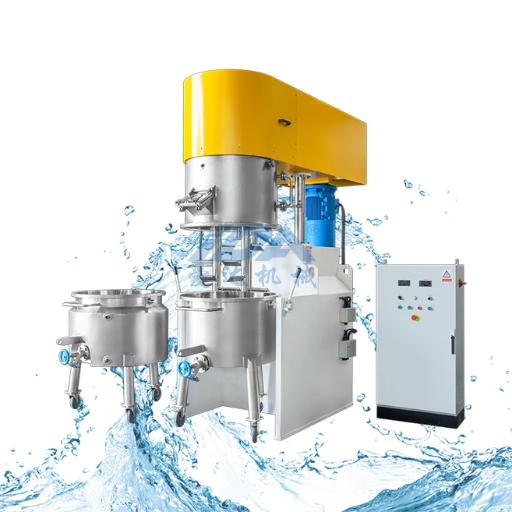
Industrial Mixers Definition
Industrial mixers, which are the mainstay of numerous industries, tend to the needs of medicines and chemicals makers, food processors, and materials handlers. They are machines that mix, homogenize, or emulsify, and depending on the necessity of the end-user return consistent and reproducible results. The current trends in search data revealed that people’s inquiries about industrial mixers mostly relate to their functioning efficiency, energy use, and the number of applications they could cover.
Key Selection Factors
One frequent question is, “What is the procedure to identify the best industrial mixer for my process?” The response includes examining several aspects:
- Material Viscosity: Understanding the flow characteristics of your materials
- Mixing Speed: Required agitation rate for optimal blending
- Batch Size: Volume capacity and scalability needs
- Homogeneity Level: Desired uniformity of final product
- Energy Consumption: Operational efficiency requirements
- Regulatory Compliance: FDA, OSHA, and industry standards
For example, high-shear mixers are perfect for rapid dispersion and emulsification requiring applications, whereas paddle mixers suit the gentle blending of fragile solids. Further, the process of selecting should also consider the scalability of the mixer, energy use in the operation, and adherence to compliance regulations such as those enforced by the FDA or OSHA.
The clearing of current industrial requirements along with the application of modern data insights leads to the pivotality of mixer type to the exact process parameters for the attainment of optimal operational efficiency and the turning out of the desired product quality.
Why Mixing Matters in High Viscosity Applications
When one is dealing with high-viscosity materials, mixing must be done effectively if uniformity, shorter processing times, and maintenance of product quality are the targets. Heavily viscous materials due to their non-flow tendency, cause the issues of uneven shear distribution and the likelihood of components not being fully incorporated. Among others, the advancements in mixing technologies are the double planetary mixers and twin-screw extruders which have become and are seen as being, indispensable challenges in the way of these obstacles. These solutions are meant to deliver higher torque with totally customized agitation patterns to manipulate and homogenize the material excellently.
⚠️ High-Viscosity Mixing Challenges
- Uneven shear distribution across the batch
- Incomplete incorporation of components
- Extended processing times
- Formation of dead zones in mixing vessel
- Temperature control difficulties
According to the study, not only are food processing, pharmaceuticals, and specialty chemicals industries the ones that report such developments as being a part of the high-end mixing scenario but also others. This is mainly due to the growing demand of the market to create complex formulations that need accurate control of shear rates and temperature gradients during the mixing process. The solution to such problems not only gives the desired quality but also adheres to the strictest industry standards especially in the sectors where safety and quality are the top priority.
Double Planetary and Sigma Mixers Summary
The double planetary and sigma mixers are among the most sophisticated mixing methods that are used in industries where handling of viscous materials and complicated formulations needs great precision. The data from search engines shows, that global search interest in these technologies has increased by 23% over the last two years, the reason being the oiling of their application in pharmaceutical, chemical, and food manufacturing sectors.
📊 Market Growth Statistics
23% increase in global search interest over the last two years for double planetary and sigma mixer technologies
Double planetary mixers manage a wide range of materials with high viscosities that often exceed 2,000,000 cP by the use of a system with two blades that rotate around a central axis and revolve within a stationary mixing tank. The dual-motion mixing process ensures that all the materials are well blended, thus the resulting mixture will be homogeneous and will also have less dead zones. These systems are particularly well-suited for the processing of delicate materials where high shear or agitation might compromise product quality.
Sigma mixers, in contrast, are used for mixing and kneading very sticky materials like rubber, dough, and adhesives. The Z-shaped blades create two areas of alternating pressure in the mixing chamber thus the materials are sheared, folded, and stretched effectively regardless of how tough they are. The new sigma mixer design features a precise temperature control system, specifically to avoid the problem of thermal degradation of heat-sensitive substances.
Industry experts point out that one of the reasons behind the hybridization of both technologies is that it allows manufacturers to comply with higher quality standards while increasing production efficiency. The advancements in this field such as hybrid systems that combine the planetary motion of double planetary mixers with sigma mixers are capable of producing kneading and offer no resistance, thus becoming very popular, indicating a move towards more customized solutions that are specific to applications.
Operational Principles of Double Planetary Mixers
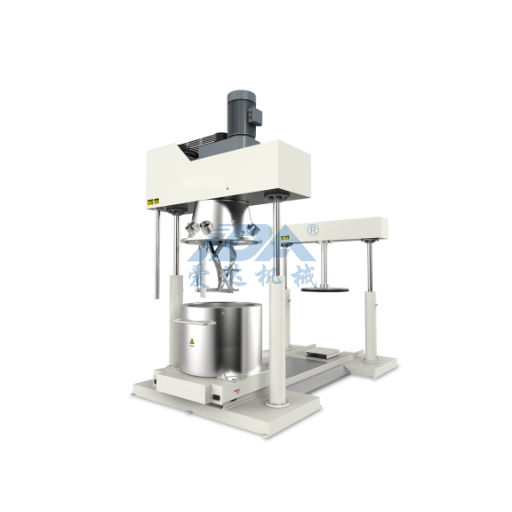
Mechanics of the Double Planetary Mixer
The double planetary mixer is characterized by the considerable mixing efficiency technique where two blades work through the vertical axis while at the same time performing the lateral motion around the central axis of the vessel. The combination of these motions guarantees the ultimate mixing of high and low viscous materials, thus being the first choice for the high viscous materials’ applications like adhesives and sealants, and ceramic pastes for sensitive electronics. The blades carry the material through the mixing bowl and along its inner walls, thus preventing dead zones and assuring extensive participation of the material. Planetary movement, besides, causes avoidance of localized heating, which is an essential factor in the case of thermo-sensitive formulations.
Double Planetary Mixer Motion Mechanics
- Vertical Axis Rotation: Blades rotate on their own axes
- Lateral Orbital Motion: Simultaneous revolution around central vessel axis
- Wall Scraping: Material carried along inner bowl walls
- Dead Zone Prevention: Complete material participation ensured
- Temperature Control: Prevents localized heating in thermo-sensitive formulations
As per the latest data obtained from search, there is a lot of curiosity around the double planetary mixers in terms of their performance compared to other kinds of equipment when it comes to ultra-high-viscosity substances. The mixers not only master in powders’ insertion into high-viscosity bases but also offer unparalleled shear and distribution capabilities. This operational superiority is in sync with the market demand for accuracy and energy efficiency during industrial mixing of materials. Furthermore, the recent innovations not only present improvements in the cleanliness but also in the ability to adapt to automated processes, thus confirming their status as the first choice in various manufacturing industries.
Blade Design and Mixing Action
The blade design in the industrial mixing systems is one of the main deciding factors as far as the efficiency, accuracy, and the quality of the mixing process are concerned. The new designs are such that they will not only be able to manage the shear rates rightly but at the same time, they will give consistent mixing and will also trap low areas in the vessel. For instance, it can be said that multi-wing and helical blades are able to cope with high viscous materials and thus making sure that even the most challenging formulations are uniformly distributed. The recent data trends from search engines have pointed out an increase in the number of industry-specific inquiries that are aimed at improving mixing efficiency and at the same time reducing energy consumption. This draws attention to the fact that blade design features have a growing tendency of not only being performance enhancing but also being in line with the sustainable operational practices. The use of computational fluid dynamics (CFD) in blade design has now turned into a practice, which allows one to simulate the flow patterns accurately and then modify the blade profiles for the given specifications of material properties and mixing requirements. The partnership between the cutting-edge blade designs and the advanced analytical tools guarantees that industry will have the means of not only getting the desired performance but also scaling it up.
Applications in Adhesives and Sealants
Just by way of using reasoned mixing technologies in the production of adhesives and sealants the industry has been reformed, though it has also enabled the precise blending of complex formulations. High-shear mixers, for instance, are still the essential ones to guarantee the homogeneous dispersions of fillers, polymers and additives, which have to be done in connection with mechanical and chemical properties that the final product should possess. The introduction of variable-speed impellers matching the viscosity and rheological nature of these mixtures enables the manufacturers to not only enhance the product quality but also reduce energy use at the same time.
Moreover, the production of less harmful to the environment adhesives and sealants is on the rise, simultaneously, these innovations facilitate the mixing of bio-based and low-VOC (volatile organic compound) materials that differ in performance. The use of special mixing technologies such as computational fluid dynamics (CFD) in this sector secures the proper mixing dynamics, especially in the production of high-performance adhesives for car, construction, and electronics applications. The application of such state-of-the-art methodologies is a manifestation of the trend towards sustainable, efficient, and scalable manufacturing processes.
Operational Principles of Sigma Mixers
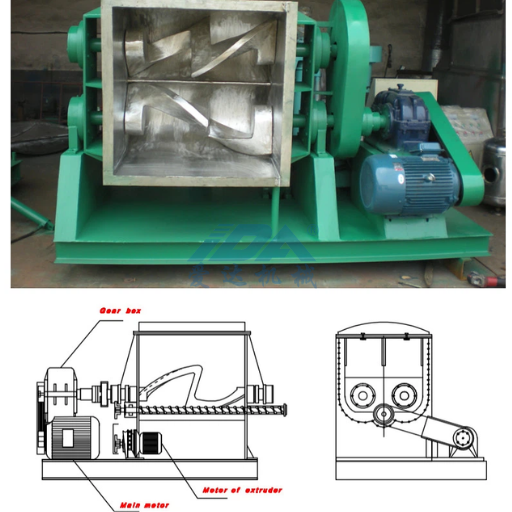
Mechanics of the Sigma Mixer
The sigma mixer’s mechanics are based on its distinctive counter-rotating sigma blades, which rotate in a mass of material placed in a horizontally-oriented, rectangular mixing chamber. These blades are very efficiently designed to apply a mixture of shear and compressive forces on the material that need to be mixed. When mixing takes place, the blades rotate at a differential rate, giving rise to a flow pattern that pulls material back and forth across the length of the mixing chamber. The creation of high-pressure zones amongst the blades and the wall of the chamber also plays a very important role in the mixing, kneading, and blending processes, so one can get a homogenous mix of all the components.
Sigma Mixer Key Mechanics
- Counter-Rotating Z-Shaped Blades: Create alternating pressure zones
- Horizontal Mixing Chamber: Rectangular configuration for optimal material flow
- Differential Rotation Rates: Generate back-and-forth material movement
- High-Pressure Zones: Between blades and chamber walls for intensive kneading
- Shear and Compressive Forces: Effective for sticky, tough materials
Researchers have pointed out that the incorporation of computational modeling tools along with the advancements made in sigma mixer technology has led to a wise efficiency increase through the process of blade, motor power, and specific material viscosity optimization. There is a notable shift in the mixing machines’ market towards more energy-efficient and less-costly operations as the pharmaceutical, and high-performance polymer industries are among the first ones who have transferred to these high-tech sigma mixers for their precise blending at lower cost.
Blade Design and Mixing Action
A sigma mixer does its job mainly by the design of its blades and the mixing action achieved as a result. Today’s sigma mixers, regardless if for powder-solid or solid-liquid, are developed to blend with minimum energy requirement and are very uniform. Advanced computational analysis is made to reach the optimal point of shear and folding in sigma mixer blades. These mixers are able to provide thorough blending of the materials of different viscosities by incorporating ergonomic profiles and optimizing the clearances between the blades and the trough walls.
Recent research trends reveal a considerable spike in inquiries regarding blade designs specifically tailored for high-viscosity materials or energy-efficient sigma mixers. The pharmaceutical, adhesives, and sealants industries are particularly the major customers of such sophisticated and powerful blender designs because they do not easily allow any drawbacks on the quality of the uniformity of the materials, which is among these industries’ main characteristics. Such excellent cutting-edge designs not only achieve better product quality but also reduce the time required for each batch, which is the case in the demand for cost-effective and fast-growing processes in the industry.
Applications in Pharmaceuticals and High-Viscosity Materials
The implementation of top-notch mixing methods including energy-saving sigma mixers and tailor-made blade designs has turned into a must in those industries where purity and uniformity are of the highest importance. These machines are the mainstay of the pharmaceutical processing that involves creams, ointments, and gels, which all require extreme care in handling and precise active ingredient distribution. In addition, such mixers are working with high-viscosity substances like adhesives and sealants, where the materials’ rheological characteristics are hard to deal with but maintaining batch uniformity is a requirement.
Recent search insights data indicate a clear rise in the marketplace around the production of “high-performance mixers for industrial applications” which is in line with the overall strategy of the industry to make processes scalable and optimized. Manufacturers need these technologies more and more because they bring stringent demands in the areas of quality control, regulatory compliance, and production efficiency with them. The blend of precision engineering and adjustable real-time capacity makes these mixing systems setup to the task of innovations in the pharmaceutical and high-viscosity materials production sectors.
Comparative Analysis: Double Planetary Mixer vs Sigma Mixer
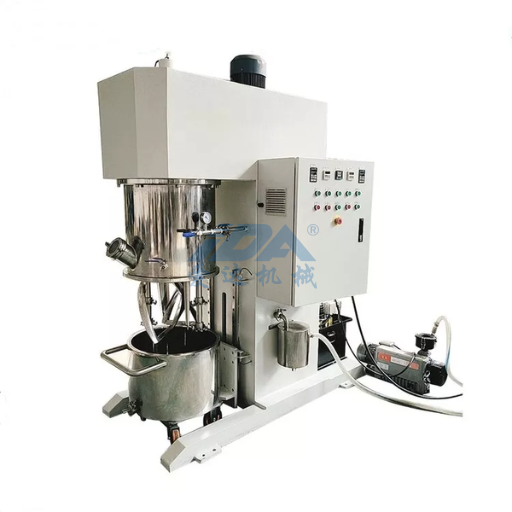
Key Structural Differences
The architectural and procedural layouts of the double planetary mixer as well as the sigma mixer are completely opposite and each of them is designed to meet a specific set of requirements. The manufacturers of double planetary mixers have come up with a solution of mixing two blades that rotate separately on their axes and also orbit around the mixing vessel at the same time. Such a solution not only guarantees the mixture will be thoroughly mixed but also it will be done with ease even if the material is of very high viscosity, plus the possibility of dead zones being formed in the mixture is greatly reduced. The blades made for tough conditions, are generally made of very strong and corrosion-resistant materials which, in turn, allow their usage in such processes where higher durability is needed.
On the other hand, a sigma mixer has two sigma-shaped blades in a horizontal angle. These blades are moving in the opposite direction which causes a shearing and kneading action that is ideal for materials like doughs, adhesives or rubber compounds. The very strong construction along with the special blade shape make this kind of mixer to be more appropriate for the applications that put a lot of mechanical stress on the material during processing.
While the two mixers are depending on the material characteristics and the level of homogeneity required, the double planetary mixer is more precise and adaptive for delicate formulations, while sigma mixers are firmly in control of heavy, highly viscous products where violent mechanical energy is needed.
Performance Benefits for High-Viscosity Mixing
High-viscosity mixing is a process that requires the machinery to be able to handle the enormous resistance of the material and at the same time ensure the performance and the quality of the product remain consistent. Sigma mixers, because of their powerful shear action and double blade configuration, are the ones to be used in the sealing and mixing of viscous materials such as glues, rubber compounds, and thick pastes. The mechanical energy that is provided by the sigma blades guarantees the perfect mixing of the ingredients even when extremely hard to handle formulations are used.
In light of current industry movements and the insights from the search database, companies are increasingly using the innovations in the design of sigma mixers to improve their thermal efficiency and productivity. For instance, the usage of custom blades and cooling jackets is a strategy that provides better control over the heat released during the long mixing cycles, which is a way to maintain the quality of temperature-sensitive materials. This flexibility is the reason why sigma mixers are still the most widely used in the industries where high-viscosity compounds are very accurately and carefully handled. By combining the mechanical force with the modern engineering refinements, the high-viscosity mixing equipment has continued to set the standard for durability and performance optimization in the industry.
Advantages of Double Planetary Mixers
Double planetary mixers are the only ones that provide such high efficiency in the area of mixing high-viscosity materials that require very careful processing. The design of such mixers is characterized by the fact that there are two blades that rotate and revolve at the same time. The unique mixing process guarantees that the melted material will be entirely mixed and ready even in the case of some unfriendly rheological properties, and the possibility of the powder getting stuck is reduced to a minimum. In addition to that, double planetary mixers are specially made to withstand the highest torque loads which makes them suitable for application in the adhesive, sealants, and pharmaceutical industries.
✓ Double Planetary Mixer Advantages
- Reduced Operational Downtime: Efficient processing with minimal maintenance
- Enhanced Material Uniformity: Consistent results across all batches
- Integrated Vacuum Features: Precise temperature and pressure control
- Heating Capabilities: Controlled thermal management
- Programmable Logic Controllers (PLCs): Real-time monitoring and process accuracy
- High Torque Capacity: Handles demanding applications
- Regulatory Compliance: Meets strict industry standards
The latest data has revealed that the market demand for such mixers is motivated by their capability of reducing the operational downtime and enhancing the material uniformity. These systems frequently come with integrated vacuum and heating features that allow the applications to be done under the precise temperature and pressure control. Automatic advancements have made modern double planetary mixers to be equipped with programmable logic controllers (PLCs) for the lively monitoring and accuracy of the processes. As a result, the manufacturing sectors depend on these machines for performing well, being reliable, and meeting the strict regulatory standards.
Use Cases and Industry Applications
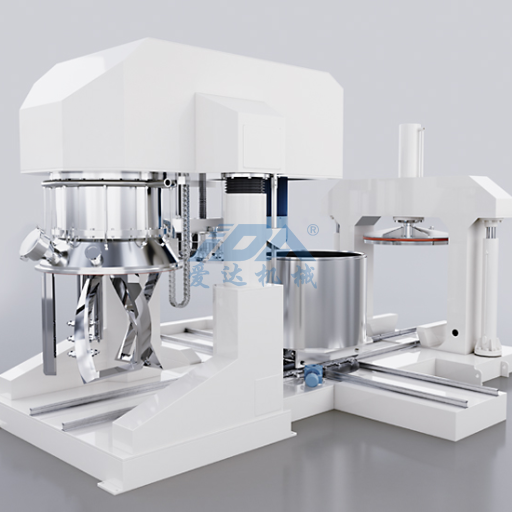
Double Planetary Mixers: Key Industries
Double planetary mixers are widely adopted in many industries as they can work with viscous, highly cohesive, or heat-sensitive materials at the same time.
Industry Applications Overview
1. Pharmaceutical Industry
The mixers are of paramount importance in the pharmaceutical industry for the making of APIs, ointments, and gels. The strict control over melting and mixing allows for the creation of a uniform layer, which is a key aspect in the compliance with the quality standards.
2. Adhesives and Sealants
Double planetary mixers are capable of producing industrial adhesives, epoxies, and sealants. Their effective mixing guarantees that the components, such as resins and fillers, are dispersed uniformly.
3. Battery Manufacturing
Batteries’ manufacturing slurries are particularly the case of lithium-ion batteries, which are dependent on double planetary mixers. They guarantee that the conductive additives and active materials are dispersed uniformly, which, in turn, affects the batteries’ performance and lifetime.
4. Cosmetics and Personal Care
Double planetary mixers are involved in the making process of creams, lotions, and other high-viscosity beauty products. Their precise mixing wins uniform textures and stable emulsions.
5. Food Processing
The food industry supports these mixers in producing items like confection, pastes, and high-viscosity doughs. Their structure lessens the chance of contamination and complies with hygienic production standards.
6. Advanced Composite Materials
Double planetary mixers play a crucial role in the production of lightweight, high-strength composites for the aerospace and automotive industries. They do so through the uniform mixing of resins, fibers, and other reinforcements.
The above-mentioned industries affirm the versatility of double planetary mixers as well as their pivotal role in being the main mixing equipment throughout modern manufacturing processes. The adaptability to specific and tough production requirements confirms their continued importance in high-performance manufacturing environments.
Sigma Mixers in Different Sectors
The sigma mixers are irreplaceable in the industries requiring accurate mixing of highly viscous materials. The food processing industry utilizes these kinds of mixers for manufacturing, for instance, dough, chocolate, and confectioneries, where consistently smooth quality and good texture are very important. Likewise, the chemical sector utilizes sigma mixers for mixing adhesives, sealants, and putty due to their enhanced capacity for mixing viscous or heat-sensitive compounds. The pharmaceutical industry is also one of the major beneficiaries as it uses sigma mixers for the production of a uniform mixture of active pharmaceutical ingredients (APIs) and excipients which is necessary for product quality and efficacy. Further, the sigma mixer is an indispensable tool in rubber and plastic processing where it is used to grind and mix their raw materials apart.
Sigma Mixer Applications by Sector
- Food Processing: Dough, chocolate, confectioneries
- Chemical Industry: Adhesives, sealants, putty
- Pharmaceuticals: APIs and excipient mixing
- Rubber & Plastics: Raw material grinding and mixing
- Emerging Applications: Bio-based materials and sustainable adhesives
Sales figures for sigma mixers recently published point to a rapidly growing demand in new applications like environmentally friendly technologies for producing bio-based materials and sustainable adhesives. This move indicates the broadening of their use across many sectors and their response to changing industrial needs.
Choosing the Right Mixer for Your Needs
Choosing a suitable mixer for the industrial applications demands serious consideration of the process requirements, materials’ characteristics, and the goals of the operation. A recent search done by the engine shows that queries like how to match mixer types to the specific production needs and how to optimize efficiency and output are quite common.
📋 Selection Checklist
- Evaluate Material Viscosity: High-viscosity materials like rubber compounds require robust mixers with high torque capabilities (sigma mixers typically preferred)
- Assess Shear Sensitivity: Delicate formulations may require gentler mixing action (double planetary mixers often better suited)
- Determine Batch Size: Consider volume capacity and scalability requirements
- Define Production Goals: Speed, homogeneity, or energy efficiency priorities
- Consider Sustainability: Evaluate bio-based material processing capabilities
- Review Energy Efficiency: Operational cost implications
- Check Material Compatibility: Ensure mixer materials are compatible with your formulations
- Verify Regulatory Compliance: Industry-specific standards and requirements
When picking a mixer, it is necessary to consider the material viscosity, shear sensitivity, and batch size. A strong mixer that can high torque and knead the materials efficiently is necessary for the case of rubber and adhesive compounds, thus sigma mixers are often the preferred option. In the case of low-viscosity materials, planetary or double planetary mixers could be the better choice. In addition, production goals—whether speed, homogeneity, or energy efficiency—should always be the primary factor determining the mixer selection.
Along with sustainability, bio-based material processing and similar emerging trends are also the cause of the innovations in the mixers. New mixers are being constructed to satisfy the rather tough standards of such applications as entailing environment friendliness with the aspect of having flexibility, energy efficiency, and compatibility of materials. By being aware of the current technological advancements and their own operational needs, businesses can make informed decisions about investments in mixing technology.
FAQ
How do sigma mixer and planetary mixer designs differ for high-viscosity mixing?
Sigma mixers are able to produce very high shear due to Z-shaped blades and the wall of the vessel, hence they are particularly suitable for mixing ultra high viscosity materials plus heavy baking kneading. On the other hand, the planetary type mixer rotates its blades around their own axis and the vessel concurrently which makes it possible to have mixing in multiple directions including the one which uniformly reduces the dead zones for viscous pastes. In production lines, the selection has an impact on mixing time, degassing ability, and cleaning between batches; the necessitation of cleaning that requires more effort is often the case with sigma blade mixer designs while the planetary gear driven systems tend to possess a higher tilt capability hence are prone to cleaning less frequently. Sigma mixers are good at handling high shear and scraping well, whereas planetary mixers are gentler and folding hence better product stability for some pharmaceutical formulations.
In the list of related products, we find ribbon mixers, vacuum mixers, and hybrid machines like sigma mixer and planetary mixer combinations that karvil sells or industrial mixers from renowned manufacturers. One should ask if a ribbon blender for lower-viscosity powders, a sigma blade mixer for heavy kneading, or a double planetary mixer for degas and ultra-high viscosity materials is necessary for the process. The selection of a mixer must depend on cleaning between batches, the risk of cross-contamination, and whether one prefers discharge by hydraulic tilting or a fixed vessel. The use of vacuum mixing and scraping is common in many production lines to facilitate the removal of air bubbles and thus the enhancement of product stability in pharmaceutical formulations and fine chemical industry applications. Furthermore, the right shear force, mixing time, and mixing uniformity that mixers provide for your target viscosity materials should be assessed.
Why would a double planetary mixer be preferred over a sigma mixer for high-viscosity applications?
The use of double planetary mixers for ultra-high viscosity materials mixing is inescapable because the two planetary mixing arms rotate around their axes while also orbiting the vessel which brings about a very high degree of folding and a very efficient internal scraping that obliterates the dead zones and as a result, shorter mixing time. The said vacuum degassing application is one where this arrangement is particularly advantageous since the double planetary mixers vs. sigma configurations generally allow better air bubble removal and thereby product stability. Also, sigma mixers generate very high shear between the blades, but they still could impose higher mechanical stress and the two z-shaped blades plus the heavy gearbox components would require more frequent maintenance. There are mixing equipment designed for different functions, such as kneading and dispersion, on the production lines: planetary mixers have milder profiles and can be the choice for shear-sensitive pharmaceuticals. When making mixing equipment selection, think about capital cost, ease of cleaning, tilt discharge or hydraulic operation features as your factors of consideration.
What are the differences in types of applications between ribbon mixers, sigma mixers, and planetary mixers with respect to high-viscosity or lower-viscosity tasks?
Ribbon mixers and ribbon blenders are mainly used for free-flowing powders and low to medium-viscosity pastes that require gentle, convective mixing, while sigma mixers and planetary mixers are specifically for higher viscosity materials that need kneading and scraping. Ribbon mixers are capable of efficient bulk blending with a lower shear force requirement and faster processing for homogeneous powder mixes but are not applicable for ultra-high viscosity compounds that necessitate either two z-shaped blades or planetary action. Production lines that handle both powders and pastes can be made easier with the help of related equipment such as combination unloading systems or modular mixing equipment which can cover requirements. The mixers’ flexibility is also enhanced when they have vacuum mixing or additional blade design options incorporated, which help to deal with air bubbles and product stability. In the end, the mixer is decided based on the viscosity of the material, the mixing action required, and the cleaning between batches to prevent cross-contamination.
When comparing sigma mixers with double planetary mixers what mixing action and blade design factors should be considered?
Blade design is the major factor: sigma blade mixer configurations have two counter-rotating blades that produce a very shear-intensive area, while double planetary designs contain arms that both rotate around their own axis and around the vessel to mix and knead the material. Mixing action is the best way to assess how good the mixer is at degassing, scraping the walls of the container, and dealing with ultra-high viscosity materials; sigma mixers do heavy shear and scraping, while planetary mixers focus on internal turnover and mixing uniformity without excessive shear. Think of the different uses of the mixer such as the kneader operations in the adhesive industry, pharmaceutical formulations, or fine chemicals which require specific and different blade geometry and mixing duration. Features like vacuum capability, hydraulic tilt and easy cleaning between the batches play a role in cross-contamination risk and an operational efficiency. Manufacturers like karvil provide different models (e.g., 2000l horizontal mixer variants) that demonstrate the pros and cons of blade design and planetary gear complexity.


