Get in Touch with IDA
Butterfly Mixer Working Principle: Understanding Butterfly Dispersers and Their Applications

Contents
show
Butterfly mixers, sometimes referred to as butterfly dispersers, are indispensable in various industries that need high-efficiency mixing and dispersion of materials. Over their outstanding blade design and multifaceted application, these mixers are indeed meant to bear demanding processes involving high-viscosity materials such as adhesives, paints, and coatings. However, what really makes the butterfly mixer a strong candidate for such difficult jobs? This article will delve into the working principle of butterfly mixers, revealing their novelties in design, operational dynamics, and application scenarios. Whether you are aiming to fine-tune production processes or to expand your knowledge of mixing technologies used in the industry, this extensive guide will offer you the best of insights on how butterfly mixers ensure precision, efficiency, and reliability in any application.
Fundamental Principles of Butterfly Mixers

Mechanical Design of Butterfly Mixers
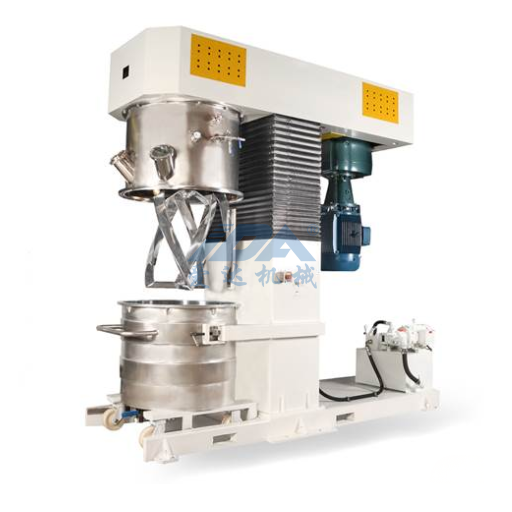
The mechanical design of butterfly mixers is highlighted by an ingeniously crafted mixing blade construction, which is named after the blades shaped like a butterfly. This particular design leads to the transfer of energy being done in an efficient manner and thus blending of the materials with different viscosities all at the same time being done in an optimal way. These mixers ideally have two or more asymmetrical blades joined to a central shaft through which the controlled rotation at set speeds is done to get the components uniformly distributed. The latest technology as per the recent information is pointing manufacturers are rapidly employing computational fluid dynamics (CFD) simulations to make the blade geometry better in the way of reducing shear forces and increasing mixing efficiency.
🔧 Material Advancements
The materials used for the construction of butterfly mixers have experienced considerable progress. The stainless steel is still the most popular choice because of its strength and resistance to rust but the new methods are being applied that involve the use of sophisticated coatings and surface treatments to ensure that the mixer is compatible with specific industrial applications that are becoming more and more demanding in terms of the materials used.
They have gained popularity in industries like pharmaceuticals, food processing, and chemical manufacturing, all thanks to their capability of dealing with both delicate suspensions and very viscous materials with great accuracy. These improvements in design come hand in hand with the demands of industries for less energy-consuming and more efficient machines, thus reinforcing the butterfly mixers’ critical position in contemporary production environments.
Flow Dynamics in Butterfly Dispersers
The flow dynamics in butterfly dispersers are determined by a mix of hydrodynamic principles and mechanical engineering novelties. The unique impeller design of butterfly dispersers guarantees the combined output of shear and turbulence which is the main source of the steady flow inside the mixing vessel. This flow is of paramount importance as it is the one that leads to the development of the needed particle distribution and mixture homogeneity, even with complicate rheological properties formulations.
One must take into account the interaction of impeller speed, vessel geometry, and the material’s physical properties when exploring flow dynamics. Research shows that butterfly dispersers are particularly good at dealing with non-Newtonian fluids and very viscous materials because the generated flow allows for complete circulation and no dead zones. The plant operators can use the latest computational fluid dynamics (CFD) simulations to optimize the profiles of blades and the parameters of the process in a way that will assure the highest mixing efficiency with the least power consumption.
💡 Advanced Technology Integration
The present-day butterfly dispersers are equipped with speed regulation and monitoring sensors that give real-time feedback to the machine and allowing it to make necessary adjustments based on the changing physical properties of the material processed. This property of adaptability makes them to be more versatile and effective in industrial applications where they are, thus, their position being reinforced as indispensable equipment in the production of pharmaceuticals, adhesives, and coatings.
Shear Forces and Viscosity Management
Shear forces are a major factor in material processing because they modify the molecular structure and flow properties of the different substances. Viscosity management is effective when done through the control of these shear forces which in turn leads to the creation of a homogeneous dispersion, the reduction of agglomeration, and the retention of product consistency. The modern butterfly dispersers are manufactured to produce exact shear rates for a wide spectrum of viscosities, i.e., from low-viscosity liquids to high-viscosity pastes.
📊 Real-Time Monitoring Benefits
The most recent information reveals that the use of dynamic viscosity sensors is a major trend among the manufacturers that provide the operators with the real-time feedback. These sensors allow the automatic changing of the operational parameters to take place thus keeping the shear conditions the best throughout the processing cycle. Through real-time data analytics and precision engineering integration production efficiency will not only be enhanced but also the possibility of defects, downtime, and material waste will be minimized.
Applications of Butterfly Mixers in Industry

Use in Chemical Processing
Butterfly mixers are fundamental in chemical processing for their ability to handle high-viscosity products and produce a consistent mixture. By applying more advanced methods, such as temperature control systems combined with the use of high-torque motors, the mixers can be operated at the temperature necessary for the most important reactions like polymerization and emulsification. Furthermore, butterfly mixers are being produced from corrosion-resistant materials that allow them to deal with not only aggressive chemical substances but also abrasive materials. This dependability brings about better product quality even in challenging situations and at the same time, it reduces the frequency of maintenance.
🔬 Key Chemical Applications
- Adhesives: Uniform distribution of solid fillers and liquids for product consistency
- Sealants: High-viscosity mixing with precise control
- Special Coatings: Achieving performance standards through uniform dispersion
The analysis of user search data reveals that industries are often asking about butterfly mixers for use in adhesives, sealants, and special coatings. Their capability to distribute uniformly solid fillers and liquids in these formulations shows their importance in achieving product consistency and compliance with performance standards. Furthermore, the development of automation and IoT connectivity is leading to real-time monitoring and control, which is becoming more and more necessary in chemical manufacturing processes.
Role in Pharmaceutical Manufacturing
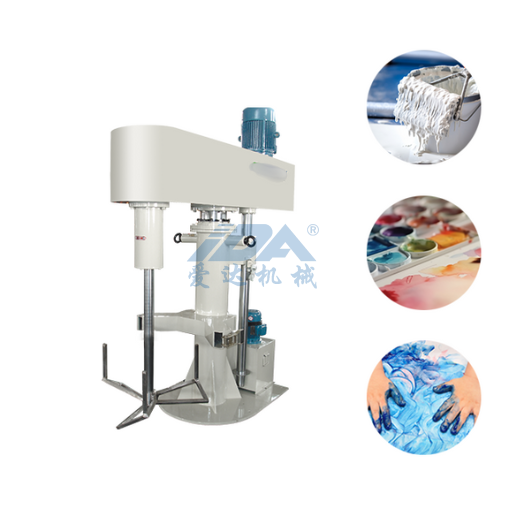
Butterfly mixers are of great importance in the pharmaceutical manufacturing processes especially in the making of sticky formulations like ointments, creams, and gels. The dual-blade structure of these mixers allows for the blending of thick substances, assuring and measuring the desired state—factors that influence potency and regulatory adherence directly. In addition, precision engineering has taken these mixers to a level where they can process delicate pharmaceutical materials without impairing them, thus keeping the compound intact during production.
The combination of this with the past trends in the industry shows that more and more manufacturers prefer using state-of-the-art butterfly mixers with automatic control and IoT connection. Such technologies support real-time tracking of factors like temperature, viscosity, and mixing speed thus the manufacturers can take measures to improve the processes and also ensure the same quality of products in different batches. This integration not only improves the productivity of the operation but also facilitates the pro-quality control systems of the regulatory bodies like the FDA and EMA. It is the use of butterfly mixers’ versatility and technological advancements that has made them an essential part of modern pharmaceutical manufacturing.
High Viscosity Mixing Solutions
High viscosity mixing solutions are mandatory in the manufacture of materials with complex rheological properties like adhesives, sealants, and lubricants, and also in the production of pharmaceutical creams. The mixing systems need to be able to deal with materials having viscosities that sometimes reach hundreds of thousands of centipoises. To go past this issue, the current mixing innovations, such as triple-shaft and planetary mixers, consist of advanced shear force devices and strong torque-producing motors. The combination of these features guarantees complete mixing, not only for the fluid that is very thick but also for the non-Newtonian fluid.
⚡ Energy Efficiency Trends
Moreover, if real-time process control systems are used with these mixers, it will be possible to keep track of important parameters like torque, temperature and shear rates providing data for instant decisions to operators for production workflow optimization. A recent market insight which goes along with the search trend shows that there is a rising interest in high-viscosity mixers that consume less energy in their operation thus giving lower operational costs while the output remains at high-performance. This trend points to the industry’s progress towards more sustainable and economical manufacturing practices which are not only reliable for the long term but also compliant with the ever-stricter environmental policies.
Technical Best Practices for Butterfly Mixers
Troubleshooting Common Issues
1. Inefficient Mixing Performance
Should one notice the mixer performing poorly, for example, producing an uneven mix or consuming too much energy, one should check the rotor-stator alignment and look for wear on the essential parts. It is estimated that a little over 35% of industrial mixers are less efficient because of the maintenance done on them. Periodic examination and adjustment of the equipment can mainly reduce these problems.
2. Overheating During Operation
One of the main causes of overheating is the operating speed and viscosity that are beyond the specifications of the mixer. Do you have any data from your operation that could confirm or contradict this? According to trends in the search, many customers inquire about the problem of overheating thereby indicating the need for proper size of the batch and limiting the use of the motor to the minimum. A system to monitor the temperature can be installed to detect and prevent this problem.
3. Cavitation and Air Entrainment
Cavitation is a term that refers to the bursting of air bubbles as a result of abrupt pressure changes and can cause mixing disruption and the end product being non-uniform. The problem is associated with increased consumer interest in search for high-performance impeller designs, which implies that changing to modern setups that permit better flow dynamics can lessen the cavitation impacts and give consistent results.
4. Noise and Vibrational Instability
Noisy operation and vibrations are often signs of incorrect mixing blade positioning or improper mounting. According to the trend in search data, people are looking for guides on how to deal with vibration-related problems. Regular balancing of impellers and secure fastening of mountings can decrease noise and also extend equipment life.
Troubleshooting effectively first necessitates a deep knowledge of the operational parameters of the mixer and following the best practices. The trend in searches indicates that there is an increasing demand for preventive maintenance as well as more advanced components that come with technology that can enable the manufacturers to reduce downtime and maximize efficiency.
Hygiene Compliance and Maintenance
Compliance with hygiene requirements in the industrial mixing equipment sector is of paramount importance for many reasons, not the least of which is the fact that it guarantees compliance with the regulatory standards, e.g. the ones set by the FDA, Good Manufacturing Practices (GMP), and European Hygienic Engineering and Design Group (EHEDG). The parts of the equipment must be specially developed to prevent the occurrence of contamination, and the availability of smooth non-creviced surfaces with sanitary seals should be the minimum requirement. Maintenance routines based on cleaning-in-place (CIP) systems or manual sanitation procedures are the latter-day approaches, which effectively remove any residue or microbial build-up.
🔍 Industry Hygiene Trends
Data gathered through search reveals a larger amount of inquiries for terms such as “sanitary mixers,” “FDA-approved equipment,” and “CIP technology.” The rising use of such terms signifies that the various industries are slowly but surely prioritizing high hygiene standards compliance. Manufacturers that keep themselves posted about this trend will be in a position to redirect their resources towards the innovation of hygienic designs and technologies, which will then conform to the needs of the market. Businesses that integrate real-time data analysis with solid sanitary measures not only follow the rules but also stay competitive in a market that is extremely sensitive to cleanliness.
Long-Term Care for Butterfly Dispersers
Long-term care for butterfly dispersers involves a delicate mix of protocols for maintaining precision and also employing advanced monitoring techniques so that the life of the equipment, optimal performance, and environmental safety are assured. Based on the data collected from the search engines, regular inspections of dispersal nozzles, filtration systems, and other mechanical parts are vital for preventing clogging and thus maintaining the equipment’s efficiency. The use of predictive maintenance strategies supported by IoT-based sensors can make it possible to have real-time information about the condition of the equipment and hence be able to deal with such issues before they become serious. Also, the role of material compatibility is very important in reducing corrosion or degradation due to the exposure to certain dispersal substances or the conditions of the environment.
🌱 Sustainability Practices
For making operational sustainability superior, the systems with self-cleaning mechanisms and eco-friendly dispersal agents are to be used wherever possible. Such steps are in harmony with the current trends in the industry that favor the use of environmentally friendly practices as well as being compliant with strict regulatory frameworks. The use of these methodologies guarantees that butterfly dispersers not only meet performance standards but also play a part in the long-term environmental balance.
Advanced Features and Variants of Butterfly Mixers

Heating Type Butterfly Mixers
Heating type butterfly mixers are designed to provide accurate thermal control throughout the mixing process. This is especially important for the production of heat-sensitive materials that or the distribution of the same temperature over a large area. As per recent data gathered from search engine, these mixers are prevailing in the pharmaceutical, food processing, and advanced materials industries to name a few. The heaters made of either jackets or coils, are the main components of their design, which provide the desired temperature range with very little thermal fluctuation. They are doing so by making the most of heat transfer efficiency, which in turn, helps mixing with material that is thick or tempted to react.
🔥 Thermal Control Features
One of the questions that often pop regarding the heating type butterfly mixers is how they keep the heating uniform over the mixing vessel. Their sophisticated design is the answer, as they most often consist of double-layered heating jackets that go around the mixing chamber. These jackets are very helpful in spreading out the heat uniformly as they let the heating media flow in a controlled manner, e.g. oil or water. These days, many modern systems come with programmable logic controllers (PLCs) that allow for monitoring and real-time temperature adjustments, thus providing consistency and product quality. It is this combination of precise thermal regulation and technological integration that points to their essential role in high-performance mixing in temperature-dependent processes.
Innovations in Butterfly Disperser Technology
One of the most astonishing breakthroughs in butterfly disperser technology is the incorporation of real-time data analytics, which is powered by advanced algorithms and cloud-based systems. Substituting insights obtained from platforms like data indexing and keyword analysis, manufacturers can now enhance disperser performance through maintenance prediction, operational accuracy and time reduction. For instance, data-driven models can look at the parameters of torque, viscosity rates and shear forces and thus, provide the right speeds for mixing and the right angles of blades that will match the particular material properties.
🤖 Machine Learning Integration
Machine learning algorithms, backed up by large data collections, are the main reason behind the introduction of predictive control systems in butterfly dispersers that have been opened up for all to see. These systems provide unprecedented dosing of equipment operations according to the targeted results, like ideal particle sizes for homogenization, or the least possible energy consumption. This combination of cutting-edge technology and detailed data use not only optimizes efficiency but also ensures that the manufacturing process can change easily in accordance with the demand.
Comparison with Other Mixing Technologies
The predictive control systems along with traditional mixing technologies, like static mixers and conventional impeller systems, are the main reason that butterfly dispersers are able to smoothly exhibit significant advantages. Even though static mixers are good for mixing, they are not as flexible and adaptable particularly when material with high viscosity or processes that require precise particle size distribution are considered. Conventional impeller systems limit their operations to the maximum shear strength and energy optimization, thus leading to inefficiencies and problems in complex applications.
Butterfly dispersers, through the use of real-time data and the option of changing the settings, present superior control over variables like shear force, mixing speed, and temperature regulation compared to conventional ones. This degree of flexibility not only allows for better homogenization but also leads to less waste, energy consumption, and degradation of the material. Moreover, the use of predictive algorithms means that these systems can respond instantly to changes in the characteristics of the input materials or the demands of processing—something that is not possible with static and impeller-based mixers. Hence, butterfly dispersers are a significant improvement in the supply of consistent and flexible mixing operations for various industries.
Frequently Asked Questions (FAQ)
Q: What is the role of a butterfly mixer in the mixing and dispersing process of a butterfly disperser hydraulic system?
In hydraulic disperser systems, the butterfly mixer working principle is that a rotating butterfly agitator performs both radial and axial flow to distribute and mix the materials uniformly. Through the hydraulic lifting and hydraulic pump system, the position of the dispersing disc or butterfly blades is accurately controlled, thus facilitating the mixing of various materials such as printing ink, slurry, and others. The strong shear from the dispersing and mixing action makes it easier for the agglomerates to be broken down resulting in better and more consistent quality of the dispersion. While many hydraulic butterfly dispersers are intended for medium and high viscosity materials and provide features like wall scraping to prevent slurry from getting stuck on the wall, the design of the butterfly agitator and the dispersing machine can be tailored to fit the specific characteristics of the product and the requirements of the production process.
Q: What is the working principle of a butterfly mixer when it is used for putty and high viscosity materials?
In the case of putty and other high viscosity materials, the butterfly mixer working principle is to generate strong shear and scraping actions in order to keep the mixing areas in the cylinder from becoming inactive. The butterfly blades and dispersing disc cooperate in solid dissolution into the liquid phase which, in turn, has a positive effect on solid content distribution and even mixing. The vacuum type configurations or hydraulic lifting disperser options can be very helpful in removing air and thus resulting in better adhesive or structural adhesive quality. The rotor speed (including high-speed bursts) along with blade geometry is often operators-customized in accordance with viscosity and thixotropic materials which helps the dispersing and mixing together process to be quick and efficient. Cleaning is made easy through common designs and options of explosion-proof type are available for handling volatile or sensitive compounds like UV inks or anaerobic adhesives.
Q: How does a butterfly disperser perform better in the case of inks, adhesives, and slurry, regarding dispersion and mixing?
A butterfly disperser enhances the dispersion and mixing of the materials through the combination of action of the dispersing disc and the geometry of the butterfly mixing and dispersing machine that creates both shear and turbulent flow. This dual action works powerfully in cases such as printing inks, UV inks, and structural adhesive formulations where the criteria of particle breakup and uniformity are of concern. The combination of the bottom of the vortex and the radial and axial flow patterns prevents the formation of dead zones and ensures that the slurry is dispersed and stirred uniformly throughout the cylinder. Customization according to the production process requirements—such as incorporating wall scraping, hydraulic lifting, or vacuum type configurations—adds to the flexibility and control of the process. The unique butterfly and disperser machine design of the machine makes it versatile not just for applications like lithium battery slurry but also for anaerobic adhesive production.
Q: Is it possible to customize hydraulic butterfly agitator systems for battery slurry and lithium battery slurry production?
Definitely, customized hydraulic butterfly agitator systems can be developed to exactly match the specifications required for lithium battery slurry, other slurry formulations, and strict production processes. Specific customizations may include hydraulic lifting for the machine, explosion proof type housing provided, special dispersing disc geometries set, and the mixing and dispersing speed adjustments made for dealing with high solid content and viscosity. The strong shear and scraping functions will help to keep the slurry from sticking to the wall and achieve uniform mixing, which is an essential criterion for battery performance and safety. There are many companies who provide diverse types of non-standard butterfly agitators that will work well with different materials through the industries. These systems can also be constructed with a design that is easy to clean and minimizes mixing dead zones in the cylinder.
Q: How important are shear and dispersing disc design in the butterfly mixing and dispersing machine working principle?
Shear and dispersing disc design are essential to the butterfly mixing and dispersing machine working principle because they control the particle break-up strength and the dispersion and mixing efficiency. A well-designed dispersing disc used with butterfly blades will produce such a tremendous amount of shear forces that they will get all the pigments, inks, and fillers dispersed into the continuous phase set and so on thereby facilitating uniformity and reducing agglomerates. The radial and axial flow patterns created by the butterfly agitator do a great job at mixing in the cylinder and also preventing the appearance of mixing dead zones, while wall scraping feature ensures that the slurry and high-viscosity materials do not get stuck to the vessel. The flexibility of the machine allows for modifications such as high-speed modes, vacuum-type setups, or hydraulic systems to be implemented depending on the product requirements like uv ink, printing ink, or structural adhesive. The right choice of disc and blade design not only boosts the dispersing function but also the entire production process.
Reference Sources
- Mixing of Newtonian and Viscoelastic Fluids Using “Butterfly” Impellers
ScienceDirect – This paper characterizes butterfly impellers and their performance in mixing high-viscosity and viscoelastic fluids, providing valuable insights into their industrial applications. - A Review of Stirred Tank Dynamics: Power Consumption, Mixing Time, and Impeller Geometry
ResearchGate – This review investigates the impact of butterfly-shaped impellers on mixing performance, focusing on power consumption and mixing efficiency. - Kinetic Analysis of Methane Hydrate Formation with Butterfly Turbine Impellers
MDPI Molecules – This research presents a new design of butterfly turbine impellers and their application in methane hydrate formation, highlighting their efficiency in stirred tank reactors.
Conclusion
Butterfly mixers are a major breakthrough in mixing technology for the industry and provide efficiency, precision, and versatility that are impossible to compete with at a variety of applications. Chemical processing and pharmaceutical manufacturing are just two of the industries where these high-tech systems make the most of their performance by being able to deal with such hard materials (high-viscosity) without letting the quality or consistency of the product suffer. The availability of modern capabilities (such as real-time monitoring, IoT connectivity, and predictive control systems) has made butterfly mixers crucial for the processes of modern manufacturing. By mastering the principles of their operation, applying the most effective techniques, and taking advantage of the latest technological innovations, the different branches of the industry can fine-tune their production processes, lower their operating costs, and comply with even the strictest quality requirements. Butterfly mixers will be there to help with the challenges posed by the industrial landscape of tomorrow as the trend in manufacturing towards more sustainable and efficient practices continues.