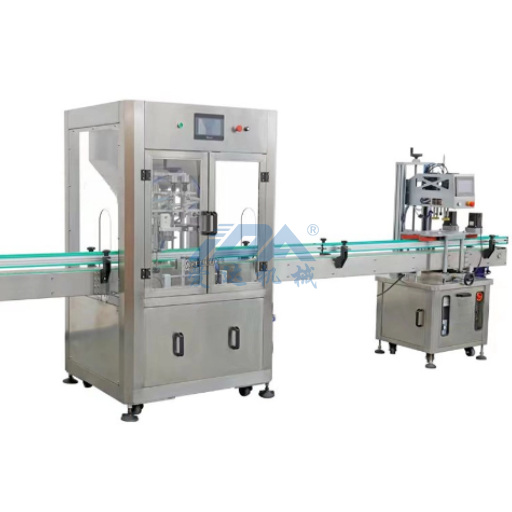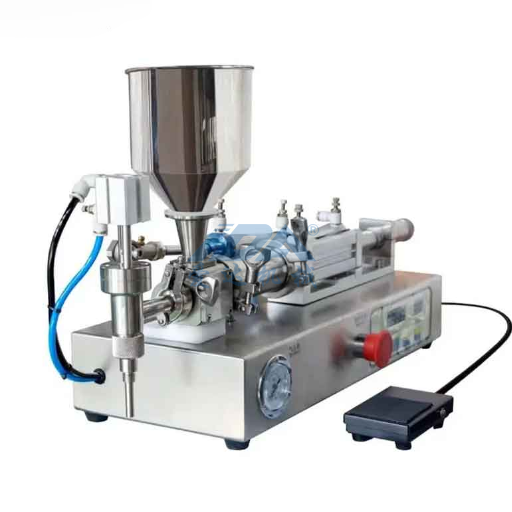
Get in Touch with IDA

Filling Machine Selection Guide for Cosmetic Manufacturers

Contents
show
The selection of a filling machine is a defining moment for cosmetics manufacturers to ease their operations and produce top-quality products quite easily. There are hundreds of filling machines in the market catering different products, viscosity levels, and production volumes. This article is tailor-made to unravel some of these formidable issues while at the same time giving very practical advice pertinent to the undeniable needs of the cosmetic industry—which might be packaging lotions, serums, or fragrances. This article will address mini-issues: how to source the ideal machinery to produce efficiently and sustainably for a lively business growth. What is needed then is an ability to recognize the most basic instruments that shall consolidate variability in the existing operation!
Key Takeaway
Selecting the right filling machine is the cornerstone of scaling a cosmetic brand. It balances product integrity with high-speed efficiency, ensuring that every bottle, tube, or jar meets professional standards without excessive waste.
Understanding Filling Machines for Cosmetics

Overview of Filling Machines
Filling machines are critical in the cosmetic industry amongst many assortments of equipment. These machines pack different cosmetics, such as lotions, serums, perfumes, etc., and ensure that these are filled in bottles by a pump in lots of the same amount so that product wastage is minimized, and exact product quantity is delivered. Their usage helps save time and enhances the product quality and look.
Many types of filling machines are made to cater for different products and packaging needs. For instance, liquid fillers will fill both thin and thick liquids; the volumetric type thus dispenses specific quantities into each container. However, on occasion, some specialized machines might be required for viscous creams or foaming products, as it is a little tricky to package without the right technology. The choice of machine is often dictated by the viscosity of the product, type of container, and the scale of production.
⚠️ Important Note
To designate a filling machine would not just streamline functions but at the same time would expedite productivity. A filling machine, due to being void of any human elements, ensures complete adherence to industry standards and policies. The automation of filling machinery amplifies focus on the growth of business lines and the immaculate delivery of cosmetic products. These tend to be the paradigms of essentialities for the operation of manufacturing process of cosmetics.
Importance of Choosing the Right Filling Machine
Selecting the correct filling machine is a crucial role in ensuring that the manufacturing process of cosmetic products remains efficient, consistent, and compliant. Such a machine, more importantly, should meet the various needs of the product, such as its viscosity, texture, and packaging requirements, maintaining the quality of the product and addressing/exceeding expectations of the consumer. A poorly matched machine can lead to inaccurate fills, waste of materials, and financial delays to the production run.
A fitting filling machine increases the rate of production while maintaining the precision needed. Automated systems could reduce errors and loss of product compared to manual processes. Besides this, the right machine could handle containers of various sizes and shapes, allowing for product packaging with the required flexibility and market attractiveness.
Choosing the appropriate filling machine also ensures that standards are adhered to and that safety requirements are met. The quality and consistency are maintained in production through a reliable piece of equipment, thereby fulfilling the requirements stipulated by the regulations. The choice of the proper filling machine stands as the groundwork for putting in place an efficient, scalable, and sustainable cosmetic-manufacturing system.
Types of Cosmetic Filling Machines
Cosmetic filling machines can be classified into various types, especially meant for specific products, ranging from the most functional while providing excellent speed. The most popular types of machines include; liquid, paste and powder filling machines. Each machine is built around different principles based on the viscosity and consistency of the filling product. Selecting the perfect model would mainly rest upon the physical specifications of the product and the requirements for production.
Liquid weights are well suited to filling products like lotions, serums, and oils. Liquid fillers are capable of dealing with thin-to-medium viscosity liquids, which necessitates precision in determining the desired fill level, hence ensuring efficient minimization of product carrying. They come furnished with nozzles that prevent spillage and assure precise filling, a necessary feature in maintaining product quality.
Paste filling machines are manufactured for more viscous cosmetic products, such as cream, gel, scrub products. They handle high viscosity material very well and form a fine resolution to fill containers without any accumulation of air or inconsistency. Meanwhile, powder filling machines are constructed to operate with dry and granulated products; both pressed powders and loose pigments. The dosing feature is also very explicit to these machines, with the product getting lost, as it ensures high quality and efficiency in the cosmetics industry. Through the understanding of your product-specific needs, manufacturers are best-suited to choose the most efficient filling machines for their operations.
Different Types of Cosmetic Filling Machines

Liquid Filling Machines
The liquid fillers are specifically designed to handle liquids offering reliable fill solutions for the cosmetic industry, handling products like lotions, serums, oils, and other liquid-based when filled. Their precision filling abilities guarantee minimal wastage and ensure that products maintain their integrity, especially for formulations that are priced high.
There are different styles of liquid filling machines, like piston fillers, gravity fillers, and pump fillers. Piston fillers are good for thicker liquids since they can handle different viscosities and gravity fillers for thinner liquids since the product flows naturally. On the other hand, pump fillers are not restricted to liquid type or consistency but work excellently for them all. Depending upon the properties of the product being filled or the demand of production, one should be wise in choosing a suitable instrument for filling.
💡
Pro Tip
Liquid filling machines significantly upgrade efficiency and assist in the imposition of the highest standards in the spheres of hygiene and quality control. Most of the sophisticated models come equipped with innovative features like hermetic no-drip shutoff valves and highly technical precise measurement devices which ensure accurate fills and highly reduce contamination risk as a result. Needing the all-important place in production lines to maintain uniformity, these machines must conform to industry regulations and live up to consumers’ expectations.
Tube Filling and Sealing Machines
Industries of cosmetics, pharmaceuticals, and food production need tube filling and sealing equipment as these ensure that the ingredients used are of correct quantity in the tubes. According to the varying viscosities and finishes to the materials that are being processed, cream and ointment but also employ a sealer to seal the tubes securely to withstand the different pressures. The tube filling-sealing machine, in addition to other auxiliary devices for selecting and adapting to tube shapes and technologies, are developed to not only fulfill company norms but meet the expectations of service and good hygiene as well.
The tube filling and sealing machines do well to ensure the consitency in filling volumes and prevention of the risk for contamination. The existing models in the market for tube filling and sealing make use of advanced automation, which supports precision and high speed configuration. To add, the machines are adaptable to multiple tube materials made of plastic, aluminum, and laminated tubes from which the majority of the industries may choose depending on the necessity and trait. Adaptability for processing various median sizes and tube materials can be considered one of the major advantages.
‘We endeavor to get our machinery industry compliant’, the supplier tells us. The requirements placed on these machines are particularly stringent, given the many regulations which they have to satisfy with regard to safety and production quality. Such machines ensure compliance with good manufacturing processes (GMP) because their products are be set for safety to end-users; the packaging process is also free from contamination. Offering a mix of both efficiency and performance, the tube filling and sealing machines have become inseparable components of modern production lines.
Automatic Filling Machines vs. Manual Machines
| Feature | Automatic Filling | Manual Filling |
|---|---|---|
| Production Scale | Large scale / High volume | Low to moderate volume |
| Human Intervention | Minimal / Fully automated | High / Operator dependent |
| Precision | Supreme accuracy & consistency | Variable accuracy |
Automatic filling machines and manual machines work in different ways. Automatic filling machines are for large scale production and efficiency. These types of machines do not necessarily require large human intervention—that is, the work gimmick fully on their own—and they ensure the recurrence of the desired results. Moreover, these machines guarantee no possibility for forming incorrect filling and very good filling capacity, and are the best at turning around for businesses presenting value on fast filling, supreme regulatory capabilities, and no contamination areas, especially in industries like pharmaceuticals, food, and cosmetics.
The manual filling machine better matches your low to moderate production outputs. These resistivity robots are manually operated, usually to the benefit or disadvantage of the operator. This might mean slow production rates due to the fact that these are highly dependent on human involvement. Nonetheless, the requirements for the manual filling apparatus carry advantages of amortization schedules, along with preset flexibility against losses for customers’ benefits, where small quantities cannot offer profits most times.
Depending on the specific production process, the choice of automated filling equipment and manual filling systems is primarily influenced by the size of the filling amount. Enterprises with strict quality as well as a high volume of production usually do well with taking an automatic machine because it is highly necessary. For all other startups and craftsmen with modest expectations, a manual machine is out-of-the-way, but cheap and simple solutions to fill the selective production pockets.
Key Factors in Choosing the Right Filling Machine
Product Viscosity and Formulation
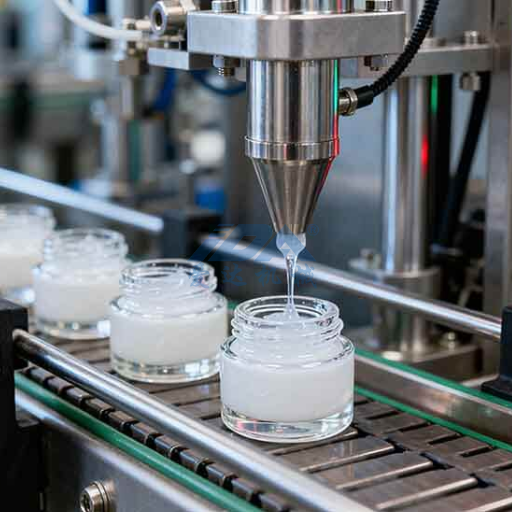
The viscosity of the product is the predominant critical factor in the filling machine. Viscosity may also be considered as a weight which directly influences the form of machine for its job. With low viscosity, easier flow of the material, for example, water and thin oils, gives good results in gravity and overflow fillers. On the other hand, when any substance is thicker, like syrup, creams, or gels, they need a piston filler or a pump-based system for adjusting its high viscosity level.
At least equally important for the product formula is the issue of its actual form, as several formulations involve unlikely particles like solid pieces in sauces or exfoliating particles of cosmetic scrubs. In such cases, a specific filling system, designed to work with solids, is needed to prevent jamming or damaging of the equipment; the composition in some formulations could react with material from the machinery, thereby requiring components such as corrosion-resistant and food-grade ones to prevent corrosion in compliance use.
Should you select the right kind of machine based on the viscosity and desired features for a given formulation, the given methods, though, will help you produce whatever you want without compromising quality or product integrity. Hence, insights on this matter must be used to ensure production smoothness, kill any chance for wastage, and allow batch seedling to produce consistent results in the same batch, depending on your requirement for maximum accuracy.
Container Types and Sizes
The type and size of the containers are imperative in selecting the correct filling machine for a certain application. Containers range widely in size from small vials and bottles to large jars and drums. Knowing the dimensions, material, and shape of the container is imperative to ensure compatibility with the filling equipment and avoid spillage or inaccuracy during the filling process.
Some of the most common materials used for containers are glass, plastic, and metal. With that, each material could have individual requirements during filling—the titanium cage being known to sell glass vials as fast as possible to avoid breakage—from what filling method or speed would be required for plastic material to prevent deformation. Also, container shape, be it round, square, or odd, may impede machine configuration, especially the type of conveyor or loading system needed to be used.
Sure an optimally efficient machine-planting process. From mass-production containers to microwells or microscope slides, diverse container characteristics present challenges of their own. Thus, a thorough machine-planning process must necessarily take into account all relevant factors when a company decides to cut its expenses in production.
Production Speed and Efficiency
The best speed and efficiency in production are attained through the use of a filling machine that meets the individual specifications of the product and packaging. It must be fast and very precise, preventing wastage of material and downtime; importantly, still being characterized by accuracy in operation and moulding. The loading time is vital in achieving the production target, but it should never be on the backs of the accuracy issues or bad quality of the product.
Therefore, the speed of production depends on the following conditions with respect to the product viscosity, container type and speed of production line required. Perhaps, for uniform liquids like water, high-speed filling devices might be configured, but thick or complex overfill products need to be addressed, call. This could invite more sophisticated equipment with utmost consideration for the filling being controlled adequately according to automatic control or controlling configuration. Furthermore, not much less important, the host of other accessories for the filling machine would minimally include common elements like feed conveyors or sealers.
The efficiency is also based on the maintenance and flexibility of the machine to accommodate production lines that need to be constantly altered. Machines adopting automation or flexible size control of containers and formats allow a company to respond to changing market conditions without having to endure huge leaps in equipment specs. By considering these types of output simultaneously, companies can select a rapid as well as a particular filling machine; a machine that is as much high-speed and accurate as adaptable for changing sizes. This will abnormally boost productivity and decrease operational costs.
Filling Machine Selection Process
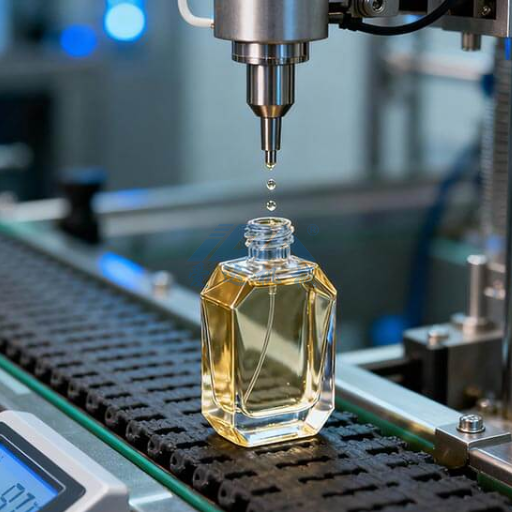
Assessment of Production Need
In assessing a production need specifically for the selection of a filling machine, the first task is to evaluate the type of product being filled. The physical characteristics of product-state, such as viscosity, temperature, foaminess, directly affect the type of filling technology required. For instance, most thin liquids require gravity or overflow filling, and somewhat thicker products would need piston or pump fillers. The most important thing is that the machine must be adapted to the specific product characteristics should it carry accurate and efficient filling.
Considering the scale and speed requirements for the production of paints, in-gauging the number of units to fill at any given time will determine the type of system to employ. High-volume-producing sites may prefer the fully automatic machines that are fast, and low volume sites can meet their needs comparatively well with semi-automatic machines that offer flexible options without the complexities of a total automated system.
Think about packaging types and future scale capacity lastly to consider. Different container sizes and shapes, as well as probable changes in design lines, may require equipment with a degree of flexibility. Since almost all investments proffered can handle various packaging formats with surprising flexibility when necessary, they are sure to be with you longer without those annoying experiences of having to upgrade equipment frequently. Contemplating potential expansion activities or potential alterations in production can help in future-proofing your investment—a good move considering that the investment is made now with respect to the present and forthcoming strategic goals.
Budget Considerations
Budget considerations should be an integral part of the decision-making process when selecting a filling machine. The total cost of ownership, which comprises the purchase costs and the regular operational and maintenance costs, should be evaluated. Study your budget constraints carefully and aim to choose the model with the best mix of options, reliability and cost.
Another vital consideration to rank a filling machine on is return on investment (ROI). In this light, lean towards models that are productivity-enhancing, will reduce machine downtime and waste generation, as these are the factors that matter in the long run and determine profitability. The efficient system might cost more upfront but will save you money over time by increasing production and reducing resource use.
Another point that is very useful to consider is the scope for future adaptation or rank advancement. To find a machine that allows for growth without changing the system, changing the system, and thus getting a more significant machine replacement becomes a costly devoir. A flexible, robust solution guarantees that therefore the budget is not spent in wastewater, that it can accommodate today’s requirements as well as the long-term desired status of your business objectives.
Evaluating Supplier Trustworthiness
Evaluating the trustworthiness of a supplier is an essential step toward ensuring the successful operations of a business. Trustworthy suppliers tend to deliver high quality goods or services timely, corresponding with the values and the objectives of your company. You will firstly try to find out about their reputation within the industry. Examine reviews, testimonials, case studies, to understand how they have fared relative to other businesses, and put into context their own reliability and commitment.
Another important factor is transparency. Dependable suppliers will always be open about price, timing and typical—as well as potential—challenges that may accrue. Ensure that your supplier is ready to discuss and made available documentation that he deems relevant, i.e., certifications, quality assurance procedures, and compliance with relevant regulations. Transparent suppliers usually provide a certain level of commitment and long-term relationship effort.
Evaluate how responsive their customer support and contacts generally are. A supplier who wants to see you happy will generally communicate quickly and work with you and your contacts to get the very best results possible. This is a clear indicator that the supplier is fully committed to trust and reliability when you consider that a myriad of lines of communication, solid escalation processes, and dedicated support teams also play a part in ensuring a system that supports appropriate trust and reliability. These are factors and steps that can serve as a basis for evaluation and aide in the selection of a supplier that satisfies his business requirements wholly.
Best Practices for Operating Filling Machines

Maintenance and Cleaning Protocols
99%
Of production downtime can be avoided with strict daily cleaning and scheduled weekly maintenance protocols.
Maintenance and cleaning are critical to the efficient operation and longevity of a filling machine. Proper maintenance includes inspecting parts for wear, using lubricants as per need for components, and replacing any parts which are old or damaged according to specifications. Regular maintenance schedules keep a check on any potential problems that might grow to cause downtime or undue repair costs.
The cleaning processes should consider both hygiene and the functionality of a production machine. Cleaning should be well considered and performed after use of a machine, mostly emphasizing parts in direct contact with the product. Cleaning detergents should be carefully selected to harmonize with the product being processed. All other residues should be eliminated so as not to cause buildups which would interfere with machine performance.
Retaining all records of maintenance work and cleaning are equally important. Keeping detailed records helps when it comes to monitoring machine performance over time, verifying compliance with industry health and safety standards, as well as troubleshooting recurring problems. Training for operators on these procedures is also important, to learn them and follow them properly and if correctly done the machine efficiency and integrity is maintained.
Training Staff for Optimal Use
Training your operators in filling machine use is a job that most people will deem necessary for optimal machine efficiency and decreased downtime. Understanding properly the machine’s components and how they function is a first priority in any training program. This should be a lesson to have participants learn the basic mechanisms in operation and control formulators. These training sessions can be put into further practice to boost their confidence level or for quick remembrance to the operator.
In particular, train operators to take care of routine maintenance—cleaning, lubrication, or other regular checking-up of parts. The maintenance programs are meant to keep unnecessary breakdowns at bay and prolong the machine’s usable life. After that, the training aspect should teach operators how to spot early signs of future breakdowns and the way they should always report these cases immediately to the maintenance crew.
It’s good to go through the fresh training on industry standards and safety protocols so that the application of the filling machines is undertaken cautiously for the adherence to rules and laws. Any form of kickstart to educational stabilization including refresher courses and skills workshops would keep employees in the know for tech advancements and best practices. A highly trained workforce is crucial to the efficient, safe, and solid operation of the filling machines, as part of the broader industry environment.
Common Challenges and Solutions in the Filling Process
Training enterprise staff in the most effective use of filling machines is crucial for deepening an operator’s proficiency and preventing downtime. The regime can start with being circumspect about how the machine’s components can be fitted together in the overall functioning. This includes demonstrating to operators the basic principles of equipment, the control panels they work with, and the safety devices that prevent improper use. They should practice in the flesh as the demonstration can be a reinforcing workout to help assure an ethereal operator spirit.
It’s also a good point to maintain. Thus, people will also be trained with respect to the more basic maintenance and cleaning work. When cleaning, greasing, or checking for wear and tear at whatever gunning interval, the lifespan of a machine can be prolonged. Know more about early signals of stress or failure and ways of getting the right hands when referring for signs.
Finally, it also means updating training on industry standards and safety protocols so employees responsibly operate the filling machines in compliance with regulations. It is expected that ongoing education in the form of refresher courses or skill-building workshops will ensure that staff are aware of any new technology or best practice that will garner additional support for the efficacy, safety, and reliability of the filling machines, thus ensuring the ultimate operational success.
Frequently Asked Questions (FAQ)
- Q: How do I start selecting the right cosmetic filling machine for my manufacturing needs?
A: A filling machine is chosen according to line features and characteristics the need to be filled with specific brand products. This is a definitive guide for those seeking to understand the best answer for their product viscosity, anything from package format (like tubes, bottles, or jars) and expected fill accuracy to production speed. Three types of filling machines· pitting piston filling machines, pump filling and vacuum filling machines· are suited for cosmetics, with pros and cons that can be compared among themselves. After deliberating on these options, these manufacturers should consider whether working with semi-automatic or fully automatic filler machines would make sense and which modular filling format would meet the need. The third consideration rests with whether the machine manufacturer has special capabilities for truly transforming their existing cosmetic packaging and capsule-filling machinery when a new filler is required. - Q: What are the basic kinds of filling machines used in making cosmetics?
A: There are multiple types of filling machines, capable of filling many types of products. They include piston filling machines, for products like creams and lotions, volumetric filling for consistent low-viscosity liquid filling, pump filling for shear-sensitive liquids, tube fillers for products like creams and gels, and, finally, powder fillers for powder-based cosmetic applications. Then there are vacuum fillers and slug-gasfilleddropmeasured capsule filling lines. The choice of cosmetic filling machine must be based on the descriptions of the products and their automation requirement that one desires. - Q: In which cases do pistons become the best choice for cosmetic procedures?
A: Piston filling is the most suitable in cases requiring very accurate filling accuracy and filling that is consistently the same, such as for thicker creams, gels, and viscous serums. The piston filling machines are designed to ensure delivery volume and reduce product waste compared to all standard cosmetic filler designs and are thus regarded as the quintessential cosmetic filler by many manufacturing companies. In the case of cosmetics products that need to be filled with heavy or particulate-containing formulations, piston filler machines outperform pump fillers. - Q: What is the choice between semi-automatic and fully automatic filling machines?
A: The fill machine choice will easily refine itself depending on the available production quantities of bulk goods, a suitable budget, and labor force. Semi-automatic filling is usually put to use in small-scale cosmetic manufacturing or R&D labs where it can offer flexibility for various cosmetic products. On the other side, fully automatic filling equipment best caters to high-volume cosmetics manufacturing lines where an automated procedure that fills, caps, and labels increases throughput and consistency. Take note that among other modular filling systems that can automatically scale from a less automatic style (semi-automatic) up to the highest degree (fully automatic) as the demand grows. - Q: In choosing a filler equipment, what should I be considering regarding packaging?
A: The packaging format is as important consideration when selecting the best cosmetic powder filling machine: tube filling machines are mostly designed for soft tubes, while other models specialize in filling bottles, jars, or vials. The viscosities for which any filler machine can fill may vary significantly but may require the use of different hoppers or nozzles. Make certain that the cosmetic filling machine integrates into the required packaging and labeling technology and can accommodate all types of packaging you usually use for your cosmetic line. - Q: Why is so much placed into the precision and consistency of filling in the cosmetic manufacturing industry?
A: Precise filling in the cosmetic industry plays an important part in regulatory compliance, cost control, and brand reputation. Features have been incorporated into filler machines to guarantee consistent filling, such as volumetric filling heads, piston control, and feedback systems. It is important to choose a filling machine for cosmetics that provides accurate dosing in order to save raw materials, maintain product quality, and bridge oversights in consistent production of cosmetics over successive batches. - Q: Can one machine provide filling for various product formulations and types?
A: The current filling machines have modular designs and can therefore be used for filling various cosmetic products by changing the nozzle or module. Performance of the machine is dependent on the viscosity of the product, the presence of particulates, and the packaging required. For instance, pump-filling systems and piston-filling machines can accommodate various product viscosities while the powder-filling machines are specifically designed for dry cosmetic powders. Therefore, it is strongly recommended that you opt for a cosmetic filling machine that can handle different product categories which you are planning to produce. - Q: In which cases do pistons become the best choice for cosmetic procedures?
A: Piston filling is the most suitable in cases requiring very accurate filling accuracy and filling that is consistently the same, such as for thicker creams, gels, and viscous serums. The piston filling machines are designed to ensure delivery volume and reduce product waste compared to all standard cosmetic filler designs and are thus regarded as the quintessential cosmetic filler by many manufacturing companies. In the case of cosmetics products that need to be filled with heavy or particulate-containing formulations, piston filler machines outperform pump fillers. - Q: In choosing a filler equipment, what should I be considering regarding packaging?
A: The packaging format is as important consideration when selecting the best cosmetic powder filling machine: tube filling machines are mostly designed for soft tubes, while other models specialize in filling bottles, jars, or vials. The viscosities for which any filler machine can fill may vary significantly but may require the use of different hoppers or nozzles. Make certain that the cosmetic filling machine integrates into the required packaging and labeling technology and can accommodate all types of packaging you usually use for your cosmetic line.
References
-
SOP Production of Cosmetics According to ISO 22716 and FDA Guidelines
This document outlines the requirements for cosmetic production, including equipment standards, as per ISO 22716 and FDA guidelines.
Read more here -
Whatman Filtration Product Guide
A guide that includes product selection criteria, which can be adapted for understanding filtration and filling equipment in cosmetic manufacturing.
Read more here -
Selection and Purchase of Used Food-Processing Equipment
While focused on food processing, this document provides insights into selecting equipment compatible with specific product requirements, applicable to cosmetics.
Read more here - Professional Filling Machine Solutions from China Factory
![Filling Machine Types, Working Principles & Selection Guide [2026]](https://idaequipment.com/wp-content/uploads/2026/04/1-2-768x515.png)