Get in Touch with IDA

Twin Shaft Paddle Mixer for Powder Processing

Contents
show
The twin shaft paddle mixer stands as one of the most capable solutions available for efficient, consistent powder processing at industrial scale. Its advanced counter-rotational mixing technology produces uniform powder blends that meet the exacting standards of food production, pharmaceuticals, chemicals, construction, and a growing range of other sectors. This guide examines the engineering design behind these systems, the operational advantages they deliver, the industries that rely on them most, and the practical factors that should guide any selection decision.
30%
Reduction in Production Time
25%
Boost in Crop Yield (Ag Sector)
20%
Improved Product Stability
15%
Decrease in Operational Waste
Introduction to Twin Shaft Paddle Mixers

What Is a Twin Shaft Paddle Mixer?
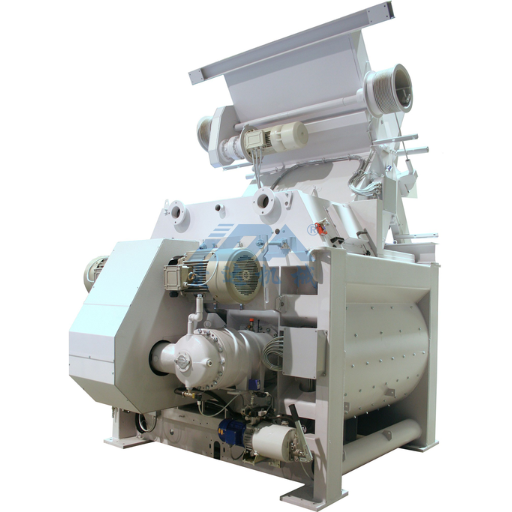
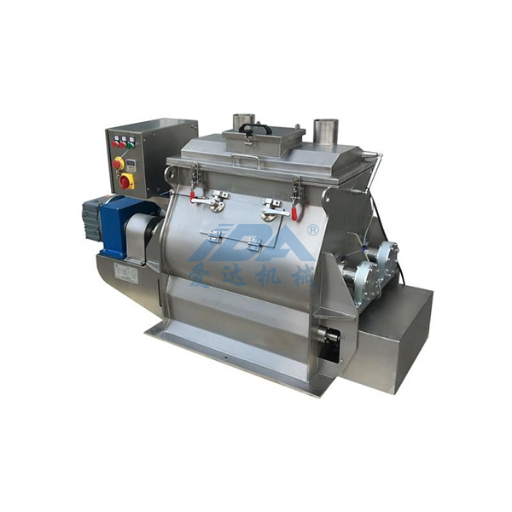
A Twin Shaft Paddle Mixer is an advanced mixing device engineered to efficiently blend powders, granules, and other solid materials at industrial scale. The system consists of two horizontal shafts fitted with specialized paddle-shaped blades that rotate in opposite directions. This counter-rotational movement generates a fluidized zone within the mixing chamber — enabling fast and complete blending of components across different particle sizes and densities. Twin shaft paddle mixers are highly regarded in food processing, pharmaceuticals, chemicals, and construction for their ability to achieve excellent mixing quality in a short timeframe. The gentle mixing action protects materials from degradation, preserving their original properties while precise control features allow operators to optimize every stage of the industrial mixing process.
Key Components of a Paddle Mixer
How Twin Shafts Enhance Mixing Efficiency
Twin shaft mixers work best to deliver their highest performance in industrial applications that require their most demanding capabilities. The two horizontal shafts work together to create a strong countercurrent mixing system that achieves total material mixing across different density and viscosity ranges, which produces superior results within a shorter time period than single-shaft systems. The mechanism creates an energy distribution system that moves energy through the mixing chamber, which leads to improved material movement and decreased areas where unmixed materials can build up. The design operates well for large material volumes, which makes it suitable for industrial processes that require high material throughput, including concrete production and pharmaceutical blending. The combination of processing precision, throughput capacity, and reduced equipment downtime makes twin shaft mixers the preferred solution for contemporary industrial mixing requirements.
Key Features of Twin Shaft Paddle Mixers
Feature 01
Precision Mixing Capabilities
Twin shaft paddle mixers produce mixed materials of identical quality throughout each cycle, regardless of material type or batch weight. The dual backward-moving shafts create a fluidized zone that achieves complete, optimum material distribution while minimizing errors. Advanced mixing control enables operators to maintain consistent composition across varied particle size and density distributions — making them suitable for food production, pharmaceuticals, and construction applications that all demand exacting uniformity.
Feature 02
Continuous Operation Advantages
These mixers are designed for uninterrupted processing — enabling continuous production while sustaining consistent product quality throughout. Fewer operational breaks mean reduced equipment wear, lower maintenance expenses over the equipment lifecycle, and higher effective production capacity. The system processes large material volumes with precise production control, making it the optimal solution for businesses that need to maintain high output rates alongside dependable operational reliability.
Feature 03
Hygienic Design
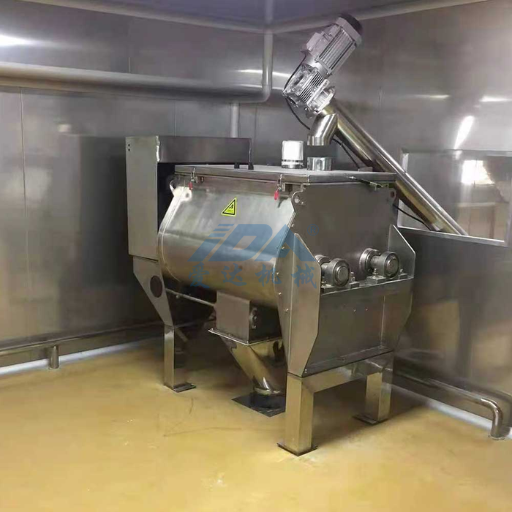
Hygienic design functions as an essential requirement because it safeguards both safety and operational standards for food processing and pharmaceutical production and cosmetic manufacturing operations. The establishment of hygienic construction standards begins with the use of smooth surface designs together with systems that eliminate all crevices and materials that resist corrosion. The system features several access points that enable maintenance and cleaning work while its advanced components such as self-draining systems and sanitary seals deliver operational dependability and decreased equipment downtime and ongoing regulatory compliance support.
Benefits of Using Twin Shaft Paddle Mixers

Operational Benefits at a Glance
- ✓
Enhanced Uniformity in Powder Mixing
The counter-rotating paddles cause a cyclone–like motion in the fluid that mixes all of the particles within a specified time frame. Thus, industries into which precision matters the most — pharmaceuticals, food, chemical— would reap the maximum benefit from the uniformity of the mixing. This uniformity ensures reduced ability to variation and assures each batch of meeting quality and compliance standards. - ✓
Decreased Mixing Duration with Greater Energy Savings
Two opposing shafts with specially designed paddles could mix material in a fraction of time required by traditional mixers. Combine this with the energy saved via this efficiency against those objectives of production achievement on the steps which are ahead by sustainable goals and cost reduction. - ✓
Versatility Across Powder Types
Twin-shaft paddle mixers provide a consistent mix of fine talc powders and strongly abrasive, high-density granule blends without any particle size, material, or moisture content limitations. They easily accommodate pharmaceutical, food production, and chemical manufacturing needs through adjustable speed and mixing process choices and by providing modern technological features to lessen noise and thereby reduce contamination and material wastage.
Applications of Twin Shaft Paddle Mixers
Industries Utilizing Twin Shaft Paddle Mixers
Food Industry
Through uniform mixing of flour and spices and additives the production process achieves high-grade results which are essential for bakery and confectionery and prepared food manufacturing.
Construction
The construction industry requires builders to create a uniform mixture between dry mortar and cement and building materials which will protect the building’s structural strength during construction work.
Chemical Industry
The chemical industry requires manufacturers to execute precise powder and granule blending operations because their production process needs complete accuracy and consistent results between different batches.
Pharmaceuticals
The pharmaceutical industry needs stable powder and uniform powder blending processes because they determine the active ingredient distribution and dosage accuracy and product safety in all pharmaceutical products.
Agriculture
Animal feed production needs farmers to combine grains with vitamins and supplements while they create balanced feed formulations and they need to combine organic materials which include fertilizers and compost and soil amendments.
Renewable Energy & Advanced Materials
Biomass feedstocks and other advanced materials work together with nanocomposites at this facility which meets sustainability standards while executing exact production processes.
Common Materials Processed with Paddle Mixers
Case Studies: Successful Implementations
Considerations When Selecting a Twin Shaft Paddle Mixer
Production Requirements & Volume Assessment
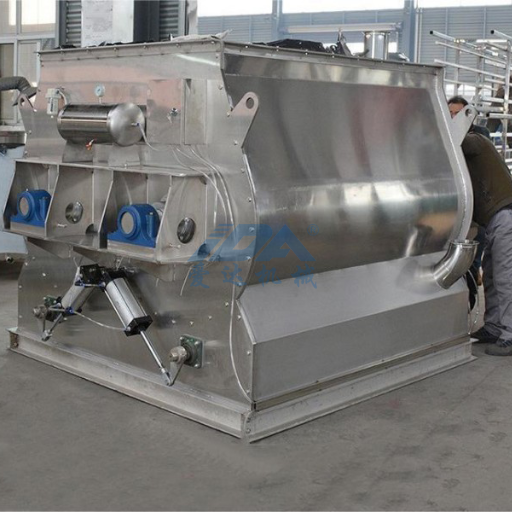
The process of choosing an appropriate mixer starts with assessing the required operational capacity for your mixing operations. The first step requires you to assess your batch sizes and processing frequency and throughput needs. Manufacturing facilities that operate at high capacity need to use large mixers which have powerful motors and strong construction to achieve their continuous processing and bulk processing needs. The industries that operate with different batch sizes need to use mixers which have both adjustable configurations and modular designs because these features enable them to handle different operational requirements without needing to change their equipment. The mixer specifications should align with production specifications and operational requirements and future growth plans to ensure that the investment meets both current requirements and future operational needs.
Evaluating Specifications & Customization Options
The three main operational needs which manufacturers and procurement teams need to address during their process equipment selection operate as their primary focus areas for mixing equipment selection. The operations systems of various production environments now include adjustable speed settings together with automated systems and modular design elements as standard operational features. The market demonstrates increasing demand for environmentally sustainable mixers which operate with reduced energy consumption and produce minimal operational waste. Organizations that evaluate their systems through current search and market data can make operational decisions which meet their present needs and build mixing systems that will adapt to future technological advances.
Integration with Existing Processing Systems
The process of integrating new mixing solutions into existing processing systems demands a thorough evaluation of their technical compatibility and their ability to function in operational settings. Manufacturers today offer products that feature modular designs with interface options which permit deployment in multiple production settings while maintaining existing operations. The new systems can operate together with current business processes through the use of advanced software solutions which include IoT monitoring tools and real-time data analytics. This method decreases system downtime during the transition process while it provides new features which improve all production operations.
Frequently Asked Questions
Reference Sources
Source 01
Failure Investigation of the Driving Shaft in an Industrial Paddle Mixer
Focuses on failure analysis and structural evaluation of shafts in double-shaft paddle mixers used in industrial processing environments.
Source 02
Effect of the Mixer Design Parameters on the Performance of a Twin Paddle Blender: A DEM Study
Explores the quantitative impact of design parameters on powder mixing efficiency using a discrete element method (DEM) simulation approach.
Source 03
Finite Element Analysis and Design Optimization of a Paddle Mixer Shaft
Investigates the structural design and optimization of paddle mixer shafts using Finite Element Analysis to improve performance and service life.