Get in Touch with IDA

Food Grade Powder Mixer: Sanitary Design Guide

Contents
show
Food production, pharmaceuticals, and cosmetics all demand precise blending processes which require their operations to run at maximum efficiency, but the food grade powder mixer serves as the advanced solution that fulfills this requirement. The systems create a mixing process which operates at maximum efficiency while maintaining all required safety and hygiene standards, which results in consistent outcomes when processing various batch sizes, as they protect both product quality and regulatory requirements. The guide presents essential characteristics and key advantages of food grade powder mixers, which demonstrate their industrial applications as vital operational investments for businesses that compete through product quality.
13%
YoY Rise in Food Safety Searches
20%
Rise in Static Mixer Search Volume
3+
Core Mixer Technology Types
FDA
/ USDA Compliance Standard
Introduction to Food Grade Powder Mixers

What Is a Food Grade Powder Mixer?
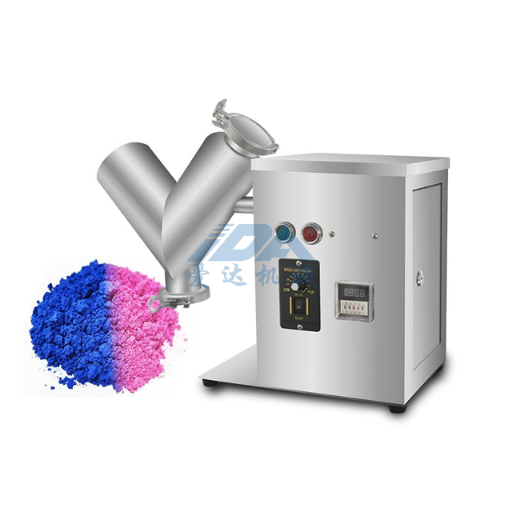
A food grade powder mixer serves as an equipment system which combines powdered substances according to the sanitary standards required by food and pharmaceutical industries. The mixers use food-safe materials which include stainless steel to prevent contamination while they meet FDA and USDA regulatory requirements. The system uses advanced mixing technologies which include ribbon blenders and paddle mixers and tumble blenders to create consistent results across all batch sizes. The design combines precise engineering with features that simplify cleaning, enabling efficient production of spice blends, baking mixes, nutritional supplements, and pharmaceutical formulations — all without compromising product quality or safety.
Importance of Food Grade Standards
The food grade standards create essential rules which protect public safety and preserve product quality and establish uniformity for all food products. The FDA and USDA regulations establish complete safety requirements which include material safety and cleanliness standards and manufacturing process standards. The standards require compliance which functions as a twofold system that protects against contamination while establishing customer confidence through product compliance with health standards. The latest data indicates that searches for food safety standards have increased by 13 percent from the previous year because consumers now require additional information about product manufacturing methods. Organizations which maintain compliance gain advantages that help them prevent expensive product recalls and protect their brand image and fulfill the changing demands of customers and regulatory authorities.
Overview of Different Mixer Models
Selecting the right mixer model requires understanding both equipment capabilities and the specific operational requirements of the application. Rising search interest in “industrial mixers for food production” and “sanitary mixers for pharmaceuticals” reflects broader industry demand for high-performance equipment that meets regulatory standards without sacrificing throughput or flexibility.
Ribbon Mixers
Best suited for dry blending operations in food and pharmaceutical companies because they deliver consistent results efficiently. Growing demand for “efficient dry ingredient mixers” has driven increased search activity for this category.
Planetary Mixers
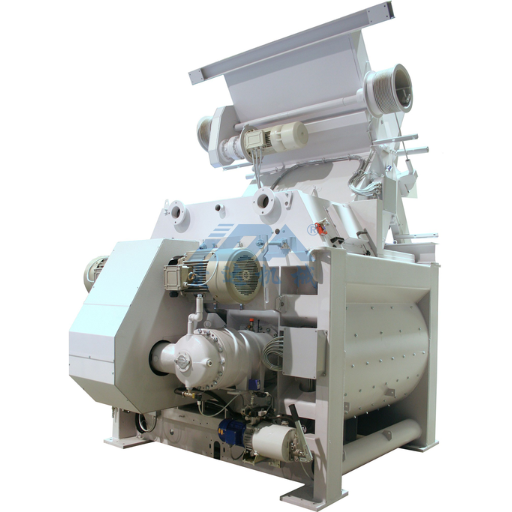
Every production batch requires equipment that can handle both heavy materials and fragile materials. The increasing demand for “bakery mixers for large batches” shows that commercial kitchens and large-scale bakery operations have started to adopt these machines.
Static Mixers
Operate continuously within chemical and food production facilities as inline systems. Search volume for “inline static mixers” increased by 20% during the last tracking period, reflecting growing interest in continuous flow efficiency solutions.
Benefits of Using Food Grade Powder Mixers
Benefit 01
Enhanced Efficiency in Mixing
Food-grade powder mixers exist to provide efficient mixing operations because their design allows precise control over every aspect of the mixing process. The processing time and material waste reduction together with the established product quality improvement as results of this precise method create measurable benefits. The systems operational efficiency enables businesses to decrease their expenses while they maintain consistent production of high-quality products during restricted manufacturing periods which makes these systems essential for companies that need to comply with strict regulatory standards.
Benefit 02
Quality Control & Consistency
Food-grade mixing operations now use advanced technologies together with data-driven production methods to achieve their required quality control standards. The combination of AI-driven inspection systems with real-time monitoring tools enables organizations to identify product defects at an early stage which ensures their compliance with strict quality standards before delivery to customers. The use of these tools together with strong quality systems enables businesses to establish customer trust while decreasing waste and sustaining their market advantage in industries that prioritize product quality.
Benefit 03
Versatility Across Industries
The adaptability of food-grade powder mixers extends their value well beyond a single sector. Manufacturing uses them for precise assembly line integration. Healthcare applies them in laboratory testing and medical-grade compound preparation. Agricultural and nutraceutical operations rely on them for uniform blending of complex, multi-component formulations. The cross-sector applicability of these systems demonstrates that food-grade mixing technology is not industry-specific — it is a platform for production excellence across multiple disciplines.
Diverse Applications of Powder Mixers
Mixing Mechanisms and Technologies
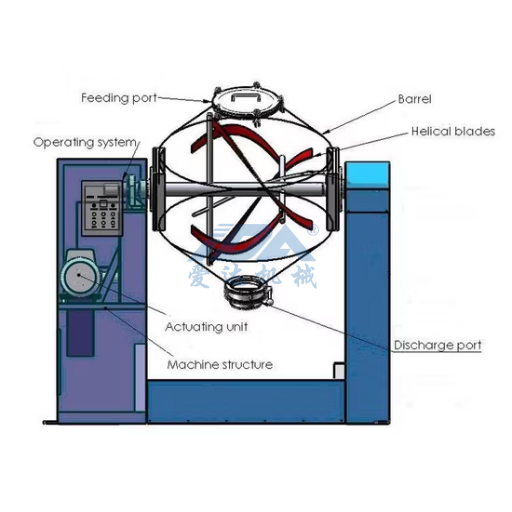
Mixer Technology Comparison
Ribbon Mixers: Design and Functionality
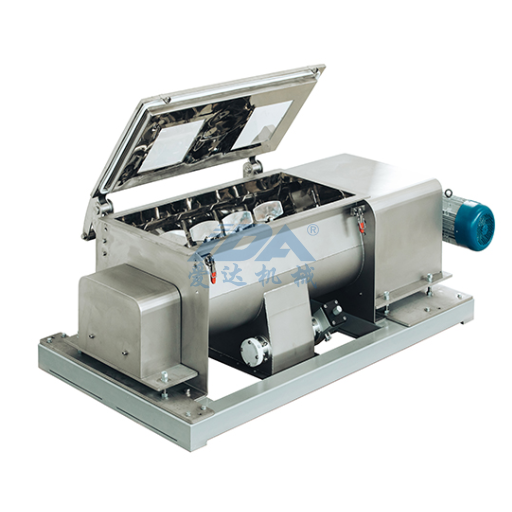
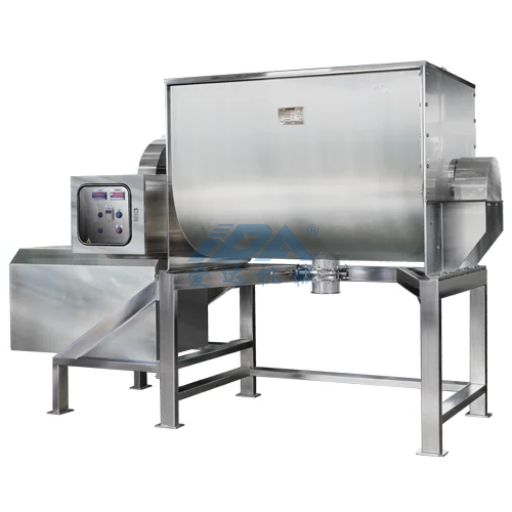
Ribbon mixers serve multiple industrial applications as an effective solution for blending materials used by food, pharmaceutical, and nutraceutical industries. The design consists of a U-shaped horizontal trough containing two helical ribbon systems — one inner and one outer. The dual-ribbon arrangement produces two opposing material flows that achieve complete, uniform product distribution throughout the entire mixing cycle. Modern ribbon mixer systems incorporate advanced components that optimize operational performance, eliminate inactive zones, and reduce energy requirements. Variable speed settings and automated systems provide improved adaptability and scalability while maintaining the cleanliness standards required by regulatory bodies.
Paddle Mixers: Efficient Mixing Techniques
Paddle mixers produce consistent and uniform results when processing both dry powders and wet materials. Efficiency is achieved through strategically placed paddle angles that create a distinctive lifting and folding motion — promoting thorough mixing while minimizing product degradation, making the design ideal for delicate materials. Adjustable speed controls and precision engineering enable customized configurations that address specific batch requirements while saving time and reducing energy consumption. Modern paddle mixers also incorporate easily cleaned surfaces and mechanisms that support sanitary standards and help production facilities meet industry regulations.
Understanding Plow and Shear Mixers
Plow and shear mixers use plows and high-speed choppers to generate strong material movement within the mixing chamber, achieving complete ingredient blending across challenging material types. The system works best with bulk solids since it breaks down clumps while achieving uniform mixing of powders and granules and other particulate materials. Shear mechanisms enable manufacturers to precisely incorporate fine cohesive powders and liquid additives into their products. The pharmaceutical and chemical industries and food production facilities now use these mixers because they can handle complex blending tasks through their modern control systems and their ability to support various formulation methods.
Choosing the Right Powder Mixer
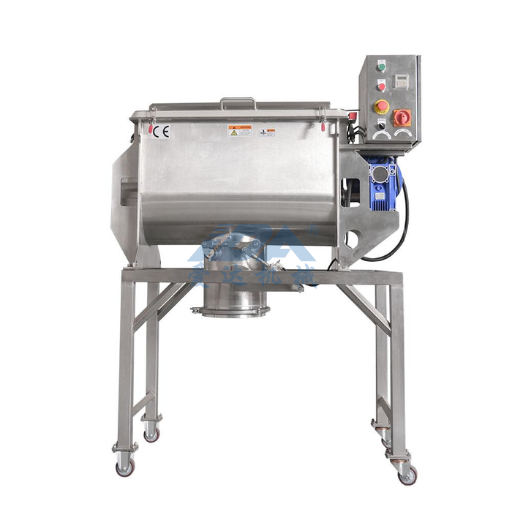
Assessing Batch Size & Production Needs
The first requirement for choosing a mixer type depends on your processing frequency and batch size. The batch mixer system provides accurate formulation control which makes it suitable for small production runs that need different recipes. Continuous mixers deliver the best performance for factories producing high quantities of identical products over long operational periods. Industries that want to grow their production capacity while maintaining product quality standards need mixers which have adjustable designs and modular systems that can handle changing market demands without needing extra equipment costs. The combination of simulation software and manufacturing data analytics tools enables demand forecasting which aligns existing mixer capabilities with both present and upcoming operational requirements.
Ingredient Properties & Compatibility
The ability to control multiple aspects of production and equipment through different components at different operational speeds enables users to create specific operational settings which depend on the characteristics of their ingredients. The system uses real-time monitoring tools which supply operational feedback to assist operators in managing their mixing activities with various ingredient combinations. The increasing demand for flexible mixing technology shows that the industry now views versatility together with ingredient compatibility as essential requirements which all mixing systems must meet.
Compliance Standards & Regulatory Requirements
Compliance standards from ISO, FDA, and OSHA establish essential guidelines that ensure equipment and processes protect both consumers and employees. The following compliance factors should be verified during mixer selection:
- ✓
ISO 9001 — Confirms production processes meet quality management requirements for mixing technology systems - ✓
FDA / USDA Material Standards — All contact surfaces must comply with food-safe material specifications and be verifiably free of prohibited substances - ✓
GMP Hygiene & Cleanability Standards — Equipment must support CIP operations and prevent cross-contamination between batches and product changeovers - ✓
OSHA Safety Compliance — Equipment design must incorporate operator protection features including guarding, emergency stops, and safe maintenance access points - ✓
Sanitary Design Verification — Smooth welds, drainable bowls, accessible shaft connections, and quick-release seals support complete cleaning validation
Frequently Asked Questions
Reference Sources
Source 01
Powder Mixing in the Production of Food Powders
Discusses the role of powder mixing technologies in achieving product homogeneity across food powder production operations.
Source 02
Agglomeration of Food Powder and Applications
Explores current applications and research opportunities in food powder agglomeration, relevant to advanced mixing technology design.
Source 03
Food Mixing: Principles and Applications
Provides an in-depth examination of the principles, challenges, and design criteria governing effective food mixing at industrial scale.