Get in Touch with IDA

Twin Shaft Concrete Mixer for Construction

Contents
show
Construction projects in today’s world require equipment that provides fast operation and steady performance during extensive work. The twin shaft concrete mixer has established itself as the definitive solution for high-volume concrete production because it delivers mixing performance and output reliability and technological integration which exceeds the capabilities of traditional mixer designs. This guide examines the core advantages, engineering principles, technical specifications, and practical selection considerations of twin shaft mixers, providing construction professionals with the knowledge required to make informed equipment decisions across infrastructure, precast, and ready-mix applications.
Introduction to Twin Shaft Concrete Mixers
What Is a Twin Shaft Concrete Mixer?
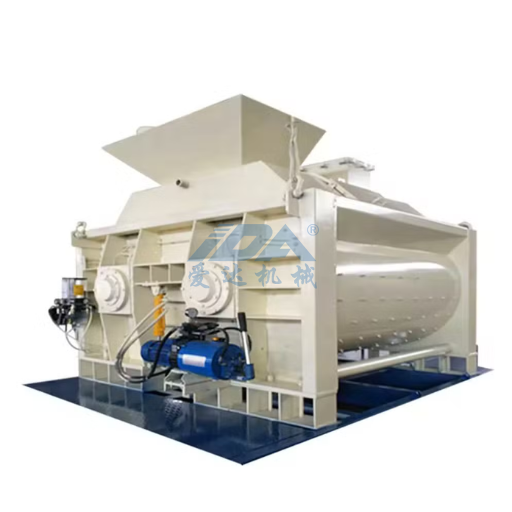
The twin shaft concrete mixer functions as a high-performance machine which produces standard concrete mixes through shorter operational time frames than traditional mixing methods. The mixer uses two shafts which rotate in opposite directions to drive multiple mixing paddles that intersect with each other. The system guarantees complete material blending which includes aggregates cement water and additives throughout all concrete consistency levels from high-fluidity mixes to stiff dry batches.
Core Design Advantages
- ▸ Enhanced mixing efficiency through counter-rotating paddle overlap — eliminates dead zones and ensures full batch coverage.
- ▸ Central outlet discharge system enables rapid, complete material release — improving batching plant cycle throughput.
- ▸ Capable of processing excessive batch volumes while maintaining consistent homogeneity — essential for large infrastructure projects.
- ▸ Wear-resistant materials, automated control integration, and maintenance-accessible design ensure long service reliability in demanding site conditions.
The Role of Mix Quality in Construction
Mix quality acts as the primary factor which determines both structural strength and the durability of structures over time. High-quality concrete production requires precise material proportions together with controlled aggregate particle distribution and the use of contemporary additives that meet established performance standards for both compressive strength and workability and environmental resistance. The construction industry suffers from multiple structural failures which result from poor mix quality through cracking and spalling and decreased load capacity. The construction industry now requires construction companies to establish strict quality control procedures which start at the mixing process.
Twin Shaft Technology Overview
Twin shaft mixing technology delivers complete material uniformity through two parallel horizontal shafts whose paddles rotate at matched speeds to create intense, intermeshing flow patterns within the mixing chamber. This mechanical action produces uniform material distribution while actively preventing segregation — even in high-volume or high-viscosity batches. The technology supports the full spectrum of mix designs including low water-to-cement ratio mixes and high moisture content formulations, making it adaptable to the varying technical demands of modern construction projects.
Benefits of Using Twin Shaft Concrete Mixers
Operational Efficiency
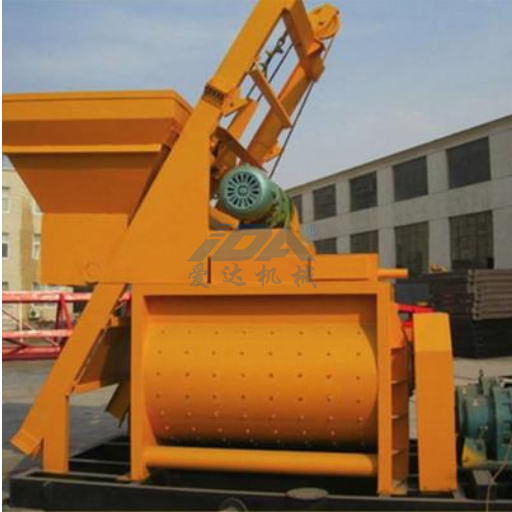
Counter-rotating shafts achieve superior mixing efficiency. The system uses automated control to monitor three different parameters which include mixing time and rotational speed and material consistency. The system achieves fast production turnaround because it operates with minimum energy use and production interruptions.
Concrete Mix Quality
The combination of precision-engineered admixtures and real-time monitoring systems creates a process that produces consistent quality throughout different production batches. The system uses automated temperature tracking and aggregate quantity monitoring and curing duration assessment to ensure structural integrity while minimizing human mistakes during the mixing procedure.
Application Versatility
Twin shaft mixers process high-performance concrete for bridges, tunnels, and high-rise structures, and support precast concrete panel production for modular construction. Growing adoption of recycled aggregates and low-carbon cement is also well-supported by the flexible mix handling capability.
Specifications and Features of Twin Shaft Mixers
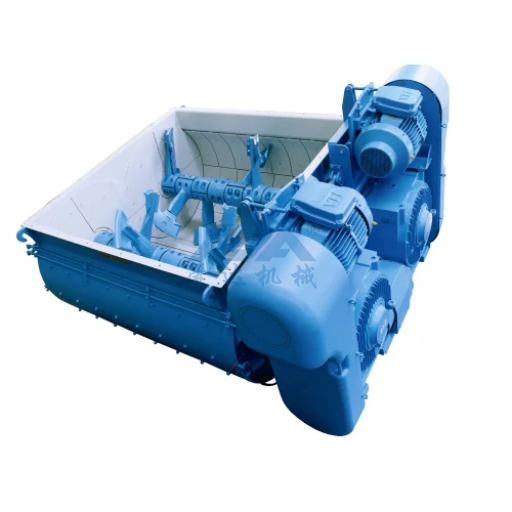
Key Technical Specifications
Design Innovations
The most significant recent advances in twin shaft mixer design center on material handling precision and component longevity. Modern systems use advanced flow dynamics technology to achieve uniform distribution of aggregates, cement, and water through precisely engineered blade geometry and specially designed mixing chambers that eliminate dead zones while enabling uninterrupted material flow. The result is faster mixing operations with measurably better final mix homogeneity.
Component service life has been extended substantially through the integration of high-performance wear-resistant materials, including tungsten carbide coatings on high-contact surfaces. At the design level, manufacturers are also incorporating energy-efficient motors and sustainable manufacturing processes — a response to the construction industry’s growing requirement for equipment that meets both performance targets and environmental standards simultaneously.
Twin Shaft vs. Other Mixer Types
| Factor | Twin Shaft Mixer | Pan / Planetary Mixer | Drum Mixer |
|---|---|---|---|
| High-Volume Capacity | Excellent — 1 to 4 m³ per batch | Moderate — application-specific | Limited to basic mixing needs |
| Mix Uniformity | Exceptional — counter-rotating overlap eliminates dead zones | Good for task-specific applications | Poor for complex or high-strength mixes |
| Cycle Time | Fast — rapid discharge in 10–30 seconds | Comparable or slower | Slower; not optimized for throughput |
| High-Strength Concrete | Fully capable — fiber-reinforced and low W/C mixes | Limited by design constraints | Not suitable for high-strength applications |
| Automation Compatibility | Full PLC, IoT, and cloud integration | Partial — varies by manufacturer | Minimal |
| Sustainability Profile | Energy-efficient motors and VFD-ready design | Moderate | Limited energy optimization |
Advanced Technology Behind Twin Shaft Mixers
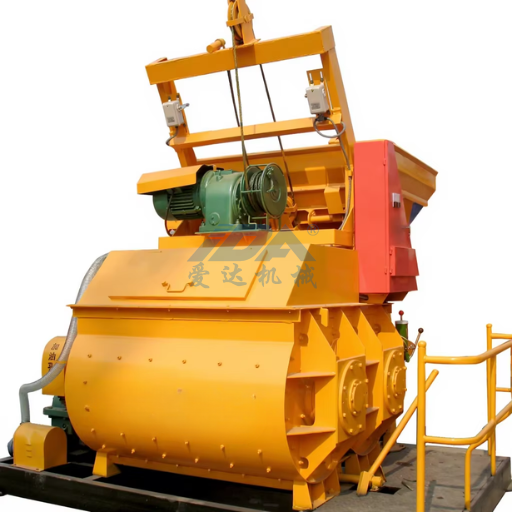
Engineering Principles of Twin Shaft Design
The twin shaft configuration uses two horizontal shafts operating together to power mixing arms and paddles that generate turbulent flow patterns inside the mixing chamber. This controlled turbulence creates continuous material movement which achieves complete homogenization by preventing particle size segregation throughout the batch. The precise shaft alignment, combined with advanced materials for wear parts, contributes directly to reduced maintenance costs and extended equipment lifespan. Modern designs further integrate load-sensing technology and real-time feedback mechanisms that optimize operational performance across varying material loads.
Automation and Control Systems
Technology Integration Highlights
AI-Driven Process Algorithms
AI-based algorithms provide automatic system updates which control engine torque and speed and weight distribution throughout different production runs which use different material combinations. The system tracks material alterations through automatic detection which needs no human operation.
IoT-Enabled Sensor Networks
IoT sensors located throughout the mixer equipment operate as continuous performance monitoring systems. The system provides operators with real-time data which helps them identify quality issues before they impact production results while the system collects data needed for upcoming maintenance tasks.
Cloud-Based Predictive Maintenance
Cloud-based platforms use operational usage data to identify patterns that indicate upcoming system failures which then activate maintenance procedures that prevent equipment breakdowns. This method enables maintenance teams to conduct preemptive maintenance activities which results in fewer unscheduled downtimes and longer equipment operational periods.
Automated Material Handling Integration
The system uses advanced conveyor systems together with robotic automation and smart sensors to achieve continuous and accurate delivery of raw materials into the mixing chamber. The system measures viscosity and temperature and mixing speed in real time to maintain output quality at expected standards while automatic corrections handle quality issues which occur during production.
Choosing the Right Twin Shaft Concrete Mixer
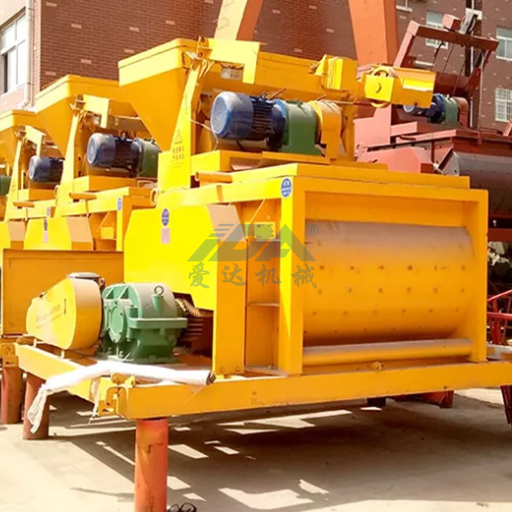
Factors to Consider for Your Project
- 01
Assess Required Production CapacityBegin by calculating your target output in cubic meters per hour. Select a mixer specification that matches this production requirement with headroom — undersizing a mixer for a high-output project creates bottlenecks that affect the entire construction schedule.
- 02
Verify Aggregate and Mix Design CompatibilityConfirm that the mixer’s mechanical configuration and paddle design are compatible with your chosen aggregate type and concrete mix design. Incompatible equipment-to-material matching leads to uneven blending, premature wear, and compromised output quality.
- 03
Evaluate Power Requirements and Energy ConsumptionYou should compare energy consumption data between different models while focusing on equipment which uses energy-efficient motors and variable speed drives. The features of the system provide significant reductions of operating costs which apply especially to high-throughput locations where the mixer operates continuously during extended production hours.
- 04
Review Durability and Maintenance RequirementsExamine the wear-resistant material specifications for high-contact components — mixing arms, liners, and shaft seals. Equipment rated for longer component lifecycles delivers lower total ownership costs and reduces the frequency of production stoppages for part replacement.
- 05
Specify Automation and Control CapabilitiesFor major projects, specify PLC-based programmable controllers with real-time monitoring and remote operation capability. These systems maintain consistent mix quality while reducing direct operator intervention — and provide the compliance documentation trail that many infrastructure contracts require.
- 06
Confirm Standards Compliance and CertificationThe equipment must go through testing to confirm its compliance with industry standards and certification requirements. The certified equipment provides safety benefits and assists with regulatory approvals while establishing operational credibility for the production process which handles public infrastructure contracts that require high quality assurance standards.
Evaluating Mixer Suppliers
Supplier selection has a direct bearing on long-term operational performance. Assess suppliers first on their technical capabilities — companies that offer advanced automation technologies, remote monitoring solutions, and energy-efficient products demonstrate market engagement and product development commitment. The ability to deliver custom solutions for specialized processing requirements is a significant advantage for complex or non-standard applications.
Supplier Evaluation Checklist
- ✓ Demonstrated track record for on-time delivery and post-sale technical support
- ✓ Complete technical documentation, training programs, and accessible customer support
- ✓ Maintenance service contracts and warranty coverage that reduce downtime exposure
- ✓ Verifiable customer case studies and peer reviews confirming real-world performance claims
- ✓ Certifications confirming compliance with global safety and environmental regulations
Installation and Maintenance Considerations
The process of effective installation needs three requirements which include exact project specifications and experienced staff monitoring and specialized training for internal operators. The integration process must operate with minimal impact on existing operations while achieving complete system integration with current batching plant equipment. The maintenance plan which should be created after installation work needs to concentrate on both predictive and preventive maintenance activities. The system uses real-time sensor data together with analytical models to predict equipment failures which will lead to production stoppages while the preventive maintenance schedule follows equipment manufacturer guidelines to maintain operational efficiency and safety standards.
The industry leaders today depend on IoT-based systems which provide real-time performance data to improve both the accuracy of installation verification and the effectiveness of ongoing maintenance operations. Remote monitoring and technical support services from suppliers enable customers to achieve superior equipment investment returns over time according to their service delivery model.
Frequently Asked Questions
Reference Sources
- ▸Experimental Research on Vibrating Mixing of Concrete Based on Twin-Shaft Mixer Explores mixing efficiency improvements through vibrating mixing schemes in twin-shaft concrete mixers via field test data.
- ▸Twin-Shaft Mixers’ Mechanical Behavior: Numerical Simulations of the Mix and Phases Examines mechanical behavior characteristics and design optimization approaches in twin-shaft horizontal mixer configurations.
- ▸
- Application of Digital Twins to Enhance the Performance of an Automatic Concrete Mixer for Construction
Investigates digital twin technology integration for performance enhancement in automated construction-grade concrete mixers.