Get in Touch with IDA

Three Roll Mill for Solder Paste Processing

Contents
show
When we bring quality into the solder paste production, such thing as the three roll mill becomes a stepping-stone for further clarification. The three-roll mill is the primary piece of equipment developed with an advanced functionality to disperse and blend solder paste components infiltrating best operational practices and reliability for various applications ranging from the production of electronics to precision assembly. The quality of the solder paste is much dependent on consistency, viscosity, and particle distribution—three factors that the three-roll mill effectively tailors. In this post, we will discuss the critical role of a three-roll mill in solder paste processing, giving an overture how it is instrumental towards better-quality products, production optimization, and solution to technical problems. This guide goes beyond production managers, engineers, students (engineering), technicians, and other interested parties in the manufacturing. And it gives real insights into the three-roll mill technology.
Principles of Three Roll Mills
How a Three Roll Mill Works
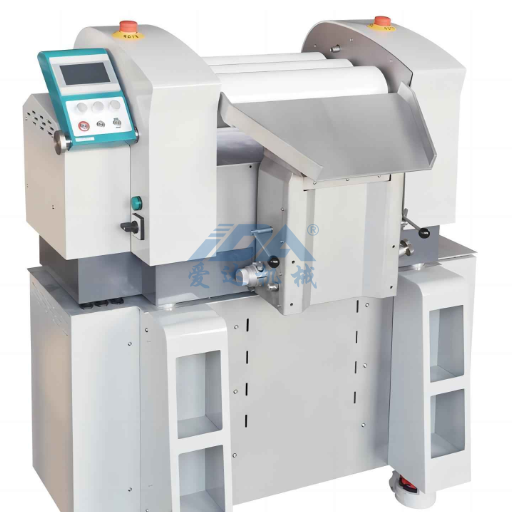
A three-roll mill is operated with three rollers that sit horizontally, each moving at different speeds. The material is led into the space between the first two rollers and is drawn in and sheared by the rollers, differring in speed according to their rotations. Owing to this differing speed, the material is uniformly sheared, leading to the breaking up of particles, and mixing and dispersal all over the surface of the rollers.
By the time the material enters the gap of the first roller, it is further unknowingly channeled into the second gap between the center and third rollers. The fact that the second gap has a finer tolerance allows for even greater dispersion and particle reduction. This particular stage ensures that the material attains the desired consistency and homogenization, which is paramount in the applications that demand uniform quality, such as solder pastes, inks, and several other materials.
A tool that boasts control of roller distance and speed in milling, such as the three-roll variety, finds application in many industries. The precision stopping of quality is when the final product becomes well dispensed, evenly spread over a surface, and highly reduced in size. As simple and reliable machines, the apparatus is essential for ensuring reproducibility in producing results in production as well as in laboratory settings.
Key Features of Three Roll Mills
Control and Precision:
Three roll mills can precisely control the roller gap for good and even particle size reduction. This lead to uniformity and consistency, saving homogenizing of very small batches. This makes a very useful limit in both labs and plants-and any other mills of the same grading scale. The mill’s controllable parameters, such as roller speed and direction, allow material modification for various viscosities/consistencies.
High Shear Capability:
The shear force generated by the rotting rollers is particularly useful for dispersing and grinding fine particles. It is a most useful benefit for materials quite viscous like pastes, resins, or slurries (large potentials in sectors like cosmetics, pharmaceuticals, ink, and paint production).
Wide Applications:
Three roll mills are equipment that makes a number of applications available to almost any industry: applications ranging from beauty (lipstick and creams) to sophisticated materials: from carbon nanotubes to conductive inks. In short, these machines will help achieve superior products and less wastage of material
Safety-Enhanced Design:
The design of a modern three-roll mill includes safety stops such as emergency stop actuators to safeguard both the equipment itself and its operators. Along with this, some machines are introduced to the production floor together with a closed enclosure design to maintain a clean environ during milling.
Construction and Maintenance Perspective:
In this sense, modern three roll mills are designed to withstand the rough materials of stainless steel or ceramics, for long-life application and low maintenance requirements. Some models give off a self-cleaning feature, which really reduces maintenance downtime and improves mill efficiency.
Advanced Automation and Control Options:
Three roll mills now have smart features, and some also come with controls for roller speed, gap size, and temperature settings. These technologies have increased the ability to replicate results and contribute to a decrement in the margin of error in areas of high-gain processes.
In viewing these features and processes, the three roll mills still become an indispensable workhorse for industries needing highly precision dispersal and particle size reduction.
Advantages of Using Three Roll Mills for Solder Paste
Three roll mills give an assurance of meticulous accuracy with the kind of solder paste it produces. These machines are planned in order to attain uniform particle size, which is crucial for good and reliable soldering applications. An exact control of particle dispersion will further prevent any occurrences of aggregation that can affect electrical connection excitability and soldering efficiencies.
They have the advantage of possessing a wide viscosity window of operation. Solder paste contains fine metal powder combined with flux medium, and there should be careful processing in order to produce proper consistency. Users can fine-tune the material with respect to these rheological properties as the conditions for that can be largely molded by adjustability of gap size and roller speed on the three roll mills, indeed giving a richer spread and subsequently stronger adherence to the circuit board.
Three-roll mills are seen to be the game by which one can consolidate quality control and reduce errors during production. Together with this physical feature is the characteristic of their having the ability to reduce so far inconsistency in batches produced, without considering the engineering type. This is significant in the electronic materials processing and manufacturing sector, considering that small differences in solder paste can result in defects or failures. Such dependability makes a three-roll mill an indispensable tool for maintaining high-quality, defect-free solder paste production.
Solder Paste Mixer Technologies
Overview of Solder Paste Mixers
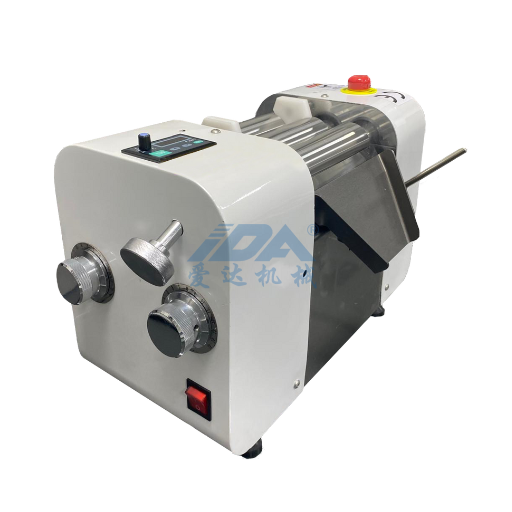
Solder paste mixers have been especially designed to blend ingredients together for a uniform quality of solder paste used in electronic assembly. They play the most important role of blending solder powders and flux without separation, thereby achieving an ideal paste that meets all properties like viscosity and homogeneity. The quality of results obtained in electronic assembly procedures will depend on the quality of intended mix from the paste-mixers.
There are several types of such paste mixers, each specializing in catering to different needs or scales of production. The most commonly utilized include centrifugal paste mixers and planetary paste mixers. Unlike planetary mixers designed for playing a dual role in dispersing and grinding due to shearing which takes place against an abrasive material where the vessel and/or balls should keep off, centrifugal offers a more reliable method and depends mainly on rotational motion and centrifugal rotation to achieve a uniform end product within an exceptionally short time. On the other hand, planetary reacts in a phenomena that would generally allow a very proper mixing of high-viscosity materials.
The choice of the solder paste mixer highly depends on the specific production process needs such as batch size, paste viscosity, and level of desired accuracy. Well-mixed solder paste minimizes the possibility of defects during the soldering process and guarantees an ultimate product that meets the strict quality criteria and, in most cases, carries new reliability. Therefore, the selection of the right machine can give manufacturers an edge in electronic assembly operations by streamlining processes and maintaining consistency.
Automatic Solder Paste Mixers
In the electronics manufacturing industry, automatic solder paste mixers are essential for consistent and reliable preparation of solder paste. The solder paste is homogenized and mixed with the mixeropposed to any chance of separated paste, air bubbles, all of which would be discouraged by the production of high-level product quality. Therefore, manufacturers profit from a more definite and efficient process than that of manual mixing methods.
To maintain the dynamic, the automatic solder paste mixing machine is employed with the motive of attaining uniform viscosity and composition for the solder paste. In order to do full justice to proper thorough mixing of the metal particles and dependence fluxes, these machines employ centrifugal-mixing and rotary-mixing mechanisms. Thus, it ensures that the suitable thickness or viscosity is retained for feasible printability of the paste and that the paste will prevent defects associated with solder bridging or the lack of soldering, all through the soldering procedure. A solder paste whose flux and metallic particles are mixed proportionately provides stencil printing with a finer-and-improved accuracy of deposition.
What is more important, automatic solder paste mixers fasten process roadmaps by wasting less time and keeping low waste. They rip the flexibility for big production volumes and fixed quality levels. Reliability and accuracy accompany such machines that are indispensable in generic production contexts high on volume and accuracy, given that any minor inconsistency could result in non-functioning components or reduced durability.
Benefits of SMT Solder Paste Mixers
SMT solder paste mixers offer several advantages over the mixing that hugely improve the operational efficiency and quality of the soldering process in electronic manufacturing. By mechanizing the mixing capability, these machines can offer a paste consistency that is identical throughout and basically correct for right and faultless need of the solder interface. Lessening these adaptation loses to a considerable degree, and at the same time, more acceptable products can be delivered in comparison to those that pondered the mere human touch.
One of the most tangible advantages of automatic SMT solder paste mixers is time saved. Manual mixing usually eats up the time and comes with the traps of human mistakes while an automatic mixer allows the users to free themselves from the physical mixing, enabling them to devote time to other demanding production activities. In this way, more profitable hours can be captured in the large-scale manufacturing sector with short-run deliveries being considered in the first place due to bigger output requirements.
A few other embodiments include enhanced compactness of design, higher depths and heights, or thinner radii. These examples create diversity among mesoscale structures.
Application of Three Roll Mills in Solder Paste Processing
Real-World Applications in Electronics
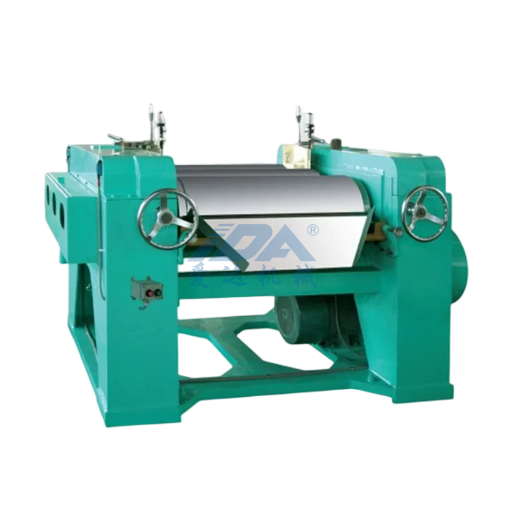
Three-roll mills are an integral part of processing solder paste in electronics. The main purpose of their use is to attain particles of solder paste to be evenly distributed, something that is indispensable to warrant the desired performance and reliability of these pastes. The mills keep the solder particles and the flux as well-mixed as possible, cutting out defects, inconsistencies, and what not throughout the soldering process-all attributing to the best performance.
One of the most relevant uses of a PCB board is to mount components on solder paste. The paste’s consistency enables solder particles to flow straight through a three-roll mill onto a PCB, in accuracy, creating strong and reliable interconnections. It, therefore, contributes to the device’s functional utility as well as longevity.
As we progress in miniaturization in the electronics industry, the developing need for smaller and more intricate interconnections is met by the high-quality solder paste produced by three-roll mills that cater to the performance needs of advanced devices. Therefore, three-roll mills are important for creating components for smartphones, medical equipment, and other highly sophisticated electronics. One of the major reasons three-roll mills remain essential equipment in present-day electronics manufacturing is their precision and reliability.
Case Studies of Successful Implementations
Case Study 1: Enhancing Semiconductor Manufacturing
A pioneer electronics manufacturer implemented three-roll mills to optimize solder paste production for semiconductor materials. This precise adjustment to particle size and distribution of the completed paste yielded a product that consistently performed at a level acceptable to the sensitive requirements of semiconductor components. This, combined with material savings, successfully enhanced quality in the final product with fewer assembly defects.
Case Study 2: Improving Medical Device Manufacturing
Three-roll mills were perfected to create conductive inks for the diagnostics industry. Precision and perfection allowed sensors that were highly reliable to be constructed, accurate under patient care. The process time was much lessened while the three-roll mills worked toward preserving the coordination of dispersing systems for the manufacture of units that satisfied the exact requirements of medical manufacturing.
Case Study 3: Optimizing Consumer Electronics Assembly
In global manufacturing of consumer electronics, three-roll milling produced solder paste adaptable to miniaturized component assemblies for smartphone design. Usage of this technology would benefit the overall downtimes of assembly further ensuring lower returns and greater device reliability. Amidst the numerous weaknesses of past products, they hereby restored credibility with greater focus upon enhancement, and secondarily limiting these returns.
Integration with SMT Machines
Most efficiently integrating three-roll milling’s technology to SMT machines and, ultimately, the PCB assembly process is ensuring continually homogeneity and viscosity in solder paste. Both these factors are crucial when the parts are placed on top of PCB boards and faster production time translation into a consistency-fluxer paste. This technology practically aims at reducing solder errors and reworks.
One of the major benefits of this combination is enhanced quality control. (substitute of quality systems) SMT machinery requires paste application for the functioning and connectivity of components. Technology in the solder-paste production by three-roll milling essentially fits the bill for the requirements of the machines, permitting zero breakdowns in rapid manufacturing. For this, there will be less chances of defect, more reliability of devices produced, and a higher level of satisfaction for the customers.
Three roll-milling technology creates scalability of production when combine d with SMT machines. With consumer electronics becoming more miniaturized and complex, there arises a need to accommodate manufacturing processes to meet these requirements, without allowing quality to slip. Considering that this technology can precisely work, yet adapt to variable situations, it offers the most acceptable production conditions for the contract or otherwise production of electronics, being able to make large products cost effectively while responding to market demands.
Challenges in Solder Paste Processing
Common Problems among solder pastes
Paste consistency is an essential factor towards assuring the reliability and quality of the electronics assembly process. Among the important issues faced by solder pastes is the dryness or getting stiffer with time, which reduces the printability and release from the stencil. This happens when paste is left open to air causing the solvent to evaporate. To avoid this problem it is extremely essential to consider proper storage and covering of paste when not in use.
Solder paste components-for example, metallic particles and flux-occasionally separate, giving rise to paste segregation. This leads to printing inconsistencies and inadequate solder joints. To undermine paste segregation, it is very important to thoroughly mix the solder paste prior to using it and handle it according to the manufacturer’s guidelines in order to ensure uniformity.
The viscosity of the solder paste can also be changed due to changing temperatures and humidity in the production process. Such changing conditions also affect the flow characteristics of the solder paste and, thus, its accuracy of placement and consistency. Thus, keeping uniform temperatures and humidity conditions during the production process is essential to stop this problem. The resolution of these problems through proactive work method means attainment of better reliability and increased efficiency in the assembly processes.
Technical Considerations for Optimal Mixing
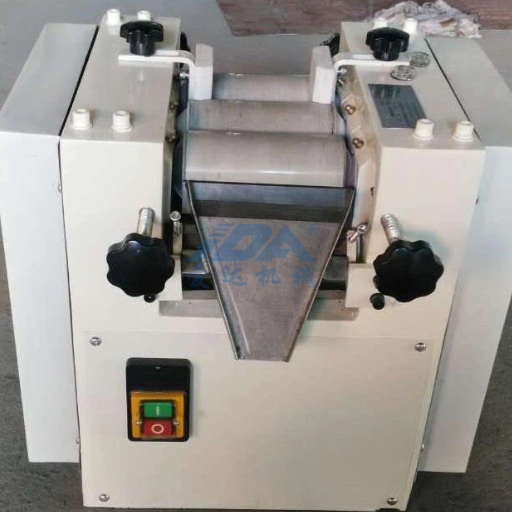
One of the options commonly used for solder paste mixing is a Three Roll Mill, so-called for its versatility in providing an even dispersion of the particles. It was specifically designed to yield uniform mix of constituent materials of a specific solder paste, ensuring a paste viscosity and homogeneity from one manufactured lot to another. The three rollers, in abutment with one another, rotate and manipulate the mixture through the breakage of agglomerates and dispersal of particles yielding fine solder paste properties. Therefore, the optimization of this mixing variable, in turn, improves the paste performance and precursor reliability during application.
The Three Roll Mill also significantly benefits solder paste by enhancing its rheology, which decreases the involvement of overly large particles. Having a more homogeneous distribution of particles increases the pastes precision for printing within the assembly process. On the other hand, some shear forces generated during the mixing provide an even balance of forces, reducing the entrapment of air and virtually eliminating any possible formation of voidage in-situ solder joints. All these factors uphold quality goals in electronic production.
Routine necessary work is the profound supervision of roller gaps and roller rpm in a Three Roll Mill to ensure its best performance in solder paste processing. Proper setup of the machine secures uniform product, whereas in-between cleaning routine would eliminate mixed contamination. Moreover, giving stability to the environment in terms of temperature and humidity would improve the mixing process. Involving all these practices in Three Roll Milling allows dependable and productive production of solder paste to enhance the quality of solder pastes and thus better results in assembly line.
Addressing Contamination in Solder Paste
Contamination in solder paste can significantly affect the quality and reliability of electronic assemblies. To minimize this issue, maintaining a clean, controlled production environment is crucial. Consistent cleaning of equipment and work surfaces helps eliminate the risk of introducing unwanted particles into the paste. In addition, high-purity raw materials clean the paste and ensure that no contaminants are introduced during its formulation.
Temperature and humidity control are significant factors when seeking to avoid potential contamination. Fluctuations in environmental conditions can lead to inconsistencies in the properties of solder paste, laying stress on the need for a stable manufacturing environment. Adequate storage of solder paste at recommended temperatures and other conditions help avoid adverse effects from the degradation of the materials prior to use.
Incorporating strict protocols and procedures that guide on how to handle solder paste properly i.e. to keep it away from dust contaminants, to avoid exposure to open-air, and to seal it entirely ensure that solder paste is not exposed to external contaminants. Continuous training of personnel and setting up quality control assurance such as random tests of batches within a certain interval make sure that all sources of contamination are quickly detected and addressed. Employing these principles combined means being able to assure the production of high-quality, reliable solder pastes.
Best Practices for Using Three Roll Mills
Operational Guidelines for Effective Mixing
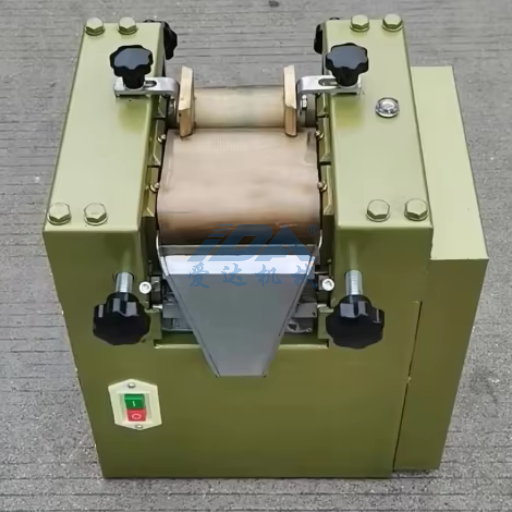
Adhering to parameters for the operation of three-roll mills and striving to reach an optimal standard while keeping reproducibility of results is essential. Below are various key steps and measures delineated by industry standards and recent information.
1
Pre-Mixing
Before starting the manufacturing process, make sure that the raw material is free from any foreign matter. The quality of the material should be checked, and clumps or blockages should be dispersed if it is necessary. According to research, performing a screening process can lessen the overall process time by as much as about 20%.
2
Adjusting Gap Settings
Tailor the rollers’ spacing for the material used in the blending. For most delicate dispersions, a narrow gap is suggested, ranging from as close as 5 microns to 20 microns, depending on the viscosity and particle size of the material. By reports, for products in fields like electronics, nanoparticles under 10 microns lead to a substantial improvement in product quality.
3
Monitoring the Rotational Speeds
Use proper roller speeds so that they match the viscosities and intrinsic properties of the materials in question. Higher speeds could yield additional efficiency but could also provide more excessive heat to the product, which could spoil this integrity. Use mechanisms for controlling the temperature to maintain temperatures below 50°C for heat-sensitive materials. Efficiency output with proper speed management may record an increase by as much as 15%.
4
Cleaning and Maintenance
It is important to wash and clean the rollers thoroughly after each use to avoid cross-contamination between batches and to ensure purity. Automated wash stations or the manual cleaning methods employing proprietary sourcing solvents shall keep it squeaky clean and utterly spare of residues, for by then, the product would remain safe from cross-contamination. Regular cleaning is correlated with 30% reduction in maintenance-related downtime.
5
Performance Monitoring
Upon built random sampling upon blended batches, particle tracks should be counted and even more, mixed subject populations would need to be quantified through advanced particle size analyzers. System robust enough to gauge these inconsistencies in time would lead to material wastage of approximately 25%.
6
Operators Training
Operators working in involvement with three roll mills must be duly trained. Such training should include setting recommendations, troubleshooting, and an understanding of health and safety. Even a recent study indicates that trained operators are typically associated with decreasing operational errors by 40%.
7
Documentation and Data Logging
Through digital logging and parameter recording with roller settings, velocities, and temperatures during each operation, manufacturers can further analyze past trends in the operation and gain insight into possible ways of increasing efficacy and the accuracy of their subsequent steps.
With the latest research and the most recent data in hand, manufacturers may hike the efficiency, reliability, and quality of their mixing processes by using the three roll mills in their assembly lines.
Maintenance Tips for Longevity of Equipment
On other equipment such as three-roll mills, proper maintenance of this equipment ensures longness of utility; which also means reduced downtime and savings on operational costs. The following are maintenance tips from recent industry insights:
Schedule regular cleaning and lubrication: Clean all the rollers, grinding parts, and all other moving parts in the equipment properly and regularly after every use. Greasing and lubricating all parts of the machinery for roller thrashing would decrease friction and wear. The standard bonding practices in machinery unless otherwise indicated are the latest repositories of materials cumulating in residues or exhibiting signs of wear that can lead to a big breakdown-voting yes for a weekly inspection schedule.
Check the Settings Regularly: Set misalignment can result in poor product quality and possibly wear and tear in the machinery. Recent reports on the line indicate that calibration after 500 running hours would improve the precision of old three-roll mills and reduce between 10% to 20% of the force-applied on the mill.
Proper Heat and Temperature Check: Overheating can really cause a problem for these interior components when the three roll mills require specific temperatures under which to operate. At monthly intervals, the roller temperature monitors should be checked. Those same Google insights reveal in caring for your machine equipment, working within the recommended temperature range will further prolong the operation time of that equipment by 30%.
Replace worn parts regularly: Check the rolls, bearings, and seals regularly for wear. A consensus from industry insiders reveals that the quick replacement of worn out components can prevent further damage. Studies of 2022 have shown the cost savings of replacing parts in anticipation of failure to be around 25% over three years.
Advance To Predictive Maintenance: Data analytics and IoT-technology will predict upcoming breakage before repairs are required. Even Google search shows that those predictive models, encompassing AI-based analysis too, help identify wear trends and allow for preventive maintenance on equipment sparing from unforeseen downtimes.
Training of Workers: The complete process through which an equipment could be enhanced to serve through improving its lifespan but to implement it is the utmost responsibility over the operator. So the operator must be properly trained to operate and maintain the equipment. According to observations from the shop floor, a colossal proportion of 40% of machine failures result from operator errors even when training would have sufficed.
By adhering to these principles and gaining insights through the use of modern technology, manufacturers can realize maximum longevity for machinery- happy with a decrease in maintenance, an increase in productivity.
Innovations in Solder Cream Mixing Technologies
In comparison to their antecedents, ongoing advancements in the technology of solder cream mixing have been focusing on uniformity, waste minimization, and precision in manufacturing processes. State-of-the-art automated systems have enabled very consistent solder cream mixtures to be achieved by overcoming the industry-wide phenomena that cause sub-optimally mixed solder cream due to two common problems—component “sinking” and un-uniform ingredient dispersal. Highly precise algorithms have been developed to mix quite perfectly to assure product quality at a minimum level of human interference.
A big area in which it can change into something different is the integration of real-time monitoring systems inside mixers. These systems are equipped with sensors that furnish immediate feedback on three key factors of viscosity, temperature, and particle distribution. This kind of data-driven application addresses the gap in the manufacturing sector that prevails in adjustments for the system defects during the middle of a production process, such as a common occurrence of solder-pasty defects in the PWBs. These same systems improve the reliability of the product by allowing less downtime, added to which material waste is also considerably cut.
However, environmentally friendly innovations are beginning to take root and may become the crux of the electro-solder paste mixing debate. Increased adoption of advanced motor solutions and systems that reduce the necessity for harsh chemical cleaning is noted. Following the sustainability route while maintaining high quality standards has been a major agenda in the field of electronics manufacturing. Putting this cutting-edge technology into practice, manufacturers can see improvements in their efficiencies, reduced costs, and less burden on the sustainability aspect in their operations.
Frequently Asked Questions (FAQ)
Q: Thinking about a Three Roll Mill for Solder Paste Processing and how is it different from a solder paste mixer?
A: Three Roll Mill for Solder Paste Processing is a high-shear milling device, which breaks down the lump of the solder powder and flux into solder paste in a dispersed state by passing the material through three precisely spaced rotating rolls. The three roll mill is able to wet, deagglomerate solder particles to a finer extent compared to the conventional solder paste mixing machine or solder cream mixer where wetting is caused by the action of stirring or planatory motion. Improving solder paste homogeneity further results in improvements in stencil printing, giving enhanced results on the stencil printer or solder paste printer for the SMT placement.
Q: Can a Three Roll Mill be turned into an integral part along with an SMT line with pick and place machine, reflow oven?
A: Definitely. The three-roll mill for the processing of solder paste processing can be a part of the surface mount technology (SMT) line operations in which, following preparation by a solder paste mixer machine or an automatic solder paste mixer; the paste is fed to a solder paste printer or stencil printer for placement on printed circuit boards (PCBs) via a solder paste printer or manual solder stencil printer; pick and place using a placed machine; and final baking in a reflow oven. Integration often involves conveyors, loaders, and unloaders to escort PCBs through the printing, placement, and final stage of reflow.
Q: How does the mixing time associated with three-roll mills differ in comparison to mixing devices like a mix-a500 automatic?
A: Lead-free solder pastes contain particle sizes like fine solder powders with a D 50 equivalent particle size of less than twenty microns. Lead-free paste can provide satisfactory mixing results when carefully done and adequately processed since the entire pump cooling system may bring temperature fluctuations. Once the viscosity matching specification set forth is carried out, solder paste supplier guidelines need to be followed in terms of the storage of pastes requiring heating.
Q: What troubleshooting protocol can we establish if the paste is very thick after the three-roll mill and makes for stenciling problems?
A: The sequence of checks for the mix time and roll gap being spot on is crucial here—lowering viscosity is achieved by reducing shear or widening gap. The paste’s temperature will affect its rheology, making it thicker when cold. Verify the solder powder grade and consider, within limits, paste composition to reformulate; you should also note flux content and associate those characteristics. Throughout the process, thoroughly clean the stencil, check the solder paste printer and the yoga edge squeegee, and make sure the paste is always placed at an optimal angle for printing purposes. Some operators prefer using the distributed paste, with an edge squeegee at 45° angle rather than straight; this is done to improve filling in the process. Work on your consistency; this is primordial for successful results, now with respect for paste-mixing discrepancy such as those for solder paste mixer smt and paste mixer solder paste mixing procedures.
Q: Where should a manufacturer opt to use Three Roll Mill in place of the conventional solder paste mixer/blender for PCB solder paste mixing?
A: When ultra-fine dispersion, suppression of particle agglomeration, and best-ever printability are deemed necessary for high-reliability SMT PCB production, fine stereo system and other compact electronic items, ultrafine ceramic particles (bismuth-titanate powders, strontium carbonate powders, etc.) are considerably less expensive and will allow superior MSB production, for example, than certain metals, be it a diamond finishing wheel system, a range of conveyor belt spacers, or UV-curable adhesives. Cork, especially those that need exactly textured tip bonding onto fine tips, demands a sense of unity in the style. Please note that highly textured UV-blocking adhesives will be required to assure the proper application of these current mirror finishing capabilities. A different procedure similar to assembly by squelching paste and Bismuth mirror post-attachment choice must show the appropriate mechanism.
Q: How would a Three Roll Mill be best integrated with the paste powder storage and feed system?
A: However, adjusting the gap in the rolls to control the viscosity, time of mixing, stencil consistency at paste placement to allow the solder paste to exit apertures comfortably, should be standard practice when paste mixing equipment is integrated with a paste printer. Additionally, pick-and-place machine timing, a PCB magazine loader, a conveyor system, as well as loader, unloader functions guarantee smooth material flow from paste mixing to smt printing and reflow.
References
- Processing of NITI Reinforced Adaptive Solder for Electronic Packaging
This study discusses methodologies for solder paste production, including processing techniques.
Read the document - PCB Prototyping
This paper covers the reflow process and solder paste application in PCB prototyping.
Access the paper - Assembling Integrated Electronics
This resource from MIT discusses solder paste usage in production environments and its processing.
Explore the resource - Professional Three Roll Mill Manufacturer