Get in Touch with IDA

Piston Filler vs Gravity Filler: Industrial Guide

Contents
show
A decision between a piston filler and a gravity filler should never start with the word “thick” or “thin.” For industrial liquid filling machines, a better starting point is to understand how the product behaves when it moves, stops, foams, carries particles and changes with temperature. After that, the two machines should be compared against the same product, containers, targets and sampling method.
This guide focuses on that test-based decision. For a broader view of filling technologies, please see IDA Equipment’s Filling Machine Guide. For sampling or line briefs, see the company’s Filling Machine Options.
Piston vs Gravity Liquid Filling Machines: The Short Answer
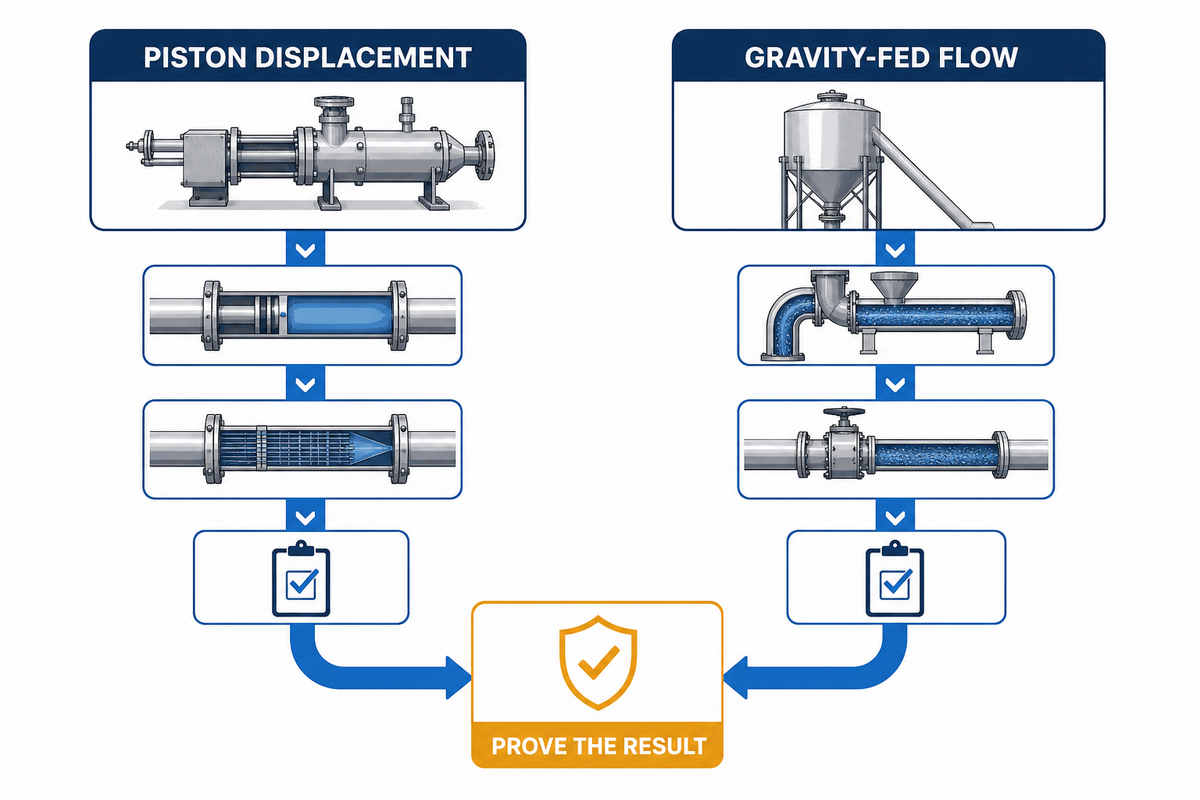
A piston filler uses a cylinder and a piston to displace a specific volume of product. For an independent measurement boundary, NIST explains why packaged-goods net content must be assessed under its own sampling rules in its net contents guidance. In gravity filling, the liquid flow is facilitated by the use of gravity and the product head. While these may be the basic theories of operation of the two fillers, they don’t guarantee the result on their own.
| Decision factor | Piston filler | Gravity filler | What must be proven |
|---|---|---|---|
| Typical starting fit | Viscous products and some products with particulates | Free-flowing, low-viscosity liquids | Stable flow and clean cutoff at production temperature |
| How the dose is formed | Positive displacement | Controlled flow under gravity | Repeatability across a representative run |
| Main attraction | Controlled volumetric dosing across difficult products | Simple product path and economical multi-head filling | Actual output at the buyer’s tolerance |
| Common risk | More product-contact components and changeover work | Flow variation, foam, or slow cycles as product behavior changes | Cleaning, recovery, and worst-case SKU results |
A practical rule is simple: don’t use the table alone to order the equipment. The winning filler is the one that meets your acceptance limits with the product and package, while also working with your plant to change product and run the line in the most efficient way possible.
How Each Filling Principle Measures a Dose
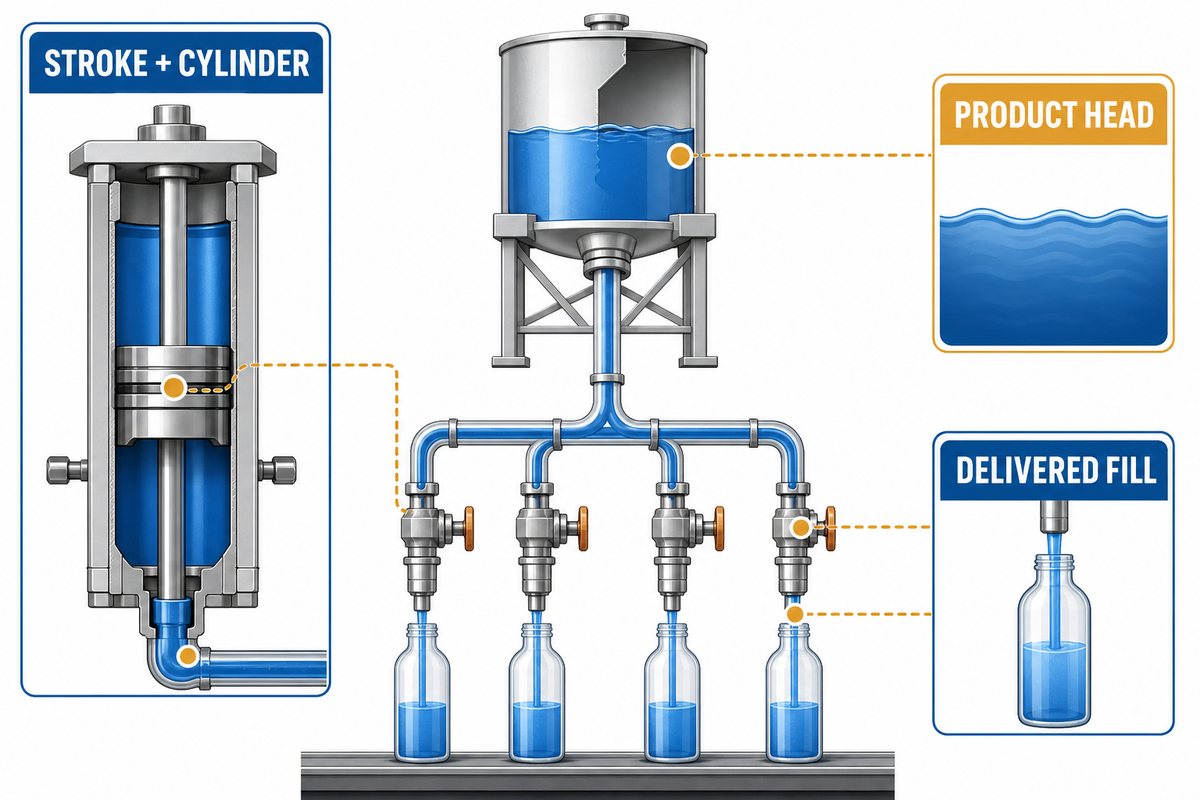
A piston filler uses positive displacement
During the intake stroke, product enters the cylinder. During the discharge stroke, the piston pushes product toward the nozzle. The stroke length or the cylinder size determines the nominal dose. For this reason, piston systems are commonly found in products that don’t flow freely on their own. Accutek states that piston systems are a positive displacement method and positions it for viscous and chunky products, while also stating that it’s configurable to the application in its piston filling machine overview.
“Volumetric” doesn’t mean “error-free.” Air pockets, product compressibility, seal condition, valve timing, entrained particulates and temperature can all affect the outcome. Setting the nominal cylinder volume is a control on the machine, not a substitute for measured fills.
A gravity filler depends on controlled flow
Product is held above nozzles in a gravity fill system and product flow is allowed to fill the container for a predetermined time or until a signal is given to stop. This method is relatively easy when the product being filled is free flowing, stable, and has a constant characteristic during the filling process. This method requires control of other factors such as the level in the supply tank, valve response, nozzle size and product temperature.
In a gravity filling system, if the viscosity of the product being filled changes, the time required to complete a fill may also change. This doesn’t make the system “inaccurate,” it means the conditions present during the filling process must be the same as the production process.
Start With Product Behavior, Not a Viscosity Label
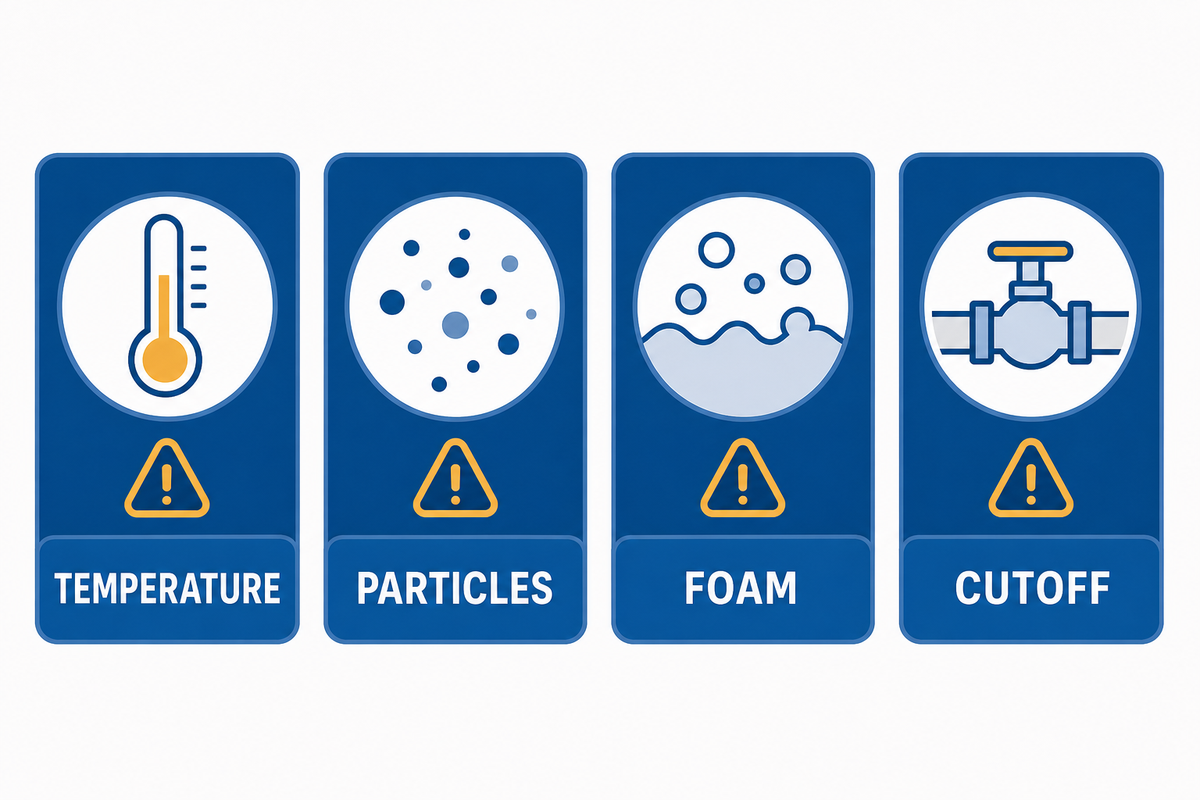
Viscosity is just one factor affecting fill. Packaging World likewise advises buyers to evaluate how filler construction affects the actual product in its liquid filler buying guidance. A product can flow well, but remain aerated and foaming, or create residual foam. A product can have particles that can flow through a valve, but can bridge in another.
Use this product-behavior worksheet before speaking with a supplier:
- Flow at use temperature: Report the coldest, normal, and warmest states expected during filling.
- Particles: Report maximum size, shape, and concentration, and whether they settle or float.
- Foam: Report if foam collapses rapidly or if foam remains above the product level.
- Stringing and Dripping: Report if the product tails after flow ceases.
- Shear sensitivity: Report if the product contains emulsions or structures that may change during flow through a valve or nozzle.
- Batch Drift: Report the density, aeration or viscosity changes, if any, of the beginning and end of the batch.
- Container behavior: Report neck diameter, rigidity, stability, and if the product target is volume, weight, or if the product level is to be visible.
This worksheet prevents a common selection error: testing an easy room-temperature sample, then discovering that the production product is colder, more aerated, or carries a different particle distribution. Use the same evidence to decide how the machine should fill containers across the real operating range.
Match Difficult Product Behaviors to the Filler and Its Hardware
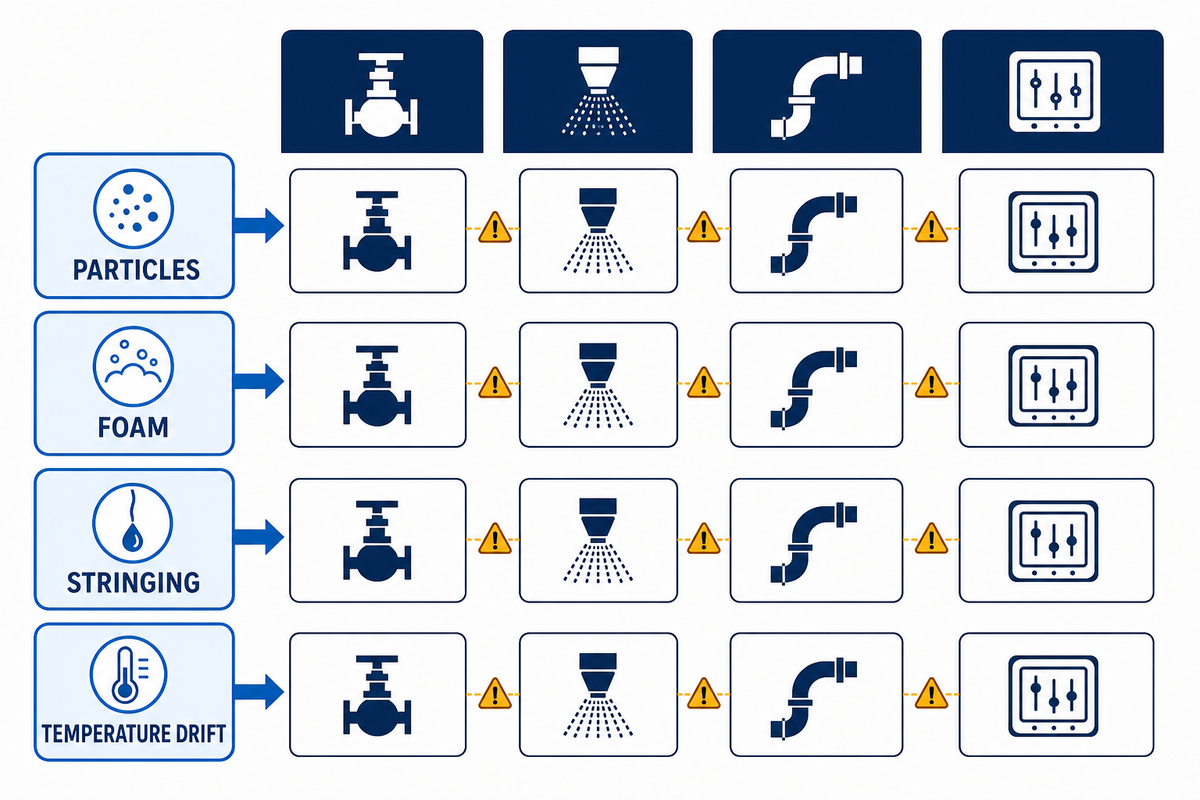
Filler principles are only one aspect. A primary patent record also shows how an adjustable check-valve mechanism can address nozzle drip in a piston-metered system; see US5016687A. Valves, nozzles, hoses, agitation, and methods of fill can all be contributing factors to a final solution.
| Product behavior type | Likely starting direction | Hardware question |
|---|---|---|
| High resistance to flow | Piston is usually the stronger first trial | Is the cylinder, valve passage, and nozzle sized for the coldest condition? |
| Large or delicate particles | Configured piston system may work | Can particles pass without crushing, bridging, or separating? |
| Free-flowing, non-foaming liquid | Gravity is often the simpler first trial | Does tank-level change affect fill time or repeatability? |
| Foaming liquid | Either may need special control | Is bottom-up or diving-nozzle filling available, and what cycle-time penalty follows? |
| Stringy product | Piston may provide better control | What positive shutoff or suck-back method produces a clean cutoff? |
| Wide temperature range | Trial both only if conditions are reproducible | Is product heating, recirculation, or temperature compensation required? |
| High-value product with tight giveaway limits | Start with a controlled volumetric trial | How will individual fills, rejects, and recovered product be measured? |
| Flexible container or narrow neck | Trial nozzle position and fill motion on both candidates | Does the container deform, trap air, or become unstable during filling? |
| Frequent allergen or color change | Give cleaning evidence equal weight with fill results | Can contact parts be inspected and the changeover repeated within the required time? |
These are working directions, not universal rules. A nominally low-viscosity liquid may still defeat a basic gravity setup if it foams badly. A moderately viscous liquid may flow acceptably by gravity if it’s kept at a controlled temperature and the required output is modest.
Compare Performance Under the Same Test Conditions
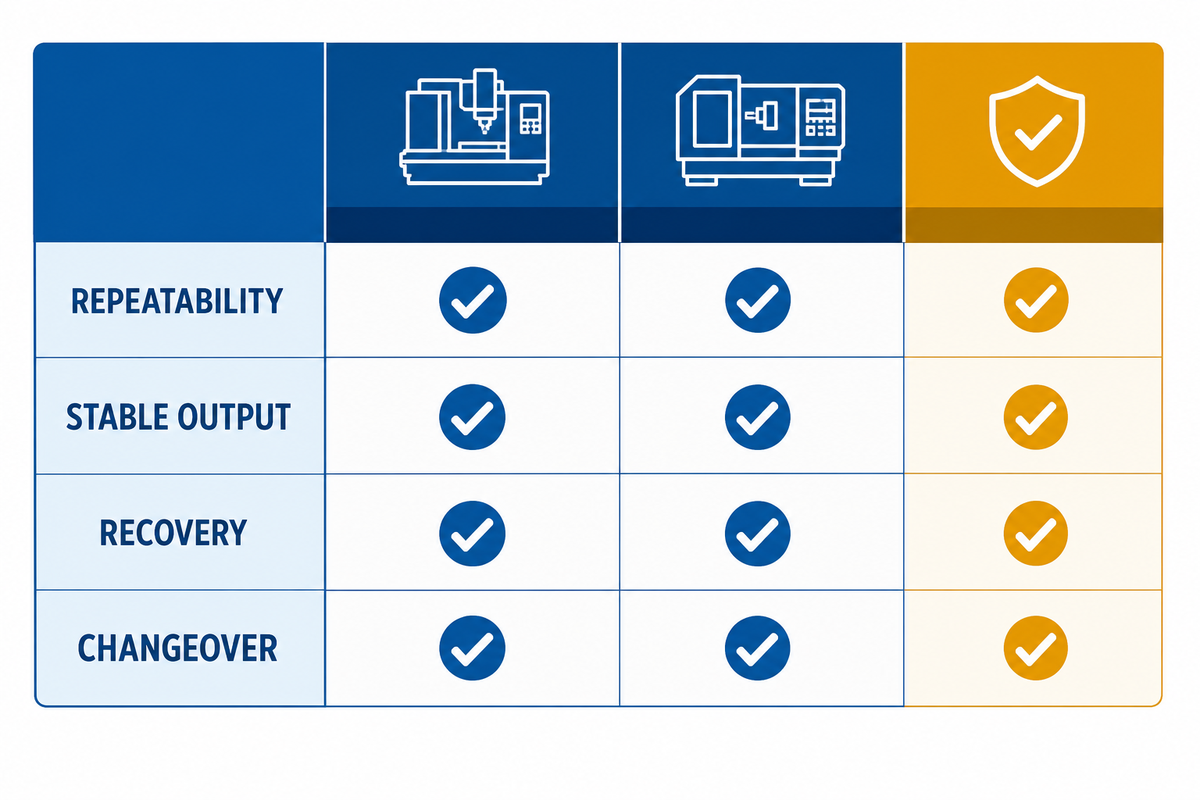
A fair piston-versus-gravity comparison holds the important variables constant. Operational troubleshooting guidance lists setup conditions that can alter fill results; see five checks for variable fill volumes. Use the same product batch, temperature window, container lot, target fill, operator instructions, and measurement method. Otherwise, one machine may appear better simply because it received an easier test.
Score both candidates on these measures:
- Fill repeatability: Record individual results, not just an average.
- Underfill and overfill: Count the number of containers outside the buyer’s specification limit and estimate the amount of product given away.
- Stable throughput: Measure sustained output after setup, including normal pauses and refilling.
- Visible defects: Count drips, strings, foam overflows, spills and contaminated container necks.
- Product condition: Look for particle damage, separation, aeration, or texture change.
- Recovery loss: Measure the product remaining in the transfer lines, hoses, and input and output equipment at the beginning and end of a product changeover.
- Cleaning and Changeover: Time the complete cleaning and changeover process to an acceptable condition to produce the next SKU.
It’s dangerous to compare headline speeds without determining the assumptions that underlie them. A slower nominal machine may produce more saleable output if it produces fewer rejects and reaches stable operation quicker.
Run a Controlled Sample Trial Before You Select the Machine
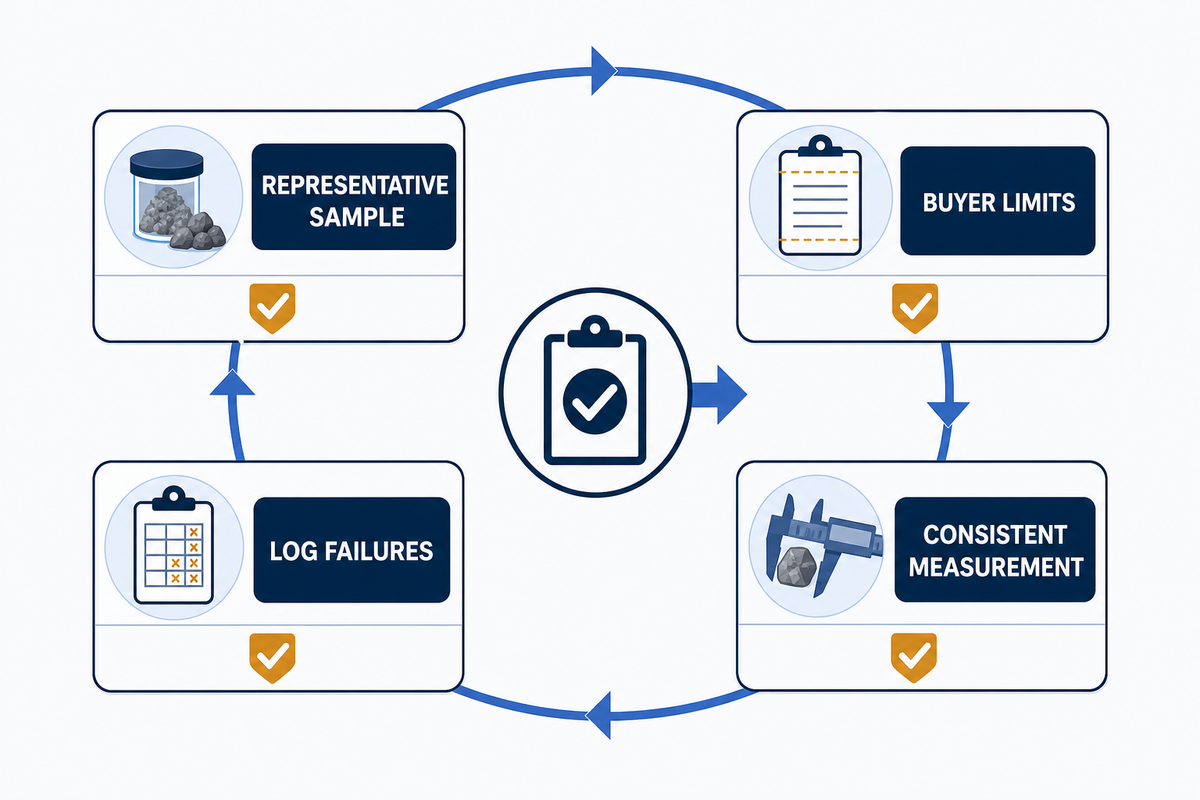
The sample trial is the most important part of the decision. The trial remains separate from legal net-quantity conclusions under 21 CFR 101.7. It converts a recommendation to evidence and touches on your understanding of the application.
1. Define the normal and worst-case SKUs
Choose at least one normal product and the product hardest to fill. The hardest to fill product may be the largest, smallest, thickest, foamiest, most particle-heavy, or hardest to mix.
2. Freeze the test conditions
Document the product batch, temperature, mixing, and target tolerance. Record the container used, machine configuration, and desired fill levels. If temperature is important, specify a range rather than write “room temperature.”
3. Use production containers
Neck and rigidity problems are often concealed by using prototype bottles. Provide an adequate sample of containers to represent all important neck sizes and unstable shapes.
4. Set buyer-owned acceptance limits
The machine builder can recommend a test, but it’s the buyer’s responsibility to determine what’s an acceptable result. Acceptable results may depend on the number of allowable rejects, fill limits, fill tolerances, and cosmetic defects. The buyer should also define the required sustained output.
5. Measure consistently
Containers should be consistent and tared. Use a verified scale or volume method. If an assumption is made about volume based on weight, verify the density assumption. A visual check may not support a claim about tight filling.
6. Separate setup from the measured run
Allow reasonable time to stabilize and define what’s an acceptable start of run. It’s permissible to make minor adjustments to obtain stable results, but a result dependent on constant adjustment isn’t an acceptable result.
7. Capture every failure mode
Log all underfills, overfills, drips, foam, strings, splashes, jams, missed containers, and any other corrections. Photographs and short videos help with supplier evaluations.
8. Time cleaning, recovery, and changeover
Run the actual cleaning steps when possible. Record disassembly, flushing, recovered product, inaccessible residue, reassembly, and the first acceptable fill after restart.
9. Repeat the worst transition
A line that fills products separately may still have issues changing to a different product. Repeat the hardest SKU change and verify that the documented procedure produces the same result.
Keep the final trial sheet with the purchase specification. This should identify the accepted limits, risks, product conditions, tested configuration, and any conditions that weren’t represented.
Keep the evidence boundary clear: a successful dose-and-speed trial proves only the conditions and endpoints that were tested. It doesn’t by itself establish packaged-goods net-content compliance, preservation of a sensitive formulation, hygienic suitability, or aseptic performance. Those requirements need their own market-specific sampling rules, product-quality tests, cleaning evidence, and, where applicable, validation of the complete filling and packaging system.
Turn Supplier Claims Into Comparable Evidence
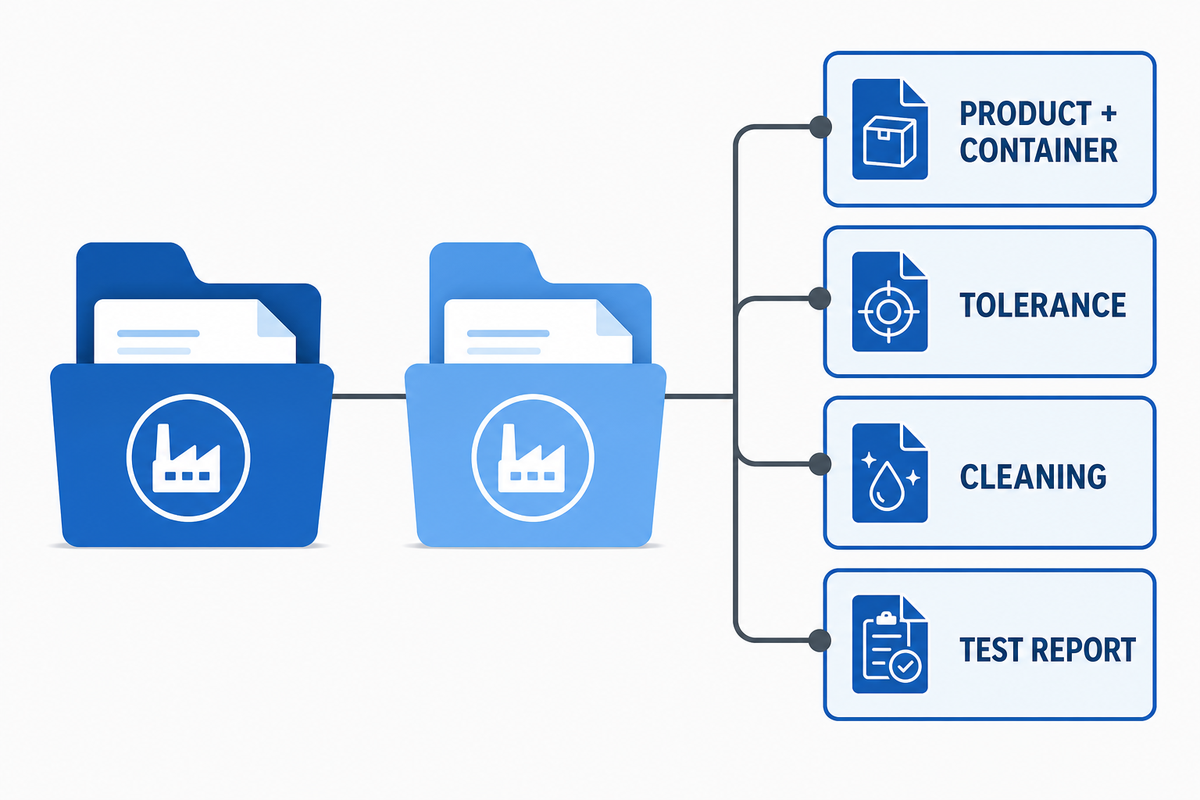
A proposal is easier to compare when the supplier answers the same set of questions. The following questions should be addressed in writing.
- Which product samples and container versions were tested?
- What’s the test temperature? What state is the product in?
- How were fills measured? How many measured containers were used?
- What fill range, cylinder, valve, nozzle, and head were used?
- Which product-contact materials and seals are proposed?
- How is the machine cleaned and changed between SKUs?
- What sustained output was achieved within the agreed limits?
- What products or containers are outside the tested envelope?
For projects involving multiple liquid behaviors, share the trial plan and completed worksheet when having a discussion with IDA Equipment about liquid filling equipment. This helps the engineering discussion and focuses the discussion on assumptions.
Know When the Right Answer Is Neither, or More Than One
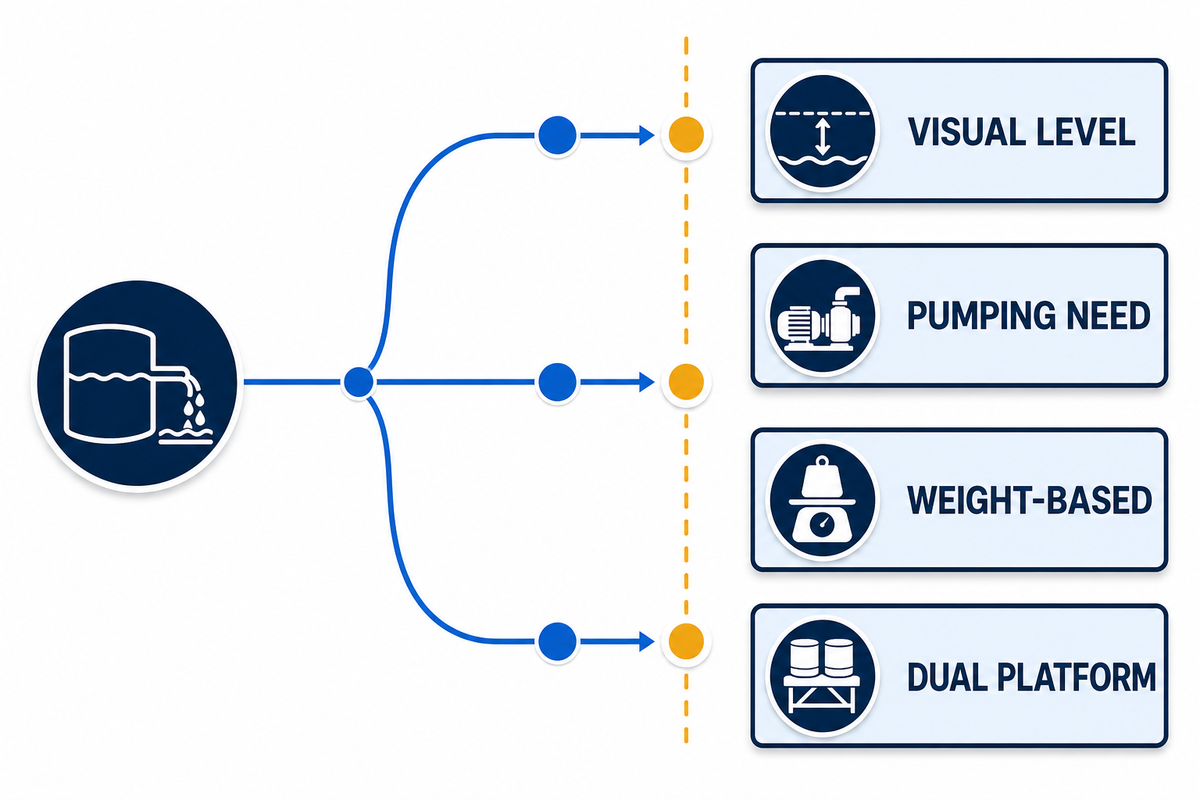
Don’t misrepresent the project by interpreting the fill objective to reflect a piston-versus-gravity tradeoff if it clearly points to something else. This application-led boundary is consistent with Packaging World’s equipment-selection guidance. An overflow filler can be used when a uniform visual level is more critical than having the same volume in the containers and the containers being filled vary in size. A pump-based filler can be used when a particular technology is available and suited to the pumping requirement. Net-weight filling may be worth testing when the sale or acceptance criterion is based on product weight.
A large range of SKUs can justify a dual filling platform. One machine may technically move every product yet take longer to clean or remain less stable at the extremes than two filling systems assigned to narrower ranges. Analyze the total operating burden, including changeover time, rejects, recovery loss, maintenance, and the number of machines.
Decision Framework: A Five-Gate Piston-vs-Gravity Choice
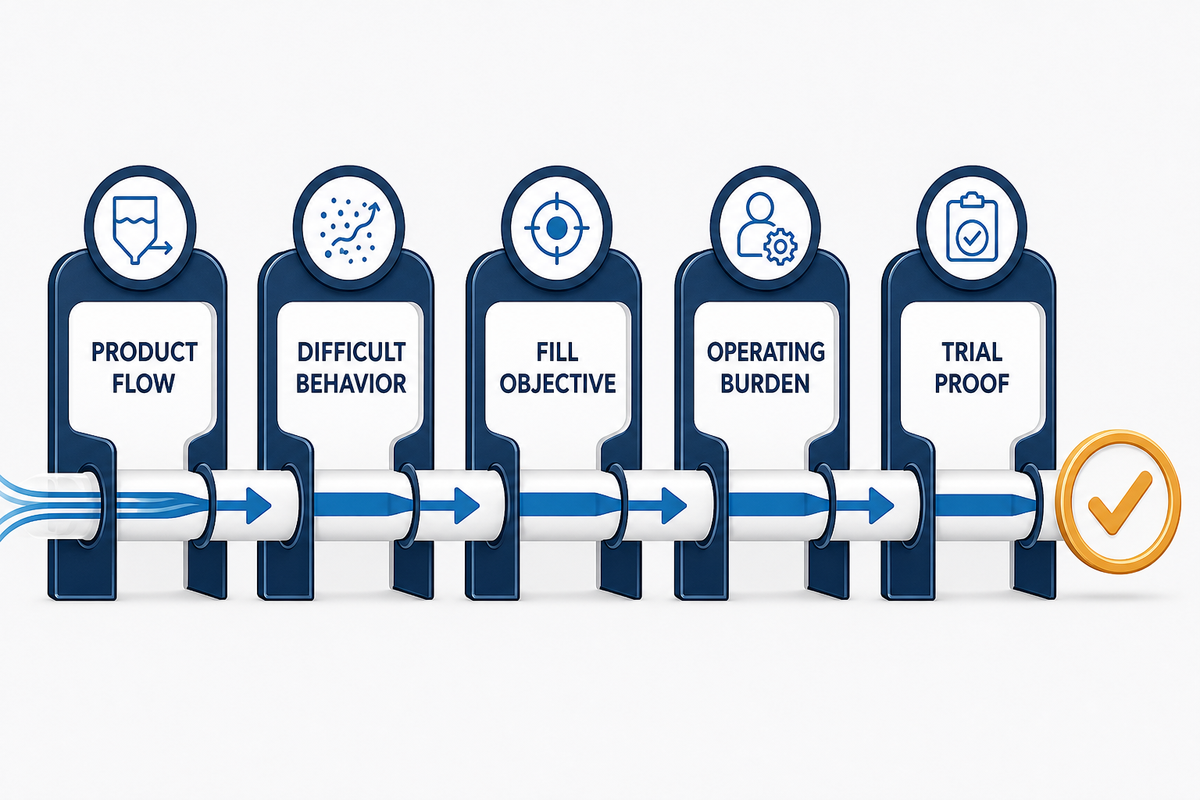
Gate 1, Can the product flow consistently? Treat package compliance as a separate measurement obligation under NIST net-content guidance. If the product is free-flowing across the operating temperature range, then keep gravity in the system design consideration. If not, use piston or a positive-displacement method.
Gate 2 – Are there difficult behaviors? We need to test particulates, foam, stringing, shear sensitivity and batch drift. Don’t pass this gate based on viscosity only.
Gate 3 – What’s the fill objective? Consider whether the commercial requirement is volume, weight or visible level, and select the measurement principle that supports it the best.
Gate 4 – Does the machine fit operations? Think about product recovery, ease of cleaning, changeover time, operator access, maintenance items, and the range of SKUs that the machine can support.
Gate 5 – Did the controlled trial pass? A configuration shouldn’t be approved unless it meets the buyer-owned limits under documented normal and worst-case conditions.
Frequently Asked Questions
Is a piston filler always more accurate than a gravity filler?
No. Either system can be consistent in the right application. Compare both with the same product, containers, tolerance, conditions, and sampling plan.
Can a gravity filler handle viscous liquids?
It depends on the desired outcome. The question for the customer is whether the product is flowing consistently under the available head pressure and temperature while meeting the cycle time and fill limits. Other factors such as stringing, temperature drift, foam, nozzle size, and tank levels can cause timed gravity filling to be inconsistent before a viscosity label gives an indication of an issue. Test the slowest and coldest conditions in which the product is produced, not a warm sample.
What products are best suited to a piston filling machine?
Piston fillers are commonly considered for viscous products and can be configured for certain sauces, creams, pastes, and products with particulates. Suitability still depends on particle size and concentration, shear sensitivity, product temperature, valve passage, cylinder range, nozzle cutoff, and cleaning needs. A representative trial should record individual fills, product damage, separation, aeration, drips, strings, recovery loss, seal behavior, and the time required to clean and restart. The accepted specification should also state which product states and particle sizes weren’t tested.
Which filler is easier to clean and change over?
It depends on the exact product path and cleaning method. A gravity system may have a simpler path, while a piston system can include cylinders, seals, valves, and assemblies that need defined disassembly or clean-in-place procedures. Poor tank access or long hoses can also make a gravity setup slow to clean. Request a witnessed cleaning and SKU-change trial using the actual residue and allergen-control requirements.
What samples should I send for a filling-machine test?
Send actual production product to evaluate setup, repeated fills, recovery, and cleaning. Send samples of the complete container and closure if applicable. Send information about target fill, fill tolerances, planned operating speeds, temperature of the product, density and viscosity of the product if available, dimensions of the particles, foaming and stringing behavior of the product, and limitations of the product on the type and level of cleaning. If the product changes during storage or mixing, provide samples representing those states instead of one easy batch.
Buy the Proven Process, Not the Filler Label
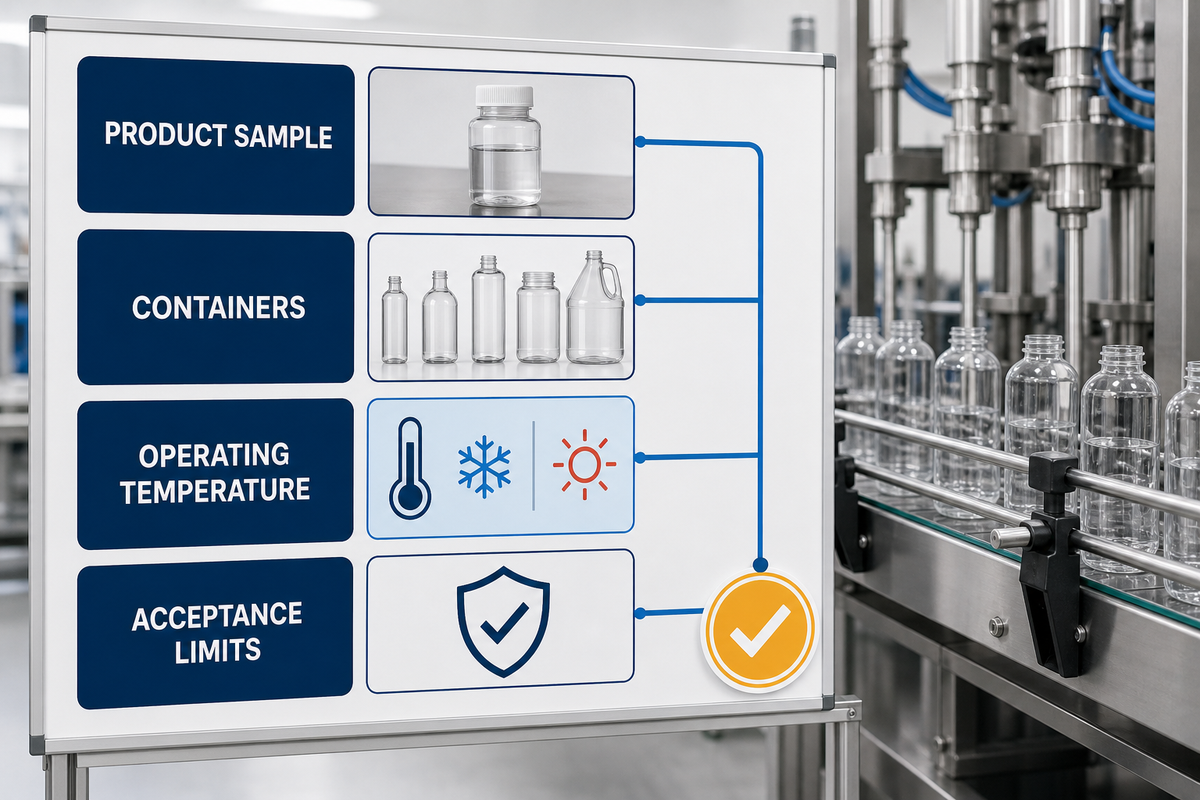
A piston filler is usually the better choice for products that are particulate or very viscous. Support the final choice with the product-specific evidence emphasized in Packaging World’s equipment-selection guidance. A gravity filler is usually better to start for products that are stable and flow freely. However, actual production and product conditions can change that initial recommendation. To plan a controlled trial, send representative product, production containers, operating temperature, and buyer-defined acceptance limits when reviewing IDA Equipment’s background and its liquid filling machine range.
The recommendation is usually based on the evaluation of the ‘product behavior worksheet’ in the worst case combined with equally realistic testing and client/buyer defined acceptance limits. This recommendation provides all the interested parties (purchasing, engineering, quality, and the supplier) a mutual definition of success.
References & Sources
Sources are cited inline beside the technical claims they support.