Get in Touch with IDA

Basket Mill Working Principle: Complete Technical Explanation

Contents
show
Understanding the Basket Mill

What is a Basket Mill?
The basket mill serves as an adaptable grinding and dispersion device which industries use for processing coatings inks and cosmetics and pharmaceutical products. The system operates as a complete mixing tank and grinding chamber which engineers built into a single compact device. The basket mill uses a cylindrical basket as its main element to contain grinding media which usually consists of small ceramic and steel and glass beads. The basket operates by submerging in the product while the internal rotor generates a strong suction effect which pulls the product through the grinding media. The basket mill achieves efficient particle size reduction and uniform dispersion through its operating process which produces consistent fine results. The system can process products with both low and high viscosity which makes it useful for multiple industrial applications.
Essential Parts Found in a Basket Mill
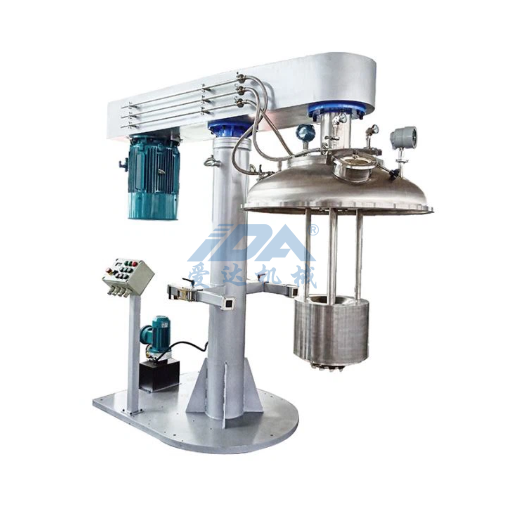
The basket mill requires particular components which I need to explain because they drive its operational performance. The basket mill operates through three main parts which include its main vessel and its grinding media basket and its rotating shaft equipped with an agitator. The basket functions as a perforated structure which enables product movement through the grinding media to achieve proper particle size reduction. The basket contains grinding media which consists of materials such as ceramic and steel and glass that create impact and shear forces through their high-speed rotation.
Hydraulic Lifting & Cooling: The hydraulic lifting mechanism serves as a fundamental part of the system. The system allows operators to change basket positions which improves control during operations and makes cleaning and product exchanges and maintenance activities easier to perform. The system includes a cooling mechanism which maintains temperature control throughout high-intensity grinding operations. The system maintains consistent performance which results in optimal product outcomes because it prevents overheating which can damage heat-sensitive materials.
Advanced basket mills come with user-friendly control panels which let operators set precise operational parameters for speed and pressure and time. The mill control system provides complete product handling capability which enables efficient processing of all product types which includes low-viscosity solutions and high-viscosity formulations. The basket mill uses its components to create a flexible equipment piece which multiple industries use to produce coatings and inks and adhesives.
Types of Basket Mills
Different industrial requirements lead to the development of various basket mill designs which include multiple machine configurations. The two primary types include traditional basket mills and high-speed basket mills. Traditional basket mills operate with dependable performance when used in low to medium viscosity applications because they produce uniform particle size reduction results. The high-speed basket mill operates at faster dispersion rates while achieving better efficiency for industries that work with formulations that have high viscosity.
The advanced models include two important features which enable them to create vacuum conditions and operate cooling systems that maintain proper temperature management throughout their working time, which protects fragile heating materials. The portable basket mill and modular basket mill systems have become more popular because these systems enable manufacturers to produce products in multiple types of manufacturing environments. The various basket mill designs together with their innovative features provide solutions which enable different industries to achieve their unique processing requirements.
Working Principle of Basket Mills
How a Basket Mill Works
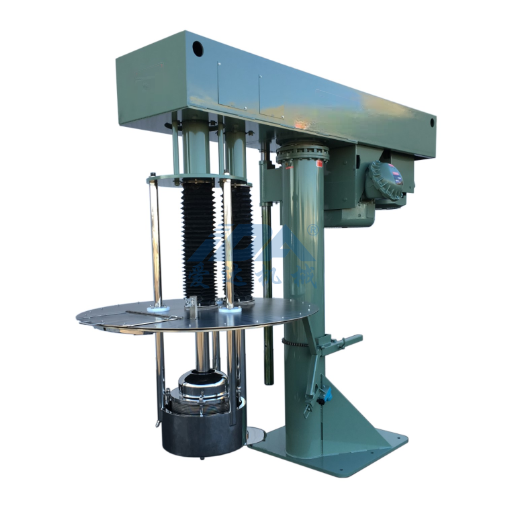
A basket mill works by using its single compact unit to perform separate processes of grinding and dispersion. The main component is a basket-like structure containing the grinding media, such as beads, which are agitated by a rotating shaft. The grinding media separate particles through their motion while the basket operates in a material processing area. The combination of high shear force and intensive agitation enables the process to achieve efficient particle size reduction throughout all stages. Advanced basket mills use speed control systems and temperature monitoring devices and optimized bead separation technology to maintain product quality while improving operational efficiency. These systems serve multiple purposes in industrial applications for paints and coatings as well as pharmaceuticals.
The Role of Beads in Grinding
Beads serve as essential components of the grinding process because they function as the material that generates smaller particle sizes through their impact on the material being processed. The grinding operation efficiency and quality results depend on the combination of bead size and material and bead density. The superior surface area of smaller beads enables them to create impacts which produce smaller particle sizes, whereas larger beads function better to crush coarser materials. The common materials used for bead production include glass and ceramic and steel, which manufacturers select based on the specific application requirements of hardness and chemical resistance and wear performance. The selection of the correct bead type and its concentration needs to occur because it affects operational efficiency for grinding, while incorrect choices result in equipment damage and grinding problems and bead breakage.
Hydraulic Lifting Mechanism Explained
The hydraulic lifting mechanism functions according to Pascal’s principle which states that any pressure applied to a confined fluid will spread out the pressure throughout the entire space. The system operates with essential parts that include a reservoir, pump, valves, and hydraulic cylinders. The reservoir maintains hydraulic fluid storage which the pump pressurizes to send through control valves into the cylinders. The cylinders transform fluid pressure into mechanical power which enables precise and efficient lifting of heavy objects.
Modern hydraulic lifting systems feature load-sensing technology together with variable displacement pumps as their main advanced capabilities. These technologies improve energy efficiency while they minimize unnecessary electrical usage. The construction and automotive and manufacturing industries use hydraulic mechanisms because these systems enable operators to move heavy objects while maintaining controlled and steady operations. Regular fluid assessments and system examinations constitute vital maintenance tasks that protect their performance abilities throughout their operational life.
Grinding and Dispersion in Basket Mills

The Process of Grinding in Basket Mills
Basket mills function as multifunctional equipment which industrial sectors use to grind and distribute materials. The grinding process begins as the slurry or mixture flows into the basket which contains grinding media like beads. The agitator spins at high speed which produces strong shear force to make the grinding media touch the particles that exist within the mixture. The interaction between the two processes produces smaller particles which enable even distribution of pigments and solids. Advanced basket mills maintain constant temperature control throughout their operational period which prevents product damage from overheating. The system achieves energy efficiency improvements through technological advancements while it reduces processing times, making it essential for fine grinding and dispersion work. Equipment users need to perform proper calibration combined with necessary maintenance tasks to achieve reliable output results while extending equipment lifespan.
Dispersion Techniques Utilized
Modern dispersion techniques use mechanical methods together with hydraulic methods and ultrasonic methods to achieve their finest results in particle size reduction and particle distribution. The process of complex formulation mixing requires high-speed mixers and homogenizers to create uniform products by disintegrating particle clusters. Bead milling represents an advanced method which uses tiny grinding balls to create high shear and impact forces that effectively disperse materials. Ultrasonic dispersion creates microbubbles through high-frequency sound waves which collapse to produce energy that disperses particles in heat-sensitive products and delicate items. The methods become essential for pharmaceutical and paint and coating industries because these fields require consistent particle size distribution which maintains product stability.
Factors Affecting Product Quality
The quality of products depends on multiple essential elements which begin with raw materials and continue through the operational conditions of the production facility. The essential attributes of raw materials establish their fundamental importance because any changes will result in different final product performance and appearance outcomes. The manufacturing process results depend on the equipment and technology utilized during the production process because they determine both product consistency and manufacturing accuracy. The distribution of particles reaches adequate levels through advanced systems which operate without interruption because ultrasonic dispersion systems handle this task, and temperature control systems protect their sensitive formulations.
The essential requirement for blank space tracking industry standards and regulatory requirements establishes safety benchmarks which must be achieved through product testing. The production area needs to be maintained through cleaning procedures because any contamination will result in product quality loss and regulatory compliance failures. The complete testing procedure together with testing processes enables efficient identification of product specification deviations which need immediate resolution. Manufacturers who maintain complete control over these elements achieve high product quality standards through their entire process.
Applications of Basket Mills
Industries Utilizing Basket Mills
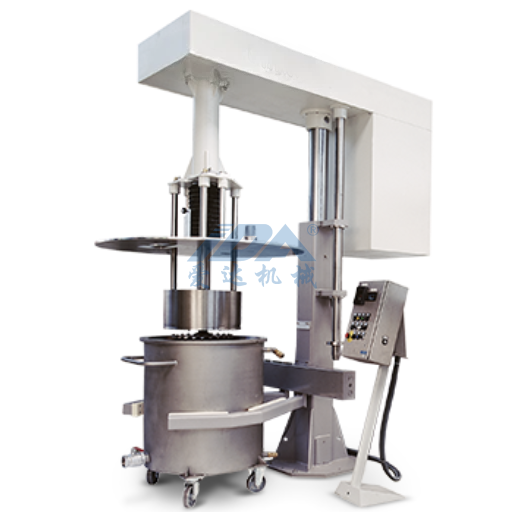
Basket mills serve multiple industries because they deliver efficient wet grinding and dispersion operations. From my experience, the paint and coatings industry is one of the largest adopters of this technology. The basket mill system enables producers to create high-quality paints which maintain consistent color and viscosity through its precise control of particle size and pigment distribution. Basket mills serve the cosmetics industry to produce creams and lotions because these products need to have smooth textures and stable formulations. The equipment utilizes its mixing and grinding abilities to produce final products that fulfill high quality requirements.
Basket mills serve multiple essential functions in the chemicals industry. The equipment plays a vital role in adhesive production because it guarantees safe manufacturing through its ability to monitor ingredient distribution and product consistency. The food and beverage industry uses basket mills to produce emulsions and flavorings and other ingredients which need to be finely ground and blended together. The basket mill system allows businesses to handle high-viscosity materials while achieving uniform material flow and reduced energy use, which makes it essential for manufacturing operations in present-day factories.
Common Applications in Coating and Pigment Production
Basket mills serve a vital function in coating and pigment production because they process high-viscosity materials while creating fine particle sizes. The production process for paints and inks and varnishes relies on these systems because they enable producers to create consistent color and quality through proper pigment dispersion. Manufacturers can reach their target particle size distribution through advanced grinding and mixing technology which basket mills provide while improving product performance. The mills provide manufacturers with a cost-efficient solution which decreases processing time and energy requirements for their current needs in coatings and pigment production. The systems maintain their industrial significance because they enable users to process both water-based and solvent-based formulations.
Case Studies Show Effective Implementation
- Coatings Company: A mid-sized coatings company achieved better pigment dispersion in their water-based paint formulations after implementing bead mill technology. Before the company adopted bead mills its production process resulted in color unsatisfactory results and product defects which caused customer dissatisfaction and increased manufacturing waste. The company experienced major advancements in particle size reduction and material dispersion effectiveness after establishing bead mills as part of their production operations. The company achieved enhanced paint visual aspects and mechanical characteristics through this process while decreasing production time by 30 percent and thus decreasing operational expenses and increasing profit margins.
- Ink Manufacturer: A global ink manufacturer which sought to create premium solvent-based inks designed specifically for industrial printing applications. The company reached ultra-fine pigment grinding through bead mills because it lets them select between different rotor speeds and bead arrangements which results in inks that have higher color brightness and better color stability. The implementation of bead mill technology enabled the company to reach its sustainable production objectives through decreased energy needs and reduced material wastage.
Benefits of Using Basket Mills

Advantages Over Traditional Mills
Basket mills provide multiple benefits which enable them to perform better than conventional milling techniques. Their main advantage depends on their ability to achieve quick particle size reduction through their effective grinding and dispersion processes which maintain consistent high-quality results. Their small footprint combines both mixing and grinding capabilities which eliminates the necessity of separate machines and simplifies their operational procedures. The ability to clean and change colors through their design makes basket mills suitable for use in the paint and coating and ink manufacturing industries.
Efficiency & Cost-Effectiveness
The current grinding solutions have achieved their highest efficiency level because they use modern design elements together with advanced material technology. Current grinding technologies combine cost-effective solutions with productive operational capabilities which deliver high performance through cost reduction. The systems achieve energy savings and maintenance cost decreases through their implementation of energy-efficient technologies and durable components. Organizations can boost their operational performance through data-based insights and exact engineering methods.
Reference Sources
- The Principles of the Milling Equipment Improvement: Advanced insights into construction principles.
- Production of Reactive Bio-Silica (TiB Burner): Insights into basket-based operational principles.
- Nanoparticle Enhanced Composite Coatings: Exploring stabilization and milling processes.
- Basket Mill: The Complete Guide to Wet Grinding & Dispersion Technology