Get in Touch with IDA

Three Roll Mill for Carbon Nanotube (CNT) Dispersion

Contents
show
Carbon nanotubes (CNTs) are changing game in the industrial zones by displaying their immense power, electrical conductivity, and thermal behavior. However, the performance they can offer in applications depends on appropriate mixing and dispersion, a task which seems highly laborious, thanks to their inherent tendency towards aggregation. The three roll mill, an extremely robust equipment designed to stack up impressionably against this problem, has plenty of advantages over every other option available. This article will be a quick run-through about three roll mills as the highly efficient dispersing systems to explore for the consistent dispersion of CNTs in order to unleash their full potency in high-end products such as advanced composites, high performance coatings and more. Keep reading to go further in detail about this innovative process and its central role in advancing CNT technology.
Introduction to Carbon Nanotube Dispersion
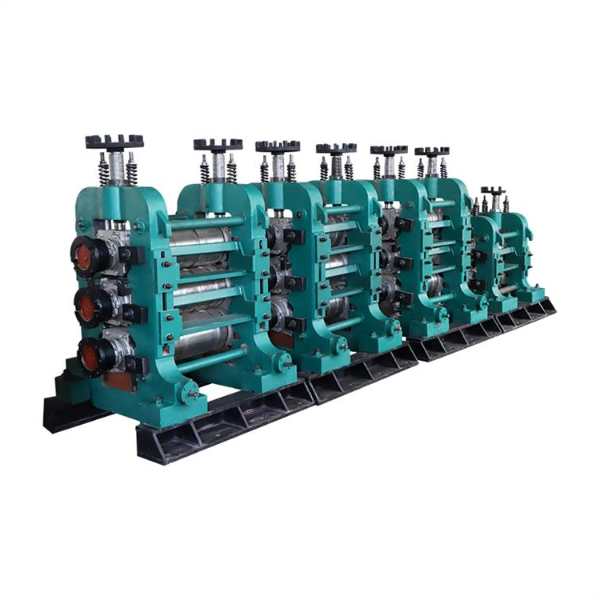
Importance of Dispersion in CNT Applications
In any item, the CNTs should be distributed uniformly to avail the benefits of the intrinsic novel properties, without which the CNTs tend to agglomerate, owing to the energetically favored strong van der Waals forces, and, in due course, to uneven distribution, which can significantly impair the quality of the CNT-reinforced materials. If this is not paid attention to, a good distribution aids in allowing the manufacturers to achieve the desired levels of electrical conductance, outstanding mechanical properties, or high levels of thermal stability.
Homogeneous dispersion is a very important thing to do in those advanced composites, as there the CNT could be applied as workable reinforcements in bulk. Makes sparse CNTs indicate much improved tensile strength and elongation in a polymer system. Likewise, in the instance of high-performance coatings, uniform spread would mean a lot more for conductivity and resistance to environmental degradation. These awesome benefits make the dispersion technology a keystone to open up the commercial and industrial horizons of CNTs.
For presumed solid dispersion to be an accomplishment, the process requiring well-proven methodologies that can comprehend the situation for allowing CNTs not to stack together is the one that can unstack. Three roll milling techniques have given good services here too. They have made perfect possible precision placement of the CNTs as contradictory to where the CNTs upon having been cured under the rubber were caused to do just that by bunching up at the same place. With the aggregation abolished and therefore the CNT evenly dispersed in the host material, in the case of nanotubes, the benefits of advanced technologies in fueling development flow across industry sectors such as aerospace, electronics, energy storage, and so forth.
Overview of Carbon Nanotubes
Carbon nanotubes are cyllindrical nanostructures made of carbon indestructure arranged hexagonally. These structures have fascinating properties, including their high strength-to-weight ratio, high thermal and electrical conductivities. The CNTs are of two categories: single-walled carbon nanotubes (SWCNTS) which consist of a single cylindrical layer, and Muli-walled carbon nanotubes (MWCNTs) with multiple concentric cylindrical shells.
In one hand, this multiuse trait of CNTs in many applications, owing to their splendid mechanical and electrical properties. This extends to the production of high-performing transistors and conductive films in the field of electronics. CNTs’ combined strength and elasticity are being found further useful in constructing various composites that are lightweight and durable. These are crucial especially in the aerospace and automotive sectors. Finally, CNTs could find parallels among energy storage solutions to further enhance batteries and supercapacitors, due to their excellent electrochemical properties.
Beyond its remarkable potential, the widespread acceptance of CNTs is hindered by primarily two critical issues, which are the scalability of production and ensured quality control. Besides quality, the most critical challenge is twofold in dispersing CNTs homogenously in the host material, hindering their successful application to industrial use. Further developments in synthesis and processing methods are necessary in order to break those technological limits and reap fully the benefits embodied by CNTs across a plethora of different sectors.
Understanding the Three Roll Mill Technology
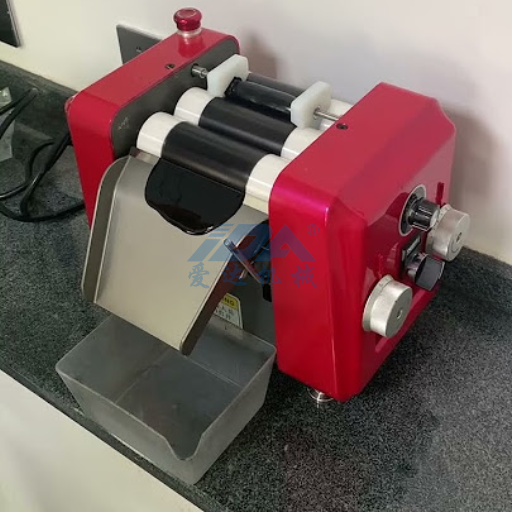
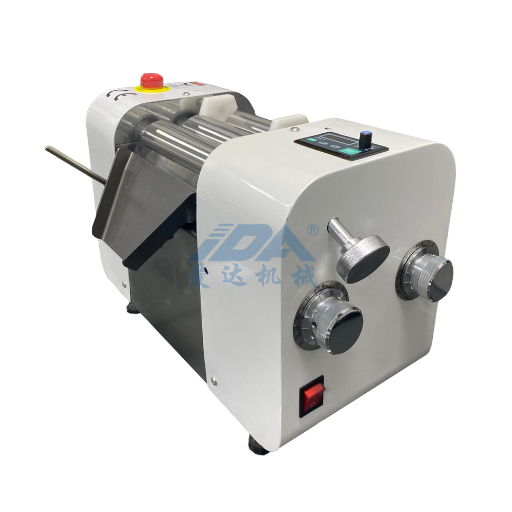
How the Three Roll Mill Works
A three-roll mill works with three rollers positioned horizontally and of which each rotates to move exact speeds. Matter to be milled moves from the feed roller between the feed rollers onto the center roller. The shear added by the gravity is applied to the material to disperse it at the same time also mixing it. The material, after processing, is further refined while moving into the gap between the center and discharge rolls, nicely and evenly refining the particle texture.
The key to the success of a three-roll mill is the dispersion of the particles and getting them distributed evenly. The high shear forces of the rollers shear and blend the material by crushing the agglomerated particles and uniformly blending any additives into the base material. This method is excellent for thick, sticky mixtures, yielding high-quality results for the most applications requiring high precision such as in electronics, inks, and composites.
Manufacturing engineers typically have very good reasons for preferring harder materials to make the rollers; besides precision in maintaining a distance in operation. Adjusting pressure and spacing between the rollers gains the opportunity to modify suitable materials resulting in the required finish. The three-roll mill, by itself is extremely useful for fabrication across myriad applications; invariably ensuring easy mixing suitable for those processes shearing, strenuous dispersion agents.
The Role of the Three Roll Mill in CNT Dispersion
The three-roll mill is essential in converting bundles of carbon nanotubes (CNTs) into a standalone matrix marked by uniform dispersion. The use of shear force creates dispersion by breaking down CNT bundles and seamlessly integrating them into the matrix of the substantive material. This is essential in most applications where the desired property in their electrical, mechanical, or electrochemical performance is obtained with homogenous dispersion.
A significant differentiating factor of the three-roll mill is its ability to carefully apply shear and pressure to achieve extensive adhesion without inducing unnecessary damage to the CNTs. The adjustable speed and space between the rolls, as well as adjustable pressure, allow for possible tuning of the separation process based on the material’s rheology and dispersion requirements. Such methodological flexibility ensures a consistent quality of CNT dispersion and aids to preserve their unique electrical and mechanical characteristics.
The three-roll mill is a very promising device for CNT dispersion because of its ability to precisely break up CNT agglomerates and achieve stable CNT dispersions. Operating well across various viscosities and formulations, it is highly valued in research and industrial applications promoting the optimum performance of CNT-reinforced composites. Finally, the conveniences of repeatability and scale-up, in the context of a promising technology of tremendous potential unlocked by the use of CNTs, bear testament to the indelible legacy of such advancements.
Key Components of a Three Roll Mill
The center of gravity is what keeps the whole unit upright. The above usually revolves branching in both horizontal and axial directions ensuring optimum handling of the two refrigerators-mounted round the arm of the work table. Convenience utilities also make possible temporary cutting (throat) adjustments. The latter feature is hydraulically adjustable to the bed.
- Feed Roll
The feed roll is always pushed together with the center by the cutting forces of the front roll to ensure that the product in intake gets the bite from the cutting knife. The whole unit besides supports lift control.
- Center Roll
Center Rolls hold either 75mm or 150mm in the width of rolls, depending on their brand and model. They could very well have diameters lying within a range of 250mm and 460mm. On the other hand, the roll contained in the machine sells at 350mm in diameter.
- Discharge Roll
Actual help with the smoothness in final production of material from the mill is obtained from the third and discharge rolls. The discharge roll features a faster rotating speed than the center roll to ensure that the final blend is properly kept for discharge. Latest coatings used in roll materials have definitely improved the discharge roll’s abrasion-resistance properties.
- Cooling System
To maintain the rolls’ temperature, a relatively contemporary Three Roll Mill has its own set of characteristics. Regulation of a cooling system under its preferable temperature provides it many other successful advantages. Damaging ingredients are kept intact in their pure form by preventing denaturation from heat Radiating norms are associated with the most recent versions wherein 30% of the above conventional roller temperatures have been drastically reduced.
- Roller Adjusting Mechanism
There must be a feature of the roller gap adjustable so that its users may have the chance to alter accordingly by the viscosity of the raw material or by the particle size. The introduction of new digital control technology to the adjustment of roller gaps has brought some degree of mechanization in the assistance of the adjustable mill gaps, whereas this was very challenging and tightly manual when the time came to adjust the gaps.
- Safety Mechanisms
The most sophisticated safety features are no more than paper tigers. For the new three-roller mill, however, there’s a change in the operating hazard: the system pumped the jamming several times; if an emergency occurred, wanted to shut it off; the system shutdown forever upon detecting something outside normal operation.
Benefits of Using a Three Roll Mill for CNT Dispersion

Enhanced Dispersion Efficiency
The three-roll mill significantly magnifies the dispersibility of carbon nanotubes (CNTs) in various materials. A uniform dispersion of CNTs in the matrix is achieved through high shear forces with an unprecedented precision regarding what makes the mill operate in the manner it does. This allows for the amelioration of some degree of agglomeration through uniform distribution, and the expertise of the CNT can be gratefully employed in terms of electrical conductance, thermal stability, and mechanical strength. The controlled space of the three-roll mill allows drastically reliable results by incorporating different roller configurations.
Regularity in the distribution is essential towards an application where material performance is most critical; for example, advanced composites or conductive inks weights are designed to having the CNTs uniformly distributed to exhibit the desired properties. It deposits shear energy roughly equal at different locations within the workpiece-one of the most important factors in breaking the agglomerates to prevent the reuniting of the CNTs and leading to honeycombed, high level products with premium performance. :.
Furthermore, the three-roll mill dos repeatability as well as scalability in the process of CNT dispersion. Through the operators being steered to tweak certain gap settings and set such processes on particular wavelengths, manufacturers can reproduce the highest quality in multiple production batches. This degree of control and efficiency makes the three-roll mill an invaluable tool for industries working with the development of next-gen materials through CNTs.
Comparison with Other Dispersion Techniques
An array of alternatives for obtaining dispersion is available, including ultrasonication, ball milling, or high-shear mixing. All the same, the three-roll mill control offers better repeatability with its processes for the use CNTs. Ultrasonic dispersal, being an example, is a technique wherein effective dispersion results from acoustic cavitation, which might very likely damage the CNT structure under manipulation of the very high energy. Ball milling is another effective way that aids in disrupting the agglomerates but might end up with defects on the CNT graphitic lattices thereby reducing the mechanical and electrical properties of the CNTs.
A common method called high-shear mixing is good to disperse CNTs by way of turning on high rotary. Surely they would give me something uniform, but the results happened to be less predictable and difficult to reproduce from batch to batch. The high-shear mixing, moreover, uses large dispersant quantities, which can easily interfere with the intrinsic properties of CNTs or perhaps introduce unnecessary impurity in the final product.
Being able to emphasize on the obtainment of consistent dispersions is one of the key advantages of the triple-roll mill. This definition clearly differentiates the triple-roll mill from other methods such as high-pressure homogenization, turbomixer, or ultrasonication. Such other methods, therefore, introduce substantial damage to the surface of the CNTs by introducing surface-active agents unrelated to the CNTs. A three-roll mill, on the other hand, permits precise control of gaps between the load rolls. This controls the shear forces experienced by the CNTs during the processing, which is the foremost factor that favors the production of the perfect dispersion around the CNTs by avoiding unwanted breakage. Three-roll mills these days are very much capable of bringing this kind of perfection to most suspended materials that also contain carbon nanotubes.
Cost-Effectiveness and Scalability
Using three-roll mills for the production of high-quality dispersions of carbon nanotubes (CNTs) is very economical: very precise production of materials with very low waste and high efficiency can lead to low overall costs of operation. Moreover, the three-roll mill is very low-maintenance and has low operating costs compared with any other production methods. The output quality is constant, making it a secure economy-option for not only those working on a small scale but also those involved in large-scale production systems.
Investing in the technology will be substantial, but the three-roll mills really pay you back: this system can adjust to fit any production scale, thereby being very useful for both academic and industrial purposes. Manufacturers can up the production without affecting the qualities and uniformities of play of CNT dispersions by altering precision parameters. This flexibility posed by the system ensures that the same technology can serve multiple purposes: from a small sample to a mass production scale.
Additionally, the simple design and technical operation allow for improved scalability of the three-roll mill. Less need for operator training, not to mention easy integration with the existing production line peacefully translates this adaptability into reality. These attributes make it an eternal good servant for industrialists striving for challenging blends of performance, economy, and scale related to processing CNTs.
Applications of CNT Dispersion Across Industries

Electronics and Conductive Materials
Carbon nanotubes, called to the growth of electronic and conductive materials, have interesting characteristic qualities like super electrical conductance, thermal stability, and mechanical strength. These combinations, along with efficient product qualification-Durability, have made it a breakthrough material in advanced electronic integration.
For conductive films, the first use of carbon nanotubes in electronic applications is in the manufacturing of conductive films and coatings over strong robust coating layers. Among the applications of these films are widely varied touch screen devices, display devices, and flexible electrics, in which conductance, transparency, and flexibility are vitally important. CNT-based conductive materials have also shown to be an interesting candidate for interconnects in integrated circuits that allows for further miniaturization and energy efficiency.
Moreover, owing to their role in both energy storage and energy management, CNTs are being utilized to incorporate changes in batteries and supercapacitors that improve mechanisms for charge and discharge of energy, increase energy density, and enhance overall performance. This new generation of industry innovations, driven by CNT dispersion technologies, helps to meet growing demand for faster, efficient and sustainable electronic devices.
Composites and Polymer Industry
Carbon Nanotubes (CNT) have substantially transformed many properties of materials thus far because they have elevated & enabled the composites and polymer industry. When incorporated in polymers, CNTs increase the material’s mechanical strength, decrease the weight of the final product, and either maintain or improve its durability. This put CNTs at the top of the list for applications in the automotive, aerospace, and construction industries, where having light yet strong materials is of paramount importance.
Carbon nanotubes also raise the thermal and electrical conductivity in the polymer composites. This makes possible multifunctional materials suited for dual roles, for instance, building shields and effectively managing heat or electrical charge. On the other hand, the aforementioned characteristics could lend themselves to such various applications such as CNTs-filled polymer for electronic applications, heat dissipating systems, energy-efficient systems needed conductive materials, etc.
One of the primary developments in the field of polymers is in developing a uniform dispersion of CNTs into the resulting composites. This homogeneity increases the resulting benefits of these materials. These days, strange and important inroads have been made due to better strategies and surface treatments that provide a good composite formation. In effect, these kinds of changes are radical ones and are motivated by the ultimate needs of durability in a very extensive manner in terms of performance versus rate of use.
Biomedical Applications
Carbon nanotubes (CNTs) have emerged as promising elements in the biomedical arena, primarily because of their unique properties like strong mechanical strength, electrical conductivity, and biocompatibility. These have a set of applications, ranging from drug delivery systems, carrying therapeutic agents directly to the target cells or tissues, to being effective nanoscale tools. The small size and the high surface area of CNTs, together with their modified surface chemistry, can make it a good vehicle for loading the drug, thereby enhancing the delivery and enhancing treatment effectiveness while reducing heavily the severity of side effects. Also, the biological compatibility of CNTs can be vastly improved by functionalizing their nonbiological surface interactions to render safer interactions in the living body.
In addition, the CNTs also play a vital bloodline in imaging and diagnostics. This includes the use of CNTs as contrast agents in various imaging techniques used in medical science like MRI and CT scans to provide good resolution specifying the details of tissues and abnormalities. The conductivity of these compounds aids them in being used not only for the board but also as biosensors for the detection of specific biomolecules, which is an advanced means of improving the early detection or diagnosis of diseases, for example, cancer. This also aids in monitoring the follow-up and health status of the patient.
Among other significant uses, CNTs are seen in the frontier of tissue engineering and regenerative medicine. Owing to their strong mechanical properties and ability to mimic the natural extracellular matrix, they make excellent materials for scaffolds and tissue repair. CNT-based scaffolds allow the growth of cells and tissue aiding in wound healing or tissue repair. This confluence with the biological systems and thus unlocking the potential to address critical challenges in modern medicine just points to the overall versatility of CNTs.
Conclusion: Future Potential of CNT Dispersion Technology
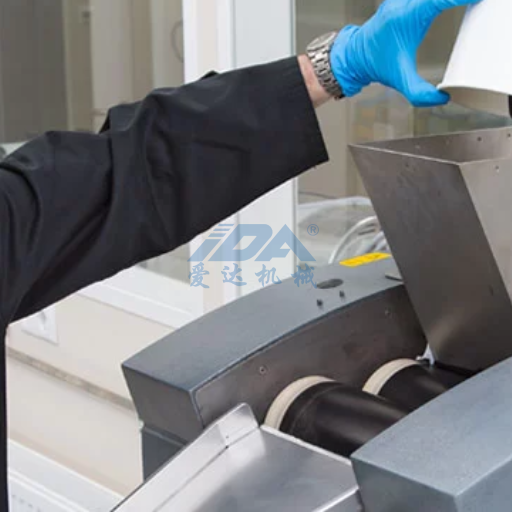
Future Trends in CNT Dispersion Techniques
Scalability and environmental friendliness are both significant factors for the future of CNT dispersion techniques. The current scenario will see a substantial advancement in creating green dispersion methods that avoid highly- hazardous chemicals. The current research for a more sustainable disposal of CNTs involves bio-based dispersants and eco-friendly agents that will bring better utility and application in many sectors.
There is another strong trend toward more efficient and uniform CNT dispersion. Nowadays, modern techniques are chemically ultrasonic cavitation and high shear mixing, and these are being perfected to maintain enough control to disperse properly, thus improving material characteristics. The integration of machine learning and artificial intelligence in predicting optimal parameters plays an important role in a reduction of the experimental steps and hence in the quick process of error elimination from production.
Finally, the convergence of CNT dispersion with new and developing technologies-such as additive manufacturing and nanocomposites-is leading the way for novel applications. This junction allows the design of materials that are smart, responding to specific functions like advanced electronics, better energy storage options, the next generation of biomedical devices, and so on. These are the signs for a bright future of CNT dispersion techniques against the growing competition of application due to development and entry into newer territories.
Final Thoughts on the Role of Three Roll Mills
Three roll mills are paramount in ensuring even and effective dispersion within several industrial settings. Their capacity to ensure a uniform particle size distribution is extremely favorable for those processing materials such as carbon nanotubes (CNT’s), various inks, paints, and pastes. This consistency goes a long way to make the final products ultimately perform on very high standards, whether in nanomatters, energy storage solutions, or biomedical applications.
The versatility of three roll mills ensures their adaptation to diverse formulations, making them valuable tools to both developers and manufacturers. Thanks to agglomerate breakdown and homogenization, the mill effectively allows faster production and enhanced quality of the materials dispersed. With time, this becomes increasingly crucial as industries get more sophisticated with their materials: targeting small, complex, and intelligent designs.
In the end, the value of three roll mills is through their precision, dependability, and flexibility in handling a good variation in materials. They are indispensable to maximize the material properties and keep paced with the technological difference in constantly emerging fields. Employed traditionally for the same objectives, these mills become core to all nonstop industries that must produce at high quality and efficiency compliance.
Frequently Asked Questions (FAQ)
Q: What is a Three Roll Mill used for in Carbon Nanotube (CNT) Dispersion, and how does it perform?
A: The Carbon Nanotube Dispersion in the Three Roll Mill device is the inline high shear milling mechanism that disperses carbon nano materials, including multiple-wall carbon nanotubes as well as single-wall carbon nanotubes in solvents or the aqueous solution. Enhanced dispersion quality is achieved by three-counter rotating rolls applying high shear which breaks up the carbon nanotube agglomerates into individual nanotubes that were profitably reinforced into nanotube composites. This ensures that carbon nanotubes possess uniformly varying properties in an aqueous or solvent medium.
Q: Comparative to its ultrasonic dispersion technique, how does a triple roll milling dispersion technique for CNTs fair?
A: The triple roll milling dispersing technique thrives upon mechanical shear, which provides similar advantages when-upscaled and controlled in comparison to ultrasonic dispersion. While ultrasonic dispersion depends on cavitation to disperse nanotubes in an aqueous medium or deionized water, three-roll mills enable the controlled and even dispersion of multi-walled carbon nanotubes and single-walled carbon nanotubes-albeit with less temperature elevation; they are also clearly better for the reproducibly scalable production of carbon materials and dispersion quality of CNTs.
Q: What this huge difference does surfactant and solvent selection have on the milling of CNTs?
A: Surfactant and solvent selection hold immense importance. In conjunction with surfactant, it aids in the separation of carbon nanotubes on account of steric or electrostatic stabilization, leading to different levels of influence of surfactants on dispersion quality and CNT properties. Solvent or aqueous solution (e.g., deionized water for aqueous dispersion) will also influence interactions with nanotube surface and decide whether dispersing carbon nanotubes offers long-term aqueous dispersion stability of single-walled carbon nanotubes or that of multi-walled carbon nanotubes.
Q: What is the difference in handling treatment of multiwall carbon nanotube material and that of single-wall carbon nanotube material in a three roll mill?
A: Multi-walled carbon nanotube and single-walled carbon nanotube materials differ in bundle strength, surface area, like SWCNTs usually requiring milder conditions and specific surfactants to avoid damage, whereas multiwalled carbon nanotubes may need higher shear in order to disperse multi-walled carbon nanotube bundles. Mounting roll gap, speed, and passes affects the application of nanotube surface treatment and minimizes structural damage while optimizing the dispersion process for both multiwall carbon and singe wall carbon forms.
Q: What is the impact on the properties of carbon nanotube and final nanotube composites while milling with three rolls?
A: Proper three roll milling enhances the dispersion quality and exposes the individual nanotubes, thereby enhancing the load transfer, electrical conductivity and thermal properties in the case of nanotube composites. Over-processing, on the other hand, shortens the nanotubes and degrades the properties of the carbon nanomaterial. Thus, it is critically vital to maintain and regulate the various parameters for balancing multiwalled CNTs’ better dispersion or single-walled CNTs’ better dispersion while simultaneously preserving the properties of the carbon nanotube.
Q: Any special things to consider in dispersing carbon nanotubes in deionized water using a Three Roll Mill?
A: While dispersing carbon nanotube in deionized water, it is important to use a compatible surfactant or dispersant so as to stabilize the aqueous dispersion to prevent re-agglomeration. Monitor the conductivity, pH of the aqueous solution and apply roll shear to give water dispersibility without introducing contamination, this will help ensure that the carbon nanotubes in aqueous solution will remain dispersed in water and yield reproducible CNTs dispersion for further processing.
Q: What are some methods of dispersion that can be combined with three-roll milling to enhance dispersion quality?
A: The use of pre-treatment by ultrasonic dispersion, chemical functionalization, or surfactants, is likely to provide more improved results with regard to the quality of dispersion. Ultrasonic dispersion helps to prepare the graphite nanoparticles, whereas chemical treatment changes the chemical functional groups on the CNTs surface for better affinity with the dispersant, solvent used. Roll milling employed after ultrasonic treatment refines the dispersion resulting in stable aqueous dispersion with high-quality individual nanotubes for carbon nanomaterials and nanotube composites.
Q: How is dispersion of quality assed after the use of Three Roll Mill to disperse CNT?
A: Dispersion of quality is assessed through TEM/SEM imaging to determine individual nanotubes, UV-Vis spectroscopy to study the stability of dispersions in aqueous media, rheology to study the changes in viscosity, and electrical thermodiffusion measurement within a composite. When assessing multiwalled carbon nanotube and single-walled carbon nanotube dispersion, special consideration should be given to the consideration of residual aggregates, aqueous dispersion stability, retention of properties of carbon nanotube material after processing.
References
PubMed Central (PMC)
- Article: Effect of Dispersion by Three-Roll Milling on Electrical Properties and Filler Length of Carbon Nanotube Composites
- Link to article
- This is a peer-reviewed study discussing the impact of three-roll milling on CNT dispersion and its effects on electrical properties.
ResearchGate
- Article: Effect of Dispersion by Three-Roll Milling on Electrical Properties and Filler Length of Carbon Nanotube Composites
- Link to article
- A platform for academic research, this article provides insights into the dispersion process and its optimization.
Nanografi Blog
- Article: Three Roll Mill and The Potential Applications
- Link to article
- This blog discusses the applications and mechanisms of three-roll mills, including their use in CNT dispersion.