Get in Touch with IDA

Pharmaceutical Three Roll Mill for Ointments, Creams & Gels

Contents
show
Pharmaceutical ointments, creams, gels, and medicated pastes need controlled dispersion, repeatable texture, and documented cleaning. A pharmaceutical three roll mill, often searched as an ointment mill, applies controlled shear to break agglomerates, distribute active ingredients, and improve batch-to-batch consistency in high-viscosity topical formulations.
Introduction to Three Roll Mills in Pharmacy
Overview of Three Roll Mill Technology
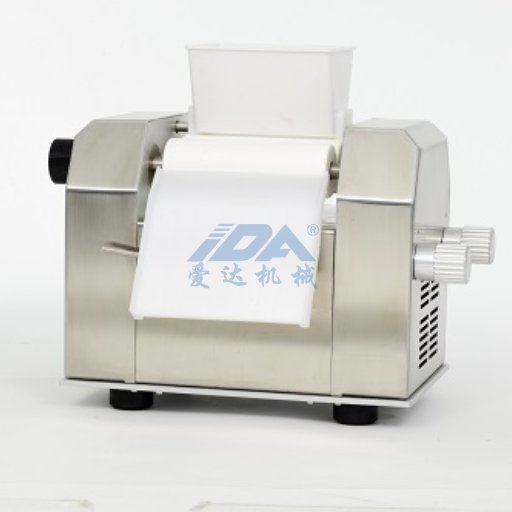
Three Roll Mill technology is a commonly employed technique in the pharmaceutical industry that provides accurately directed blending, hydridization, and chemical addition. These mills are equipped with three randed rotators placed geometrically on three levels arranged vertically. The settings allow for the control of the space between rollers for adjusting precise particle size ratio and consistency of the final product phase. It is believed to be a very useful tool in applications where uniformity is needed and fine dispersion is required, like the manufacturing of creams, ointments, and other drug forms.
Three-roll mills are devices that provide high quality of consistency and particle size reduction, which ensures homogeneity in the final pharmaceutical product that advances stability, texture, and therapeutic efficiency. The technology is suitable for processing highly viscous materials with a few options otherwise. Besides, it ensures uniformity in the distribution of such substances as active pharmaceutical ingredients (APIs) to avoid treatment-efficacy errors and the risk of patient harm.
As a technology, a three-roll mill provides several advantages in pharmaceutical manufacturing primarily due to its precision, performance, and versatility. Whether its application is to develop novel drug formulations or scale up production, this technology, without question, offers a dependable answer to meeting the high standards for quality imposed by these industries. The ability to manage numerous materials with perfect control makes the three-roll mill a mandatory device in the advanced manufacturing of pharmaceuticals.
Importance of High Viscosity Dispersion
The high viscosity dispersion is not significant to good industries, where uniform mixture and quality are sought in the product like in pharmaceuticals, cosmetic and chemical industries without the intensity of good dispersion since the proper blending of every ingredient affects the end product. Thus, achieving the right level of dispersion in the stage following formulation is important for preserving the effectiveness and stability of pharmaceuticals.
The maintenance of dispersion, that is, the prevention of material separation, remains one of the biggest reasons for high viscosity dispersion. An inadequate level of dispersion in high-viscosity formulations leads to non-uniform mixing, which in turn affects product quality and potentially causes safety issues. Improved dispersion methods give the manufacturer the ability to control particle size and distribution, ensuring consistency in batches.
Then also, high viscosity dispersions are so crucial toward the optimal operation aim. Effectively dispersed material can reduce processing time and prevent wastage thereby further improving production efficiency. An effective dispersion will also work toward enhancing the shelf life and performance of the product; this, especially, is valuable in industries where the quality standards have already gone sky high. A high-viscosity dispersion actually helps one meet regulatory requirements and customer expectations besides ensuring uniformity.
Applications in Pharmaceutical Ointments
Three-roll mills administer the successful dispersion of active ingredients and excipients in the manufacturing of pharmaceutical ointments. They work by passing the material through three horizontally positioned rolls where it undergoes shearing to achieve a fine and uniform consistency. This process creates the elimination of agglomerates or large particles, whereby a very smooth and successful operation can be ensured for an ointment.
Employing a three-roll mill ensures that the quality and efficacy of pharmaceutical ointments are significantly enhanced. The distribution of active ingredients is uniform, with immediate enhancements in therapeutic activity. Further, the control of particle size so, making it possible to manage batch-to-batch variation and maintain stringency in compliance with quality standards prevailing in pharmaceuticals.
For topical products, the practical value is straightforward: smoother application, better active-ingredient distribution, fewer visible agglomerates, and more repeatable viscosity from batch to batch.
Technical Specifications of Three Roll Mills

Key Components of a Three Roll Mill
The three roll mill is one kind of highly efficient mechanical device that may be used in a variety of applications; particularly in pharmaceuticals, cosmetics, and the production of inks. Among the key components of a three roll mill are the following:
Feeding Roll
This roll picks up the raw material and supplies it to the mill. It moves more slowly than any other roll to ensure accurate and consistent input for further processing.
Middle Roll
The mid-roll turns at an intermediate speed and does a lot of shearing. It helps in mixing and refining the material. This is a moment when the flow of feed material takes place from the feed roll toward the discharge roll. The good thing is that the material has a highly homogeneous distribution and is beautifully dispersed.
Discharge Roll
The discharge roll rotates at a higher speed, catching the fine products and therefore providing a smooth and optimal output. It will always produce fine products so that they may be easily balanced and packed for complete-procedure matrices.
System of Adjustment
One controls the gap amidst rolls herein since this is a prime factor for the level of shear and the size of particles formed. In today’s three-roll mill design, the gap is adjusted with precision controls, creating room for multiple applications.
Cooling Device
There can be enough heat to input at a milling operation, thanks to frictional energy. Such heating hurts more sensitive applications like pharmaceuticals and cosmetics. Temperature will remain under control thanks to integrated cooling systems in the rolls.
Scraper
A blade scrapes clean-away the batches stuck to the roll of discharge for better collection of the product processed, minimizing losses.
The forgone features are among those that make three roll mills indispensable in industries aiming for refined mixing, grinding, and dispersion of requisite processes.
Performance Metrics and Efficiency
Three roll mills are evaluated based on many critical performance metrics above which ensure the efficiency and appropriateness of their use in industry. The discussed metrics are throughput capacity, particle size cutting, and energy consumption. Throughput capacity is, again, determined by roller sizes and speeds, ultimately specifying how much material can be processed over a certain period of time, while end particle sizes sort out the question of the fineness and uniformity the mills have been able to achieve according to different applications.
Calibration and maintenance go a long way in determining the efficiency of a three-roll mill. It is this roller alignment and control of pressure between the rollers that, too, are critical to obtaining a consistent output with minimum wastage of material. A good cooling system does almost everything to ensure the continuation of smooth operation without over-heating under heavy duty. These collectively guarantee that an industry can achieve high quality products without sacrificing productivity or energy utilization.
It is important to note that reliability and durability in a mill serve as important factors of increased productivity. Use of good quality materials and regular cleaning of parts like scrapers and adherence to proper operational limits extend the life span of the equipment. Provided industries with an emphasis on these factors maximize the benefit of three roll mills by reducing downtime and enablings lower operating cost. Intuitively, the three roll mills will be launched as the most eminent tools for obtaining a very fast and efficient processing outcome.
Benefits of Precision Milling in Drug Efficacy

Impact on Active Pharmaceutical Ingredients (APIs)
Precision milling is absolutely key in enhancing the effectiveness of APIs (Active Pharmaceutical Ingredients). It is capable of converting into a uniformly particle-sized-efficient milling process which results in an increased rate of dissolution and, hence, an improved bioavailability of the drug. This would ensure a steady level of therapeutic success, given that the APIs are properly absorbed into the bloodstream.
Further advantages of precision milling are the reduction in variability between drug formulations. Equal particle sizes lead toward blending homogenity and guarantee that every dosage unit comprises the amount of API predicted. Constant particle size distribution is of great significance, so as to maintain the efficacy and safety of drugs, especially those with a narrow therapeutic index.
The technology also supports the development of innovative drug solutions, including controlled-release formulations. Precision milling enables the manipulation of particle properties to achieve desired release profiles, extending the drug performance over time. This not only enhances patient compliance but also addresses the growing need for advanced pharmaceutical design tailored to specific therapeutic requirements.
Enhancing Bioavailability through Particle Size Reduction
With the size reduction, the bioavailability enhancement is a crucial part of all considerations for a drug having low solubility in water. Hence, an increase in the surface area of drug particles is marked once a reduction is carefully made to their sizes. This happens to fast-track extinction. Consequently, the drug is made to dissolve much better in biological fluids and, thereby, absorbed more readily by the body. Enhancing dissolution has a direct effect on bioavailability, hence the drug acts more efficiently at a smaller dose.
One of the main forces that makes the process of particle size reduction appealing in the pharmaceutical industry is the improvement in the uniformity of drug drug distribution. This uniformity is critical for predictable therapeutic outcomes and it teams down variability in the way patients are affected by the drug. Pharmaceutical developers can, by ensuring uniformity, address different causes of laxity which cause impairment in the safety and efficacy of the product substances.
The most attracting feature of particle size reduction in an area particularly synergized with drug stability is the enhancement of drug stability and drug performance within various formulations. Formulators are better off with this enhanced compatibility with smaller. Therefore, the control of drug release is promoted due to prolonged action. This paves the way for advanced pharmaceutical solutions catering to patient-centered advantages in terms of compliance and enhanced therapy.
Consistency in Ointment Formulation
Consistency in ointment formulation is a key factor required for effective results, patient acceptance, and correct use of the formulation. The texture, uniformity, and stability are important parameters that determine the feasibility and therapeutic capabilities of an ointment. Consistent formulations allow for effective distribution of the active ingredient so that therapeutically effective dosages can be achieved and standard therapeutic responses can be expected from all applications.
For consistent formulations, choice of the base ingredients, techniques for proper mixing, and precise measurements are critical issues. These points are extremely crucial mainly because of the temperature control during and after production, compatibility of the active ingredients with the base, and stability of the emulsion or suspension under harsh conditions. Viscosity and homogeneity of the ointment provide a consistent product performance over time.
In addition, tests such as viscosity measurements, texture analysis, stability assessments become inevitable in assuring the quality and consistency of the end product. Following and enforcing these stringent protocols during their development and manufacturing will see to it that the developers of these products certainly end up with something that works as well as would be expected by patients, being easy to use and thus further increase the level of compliance and possibly even patient outcomes.
Compliance with Safety and Quality Standards

Understanding GMP and FDA Regulations
The regulations of the Good Manufacturing Practices (GMPs) are one of the fundamental ways to ensure that pharmaceutical products, ointments being an example, are of high quality, safe, and efficacious. GMPs restraints safe ways for the manufacturing process, machinery, and the documentation of a product with minimal risk of contamination, mix-up, and less serious deviation from products specifications. Observance with compliance in these standards would recruit safety advantages to patients and also establish confidence in regards to the pharmaceutical products.
FDA does this by approving manufacturing processes and then conducting audits to ensure that the cGMP rules are being followed. For pharmaceutical ointments that means adequate blending of the active ingredient, consistent consistency of the ointment, and the final product is devoid of harmful impurities. The so-operating equipment must simultaneously satisfy the cGMP rules, and their operation must be well documented to show compliance.
The importance of the three-roll mill in making pharmaceutical ointments extends to proper-size reduction of particle size and thorough mixing of all ingredients such as to provide a smooth texture and consistent quality. Following the GMP guidelines and FDA rules usually ensures safe and effective ointment preparations, thereby catering to the needs of the patients while meeting the high statuses in the industry.
Ensuring Quality Control in Production
In the manufacturing of pharmaceutical ointment, the three-roll mill plays a vital role to produce the texture, consistency, and quality for safety and effectiveness. It is a method in which the particles in the ointment are homogeneously dispersed, resulting in the diminution of the size of particles in an ointment for its smoothness if required for proper absorption and usage. This way one ensures the uniform distribution of active pharmaceutical ingredients hence ensuring reproducible therapeutic effects all the time.
If used appropriately, the three-roll mill does contribute to sustaining the quality regime all through the ointment’s creation; that is, it plays a pivotal role. If one has one, which helps him/her to break the particles of the drug to a precise size, the process of passing said drug through the three-roll mill can be 1. An inferior working control in some cases, and 2. Possibly lack in security or effectiveness. Thus, the roll-out process from within is in large demand since it maintains processes with the same standards of Good Manufacturing Practice (GMP) together with FDA act compliance, avoiding subsequent risks to high-end results for the consumer.
Incorporating the three-roll mill into a cleansed environment gives an increase on the repeatability and reliability of the pharmaceutical formulas. And doing regular maintenance, validation of that equipment calms us and contributes to maintaining to the very standard expected while keeping to the regulatory requirements. With contemporary equipments and stringent quality protocols to amalgamate, pharmacological manufacturers may develop ointments that meet the industrial standards as well as patient demands all the time.
Best Practices for Compliance
The significance of a three-roll mill is displayed in the fact that it is an essential device in the process of making pharmaceutical ointments for ingredients to react and form an even final product. It is very important to allow regular inspection and calibration so as to make sure it is functioning at its best and that it complies with the necessary regulations. This will ensure more accurate settings for the gaps between the rollers and consequently better ingredient distribution for higher quality.
It is very essential that cleanliness and maintenance precede and follow the compliance. The equipment should be immediately cleaned after use to make sure cross-contamination between products does not take place. Hands-on still reach should put every stride firmly under good manufacturing principles. Inspections might also identify changes, indicated by wear and tear on the equipment and its functionality and therefore could compromise the quality of the product.
Training of the three-roll mill operators ought to be done to avoid frequent user-errors likely to happen. Teachers must instruct the operator about the essentials of using the equipment safely, cleaning procedures, and legal safety requirements. These vital steps have the potential to meet regulatory requirements at all levels; the design controls and the process take due diligence.
Best Practices for Achieving Optimal Ointment Consistency
Adjusting Roll Gap for Desired Viscosity
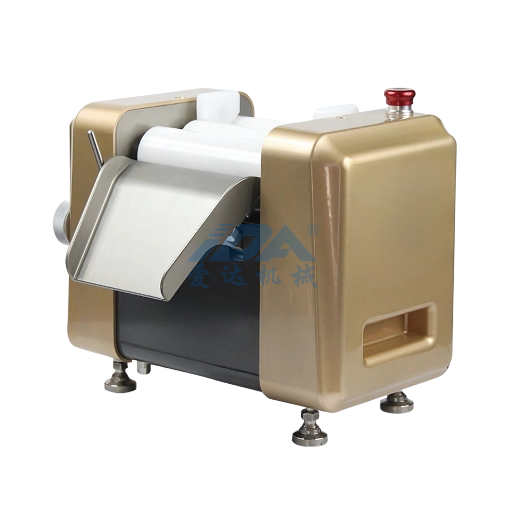
Primarily, it is the precise gap in the rolls that achieves the desired viscosity through a three-roll mill for ointments. This gap is the space between the rolls in the mill and serves to greatly impact the homogeneity and fineness of the material processed. Thus, having a smaller gap between the rolls will make the particles fined as well as increase the dispersion while a wider gap is best for applications requiring less viscosity. Operators are instructed to make incremental adjustments to the roll gap and observe regularly how the product feels and smoothness in order to determine the success ratio of these changes.
Trouble-shooting would require the widest roll gap to be applied to the compound, as its texture is observed—as the gap is slowly cranked down—until the processing consistency is reached. Several runs at different increments through a three-roll mill might be needed for fine-tuning the texture. Checking the temperature through the process is equally important since, in the form of heat dissipation from friction, any overheating can either vitiate the original formulations or disturb the viscosity.
Ably assembling and scrupulous alignment promise an easier course with methodology involving fine-tuning viscosity vs. completely struggling to avoid discrepancies. One has to pay oint attention so as to maintain consistency regularly while working with pharmaceutical ointments-one should apply these practices consistently to make 3-roll mills work to appear and produce their best.
Temperature Control During Milling
Controlling the mill’s temperature is necessary for producing good and consistent medicine. The optimal temperature needs to be maintained no matter whether it is low or high to stop the adverse effects of heat. When the material is milled, heat can go to the extent of changing the viscosity of the formulation, affecting the final product, in the most negative way.
To help regulate the latter, a three-roll mill can be cooled—injection cooling being a simple compliance. The water trap keeps the heat-evaporating part from the milling process in water throughout the milling process so that the mill always works at its ideal temperature. Maintaining a close look at both the mill’s and the material’s temperature is obligatory to notice any abrupt or slow changes that would affect the final product’s quality.
Keeping milling temperature within the optimal range is crucial for manufacturing a consistently dosed product of assured quality that performs to specifications in any industrial environment. Optimal temperature ensures longevity of equipment by not subjecting it to excessive heat and wear.
Regular Maintenance for Performance Optimization
It is vital for one to make sure at all times that a three-roll mill designed for pharmaceutical production is maintained. Regular maintenance ensures that the greatest level of roller and bearing durability in order to facilitate running at their maximum efficiency. The operational aspect of regular cleaning is important, whereby the user must ensure the rolls are cleaned up after every use to create minimal residue build-up, which can pose serious risks of spoiling materials and continuous proper operation of the mill. The residue may also affect the consistency of the product’s surface finish. A good cleaning process is validated; noncontaminated cleaning tools and clean, appropriate cleaning materials should be used, so that there should not be any residues or contaminants.
Lubrication is probably the most ignored area when we talk of maintenance. Every machine has moving parts and the bearing. Proper lubrication will ensure minimum friction in time, which helps reduce wear of the rollers. Reduced friction ensures the highest cost-effective operation of the mill. It is advisable to adhere to manufacturer guidance as to the type and frequency of lubrication, as incorrect application conceivably damages parts with downtime disadvantageously affecting company revenues.
Also, routine checks are essential with respect to identifying signs of wear, misalignment, or, indeed, damage to critical components. Repairing patches of wear before they obstruct operations will minimize machine defects and ensure that quality stays unaffected. The continuous calibration of the rollers in their operational places is required to ensure that even particle size distribution is maintained, particularly in the area of pharmaceutical milling. When an equipment is consistent and complies with industry standards, a proactive maintenance program is the way to keep it functioning as required.
Ointment Mill vs Pharmaceutical Three Roll Mill
In many topical drug and cosmetic applications, buyers use the term ointment mill to describe a three roll mill configured for high-viscosity ointments, creams, gels, and medicated pastes. The selection factors are target fineness, batch size, roller material, cleaning process, temperature control, and contamination sensitivity.
For sensitive pharmaceutical or cosmetic formulas, ceramic rollers, controlled roll gaps, validated cleaning routines, and repeatable pass settings are more important than simply choosing the lowest-cost machine.
EXAKT Alternative for Industrial Ointment Production
Lab-scale mills are useful for formulation trials, but production buyers often need larger roller sizes, stronger frame design, customizable roller materials, hydraulic gap or pressure control, cooling options, and factory support for scale-up. When comparing IDA with lab-focused brands such as EXAKT, evaluate batch volume, cleaning process, target particle size, and required documentation before choosing a model.
| Application | Material Concern | Model Direction | Next Step |
|---|---|---|---|
| Medicated ointment | Uniform API dispersion | Ceramic roller lab or pilot model | Send ointment sample for testing |
| Cream / gel | Texture consistency | Small production model | Request model recommendation |
| Cosmetic-pharma crossover | Metal contamination sensitivity | Zirconia ceramic roller configuration | Compare ceramic roller options |
| Scale-up from lab | Repeatability and throughput | Pilot-to-production series | Ask for lab-to-production advice |
Frequently Asked Questions (FAQ)
Q: How does a pharmaceutical company three roll mill process what kinds of pharmaceutical products?
A: A pharmaceutical three roll mill is used for the processing of creams, ointments, gels, suspensions, and other semi-solid formulations containing finely dispersed phases; it is especially used on some products with high viscosity where, under controlled shear and longer mixing times, it allows uniform texture and stability to be obtained.
Q: How does the mill handle materials with high viscosity?
A: Three roller mill design work for high-viscosity product is based on feeding material between the feed and center rolls so that extreme shear and compressive forces are applied to the product. The sequential nip between the two gaps ensures slow and efficient size reduction without hot zones. The rolls can speed up or slow down, and the gaps can be adjusted; all this input combined with temperature affects the material’s viscosity.
Q: Which key operational parameters should be considered for the control of a pharma three roll mill?
A: The key controlled parameters include roll speed ratios, gap settings between rolls, roll temperatures, and feed rate. Regular maintenance for ensuring rotating rolls possess a counter direction must be put into account for obtaining consistency in shear gradients. Successful management of these variables would assist in the target particle size distribution and product homogeneity, preventing degradation to sensitive pharmaceutical ingredients.
Q: How do you clean and validate a pharma three roll mill for GMP compliance?
A: Cleaning of this item involves the deassembly of the accessible parts and the use of verified cleaning agents to ensure that the documented cleaning process effectively removes the residues. The cleaning step itself shall be validated through IQ, OQ, and PQ, followed by the collection of swab samples for checking on potential cross-contamination risks and visual checks on specific core and eye-bolt screw parts, while also attempting to elucidate such important matters as filter-use limitations to achieve GMP standards.
Q: In what way would you scale up a pharmaceutical three-roll mill from effective lab production to larger production in a pharmaceutical environment?
A: Scale up is the process of replicating shear rate, roll surface speed, and residence time at lab-, as opposed to production-scale. Thus, when the two configurations; namely, in scale-up from laboratory- to production-scale; are balanced so as to allow for maximum results; process parameters are maintained like the GoM of roll stand between them, whereas other adjustments are made to feed viscosity, temperature control, gap settings. This way, maintenance of as-correct-as-possible actual product characteristics is promoted with the increase in batch size.
Q: Which formulations might a pharma three roll mill work on?
A: Extremely low-viscosity liquid formulations, high-viscosity or abrasive solids, or materials that are chemically incompatible with the material of the rolls may not hold good for the process. Alternatively, formulations requiring lower shear or are thermally sensitive beyond the mill’s temperature limits could be subjected to an alternative mixing or homogenization methods.
References
- The Mechanics of the Three Roll Mill
Published in the American Journal of Health-System Pharmacy, this article provides detailed insights into the mechanics and applications of Three Roll Mills in pharmaceutical processes.
Link to article - Approximate Rates of Shear Encountered in Some Pharmaceutical Processes
This research article from ScienceDirect discusses the use of roller mills in pharmaceutical processes, including their role in spreading topical preparations.
Link to article - Novel Concept for a Mucosal Adhesive Ointment
Also from ScienceDirect, this paper explores the use of Three Roll Mills in the preparation of specialized pharmaceutical ointments, including clinical applications.
Link to article - pharmaceutical three roll mill for ointment and cream production
This comprehensive guide provides essential insights into Three Roll Mill technology for pharmaceutical ointment manufacturing. For optimal results and regulatory compliance, always follow GMP guidelines, FDA regulations, and industry best practices in pharmaceutical production.