Get in Touch with IDA

Understanding Impeller Types for IBC Mixing Applications

Contents
show
The selection of an appropriate impeller type constitutes a vital element for achieving effective mixing operations within Intermediate Bulk Containers. The impeller selection process determines three critical factors which include mixing efficiency and equipment lifespan and operational effectiveness. Each application has unique requirements whether it’s blending sensitive liquids, handling viscous solutions, or promoting homogeneity in multi-phase systems. This comprehensive guide presents an extensive study of various impeller types used in IBC mixing applications, including detailed descriptions of their design elements, performance attributes, and optimal operational conditions.
Introduction to Mixing Impellers

Understanding Agitation and Flow Patterns
Agitation and flow patterns serve as essential operational principles which industrial mixing processes need for accurate process outcome management. Agitation describes how materials move inside a container because an impeller creates mechanical movement throughout the space. The movement creates flow patterns which include axial flow, radial flow, and tangential flow—these patterns determine how effectively mixing occurs and how evenly the final product will be distributed.
Primary Flow Pattern Types:
Axial Flow
Top-to-bottom flow pattern ideal for low-viscosity fluids with vertical circulation
Radial Flow
Side-to-side flow pattern optimal for high-shear situations requiring specific area mixing
Tangential Flow
Circular flow pattern useful for specific mixing applications
Latest search engine trend data shows that industry experts look for methods to enhance flow patterns because it helps them save energy while decreasing their operation duration. The process of selecting an agitation method together with its related flow pattern needs to match the particular needs of the application which include fluid viscosity, container dimensions, and process objectives.
Importance of Choosing the Right Mixing Impeller
The industrial mixing process achieves its optimal performance through the selection of proper mixing impellers. The type, size, and design of the impeller directly influence flow patterns, shear rates, and energy consumption, all of which affect the efficiency and quality of the final product.
| Impeller Type | Primary Application | Key Advantage |
|---|---|---|
| Hydrofoil Impellers | Low-viscosity fluid management | Low energy consumption with efficient operation |
| Rushton Turbines | Gas-liquid dispersion | Powerful radial flow capabilities |
Industry Advancement: The industry applies computational fluid dynamics (CFD) simulations together with empirical testing methods to forecast how different impeller designs will perform, which helps to meet project requirements while cutting down on testing costs. Engineers improve process reliability through the combination of contemporary data-driven analysis with their technical expertise.
Overview of IBC Mixing Constraints
The IBC mixing process functions through fluid mechanics principles which establish the liquid properties and container dimensions and operational process boundaries. The equipment selection and process design work require knowledge of these constraints.
Primary Operational Constraints:
- Diverse fluid rheological properties (viscosity and density variations)
- Impact of internal baffles on flow patterns and homogenization effectiveness
- Required calibration of impeller design and rotation speed for shear-sensitive materials
- Prevention of sedimentation during complex mixing situations
- Container geometry and dimensional limitations
Current search data indicates that industries seek to develop efficient and scalable solutions which use magnetic mixer technologies, foldable impellers, and real-time monitoring systems to solve their operational constraints. The engineering team needs to work together with advanced equipment designers and ongoing technological progress to develop solutions for IBC mixing issues.
Types of Mixing Impellers

Radial Flow Impellers
Radial flow impellers function by producing fluid movement that moves at right angles to the impeller shaft, which results in the creation of strong shear forces that produce turbulent flow patterns. The design of these impellers makes them ideal for operations which need fast mixing of two non-mixing liquids and solid particles that need to dissolve in liquid.
Key Characteristics and Applications:
Primary Function
Creates strong shear forces perpendicular to shaft
Ideal Applications
Liquid-liquid mixing, solid dissolution
Industry Sectors
Pharmaceutical, food production, specialty chemicals
Performance Benefit
Improves micro and macro mixing processes
Current search engine data shows that industrial demand for radial flow impellers has increased across pharmaceutical, food production, and specialty chemical sectors because operators need accurate and effective mixing solutions. The capability of radial flow impellers to improve both micro and macro mixing processes makes them necessary for operations which need complete material blending and energy-efficient results.
Axial Flow Impellers
Axial flow impellers function by directing fluid movement through a straight path which follows the direction of their impeller shaft, which helps them manage large volumes of fluid. The industrial process benefits from these impellers because they provide essential advantages for applications which need to maintain both high flow rates and low shear stress.
Optimal Applications:
- Heat Transfer Processes: Efficient circulation minimizes temperature gradients
- Crystallization Operations: Low shear stress protects crystal structure
- Solid Suspension: Reduces vortex creation while distributing particles uniformly
- Bioreactor Operations: Scalable designs adapt to different production processes
Industry Trends: Recent data shows that companies now focus on developing energy-efficient systems which fulfill environmental sustainability standards. Current developments show that real-time process monitoring systems which use axial flow impellers can boost mixing precision. Search trends indicate a rising demand for scalable impeller designs which industrial facilities need because these designs can adapt to different production processes.
Folding Impellers for Narrow Bung Openings
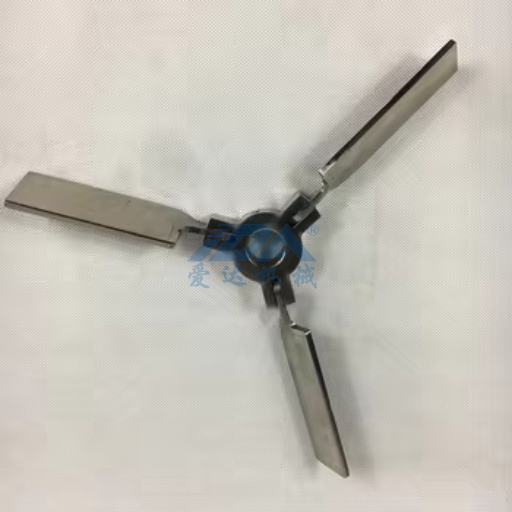
Folding impellers provide specific solutions that help industries solve their narrow bung opening problems through their special design, which offers a complete solution to their space-limited mixing requirements. The impellers fold to permit simple insertion through narrow openings, after which they expand to their complete diameter for proper mixing inside the container.
Design Innovation
Fold for easy insertion through narrow openings, then expand to full diameter for optimal mixing performance
Target Industries
Pharmaceutical and fine chemical sectors requiring precise mixing in small-bung containers including drums and bioreactors
Technological Advancement
Advanced materials research and CFD simulation development drive progress toward more dependable and flexible handling
Market Demand: The most recent search trends show that people have become increasingly interested in folding impeller designs which achieve high mixing rates while working through small openings. The implementation of narrow bung solutions represents a major breakthrough, which enhances process performance while providing easy access to equipment and straightforward upkeep procedures.
Performance Evaluation of Impeller Designs
Mixing Efficiency and Fluid Viscosity Ranges
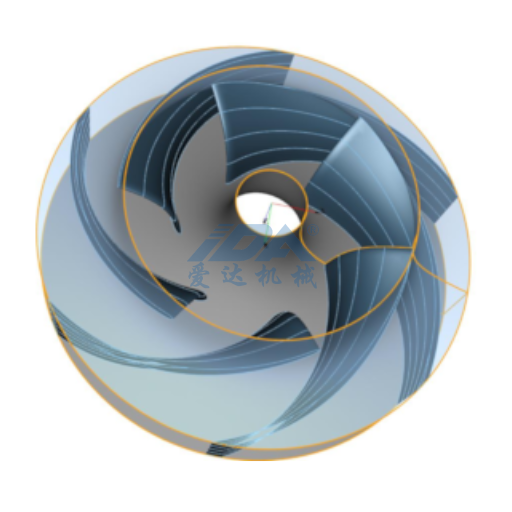
The mixing efficiency of impeller designs depends on liquid viscosity and Reynolds number which serves as a dimensionless metric that describes how fluids flow. The most efficient impeller design for achieving uniform mixing results from using high-speed axial flow impellers when working with low-viscosity fluids that have a viscosity range of 1-10 cP.
| Viscosity Range | Recommended Impeller Type | Performance Characteristics |
|---|---|---|
| 1-10 cP (Low) | High-speed axial flow impellers | Uniform mixing with rapid dispersion |
| 1,000+ cP (High) | Strong shear force impellers with maximum torque | Breaks through flow resistance, generates adequate turbulent flow |
| Variable (Non-Newtonian) | Folding impeller designs with adaptive blade geometry | Consistent performance despite dynamic viscosity changes under shear stress |
Search Trend Analysis: The search data shows that users require adaptable impeller designs because they frequently search for “high-viscosity mixing impeller” and “multi-purpose impeller performance” solutions. Folding impellers are now recognized as a preferred engineering solution owing to their capability to balance power draw with mixing intensity effectively.
Power Consumption Considerations
Industrial mixing operations use power in direct relation to three factors which include impeller design, motor efficiency, and the resulting fluid dynamics. The increasing number of searches for “energy-efficient impellers” and “power optimization in mixing systems” demonstrates that businesses today focus on developing methods which decrease energy expenses without compromising operational performance.
Energy Optimization Strategies:
- Viscosity of High Application: Helical ribbon model minimizes drag while still creating the required torque.
- Multi-Purpose Impellers: Hydrofoil designs handle diverse viscosity levels while maintaining high flow rates with reduced energy consumption
- Material Matching: Proper impeller selection matches specific rheological properties of processed materials
- System Improvements: Motor technology advancements and process monitoring tools enhance overall efficiency
Performance Impact
30% Energy Savings
Achievable through optimized impeller designs in specific applications according to recent performance analyses
Material Compatibility: 316 Stainless Steel vs. Specialized Coatings
The decision-making process for material compatibility requires a choice between 316 stainless steel and specialized coatings based on three primary operational requirements which include assessing corrosion resistance, chemical compatibility, and evaluating cost efficiency.
316 Stainless Steel
Composition: Contains molybdenum for enhanced resistance
Resistance: Excellent against pitting and crevice corrosion in chloride environments
Industries: Food processing, pharmaceutical production, marine applications
Benefits: Durability with simple cleaning methods
Specialized Coatings
Types: PTFE, epoxy, and advanced polymer solutions
Protection: Aggressive chemicals, high temperatures, abrasive materials
Requirements: Strict application methods and ongoing maintenance
Challenges: Potential coating degradation and peeling in extreme conditions
Emerging Trend: Recent data trends show that people increasingly prefer to use hybrid methods which combine 316 stainless steel with specialized coatings to create tailored solutions that fulfill their specific performance requirements. The combination uses stainless steel structural strength while utilizing modern coating technologies to achieve advanced chemical resistance and anti-fouling capabilities.
Choosing a Mixing Impeller for Your Application

Factors to Consider in Impeller Selection
The selection of an impeller for a specific application requires thorough evaluation of multiple essential factors which determine the best operational performance and process compatibility.
Critical Selection Factors:
1. Fluid Properties
Material characteristics including viscosity, density, and shear sensitivity. High-flow axial impellers work best for low-viscosity fluids while high-viscosity fluids demand low-shear high-torque helical or pitched-blade impellers.
2. Operational Requirements
Mixing goals such as blending, dispersion, or heat transfer. Blending applications require radial flow impellers (straight-blade turbines) while axial flow impellers (hydrofoils) are optimal for high flow with reduced energy usage.
3. Flow Conditions
Adequate mixing for both turbulent and laminar flow conditions must be addressed through appropriate impeller design.
4. Material Compatibility
Essential when corrosive or abrasive fluids exist. Selection of impeller materials (stainless steel, titanium, coated composites) requires assessment of both chemical and thermal process conditions.
5. Performance Prediction
Computational Fluid Dynamics (CFD) modeling helps design complex mixing systems while data-driven optimization improves design effectiveness.
6. Economic and Operational Considerations
Process objectives require balancing economic factors and operational limits with energy efficiency metrics, maintenance expenses, and scaling capabilities.
The evaluation process allows operators to assess multiple factors which lead to a solution that provides dependable and effective mixing results throughout the entire application time frame.
Case Studies: Successful IBC Mixing Applications
Case Study 1: Optimizing Pharmaceutical Blending
A pharmaceutical company wanted to enhance the uniform distribution of active pharmaceutical ingredients during their production of large batches. The advanced IBC mixing system achieved a 25% reduction in blending time because it used precise control algorithms to maintain a consistent blend uniformity of over 98%.
Key Success Factors:
- Computational fluid dynamics (CFD) simulations for accurate impeller design
- Uniform mixing maintained at different fill levels
- Vibration monitoring systems for operational reliability improvements
Case Study 2: Enhancing Food Industry Efficiency
A global food processing company faced challenges in achieving uniform mixing of powdered ingredients in bulk quantities. The IBC mixing systems achieved a 30% increase in batch yield consistency through their use of real-time sensor feedback and data analytics.
Measurable Results:
- 18% reduction in energy consumption through data-driven machine learning models
- Optimized operational parameters for agitation speed and cycle duration
- Enhanced product quality meeting strict regulatory requirements
Common Success Factor: The integration of advanced mixing technologies with data-driven methods. CFD simulations combined with IoT-enabled sensors and machine learning methods enable companies to enhance operational efficiency while decreasing expenses and achieving higher product quality. Search engine data shows that interest in “IBC mixing solutions with smart analytics” has grown by 45% during the last two years.
Expert Recommendations for Optimal Mixing
To achieve optimal mixing performance, it is essential to focus on advanced methodologies and technologies that address both precision and efficiency. Smart analytics and IoT-enabled monitoring systems which provide real-time data about speed and torque and ingredient consistency, enable mixing operations to achieve better accuracy.
Best Practice Recommendations:
- System Calibration: Configure mixing systems according to specific rheological characteristics of materials for uniform results while reducing material waste
- Smart Analytics Integration: Implement IoT-enabled monitoring for real-time process data visibility
- AI-Powered Predictive Maintenance: Use intelligent tools to decrease equipment outages and operational interruptions
- Regulatory Compliance: Ensure operations produce higher quality products which meet regulatory standards
Market Trend: Businesses are gravitating towards intelligent systems, with interest in “IBC mixing solutions with smart analytics” increasing by 45%. The integration of these advancements enables industries to optimize their operations while producing higher quality products.
Frequently Asked Questions
What types of impellers work best for IBC mixing operations?
The IBC mixing process uses three main impeller types which are pitched blade turbines, propellers, and radial impellers. The choice between these three impeller types depends on the mixing vessel design and the required mixing performance. The propeller and pitch blade deliver effective fluid mixing for low viscosity liquids because they create strong fluid movement and high pumping power. The radial impellers produce strong shear forces which help with the emulsification process. The design requires multiple impellers and larger blade size impellers to create sufficient bottom flow for handling high axial flow conditions in high viscosity materials. The system requires specific power needs which depend on the mixing area dimensions and the installed impeller units. The food and beverage industry needs sanitary equipment which hygienic blade designs and smooth surfaces deliver through their special safety design.
How does the selection of agitator impellers impact the flow patterns and shear forces which exist in an IBC?
The selection of agitator impellers directly determines the flow pattern and shear force development which occurs throughout the tank. This selection process determines what kind of flow patterns and movement patterns will develop during swirling and looping and localized high shear zones. The propeller-style agitator produces axial flow through its pumping ability while maintaining low shear output. The blade turbines and radial impellers produce high shear forces which enable dispersion and emulsification processes. The actual mixing results also depend on the pumping rate and the number of impellers installed along the shaft. The desired mixing outcomes for your mixer configuration include homogenization, solid suspension, and emulsion formation. The right selection of agitator impeller enables an organization to achieve optimal power needs which result in efficient operational performance.
Which type of impeller provides high axial flow for low level mixing in IBCs?
The pitched blade and propeller-style impellers serve as common types which produce high axial flow because they move fluid vertically through their design to establish top-to-bottom circulation which achieves effective low-level mixing. High axial flow exists through the upward movement of material from the vessel’s bottom section which stops dead zones from forming and produces better mixing results. The shallow pitch or low RPM propeller delivers gentle agitation through its capability to create circulation while maintaining low shear production. The use of larger diameter impellers or multiple stages becomes necessary when handling high viscosity liquids to maintain proper pumping capacity. The selection of an appropriate impeller for axial flow operations requires assessment of the mixing tank or vessel dimensions and power requirements.
What process determines which mixer and agitator equipment is suitable for food and beverage applications with IBC containers?
The selection of a suitable mixer for food and beverage purposes requires you to first assess three factors: the sanitary design of the system, the simplicity of cleaning its impellers, and the material components which should not result in product contamination. The industry standard for agitator selection involves using polished pitch blade or propeller impellers because these designs deliver predictable fluid movement while enabling users to achieve their desired mixing outcomes without generating excessive shear forces which would harm fragile materials. The evaluation process requires you to assess mixer applications which include gentle dispersion, emulsification, and full homogenization to determine appropriate impeller choices and operational speeds. The mixing process requires assessment of three factors which include the quantity of impellers, the characteristics of the pump, and the flow patterns that will occur during the mixing operation. The evaluation process needs to include three factors which are maintenance requirements, the dimensions of the mixing equipment, and the capacity of the mixer to operate inside the IBC opening and its support framework.
Which agitator options generate higher shear forces that enable emulsification in IBC containers?
Agitators that create higher shear forces include radial impellers, blade turbines, and specialized high-shear impeller designs which produce extreme local turbulence for emulsification purposes. These agitator impellers generate increased shear forces because they produce more pressure at their blade edges which helps to destroy droplets and create emulsions during liquid mixing. The scaling process requires assessment of power requirements together with impeller efficiency because higher shear demands increased energy consumption. The process requires you to create a balance between power needs for higher shear forces and the resulting heat production which affects product quality for sensitive products and to use staged mixing which starts with a coarse propeller and moves to a high-shear phase. The stability of an emulsion depends on three factors which include the mixing flow rate, pumping rate, and the choice of impellers used in the procedure.
What impact do various impeller types create on pumping efficiency and energy consumption of IBC mixers?
The various types of impellers produce unique pumping values which develop specific flow patterns that determine both the pumping capacity and required energy to meet the mixing requirements. Axial flow impellers that include propellers and pitched blades deliver high circulation pumps together with low power needs while radial impellers and turbines create increased shear forces that demand higher energy consumption for identical quantities. The power needed for mixing in a vessel depends on two factors which are impeller efficiency and the total number of installed impellers. The process needs you to include the viscosity of the fluid and the presence of high viscosity substances together with solid materials which are suspended when you calculate power requirements. You can achieve your desired mixing performance through proper impeller selection together with optimal mixer setup which will reduce energy consumption.