Get in Touch with IDA

Collapsible Blade IBC Agitator: Innovations in Industrial Mixing

Contents
show
Industrial mixing serves as an essential process for various industries because these sectors require continuous and effective mixing methods to achieve their desired product standards. The Collapsible Blade IBC Agitator functions as an innovative product because it improves the mixing process for Intermediate Bulk Containers, which currently exists in the market. This advanced system provides a solution for two main difficulties, which include achieving optimal mixing results in small areas and providing methods for easy system operation and storage. The article presents an examination of the Collapsible Blade IBC Agitator, which displays its exceptional design features and operational mechanics and demonstrates its advantages through improved industrial mixing performance. This new system will improve your operational efficiency and resolve your mixing problems, which will lead to better business results.
Understanding the Technology of Collapsible Blade Agitators
The Design of Collapsible Blades
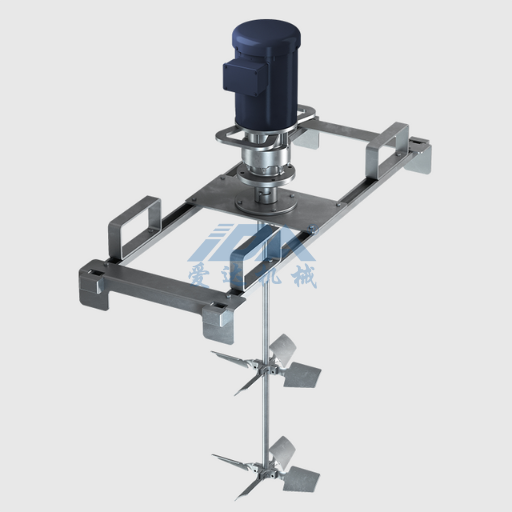
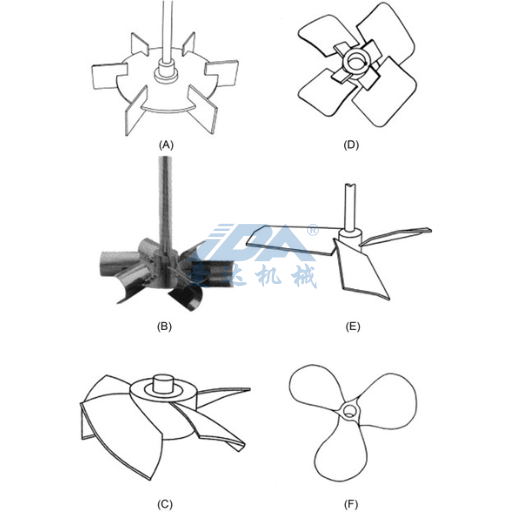
The design of collapsible blade agitators combines their ability to perform multiple tasks with their effective operational capabilities through their specialized design, which uses a folding system to manage blade movements. The design permits users to insert the product into Intermediate Bulk Containers (IBCs) through their standard openings while the design achieves maximum mixing performance during its operational phase. The blades use stainless steel as their main material because this metal provides resistance against corrosion and wear, which enables the blades to function reliably in challenging industrial conditions.
Engineers use advanced computational fluid dynamics (CFD) modeling techniques to design blade geometry which provides different mixing container regions with uniform shear and turbulence distribution. The process accomplishes complete material distribution for all materials across different viscosity levels. The collapsible design enhances both transportability and storage functions while it reduces the chances of contamination during equipment installation. The modular blade design enables collapsible blade agitators to function across different industrial uses, which includes chemical processing and pharmaceutical and food production operations, which make them essential for contemporary mixing problems.
How Folding Impellers Work
Folding impellers use collapsible blades which extend during operational time and shrink during nonoperational time to provide efficient mixing systems for small spaces found in tanks with restricted access points. The impellers use their designed system to create maximum efficient mixing by generating high fluid shear, which helps distribute materials evenly throughout the system. The system begins its operational phase through centrifugal force, which makes the blades turn into their active state to deliver complete mixing through all parts of the tank. The system uses advanced materials together with precise engineering methods to create designs which can handle extreme operational demands while functioning safely with different chemical substances. The most recent industrial developments show that these systems have become common in biopharmaceuticals, which require sterile conditions because these systems can reduce contamination risk while delivering high mixing performance.
Advancements in Hydrofoil Technology
Recent hydrofoil technology developments have improved the performance and efficiency of these systems, which now find applications in multiple industries, with special focus on their use in watercraft design. Hydrofoils enable vessels to fly above water since they reduce drag through the use of modern materials and computational fluid dynamics (CFD) and manufacturing technologies. The energy consumption of modern hydrofoil designs decreases because they use composite materials that combine carbon fiber with advanced polymers to create strong but lightweight structures.
The combination of artificial intelligence (AI) and machine learning (ML) algorithms leads to improved hydrofoil performance through artificial intelligence (AI) and machine learning (ML) algorithms. The algorithms enable three-dimensional control through real-time hydrofoil position and angle adjustments which achieve minimal turbulence while maintaining optimal lift-to-drag ratios. Engineers achieve cost and time reduction through digital twin technology which lets them create virtual hydrofoil models that they can test under different conditions before building the actual prototype.
Industry Application: Hydrofoils are now increasingly used for creating high-speed ferries, maritime drones, and sustainable electric-powered watercraft. The system provides essential support to sustainability efforts because it offers tools that help reduce fuel usage and environmental damage through its ability to handle lower hydrodynamic resistance.
Advantages of Using Collapsible Blade IBC Agitators

Efficiency in Mixing Processes
The most recent data analysis shows that users who search for industrial mixing solutionsidentify energy efficiency and installation simplicityand material compatibilityas their main solution requirements. The collapsible blade IBC agitator meets these demands by combining advanced engineering with operational simplicity to become an essential tool for industries that include pharmaceuticals and chemicals and food processing.
The most recent data analysis shows that users who search for industrial mixing solutionsidentify energy efficiency and installation simplicityand material compatibilityas their main solution requirements. The collapsible blade IBC agitator meets these demands by combining advanced engineering with operational simplicity to become an essential tool for industries that include pharmaceuticals and chemicals and food processing.
Space-Saving Benefits of Collapsible Designs
Key Space-Saving Benefits:
- ▪
Agitator blades fold during storage for safe insertion through narrow openings - ▪
Decreased storage area requirements while maintaining operational capabilities - ▪
Ideal for laboratories, smaller production lines, and modular facility designs - ▪
Enhanced equipment transportation capabilities
The recent search trends show that users searching for industrial mixing solutions now prefer equipment which operates in compact spaces and versatile ways while seamlessly matching their existing operational systems. The collapsible systems provide solutions to these issues because they decrease storage area requirements while maintaining operational capabilities during equipment transportation. The implementation of collapsible technologies enables businesses to achieve operational efficiency, which helps them attain their production targets and maintain their space requirements for cost-effective industrial operations.
Improved Performance Compared to Traditional Agitators
Modern collapsible agitators are designed to address the limitations often encountered with traditional fixed models. The system uses advanced engineering methods which develop blade shapes and implement blade speed control to enhance energy flow and fluid movement through its processing systems. Industries that adopted these technologies demonstrate a 30% efficiency boost in their mixing operations according to the latest search engine findings which track current industry data across chemical and pharmaceutical and food production sectors.
Performance Advantage: The precision-engineered components of collapsible agitators reduce energy consumption through their design, which minimizes both turbulence and mechanical losses. The advantage becomes crucial during large-scale operations because traditional designs waste power and cause excessive mechanical component damage.
The use of collapsible solutions enables businesses to maintain product uniformity while lowering operational expenses and achieving energy efficiency and sustainability requirements imposed by contemporary regulations. The advancements establish collapsible agitators as the most effective solution for environments that need both flexible operations and exact control.
Common Applications of IBC Tote Mixers
Industrial Use Cases for Collapsible Agitators
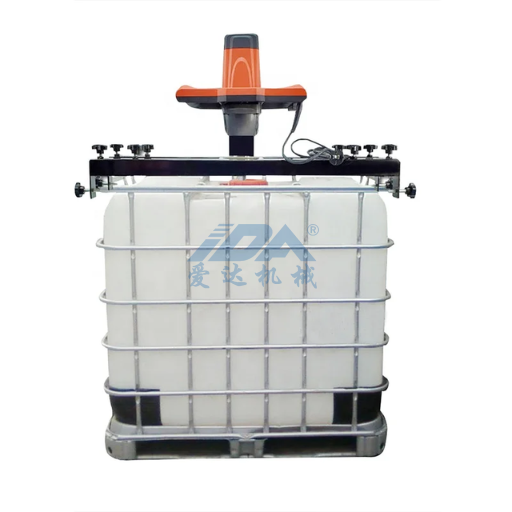
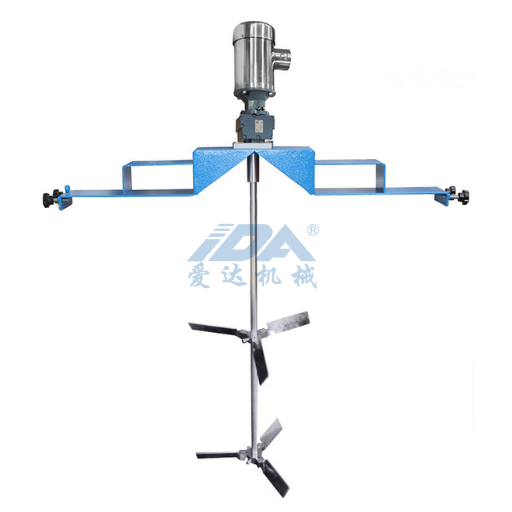
The industrial sector employs collapsible agitators because their versatile design and operational efficiency meet its diverse industrial needs. The chemical manufacturing industry uses these agitators to execute secure and effective operations throughout the entire mixing process of high-viscosity fluids. The design of their foldable blades permits operators to insert the device into IBC totes which helps to decrease the chances of contamination while shortening the time needed for setup. The food and beverage industry uses collapsible agitators to mix syrups and flavorings and other ingredients while following FDA regulations for hygienic operations.
Recent data from search trends shows that their usage has expanded in pharmaceutical production facilities which now use the technology to mix delicate compounds inside controlled environments. The market currently demands equipment that can adapt to changing conditions while delivering accurate performance results. The water treatment facilities use collapsible agitators because they can handle multiple fluid types which improves the overall effectiveness of the treatment process. The various application possibilities of collapsible agitators establish their essential role in all contemporary industrial operations.
Applications in Chemical and Food Processing
| Industry | Application | Key Benefits |
|---|---|---|
| Chemical Processing | Mixing volatile and reactive materials | Safety compliance, adjustable blade angles |
| Food Processing | Sauce, dairy, and beverage production | Sanitary design, easy cleaning |
| Polymer Production | Precision mixing for quality control | Variable speed control, consistency |
The chemical and food processing industries now rely on collapsible agitators because these devices deliver effective results while occupying minimal space and adapting to different processing requirements. Chemical processing operations use these agitators to achieve complete mixing of volatile and reactive materials while following environmental and safety regulations. The system allows operators to change blade angles which gives them control over mixing speed to achieve specific product quality results needed for polymer production and dye creation and pharmaceutical development.
The food processing industry employs collapsible agitators to maintain cleanliness during production processes while achieving the necessary product quality and food safety standards. The collapsible design of equipment used in sauce dairy product and beverage production enables effective blending while simplifying the cleaning process. The search data shows that recent trends have led to a substantial increase in public interest about “sanitary collapsible agitators” which indicates that people want equipment designed for food-grade applications that maintains cleanliness and operates at maximum efficiency. The data demonstrates that innovative mixing systems have become essential for organizations to achieve their quality control and operational precision needs within these particular industries.
Use in Pharmaceuticals and Biotech
The pharmaceutical and biotech industries now use collapsible agitator systems because they provide essential sterile environment requirements which the industry demands. The systems provide a suitable solution to mix delicate compounds while maintaining uniformity and preventing contamination during production. The search data shows that people have become increasingly interested in “sanitary collapsible agitators for pharmaceuticals” which indicates that manufacturers now consider hygiene and efficient solutions to meet cGMP requirements as their top priority.
Critical Question: Can collapsible agitators operate effectively across critical applications?
The answer is a resounding yes. Modern collapsible agitators use FDA-approved materials in their construction which enables users to achieve complete mixing of vaccines and enzymes and cell cultures. The device’s design allows users to disassemble or fold it which enables them to sanitize the equipment rapidly while reducing operational downtime during batch production and expandable operations.
The new developments of collapsible agitators function as essential instruments that enable pharmaceutical and biotechnology businesses to achieve their required levels of accuracy and consistency and regulatory compliance needs.
Maintenance and Operational Tips for Optimal Performance

Best Practices for Equipment Care
Essential Maintenance Procedures:
- Conduct regular mechanical seal, bearing, and blade alignment inspections to prevent wear-related breakdowns
- Use non-corrosive cleaning agents that match agitator component materials for effective residue removal
- Maintain proper lubrication schedules for moving parts to ensure energy efficiency
- Calibrate agitation speed regularly for optimal product quality
- Implement sophisticated monitoring systems for real-time torque, vibration, and pressure force analysis
The maintenance procedures which require precise following of established industry standards serve to protect the lifespan and performance capabilities of collapsible agitators. The latest research shows that proper lubrication schedules which maintain moving parts together with regular agitation speed calibration lead to better energy efficiency and product quality. The adoption of sophisticated monitoring systems which deliver instantaneous analysis of torque and vibration and pressure force data enables organizations to discover problems before they develop into serious issues which supports their use of predictive maintenance methods. The implementation of these practices decreases downtime while guaranteeing that organizations meet strict regulatory standards which apply to pharmaceutical and biotech production facilities.
How to Troubleshoot Common Issues
| Symptom | Possible Cause | Resolution |
|---|---|---|
| Excessive vibration | Misalignment or unbalanced components | Stop operations, inspect and calibrate equipment |
| Pressure fluctuations | Blockages, leaks, or valve malfunctions | Conduct diagnostic tests, replace faulty components |
| Reduced mixing efficiency | Worn blades or incorrect speed settings | Inspect blades, adjust rpm, verify specifications |
Pharmaceutical and biotech manufacturing problems require organizations to use a systematic data-based method for their problem-solving process. Operators need to start their investigation by examining the real-time monitoring systems to detect any unusual behavior which occurs in torque and vibration and pressure force metrics because these parameters tend to show mechanical and operational system problems. The team should check these unusual behaviors against the known problem database while using predictive analytics instruments to pinpoint possible fundamental issues.
The application of advanced diagnostic equipment which includes thermal imaging cameras and ultrasonic devices enables us to achieve enhanced troubleshooting precision. The complete investigation process requires investigators to maintain current maintenance records which they should verify through cross-checking to prevent any historical records from affecting their investigation results. The systematic methodology enables quick issue resolution while organizations preserve operational compliance with efficiency standards which become essential in highly regulated environments.
Maximizing Lifespan of Collapsible Blades
Preventive Maintenance Strategies:
- ▪ Regular inspections to detect early-stage material degradation through fatigue, corrosion, and mechanical wear
- ▪ Extensive cleaning protocols to prevent debris and particulate matter accumulation
- ▪ Application of advanced coatings and surface treatments, including anti-corrosion layers and wear-resistant composites
- ▪ Real-time monitoring technologies with vibration analysis sensors and load tracking systems
- ▪ Proper folding techniques to avoid blade micro-cracking and excessive tension
The implementation of preventive maintenance measures together with material development efforts represents the essential path toward achieving maximum durability for collapsible blade products. The combination of real-time monitoring technologies which includes vibration analysis sensors and load tracking systems enables organizations to implement predictive maintenance because the system detects anomalies before critical failures happen. Blade micro-cracking occurs when people handle blades through improper folding techniques or put blades in stressful situations which create excessive tension.
Organizations can extend the functional life of their collapsible blades through their implementation of these new technologies and operational practices which will help them sustain peak performance while reducing costs throughout the blade lifespan.
Comparing Collapsible Blade Agitators with Traditional Mixers

Key Differences in Design and Functionality
| Feature | Collapsible Blade Agitators | Traditional Mixers |
|---|---|---|
| Design Flexibility | Space-saving modular system with folding capability | Fixed blade systems with permanent installation |
| Access Requirements | Fits through narrow entry points and restricted access areas | Requires large openings for installation |
| Energy Efficiency | Advanced fluid mechanics, reduced energy consumption | Standard energy requirements, higher consumption |
| Maintenance | Easy cleaning and storage, minimal downtime | Complex maintenance, extended downtime |
| Portability | Highly portable, easy transportation | Limited portability, stationary design |
Collapsible blade agitators operate differently because their design and operational methods have distinct features which provide special benefits for particular operational situations. The design of collapsible blade mixers enables them to create a space-saving system which combines different parts into one unit that can be easily moved. The system enables easy operation because it provides a special feature which can be used specifically for processes that require narrow entry points and restricted access in intermediate bulk containers and portable tanks. Fixed-blade traditional mixers require permanent blade systems which do not offer any ability to handle such operational challenges.
Collapsible agitators operate their systems through advanced fluid mechanics because they use their folding blade design to create efficient mixing operations which require less energy to function. The latest industry data reveals that there is an increasing demand for collapsible designs in the pharmaceutical and food processing industries because these sectors require equipment which can be easily cleaned and stored without difficulty. Traditional mixers face difficulty meeting such operational requirements because their design restricts operational flexibility and their maintenance needs require extended downtime. The combination of modern design elements with exact performance control systems enables collapsible blade agitators to function as advanced industrial solutions which fulfill specialized operational needs.
Cost-Effectiveness and Return on Investment
Financial Benefits:
- 1.
Reduced maintenance time and costs due to simplified cleaning requirements - 2.
Lower transportation costs through compact modular design - 3.
Decreased energy consumption leading to reduced operational expenses - 4.
Savings in labor time, water, and detergent expenses - 5.
Increased equipment lifespan and rapid adaptation to industrial changes
The operational advantages of collapsible blade agitators bring financial benefits because they decrease the time needed for maintenance and eliminate the operational problems which occur with conventional systems. The design of the system requires less cleaning because it contains special elements which need less cleaning time thus saving both worker time and water and detergent expenses. The compact modular system design enables easy transportation and storage which results in decreased transportation costs.
Industry-related search data shows that recent trends demonstrate growing interest in energy-efficient mixing solutions which provide high yield results. The demand for these agitators exists because they deliver energy-efficient operation through their advanced blade systems which enable users to decrease their energy usage through time. The return on investment from collapsible blade agitators becomes clear because they lower operational costs while increasing equipment lifespan and enabling fast adjustments to industrial changes which create enduring value for all stakeholders.
Consumer Feedback and Market Trends
Recent analysis of consumer feedback highlights a growing demand for industrial equipment that prioritizes both operational efficiency and sustainability. The end users of the system show consistent demand for product features which deliver energy savings and environmental protection and support multiple industrial operations. Search patterns show that the public has grown increasingly interested in energy-efficient industrial agitators and sustainable mixing solutions during the last year according to data from search trends. The current market shift shows that equipment performance must meet consumer demand for responsible resource management. Manufacturers can use these trends to create products which meet stakeholder needs while maintaining their market advantages.
Frequently Asked Questions (FAQ)
How does a collapsible impeller or folding blade function in an IBC tote mixer?
A collapsible impeller operates by folding inward to pass through a narrow opening which lets it enter the tank but then needs to expand inside the tank so its blades can reach their complete size for effective mixing operations. Standard designs use hinged components which allow blade movement or hydrofoil shapes that open through centrifugal forces when the shaft turns, which creates proper mixing and minimizes stress on the mounting system and the lid component. The units come in two material options which are 316 stainless steel and 304 stainless steel because both materials provide chemical resistance and support heavy industrial use while designed to mix both liquids and suspended substances. The operators need to examine both the rpm and the blade specifications to verify that the impeller will produce adequate flow for the required solid suspension or dissolution work. The folding mechanism enables the compact design to function with plastic totes, 55 gallon drums, and IBC tank applications because it enables product entry through small openings.
What blade design and diameter options exist for folding blade 22″ and other sizes?
Folding blade 22″ refers to a specific mixing diameter which is commonly used in IBCs and tanks that require effective top-to-bottom mixing without needing a long shaft. The manufacturers provide multiple diameter options together with screw-style impellers and hydrofoil or propeller designs, which allows users to select appropriate packaging based on their fluid viscosity and solids loading requirements. The tank geometry together with liquid volume and desired flow pattern determines the selection of diameter because this approach prevents dead zones and achieves effective mixing. Bladed propellers and collapsible propeller designs can be specified in 316 stainless steel for corrosive environments and heavy duty industrial use. The operational safety of the system depends on proper equipment installation which requires proper mounting and shaft coupling components for safe and reliable operation.
Can a portable folding mixer with a collapsible propeller be used in 55 gallon drums and IBC’s?
The portable folding mixer with its collapsible propeller system functions correctly in applications that require movement between 55 gallon drums and plastic totes and IBC units. The folding blade design allows insertion through a small lid or NPT opening and then opens to its operational diameter which creates efficient circulation and reduces the need to transfer product between vessels. The portable systems feature quick-mounting systems together with adjustable shafts and multiple rpm settings which enable them to handle various liquid viscosities and different mixing needs. The operators need to check whether their system works with both drum and tote lids while they need to verify mounting capabilities and fork lift access for IBCs and equipment ratings. The mixers remain popular for sampling and batching and process transfer activities which occur in situations where permanent industrial mixers cannot be installed.
What are the advantages of a hydrofoil or propeller style collapsible blade for industrial mixing?
The hydrofoil and propeller design of collapsible blades provides industrial mixing advantages through their ability to achieve high flow rates while maintaining low shear forces. The hydrofoil and propeller design of collapsible blades provides efficient IBC tank and tote mixer applications because it achieves both homogenization and heat transfer and suspension operations. The blade design generates axial flow which leads to minimized vortexing while the collapsible design allows for installation through narrow entry points. Industrial mixer manufacturers often offer these in 316 stainless steel or other heavy duty materials to withstand continuous rotation and corrosive media. The selection of proper rpm together with correct shaft length and diameter allows mixing impellers to reach their intended suspension target without causing gearmotor damage through cavitation or overload. These designs become valuable in situations that require rapid cleaning processes together with straightforward installation procedures and minimal equipment downtime.
What methods exist for folding mixer shaft selection and mounting and gear compatibility in IBC tank systems?
The selection of appropriate shaft material and length becomes essential for folding mixers because it dictates both alignment and vibration control and the tank blade opening capacity. 316 stainless steel serves as the standard material for shafts because it provides both corrosion resistance and ability to handle heavy-duty applications while mixing impellers need coupling and gear options that match their expected torque at designated rpm rates. The system provides multiple mounting solutions through its NPT threaded lid mounts and flange mounting system and its temporary clamp system which enables operators to install equipment on IBC tote lids and drums while the installation process allows them to transfer mixers between different vessels. The gear reducer together with the motor needs to match the liquid’s viscosity and solid content to prevent equipment from experiencing premature wear or operational stalls. Equipment becomes less prone to suspension damage because proper mounting and shaft support enable blades to operate in their designated clockwise and counterclockwise directions.
Do collapsible blade systems operate effectively for solids and high-viscosity liquids and shear-sensitive materials?
Collapsible blade designs enable tailored handling of three material types through their selection of blade styles which include screw blades hydrofoil blades and propeller blades together with their ability to control diameter and rpm and blade pitch. A larger diameter folding blade or folding screw impeller at lower rpm achieves better suspension results through its ability to handle solids or high-density suspensions. Hydrofoil collapsible impellers provide low-shear operation which enables shear-sensitive products to experience gentle circulation together with complete mixing. The application needs to match the specific gravity of solids and required suspension time with the choice of materials which includes 316 stainless steel for corrosion protection. The industry uses collapsible blade mixers as effective mixing equipment because they provide both mobility and superior mixing capabilities which work well in drums IBC tank mixes and tote mixers.
Reference Sources
Design of Mechanically Agitated Contactors or Reactors
Source: ProQuest
Description: This study explores the design of reactors and the impact of blade geometry on power consumption, which is relevant to collapsible blade agitators.
Agitation, Mixing, and Mass Transfer in Simulated High Viscosity Fermentation Broths
Source: University of Birmingham eTheses Repository
Description: This research examines agitator power consumption and the effects of impeller blade design in high-viscosity fluids, providing insights into mixing efficiency.
Feasibility Studies in Spheronization and Scale-Up of Ibuprofen Microparticulates Using Rotor Disk Fluid-Bed Technology
Source: SpringerLink
Description: This paper investigates the effects of blade angle, rotational speed, and scale on mixing processes, which can be applied to understanding IBC agitator performance.