Get in Touch with IDA
Double Planetary Mixer: A Comprehensive Guide to Used Planetary Mixers

Contents
show
The double planetary mixer is deemed one of the most flexible and efficient mixing technologies in industrial processes. These mixers, designed for handling the most difficult formulations, the highest viscosities, and the most sophisticated blending operations, are used in the production of adhesives, sealants, pharmaceuticals, and advanced materials, among others.
The present guide is intended to reveal the subtleties of used double planetary mixers, thus enabling the practitioners of the industry to make knowledgeable decisions regarding the purchase of dependable and economical alternatives. This resource, which is very thorough, will also bring forth the understanding of key features and benefits, the performance criteria, the purchasing considerations, etc. so as to optimize the mixing processes. Thus, the detailed insights to be shared will help you to unlock the entire potential of this essential equipment.
Technical Specifications of the Double Planetary Mixer
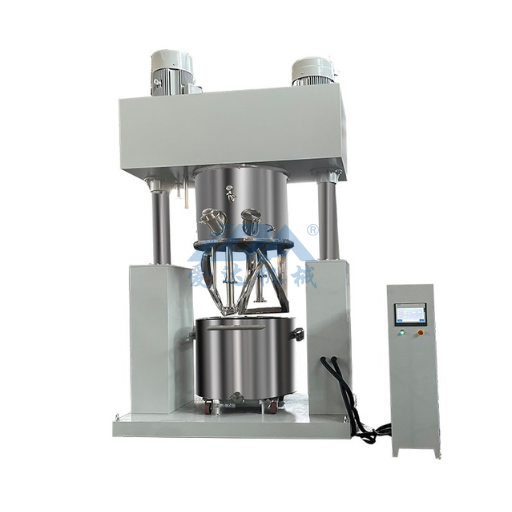
High-Torque Capabilities
The high-torque capabilities of the double planetary mixer allow it to process the most difficult mixing applications with accuracy and speed. It is suitable for the mixing of very viscous materials, giving the user the choice of thorough mixing even in situations where viscosity goes as high as 2,000,000 centipoise. The mixer uses advanced drive systems to keep the mixing process stable and to deliver the necessary torque, which it does by avoiding mechanical stress during lengthy operations.
🔧 Key Torque Features
- Handles viscosities up to 2,000,000 centipoise
- Advanced drive systems for stable mixing processes
- High-precision gear systems for maximum energy transfer
- Strong motor arrangements minimize power loss
- Essential for adhesives, sealants, and specialty compounds
High-torque capability is a must-have especially for sectors like adhesives, sealants, and other speciality compounds where the mixing of the same quality and material integrity is very important. These functions are supported by the constant monitoring of performance, which makes it possible to the users to the mixer’s operational parameters correctly, thus making it possible for the mixer to work with different viscosities and shear requirements.
Vacuum and Pressure Ratings
Vacuum and pressure ratings are very important parameters in the operation of industrial machines because they determine the safe and effective materials handling under different environmental conditions. These ratings are set by the maximum internal pressure or vacuum levels that a system can bear without losing its structural integrity or functionality.
The search data indicates that there is a trend that businesses are looking for more and more assistance in choosing the proper equipment ratings to fit their application requirements so as to avoid system failures. When setting the operational conditions in alignment with the equipment capabilities, informed by real-time insights, organizations achieve the optimized safety, reduced downtime, and improved performance outcome.
Blade Configurations: Finger, Helical, and Rectangular
💡 Modular Advantage: The data also signals a new trend indicating the demand for modular systems that integrate these configurations for various industrial applications. For example, coupling helical and rectangular blades in one system gives the option to carry precision jobs and high-capacity operations at the same time.
Industrial Applications of the Double Planetary Mixer
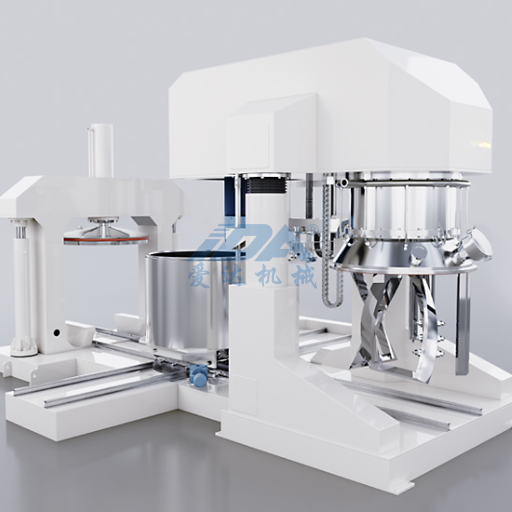
🧪 Chemical Industry
Ideal for mixing viscous materials like sealants, adhesives, and silicones. Features automated mixing cycles and temperature controls for quality and regulatory compliance.
💊 Pharmaceuticals
Essential for ointments, creams, and gels. Equipped with vacuum mixing, temperature control, and automatic process monitoring for GMP compliance.
🔋 Battery & Adhesive Production
Perfect for high-torque applications handling viscous or thixotropic materials. Ensures uniform blending of binders, conductive agents, and active materials.
Chemical Industry Applications
Double planetary mixers are among the most preferred mixers in the chemical industry due to their capability to mix viscous materials with a high level of mixing uniformity. Modern data on market dynamics, that is, even data sourced from search analysts, show that businesses are very often looking for mixing equipment solutions that can effectively mix sealants, adhesives, and silicones. The physical characteristics of these materials are such that they need strong high-torque mixers that can ensure perfect blending without damaging the material.
Moreover, the search patterns suggest more and more companies are interested in energy-efficient mixing solutions, which indicate the need for the advanced technologies coiled with double planetary mixers. This movement highlights the mixers’ contribution in terms of boosting production output to be scalable, cost-efficient, and consistent.
Pharmaceutical Manufacturing
The double planetary mixers are one of the major factors that contribute to the success of the pharmaceutical industry, as they serve such processes that require the highest mixing accuracy and batching uniformity. They are among the essential equipment for making ointments, creams, and gels where it is of utmost importance to have an absolutely even mixture of active pharmaceutical ingredients (APIs).
✨ Pharmaceutical Features
- Vacuum mixing capabilities
- Advanced temperature control systems
- Automatic process monitoring
- GMP compliance assurance
- Prevention of air entrapment
- Superior product quality and stability
Battery and Adhesive Production
Manufacturing of batteries and adhesives is very much dependent on accuracy and advanced mixing technologies since only these can guarantee consistency in product quality and performance. Double planetary mixers, which are designed for heavy-duty operation and high torque, are in large-scale use in the production of these products since they are very good at handling even the most difficult-to-work-with materials like those which are highly viscous or have thixotropic characteristics.
Binders, conductive agents, and active materials that are part of battery production are blended together uniformly by the mixers in order to get the best energy density and cycle performance. The same goes for the adhesive production, where the mixers resin, combine solvents and other components to make products with bonding characteristics that are very much the same.
Key Benefits of the Double Planetary Mixer
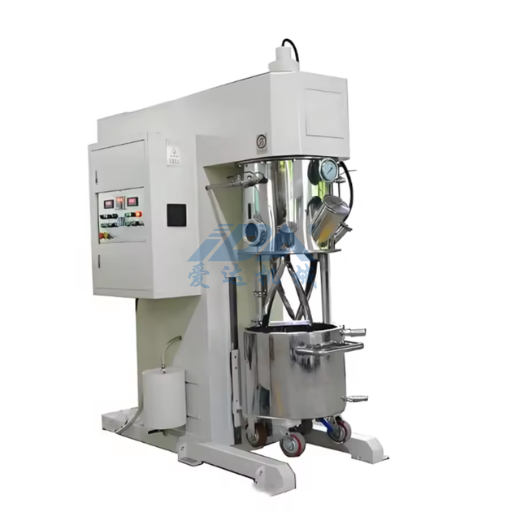
Superior Viscosity Management
The double planetary mixer is constructed for mixed materials of various viscosities, and quality mixing is guaranteed even with very thick substances. Mixing is done by the use of intermeshing blades, which rotate around their axes and at the same time orbit the mix vessel. Materials are evenly distributed regardless of their initial consistency, and the whole mixing process is fast and thoroughly done.
Control systems with advanced features provide for the monitoring and adjustment of parameters such as speed and torque, which allows the manufacturers to keep the optimum viscosity throughout the production process. When one looks at the search trends regarding the industrial mixing technologies, the searches for “viscosity control in high-performance mixers” and “efficient mixing for adhesives and sealants” have shown the most significant rise.
Reduced Batch Times
The main reason for reduced batch times is to increase the efficiency of production and this applies to all industries, especially those with high-volume or very short-perishable-manufacturing-processed products. The double planetary mixer is designed to cut down the time of mixing substantially with improving the quality of the mixing by sheer force control and the mixing of the material being done uniformly.
⏱️ Efficiency Impact
As per the data-driven insights from the search trends, it has been revealed that there is a significant rise in the industry sector interest that seeks to reduce lead times in manufacturing process. This is in agreement with the coming operational skills and speed of getting the product into the market in competitive sectors that are prone to constant changes.
Improved Homogeneity Compared to Traditional Methods
Modern Double Planetary Mixers have more Uniform Product than Traditional Mixers due to their top-notch design and accurate mechanical movement unlike conventional systems, these mixers have a dual-arm mechanism in which one arm is rotating around its axis while the other one is orbiting the rotating tank simultaneously thus the elaborate movement guarantees that every particle or material in the batch gets to be integrated completely so there is no inconsistency or dead zones which are common in other mixing technologies.
Recently data-driven search trends show a significant increase in the number of queries related to “advanced mixing solutions for uniformity” and “innovative technology for consistent production” reflecting the demand for equipment that can produce the same and predictable results over and over again. Consequently, industries that require highly uniform products such as pharmaceuticals, adhesives, and specialty chemicals can both secure their top-quality outcomes and comply with strict quality standards.
Maintenance & Safety Best Practices for Used Planetary Mixers
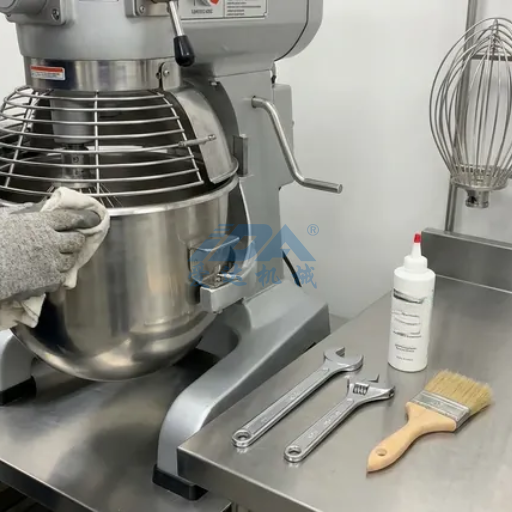
Preventative Maintenance Tips
🔧 Essential Maintenance Checklist
- Regular Component Inspection: Check shafts, seals, and agitators for wear and tear or damage
- Proper Lubrication: Lubricate all moving parts according to manufacturer’s guidelines
- Thorough Cleaning: Clean machine properly after every use to prevent contamination
- Electrical System Checks: Inspect wiring and motor connections regularly
- IoT Monitoring: Integrate predictive maintenance technologies for real-time performance tracking
- Performance Metrics: Monitor motor vibration, temperature, and torque to spot anomalies early
Trends in searches have recently disclosed data that suggests an increased interest in predictive maintenance technologies, thus, it would very much be a good idea to integrate IoT monitoring solutions into planetary mixers. By the union of the preventive maintenance practices with the predictive analytics, the industries are blessed with great reliability, longer service periods for their mixers, and also do not risk violating the strict operational standards.
Cleaning-in-Place (CIP) Systems
Cleaning-in-Place (CIP) systems are extremely advanced automated technologies that are used in many fields to the extent that they are now deemed indispensable in the case of food, beverage, and pharmaceutical manufacturing owing to their capability of keeping the machinery clean without disassembling it. The working principle of these systems is the cleaning agents, such as detergents, and sanitizers, being driven through the inner surfaces of the pipelines, vessels, and other pieces of processing equipment.
✅ CIP System Advantages
- Reduces downtime significantly
- Maintains strictest hygiene regulatory standards
- Minimal human involvement reduces contamination risk
- Consistent and repeatable cleaning results
- Cost-effective operational solution
- Real-time monitoring for performance validation
Operator Safety Protocols
Operator safety protocols in an industrial environment are very important and they help to lessen workplace accidents and thus ensure a company’s adherence to the regulatory standards. These protocols include a combination of engineering control measures, administrative measures to be taken, and personal protective equipment (PPE) that may be necessary which altogether will lower the risks that come with machinery operating and chemical handling.
⚠️ Safety Best Practices
- Compulsory operator training programs
- Regular equipment maintenance to prevent breakdowns
- Automated safety systems (emergency stops, interlock mechanisms)
- Air quality and harmful substance monitoring
- Proper use of personal protective equipment
- Instant risk detection alerts
Ordering a Double Planetary Mixer
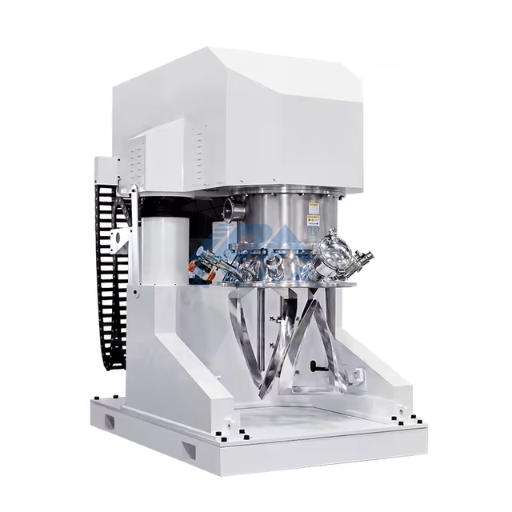
Mixer Design Factors to Consider
Optimizing the performance and the suitability of a double planetary mixer for the specific application presupposes the evaluation of some critical factors that are the design or selection of the mixer. The factors of main concern are as follows:
1. Viscosity and Material Properties
The material to be processed is very much what’s responsible for the design specifications. High-viscosity materials over 1,000,000 cP would require very powerful motors, very strong arms, and very effective gear systems to cope with the dynamic loads. Properties such as hardness, resistance to shear, and thermal stability will also be very important in deciding the materials for mixer components.
2. Capacity Requirements
The taking of an accurate measure of the batch size coupled with the frequency of operation is the key to preventing inefficiencies. For high-volume production, mixers with large capacity whose outputs can be scaled are the ones to be preferred, while for lab or pilot-scale tests, smaller mixers might suffice.
3. Temperature Control Systems
Double planetary mixers make sure that the temperature control remains in place when treating materials with thermal fluctuation sensitivity. The latest designs include mixing vessels with steam jackets, in-line temperature sensors, and programmable temperature controllers to keep the temperature exact during the process.
4. Cleanability and Maintenance
Cleaning and maintenance are counted among the considerations due to operational efficiency and regulatory standards. Technologies such as CIP (Clean-in-Place) systems and fasten-to-remove blades have turned cleaning into a very quick and easy task thus cutting down the downtime and cross-contamination.
5. Automation and Controls
The development of Industry 4.0 technologies has made automated control systems a necessary part of the design of machinery. The systems include PLC (Programmable Logic Controllers), HMI (Human-Machine Interfaces), and data collection modules which allow for accurate control of the operation of the plant.
6. Compliance with Standards
Compliance with the guidelines that are specific to the industry such as FDA, GMP, ATEX, or OSHA is never up for negotiation. The mixer should be designed in a way that is compliant with the regulations and standards, and the materials used in its construction must be certified to guarantee that safety and quality are maintained.
Types of Planetary Mixers
Planetary mixers are multipurpose machines that can be employed in various mixing applications across different industrial and commercial sectors. The types of planetary mixers that dominated the market based on recent trends and search patterns are the following:
📈 Market Trend: Search data indicates that there is a surge in interest in vacuum and automated planetary mixers pointing towards the trend of moving towards smarter and more advanced mixing solutions that can deal with complex industrial needs.
Press as an Option in Mixer Configuration
Mixer configurations that include press functionalities create a versatile solution for industries that need to process materials under controlled pressure conditions. Press mixers are exceptionally suitable for such areas where compaction, deaeration, or uniformity under elevated pressures are the key requirements. These systems are widely used in the pharmaceutical, glue, and advanced materials synthesis industries where accuracy and repeatability are of utmost importance.
The latest search engine data showed that press mixers, particularly automation combinations, are gaining more and more interest, which can be interpreted as a demand for machines that make the operation easier and offer better performance measures. This is in line with the general movement in the industry toward more intelligent, data-centric mixing solutions.
Frequently Asked Questions
Reference Sources
📌 Key Takeaways
- Double planetary mixers handle viscosities up to 2,000,000 centipoise with superior efficiency
- Dual-arm mechanism ensures complete material integration with no dead zones
- Essential for pharmaceuticals, adhesives, batteries, and chemical production
- Vacuum options eliminate air entrapment for flawless product quality
- CIP systems and preventative maintenance extend equipment lifespan
- Consider viscosity, capacity, temperature control, and compliance when selecting
- Used mixers offer cost-effective solutions when properly maintained and certified