Get in Touch with IDA
Double Planetary Mixer Working Principle: Understanding Powerful Double Planetary Mixers

Contents
show
Double planetary mixers are the best in mixing technology, and they are characterized by their capability to process very thick and heavy materials with great ease. The medical, cosmetic, and adhesive industries are examples of those industries where such mixers are the most important equipment because there is always a need for perfection, regularity, and power for the production of superior products. This article reveals the operation of double planetary mixers by explaining the intricate mechanics that power their performance. It will be a surprise to the readers to trace the journey of these mixers from the very beginning to their present-day use and the advantages they offer to high-demand industrial processes. So, whether you are an engineer, a developer, or just a technology enthusiast, this in-depth discussion will enlighten you on the significance of double planetary mixers in contemporary production.
Introduction to Planetary Mixers
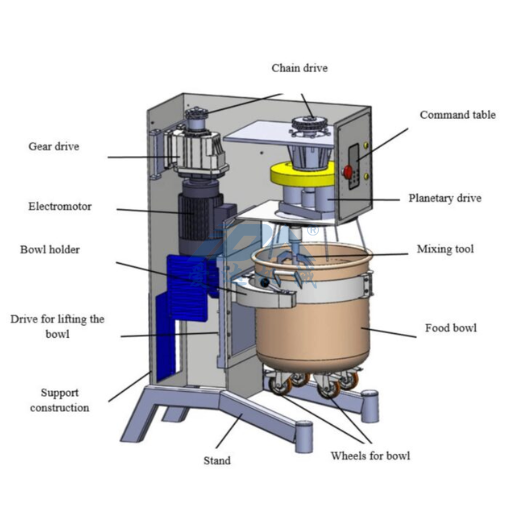
Definition and Overview of Planetary Mixers
Planetary mixers are the newest and the most advanced type of industrial mixers designed to combine the hardest, densest, and high-viscosity materials with ease. The name comes from the unique motion of the mixing paddles that not only cover the bowl but also rotate around a central point like planets in a figure-eight orbit. The axial and radial movements working together ensure thorough mixing and continuous supply of the ingredients, even in very demanding applications.
Key Specifications
- Viscosity Range: 100,000 cP to over 2,000,000 cP
- Motion Pattern: Figure-eight orbit (axial and radial movement)
- Advanced Features: Vacuum capability, temperature control, interchangeable blade designs
The most recent information indicates that planetary mixers have been almost universally adapted in pharmaceutical, adhesive, sealant, and, food production, among others, industries. Planetary mixers can process the heaviest of materials, which are like pastes and having viscosities from about 100,000 cp to over 2,000,000 cp. Moreover, modern models are usually equipped with a vacuum, a temperature-controlling jacketed mixing vessel, and an ability to take different designs of blades which make them more versatile in special tasks. Planetary mixers are widely used to obtain homogeneity and quality in the manufacturing parts that are high in demand.
Importance in Manufacturing Industries
The manufacturing industry has found planetary mixers to be very beneficial as they can easily handle extremely viscous and dense materials that are difficult to mix. Pharmaceutical, adhesive, food processing, and battery manufacturing industries use these mixers to guarantee accurate blending and mixing of materials that have a slight difference in the desired properties. Based on a recent study of trends in search data, it can be observed that there is an increased interest in advanced planetary mixer models that come with such productivity-enhancing features as automated controls and real-time monitoring systems. This development is in line with the rising demand for scalability and process optimization, which lead to getting the same quality in all batches while at the same time reducing the number of production errors. By so doing, planetary mixers play a tremendous role in the manufacturing industry as they make it possible to have mixing processes that consume less time, easy to clean, and support the production of complex formulas with very strict quality controls. Hence, all these aspects go together in confirming their significance in the modern industrial applications.
Applications Across Different Sectors
Planetary mixers have been popular in a wide variety of sectors thanks to their multi-functionality and excellent design that enables them to mix different materials. In the food and beverage industry, mixers are often seen as the main machines for creating uniformly textured high-quality dough, batters, and chocolate mixtures. Likewise, the pharmaceutical industry is an area where planetary mixers come into play for developing creams, ointments, and gels, where the quality factor of homogeneity is provided by efficiency. The mixing devices are also used in the chemical and cosmetics industry to produce high-viscosity emulsions, adhesives, and sealants, among others. The trend of search queries regarding “industrial mixers for food processing” and “pharmaceutical-grade mixers” shows that there will be an increasing interest in specific solutions to satisfy the needs of various sectors. This dependence on planetary mixers, to a large extent, is driven by the need for precision, efficiency, and scalability.
Industry Applications Summary
- Food & Beverage: Dough, batters, chocolate mixtures
- Pharmaceutical: Creams, ointments, gels
- Chemical & Cosmetics: High-viscosity emulsions, adhesives, sealants
Understanding the Double Planetary Mixer
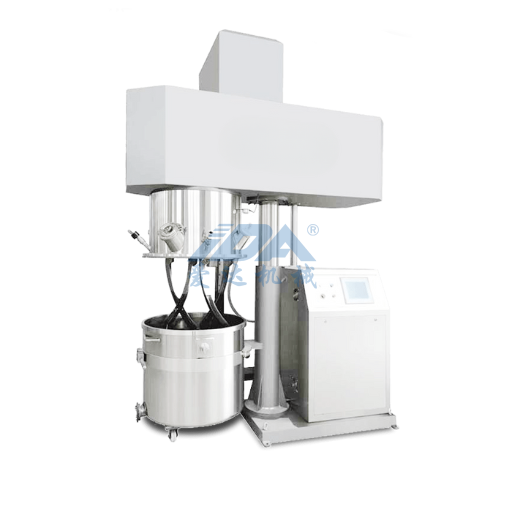
Design Features of Double Planetary Mixers
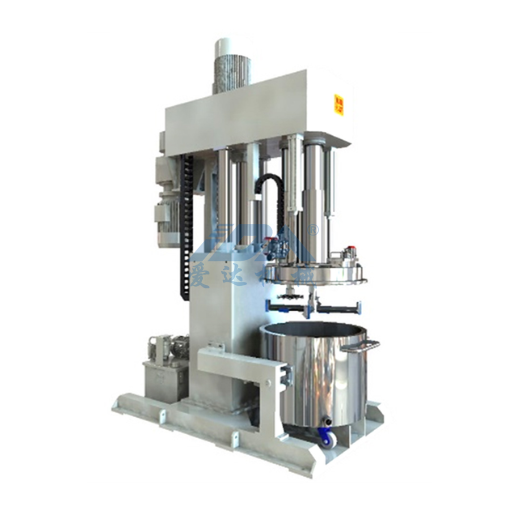
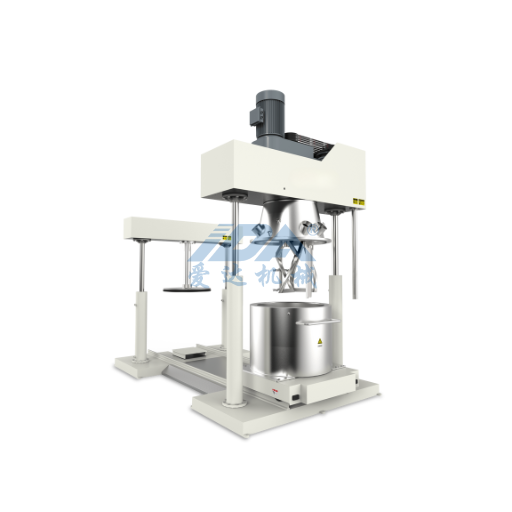
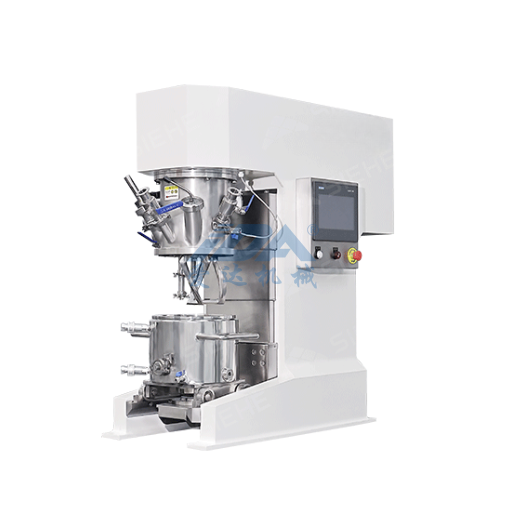
Double planetary mixers are made for high performance when it comes to mixing complicated mixtures. This mechanism of dual orbiting mixing blades that both rotate on their axis and revolve around the central axis inside the cylindrical mixing vessel is what sets the double planetary mixers apart. The dual-motion system removes the challenge for even the most unmixable materials with existence of throughout and uniform mixing. Heavy-duty, high-torque drives, precision-machined components, and adaptable blade configurations are among the major design elements that characterize these mixers.
Search engine data has just recently suggested that there is a growing concern of “industrial mixers for food processing” and “pharmaceutical-grade mixers”. This perfectly coincides with the capabilities of the double planetary mixer to solve sector-specific problems such as sanitation, waste disposal, and accurate process control. Moreover, the industry asking for these mixers because of their ability to scale up from small-batch trials to large-scale productions while guaranteeing uniform results across all the units. The robust design features of double planetary mixers position them as critical solutions for achieving efficiency and compliance in various sectors.
Mechanics of Dual-Axis Motion
In double planetary mixers, the dual-axis motion allows for the mixing blades to simultaneously rotate and revolve within a specified axis. This intricate movement makes sure that the entire mixture in the container is prepared the same way, so there are no dead spaces where the mixer would not reach and full homogenization would not be done. The planetary blades turn on their axis and at the same time orbit around the center of the mixing chamber. This combined action markedly increases the force created by shear, the uniformity of the mixing, and the rate of transfer of material.
Dual-Axis Motion Advantages
- Eliminates Dead Zones: Complete coverage of mixing vessel ensures no unmixed material
- Processes High-Viscosity Materials: Effective handling of difficult-to-flow substances
- Maintains Quality Consistency: Uniform results across different product aspects
- High Mixing Intensity: Efficient processing of adhesives, sealants, and heavy pastes
- Precision and Repeatability: Essential for pharmaceutical, food, and chemical industries
The latest search data indicate that industries are frequently asking about the advantages of the dual-axis motion over the traditional mixing methods. The foremost benefit of the latter is its capability of effectively processing high-viscosity or even very hard-to-flow materials and still maintain quality throughout the different aspects of the product. Unlike conventional mixers, the dual-axis set up provides a mixing intensity level that is quite high and thus enables the processing of difficult combinations like adhesives, sealants, and even heavy pastes very efficiently. Precision and repeatability now become a must-have in such processes where dual-axis motion comes into play to satisfy not only the ever-increasing need for optimization in the pharmaceutical, food, and chemical industries but also ease in manufacturing.
Blades Interaction with Vessel Walls
One of the most critical elements in the mixing process is the blender blades and vessel walls’ interaction. To ensure correct mixing, the blades must be placed and designed with precision so as to displace the material comprehensively and keep the dead zones where some of the ingredients might become under-processed eliminated. The use of advanced geometries like helical or scraper blades can increase the contact area with the vessel walls, thus making it easier for heat transfer to take place and the distribution of temperature to be uniform, especially in the case of shear-sensitive materials.
Engine analysis reveals that there is an increasing focus on scraper blades made for thermal control during the mixing process in the recent trends over the past few months. These blades will continuously scrape the walls of the vessel which would not only eliminate the possibility of material build-up but also make sure that the temperature across the different batch sizes is the same i.e. controlled thus avoiding the risk of material instability and hence product non-compliance. The design innovation for the pharmaceutical industry that employs the dual interaction of blades and walls along with high-precision engineering not only meets the functional requirements but also the regulatory ones across the manufacturing domains.
Key Benefits of Blade-Wall Interaction
- Prevents material build-up on vessel walls
- Ensures uniform temperature distribution
- Improves heat transfer efficiency
- Eliminates dead zones and under-processed areas
- Meets regulatory compliance requirements
Working Principle of Double Planetary Mixers
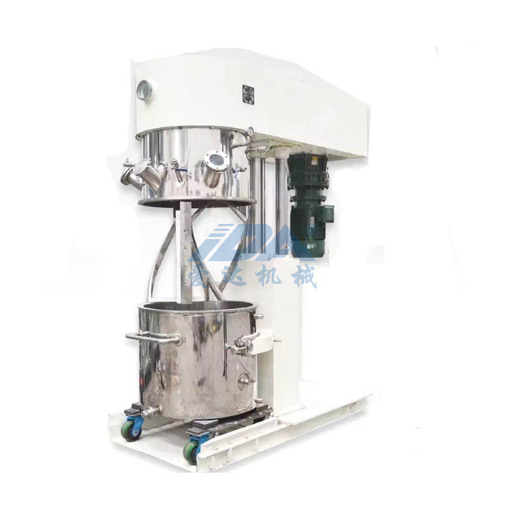
The Mixing Process Explained
A double planetary mixer is a very efficient all-around mixer, as it combines both the rotational and the orbital motion of the platen, which are synchronized. The two mixing blades, which are usually in rectangular or helix shape, turn around their axes while concurrently moving around the center axis inside the mixing chamber. This two-prong approach to mixing guarantees that even the thickest of materials or the densest of formulations will be mixed thoroughly and uniformly.
The most recent data and industrial perspectives indicate that perfection in control systems has improved this process to the highest level. The outstanding double planetary mixers these days come with digital torque monitoring and automated feedback systems, which mean that the user can make changes in real-time regarding blade speed and position. Not only does this facilitate the creation of a very uniform mixture but it also helps to reduce energy consumption while at the same time avoiding any localized heating or failure of the materials. This innovation has been driving force in the most stringent sectors such as electronics and pharmaceuticals, where precise specifications regarding homogeneity and temperature control are vital. So, the operational efficacy of double planetary mixer is based on mechanical accuracy together with data-driven optimization technologies.
Modern Control Systems Features
- Digital Torque Monitoring: Real-time tracking of mixing force and resistance
- Automated Feedback Systems: Instant adjustments to blade speed and position
- Energy Optimization: Reduced consumption through intelligent operation
- Temperature Control: Prevention of localized heating and material failure
- Data-Driven Insights: Process optimization through performance analytics
Dead Zones Removal in Mixing of High Viscosity Materials
Elimination of the dead zones in mixing of highly viscous materials result from advanced designing of equipment and innovative mixing methods. Dead zones places in a mixing container where the material is not moving or is imperfectly mixed are an especially serious problem in high-viscosity applications. They lead to a product that is not consistent in quality. The problem is solved by modern double planetary mixers that have optimized blade configuration and an orbital motion of mixing which not only keeps the material scraped from the walls of the vessel but also keeps it coming back to the center of the batch. Moreover, precision-engineered mixing geometries create almost no space or gaps between the blades and the wall of the vessel thereby making it very hard for stagnation to take place.
Synchronous with these developments, real-time process monitoring through sensor integration has advanced detection of the dead zones and elimination of the same. Analysis of data, based on search engine insights and industry demand, indicates that dual-shaft mixers or hybrid planetary mixer types of solutions are increasingly being adopted in high-demand industries such as adhesives and silicone processing. These innovations provide the users with a high degree of control over the movement of the material ensuring complete homogenization even in extreme viscosity ranges higher than 1,000,000 cP. The fusion of advanced mechanical engineering with digital performance monitoring results in a dynamic methodology that meets the challenge of dead zones in high-viscosity mixing.
✓ Dead Zone Elimination Strategies
- Optimized blade configuration and orbital motion
- Continuous wall scraping to prevent material stagnation
- Precision-engineered mixing geometries with minimal gaps
- Real-time sensor monitoring for dead zone detection
- Dual-shaft or hybrid planetary mixer solutions for extreme viscosity (>1,000,000 cP)
Continuous and Uniform Mixing Characteristics
Continuous and uniform mixing of materials benefits significantly with both operational and product qualities, particularly in the case of those industrial processes where the mixture is in high-demand. If a manufacturer guarantees uniform dispersion of the material, product quality will be higher as well considering that there will be no defects which will be imparted and also no performance will be lost in subsequent applications. This also means that the mixing time will be reduced or the mixer will be idle during the transition between the different batches if the next batch is already prepared, thus leading to a cheaper production cycle and less waste and rework. Using the most recent industry data from insights indicates that a 25-30% increase in the overall productivity and a marked increase in the energy efficiency because of reduction in the mixing time and optimized use of the equipment are all points reported by the processes employing advanced mixing technologies. Such advancements are indicative of the fact that precise and homogeneous mixing is at the forefront of industrial innovation and of raising competitive production standards.
📊 Key Performance Statistics
- Productivity Increase: 25-30% overall improvement
- Energy Efficiency: Marked improvement through optimized equipment use
- Waste Reduction: Decreased through precise mixing and less rework
Technical Advantages of Using Double Planetary Mixers
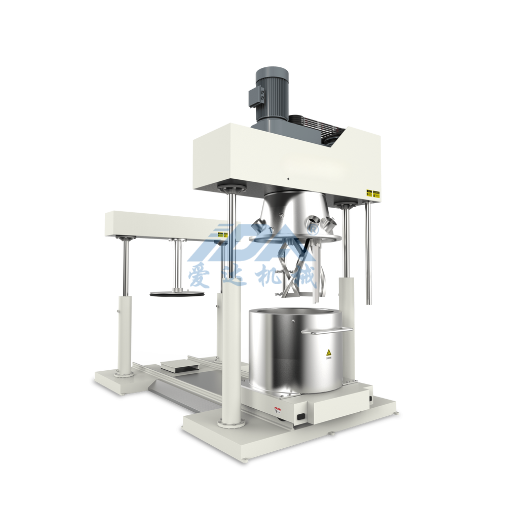
Efficiency Gains in Production Lines
The modern production lines have benefited tremendously in terms of efficiency by the use of double planetary mixers, as these mixers not only cut down the mixing times but also guarantee uniformity even for the most viscous materials. The recent analysis of data trends retrieved through search engine tools shows that the application of double planetary mixers in industries results in a sustainable mix of throughput and operational persistence. The surge in queries regarding “reliable batch mixing” and “energy-efficient industrial mixers” point to a rising demand for such equipment that can simultaneously meet the standards of cost-effectiveness and performance. The implementation of double planetary mixers into the production system not only cuts the downtime down to size but also promotes the eco-friendly operations by cutting energy consumption and material waste, hence fortifying their focus in the handling of the competitive manufacturing environments.
Impact on Product Quality and Consistency
The product quality and consistency in large scale manufacturing processes that are using double planetary mixers are vastly improved. By means of precise mixing mechanisms and controlled agitation, the double planetary mixers are capable of homogenizing materials with different viscosities without losing the structural integrity of delicate components. The search trend indicates that there has been a drastic increase in search queries for “optimal mixing techniques” and “maintaining product uniformity in production,” thus the industry is increasingly focusing on achieving impeccable standards. The challenges are taken care of by the double planetary mixers – they get rid of the material separation, guarantee the correct distribution of the ingredients, and minimize the inconsistencies which could occur during the traditional mixing processes. As a result, their presence reinforces the reliability of the process and the volume of output, which in turn, makes manufacturer’s quality assurance measures more straightforward.
Cost-Effectiveness and ROI Considerations
Separating the cost-effective and return on investment (ROI) factors of double planetary mixers demand consideration of various critical parameters. To start with, the mixer downtime reduction however, it is through robust design and efficient operation, means in the long run very less maintenance cost. Moreover, consistent mixing quality is maintained throughout the process, such that very little, if any, waste and rework are so that operational costs are managed more effectively.
The data from recent search trends spotlights an increasing want for precision mixing technologies due to the fact that manufacturers are putting the greatest emphasis on the efficiency and sustainability of their production lines. The enterprises that employ double planetary mixers are not just following this trend but also are capable of producing top-notch, consistent products that meet the market demands and at the same time consume less resources. This would mean that the cost of investment would be recovered sooner and the companies would be positioned more favorably in the sectors that depend on efficient mixing systems such as, pharmaceuticals, food production, and specialty chemicals. The merger of high technology and guaranteed savings ensures that investing in this technology will always be a wise financial decision.
Case Studies and Applications
Pharmaceutical Manufacturing
The use of advanced mixing technologies in the pharmaceutical sector is a major step forward for the industry. It solves the major problem of the mixing processes involving API’s of poor and unstable quality, brings about the mix that is most precise, and at the same time helps keep the regulators happy. Manufacturer’s use of state-of-the-art mixing machines and inline blending systems opens the door for totality in the distribution of APIs which in turn is the main factor in drug’s potency and safety. New data gathered from search engines shows that the recently popular queries about pharmaceutical mixing largely revolve around the subject of up-scaling and achieving uniformity across different batches. Such trends in the industry indicate that there is major focus on the blending of accuracy with speed and to the use of regulations that are tight but still offer quality at a low cost in the end.
Chemical Production Processes
Modern chemical production processes have steadily turned to advanced technologies for help in the way of enhancing their efficiency, precision, and scalability. The data from the latest search engine clearly indicates this question being raised: “How can the manufacturer of chemicals get the best out of production and at the same time, comply with the toughest regulations?”
The answer is founded on a versatile approach that makes use of the process analytical technology (PAT), automation, and data-driven insights. PAT makes it possible to do the monitoring and controlling of chemical reactions in real-time, thus ensuring that there is a distribution of the active pharmaceutical ingredient (API) that is consistent and reducing deviations as well. Automation makes the processes of that involve repetitive tasks faster and less error-prone due to the absence of humans and hence increase production throughput. Furthermore, the application of machine learning algorithms can monitor batch-to-batch variations, forecast faults before they happen, and keep the process ersive adjustments. Doing all this at the same time leads to having a very strong quality management system, compliance with the regulations in the industry, and savings of costs that are significant, there by achieving the goal of combining efficiency with product safety that is uncompromised.
Chemical Production Technology Integration
- Process Analytical Technology (PAT): Real-time monitoring and control of chemical reactions
- Automation Systems: Reduced human error and increased throughput
- Machine Learning Algorithms: Predictive fault detection and process adjustments
- Quality Management: Strong compliance with industry regulations
- Cost Optimization: Significant savings while maintaining product safety
Battery Production Innovations
The production of batteries is aimed mainly at the creation of systems with higher energy density, lower costs and smaller negative impact on the environment. Solid-state batteries, for instance, are among the innovations in this area which, by using solid materials, have surpassed the conventional liquid electrolytes. This not only secures the battery against leakage and thermal runaway, thus improving its safety, but also helps it accommodate much more energy. Moreover, the AI and machine learning techniques have been incorporated into the production lines to ensure that the real-time properties of materials and process parameters are monitored. For instance, the predictive AI system can detect performance problems occurring during the electrode manufacturing process leading to achieving uniform quality among the battery cells.
However, the adoption of environmentally friendly methods like recycling used batteries and polluting materials reduction with the help of silicon or lithium sulfur chemistry is becoming the industry standard. The developments are proof of the industry’s efforts to address the dual problems of technology and environment. The future of battery technology, which is able to meet the increasing demand for energy storage and electric cars, will be marked by the collaboration between research institutions and manufacturers that will result in novelties such as fast charging and cycling ability upgrades being integrated into the battery technology.
🔋 Battery Production Innovations
- Solid-State Batteries: Enhanced safety and higher energy density
- AI & Machine Learning: Real-time monitoring and quality control
- Eco-Friendly Materials: Silicon anodes and lithium sulfur chemistry
- Battery Recycling: Sustainable practices for environmental protection
- Fast Charging Technology: Enhanced cycling ability for electric vehicles
FAQ
How is the double planetary mixer functioning and what is the difference in the motion of the planetary mixers?
The principle of the double planetary mixer operates by the method of two different planetary motions wherein the planetary agitators, while the planetary frame turns, move around the axis producing a dual movement which is very active in the mixing and dispersing process. This kind of arrangement makes it possible for the agitator to rotate not only with the planetary frame but also to spin on its axis thus resulting in full dispersion and mixing of viscous materials and slurry. The movement of the planet reduces the angle of dead by shifting the dispersing shafts and wall scraper from one end of the tank to the other thus increasing the mixing efficiency. The two planetary design is taking the single planetary mixers yielding the shearing and kneading action that is suitable for high viscosity and viscous materials. Many of the leading double planetary mixer manufacturers also incorporate planetary gear and a planetary carrier in their designs to assure precise motion and robust performance.
What are the main features of the working principle of a planetary mixers when dealing with high viscosity slurries?
The working principle of planetary mixers for high viscosity slurries merges disperser high-speed rotation with planetary frame slow orbital movement to create axial and radial flow patterns that disperse and knead the mass. Wall scrapers and twist type or claw type blades work together to prevent material build-up and ensure the mixer holds strong shearing and kneading forces for full dispersion and mixing. Dispersing shafts, two blades or more, and the stirrer geometry are all designed to provide the highest mixing efficiency and the lowest dead angle in the process of slurry preparation. Some designs feature a hydraulic lifting system and a hydraulic or frame type lifting mechanism for lowering and lifting of agitators, thus making maintenance easier and interfacing with vacuum emulsifying mixers. The pairing of the disperser and the planetary agitators guarantees that both dispersion and mixing occur even for highly viscous and thixotropic formulations.
Why is it a must that a scraper made of a planetary frame is included in the double planetary mixers?
The scraper on the planetary frame is a very important component as it ensures that the mixing tool is always in close contact with the wall of the vessel, thus the working principle is able to deliver full dispersion and mixing with no dead angle zones. Conversely, scrapers keep removing the thin layer of the product from the walls of the tank, which is very much needed when working with viscous products, high viscosity slurries, or pastes that would otherwise stick and reduce the mixing effect. This action not only helps the scrapers to remove the product but also the mixing efficiency is increased because the dispersing shafts and blades are enabled to work on fresh material thus contributing to the mixing and dispersion of the material as the planetary frame moves. Many mixers also come with options of corrosion-resistant materials for the scrapers and the explosion-proof or heating types that can be selected based on different production environments. Besides, planetary motion, scrapers also help achieve uniform temperature distribution when heating and cooling functions are being used.
What are the advantages of having a double planetary mixer with components that implement both dispersion and kneading simultaneously in the working principle?
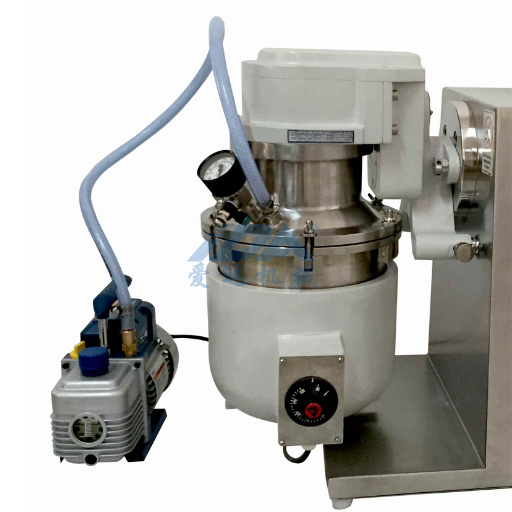
The double planetary mixer is incorporating planetary agitators in a double setting, a planetary carrier, a decelerator, and that can also be accompanied by dispersing shafts and scrapers which serve the purposes of combining dispersion and kneading. The decelerator in conjunction with the adopted planetary gear arranges the dual planetary motion synchronously thereby the agitators are rotating along with the planetary frame and at the same time also spinning independently which results in very strong shearing and kneading. There are two kinds of blades or twist-shaped/claw-shaped blade options at the disposal. These blades are responsible for delivering axial and radial stirring to increase the mixing efficiency for viscous materials and slurry preparation. The auxiliary systems such as the hydraulic lifting system, vacuum port for the planetary vacuum mixer, and heating and cooling jackets remain an integral part of the mixing process by providing control over the process and helping with the material handling. Components that are thus integrated into one another result in the mixer being used for dispersing and mixing tasks of any formulations needing full dispersion and mixing under controlled temperatures across the board.
Is the working principle of planetary mixers capable of accommodating requirements of special materials that are explosion-proof or high-speed?
The working principle of planetary mixers can indeed be adapted for explosion-proof and high-speed applications by choosing the right motor, control, and enclosure technologies to meet safety and operational requirements as the case may be. Explosion-proof type housings, sealed electrical components, and proper grounding are some of the techniques that the mixer can utilize to process volatile or flammable solvents while still maintaining the same dual planetary motion and mixing effect. In the case of high-speed requirements, the mixer manufacturer might create the geometry of the disperser and agitator in such a way the rotation is very fast but cooling and structural integrity are also taken care of so as not to have a situation of excessive shear heating. The combination of high-speed rotation with planetary movement does provide axial and radial flows that are suitable for both dispersion and mixing situations but there are certain material-specific factors such as viscosity, shear sensitivity and slurry preparation which must be dealt with. The proper choice of dispersing shafts, wall scraper design and control systems is what facilitates mixing efficiency and safety for the specialized processes.