Get in Touch with IDA

Basket Mill Selection Guide: Choosing the Right Size for Your Production

Contents
show
The process of selecting an appropriate basket mill size serves as the essential step which leads to production optimization and creation of high-quality outcomes. The process of determining which basket mill options to choose becomes difficult for users because they need to know how to combine their operational needs with available machine capabilities.
The guide helps you make decisions about production scaling and efficiency improvements and special material property requirements. We will identify the most important elements which need evaluation when selecting basket mill size while providing you with practical information to help your business make optimal purchasing decisions. Prepare to eliminate uncertainty in equipment selection so that you can enhance your production capacity to unprecedented levels.
Understanding Basket Mills and Bead Mills
What is a Basket Mill?
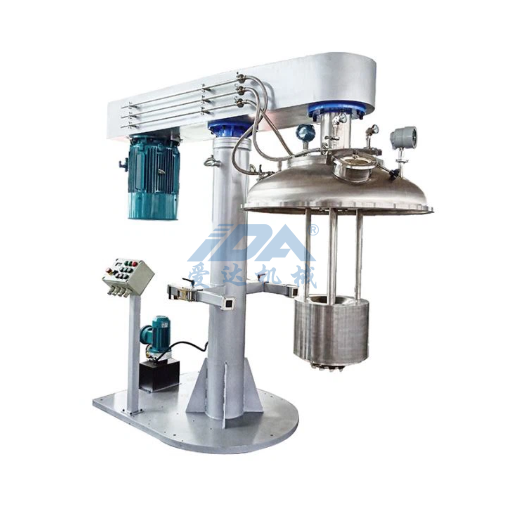
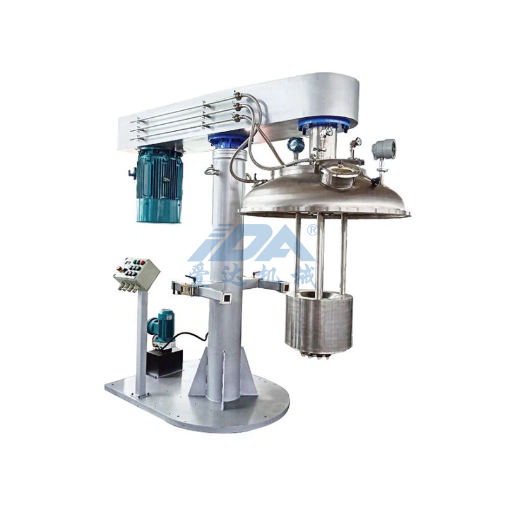
The basket mill serves as an industrial tool which enables wet milling and dispersion operations in various sectors including coatings and inks and cosmetics and adhesives. The system uses a grinding chamber which contains beads that a high-speed impeller forces into movement. The system enables complete material mixing through efficient particle size reduction. The basket mill enables simultaneous milling and dispersing operations which result in faster processing times and improved product quality. They possess special worth because they can manage different viscosity levels and they provide scalability which makes them suitable for both small production runs and large manufacturing operations.
How Bead Mills Work for Fine Grinding
Bead mills operate through the use of small grinding beads which they agitate within a chamber to achieve their goal of producing finely ground materials with consistent particle size. The operation begins when the material enters the milling chamber where its contents face extreme mechanical pressure which results from the beads’ continuous motion. The grinding beads which operationally use materials like zirconia and glass become selected because they fulfill operational needs through their extended lifespan. The beads receive energy which produces a shearing effect and an impact force that generates smaller particles while achieving uniform distribution of pigments and other materials. Modern bead mills use sophisticated control systems which permit operators to make precise changes to essential operating factors including bead diameter and rotational velocity and separation methods thus producing steady operation with improved efficiency. Bead mills demonstrate flexible operational capabilities which enable their use in multiple fields such as coatings and inks and pharmaceuticals and cosmetics while meeting the increasing need for top-quality fine grinding services.
Comparing Basket Mills vs. Bead Mills
Basket mills and bead mills both serve as equipment for fine grinding and dispersion work but they use different designs and operational methods to achieve their particular functions. The basket mill uses grinding media that operators submerge into material while they use a contained chamber to mix and process the material. The design enables fast cleaning procedures and simple color changes which result in less material waste that makes the product suitable for paint and coating businesses that need to change their product batches.
Bead mills use a continuous flow system which operates together with a separate grinding chamber to deliver their results. The system enables operators to process bigger amounts of material while achieving better results when producing ultra-fine particles. The equipment proves highly effective for operations that demand precise results in pharmaceutical and cosmetic manufacturing environments. Bead mills enable users to control operational parameters through their ability to adjust bead size and speed which leads to better system customization.
The decision between two options depends on three elements which include production volume, material characteristics, and the needed operational standards.
Key Factors to Consider in Mill Selection
1. Production Scale and Size Requirements
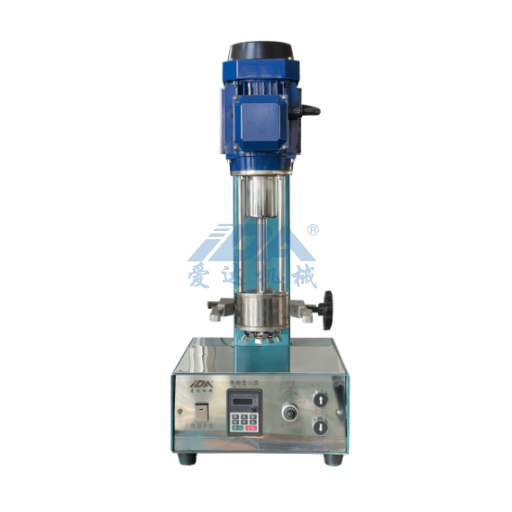
The process of evaluating production scale requires determination of daily and batch material processing volume. Bead mills provide optimal performance for large production needs because they operate with continuous systems that achieve greater production capacity. The operation of basket mills enables small businesses and specific product development to use their equipment because it provides both flexible and user-friendly features. The final product performance and quality depend on the size requirements because the final particles determine their dimensions. Bead mills deliver precise particle size control because they produce smaller and more uniform particle sizes which makes them suitable for applications that require exact measurements. The selected mill needs to meet production requirements and material limitations which scientists must understand to achieve their research goals.
2. Particle Size Reduction and Distribution
The process of achieving perfect particle size reduction and distribution needs to obtain the correct material properties and milling equipment selection and operating conditions analysis. The reduction efficiency of materials depends on their hardness and density and moisture content. The selection between bead mills and basket mills determines the equipment choice which impacts the final particle characteristics of size and uniformity.
The outcome depends on operating parameters which include rotor speed and grinding media size and processing time. Finer particle distributions result from higher rotor speeds and smaller grinding media, while longer processing times produce more reliable outcomes. The monitoring and control of these variables become essential for producing particles which fulfill exact specifications required in pharmaceuticals and paints and advanced applications. The combination of modern milling technologies with complete knowledge of these factors enables operators to create dependable particle size distributions which meet their specific requirements.
3. Milling Efficiency and Operational Efficiency
The integration of milling efficiency with operational efficiency is crucial in optimizing production processes across various industries. The implementation of efficient milling systems enables operators to achieve sustainable operation through lower energy costs and reduced equipment downtime which results in higher operational efficiency. Operators can make better decisions through modern technology which includes automatic monitoring systems and immediate data processing capabilities. The new technologies enable increased production rates while maintaining product quality because they allow businesses to meet the needs of advanced operational requirements. The process requires organizations to find a balance between different efficiency standards because this method helps them achieve better productivity results which assist them in keeping their market advantages.
Wet Grinding vs. Dry Grinding Techniques
Advantages of Wet Milling
- Produces ideal particle sizes and achieves complete pigment distribution.
- Generates smaller particles which maintain uniform size distribution.
- Increases safety because it protects against dust pollution.
- Reduces heat production, which protects delicate materials from damage.
- Results in more durable paints with easier application and brighter results.
Challenges of Dry Grinding
Wet grinding, commonly found in everyday household objects, is not entirely devoid of issues that are likely to hamper efficiency, and therefore, product quality. The most critical problem is the substantial heat that arises during the tuning process, which may cause material breakdown, particularly for heat reactive parts. This has an effect on the consistency of the end product as well as calls for the inclusion of more cooling apparatus and thus elongating the running costs. In addition, wet grinding often has the issue of unequal grains distribution and poor quality which can affect the field of using such product as well in the form of coatings without some complications. The other issue emanates from this operation is the formation of airborne dust, that is health hazards knowing that it is necessary to deal with these hazards. Necessary remedies to the problem of the contamination of workplace and the environment are called containment measures, procedures that a business must design or create or procure. These impediments most certainly argue against the use of dry grinding in a number of specific industrial application scenarios and in pick ones, one ought to use it with circumspection.
Application-Dependent Grinding: There are several criteria that affect choosing the right method of grinding, including but not limited to average particle sizes, quantities, economy aspects, target end-use and many others factors, Wet grinding for instance it also known to have a cooling effect, is particularly useful in the production of fine particles that dry grinding alone cannot achieve and is also good for heat sensitive materials. Conversely, the development and application of dry grinding can be more suitable in cases when there is excessively containing moisture or when the less complicated processing is desirable.
Evaluating Milling Technology for Long-Term Value
The Importance of Quality
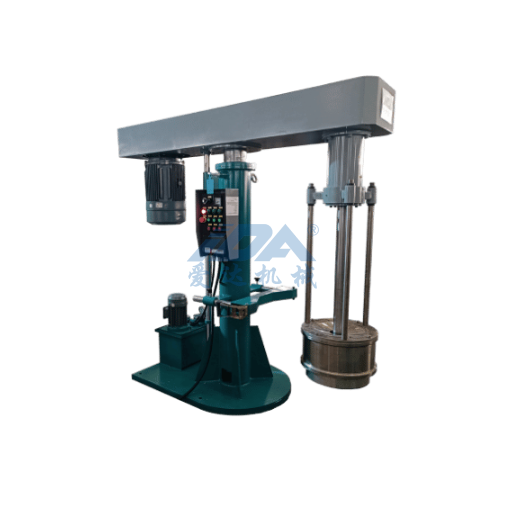
One of the determining factors that heavily affect my choice of milling equipment is the quality. This is because this has a direct effect on the efficiency of the milling operation and of course the quality of output This is because high-quality milling equipment ensures uniform particulate distribution which is evidently of utmost importance in the task of processing the material. In other words, for pharmaceutical milling, food milling and several other industrial milling processes, even grind distribution can improve the quality of the final product hence nullifying the waste and risks of reshaping.
Financial Feasibility
In order to make an assessment of the financial viability of alternative mills, one should reconcile initial costs of investment and long run performance. A number of factors such as energy consumption, maintenance considerations and life span may be necessary when assessing the overall worthiness of a product. For example, mills that are equipped with energy-efficient components reducers the power consumption and hence the cost of utilizing power during their life period will be much less. Mills that need the least amount of care and/or use parts that can easily be amended help in ensuring that there is decreased loss of production thereby cost. Similarly, High capacity mills may be better in terms of large scale operations due to the fact that they process higher tonnage in a relatively shorter period-or-processing.
Directions in Development of Technologies: A Forecast
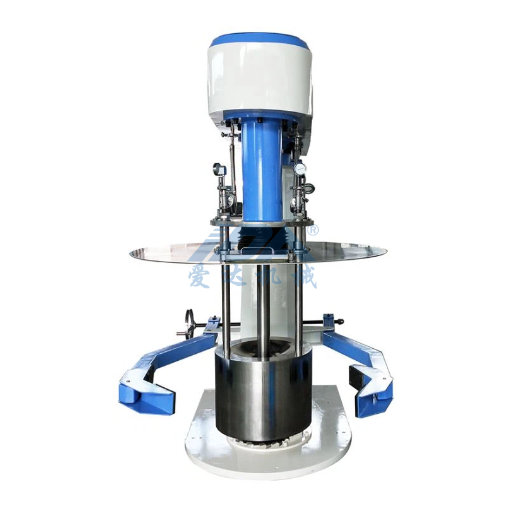
When it comes to technology and modernizing milling business one of the things one cannot fail to notice is the trends. The importance of industry 4.0 in milling is actively being transformed by the aspects of automation and smart technologies, with the vast majority of machine tools incorporating more and more artificial intelligence (AI) and machine learning technologies. Such a environment allows the operation of the mill to check and change the process in real time, which can improve the yield of the process and reduce the occurrence of any errors. An example is the use of AI-based sensors that are able to diagnose the anticipated or experiencing wear and tear of machines or even warn of any potential machine breakdown which minimizes downtime and in turn extends the life of the gear. Moreover, the fast adaption of Industrial Internet of Things (IIoT) devices on the other hand, substantially improves it, making it possible to connect machines and have the information necessary for the process improvement.
This stems from the trend towards more sustainable and more energy efficient grinding equipment. Most of the manufacturers are choosing equipment that consumes less electricity and generates minimal waste in compliance with the environmental policy in the world. This will include improved or more advanced cutting tools and tooling wear opportunities which can help to increase accurateness while cutting the loss of materials. Also, there is a definite increase in the design of the equipment layout in modules and in a flexible mode allowing the operators to cope with different production needs quickly without having to purchase new machinery in a complete state. These are advancements that apart from considerations for the environmental impacts of the use of the machinery ensure a long term and efficient engineering of the equipment while different economic factors come into play.
Lastly, additive manufacturing and hybrid machines have been highlighted. Such hybrid machines enable the expansion of workable materials through the storage, sharing and use of 3D printer usage, while at the same time improving creative capabilities. In some cases, this suggests that manufacture of custom parts that are difficult to obtain from producers of other products is possible. For instance, in aerospace or automotive industries, where accuracy and creativity are of essence in the product design and production process. In my opinion, considering these developments, the development of milling in the future will be integrated in a successful and more efficient manner with new and environmentally friendly developments that will be tailored for the specific needs of the growing industries.
Pilot Plant Studies for Optimal Selection
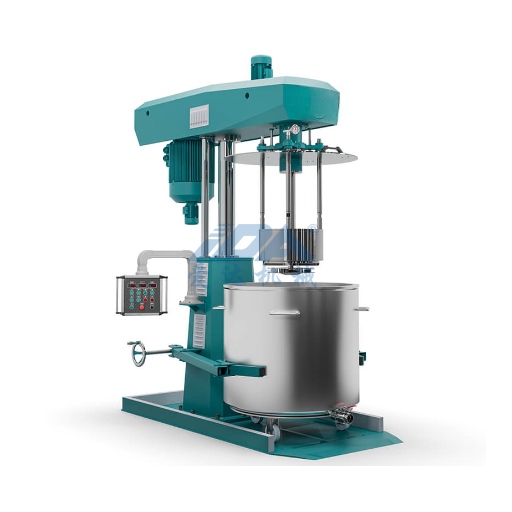
Since the recent years one of the key activities the organization has resorted to is the conduction of pilot tests aimed at ascertaining and consolidating industrial processes before large scale implementation. Understanding how such activities help in the evaluation of each and every process, particularly the aspect of process efficiency and equipment productivity and the quality of finished goods with the help of adequate measurements is significant. These serve as the limit of study in order to test the independent importance. Even though the perspired effort seemed positively productive from the potential effect this could have on the policy, management was required to know how effective the activity would be in the practical sense. The idea is that when a philosophically justified position is more or less firmly secured within a given institution, it becomes very difficult at an individual level to efficiently oppose intrusive practices. The other public is the public of mass media, advertisers, politicians, show-business and so on. Data obtained during preliminary studies is rather a solid pedestal on the basis of which objective decision making can be assured when shifting to piloting and commercial scale operations. It is worth noting that such an approach is called soft operational procedures.
Analysing and Preparing Reports for Decisions
Looking deep into the little details of empirical data rises great implications about equipment operation, its flaws, and the effectiveness of the process as a whole. With the help of sophisticated analytical instruments-in which industry-specific benchmarks are also used- a precise and comprehensive assessment of the technical capabilities of any equipment is conducted, and conclusion reached on how to decide. An integration of various data sources broadens the scope of the evaluation which is critical for the management in the context of the different resources, including their constraints and how they are limiting the productivity and the operations in the present and even in the long run. This is how the stakeholders gain an ability to select the right industrial innovations which are in line with the short term targets and those that could be adopted in the long run.
Preliminary stages: optimiztion the nitrogen dispersion in nanopowders
The processes that have been under discussion above are thus developed and operated with a fair share of latitude and so, optimized in laboratory; however, many of the desired results determined by , researchers, yet, can hardly be achieved. Combining real-time modeling and analysis techniques can help in such a context since a number of configurations can be tested with respect to the effect of selected dispersion generators. When a simple compliance check using existing silo content and structural analysis data will not be serviceable, especially to a systems integrator environment so this type of an investigation enhances the area of patents namely patents pending. This necessitates the creation of the development team if it wants to speed up the market penetration phase of its services.
Frequently Asked Questions (FAQs)
How can I determine which type of basket mill is best for manufacturing paint and coatings?
Much needs to be done when it comes to selecting a mill for paint production such as production capacity, the target particle size, and the particle size distribution needed in the end product. It is the responsibility of every manufacturer to consider the total cost of ownership which comprises energy consumption, cost of media, maintenance, time of delivery, etc and thus the initial purchase price should be in relation to the aesthetic and maintenance cost over the life of the equipment. The mechanism involved in media selection is critical as is the potential materials filled in baskets to allow grinding which helps in the choice of media. Also analyze state of the art mills such as basket or torusmill® and the comparison of ease of working, the scale up possibilities and the availability of support from the manufacturer. It is important to check whether there are documented procedures for operation of the machine and the extent of the safety measures incorporated as protective measures.
Why is grinding media important and what features of grinding mill design one should pay attention to?
Selection of grinding media is a vital task: dimensions, utilized material, and hardness of beads greatly affects the efficiency of particle dispersal, time of milling and the end grain size. Correct matching of the fixture form as well as the dimensions of the milling equipment regulates the degree and intensity of the exposure resulting in decrease of the grain size and conformity of the grain size. Controlling the adherence and coverage of bead and pigment with one another or other coat would help prevent substance makeshift after mill grinding processes and hence enhance the final quality of the product especially, in the case of gentle inks and some other chemicals. Depending on the type of media to be picked, energy is also a factor to be considered since media with a ball shape requires more energy as compared to others. Ling and Kruizenga other disadvantages in the article are bridging of the grinding zone and emptying of the accumulation pits. Try as much as possible to work with suppliers to find out solutions for machining as well as those which help in achieving the required capacity.
When it comes to completeness of tasks, how superior are linen towers to CIP basket mills in respect to the level of productivity required to be completed?
In small-scale production, pilot testing, formulation revisions and other factors, the practice of doing work in batches can be applied to meet the requirements, batch changes can make this throughput available. In large-scale industrial manufacturing, the right thing to do is the application of automated processes in order to ensure minimal downtimes and uniform time for milling with little operator tweaking. In deciding on where to employ manufacturability, the ease of it and the fact of not creating added steps and processes, is the treating of the materials at a different level especially in view of the fact that; with the development of technology, many basket mills and horizontal media mills assist in bridging the pilot plant and full production gaps by replicating experimental evaporative conditions with constraining duration and power. Maintenance of the overall system can be cheaper in continuous because operating cost of such systems is very high if production is high and gallery is preserved that is production is continuous. This most probably will be true in the construction of plants to dry dyes and equipment for ink manufacturing. It is also possible to state that the cleaning problems existing in the equipment contributed to the difficulties experienced.
How is the fine grinding process affected by think nature of the grinding liquid medium and attrition type milling?
The presence of a liquid phase provides few complications. It wets and makes the powder pasty which is very easy to mill. This is because without any additional lubrication the friction becomes very low and the powders start to be flowy. It can be seen most easily when very small amounts of a liquid phase are incorporated in the conventional dry grinding of powders where there is hard contact between particles most of the time. Powder grinding becomes efficient when particles are freed from one another so that relatively low forces can be sufficient to crack them. Fluid solid separation where the liquid phase is incorporated is the best green grinding technique due to prevention of the carbon footprint that would have existed if both admix and dried milling operation was adopted. Some changes in the previously identified parameters may mean that because the liquid phase present in the system may change, shear friction between the particles may increase/reduce depending on the su rface tension of the system. On the other hand, milling with a liquid phase due to self-lubricating effect of wet mill-ing enhancing the flow of the particles by forming clear layers or lubrication between the grinding surfaces results in paste since the particles remain intact by the time bonding reactions occur.
In what ways can I lessen power consumption and prolong the service life of devices?
The process of minimizing power consumption in Tomago’s fired thin, signed to encompass a variety of high-efficiency dry milling technologies that make fully up an integrated energy-saving milling process. “Energy efficiency involves the improvement of grinding media operational life, adequate selection is a prerequisite for the life of the mill working parts and the wear on working draw manager and lined mill increases. Reducing the need in frequent media changes helps considerably in the last mentioned aspect,” says Oleg Lopamot. Regular maintenance and accessible cleaning allow you to perform maintenance work quickly and is expected to be loaded within budget and to meets given saturation limits of the solvent used. Training of personnel and facility managers means that the user will not panic if he encounters a breakdown, nor will he patch one up himself and continue to run the equipment in this condition. Another important issue is the overall efficiency of a process since this has a major impact on costs. For example, frequent use of a more efficient unit such as the torus mill or modern basket mill may require less power and reduced maintenance costs in the long run.
What are the main deciding issues with looking for equipment for pigments/tinting and chemicals research?
Exceptionally crucial factors will depend on various factors like the nature of materials, granulating particle size, how that is fine and how those fine particles are distributed and the extent of the pigments or the specialty chemicals. Pay attention to the functionality of a ball or pebble mill or even a basket mill; it is worth raising that basket and horizontal mill types are also conditionally better in terms of ensuring other types of homogeneous dispersion. As for the intention of producing, act in a way of doing so in portions or on a flow basis, the volumes of manufactured outputs, the removal of samples, and ease of cleaning to avoid undue mixing of materials, should all be factored in. These factors determing media, grinding time and rate of rotation will have a effect on the gap between milling stages and the product. To minimize risks during stages of increase in scale, the use of a pilot production facility is a appropriate action. Additionally, functional limitations, in terms of maintenance and training costs should be accounted when calculating total lifetime costs in order to select the most suitable long-lasting system.