Get in Touch with IDA

How to Choose a Hydraulic Discharge Press Hydraulic

Contents
show
The discharge press selection process serves as the foundational step in identifying the most appropriate dewatering method for your industrial application. The core principles of filter press selection have become essential knowledge because filtration system technologies continue to advance while operational requirements keep changing. Your understanding of filter press technologies needs to progress if you want to achieve three objectives: reducing production downtime, improving operational efficiency, and complying with strict environmental regulations. This guide examines fundamental principles which include material compatibility and system requirements together with advanced factors that must be considered for successful dewatering process implementation.
Understanding Discharge Press Systems

Defining a Discharge Press
The discharge press functions as dedicated mechanical equipment which separates solids from liquids through its ability to apply high-pressure compression in filtration technology. The systems operate in multiple industries which include wastewater treatment mineral extraction and chemical processing because they can dewater solids into manageable forms while recovering liquid waste.
The system works by pushing slurry through a series of tightly spaced filter plates which create a filtration pathway. The system uses hydraulic systems or compressed air to create the pressure that drives liquid through the filtration media, which results in solid waste being densified into separate layers that can be moved or thrown away.
Modern Technological Integration
Discharge presses use automatic systems which include sensors and programmable logic controllers (PLCs) and remote monitoring technology to maintain their peak operational efficiency. The technologies provide exact cycle time and filtration pressure and cake formation control which enables companies to increase production while decreasing their operational expenses. The design of these products enables them to process multiple types of materials which makes them suitable for companies that need different dewatering solutions.
Categories of Discharge Press Systems
Discharge presses are classified based on their operational modes. The three primary categories are manual, semi-automatic, and fully automatic discharge systems.
Manual Discharge Presses
Manual discharge systems operate with direct human intervention for material discharge mechanisms. These cost-efficient systems are installed in operations targeting minimal capital investment and lower work frequencies. Despite their simplicity, they present limitations in situations requiring rapid or continuous processing capabilities.
Semi-Automatic Discharge Systems
Semi-automatic systems use mechanical devices which include hydraulic and pneumatic cylinders to achieve their partial automation capabilities. The system requires operator intervention but it reduces the need for human operators. This category of industrial operations provides a balanced solution which meets required effectiveness standards while maintaining affordable operating costs for medium-sized industrial operations.
Fully Automatic Discharge Systems
The system operates through complete automation which uses programmable logic controllers and robotic arms for handling all discharge operations. The system provides outstanding performance to businesses which need to process large volumes while maintaining exact accuracy and experiencing minimal operational interruptions. The main uses of the system exist in mining operations and chemical processing facilities and wastewater treatment plants.
Centrifugal and Vibratory Discharge Systems
Vibratory and centrifugal systems employ specialized motion and force mechanisms to discharge processed materials. These configurations are utilized where delicate filter media treatment or specific material properties are paramount considerations.
Essential Hydraulic Press Components

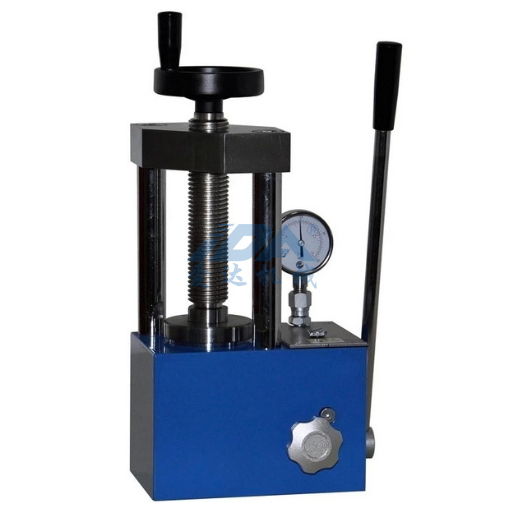
Hydraulic presses comprise essential components working synergistically to apply compressive force through hydraulic energy. Understanding these components is crucial for optimal system selection and operation.
| Component | Function & Characteristics |
|---|---|
| Hydraulic Cylinder | Primary component containing hydraulic fluid that exerts force. Features high pressure ratings to prevent deformation under extreme loading conditions. |
| Frame | Structural support carrying component weight. Available in C-frame or H-frame configurations depending on application requirements. |
| Power Unit | Comprises pumps and reservoirs generating and storing hydraulic power for press operation. |
| Control System | Modern systems utilize programmable logic controllers (PLCs) enabling precise operations and process automation. |
| Ram | Connects hydraulic cylinder to workpiece, performing critical force transfer functions. |
Advanced Integration: Implementing sensor-based monitoring and real-time data analytics into these components enables industries to optimize performance efficiency. Modern hydraulic presses benefit from predictive maintenance capabilities, enhanced safety protocols, and improved economic efficiency through data-driven operational insights.
Critical Factors to Consider When Selecting a Filter Press

Material Viscosity and Its Significance
The operational efficiency of filter presses depends on the viscosity of materials used in their processes. The speed of filtration and the necessary pressure for operation and the efficiency of separation depend on the flow characteristics of materials. High-viscosity materials require industrial-grade pumps and longer operational periods to achieve effective filtration results, but low-viscosity materials enable faster filtering processes which need continuous monitoring to avoid system failures.
Industry Trends in Viscosity Management
Current industry data indicates increasing demand for solutions addressing viscosity variation challenges. Technologies gaining prominence include:
- Advanced variable-speed pumps
- Specialized filter media for high-viscosity applications
- Automated pressure regulating systems
- Real-time viscosity monitoring equipment
Production Capacity Requirements
Evaluating production capacity and scalability potential is essential when planning high-volume output operations. Current analytical data reveals increasing interest in maintaining high production efficiency during demand fluctuations.
Key Production Optimization Considerations
- Batch Production Efficiency: Optimize cycle times to maximize throughput per operational period
- Quick Changeover Capabilities: Minimize downtime between different material processing runs
- Modular Equipment Enhancement: Enable capacity expansion through additional plate stacks or parallel systems
- Automated Monitoring: Implement real-time analytics ensuring optimal production line performance
- Digital Twin Technology: Utilize simulation for economically viable production scenario analysis
Operating Environment Analysis
Comprehensive operational environment assessment enables detailed understanding of trends and operational needs as they develop. Incorporating predictive modeling allows organizations to adjust supply chains in response to demand variations or geographical considerations, ensuring operational flexibility while optimizing resource allocation and market-driven priorities.
Press Sizing and Dimensional Specifications

Calculating Optimal Press Dimensions
Accurate press sizing assessment ensures machinery operates at optimal design capacity. The calculation process requires comprehensive analysis of multiple operational parameters.
Essential Sizing Parameters
| Parameter | Consideration |
|---|---|
| Volume Throughput | Analyze cubic volume processed per operational cycle and hourly throughput demands |
| Cycle Time | Determined by feed pump pressure and material characteristics; affects overall sizing requirements |
| Solid Content | Material compressibility varies; influences plate configuration and flow rate optimization |
| Plate Design | High solids content may require specialized plate configurations for effective dewatering |
Modern computational tools and predictive analytics databases enable realistic calculations based on industry benchmarks, operational history, and system efficiency data. Analytics-driven press instrumentation facilitates optimal current sizing while planning for future capacity expansion, preserving investment value even during periods of underutilization.
Cake Thickness Optimization
Cake thickness represents a critical parameter determining filtration technology effectiveness. Excessive thickness reduces flow rates and extends cycle times, while insufficient thickness underutilizes filtration capacity, which causes operational expenses to increase because of process stoppages.
Optimization Approach: Engineers use engineering tools and analytical software together with operational trend analysis to determine the best cake thickness specifications. The system operates at its highest performance level through this method which regulates porosity together with moisture content and system capacity.
Throughput and Efficiency Indicators
Calculating efficiency formulas and throughput models requires comprehensive data-driven strategies. Critical performance indicators include:
- Flow Rate Analysis: Monitor material flow through system for bottleneck identification
- Pressure Drop Monitoring: Track pressure variations indicating potential blockages or inefficiencies
- System Reliability Metrics: Measure uptime and failure frequency for maintenance optimization
- Predictive Analytics Application: Quantify system blockages before critical failures occur
- Performance Parameter Integration: Link measured parameters for comprehensive operational understanding
Selecting Appropriate Filter Cloth

Filter Cloth Types and Applications
Selecting suitable filter cloth material with appropriate weave patterns requires careful consideration of filtration process requirements. The following overview details primary filter cloth types and their industrial applications:
Polypropylene Filter Cloth
Applications: Chemical, pharmaceutical, and food industries
Key Properties: Exceptional chemical resistance, superior filtration characteristics, low water absorption, excellent durability in wet environments
Polyester Filter Cloth
Applications: Mining, water treatment, industrial filtration processes
Key Properties: High tensile strength, superior abrasion resistance, moderate heat tolerance capability
Nylon Filter Cloth
Applications: Oil filtration, paint processing, high-stress crossflow filtration
Key Properties: Outstanding mechanical strength, exceptional stress and elongation resistance
Cotton Filter Media
Applications: Food and beverage processing requiring natural materials
Key Properties: Biodegradable, organic acid resistance, environmentally sustainable option
Polytetrafluoroethylene (PTFE) Filter Cloth
Applications: Harsh chemical environments, high-temperature operations (>200°C)
Key Properties: Extreme chemical resistance, superior temperature tolerance, non-wetting surfaces facilitating easy particle removal
Proper material selection, which considers particle distribution and chemical compatibility and operating temperatures and environmental conditions, enables industries to achieve optimal filtration performance while decreasing energy usage and meeting regulatory standards.
Technical Parameters for Filter Cloth Selection
Filter cloth decision-making requires evaluation of multiple technical parameters. Current industry data highlights the following key considerations:
| Parameter | Selection Criteria |
|---|---|
| Filtration Capacity | Particle size dictates filtration media penetration scope. Finer particles require tighter weave structures; larger particles accommodate open weave designs. |
| Chemical Resistance | Filter cloth material must resist reaction with process ingredients preventing degradation or contamination. PTFE preferred for extreme chemical resistance. |
| Operating Conditions | Temperature and pressure conditions determine material selection. Aramid fibers widely preferred for high-temperature applications due to thermal stability. |
| Target Flow Rate | Determines weave pattern, fabric permeability, and porosity supporting effective filtration without compromising flow performance. |
| Environmental Compliance | Emphasis on sustainable materials meeting requirements such as ISO 14001. Preference for durable, reusable filter cloths. |
Maintenance Best Practices
Proper filtration material maintenance ensures optimal performance characteristics, extended service life, and reduced downtime. Current operational data supports the following best practices:
1
Regular Cleaning Protocols
Implement scheduled cleaning through manual or automated methods preventing complete clogging and efficiency degradation. Backflushing and ultrasonic techniques recommended for effectiveness with minimal fabric wear.
2
Systematic Inspection Procedures
Routine inspections identify defects which include blockages and tears and weave damage therefore enabling immediate corrective action. The structural integrity assessment process uses advanced technologies which include infrared sensors and AI monitoring systems.
3
Appropriate Cleaning Agent Selection
Cleaning materials must match filter cloth composition. Alkaline solutions effectively remove grease deposits when applied in controlled amounts preventing surface degradation.
4
Proper Storage Conditions
Store filter cloths clean and dry protecting from dust and corrosive conditions. Maintain stable humidity levels preserving fabric integrity during storage periods.
Hydraulic Press and Ram Operational Principles

Hydraulic Press Functionality and Efficiency
Hydraulic presses operate on Pascal’s Principle, which states that pressure applied to confined fluid transmits equally in all directions. These systems require hydraulic components including reservoir, cylinders, and pumps to generate force. The process involves converting pump mechanical power into hydraulic energy through fluid compression, typically using oil as the hydraulic medium. This energy applies to workpieces enabling operations including compression, shaping, molding, and cutting.
Contemporary Industrial Applications
Modern hydraulic presses serve extensive roles across automotive, manufacturing, and metallurgy sectors due to their controlled, precise force delivery. Advancements in control systems and automation have elevated performance standards including:
- Enhanced energy utilization efficiency
- Improved operator safety protocols
- Integration with smart manufacturing systems
- Real-time performance monitoring capabilities
Hydraulic Ram Role in Press Operations
The hydraulic ram serves critical functions which transform hydraulic fluid pressure into mechanical force. The system provides precise pressure control which industrial operations use for forging and forming and stamping processes. Industry data indicates substantial demand increases for high-capacity hydraulic rams because their precision capabilities enable operation under high workloads.
Technological Advancements
The new hydraulic rams use modern sealing systems and feedback monitoring devices which help to increase their performance through better accuracy and reduced equipment damage and longer service life. The new technologies enable manufacturers to create sustainable production methods which successfully solve current industrial problems that involve both resource management and production capacity expansion.
Importance of Hydraulic Press Systems
The hydraulic press systems serve as vital manufacturing tools which deliver precise operational control and powerful manufacturing capabilities. The hydraulic fluid system enables material compression through its ability to maintain consistent force during multiple processes which include metal forming and molding and forging operations. The system supports various materials from metals to composites which enables applications in automotive and aerospace and construction industries.
Modern System Enhancements
Current trends indicate growing demand for hydraulic press systems incorporating intelligent technologies due to production-level advantages. Key enhancement features include:
- Real-time Monitoring: Continuous performance tracking enabling immediate optimization adjustments
- Automated Control Processes: Reduced operator intervention requirements improving consistency
- Energy-Efficient Configurations: Lower operational costs through optimized power consumption
- Environmental Sustainability: Low-emission hydraulic fluids and recycling systems supporting green manufacturing initiatives
These systems help organizations reduce operational expenses while maintaining compliance with stringent environmental regulations, contributing to sustainable manufacturing practices.
Frequently Asked Questions
What parameters should be evaluated for slurry material before selecting a discharge press type?
The evaluation process needs three parameters which include material viscosity and solid content concentration and particle size distribution and compressibility characteristics. The system needs to be evaluated based on three operational requirements which are throughput capacity and cycle frequency and filtration pressure requirements. The assessment needs to examine infrastructure compatibility through three factors which are available floor space and power supply capacity and potential for future expansion. The filter plate configuration and stack capacity and drainage system design needs to match the properties of the materials. Materials with high fragmentation require special press frames which need additional structural support to handle their heavy compression needs.
How does dewatering efficiency influence discharge press selection?
Dewatering efficiency depends on press volume, filter area coverage, compression rate, and final cake moisture content. Achieving lower cake moisture typically requires pressures around 225 psi with specialized compression plates and potentially cloth washing systems. Press volume directly affects production capacity per time unit, with higher volume presses providing greater throughput per cycle. Platform and follower plate press designs may be selected for improved cake discharge and easier wet filter cake handling. Evaluate automated hydraulic systems for consistent opening/closing operations ensuring optimal cycle performance and labor efficiency.
How can filter press operation achieve clear filtrate output?
Clear filtrate achievement requires appropriate filter material selection and efficient plate design retaining solid particles. Initial and repeated filtration cycles depend on controlled feed/discharge operations, regular cloth cleaning preventing fouling, and maintained operational parameters including feed pump pressure and cycle timing. Consider whether small or large filter presses suit production scale, as oversized systems may cause operational issues producing cloudy filtrate. Solid content per cycle and material characteristics determine whether standard polypropylene filter cloth suffices or higher-grade filtration media is required. Monitor clear filtrate production rate measured in gallons per minute for operational efficiency assessment.
What selection steps ensure appropriate filter choice for discharge and cake handling?
Begin with slurry testing identifying solid concentration, particle retention requirements, and discharge characteristics for both wet filter cake and dewatered cake. Match filter press capacity and plate stack configuration to current and projected production volumes ensuring filter plates and stack size accommodate desired cake thickness and supporting equipment. Determine whether hydraulically automated opening/closing systems justify investment over manual operation, particularly for high-frequency cycles or expensive labor contexts. Evaluate cloth backwashing requirements, feed pump polymer addition capacity (GPM), and whether platform and follower plate designs facilitate feed and discharge operations. Verify system accommodates material variations with provisions for plate and cloth replacement and routine maintenance access.
What are the feed pump implications for press selection and operation?
Feed pumps determine feed rate (gallons per minute) and maximum system pressure enabling adequate filtration and cake formation. Pump capacity affects whether press capacity becomes flow-limited, potentially causing extended cycles or insufficient cake development when larger filter plates require service. For applications demanding high solid retention rates and elevated pressure (potentially 15 bar or 225 psi for difficult slurries), ensure feed pump achieves required pressure and integrates with modern remotely controlled filter press designs. Synchronize feed and discharge operations preventing plate stack overload and ensuring consistent cake discharge performance. When selecting pumps, carefully consider filter plate surface area and material processing characteristics for optimal system matching.
What criteria determine filter press configuration selection for specific discharge applications?
Filter press configuration selection—plate-frame, recessed chamber, or membrane filtration—depends primarily on post-discharge cake characteristics, dry cake requirements, and cloth/bladder washing or pressing impact on performance. Evaluate plate stack configuration and press scalability for different material flows and production demands. Platform presses may be preferred when cake removal ease and large-scale discharge handling equipment are priorities, while pilot-scale and batch filter presses suit testing and smaller production operations. Determine whether hydraulic automatic opening/closing filter press systems justify investment through labor reduction and cycle performance improvements. For future expansion planning, ensure press design accommodates additional plates or increased feed rates without major system reconfiguration.
Reference Sources
From Library to Discharge: A Managing Care Student Project – Discusses evaluation and decision-making processes applicable to equipment selection methodologies.
The Impact of an Electronic Discharge Instruction Application on the Quality of Discharge Instruction Documentation – Explores systematic approaches for improving documentation, relevant for creating comprehensive selection guides.
Bridging The Gap: A Comprehensive Discharge Guide – Provides insights into creating thorough guides applicable to discharge press selection processes.