Get in Touch with IDA

Vacuum Planetary Mixer: Understanding the Technology Behind Battery and Pharmaceutical Applications

Contents
show
The vacuum planetary mixer stands as a critical innovation in the manufacturing processes of cutting-edge industries such as battery production and pharmaceuticals. This technology provides mixing solutions which achieve precise results to deliver high-quality materials that require uniformity. The vacuum planetary mixer operationally handles both highly viscous materials and processes which require complete elimination of bubbles according to contemporary production standards which demand advanced operational capabilities.
Introduction to Vacuum Planetary Mixers

What is a Vacuum Planetary Mixer?
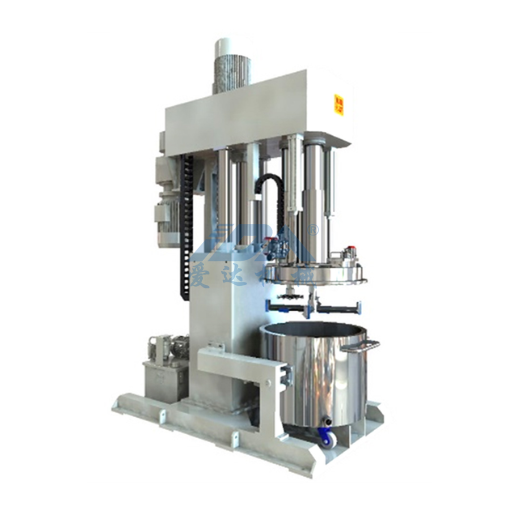
The Vacuum Planetary Mixer functions as an industrial mixer which uses its special design to handle complex mixtures that need exact control over their mixing process. The equipment uses planetary motion together with vacuum technology to produce highly uniform results because it achieves air-free mixing and maintains temperature control.
The mixing blades of the system operate through planetary motion which enables their dual rotation because they turn on their own axes while they circle around a central point to achieve complete coverage of the mixing vessel.
The system requires vacuum technology because it functions as the main method to remove all air and gas particles from the mixture which needs to happen during adhesive production together with sealant creation and electronic material development and pharmaceutical manufacturing processes. The vacuum environment uses negative pressure to create a barrier which prevents air pockets from forming, while it maintains product quality and integrity throughout the manufacturing process.
Advanced Control Systems
The advanced control systems of modern Vacuum Planetary Mixers enable users to create exact changes which affect speed and pressure and temperature settings. This equipment functions as a crucial resource for industries which demand strict product quality control procedures and require materials with exceptional performance characteristics.
Key Components of a Planetary Mixer

Component 01
Mixing Blades
The mixing blades serve as essential equipment which enables the system to process multiple materials which display different viscosity characteristics. The blades work through planetary motion because they rotate around their own axis while they travel in orbit around the center of the vessel. The material achieves complete mixing because the system uses dual-action technology which eliminates all dead zones during the mixing process.
Component 02
Mixing Vessel
The mixing vessel operates as a mixing container which consists of stainless steel and other materials that provide long-lasting strength against corrosion and wear. The majority of vessels come with heating and cooling jackets which help to maintain exact temperature control throughout the mixing process.
Component 03
Vacuum Chamber
The vacuum chamber capability stands as an essential aspect of contemporary planetary mixers because it enables their operators to create a vacuum environment for their mixing operations. The vacuum environment works to eliminate all air which has become trapped inside materials that possess high viscosity levels, resulting in improved product density and uniformity.
Component 04
Drive System
The drive system includes powerful motors that support the rigorous demands of mixing complex materials. The advanced models enable users to control mixing speed through variable speed control which helps to optimize material mixing while decreasing power usage and improving operational efficiency.
Component 05
Control System
The control system uses its advanced automation system to monitor and control essential parameters, which include speed and vacuum pressure and temperature and mixing time in real time. The systems provide precise settings through their programmable features, while they enable data logging and remote access for operational efficiency.
Component 06
Sealing System
The sealing system exists to stop leaks from occurring while protecting against contamination which occurs when the system operates under vacuum or when it processes dangerous substances. High-quality seals protect system integrity while they extend equipment durability and maintain product standards.
The Role of Double Planetary Systems
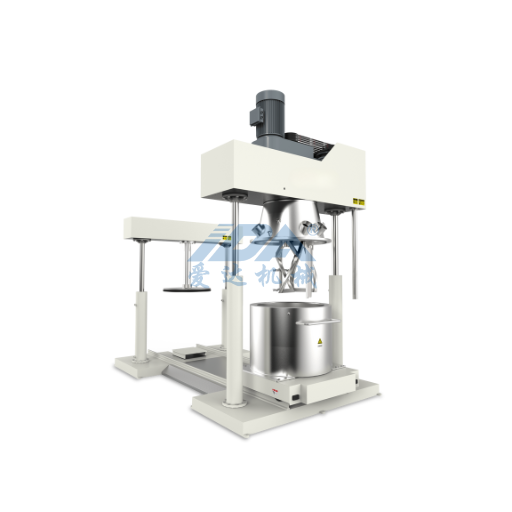
The double planetary systems serve as vital equipment, which enables industries to achieve their requirements for exact and consistent material mixing. The system design includes two planetary blades, which operate through independent axis rotations while they conduct central axis revolutions.
The dual-motion mechanism creates an effective mixing system that achieves complete component dispersion, which results in optimal shear and complete component integration. The systems offer multiple benefits which include enhanced mixing abilities while their strong construction combined with flexibility allows them to function in settings that need both accurate results and long-lasting durability.
Working Principles of Vacuum Planetary Mixers

Basic Principles of Material Blending
Mixing equipment for vacuum operation uses two rotating axes to drive their mixers because the blade system needs to rotate blades and also rotate blades around the main mixing container. The material undergoes dual-staged processing because the system applies constant shear and compression and folding movements to achieve complete mixing results.
The vacuum environment eliminates air pockets during the mixing process, which is particularly critical for applications involving high-viscosity materials or those requiring bubble-free, dense mixtures. The recent data shows that these mechanisms improve process efficiency by 35% in adhesive formulations and electronic encapsulation compounds.
How Vacuum Integration Enhances Mixing Performance
Vacuum integration enhances mixing performance through air removal which creates better material density and mixture homogeneity and superior product quality. The mixing chamber uses a low-pressure system to create an environment that prevents air from entering the space which is necessary for processes that must achieve void-free results in electronic encapsulation and strong adhesive applications.
The presence of vacuum conditions allows better heat transfer and lower oxidation rates which maintain uniform material characteristics throughout the entire production process. Research shows an 18% yearly growth in interest about vacuum-assisted mixing technologies for improving accuracy in manufacturing operations.
Understanding Bubble-Free Mixing with Vacuum Technology
The vacuum-assisted mixing system uses vacuum technology to stop air from entering the mixing process which creates bubble-free results needed by industries that need exact results and consistent performance including aerospace pharmaceuticals and electronics.
The controlled vacuum system creates a pressure drop that causes trapped air bubbles to expand and escape from materials. The procedure improves product uniformity through its ability to eliminate voids and produce consistent end products. This technology improves manufacturing product reliability together with operational integrity for companies that work under strict industry standards.
Advantages of Using Vacuum Planetary Mixers

Advantage #1: Processing High-Viscosity Materials
The processing of high-viscosity materials faces specific difficulties because of the physical characteristics that define adhesives and sealants and composite materials. The operational performance of vacuum planetary mixers helps to resolve these problems through their ability to produce products with greater homogeneity and decreased air content and enhanced material uniformity.
The mixers achieve optimal performance through their dual movement system which combines rotational and revolutionary motion to create effective shear and folding movements that distribute solid and liquid and powdered materials throughout highly viscous mixtures.
The medical aerospace and electronics industries require vacuum planetary mixers to function at controlled vacuum conditions which eliminate all air pockets and microbubbles. This system develops product integrity through multiple processes which reduce product failures while increasing product compatibility with high performance standards.
Advantage #2: Enhanced Product Quality and Uniformity
Current research shows that vacuum planetary mixers improve product quality when their operational performance results in better consistency than standard manufacturing methods. Industries increasingly prioritize technologies that ensure uniform material distribution, free from voids or imperfections.
The elimination of air entrapment during mixing process produces materials with consistent density and body structure which scientists use to create semiconductor devices and medical equipment components.
The precise technical specifications of this system help industries accomplish their waste reduction targets while improving their resource management efficiency, which makes these systems essential for contemporary manufacturing operations.
Advantage #3: Operational Efficiency in Batch Production
Advanced mixing technologies serve as the main method to enhance operational efficiency in batch production processes. The technology ensures that material distribution throughout the batch remains constant to create identical products because it operates at a micro-scale level.
The high-shear blending method creates products with identical particle sizes and uniform mixtures which determine product quality while decreasing the need for reprocessing.
Real-time monitoring systems and machine learning algorithms now work together to establish a new method for managing production processes. These systems can predict potential deviations by monitoring environmental factors, which enables them to take action before any problematic changes occur. The adoption of modern equipment and research-based operational improvements leads to higher production efficiency levels while decreasing material expenses.
Industrial Applications of Vacuum Planetary Mixers

Application 01Battery Slurry Production
The production of battery slurries depends on vacuum planetary mixers because these mixers provide complete distribution of active materials together with conductive agents and binders. The homogenous material composition of lithium-ion batteries helps them achieve stable electric performance throughout their entire lifespan.
The mixers function in controlled vacuum conditions to remove trapped air and gas bubbles from the slurry which would otherwise create defects during electrode coating and result in reduced battery capacity and cycling performance.
The latest technology enables real-time monitoring systems to maintain precise viscosity and density control while predictive analytics monitor slurry properties. Advanced mixers play a critical role in producing high-performance batteries which electric vehicles and renewable energy storage systems require.
Application 02Pharmaceutical Cream Formulation
The development of pharmaceutical creams requires an exact balance between active pharmaceutical ingredients and emulsifiers and stabilizers and excipients which will produce the needed therapeutic result and product preservation and user acceptance.
Researchers develop new creams because industry trends demand improved bioavailability and precise delivery systems. Users can access deeper skin layers through advanced delivery systems which use liposomes and nanoparticles to deliver active pharmaceutical ingredients into their bodies.
The market shows a preference for clean products which do not contain allergens or parabens or synthetic fragrances. The implementation of these innovations in formulation processes helps organizations achieve regulatory compliance while satisfying the needs of patients as well as market trends.
Application 03Food and Cosmetic Industries
Food and cosmetic industries share common ground because their product development relies on shared ingredients and technological advances which keep gaining importance. Current trends show increasing consumer interest in multifunctional ingredients which include hyaluronic acid and collagen and plant-based oils.
Consumers prefer these compounds because they provide two distinct functions; for example dietary supplements use collagen to support joint health while cosmetic products use it to enhance skin elasticity and decrease wrinkle visibility.
Consumer preference for “edible beauty” products shows a trend that favors ingredients which are safe to eat and provide both nutritional value and aesthetic benefits. The inclusion of these components allows businesses to address rising customer demands while generating cross-industry innovation which helps them gain additional market share.
Maintenance Protocols for Vacuum Planetary Mixers

Identifying and Troubleshooting Common Issues
The process of finding solutions to common machinery problems gets improved through the application of analytics which use data as a base for their work. The analysis of patterns which show equipment failures and performance problems enables manufacturers and operators to identify upcoming issues before they become widespread.
The process of combining real-time information with maintenance logs and performance metrics provides a focused diagnostic method which decreases downtime while extending equipment lifespan. The combination of data-driven insights together with traditional troubleshooting methods leads to better machinery performance results.
Best Practices for Equipment Longevity
- Optimization of Bearing Lubrication: Regular lubrication schedules which use manufacturer-approved products prevent friction and overheating problems which extend the operational lifespan of bearings.
- Correct Alignment Techniques: The proper alignment of mechanical parts prevents equipment from experiencing excess stress, which leads to reduced wear and tear.
- Predictive Maintenance Technologies: The implementation of machine learning driven predictive maintenance tools enables organizations to identify early wear indicators through their detection of vibration anomalies and temperature spikes, which helps prevent major operational failures.
Frequently Asked Questions
What is a vacuum mixer and how does vacuum mixing benefit a laboratory?
A vacuum mixer is a device that creates a vacuum to eliminate air and gases from the mixing process while the vacuum mode mixes paste and slurry materials in laboratory environments. Vacuum mixing serves as a fundamental technique for battery research and development because it requires anode and cathode slurries to maintain complete air-free conditions which prevents battery performance degradation. The process enables better mixing results because it allows high viscosity materials and ceramic additives to be combined with advanced formulations. Research and development teams benefit from vacuum mixing because it enables faster testing timelines while producing consistent results during their slurry mixer testing and pilot production process.
Why choose a planetary vacuum mixer for lithium battery slurry mixing?
A planetary vacuum mixer uses its two mixing systems together with its vacuum system to achieve optimal mixing performance which makes it well suited for the lithium battery slurry mixing process. The planetary mixer uses multiple agitators which have independent shafts that turn on their own axes while they move around the tank to make sure that high viscosity slurries receive complete stirring and all ceramic and active materials obtain full wetting. The equipment design allows battery researchers to create uniform paste compositions which result in superior electrode coating performance. Planetary vacuum mixers are commonly used by teams together with high-speed dispersers for pre-dispersion and post-dispersion purposes to achieve ideal particle distribution.
How does a double planetary mixer perform with high viscosity and sticky materials?
A double planetary mixer handles sticky materials and high viscosity materials effectively because its two mixing arms create intense shear forces which simultaneously scrape materials from the mixer walls to the center. The dual planetary system enables slurry mixing and paste production because it eliminates dead zones while achieving uniform distribution of binders and conductive additives in cathode and anode slurries. The design of this system allows laboratories and battery research and development teams to decrease their dependency on high speed disperser usage while preserving their fragile particles from becoming over-sheared. The double planetary mixer serves as a dependable mixing machine for researchers who tackle complicated sticky materials in both battery laboratories and ceramic paste development work.
When is a dual-shaft planetary system preferred over a high speed disperser?
The dual-shaft planetary system provides excellent results when you require both strong macroscopic mixing and scraping together with controlled vacuum mixing for degassing purposes. The dual-shaft planetary system uses its main mixing shaft together with its secondary mixing shaft to perform both high viscosity kneading and moderate shear dispersing operations, which makes it suitable for slurry mixing tasks in battery research. The system enables battery research and development testing of laboratory processes to achieve faster cycle times, which maintain consistent loading while reducing sticky buildup for thick paste used in cathode and anode formulations. The choice between these two options depends on your primary interest in either large-scale mixing and dispersing or achieving optimal particle distribution through high-speed equipment.
What role does centrifugal action play in mixing and dispersing processes?
Centrifugal effects help high speed dispersers plus certain mixer designs to push materials through shear areas, which results in better particle breakage and wetting during the dispersing process. The centrifugal force during slurry mixing together with mixing and dispersing operations helps materials to move away from the shaft and agitator into the tank perimeter where blades and rotors operate with greater efficiency. The cathode and anode slurries which require rapid deagglomeration of conductive additives and ceramic powders are prepared by battery labs through the use of centrifugal-enhanced dispersers. The combination of centrifugal dispersing with planetary vacuum degassing system produces optimal outcomes for battery research and laboratory production systems.
How does a Ross disperser compare to other dispersers in battery R&D?
The Ross disperser functions as a high-speed disperser that operates at substantial shear rates to achieve rapid powder dispersion into liquids, which makes it suitable for use in battery research during the initial powder wetting and distribution process. The Ross disperser uses high-speed dispersing together with centrifugal forces to break down agglomerates, while planetary vacuum mixers offer superior capabilities for degassing and handling high-viscosity slurries. Most research and development teams use a Ross or high-speed disperser as their initial dispersion equipment before moving to a planetary mixer machine, which performs vacuum mixing, final stirring, and discharge. The combination of disperser and planetary systems delivers complete mixing and dispersing solutions which battery laboratories and manufacturing processes need.