Get in Touch with IDA

Is Silicone Flammable? Heat Resistant Temperature Range, Why Silicone Doesn’t Melt, and Flame-Retardant Additive Guide

When engineers ask is silicone flammable, the material boundary is clear: cured solid silicone rubber (polydimethylsiloxane, PDMS) is not flammable under normal operating temperatures (-60°C to +230°C) and carries an NFPA 704 Flammability Rating of 1. Unlike carbon-backbone plastics that melt and drip flaming liquid, crosslinked silicone resists flash ignition until approximately 450°C (842°F) and auto-ignites only at 490°C to 500°C (914°F to 932°F). When exposed to extreme fire, it oxidizes into a solid, non-conductive white amorphous silicon dioxide (SiO2) char barrier rather than pooling into burning droplets.
Key Engineering Takeaways for Specifiers & Compounders
- Solid cured elastomer behaves very differently from uncured liquids: fully cured silicone rubber is slow to ignite (flash ignition ~450°C), whereas aerosol silicone sprays (propelled by propane or butane with flash points below -60°C) and solvent-borne dispersions are highly flammable before carrier evaporation.
- High thermal endurance does not equal UL 94 V-0 self-extinguishing performance: unmodified standard silicone has a nominal Limiting Oxygen Index (LOI, per standard ASTM D2863) of ~20% to 21% and burns slowly in ambient air (~20.95% oxygen, UL 94 HB). Passing vertical burn testing (UL 94 V-0 at 0.8 mm to 3.0 mm) requires compounding 80 to 160 phr aluminum trihydrate (ATH) with 10 to 50 ppm platinum catalyst to reach a nominal LOI of ~32% to 38%.
- Halogen-free combustion avoids acid gas corrosion: unlike fluorocarbon elastomers (FKM/Viton) or polytetrafluoroethylene (PTFE) that liberate lethal hydrogen fluoride (HF) gas above 315°C to 400°C, flame-retardant silicone rubber burns halogen-free with low smoke optical density per standard ASTM E662.
- Batch kneader temperature must stay below 135°C: compounding high-filler ATH flame-retardant silicone in a vacuum sigma kneader requires chilled-water jacket cooling below 125°C to 135°C so shear heating never triggers premature ATH dehydration above 180°C.
Is Cured Silicone Rubber Flammable or Self-Extinguishing?
Whether silicone catches fire in industrial service depends on two distinct material boundaries: its inorganic-organic hybrid polymer backbone and its specific flame-retardant formulation. Unlike organic polymers built on carbon-carbon (C–C) chains with a bond dissociation energy near 348 kJ/mol, a silicone polymer is constructed around an alternating silicon and oxygen (Si–O–Si) siloxane chain. According to thermal bond-energy benchmarks published by Northern Engineering Sheffield (NES-IPS), the covalent bond between silicon and oxygen atoms is approximately 444 kJ/mol (and up to 460 kJ/mol in crosslinked sealant networks). Because of the above-mentioned partial oxidation of the silicon along the polymer backbone, cured silicone exhibits excellent heat resistance, superior temperature resistance, and exceptional thermal stability and resistance to heat when compared to natural rubber, EPDM or butyl rubber.
Buyers often want to know what temperatures can silicone tolerate, how heat resistant is silicone, and at what ignition temperature the elastomer actually fails. Under normal room temperature and elevated temperatures up to 230°C (446°F) , general-purpose silicone rubber can withstand continuous thermal aging while remaining flexible and chemically inert. Special high-temp silicone compounded with iron oxide or cerium oxide thermal stabilizers is able to withstand 300 degrees Celsius (572°F) in intermittent service. However, high heat tolerance does not necessarily mean that unmodified regular silicone is self-extinguishing when an open flame is above its pyrolysis ceiling.
At What Temperature Does Cured Silicone Rubber Ignite?
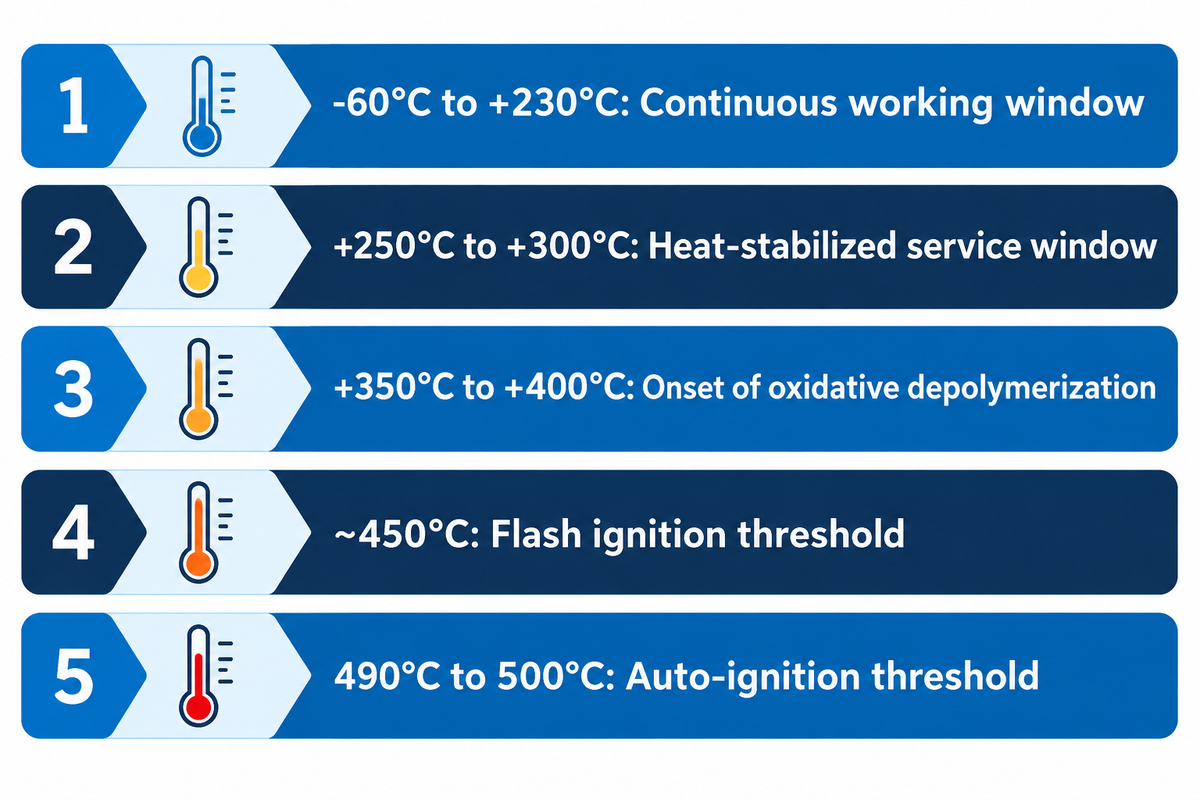
To prevent confusion between continuous operating temperature and combustion thresholds, materials engineers track the PDMS Thermal Milestone Ladder (-60°C to 1,000°C) across five distinct regimes validated by NIH/PubMed polydimethylsiloxane thermal degradation studies and U.S. Department of Transportation (DOT) fire safety evaluations:
- Continuous working window (-60°C to +230°C / -76°F to +446°F): standard silicone rubber maintains elasticity, compression recovery, and electrical insulation across this wide temperature range without chain scission.
- Heat-stabilized service window (+250°C to +300°C / +482°F to +572°F): specially formulated high-temperature silicone grades resist oxidative embrittlement during peak thermal excursions.
- Onset of oxidative depolymerization (+350°C to +400°C / +662°F to +752°F): the siloxane backbone begins thermal rearrangement in air, releasing volatile cyclic siloxane oligomers (hexamethylcyclotrisiloxane D3, octamethylcyclotetrasiloxane D4, and decamethylcyclopentasiloxane D5).
- Flash ignition threshold (~450°C / 842°F): when evolved cyclic siloxane vapors mix with ambient oxygen in the presence of a direct flame or spark, unmodified silicone rubber ignites.
- Auto-ignition threshold (490°C to 500°C / 914°F to 932°F): even without a pilot spark, radiative heat at this ceiling causes spontaneous ignition of evolving decomposition gases.
A critical limitation applies to unfilled or standard fumed-silica-reinforced polydimethylsiloxane: per standard ASTM D2863, its nominal Limiting Oxygen Index (LOI) is only around ~20.0% to 21.0%. Because Earth’s atmosphere contains roughly ~20.95% oxygen, an unmodified silicone gasket or sheet ignited by a 450°C torch can continue burning slowly after the torch is withdrawn, earning only a horizontal burn rating (UL 94 HB). Achieving rapid self-extinguishing behavior requires dedicated flame-retardant silicone formulations.
Does Silicone Melt or Burn? Combustion Byproducts and Silica Char Mechanics
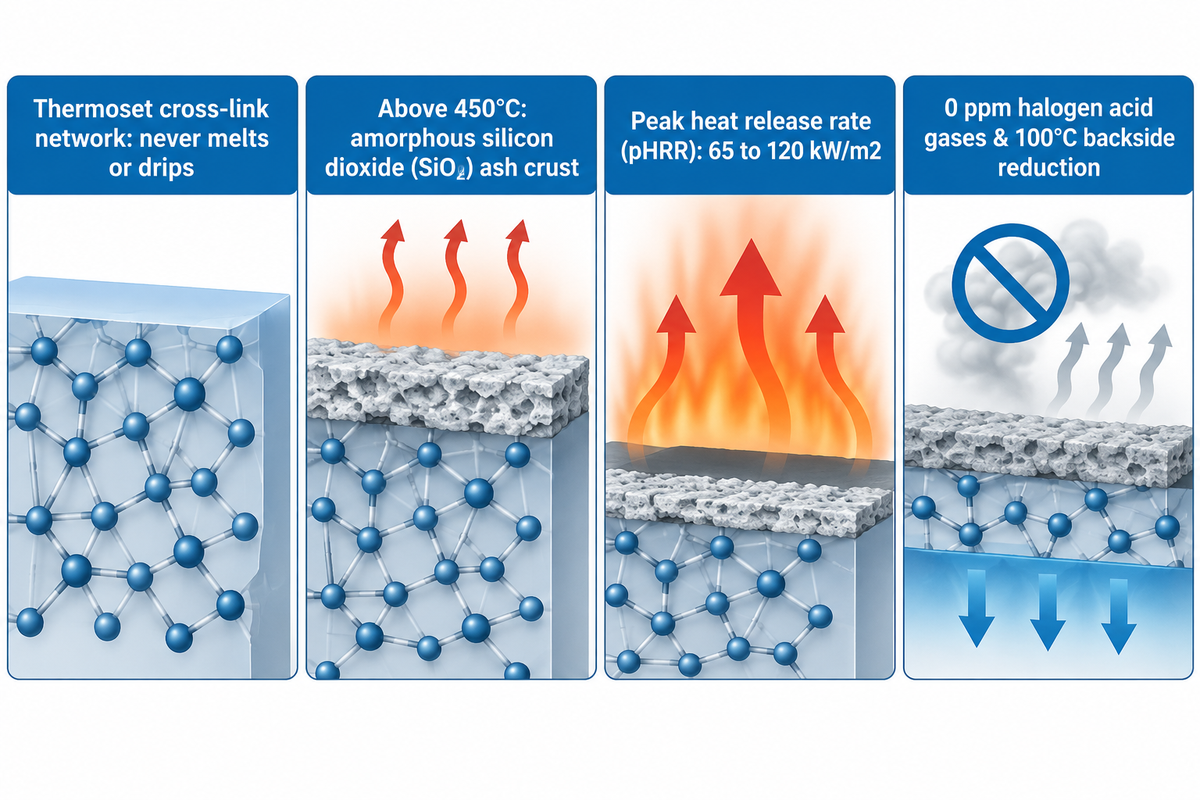
A common question on the shop floor is “Will whether silicone melt like polyethylene, nylon, or PVC when exposed to a stove burner, extreme temperature, or rapid temperature fluctuations?” Cured silicone rubber is a thermoset elastomer locked together by covalent cross-link bridges during peroxide or platinum vulcanization, and retains its mechanical properties over a broad working temperature range. Due to this permanent three-dimensional network and inherent silicone heat stability, crosslinked silicone never melts or drips flaming liquid droplets when subjected to fire.
Unlike melting, exposure to elevated temperature, above 450°C, initiates a condensed-phase oxidation. As the methyl (–CH 3 ) side groups attached to the silicon atoms oxidize, the siloxane chain converts into a porous, white inorganic crust of amorphous silicon dioxide (SiO 2 ) ash. A char layer develops during cone calorimeter testing, and as documented in NIST Interagency Report 6041 (NISTIR 6041), it functions as a radiative heat barrier and mass transfer barrier.
By trapping the virgin polymer beneath the char front and retarding the escape of volatile cyclic siloxanes into the flame zone, the silica char crust limits the peak heat release rate (pHRR) to 65 to 120 kW/m2, which is less than one-fifth the pHRR of plastics.
From an occupational health and fire-safety standpoint, peer-reviewed silicone elastomer combustion research confirms that burning pure or mineral-filled silicone (including vinyl-silane modified aluminum hydroxide composites at ~65% by mass) produces zero halogenated acid gases (0 ppm hydrogen chloride, 0 ppm hydrogen fluoride, and 0 ppm hydrogen bromide) and reduces backside temperature by about 100°C during cone calorimetry. The primary combustion byproducts are solid amorphous silica powder, water vapor (H2O), carbon dioxide (CO2), and trace carbon monoxide (CO), yielding exceptionally low smoke optical density and toxicity in enclosed transit and cleanroom environments.
Why Uncured Silicone Sealants, Sprays, and Oils Catch Fire
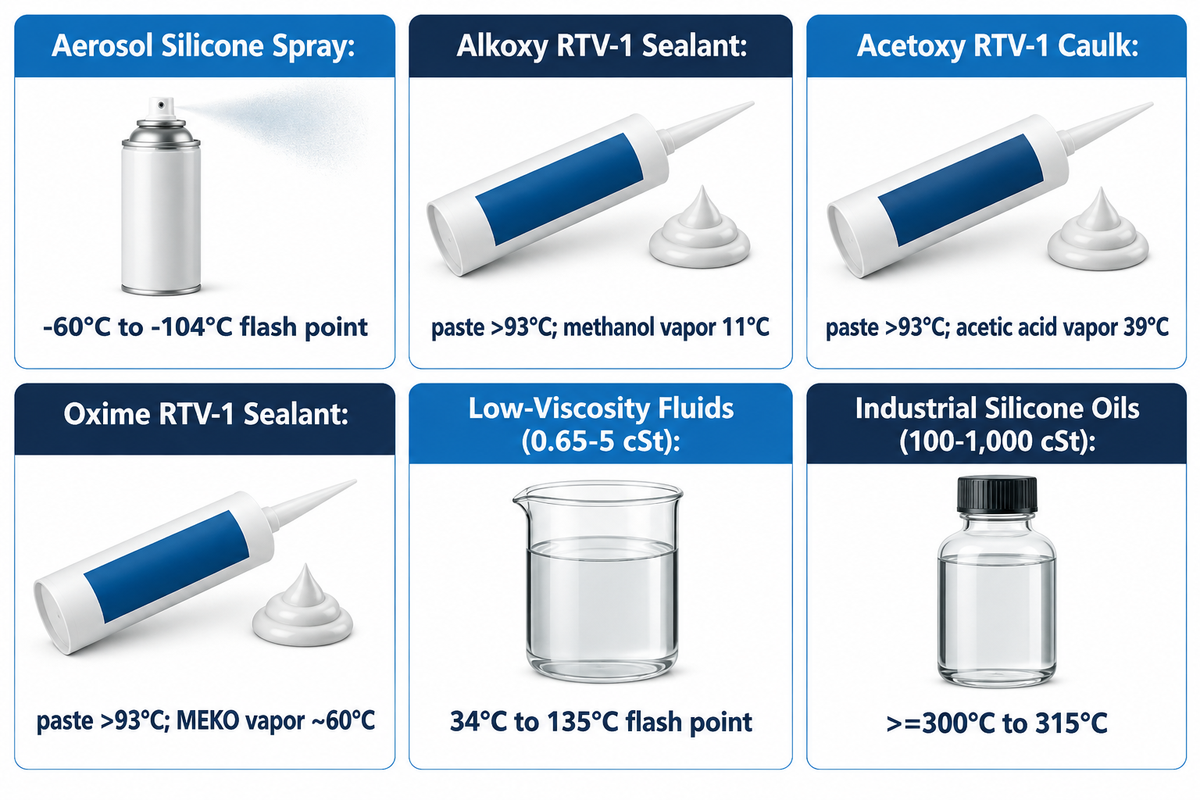
Although cured silicone rubber resists ignition up to 450°C, maintenance technicians occasionally experience flash fires with aerosol cans or uncured caulk before polymerization completes. Volatile hydrocarbon carriers, liquefied petroleum gas (LPG) propellants, low-molecular-weight silicone fluids, and condensation cure by-products used in sealants and sprays, behave as flammable materials before the material cures into a solid rubber.
As stated in the Wacker ELASTOSIL® Processing and Safety Technical Guide, some of the most common mistakes made in the industry are applying solvent-thinned silicone dispersions or aerosol lubricants near welding sparks, static discharges, and unventilated curing ovens. Our Uncured vs. Cured Silicone Flash-Point & Carrier Matrix below describes the exact flash-point behavior for liquid silicones, RTV sealants, and cured elastomers:
| Silicone Product Form | Carrier / Cure Leaving Group | Closed/Open-Cup Flash Point | Uncured Flammability Hazard | Post-Cure / Dried Behavior |
|---|---|---|---|---|
| Aerosol Silicone Spray (nominal ~2%–10% PDMS) | Propane / butane propellant + heptane or naphtha solvent | -60°C to -104°C (-76°F to -155°F) | Extremely flammable aerosol; instant flash fire if sprayed near sparks | Non-flammable thin film after 15–30 min solvent evaporation; withstands 200°C–250°C |
| Alkoxy RTV-1 Silicone Sealant (Neutral cure) | Solvent-free (~100% nominal solids) paste evolving trace methanol during hydrolysis | Bulk paste >93°C; methanol vapor 11°C (52°F) | Paste is non-flammable, but methanol vapor can reach LEL in sealed unventilated ovens | Solid elastomer resists continuous heat up to 200°C–230°C; flash ignition ~450°C |
| Acetoxy RTV-1 Silicone Caulk (Acid cure) | Solvent-free (~100% nominal solids) paste releasing acetic acid vapor (vinegar odor) | Bulk paste >93°C; acetic acid vapor 39°C (102°F) | Combustible acetic vapor during 24–72 h moisture cure; attacks alkaline masonry | Cured silicone seal withstands -50°C to +200°C; UL 94 HB unless flame-retarded |
| Oxime RTV-1 Silicone Sealant | Solvent-free (~100% nominal solids) paste releasing methyl ethyl ketoxime (MEKO) | Bulk paste >93°C; MEKO vapor ~60°C (140°F) | Moderate vapor flash risk in heated enclosures; requires exhaust ventilation | High-oil-resistance cured gasket; auto-ignition 490°C–500°C |
| Low-Viscosity Silicone Fluids (0.65–5 cSt) | Short-chain linear/cyclic dimethyl siloxanes | 34°C to 135°C (93°F to 275°F, per standard ASTM D93) | Class II/III flammable or combustible liquid; high vapor pressure | Remains volatile liquid; not used for high-temperature thermal transfer |
| Industrial Silicone Oils (100–1,000 cSt) | High-molecular-weight polydimethylsiloxane fluid | ≥300°C to 315°C (572°F to 599°F, per standard ASTM D92) | Low flammability; used as dielectric transformer and heat transfer fluid | Slowly gels if oxidized above 250°C in open air; fire point >350°C |
As the matrix illustrates, solvent-free RTV-1 silicone sealant cartridges (documented in Global Formulation’s RTV-1 silicone chemistry analysis, including FDA 21 CFR 177.2600 food-grade systems) exhibit bulk closed-cup flash points above 93°C (200°F). The fire risk during sealant application arises only when solvent-thinned primers are used or when large beads of alkoxy or acetoxy caulk cure inside a sealed, heated enclosure where methanol (11°C flash point) or acetic acid (39°C flash point) vapors cannot dissipate. Similarly, real-world workshop and kitchen experience and direct butane torch testing show that while pure cured silicone chars into clean white silica ash and self-extinguishes once the torch is removed, cheap silicone products adulterated with hydrocarbon extender oils burn with heavy black soot.
UL 94 V-0, ASTM D2863 LOI, and Global Fire Standards for Silicone Rubber
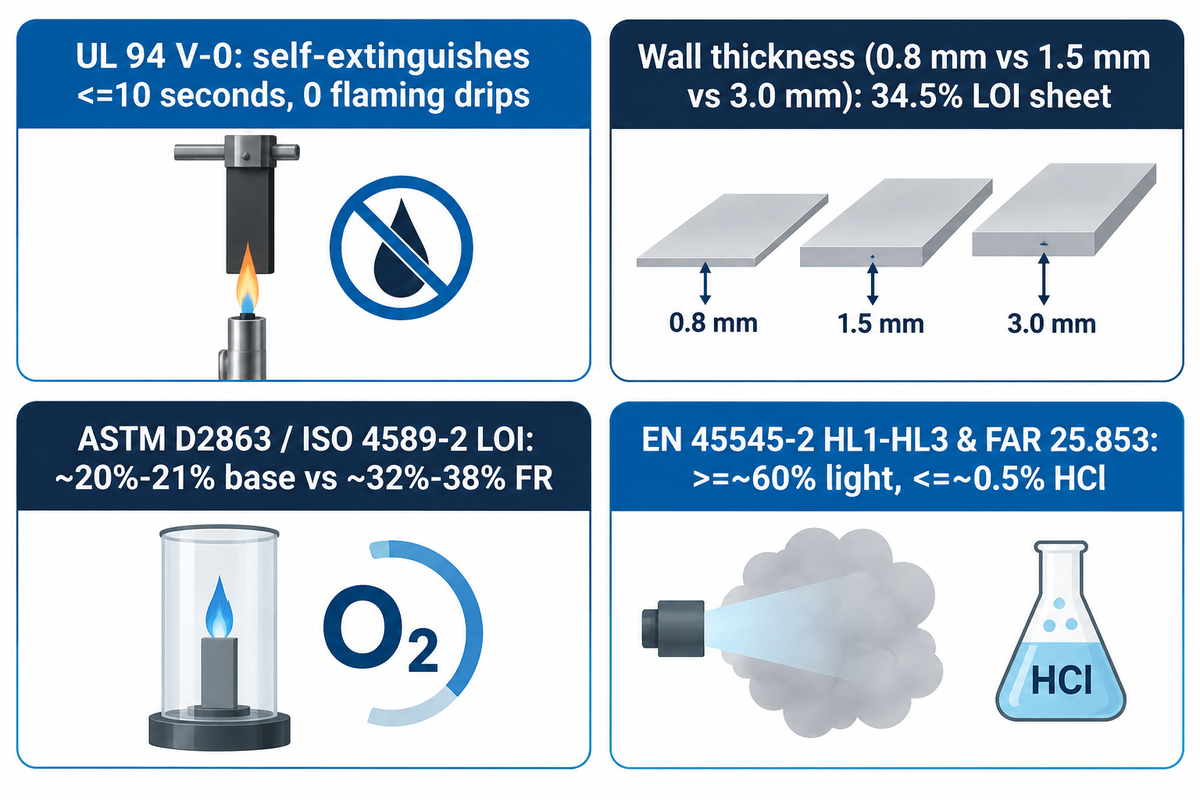
As noted in fire-resistant silicone coating research and in the Composites UK Good Practice Guide to Fire Performance, a high continuous service temperature is not an indication of non-flammability. Even if silicone sealant can withstand 250°C to 300°C, regulatory approvals for use in electrical enclosures, rail cars, aircraft and EV battery packs require passing standardized flame-impingement tests.
- Under UL 94 vertical and horizontal burn testing (HB vs. V-1 vs. V-0), standard unfilled silicone rubber achieves only UL 94 HB (horizontal burn rate ≤40 mm/min for 3.0 to 13.0 mm thickness). Compounded flame-retardant silicone rubber achieves UL 94 V-0, meaning a vertical specimen subjected to two 10-second flame applications self-extinguishes within ≤10 seconds per application (total afterflame ≤50 seconds across 10 applications for 5 specimens), with zero flaming drips capable of igniting surgical cotton placed 300 mm below.
- Wall thickness on the UL Yellow Card (0.8 mm vs. 1.5 mm vs. 3.0 mm) governs compliance: according to The Rubber Company’s UL 94 V-0 Flame-Retardant Silicone Sheeting specification, a 60 Shore A grade with 7.5 MPa tensile strength, ~300% nominal elongation, and 20 kV/mm dielectric strength achieves a nominal LOI of 34.5% at standard sheet thicknesses, whereas a compound tested only at 3.0 mm may fail V-0 when calenders or extruders reduce wall thickness to 0.8 mm.
- Limiting Oxygen Index testing under ASTM D2863 / ISO 4589-2 measures the minimum oxygen concentration in a flowing oxygen-nitrogen mixture required to support candle-like flaming combustion: unmodified PDMS sits around ~20% to 21%, whereas industrial fire-resistant silicone compounds reach ~32% to 38% LOI.
- European railway (EN 45545-2 Hazard Levels HL1–HL3) and aerospace (FAR/JAR 25.853) codes add smoke and toxicity gates: as detailed in Seals Direct’s aerospace and rail specification guide (covering 60s vertical burn and 15s horizontal burn across -50°C to +220°C at 1.12 to 1.2 g/cm3 density), rail and cable elastomers must also meet ISO 5659-2 optical smoke density, IEC 61034-2 light transmittance (≥ ~60%), and IEC 60754-1 halogen acid gas limits (≤ ~0.5% HCl).
How Flame-Retardant Silicone Rubber Works: ATH, Platinum, and Ceramifiable Systems
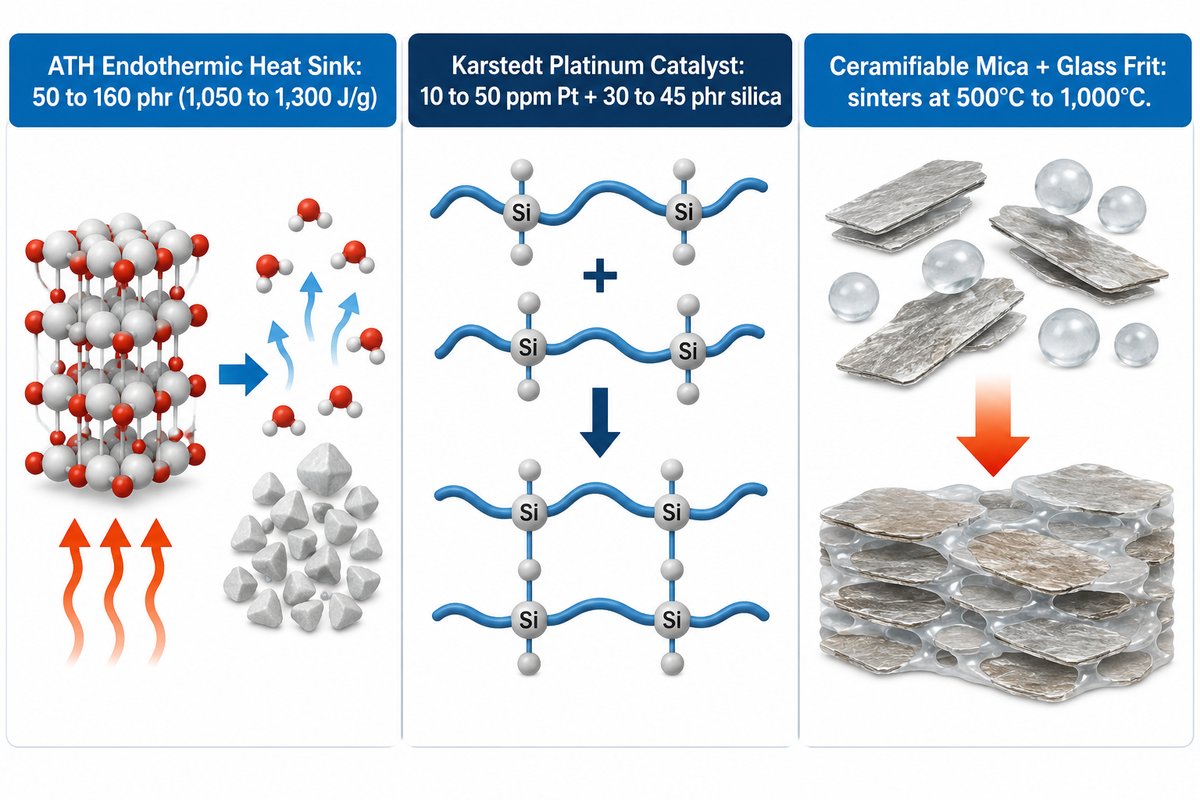
To prevent the spread of fire without introducing toxic brominated or chlorinated compounds, polymer chemists engineer flame-retardant silicone rubber through three complementary condensed-phase and endothermic mechanisms. Driven by EV battery pack safety and strict RoHS/REACH halogen-free mandates, the global flame-retardant silicone composition sector is expanding at a projected CAGR exceeding ~8% between 2024 and 2030, with 2025–2032 industry forecasts highlighting rapid adoption of ceramifiable and UL 94 V-0 elastomers.
1. Aluminum Trihydrate (ATH) Endothermic Heat Sink (50–160 phr)
Aluminum trihydrate (Al(OH)3, also called aluminum hydroxide) is the primary mineral flame-retardant additive used in high-consistency silicone rubber (HCR/HTV), liquid silicone rubber (LSR), and high-voltage electrical insulator compounds. As documented in ScienceDirect’s study on ATH and platinum co-catalysis in silicone rubber and NewSil Global’s HTV formulation benchmarks, commercial UL 94 V-0 HTV compounds start at 50 to 60 phr ATH (with heavy-duty electrical and rail formulations loading 80 to 160 phr) to raise the elastomer’s nominal LOI from ~20% to ~32%–38%. When exposed to fire temperatures between 180°C and 220°C, ATH undergoes endothermic dehydration:
2 Al(OH)3 + Heat (1,050 to 1,300 J/g) → Al2O3 (Alumina Char) + 3 H2O ↑ (Water Vapor)
This reaction absorbs 1,050 to 1,300 J/g of thermal energy, cools the silicone matrix below its 350°C depolymerization threshold, releases ~34.6 wt% non-combustible steam to dilute flammable cyclic siloxane gases in the flame zone, and leaves behind a refractory aluminum oxide (Al 2 O 3 ) ceramic reinforcement within the silica ash. However, high ATH loading (50 to 60 phr and above) without silane surface treatment can reduce tensile strength toward 3 to 6 MPa and elongation at break down to roughly ~100%–200% while raising Shore A hardness by 5 to 10 points.
2. Karstedt Platinum Catalyst + Metal Oxide Condensed-Phase Cross-Linking (10–50 ppm Pt)
When thin-wall gaskets or automotive electrical connectors cannot tolerate the stiffness of 150 phr mineral filler, formulators pair 10 to 50 ppm of Karstedt platinum catalyst (or platinum-phosphorus complexes disclosed in Japanese Patent JP5269405B2 and Patent CN113913024A) with fumed silica (30 to 45 phr) and titanium dioxide (TiO2) or ferric oxide (Fe2O3) co-additives. During thermal exposure, platinum catalyzes rapid radical cross-linking of the polydimethylsiloxane chains, locking methyl groups into a dense ceramic-like network and suppressing the unzipping reaction that generates volatile D3/D4 rings.
3. Ceramifiable Silicone Rubber for 1,000°C Fire Survival Cables and EV Barriers
In fire-survival power cables (IEC 60331-21 at 750°C–830°C for 30–120 minutes, BS 6387 Category C at 950°C for 3 hours) and electric vehicle battery thermal-runaway shields, standard silica ash is too friable to withstand mechanical shock or water-spray jets. Ceramifiable silicone rubber compounds and muscovite/phlogopite mica silicone composites incorporate 30 to 55 phr of a glass-frit, kaolin, and mica filler system. Between 500°C and 650°C, the borosilicate glass frit softens, wets the silica and mica platelets, and initiates liquid-phase sintering. At 900°C to 1,000°C, the compound transforms into a rigid, self-supporting ceramic shell (compressive ash strength 1 to 5 MPa, flexural strength up to 8 to 15 MPa) that holds conductors apart in 0.5–1.0 mm control cores and 1.5–6 mm2 power feeders.
Silicone vs. EPDM, Neoprene, Viton (FKM), and PTFE Fire Resistance Comparison
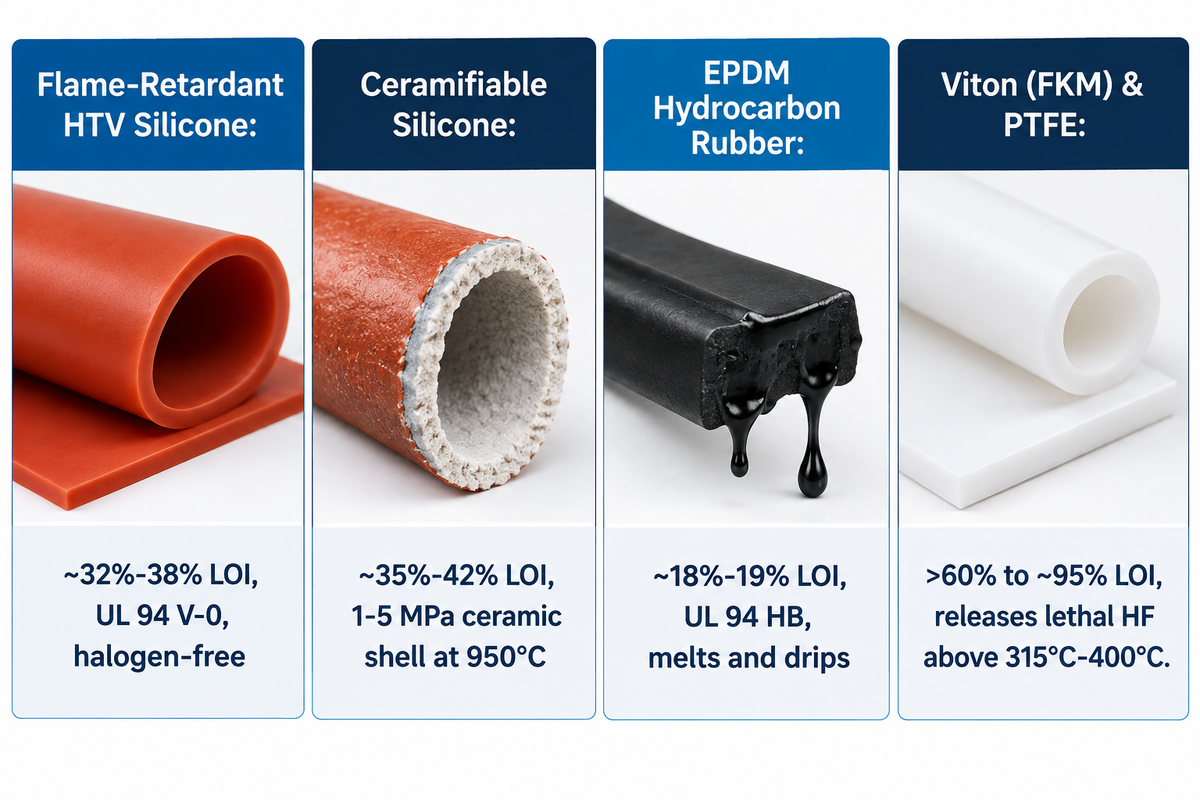
Engineers selecting elastomers for high-heat gaskets, cable jacketing, or battery enclosures often assume that fluorocarbon rubber (Viton / FKM) or PTFE is universally safer than silicone in a fire simply because fluoropolymers have a higher Limiting Oxygen Index. As highlighted in RY Silicone’s UL 94 and EN 45545 compliance analysis and SpecialChem’s polymer flame-retardant selection guide, that assumption overlooks lethal halogen acid gas release during real fires.
Our Five-Elastomer Fire & Smoke Toxicity Matrix (ASTM D2863 / ASTM E662) contrasts nine commercial elastomer types and polymer categories across continuous service temperature, flash ignition, Limiting Oxygen Index, UL 94 burn rating, and combustion gas toxicity:
| Elastomer Type & Polymer Category | Continuous Temp Range | Flash Ignition Temp | Nominal LOI (ASTM D2863) | UL 94 Class Rating | Combustion Residue & Acid Gas Toxicity (ASTM E662) |
|---|---|---|---|---|---|
| Standard Silicone Type (VMQ / PDMS) | -60°C to +230°C | ~450°C (Auto: 490°C) | Nominal ~20% – 21% | UL 94 HB | White amorphous SiO2 ash; 0 ppm halogen acid gas; low smoke density |
| Flame-Retardant HTV Silicone (ATH + Pt) | -60°C to +230°C (300°C HS) | 460°C – 490°C | Nominal ~32% – 38% | UL 94 V-0 (0.8–3.0 mm) | Insulating SiO2 + Al2O3 char; halogen-free; passes EN 45545-2 HL2/HL3 |
| Ceramifiable Fire-Survival Silicone (Mica/Frit) | -60°C to +250°C (Sinters 500°C–1,000°C) | >480°C | Nominal ~35% – 42% | UL 94 V-0 + IEC 60331 | Sinters into 1–5 MPa rigid ceramic shell at 950°C; zero halogen acid gas |
| Addition-Cure Liquid Silicone (LSR V-0) | -50°C to +220°C | 450°C – 480°C | Nominal ~30% – 35% | UL 94 V-0 (1.5 mm) | Clean silica char; zero corrosive fumes; ideal for automotive EV connectors |
| Fluorosilicone Elastomer (FVMQ Category) | -60°C to +200°C | 430°C – 460°C | Nominal ~26% – 30% | UL 94 V-1 / V-0 | Resists jet fuel & solvents, but trifluoropropyl side groups evolve trace HF if burned |
| EPDM Hydrocarbon Rubber (Unfilled) | -50°C to +150°C | 310°C – 360°C | Nominal ~18% – 19% | UL 94 HB (Burns rapidly) | Melts/drips flaming hydrocarbons; dense black carbon soot; high heat release rate |
| Natural Rubber (NR) & Butyl Rubber (IIR) | -50°C to +110°C | 290°C – 340°C | Nominal ~17% – 18% | UL 94 HB (Flammable) | Softens and pools into burning liquid; heavy soot; zero char barrier protection |
| Neoprene (Polychloroprene, CR) | -40°C to +120°C | 380°C – 410°C | Nominal ~26% – 38% | UL 94 V-1 / V-0 | Contains chlorine; releases corrosive, choking hydrogen chloride (HCl) gas & thick black smoke |
| Viton® (FKM) & PTFE Fluoropolymers | -20°C to +250°C (PTFE 260°C) | >500°C – 560°C | Nominal >60% to ~95% | UL 94 V-0 | Decomposes above 315°C–400°C releasing lethal hydrogen fluoride (HF) & carbonyl fluoride |
While FKM and PTFE resist ignition in the open air, any surrounding fuel or electrical fire that drives ambient temperatures above 350°C to 400°C causes fluoropolymers to evolve hydrofluoric acid (HF) which is a gas that can cause fatal pulmonary edema at low ppm and attack and damage semiconductor switchgear. That is why rail rolling stock, aircraft ducting, and submarine bulkheads specify halogen-free flame-retardant silicone materials.
Compounding Flame-Retardant Silicone: Kneader Temperature Control and Filler Dispersion
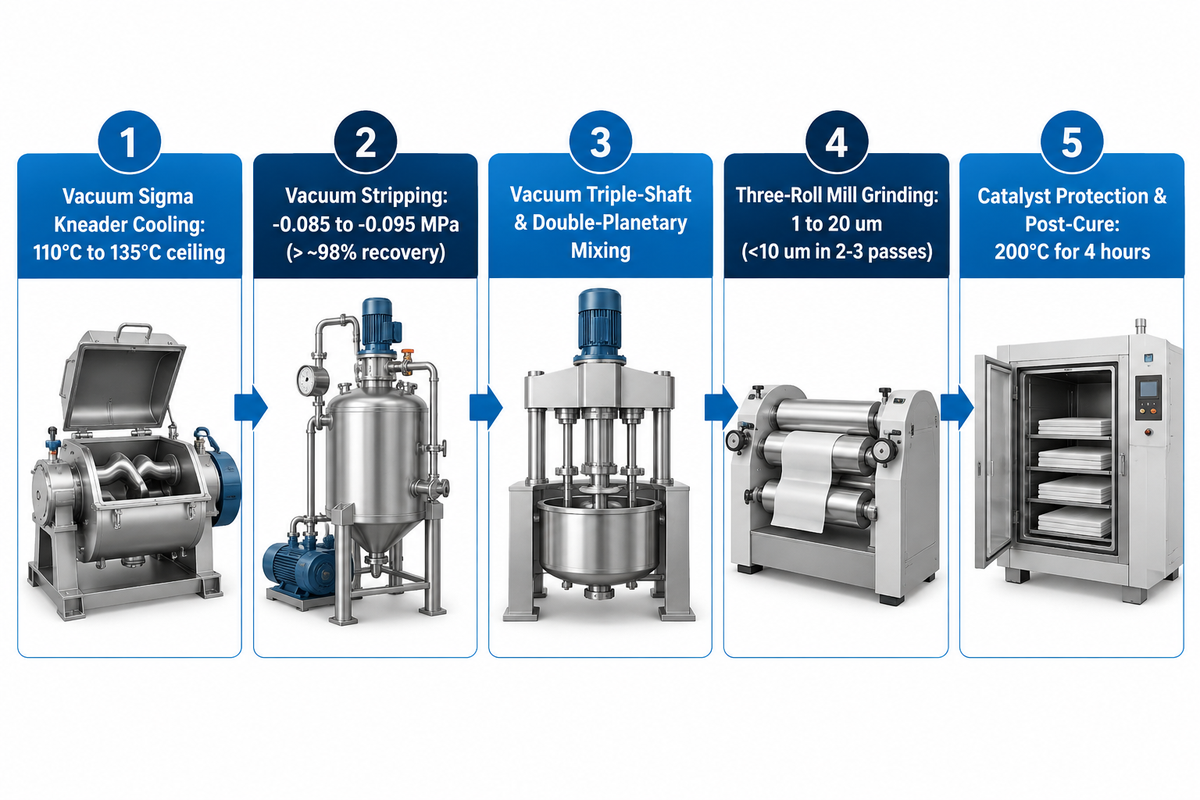
Formulating a UL 94 V-0 silicone compound on paper is straightforward, but manufacturing it without porosity or catalyst poisoning requires tight thermal and shear control on the mixing line. When dispersing 80 to 160 phr of fine aluminum trihydrate powder (median particle size d50 = 1 to 2 μm) into high-viscosity methylvinyl silicone gum (VMQ) or liquid silicone resin (up to 2,000,000 mPas), frictional shear inside the mixing chamber rapidly generates heat.
As proven in PCT Patent WO2021102621A1 and field production lines engineered by industrial silicone compounding and mixing equipment manufacturer Jiangyin IDA Equipment Co., Ltd. (IDA Equipment), violating the ATH Kneader Shear-Heating Threshold Protocol (<135°C) is the leading cause of batch rejection:
- Jacketed vacuum sigma dispersion kneader cooling (110°C–135°C ceiling): because ATH begins losing crystal water at 180°C (with localized hot-spot dehydration starting near 160°C), the dispersion kneader must use forced chilled-water circulation through its sigma-blade cored shafts and mixing trough jacket to keep batch temperature strictly between 110°C and 135°C during high-filler incorporation. If batch temperature spikes above 165°C, evolved moisture creates micro-void bubbles during subsequent curing, dropping dielectric breakdown strength below 15 kV/mm.
- Vacuum stripping (-0.085 to -0.095 MPa) and in-situ silane surface treatment: adding ~0.8 to 1.5 wt% vinyltrimethoxysilane or hexamethyldisilazane (HMDS) during kneading hydrophobizes the hydrophilic ATH and fumed silica surfaces, preventing crepe hardening during storage. A vacuum of -0.085 to -0.095 MPa removes adsorbed moisture and volatile cyclic siloxanes (D4-D6) before discharge of the hydraulic ram press (> ~98% material recovery).
- High-viscosity RTV and LSR planetary mixing: for flame-retardant RTV silicone sealants and two-part addition-cure potting compounds, vacuum triple-shaft and double-planetary mixers blend ATH, fumed silica, and polydimethylsiloxane polymer under deep vacuum without dead zones or air entrapment.
- Three-roll mill precision grinding and nano bead milling: undispersed ATH agglomerates larger than 40 to 50 μm act as localized fuel pockets where a 0.8 mm or 1.5 mm UL 94 vertical burn strip will burn past the 10-second V-0 limit. Passing high-viscosity paste through a chilled industrial three-roll mill (achieving 1 to 20 μm fineness, and below 10 μm in 2 to 3 passes) and a 100-to-150-mesh extruder strainer guarantees uniform tear resistance, as emphasized in Rubber World’s analysis of flame-retardant automotive electrical connectors. For lower-viscosity solvent-borne silicone coatings and flame-retardant pigment dispersions, a horizontal industrial nano bead mill wet-grinds mineral synergists to sub-micron uniformity.
- Preventing platinum catalyst poisoning and secondary oven post-curing: addition-cure UL 94 V-0 silicone systems are poisoned by trace sulfur, tin, amines, or organophosphates, so dedicated stainless-steel mixing chambers must never share uncleaned blades with sulfur-cured EPDM or neoprene batches. Following molding or extrusion, a secondary oven post-cure at 200°C for 4 hours drives off residual volatiles and oligomers.
Sourcing Decision Matrix: Specifying Flame-Retardant Silicone Grades and Mixing Lines
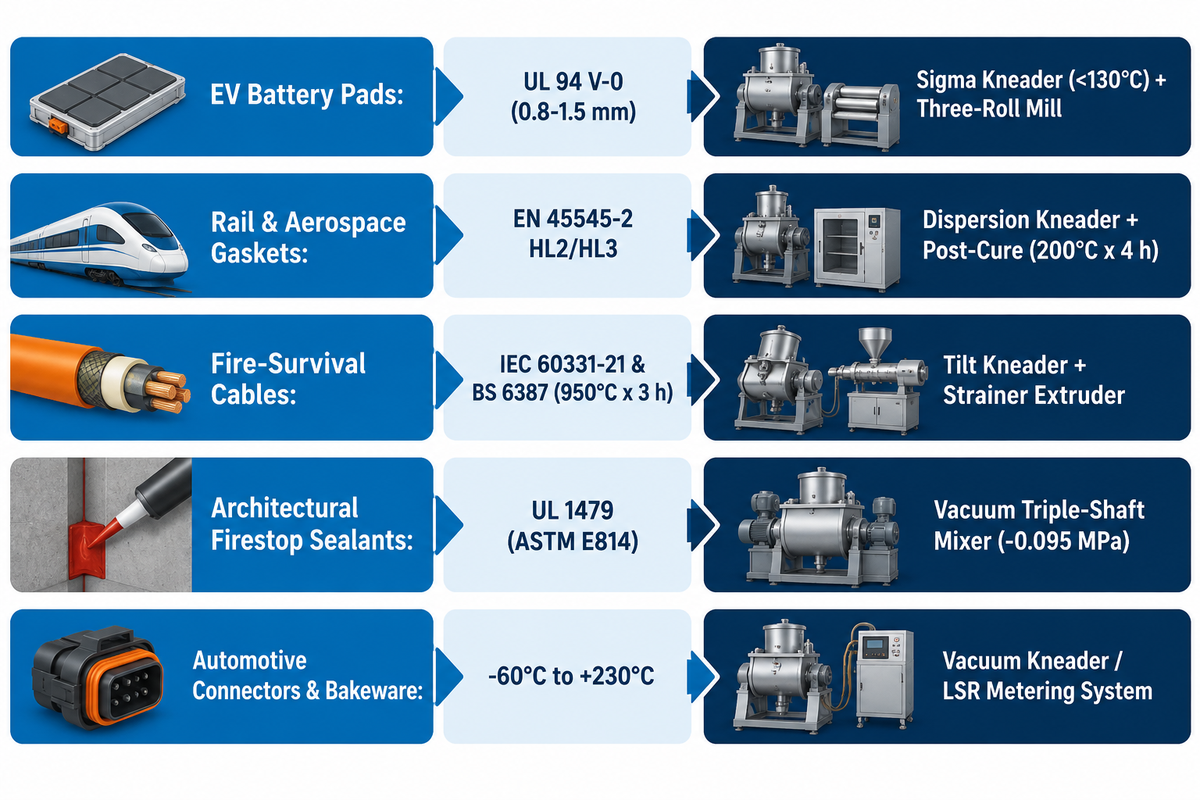
Silicone is used across wide range of applications under demanding temperature conditions. From a broad range of silicone, grades used in automotive wire harnesses, household silicone cooking mats, stove seals, and cooking utensils to 3D printing resins, medical O-ring seals, silicone tubing, aircraft ducting and EV battery fire barriers, engineers must match the compound to the thermal hazard. Whether you are procuring finished sheet silicone or building an in-house compounding line (from 500 to 100,000 tons per year) to make silicone elastomers, use the engineering matrix below to match the application to the exact fire standard, formulation, and equipment configuration:
| Target Application | Required Fire & Temp Standard | Recommended Silicone Formulation | Compounding & Dispersion Line |
|---|---|---|---|
| EV Battery Thermal Runaway Pads & Busbar Sleeves | UL 94 V-0 (at 0.8–1.5 mm), nominal LOI ≥ ~35%, 1,000°C thermal blast | Addition-cure HTV/LSR with 110–150 phr ATH + 25 ppm Pt + mica/glass frit | Jacketed Vacuum Sigma Kneader (<130°C) + Three-Roll Mill + Strainer |
| Rail Transit & Aerospace Door/Window Gaskets | EN 45545-2 HL2/HL3, FAR 25.853, ASTM E662 low smoke | Low-smoke zero-halogen (LSZH) peroxide or Pt-cured HCR (nominal LOI ~34%–38%) | Vacuum Dispersion Kneader + Two-Roll Open Mill + Post-Cure Oven (200°C × 4 h) |
| Fire-Survival Power & Control Cables | IEC 60331-21 (750°C–830°C), BS 6387 CWZ (950°C × 3 h) | Ceramifiable silicone rubber (30–55 phr phlogopite mica + 500°C–650°C glass frit) | Heavy-Duty Tilt Kneader + Twin-Cone Feeder + Fine Mesh Strainer Extruder |
| Architectural Firestop & Curtain-Wall Sealants | Per standard UL 1479 (ASTM E814), ASTM E84 Class A, UL 94 V-0 | Neutral alkoxy or oxime RTV-1 paste compounded with ATH & calcium carbonate | Vacuum Triple-Shaft / Double-Planetary Mixer (-0.095 MPa) + Hydraulic Press |
| Automotive Connectors, Bakeware & General Seals | -60°C to +230°C continuous heat; UL 94 HB or Pt V-0 | Fumed-silica VMQ or Pt-catalyzed LSR (post-cured to strip D4–D6 volatiles) | Vacuum Kneader / LSR Metering & Mixing System + Vented Curing Oven |
When issuing a Request for Quotation (RFQ) for types of silicone or turnkey compounding machinery Conforming to IEC 60204-1 and ANSI/NFPA 79 electrical safety standards, always specify the exact minimum UL 94 wall thickness (such as 0.8 mm or 1.5 mm), target ASTM D2863 LOI percentage, and batch viscosity ceiling. Engineering teams scaling up in-house production of flame-retardant HTV, LSR, or RTV sealants can consult Jiangyin IDA Equipment Co., Ltd. to configure jacketed vacuum sigma kneaders, planetary mixers, and three-roll mills tailored to high-loading ATH and ceramifiable formulations.
Frequently Asked Questions (FAQ)
Can food-grade silicone catch fire in a household oven or air fryer?
Normal baking temperatures up to 230°C (446°F) will never ignite certified food-grade cured silicone bakeware or air fryer liners. Charring will occur if a silicone baking mat is placed in contact with a glowing element of an electric oven or a gas broiler where localized surface temperatures exceed 450°C (842°F). Always check the continuous service temperature of the mat and maintain a clearance of at least 5 cm from heating elements when broiling or roasting at high temperatures.
Why does a silicone spray can carry an “Extremely Flammable” warning if silicone itself is fire-resistant?
Pressurized aerosol cans dissolve roughly ~2% to 10% liquid polydimethylsiloxane oil inside volatile hydrocarbon solvents such as heptane or naphtha and propel the mist with butane or propane gas (flash point below -60°C). Because the flash point of butane or propane is below -60°C, spraying can cause an immediate flash fire. During spraying and for 15 to 30 minutes after, a nearby spark or pilot light can also cause a flash fire. After the solvent completely flashes off, the thin layer of silicone lubricant is heat-stable up to 200°C-250°C.
Does UL 94 V-0 certification mean silicone rubber is completely fireproof?
Certification to UL 94 V-0 proves that a silicone rubber specimen is self-extinguishing within 10 seconds after a test flame is removed, not that the elastomer is indestructible in a prolonged inferno. Under sustained external fire exposure above 600°C to 800°C, even UL 94 V-0 ATH-filled silicone will gradually oxidize into non-conductive white silica ash. When an application requires structural barrier survival at 950°C to 1,050°C, engineers must specify a ceramifiable silicone compound formulated with mica and glass frit.
Is the white powder left after burning silicone rubber hazardous?
Combustion of silicone elastomer leaves behind amorphous silicon dioxide (SiO2), which has no lattice structure like in silica dust. However, fine ash can still irritate eyes and airways and should be removed by HEPA vacuum.
Can standard RTV silicone caulk be used as a building firestop sealant?
General-purpose household RTV caulk achieves only a horizontal burn rating (UL 94 HB) and will not pass multi-hour building fire-barrier inspections, which require specialized firestop sealants certified per standard UL 1479 (ASTM E814) and ASTM E84 Class A.
References & Sources
- National Institute of Standards and Technology (NIST) — NISTIR 6041: Cone Calorimeter Heat Release Rate and Silica Char Mechanics of Polydimethylsiloxane (ASTM E662 / NFPA 704)
- National Institutes of Health (NIH / PubMed Central) — PMC6566511: Thermal Stability, Depolymerization, and Flame Retardancy of Polydimethylsiloxane Composites
- The U.S. Department of Transportation (DOT / NTL ROSAP) — DOT Report 16407: Fire Safety and Ignition Evaluation of Silicone Elastomers (FAR 25.853 / ASTM E662)
- National Institutes of Health (NIH / PubMed Central) — PMC6459615: Thermal Degradation and Halogen-Free Silica Ash Formation of Silicone Rubber
- National Institutes of Health (NIH / PubMed Central) — PMC9147155: Ceramifiable Silicone Rubber Composites with Enhanced Self-Supporting Ceramic Structure (IEC 60331 / BS 6387)
- Wacker Chemie AG — ELASTOSIL® Silicone Sealants and Adhesives Processing & Safety Guide (6709-EN, ASTM D92 / ASTM D93)
- Global Formulation — Silicone Sealants: RTV-1 Cure Chemistry, 21 CFR 177.2600 Compliance, UL 1479 (ASTM E814) & ASTM E84 Firestop Standards
- ScienceDirect — Combined Flame Retardancy of Aluminum Trihydrate (ATH) and Platinum in Silicone Rubber (UL 94 / ASTM D2863 / ISO 4589-2)
- The Rubber Company — UL 94 V-0 Flame-Retardant Silicone Sheeting Technical Data Sheet (LOI 34.5%, ASTM D2863)
- Seals Direct UK — Flame-Retardant Silicone Rubber Aerospace (FAR 25.853) & EN 45545-2 Rail Specification (ISO 5659-2 / IEC 61034-2 / IEC 60754-1)
- SpecialChem Polymer Additives — Flame Retardants Selection Guide: Silicone-Based and Halogen-Free ATH Systems
- Rubber World Magazine — Use of Liquid Silicone Rubber in Flame-Retardant Rated Automotive Electrical Connectors (IEC 60204-1 / NFPA 79)
- Composites UK — Good Practice Guide to Composites Fire Performance and ATH Filler Wetting
- Google Patents / WIPO — WO2021102621A1: Flame-Retardant Polysiloxane Composition and Kneader Compounding Method
- Google Patents / JPO — JP5269405B2: Platinum-Complex Catalyzed Flame-Retardant Silicone Rubber Composition
Related Posts
Trending now