Get in Touch with IDA

Horizontal Bead Mill: Complete Buying Guide 2026

Contents
show
Introduction to Horizontal Bead Mills
What is a Horizontal Bead Mill?
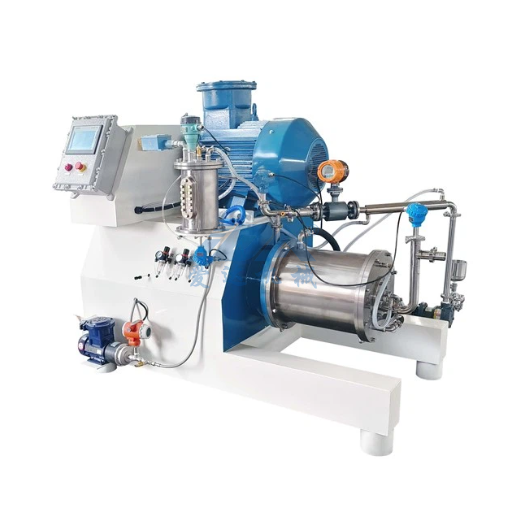
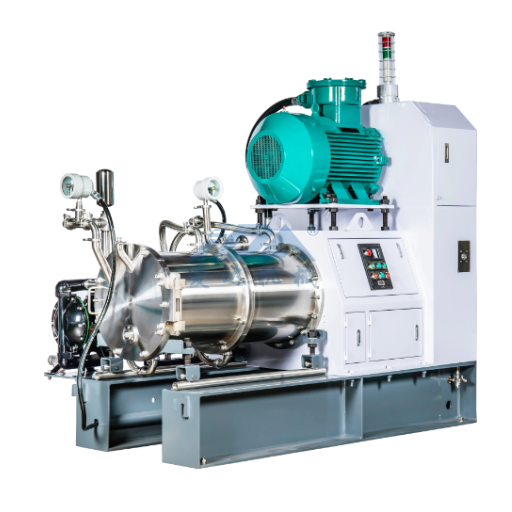
The horizontal bead mill functions as an industrial equipment solution which processes liquid materials through its fine grinding and material dispersion capabilities. Industries such as paints and coatings and inks and pharmaceuticals and chemicals use this equipment because they need to create particles of uniform size which match their production requirements. The mill uses small spherical beads as its grinding material while a rotor system moves these beads inside a horizontal milling chamber to create grinding motion.
The system works when operators pump material into the milling chamber, which allows the material to interact with the grinding beads. The agitation causes the beads to collide with the particles in the material, breaking them down into smaller sizes. The process achieves efficient grinding results which produce uniform particles and high-quality dispersion products.
Horizontal bead mills operate as the preferred equipment choice because they provide accurate measurement results while handling materials with high viscosity properties. The system enables users to control their operations by producing specific particle sizes while consuming less energy and adapting to different production needs. The system serves as a vital resource for companies who want excellent performance and outstanding product quality during their manufacturing operations.
Basic Principles of Wet Grinding and Dispersion
Wet grinding and dispersion operations use liquid mediums to break particles into desired size fractions or to create uniform particle distributions. The process typically requires mechanical forces which include shearing and impact and compression to achieve particle size reduction while creating a more uniform mixture. The specialized equipment used for grinding and dispersing operations relies on these forces to execute its functions.
Wet grinding requires a liquid medium which operators use to reduce particle sizes through their grinding process. The liquid medium enhances energy transfer efficiency while it serves as a cooling mechanism which maintains optimal temperatures during grinding operations. The process introduces dispersants or additives into the mixture to create particle stabilization which maintains their uniform distribution without forming clumps.
Effective dispersion requires thorough mixing to uniformly distribute particles throughout the liquid. The process success depends on three factors which include liquid viscosity and particle size distribution and mixing energy applied. The process of wet grinding and dispersion produces finer particles with consistent size distribution which improves the material properties of the final product. The industry employs this technique in sectors like paints and pharmaceuticals and food manufacturing to produce superior quality outcomes.
Types of Horizontal Bead Mills
Horizontal bead mills use two distinct operational designs which match their specific intended applications. The primary types include disc-type, pin-type, and turbo-type bead mills. Each industrial sector requires specific dispersing needs which these three systems provide through their distinct features.
| Mill Type | Mechanism | Best Applications |
|---|---|---|
| Disc-Type | Rotating discs producing turbulent motion. | Coatings, paints, and ink manufacturing. |
| Pin-Type | Pin-shaped components for high-intensity impact. | Cosmetics and pharmaceuticals (fine particles). |
| Turbo-Type | Specially designed rotors for high energy transfer. | High viscosity food and chemical production. |
Each type of bead mill serves a unique purpose, and selecting the appropriate mill depends on factors such as material properties, desired particle size, and production volume.
Understanding the Technology Behind Bead Mills

How Horizontal Bead Mills Work
Horizontal bead mills operate through the use of small spherical grinding media which breaks materials into smaller components. The core of the process involves an enclosed grinding chamber where the media are rapidly agitated by a rotating shaft or discs. This agitation creates a shearing and impact motion that effectively reduces particle size. Materials are introduced into the chamber, and the combination of media movement and high energy transfer ensures efficient grinding.
The design of horizontal bead mills includes two main components which determine how they operate because grinding media placement controls material flow throughout the milling process. Horizontal configurations allow for better material flow and uniform distribution of energy, leading to consistent particle size reduction. The design also minimizes dead zones where the material could stagnate, maximizing process efficiency and reducing wasted energy.
Horizontal bead mills use temperature control systems which help maintain their operational stability throughout all processing activities. These systems prevent overheating of materials and ensure the process remains efficient. The mills operate with exceptional flexibility because they can process multiple material types which include high-viscosity materials suitable for use in coatings, inks and pharmaceuticals. Their ability to deliver uniform particles with precision makes them an indispensable tool in modern manufacturing.
Comparing Horizontal Bead Mills and Ball Mills
Horizontal bead mills and ball mills serve the function of material grinding and material dispersion yet operate with three different aspects which include design and application and performance. Horizontal bead mills utilize a series of small beads inside a chamber to break down materials into finer particles through intense agitation which enables them to produce exceptionally fine and uniform particle sizes. The ball mill system operates with a rotating drum that contains large grinding balls which makes it ideal for processing substantial amounts of coarse materials.
Efficiency stands as the primary factor that separates both systems from each other. Horizontal bead mills achieve higher energy efficiency because their design enables better material movement while requiring less power for operational tasks. The ball mill system demands extended operation periods while consuming more power to produce results that match the output of bead mills which operate with lower power requirements for their particle size distribution work. The bead mill system provides industries that need exact particle sizing through their affordable solution which delivers precise control over particle dispersion.
The two technologies differ because of their different operational environments. Horizontal bead mills operate best in industries which need to create fine particle products with equal distribution of their particles because this process requires exact material control for successful operation. The mining and cement industries which need extensive material grinding choose ball mills because they offer more efficient equipment for their operational needs. The selection between these two systems requires assessment of process specifications which involve determining optimal particle sizes and determining energy efficiency needs and identifying the materials to process.
Key Components of a Bead Mill
The bead mill operates through its fundamental elements which enable it to accomplish both particle size reduction and material dispersion tasks. The primary component is the grinding chamber which contains the grinding media and serves as the entrance point for incoming material. The chamber allows the material to interact with grinding media and mechanical forces in an effective way.
The agitator or rotor serves as another essential component because it produces shear forces which break down particles while achieving uniform distribution. The grinding process effectiveness and output quality depend on the rotational speed and structural design of the rotor. The agitator uses small beads made of durable materials to achieve consistent particle size reduction while maintaining proper mixing within the chamber.
The additional components of the system include a cooling system which maintains optimal grinding temperature to prevent overheating and a separator system which stops grinding media from leaving the chamber together with the processed material. The components work together to deliver exceptional performance while maintaining exact control over particle size distribution and operational dependability for industrial use.
Applications of Horizontal Bead Mills

Industries Utilizing Bead Mills
Bead Mills Are Used By Many Different Industries. The horizontal bead mill enables precise control of particle size reduction and material dispersion which makes it essential for multiple industries. The paint and coatings industry represents one of its primary applications. Bead mills produce high-quality decorative paints automotive coatings and industrial finishes by creating products with uniform particle distribution and consistent color appearance.
The pharmaceutical industry uses this technology for its major applications. Horizontal bead mills enable pharmaceutical companies to develop and produce their drug formulations which includes creating nano-dispersions that enable drug delivery systems. The mills use active ingredients to produce smaller particles which enhances product bioavailability and improves performance while maintaining product safety and reliability.
Bead mills are used by the cosmetics and personal care industry for their production needs. The products which include foundations and lotions and creams use these devices to create smooth textures and uniform appearances. Products with fine particle sizes yield better application results and enhanced stability which are crucial for fulfilling customer needs. The industries show how essential horizontal bead mills have become in contemporary manufacturing procedures.
Case Studies: Success Stories in Bead Milling
- The Paint and Coatings Industry Achieved Better Operational Performance:
A leading paint manufacturer sought a solution to improve the production efficiency of their pigmented coatings without compromising on quality. The company achieved better pigment dispersion through their implementation of horizontal bead mills which produced vibrant colors that matched their requirements for processing time reduction of 30 percent. The production process became more efficient because it reduced material waste which helped the company achieve its environmental sustainability objectives. - Revolutionizing Pharmaceutical Applications:
A pharmaceutical company faced challenges in producing nanoscale emulsions for drug delivery systems. The company achieved better particle size control through bead milling technology which resulted in improved active ingredient bioavailability and stability. The company developed this advancement to satisfy rigorous governmental regulations which enabled them to produce better products for their customers and business growth. - Innovation in Food and Beverage Production:
A dairy producer who needed to solve emulsification issues in flavored beverages used bead milling technology to improve their product’s emulsion texture and stability. The technology created products with uniform texture that maintained their quality throughout their extended shelf life. The company’s successful achievement allowed them to introduce new products which helped them secure a competitive advantage in their industry.
Bead milling demonstrates its ability to solve essential production problems while producing actual outcomes through its implementation in multiple industries according to these case studies.
Operational Techniques for Maximizing Efficiency
Optimizing Grinding Processes
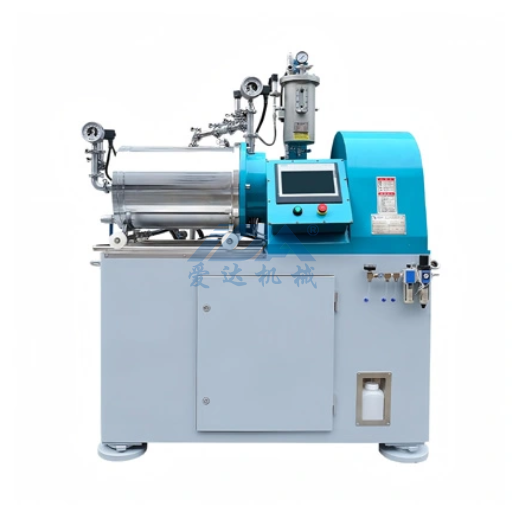
The process of optimizing grinding operations requires researchers to examine three essential aspects which include material properties, grinding materials and equipment operational parameters. The physical and chemical properties of the material being processed determine which equipment and grinding media should be used. The combination of these elements prevents operational inefficiencies which lead to excessive equipment wear and power usage while producing uniform particle dimensions and product quality.
The process of optimization requires continuous monitoring to enable necessary changes to operational settings. The process outcomes depend on three main factors which include speed and pressure and grinding duration. System performance monitoring requires advanced tools and sensors which deliver real-time system data to operators for precise efficiency adjustments.
The maintenance process and equipment calibration procedures serve as critical components that organizations need to maintain consistent operational capacity throughout their business operations. Scheduled inspections help identify early signs of wear or malfunctions that can hinder efficiency. The implementation of maintenance routines which include training employees to keep all equipment in good condition helps organizations achieve higher operational efficiency while decreasing machine downtime which results in a grinding process that operates more dependably and economically.
Temperature Control in Bead Milling
To achieve product quality and process efficiency bead milling requires accurate management of its temperature throughout its operation. The milling process produces heat during its operation because beads create friction with the material that undergoes processing. Failure to control the generated heat results in temperature-sensitive material degradation which produces uneven particle distribution and decreases overall effectiveness. Manufacturers achieve material integrity and consistent production results through their temperature management practices.
Bead mills use advanced cooling systems which include jackets and internal cooling loops to control their operational temperature. The coolant needs to flow properly throughout the milling process because it maintains optimal temperature control. This system protects delicate materials while it stops excessive heat from developing, which would eventually harm the mill’s machinery.
The milling process requires continuous temperature monitoring as an important procedure. The operators need to use accurate thermometers or sensors for temperature detection so that they can modify the cooling system based on temperature changes. The implementation of consistent temperature control techniques leads to improved product quality while extending equipment lifespan and reducing energy requirements which together create an efficient and dependable milling process.
Achieving Desired Particle Sizes
The milling process requires both precise execution and complete process control to create specific particle sizes. The three main factors that determine particle size are the selected milling machinery and the operational speed and the total time spent milling. Operators must choose equipment that matches both the material to be processed and the target particle dimensions.
Milling operations need ongoing monitoring because they require constant process changes to produce consistent results. The team must continuously optimize three parameters which include feed rate and rotational speed and grinding media size. The existing adjustments enable process monitoring because they stop deviations which would result in either excessively coarse or excessively fine production.
The implementation of quality control measures guarantees that the final product satisfies all required specifications. Particle size distribution can be determined through techniques which include sieving and laser diffraction and sedimentation. Manufacturers can use appropriate equipment together with real-time process adjustments and strong quality control systems to achieve and sustain their desired particle size.
Maintenance and Longevity of Horizontal Bead Mills
Essential Maintenance Tips
The adequate performance of horizontal bead mills requires their regular maintenance which also helps to extend their operational lifespan. The first step requires users to check essential equipment parts which include seals and bearings and grinding chambers for any signs of deterioration or damage. The immediate replacement of all damaged components needs to proceed because it protects machinery from experiencing additional operational failures. The process of moving parts needs proper lubrication which decreases friction effects and results in lower equipment consumption while improving system performance.
The bead mill requires cleaning after every operation because material buildup creates problems that affect its operational capabilities. The cleaning process requires suitable cleaning solutions which must completely remove and separate the beads. The team needs to conduct regular inspections of the cooling system to verify its capability to sustain proper operational temperature levels. An efficient cooling system prevents overheating, which could lead to system failure.
The maintenance schedule needs to establish fixed times when trained technicians will perform inspections and repairs of equipment. The documentation of maintenance work serves dual purposes because it enables performance monitoring and repair scheduling and equipment improvement planning. The application of these guidelines enables operators to achieve two objectives which are to decrease their operational interruptions and to lower their maintenance expenses while increasing their mill output.
Common Issues and Troubleshooting Techniques
Horizontal bead mills provide efficient particle size reduction through their mixing process, yet operators face specific operational challenges. The following section presents troubleshooting methods for three typical operational problems.
- Insufficient Grinding Efficiency: The bead filling ratio needs to be verified because it must maintain its recommended level. Performance depends on the correct bead size which requires regular inspection and replacement of worn beads. The material needs to have both flow rate and viscosity verified because they should meet operational requirements.
- Overheating of the Mill: Inadequate cooling systems create conditions that result in overheating. The coolant system needs a correct function test which requires verification of both coolant flow rates and coolant temperature values. The cooling channels need to be cleaned because blockages are preventing the system from working properly. The system needs to operate at its recommended speed because this will help reduce the amount of heat that is generated.
- Bead Breakage or Leakage: Beads break and seals leak because of two reasons which include improper handling and worn parts. Regular maintenance of seals and screens can help prevent leakage. Operators need to handle the beads with care during setup to protect the material, and they should only use high-quality beads which meet the mill’s requirements.
The operators maintain horizontal bead mills through regular maintenance work and their quick response to equipment problems.
Best Practices for Extending Equipment Life
The operation of a horizontal bead mill requires both its regular maintenance schedule and its operational procedures to be maintained at all times. The maintenance team needs to perform ongoing inspections throughout the day to detect any signs of equipment degradation which specifically affects seals and screens and beads. The team should fix all problems immediately because they create more serious equipment breakdowns when they remain unsolved.
The operation process requires staff members to handle materials and equipment according to established standards. The operators need to install beads and screens correctly while they should keep the mill within its operational limits. The equipment operates more smoothly with high-quality replacement parts and beads which meet the mill’s specifications because these components reduce operational stress.
The team can reduce contamination threats and equipment performance issues by maintaining a tidy work space that surrounds their equipment. The team needs to maintain detailed records of all maintenance activities and repair work because this information helps them monitor equipment usage and predict when parts will need to be changed or serviced. The manufacturers have established these guidelines which help businesses achieve their operational objectives through enhanced horizontal bead mill performance.
Frequently Asked Questions (FAQ)
Q: What is a Horizontal Bead Mill and how does it differ from a sand mill?
A: A Horizontal Bead Mill functions as a horizontal grinding machine which operates continuously to grind liquid and slurry materials through its use of moving beads that include zirconium beads and ceramic beads which operate in a rotating chamber. The horizontal bead mill system provides better performance because it enables operators to control the particle size distribution by using two different grinding technologies, The pin type and grinding disc configuration system.
Q: How do zirconium and zirconia beads affect the quality of the finished product in a Horizontal Bead Mill?
A: The combination of zirconium oxide with stabilized zirconium beads which include both yttrium and cerium stabilized types creates beads with high density and hardness. These properties help improve milling efficiency while they decrease contamination. The use of high zirconia content or zirconium bead media enables production of particles that reach sub-micron and nanometer scales. This method creates a narrower particle distribution which results in better finished product quality when compared to hardened steel beads. This effect becomes especially noticeable in applications that require nano materials and ceramic materials.
Q: What role does the mechanical seal and cooling jacket play in mill operation and safety?
A: The mechanical seal and cooling jacket establish essential components which maintain operational reliability and protect against hazards during nonstop manufacturing operations. The mechanical seal functions as a strong barrier which blocks leaks and stops contamination while the self-lubricating system with sealing liquid options. The cooling jacket maintains grinding heat and material temperature at controlled levels which enables stable dispersion and preserves the finished product quality. The system allows the implementation of explosion-proof designs together with real-time monitoring and protection systems for hazardous situations and high pressure environments.
Q: Can a Horizontal Bead Mill be used for laboratory and production scale applications?
A: Horizontal bead mills function as laboratory bead systems which enable small-scale testing and they allow continuous industrial operation through their design as large flow production grinding machines. The equipment options include both compact mills and large grinding systems which provide high throughput capacity, thus enabling operators to scale their operations while achieving consistent grinding performance between high-throughput mills and bead mills.
Q: What factors influence grinding fineness and how can mills achieve sub-micron or nano particle sizes?
A: The fineness of grinding operations depends on multiple factors which include the size of beads and the specific materials used which include zirconia and ceramic beads and the rotation speed of the rotor or agitator shaft and the centrifugal force and the grinding disc or pin type geometry and the duration of material processing. High pressure, high efficiency agitator designs, optimized separation screen and repeated passes can push particle sizes into sub-micron and nanometer ranges. The system achieves its targeted fineness and product quality through the implementation of real-time monitoring and protection which ensures stable operational conditions.
Q: How is cleaning and maintenance handled for Horizontal Bead Mills to ensure easy cleaning and long life?
A: Modern horizontal bead mills enable efficient cleaning operations through their design which allows workers to access all parts of the equipment together with their detachable separation screens and their components that provide automatic lubrication to both the main shaft and the agitator shaft. The special material coatings and explosion proof features together with the hardened steel and high-quality ceramic components create a system that reduces operational wear. The performance monitoring of zirconia content in beads together with the mechanical seal and sealing liquid assessment helps to maintain stable performance while extending the operational period.
Q: What are the advantages of bead grinding systems compared to other grinding equipment?
A: Bead mills provide multiple advantages which include their capacity to efficiently convert energy and their ability to control particle size distribution and their capacity to generate narrow particle size ranges and their ability to produce sub-micron particles and their dependable operation and their capacity to work with various material types. The system functions effectively as a disperser which also operates as a homogenizer to produce better quality products while it allows different scales of grinding operations from laboratory bead mills to industrial-sized production equipment.