Get in Touch with IDA

High Speed Disperser: The Complete Guide for Industrial Mixing

Contents
show
Efficient, consistent, and precise are the three essentials for industrial mixing. Among the tools that help embody these characteristics is a high-speed disperser. However, its standing is earned; it has become indispensable for a broad array of industries. What makes a high-speed disperser so important, and how shall we exploit its capabilities for optimal performance?
This comprehensive guide sets parameters in understanding high-speed dispersers. We touch on functionality, applications in industries like paints, coatings, adhesives, and more. Streamlining production, enhancing the quality of your products, or understanding the technical caprices around the disperser operation shall be the motivation for reading this post. Therefore, discarding a word with this blog might be more wasteful because it has your back up. Here, we explore the crux of advantages, operating principles, and dispersive best practices—a treasure trove bursting with information and resources for tidying and business success.
Key Takeaway
High-speed dispersers are critical for achieving uniform particle distribution and stable mixtures in high-viscosity industrial applications, significantly accelerating production timelines while ensuring high-quality output.
Introduction to High Speed Dispersers
What is a High Speed Disperser?
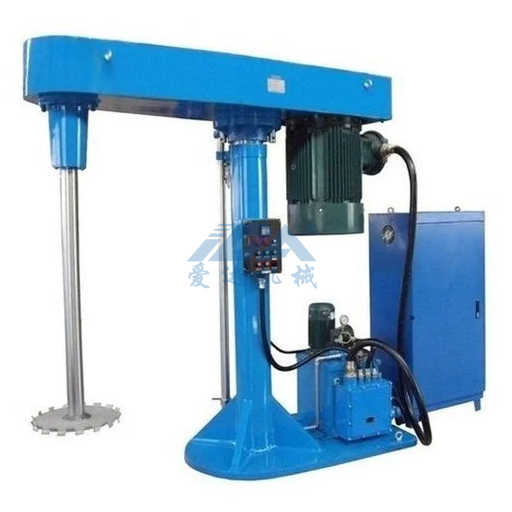
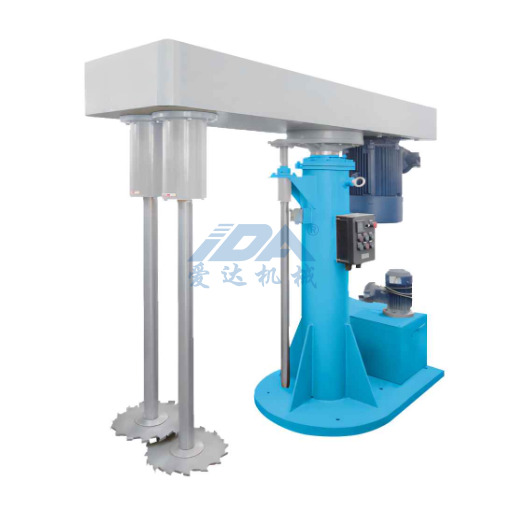
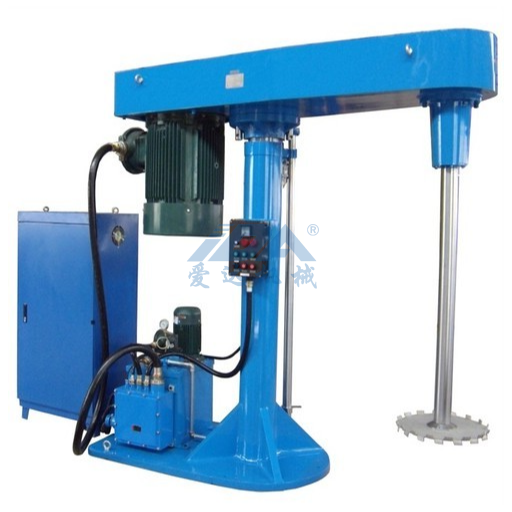
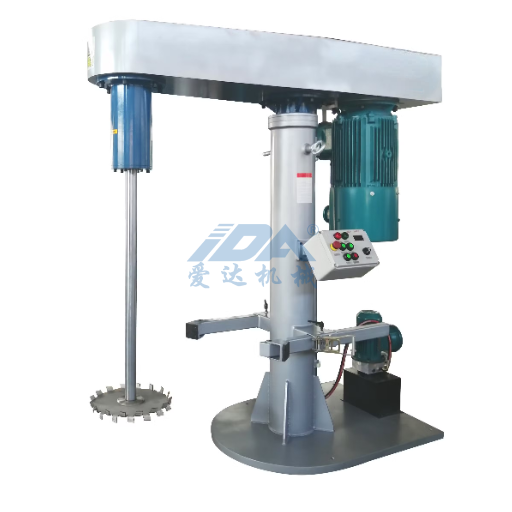
A high-speed disperser is a versatile and efficient piece of industrial equipment designed to mix, disperse, and homogenize materials in a liquid medium, usually in fields such as paint, coating, adhesive, chemical, and food handling. Its actual work is to disintegrate solid particles and disperse them uniformly into the liquid to form a homogeneous and stable mixture.
A high-speed disperser holds a rotor blade which rotates at high speed producing high shear forces which impart ultimate force necessary to disintegrate agglomerated solid particles and ensure uniform dispersion. The machine has an advantage of high adjustability due to adjustable speed and position of the blade to suit a wide spectrum of materials in terms of both viscosity parameters, thus making it possible to have multiple applications for a variety of production requirements.
One advantage of high-speed dispersers is that they speed up the entire process of production. At the end, only high-quality products result when proper maintenance procedures and practices are engaged. For the majority of users and consumers out there, easy repair and cleaning are the most predominant aspects of maintaining an efficient and dependable machine to guarantee that all these factors can be easily intervened.
How High Speed Dispersers Work
A high-speed disperser works by utilizing a rapidly rotating disc-shaped blade to mix and dissolve or disperse sometimes insubstantial material into liquids. The blade forms a powerful vortex effect by drawing the material down into the liquid, causing mind-blowing agitation and even dispersion. This is typically for breaking solid particles or incorporating powders into liquid; the action is effectual, however, for less-than-optimal results.
High shear and high-speed mixing are the operative mechanisms here. The disperser blade supplies the mixing energy to separate one clump of material from another and to reduce particle size. In this way, smooth, regular formulations can be obtained, whether they are intended for paints, adhesives, or any other type of industrial products. These properties make the system quite flexible, in which speed and effectiveness can be changed for different material properties and job requirements.
As a whole, high-speed mixers, granted by the efficient mixing and blending attributes, provide a fast and reliable way of achieving superior-quality results for industries truly demanding power. With their optimal application and regular maintenance, these machines ensure consistent performances in a variety of applications.
Key Components of High Speed Dispersers
A high-speed disperser is made from various crucial parts that work together to ensure effective mixing and blending. The central part of the machine is the mixing shaft driven, usually by a motor, supplying the rotational energy. The shaft consists of the dispersing blade, engineered and crafted by precision to ensure the optimal liquid circulation and shear force in the process. The blade serves to disintegrate and scatter all the materials inside the mix uniformly.
The second mandatory component is the engine (motor), produced to drive that high disperser blade. An engine’s horsepower and engine speed will dictate the output and then the ability to manage multiple materials across a wide viscosity range. Quality motors are valued against the regular sideways thing to keep up the regular operation of very heavy materials.
I would argue that the container or vessel that is employed for mixing is a vital part of the disperser since it acts as a hold for materials being processed, as well as rearranging the software around which the disperser’s blade works, ensuring hard constant flow and mixing. Some vessels come with special additions to enable them to be cooled or heated to maintain control over the mixing temperature. The good operation of these parts guarantees effective dispersing throughout the enormous variety of industrial applications.
Types of High Speed Dispersers
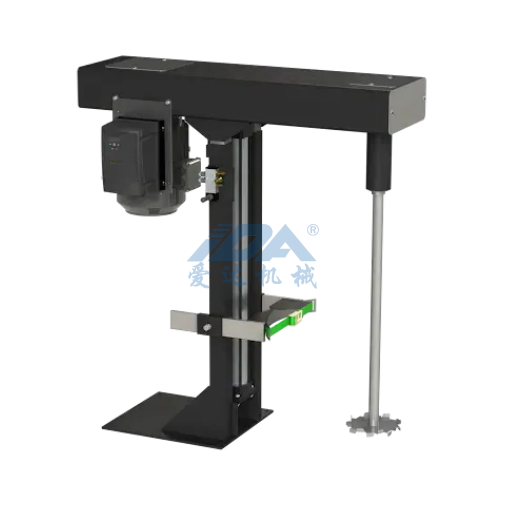
Bench-top Dispersers
Bench-top dispersers are perfect for the handling of small-scale dispersing and mixing tasks, owing to their extreme compactness and multifunctional nature. They are widely used in laboratories, pilot plants, and other process units for experiments requiring a wide range of control and a significant amount of flexibility or use. With their standalone form and small size, bench-dispersers are well-suited for small-scale operations, such as producing testing cakes, pilot plants for upscaling purposes, or R&D experiments.
One major plus for the bench-top disperser is that it is quite simple to use. Many units are fitted with adjustable speeds, which allow operators to modify the mixing action as needed based on the material or process demand. This definitely aids in providing consistent mixes while boosting the dispersion of solid particulate material or liquid blending. Moreover, it occupies little space, requiring less space than an industrial unit in areas one cannot put an industrial piece into.
Small-sized bench top dispersers, though compact, exhibit great capabilities prompting them to adapt in different applications. It is a design to process various kinds of materials ranging from those with low viscosity to those with some moderate paste-like appearance (depending on the model applied and configuration disappointed), making them a must-have solution in paints, coatings, cosmetics, and food processing. Their dependability and precision render an invaluable tool for scientists and engineers endeavoring to tweak processes for scale-up or optimization experiments.
Industrial High Speed Dispersers
The use of high-speed dispersing machines is capable of carrying out fast mixing and dispersing operations in diverse industries. Such machines are created for hazardous conditions created by objects with low viscosity flowing into thick paste. Thanks for their power in destroying aggregates, the uniform blends that these dispersers are able to achieve become a key aspect of effective quality control in paints and coatings, food production, and the pharmaceutical industries.
One most obvious merit is that high speed dispersers cut short the length of operations; this benefit becomes organized via the aggressive rotation of the blade, thus propagating powders, pigments, and other additives rapidly into the liquids. It assures time-efficiency and, more importantly, neither changes the product they have to produce, nor make accomplishable any change in its process.
Furthermore, since these dispersers are highly scalable and adaptable, they can easily be configured with a variety of blade sizes and seating setups as needed for the process. Their importance stems from the accuracy of dispersion and repeatability along with being a tool of very high utility for manufacturers trying to increase process efficiency and produce better good quality in large-scale application as well as in very small production batches.
Explosion Proof Dispersers
Explosion-proof dispersers refer to equipment that is specially designed for mixing and operating safely in explosive environments where flammable substances such as gases, vapors, or dust exist. The disperser is said to be engineered with safety features that prevent sparks or high heat from being generated during use, further reducing the risk of combustion. Its ultrastrong construction ensures that the equipment adheres to stringent industrial standards and regulations for application at a hazardous workplace.
⚠️ Important Note
The enclosed motor, flame-resistant electric gear, and sealed control panel are crucial components. These systems isolate electrical elements from the outside environment, mitigating blast risks in chemical, pharmaceutical, and paint plants.
For your industry, the task of selecting the explosion-proof high-speed blade disperser can only be offered to cater to the given specifications, such as batch capacity, the viscosity of dispersion to be handled, and hazardous compounds considered for care for the workplace. Correct installation and timely maintenance always pay off in the long run by keeping the life of the disperser and rendering all operations safe. Explosion-proof high-speed blade disperser will make you prioritize safety as well as have your processes’ efficiency without compromising quality.
Applications of High Speed Dispersers
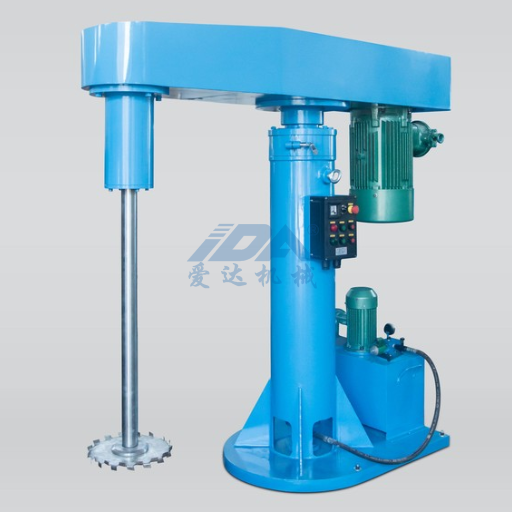
Use in Chemical Processing
Chemical manufacturing has long been dependent on high-speed dispersers for mixing, blending and homogenizing of a wide range of substances due to their high mixing efficiency. Particularly, they are best-suited to produce mixtures of highly viscous nature—promoting good dispersion of particles from the entire mix, an important factor for uniformity required right from the stage of manufacturing for all materials like adhesives, sealants, and coatings.
In a chemical way of speaking, the most important role of the dispersers comes up when controlling particle sizes while dispersing particles under intense contact of shear actions. The process intensifies the reactivity and performance of chemical formulations; therefore, highly dispersible materials for pigment dispersion, emulsion preparation, and polymer synthesis. Speed and shear forces can be controlled precisely so that one can customize the dynamics of processing to fit the requirement.
In hazardous chemicals processing, safety is of no less significance, due mainly to the nature of chemicals. The explosion-proof high-speed dispersers are configured in a way that the security of the personnel comes first in the scheme of things, but the efficiency is maintained under hazardous conditions. By adhering to strict safety requirements, these dispersers minimize the risk and at the same time keep primary chemical manufacturing processes reliable and efficient.
Application in Food and Beverage Industry
When it comes to the food and beverage industry, high shear dispersers come as a blessing in several production processes. Mixing is essentially for blending a few ingredients uniformly with the aim of achieving consistency in terms of sauces, dressings, drinks, dairy products, usually without lumps or unevenly incorporated elements—a priority in quality production.
Safety is a major concern in the food and beverage industry, particularly with sensitive ingredients and the execution of food safety standards. High-speed dispersers which are explosion proof come into effect here to lower the risks of explosion when volatile substances are processed, such as alcoholic beverages. These machines guarantee safe end products for consumers by hygienic operations within API quality.
The high speed dispersers add to efficiency by shortening production time and reducing energy consumption; any reduction in waste formed is a saving in costs. Their versatility permits a variety of customization for product recipes, enabling manufacturers to brainstorm and innovate different products while maintaining operational concrete reliability.
High Speed Dispersers in Paint and Coating Production
High-speed dispersers stand tall among paint-and-coating tools in the produce for the efficiency and consistency of the mix. These machines have the job of mixing, dissolving, and dispersing pigments and other solids within liquid bases effectively. The high shear forces ensure an even distribution of materials, creating a unified high-quality end product.
The high-speed disperser has another advantage in manipulating a wide range of viscosities for production in paint and coating. This and other useful properties make it useful in formulations ranging from thin solvent coatings to thick, high-solids paints. Fast mixing saves time on production and reduces energy consumption, which means that production units will be able to meet the ever-increasing demand and at the same time decrease costs of operation.
High-speed dispersers are equally responsible for ensuring that the reproduction of batches perform consistently. The main feature that follows a homogeneous dispersion of particles is that properties like smoothness of rough paint applications, durability of materials, and active color retention are enhanced. High-speed dispersers are essential for modern paint and coating manufacturing.
Technical Specifications of High Speed Dispersers
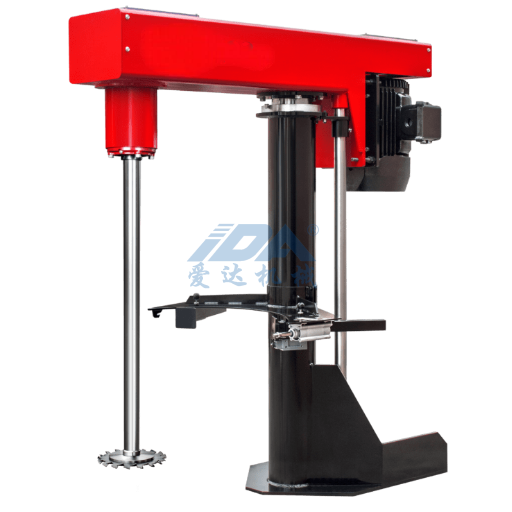
Motor Power and Speed Ratings
High-Speed disperser motors typically fall in a range of 1hp to 100+ hp, based on the necessity of the application in terms of size and capacity. Lower powers are ideal for more minor scale operations where larger powers are designed to handle large materials with ease and effectively. Deciding the simplest motor energy rating gives the best performance and efficiency.
💡
Pro Tip
The speed range for these units typically falls between 500 and 5,000 RPM. To secure a higher fine distribution of particles, the machine must be set to a higher speed adapted to the specific materials being processed.
The electric power and the speed rating are both significant contributors to the output and efficiency of high-speed dispersers. Depending on the batch size and viscosity of the materials and intended finalized quality of the processes, the manufacturing needs and blends of the, including the possibility of blending these two units, must be adequately taken into consideration. Their documents are very vital to make sure that these units can function the same way and produce the same results while keeping costs minimal.
Capacity and Volume Considerations
The capacity and volume considerations for high-speed saws should largely be determined by their intended use in how the manufacturing process is laid out. For smaller volume publications or low-viscosity compounds, having a saw with low-volume capacity can be quite energy-efficient. For larger volumes or higher-viscosity materials, high-capacity dispersers are almost essential to handle the workload effectively and maintain quality control successfully.
Capacity considerations should also consider expected production output and changes in barge size. Therefore, the disperser must be able to accept changes in a batch with overload or grossly underperforming with single-point adjustment, thus enhancing adaptability and dependability. Furthermore, issues that might arise with respect to possibility for deliberate scale-up in the existing capacity and equipment had better be addressed.
Another primary aspect is the dispersal of a material dispersed into the matrix in the medium via the coupling machine. It is ensured with such a process that a disperser be selected either at full volume or not available in any other portion, reducing waste and superfluous material, or with the possibility of underprocessing. Should the correct disperser be chosen, these problems would be reduced, to the benefit of cost-effectiveness, goals, and management of peak levels of quality.
Materials and Durability
The high-speed disperser is an extremely flexible and efficient tool that is widely used in the production of various substances. Its main job is to disperse either a solid or a liquid component into a base material efficiently, blending perfectly with uniform properties. This activity is very critical to industries such as coatings, adhesives, or those that depend on high dispersion quality for better quality of performance and durability.
The long-term durability of the material, when produced using a high-speed disperser, heavily relies on the selection of the raw material and the precision with which the dispersion process is carried out. When a proper dispersion of the material happens, particles are thoroughly dispersed, averting aggregation, sedimentation, or other factors that may result in a weakening of the material in time. To achieve the best result, factors like the speed of dispersion, potency of the dispersing equipment, and the viscosity of the medium must be balanced judiciously. Regular maintenance of the high-speed disperser adds more points in maintaining the quality output at the required level.
To enhance the durability and cost-effectiveness in an operational phase, sensible protocols are to be established for the usage of the high-speed disperser with respect to different material requisites. Critical parameters such as temperature and shear force must be monitored by the operators to prevent any harm to those sensitive products during the operation. If these rules are adhered to, the final product will perform to the highest standard, and long-term durability and reliability are ensured.
Operational Best Practices

Safety Measures for High Speed Dispersers
Use of high-speed dispersers calls for safety prioritized operations, so as to prevent accidents that may put physical health and equipment security at stake. So the operator always has to don PPE, including safety goggles, gloves, and hearing protection, to safeguard him/herself against any spills or soiling, chemical threats, or excessive airborne noise. Kept clear and highly clean, the work area provides for the prevention of tripping/slipping hazards and for the eradication or minimization of any product contamination.
- ✓
Always wear full Personal Protective Equipment (PPE) - ✓
Inspect spindles and shafts for alignment before start-up - ✓
Ensure material volume does not overload the motor capacity - ✓
Maintain clear emergency shutdown signage near the unit
It is also important always to give an overall inspection to the equipment on arrival. Loose parts on the disperser must be tightened, spindles, or shafts must be checked for consistent alignments and wear, and moving parts must be monitored for damage to ensure standard operations. Consistent inspections would further mitigate occurrences of a mechanical breakdown during machine operation. Make sure the material being processed can be coped with by the disperser and do not overload the machine, as this will only result in overheating.
Proper training and strict adherence to established operating procedures are key. It is important that all operators receive thorough training in the operation of the machine, including emergency shutdown procedures. Clear signs and instructions should be attached close to the equipment. Staying alert and keeping full concentration while using the disperser will help give advance warning and control to prevent possible issues, making for a safe and efficient operation.
Maintenance Tips for Longevity
To ensure that your disperser gives a good, long life packed with short bursts of quality performance, there is nothing as good as regular maintenance. So, after every use, take the cleaning of gear a step forward and really get into cleaning. Any deposits left resulting from material on the disperser will harden with elapsed time. This will mean reduced performance and maybe even expensive trouble. Keep the buildups to a minimum by using good cleaners and tools and always wearing recommended safety equipment and guidelines from the equipment manual.
Conduct a periodic inspection of all parts of the disperser for wear and damage. Specific sensitive parts like the seals, bearings, and blades are most susceptible to wear and may eventually need replacement. Pinpointing issues this way at an early stage can prevent interference with critical areas and save you a lot of time. Introduce a master list of items that you are likely to inspect, record your results to keep the chronological touch of inspection visits.
Ensure that dryers (dispersers) are stored in a clean and pollution-free environment, mostly in store areas. This will assist in keeping the appearance and functionality of the dryer appropriate. Also, remember to clean the debris causing clogs from the plan air filters and to check the clean drain condensate. Put all these practices into action, and efficiency, which will ensure consistency over a long period of time, will be inherited in all the equipment and systems being used.
Frequently Asked Questions (FAQ)
Q: What is a High-Speed Disperser and how does it work?
A: A high-speed disperser is typically an industrial mixing machine that was designed to disperse solid powders, pigments, or solids quickly into liquid media, for example, using a high-speed rotating blade. Through intense shear and high-grade turbulence in the mixing vessel, the disperser is effectively able to destroy any agglomerated material and hydrate particles in order to achieve a homogeneous suspension. Among the product applications of high-speed dispersers are paints, coatings, adhesives, inks, and several other kinds of chemical mixtures where fast and effective dispersion is needed.
Q: What are some components which form High Speed Dispersers?
A: A standard High Speed Disperser typically comprises a motor, gearbox, shaft, dispersing blade (impeller), and adjustable mount or lifting device to place the blade inside the tank. Frequently occurring features involve control panel operation, which includes the height adjustment and safety standards such as emergency stops, splash guards, etc. The materials of construction and design of blades vary depending on the process, which often includes the use of stainless steel and special coatings for the prevention of corrosion.
Q: What are the advantages of using a High Speed Disperser in comparison to other types of mixers?
A: The major advantages of a High Speed Disperser are the short dispersing times, efficient deagglomeration of powders, characteristics that enable them to work on high-viscosity systems when combined with suitable blade designs. They also prove to be more cost-efficient in the case of batch processing when compared with an Inline Homogenizer, a somewhat more complex system, and are much easier with which to retrofit an existing tank. For a great many formulations, the High Speed Disperser presents an optimal balance among speed, shear, simple designs and the like.
Q: In which industries can one usually find a High Speed Disperser?
A: A High Speed Disperser is commonly used in industries such as paint and coatings, printing inks, adhesives and sealants, cosmetics and personal care, pesticides and agrochemicals, pharmaceuticals, and food processing. Every industry that needs fast wetting and dispersion into liquids of powders or pigments could use a High Speed Disperser.
Q: What must I consider when selecting blade and speed for my High Speed Disperser?
A: Formulation is perhaps most important, but must also consider viscosity, particle size and the desired end launchable properties. Flat blades and toothed rotor-stator designs are common; flat propeller blades work for general mixing and high-speed shear, while toothed or saw-tooth blades improve wetting of difficult powders. Manufacturer recommendations could help you, and you can also run some small-scale visibility tests and establish what speed produces an optimum dispersion. Make sure equipment is not producing much heat and air in the process.
Q: Can the High Speed Disperser tackle high-viscosity materials and be scaled up for production?
A: Indeed, the High Speed Disperser may well be adjustable for mid-to-high-viscosity materials, while very high viscosities may require the use of the special blades or supplementary equipment such as an agitator or a recirculating system. To scale-up, to the extent that is possible, try to preserve geometric similarity and shear rates, and conduct pilot-scale production trials and sit down with the supplier for information on what to do. There are guidelines for scale-up that have been given by a lot of manufacturers so the High Speed Disperser you work with in the lab can be utilized by purpose from pilot to production scale.
Q: How does a High-Speed Dispenser fare against an inline high-shear mixer or homogenizer?
A: High-speed Dispenser works in the batch and is excellent for batch processes, taking pride in being simple and cheap of capital. The high-shear mixers, or homogenizers, produce more consistent shear in continuous flow and are capable of producing finer, assenting dispersions for particular applications. The decision should rely on shipping volume magnitude, desired particle size distribution, continuous procedure, and product sensitivity. In certain work processes, a High-Speed Dispenser is accounted for to employ in the wetting and pre-dispersion stages using inline homogenization for lower particle size.
References
-
A Practical Guide to High-Speed Dispersion
This book provides detailed insights into the principles and applications of high-speed dispersers, making it a valuable academic resource.
Read more on Google Books -
Laboratory Testing of Dispersant Effectiveness at High Pressures
Published in Wiley Online Library, this paper discusses laboratory testing methods for dispersants, including high-speed mixing.
Read more on Wiley Online Library -
Formulation and Analysis of Acrylic Emulsion Coatings
This research article from ScienceDirect compares high-speed dispersers and bead mills in pigment dispersion.
Read more on ScienceDirect -
High Speed Disperser – Industrial Mixing Equipment from Leading China Manufacturer