Get in Touch with IDA

By Karry · Updated October 2026
How is nail polish made in a factory? For regular polish, manufacturers make a film-forming base, add and disperse color, complete the batch, filter it if formula allows, run quality and package checks, and bottle and cap the product. Understanding how nail polish is made requires following the formula consistently, managing the solvent, and controlling package behavior across the whole process, not just the mixer. It takes effort to maintain consistency from the first to the last bottle produced.
This report describes the nail polish manufacturing process on an industrial scale, and doesn’t turn one supplier’s example into a universal recipe. The process description begins with regular nail lacquers, and includes gel and water-based lacquers, since their hardening mechanisms differ. Equipment mentions are functional. An exact machine still requires a representative formula and bottle trial before it can be determined suitable by the end user.
Factory process at a glance
- Approve, stage and weigh the formula materials.
- Prepare the clear film-forming base.
- Wet and disperse pigments or add a qualified pigment paste.
- Finish the shade and adjust formula-defined properties.
- Filter only through a method that retains the intended effect materials.
- Release the batch against approved tests.
- Fill bottles, insert brushes, cap and inspect the pack.
How Nail Polish Is Made: The Factory Process
The beginning of the process is the approval of a formula and batch record. The operator confirms the identity of the materials and their release status. The required quantity is staged. Compatibility of the selected vessel, transfer route and filling contact parts with the solvent system is checked. A regular polish flow proceeds to the following processes.
How is nail polish made step by step?
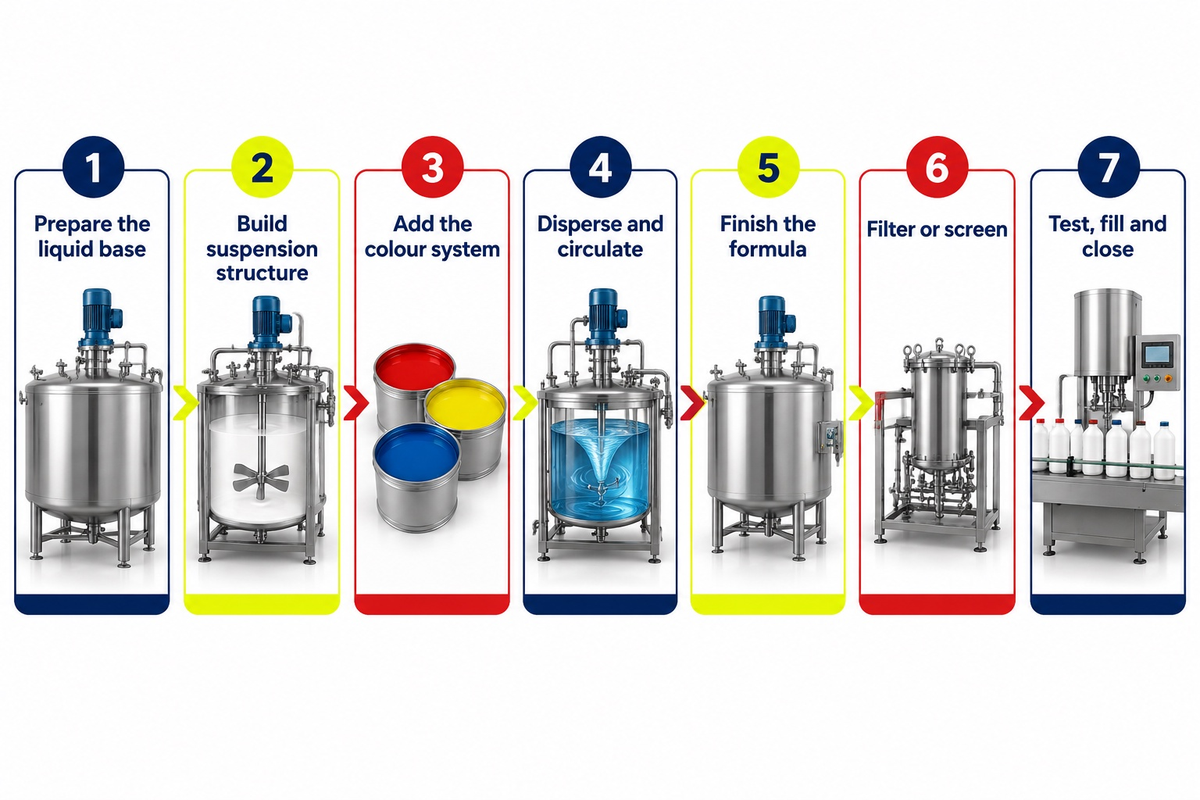
Regular polish is made by preparing the film-forming base, building suspension structure, adding and dispersing the colour system, finishing the formula, screening it by an approved method, releasing the batch and filling the bottles. The order of the actions is defined by the approved formula. Altering the order of the actions can change viscosity, wetting and final appearance of the polish.
- Prepare the liquid base. Film former, resin, plasticizer and specified solvents are combined by the validated order. The target is a uniform base, not simply a clear-looking liquid.
- Build suspension structure. A rheology or suspension aid may need controlled activation so pigments and effect particles don’t settle too quickly in the bottle.
- Add the colour system. The plant may use a qualified pigment dispersion, premicronized pigment, pearlescent mica or another approved colorant package.
- Disperse and circulate. The mixer must wet powders, break unwanted agglomerates and move the bulk batch through the active zone without assuming that every pigment needs further grinding.
- Finish the formula. The batch is brought to its approved shade and formula-defined properties. Adjustments follow the batch procedure rather than an online rule of thumb.
- Filter or screen. The method must catch unwanted foreign material without stripping out glitter, mica or other intentional particles.
- Test, fill and close. Quality control reviews the batch, then the filling line meters product into bottles, places the brush and tightens the cap under defined checks.
This sequence represents a manufacturing map rather than a transferable formulation. The Silverson nail-varnish application report is helpful to understand wetting and circulation and can assist in understanding deagglomeration; however, it’s a vendor report from a mixer supplier.
Where does the process usually go wrong?
Powders can float before wetting; dense solids can sink. A weak circulation can leave part of the vessel outside the effective mixing zone. Poor dispersion can show up as streaking or uneven color. A stable bulk batch can still fail at packaging if its viscosity, suspended particles, bottle neck, brush or cap differs from the package used during development.
What Is Nail Polish Made Of? Ingredient Roles
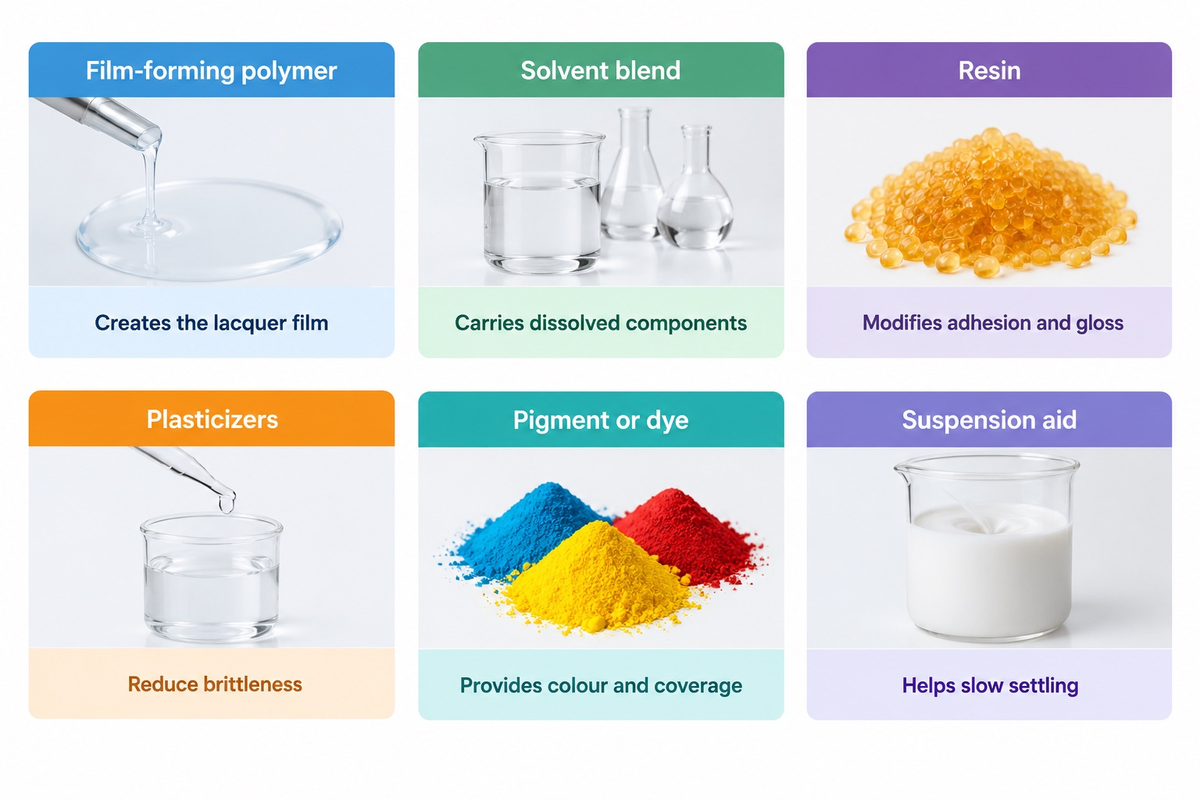
Regular nail polish is a coating system made from a film-forming polymer carried in a volatile solvent, together with resins, plasticizers and other modifiers. The Royal Society of Chemistry explains that upon application of the polish, the solvent evaporates and a film is formed. Nitrocellulose is a common film former.
What are the ingredients used to make nail polish?
A regular formula is composed of a film former, a solvent blend, a resin, a plasticizer, a color and a suspension aid. Some shades contain mica, glitter, or other effect materials. Each family has a separate job, so replacing one ingredient can change drying, film behavior, settling, mixing or package compatibility.
| Ingredient type | What it does | Process question |
|---|---|---|
| Film-forming polymer | Creates the continuous lacquer film | Is it fully incorporated without damaging the intended structure? |
| Solvent blend | Carries dissolved components and leaves during drying | Are materials, ventilation and plant controls suitable for the actual blend? |
| Resin | Modifies adhesion, gloss and film behavior | Has compatibility been checked in the complete formula? |
| Plasticizers | Reduce brittleness and add flexibility | Does the selected system remain compatible during storage? |
| Pigment or dye | Provides colour and coverage | Is it a soluble colorant, premicronized powder or prepared dispersion? |
| Effect material | Adds pearl, shimmer, glitter or texture | Can mixing, filtration and filling preserve the intended effect? |
| Suspension aid | Helps slow settling | What activation method and endpoint does the formula require? |
| Soluble dye | Adds colour without a suspended pigment particle | Is it permitted for the product and target market? |
| Formula additive | Adjusts a defined property such as flow or stability | Is its function and addition point defined in the approved formula? |
Examples of solvents can be ethyl acetate, butyl acetate, or a mixture of both. Hectorite clay can be a part of a suspension system. The 2025 peer-reviewed review of nail polish composition documents wide ingredient variation and reports prior analyses in which some labels did not match measured contents, so product-specific claims need appropriate substantiation.
How Pigments Are Dispersed and Stabilized
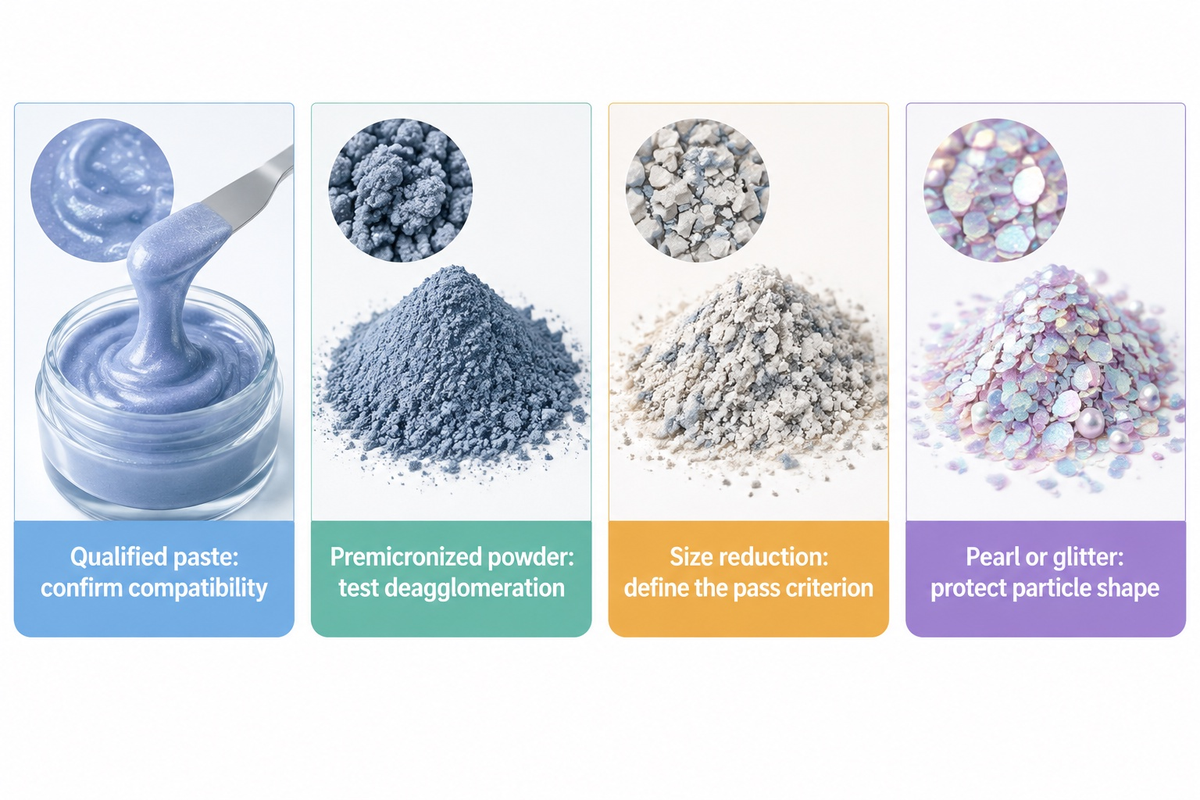
Pigment processing has two different goals: wetting and deagglomeration, or true particle-size reduction. Silverson’s vendor application note says pigments in its typical nail-varnish example are generally premicronized, so its described duty is deagglomeration rather than further size reduction. Treat this as a trial hypothesis for the colorant being studied and not as a rule to be generalized to all cases. Sending every pigmented formula through a mill can add heat, solvent exposure, cleaning time and contamination risk without solving the right problem.
Does every colour need milling?
No. A three-roll mill or bead mill should only be used when the pigment package and goal warrant grinding. A high shear disperser may be adequate for wetting and breaking agglomerates in other cases. Different constraints exist for other raw materials. The FDA color-additive list is a separate qualification check: dispersion performance does not establish that a colorant is permitted for the intended cosmetic use or target market. Large flakes, mica and glitter create a different constraint: too much shear may damage the visual effect, while a fine filter may remove the material the product is supposed to contain.
Dispersion decision
- If the pigment arrives as a qualified paste, confirm compatibility and let-down behavior.
- If it arrives as premicronized powder, test wetting and deagglomeration before specifying a mill.
- If particle-size reduction is required, define the target method, sample point and pass criterion.
- If the formula contains pearl or glitter, protect the intended particle shape through mixing, transfer and filling.
Gloss in a single product sample isn’t an indicator of formula consistency in the remaining samples. Color uniformity, hiding, sediment behavior and redispersibility should be judged by the product’s approved methods. If a manufacturer changes its colorant supplier, the colorant’s dispersion behavior can still differ even when the INCI name stays the same.
Regular, Gel, and Water-Based Polish Are Different Production Systems
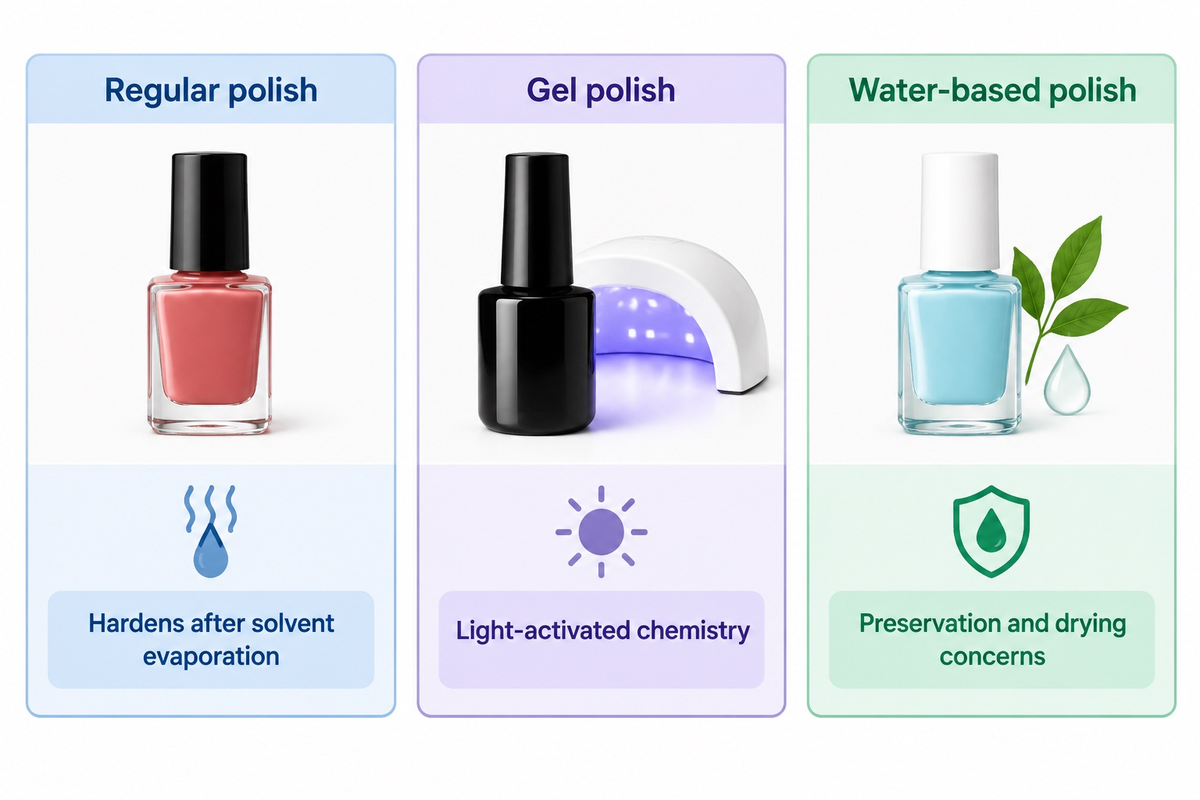
After solvent evaporation, the nail lacquer hardens. Gel products use a light-activated chemistry and water-based products use a different carrier and polymer to replace a conventional solvent system. Thus, these aren’t three labels for a single manufacturing process.
How is gel polish made differently from regular polish?
Gel polish uses light-activated chemistry. Unlike regular polish, gel polish does not rely on solvent evaporation alone to harden. Gel polish uses light-activated chemistry and may require light-protective packaging, exposure controls and formula-specific equipment review. Different equipment and processing conditions apply to gel polish than to regular polish. The equipment review must cover the actual gel formula and curing sensitivity; a process qualified for regular lacquer cannot be copied without new validation.
That distinction affects raw-material handling, light exposure, vessel and seal compatibility, mixing energy, environmental controls, filling conditions and package qualification. A gel formula may require protection from unintended curing during manufacturing. A water based formula raises preservation and drying concerns. The FDA cosmetics inspection guidance also points manufacturers to water quality and preservation controls; it is a guidance checklist, not one universal test plan for every formula. Regular polish formulas need to control for their volatile solvent.
The peer-reviewed review also reports that methacrylate chemistry used in gel systems can have allergy implications. That does not turn an equipment article into medical advice; it is a reason to keep chemistry families separate and to have qualified safety and regulatory specialists review each product.
Quality Control Before Filling
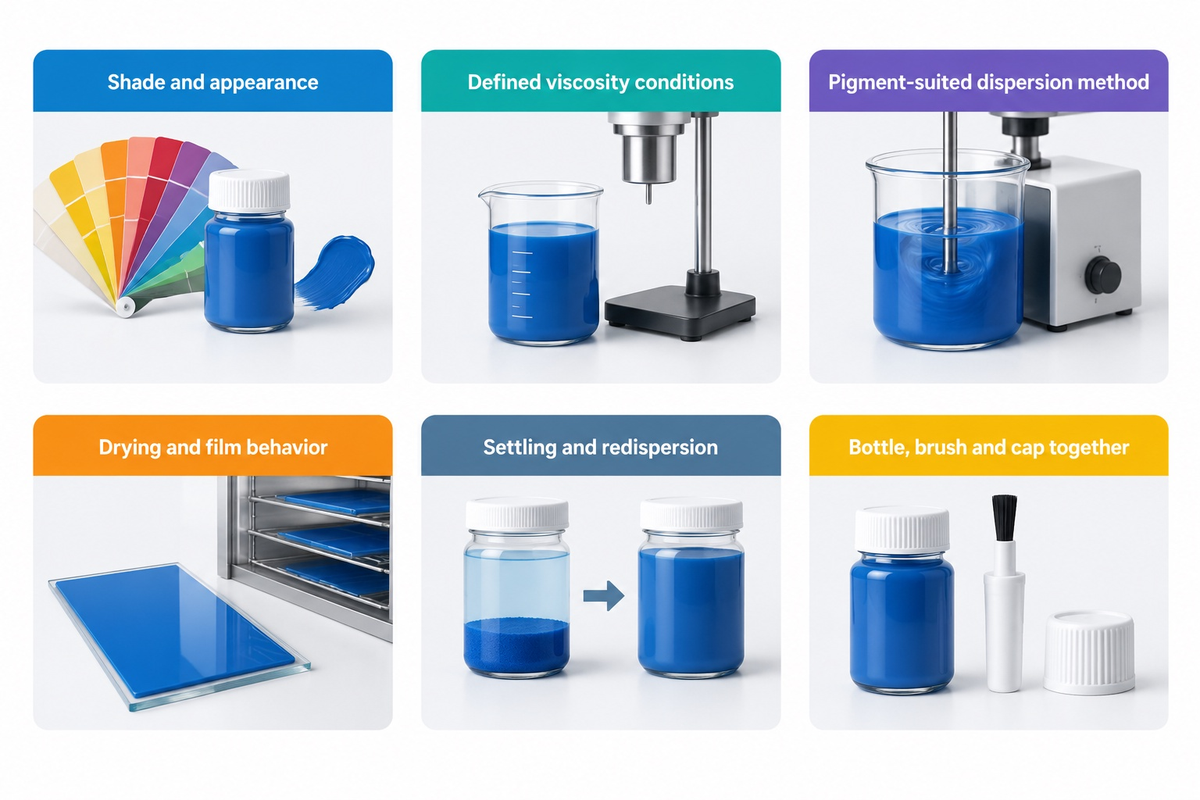
Quality control checks that a batch meets the release criteria of the approved product, not that it meets some random internet standard. Formula-defined checks may cover identity, appearance, shade, viscosity, drying behavior, film condition, adhesion, settling, redispersibility and package compatibility. The methods and acceptance criteria are established by the company for its specification and target market.
Which checks belong before the filler?
- Compare shade and appearance by the approved drawdown or application method, lighting and substrate.
- Record the viscosity instrument, spindle or geometry, speed and temperature with the result.
- Use a dispersion method suited to the pigment system rather than treating a visual glance as particle-size evidence.
- Measure drying time and film behavior at the approved application thickness and environmental conditions.
- Assess settling and redispersion on an approved schedule.
- Check bottle, brush, wiper, neck, cap torque, leakage and manicure application behavior together.
A chip-resistant claim also needs its own defined wear or film test; it cannot be inferred from hardness or drying behavior alone. The same quality system can continue during and after filling through in-process sampling, finished-product review and retained-sample controls, as described in the FDA cosmetics inspection guidance.
The U.S. Food and Drug Administration’s nail product page indicates that nail products marketed as cosmetics are subject to the regulations governing cosmetics and that the manufacturer is responsible for safety and the labeling of the product; most color additives are an exception to the general rule regarding a premarket approval. Products marketed with therapeutic claims can fall into a different category. Other countries may employ different legal frameworks and a release checklist must reflect that.
Unit-Operation Trial Trace: Mixing and Bottle Filling
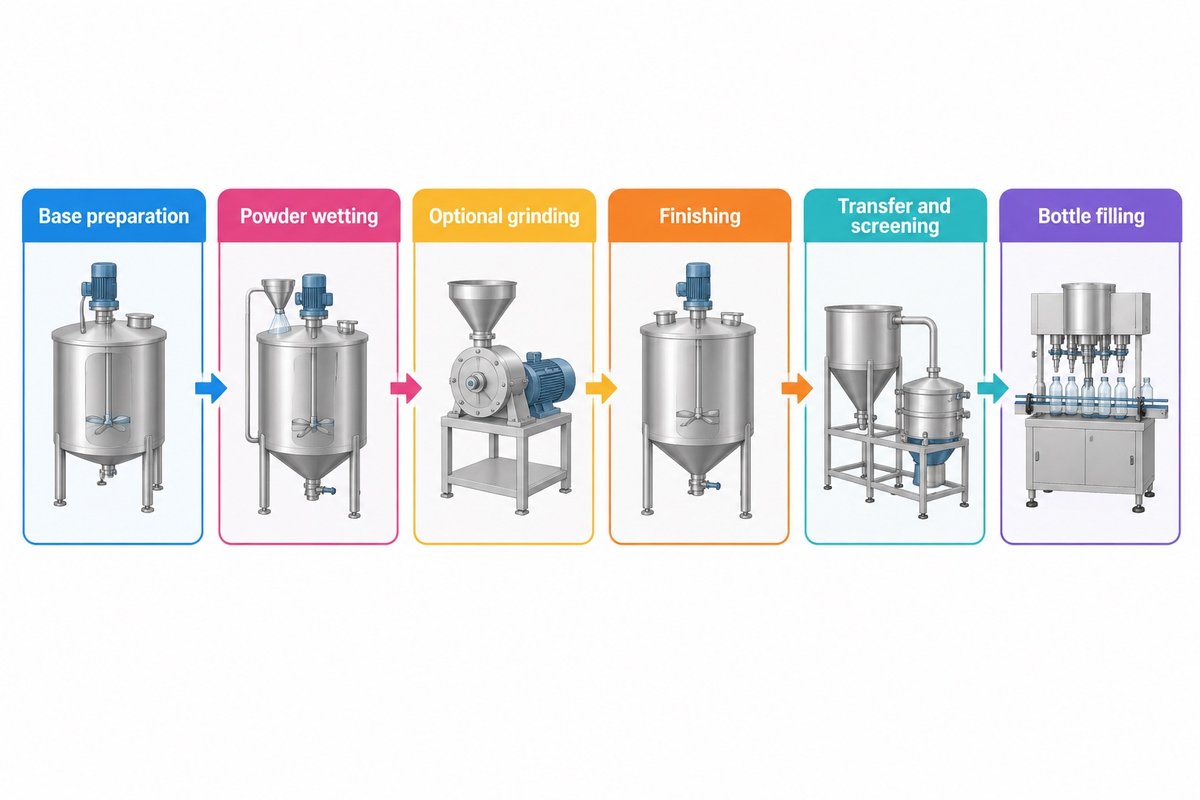
What equipment is needed to manufacture nail polish?
A line may need a compatible mixing vessel, disperser, optional mill, transfer pump, qualified screen or filter, holding vessel and bottle-filling and capping equipment. The exact set depends on pigment form, effect particles, formula family, batch size and package. For each unit operation, name the operation, select the equipment, and run a trial.
| Unit operation | Equipment function | Trial question |
|---|---|---|
| Base preparation | Agitation and dissolution in a compatible vessel | Can the system reproduce the order and hold conditions safely? |
| Powder wetting | High-shear dispersion with bulk circulation | Are floating powder and agglomerates cleared without harming effects? |
| Optional grinding | Bead mill or three-roll mill where reduction is justified | What measured target requires a mill rather than a disperser? |
| Finishing | Controlled agitation and formula adjustment | Can the batch stay uniform without excess air or solvent loss? |
| Transfer and screening | Compatible pump, line and qualified screen | Does the route preserve the intended particles and recoverable yield? |
| Bottle filling | Metering, bottle handling, brush insertion and capping | Can it run the actual product and package with accepted rejects? |
IDA’s public ink production line supports evidence for several unit operations including the dispersion of pigment and resin in a solvent, and the filling and packaging of the product. IDA’s line isn’t a case study for the production of nail polish. A buyer can use the page to understand related unit operations, then ask for a nail-polish-specific trial with the intended formula and bottle. The same applies to a high speed disperser, three roll mill or filling machine. Public equipment relevance is not proof of exact-model fit.
How to Size a Nail Polish Production Line
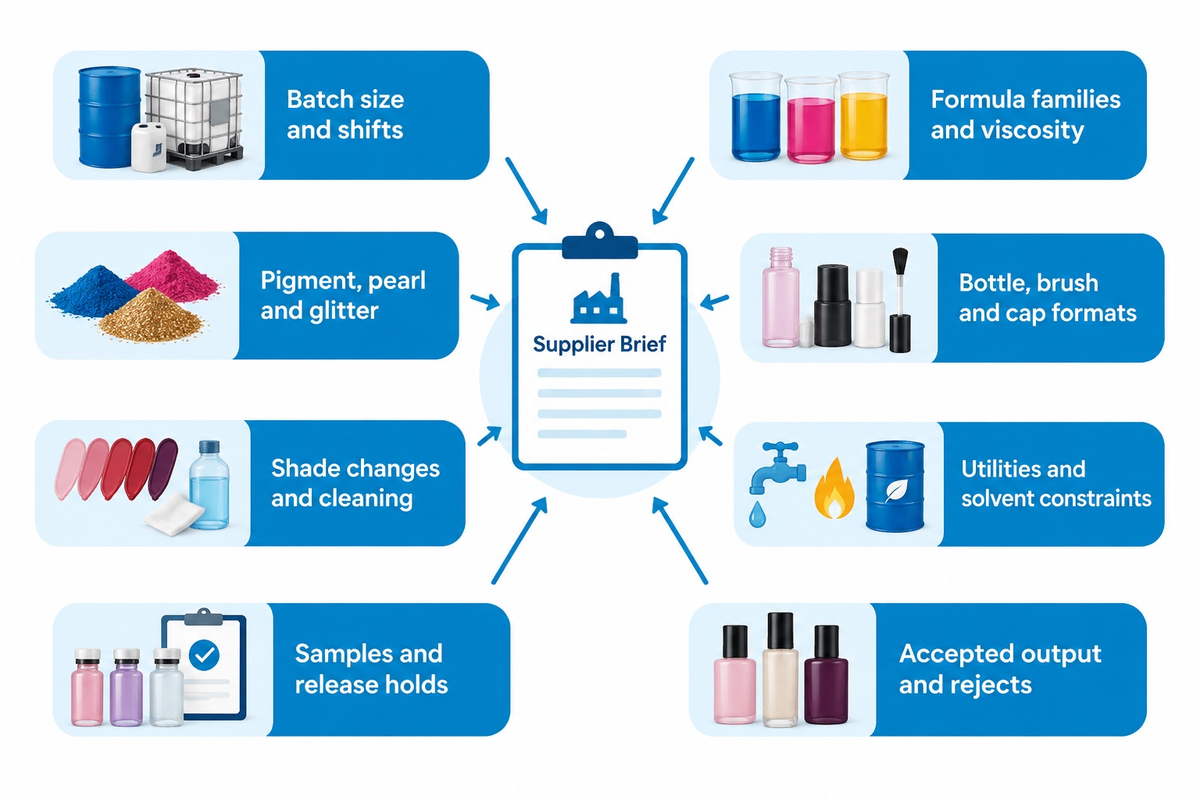
Don’t size a line from the filler’s headline speed alone. Accepted output is limited by the slowest real stage over the chosen production window. That window includes batch preparation, waiting, transfer, shade changes, bottle and closure changeovers, cleaning, inspection, rejects and planned downtime.
What inputs should a supplier receive?
- Target batch size and batches per shift
- Formula families and viscosity measurement conditions
- Pigment, pearl and glitter variants
- Bottle sizes, necks, brushes, wipers and cap types
- Number of shade changes and the cleaning endpoint
- Available utilities and solvent-handling constraints
- Required quality samples and release hold points
- Definition of accepted output and reject handling
A simple planning model is useful: accepted bottles per shift equal released product available for filling divided by accepted net content per bottle, capped by the proven packaging output within the same shift. Allowances for hold-up, samples and rejects should be made on both sides of the equation. This is a mass balance and not a guarantee of throughput.
Small bottles don’t necessarily simplify dosing. Brush handling, cap presentation and colour changeovers can consume more time than liquid metering. Ask the supplier to show a cycle with representative closures and the hardest formula, then state which steps are included in the quoted output. A representative factory acceptance test, described here in filling-equipment vendor guidance, can verify the packaging stage against an agreed protocol before shipment, so sizing should not rely on nameplate speed alone.
Supplier Acceptance Chain Before You Order
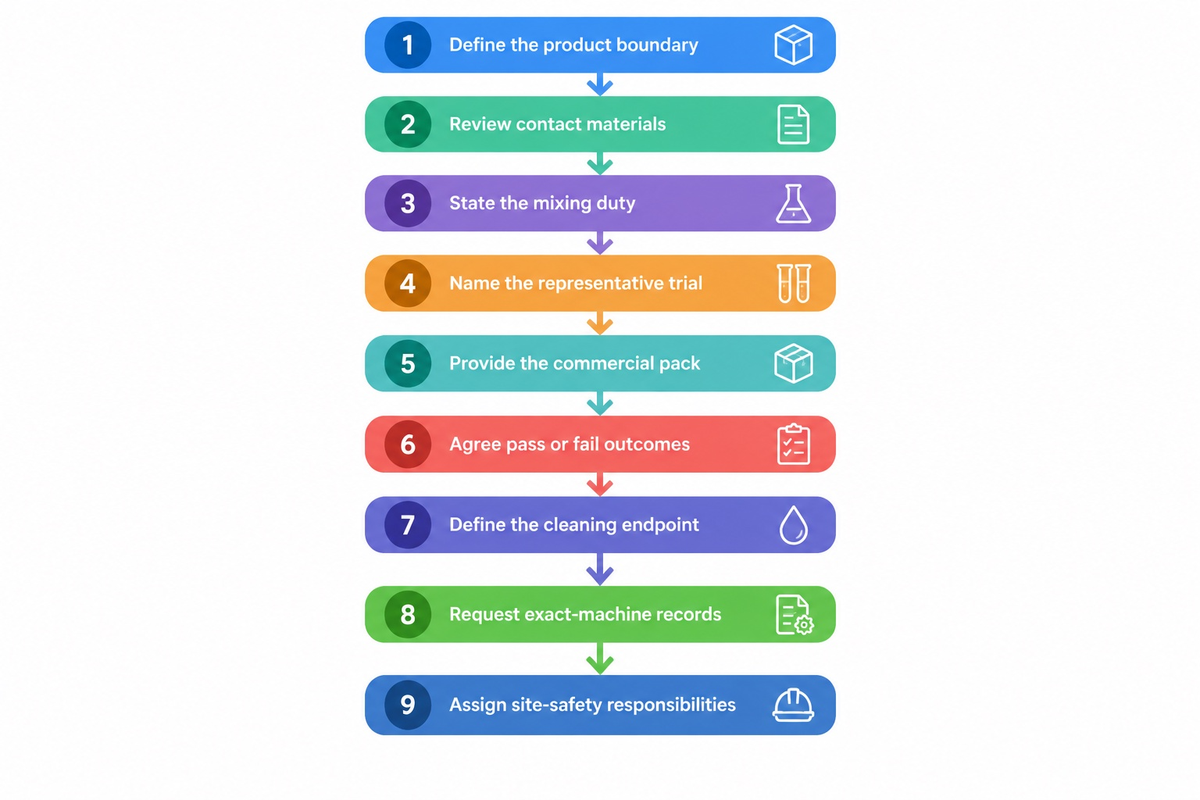
A good proposal outlines risks. Before issuing a purchase order, ask for exact-model evidence and a written acceptance plan.
- Define the product boundary: regular lacquer, gel, water-based or several systems.
- Review contact materials: which metals, elastomers, hoses, seals and coatings contact the actual formula?
- State the mixing duty: dissolution, wetting, deagglomeration, grinding, suspension or gentle finishing.
- Name the representative trial formula, batch size, pigment load and effect material.
- Provide the bottle, brush, wiper and cap that represent the commercial pack.
- Agree which measured outcomes decide pass or fail.
- Define the cleaning sequence and endpoint included in a changeover.
- Request drawings, component lists, manuals, certificates and test records tied to the exact machine.
- Assign site-safety responsibilities across the machine, room and jurisdiction.
For U.S. facilities, OSHA 29 CFR 1910.307 states that hazardous locations are classified according to the materials that may be present and the likelihood of a hazardous concentration, and that each room or area is considered individually. That’s why “explosion-proof” by itself isn’t a complete line specification. Qualified professionals and the relevant authority should review the actual installation where applicable codes require it. For applicable U.S. operations, 29 CFR 1910.106 separately addresses flammable-liquid handling, ventilation, ignition sources and electrical conditions; solvent compatibility alone does not establish facility compliance.
Whenever possible, during a Factory Acceptance Test, the agreed product and package should be used. Define the output, document the alarm state, unresolved items, and the method of test. For a trial proposal relating to your own formula and package, contact IDA Equipment using the input list above.
What’s Changing in Nail Polish Manufacturing
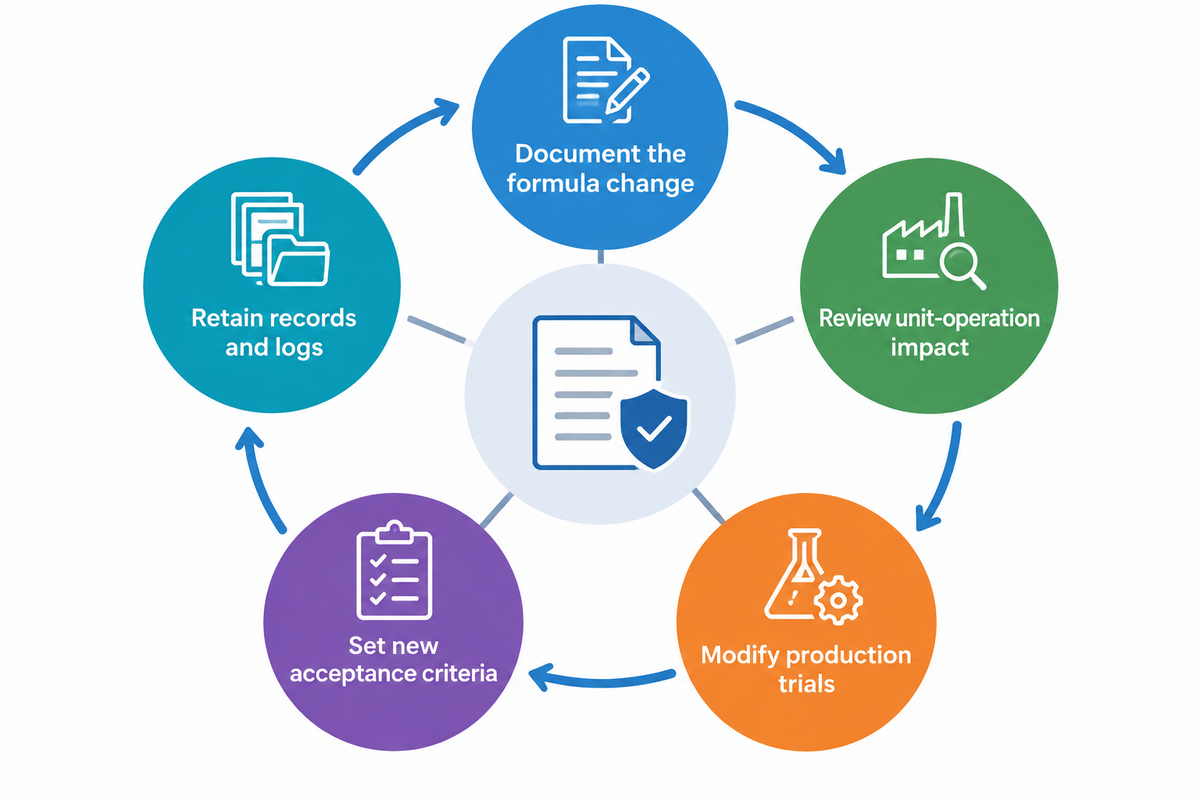
A greater variety of formulations and formats is requiring more validation work. Ingredient-positioned products, gel-effect finishes, water-based products, magnetic products, textured particles, and new packaging ideas can each alter more than the marketing claim. They can alter wetting, shear sensitivity, filtration, light exposure, filling, or compatibility.
There’s also variation in scrutiny with different markets and over time. Trade summaries can signal an issue to a manufacturer, but the final word should come from the latest official rules and the complete ingredient list. The basis for “free from” or “clean” claims should be clearly defined. For U.S. regulatory context, the FDA overview of the Modernization of Cosmetics Regulation Act is a current official starting point, but the complete formula and latest applicable rules still control the review. A claim does not replace safety substantiation.
The best “practical” response to the challenges of the future isn’t a single, “future-proof” machine. The best approach is to document changes to the formula, and demonstrate the impact to various unit operations. This may require new acceptance criteria and the modification of production trials. Evidence of these changes should be retained with the batch records and equipment logs.
Frequently Asked Questions
What is the main ingredient in nail polish?
Regular polish commonly contains a solvent blend carrying a film-forming polymer such as nitrocellulose, although no single ingredient is the main ingredient in every product. Other ingredients include resins, color, and plasticizers. Resins, plasticizers and colour materials also shape the finished film.
Are chemicals in nail polish bad for you?
Not necessarily: the term ‘chemical’ alone does not determine whether nail polish is harmful. Safety depends on the type of ingredient, concentration, exposure, product use and the law. Manufacturers should evaluate the total formula and labeling; consumers with a reaction or medical concern should seek qualified health advice.
How much does it cost to manufacture nail polish?
Nail polish manufacturing costs include materials for formula and effect, packaging, labor, quality control, losses, and changeovers. Total costs are affected by batch size, plant requirements and production volume. Total costs are very difficult to estimate unless a specific product and production plan are defined. Estimates for costs per bottle may conceal major assumptions.
Does every nail polish need a bead mill?
No. Prepared or premicronized pigments may need wetting and deagglomeration rather than further milling to reduce particle size. Milling is justified only when the approved target and colorant systems require it.
Can the same filling machine handle regular polish and gel polish?
Consider a shared filling machine for regular polish and gel polish only after the supplier reviews viscosity, curing or light sensitivity, wetted materials, cleaning, bottle and brush geometry, dosing method and the accepted production test for each product family.
References & Sources
- U.S. Food and Drug Administration, Nail Care Products
- Occupational Safety and Health Administration, Hazardous (Classified) Locations
- Royal Society of Chemistry, What’s in Nail Polish?
- Nail Polishes: A Review on Composition, Presence of Toxic Components, and Inadequate Labeling
- Silverson, Nail Varnish Manufacture (equipment-vendor application source)
- Cosmetics & Toiletries, A Review of Nail Polish: The Industrial Cosmetic (trade source)
- US20140341824A1, Nail Polish Composition and Method of Making a Nail Polish (patent context, not proof of adoption)