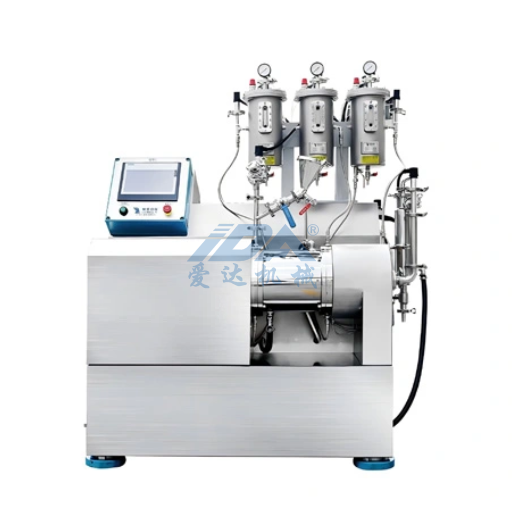
Get in Touch with IDA

How Horizontal Bead Mill Works

Contents
show
The horizontal bead mill serves as the most effective solution for attaining precise results in particle size reduction and particle dispersion. The machine functions as a crucial asset for industries which include paints and coatings and pharmaceuticals and other fields that require steady performance of premium output. The article explains how the horizontal bead mill functions as an efficient method for executing fine grinding operations. The article examines every aspect of the horizontal bead mill which includes its operational mechanisms and its various components and its benefits over comparable systems. This blog post delivers practical information about bead milling systems to both industry experts and those who want to learn about advanced milling technologies.
Key Takeaway
Horizontal bead mills utilize high-energy agitators and small grinding media to achieve ultrafine particle dispersion, offering superior efficiency and consistency compared to traditional ball or jet mills.
Introduction to Bead Mills
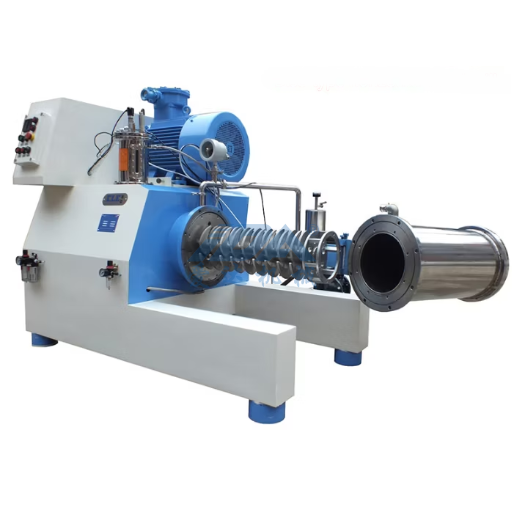
Definition and Purpose of Bead Mills
Bead mills serve as specialized grinding equipment which operates to achieve both particle size reduction and material dispersion into complete uniformity. These machines function as adaptable equipment which employs small grinding beads to decrease particle size in liquid and semi-liquid material suspensions. Their primary purpose is to achieve fine, consistent grinding for a wide range of industries, including pharmaceuticals, paints, inks, and cosmetics.
The operational principle of a bead mill centers around the movement of grinding beads within a rotating chamber. The chamber starts to move so the beads will start to collide with the particles which will cause their size to decrease into smaller fragments. The system maintains controlled grinding and product dispersal which produces uniform results needed by industries that demand products of exceptional quality.
The key advantage of bead mills is their efficiency. Bead mills enable users to produce ultrafine particle sizes with lower energy usage and faster processing speed when compared to traditional milling techniques. The equipment provides stable performance which enables treatment of different materials, resulting in its popularity among businesses that require dependable and expandable milling systems.
Historical Development of Bead Mill Technology
Bead mill technology development started during the 1950s because industrial needs required better methods to achieve particle size reduction and material dispersion for paints and coatings and pharmaceutical products. The initial milling systems developed during the early 1900s failed to provide the necessary precision and flexibility needed to achieve ultrafine grinding results, which led to the development of better systems that would enhance both operational performance and system efficiency. The 1970s and 1980s brought about major breakthroughs in bead mill technology through the introduction of better materials which protected against wear and the creation of systems that operated effectively with high viscosity fluids and tiny particles. The new developments enabled bead mills to operate with better results because they could now process different materials which required special treatment. Bead mills became more adaptable through the addition of adjustable parameters which included speed and temperature control systems used in different industrial applications.
The modern bead mill industry developed sustainable operations which increased production efficiency. The latest designs focus on decreasing energy needs while building components which last longer and achieve exact production of ultrafine particles according to environmental regulations. The combination of new bead materials and improved automation systems has established bead mills as vital equipment for industries that need to produce high-quality milling and dispersion results. The continuous development of bead mills demonstrates their essential role in satisfying the requirements of contemporary production processes and scientific study.
Comparison with Other Grinding Equipment
Bead mills provide unique benefits that make them better than both ball mills and jet mills which serve as alternative grinding machines. The system enables factories to produce extremely fine particles because it operates with 99% particle size accuracy which makes it suitable for ultrafine dispersion needs of industrial operations. Bead mills operate their grinding process by employing fast mixing movements which use tiny grinding beads to achieve exceptional grinding results which differ from ball mills that depend on their impact and attrition mechanism. The method produces particles which have a consistent size distribution and needs less time for processing.
| Feature | Bead Mill | Ball Mill | Jet Mill |
|---|---|---|---|
| Target Size | Ultrafine/Nano | Coarse/Fine | Fine Powder |
| Medium | Wet (Suspension) | Dry or Wet | Dry (Gas) |
| Energy Efficiency | High | Low | Moderate |
Bead mills provide their operators with the ability to process multiple materials which range from extremely sticky materials to complex material combinations. Jet mills handle specific dry powder tasks effectively but they lack the capability to process liquid suspensions and high viscosity materials. The ability of bead mills to operate continuously with their expanded capacity makes them ideal for industrial settings which require high production output.
Bead mills need smaller energy amounts than their competing machines require when they perform their ability to achieve finer grinding results. The system design creates a sealed environment which prevents contamination thus improving product quality while satisfying strict industry standards which pharmaceutical and coating companies need to follow. Bead mills establish themselves as the best choice for modern production environments which require precise grinding and dispersion operations.
Working Principle of Horizontal Bead Mills

Mechanics of the Agitator in Bead Mills
The horizontal bead mill uses its agitator as a main element which drives both grinding and dispersion operations. The machine functions through high shear force production which keeps beads moving within the grinding chamber. The design typically consists of a shaft equipped with discs, pins, or other agitation elements, which evenly distribute energy to the beads as they collide and grind materials. The process establishes constant particle size reduction throughout its duration.
The agitator’s rotational motion causes the beads to move at high speeds which creates intense mechanical impact and friction. The mixing action breaks down particles into smaller sizes while it helps achieve even distribution. The agitator handles the beads and material through efficient operation which delivers power and decreases the time needed for work.
The agitator needs specific design elements which protect against wear while using less energy. The operation needs high-quality materials with precise designs which enable them to resist abrasive forces during operation. The agitator requires proper maintenance to maintain its performance capacity over time and to stop equipment from breaking down. The optimization of agitator mechanics enables bead mills to produce reliable high-quality grinding and dispersion results.
Role of Grinding Media in the Milling Process
The milling process depends on grinding media because they enable particle size reduction while they accomplish material distribution. The media in operation produce shear and impact forces which enable them to reduce solid particles into smaller fragments. The pharmaceutical and paint and ceramic industries require this process because they need to create products with specific particle sizes and uniform distribution.
Multiple factors determine how well grinding media function including their size and shape and material composition. Media selection processes determine that proper media selection helps the grinding process because it enhances energy transfer to milling particles. Smaller media types create larger surface areas which provide better performance for fine milling operations, while larger media types deliver superior results for breaking down large particles. The media’s hardness and density determine their durability and grinding efficiency, which enables them to maintain dependable performance throughout different uses.
💡
Pro Tip
Selecting Zirconium Oxide beads offers the best balance of density and wear resistance for high-viscosity pharmaceutical and cosmetic dispersions.
The right grinding media selection decreases equipment wear and limits energy use. The appropriate selection extends the life of the milling equipment while it enhances production efficiency and maintains product quality. The milling process achieves cost-effective operation because grinding media selection and maintenance processes lead to efficient performance.
Flow Dynamics: Inlet and Outlet Mechanisms
The milling operation achieves its best system performance through its flow dynamics throughout the process. The inlet mechanism serves as the entry point for materials, where a consistent and controlled feed rate is vital. The proper flow control system distributes materials uniformly throughout the grinding process, which directly affects grinding efficiency. The grinding process becomes disrupted when these irregularities occur during this particular stage.
The outlet mechanism serves to expel the treated waste materials from the milling chamber. Effective outlet systems minimize the risk of material buildup and prevent blockages, which could cause disruptions in production. The design of an outlet mechanism establishes better separation between ground particles and residual media, which produces a uniform final product while decreasing contamination risks.
The inlet and outlet systems need to function together as a unified system to accomplish their full operational potential. The system requires monitoring of three specific factors which include flow rate and material density and particle size distribution. Proper maintenance of these mechanisms helps minimize downtime and ensures that the milling process remains cost-effective over the long term. The combination of inlet and outlet dynamics creates a major impact on how both reliability and performance of the milling operation function.
Types of Bead Mills
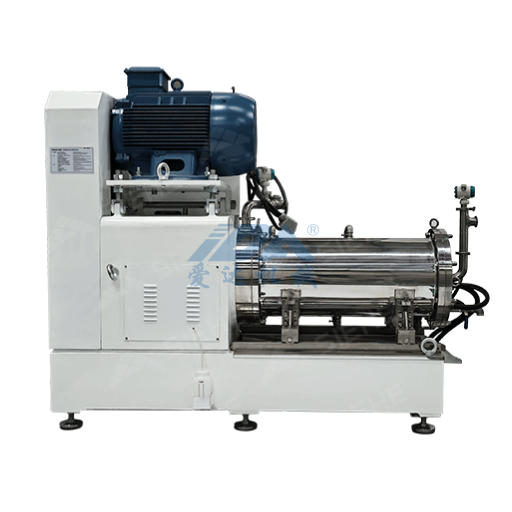
Horizontal Bead Mills: Features and Benefits
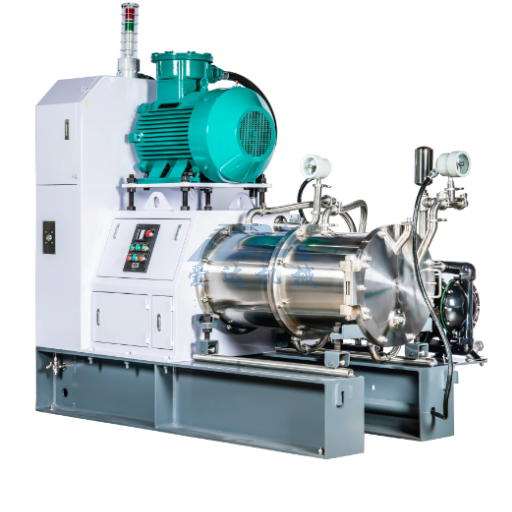
Industrial applications benefit from horizontal bead mills which operate at high efficiency while offering multiple operational modes. Their main characteristic functions through a grinding chamber which operates in a horizontal orientation to execute milling operations at a steady pace. The system improves energy distribution while it guarantees that grinding beads receive equal movement which produces smaller particles and better product results. Horizontal bead mills use modern cooling technology which helps to keep machines operating at their best temperature range while they work because it stops equipment from getting too hot and keeps material characteristics intact.
The ability of horizontal bead mills to handle multiple materials with different viscosity levels and material characteristics creates another important advantage. The mills produce high-quality paints and inks and coatings and other dispersions through their manufacturing capabilities. Their adaptability to different formulations ensures that industries can achieve specific milling requirements with precision. The system functions as an efficient production unit because it enables nonstop operation which boosts output while maintaining product quality and operational effectiveness.
Horizontal bead mills provide a maintenance process which operators find easy to execute. The system enables users to take apart machines easily for fast cleaning and quick installation of new components. The process helps to maintain system efficiency while it minimizes operational time. Operators can track and adjust the operational process with little effort because modern horizontal bead mills feature safety systems and easy-to-use control mechanisms. The industrial milling process relies on horizontal bead mills because they deliver effective results while maintaining dependable performance and functional value.
Vertical Bead Mills: Advantages and Limitations
The functionality of vertical bead mills matches that of horizontal bead mills but their vertical design provides particular advantages that make them appropriate for particular use cases. Their main advantage comes from their small footprint which needs less space than standard facilities use. The upright structure of vertical bead mills enables operators to clean and maintain the equipment because operators can easily remove waste material which needs to be cleaned after production. The mills enable operators to process small production runs which allows them to adjust their production schedule according to their immediate needs.
The vertical bead mills present users with particular restrictions which they must navigate. The machine’s vertical design causes the beads inside the equipment to settle when the machine remains inactive which results in irregular dispersion behavior. The process requires additional steps which involve continuous movement through mixing and agitation to achieve reliable outcomes. Some applications experience decreased energy efficiency when compared to horizontal mills because gravity-based bead movement creates less effective milling operations.
Comparison of Horizontal and Vertical Bead Mills
Horizontal bead mills operate better for handling large production volumes because they deliver higher operational efficiency. Vertical bead mills operate effectively at low production levels because their maintenance requirements are less complex.
- ✓
Horizontal: Best for high-volume, continuous production. - ✓
Vertical: Ideal for lab settings and small-batch flexibility.
Applications of Bead Mills in Various Industries
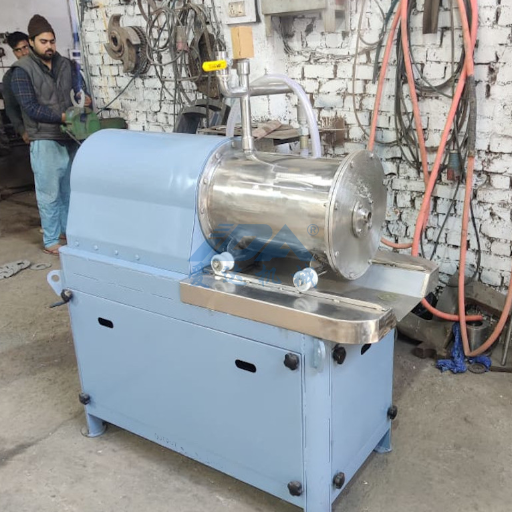
Use of Bead Mills in Paint and Coatings
The paint and coatings industry depends on bead mills because the machines provide both consistent pigment dispersion and pigment particle grinding. The mills use their capacity to break down pigment particles until they reach the required dimensions which results in stronger color delivery and uniform paint and coating finishes. The process delivers products that achieve industry standards for both appearance and performance because it produces high-quality results.
The main benefit of bead mills in this application lies in their capability to process different pigment types which include both standard organic pigments and inorganic pigments. The mills function at high efficiency because they maintain particle quality during their operations while producing accurate and repeatable results. This factor supports proper product development because it maintains control over viscosity and product texture development.
Bead mills enable manufacturers to create better products through their advanced ability to control particle size distribution which they use for testing purposes. The control system enables better development of paint and coating properties which include durability and opacity and application methods. Bead mills deliver better pigment dispersion which leads to lower material waste and higher production cost savings because they function as essential equipment for current paint and coating processes.
Role in Pharmaceutical and Cosmetic Manufacturing
Bead mills serve a vital function in pharmaceutical and cosmetic manufacturing processes because they deliver effective particle size reduction and complete mixing of materials. The machines operate to create precise fine material distribution which results in stable product quality through their ability to create uniform distribution of active ingredients and excipients and pigments. The bead mills create uniform products, which help pharmaceutical and cosmetic products maintain their effectiveness and stability and visual attractiveness.
In the pharmaceutical industry, bead mills serve an essential function because they create drug formulations which require specific particle size control to determine how drugs will become available and how effective they will be. The fine dispersion that bead mills achieve through their process enables active pharmaceutical ingredients to spread evenly throughout creams and suspensions and topical treatments. This uniformity helps maintain consistency in dosage and enhances patient outcomes.
Cosmetic manufacturing also uses bead mills to create skincare creams and lotions and makeup products which customers want to have smooth textures and extended product performance. Effective pigment dispersion ensures vibrant colors, while uniform mixing supports the stability and consistency of cosmetic formulations. The particle size distribution optimization process enables bead mills to assist manufacturers in achieving the superior quality requirements which the pharmaceutical and cosmetic sectors demand.
Application in Food and Beverage Processing
Bead mills function as essential equipment for food and beverage production because these machines enable accurate particle size reduction which creates better product textures and flavors and product stability. The bead mill process enables better products through its ability to produce uniform particle sizes which results in even ingredient distribution during mixing. The process provides essential benefits for applications which require sauces and dressings and dairy products and beverages to achieve both smooth texture and consistent quality.
Bead mills serve as essential industrial equipment because they produce stable emulsions and suspensions which do not break down. Foods like salad dressings and flavored beverages rely on stable formulas to maintain their desired appearance and texture over time. Bead mills enable manufacturers to create stable emulsions through their ability to finely disperse oil-and-water mixtures and other heterogeneous substances which extends the product shelf life. The process delivers consistent product quality which enhances the customer experience with each product they consume.
Additionally, bead mills play a significant role in maximizing flavor extraction, especially in products like chocolate, coffee, or fruit-based beverages. The fine grinding process enables extraction of aromatic compounds and flavor compounds from materials resulting in improved sensory characteristics for the product. This system guarantees that manufacturers can produce stable high-grade products which fulfill the requirements of their customers and their customers’ end users.
Recent Innovations in Bead Mill Technology
Advancements in Grinding Media Technology
Recent advancements in grinding media technology have created better operational results in bead mill systems. The main breakthrough for this field emerged through the creation of high-performance grinding media materials which include advanced ceramics and innovative composite materials. The materials exhibit improved durability which leads to decreased operational wear and constant grinding output during extended periods of usage. The system improvement leads to decreased maintenance periods which results in higher overall production output for the facility.
The second major advancement for the system comes from optimizing both the dimensions and the configuration of its grinding media. Research has shown that smaller, uniformly shaped beads can facilitate a higher degree of particle size reduction in shorter timeframes. The system reaches its highest efficiency when it produces particles with better size distribution which results in better quality output. Manufacturers have developed special bead shapes that improve material mixing and dispersion by providing a complete and consistent processing method.
Modern systems can now process more materials because of improvements in their grinding media compatibility. Modern grinding media protect against contamination and chemical damage, which allows their use in applications that require protection, including pharmaceuticals and cosmetics and fine chemical products. The improved versatility of bead mills allows them to fulfill different industry requirements while maintaining their high-quality standards, which strengthens their role in current manufacturing methods.
Emerging Trends in Bead Mill Design
The design of bead mills undergoes continuous development to fulfill the requirements of contemporary industrial applications, which progress through multiple important design trends. The most significant industry development currently focuses on energy-efficient systems. Manufacturers use advanced motor technology and efficient chamber design solutions to achieve energy savings, which lead to better operational results and increased product quality. Businesses save costs through energy-efficient practices, which also help them achieve international sustainability targets.
The current industry development involves implementing sophisticated automation systems and advanced control technology. Modern bead mills use advanced monitoring technology to provide operators with real-time information about temperature levels and pressure readings and the distribution of particle sizes. The system enables operators to perform accurate product adjustments, which maintains product quality and reduces operational interruptions. The implementation of automation technology increases workplace safety because it decreases the need for people to perform tasks, which results in higher efficiency for the entire manufacturing system.
There is an increasing demand for bead mill systems that combine various functions to process different materials and use multiple techniques. The ability to adapt materials between different contexts becomes essential for manufacturing environments that need operational flexibility, especially in pharmaceutical production where materials exhibit different sensitivity levels and chemical properties. The combination of multi-functional product designs and modular manufacturing components enables production facilities to shift between multiple product types, which maintains operational standards and production efficiency. The current design trends demonstrate how bead mill innovation develops solutions that fulfill the needs of modern industrial applications.
Frequently Asked Questions (FAQ)
Q: What is the bead mill working principle and how does it achieve grinding and dispersing?
A: The bead mill working principle relies on agitate-induced motion of beads inside a grinding chamber which a rotor or agitator drives. The spinning rotor makes beads hit feed particles which creates shear forces that break particles into smaller sizes. The bead mill functions as a wet grinding machine that efficiently grinds and disperses materials through its wet grinding and wet bead applications.
Q: What are the two types of bead mills and how do they differ in operation of the bead mill?
A: The two main types of bead mills include horizontal nano bead mills and vertical bead mills which demonstrate two different configurations of bead mill operation. The main difference between the two types of mills exists because horizontal bead mills operate at higher production capacities during continuous wet grinding processes while vertical mills function as compact devices used in laboratory bead mill operations and special industrial applications. The two systems use bead-particle collisions and shear force to operate however their performance depends on the design of the rotor system and the size of the beads and the flow pattern of the material.
Q: How does bead size and bead material like zirconium affect performance and achieving nano results?
A: Bead size and material selection determine the achievement of required finer particle results. Small beads increase collision frequency and are better for producing nano particles while larger beads deliver stronger impact for coarse grinding. Zirconium (zirconium oxide) bead material provides high density and chemical resistance which enhances grinding efficiency while decreasing contamination. The selection process requires consideration of three factors, which include the grinding machine type and desired particle size and the materials used for grinding and dispersing.
Q: Can bead mills perform both wet grinding and dry bead mill operations?
A: Bead mills exist as equipment for wet grinding operations which use wet bead processes because the liquid medium helps with three functions: dispersion and cooling and continuous flow. Less common dry bead mill variants require different design considerations to handle dust and heat and bead wear. Wet grinding delivers superior control over particle size and stability for most material dispersion processes and nano-bead mill operations.
Q: What is an agitator bead mill and how does the rotor influence grinding and dispersing?
A: An agitator bead mill operates through its rotor or agitator shaft which produces both flow and mixing movements within its grinding chamber. The rotor transfers energy to the beads which results in their movement and impact with the particles. The grinding efficiency and residence time and final particle distribution in both laboratory bead mill and industrial systems depend on the rotor speed and design and its distance from the stator.
Q: Why are sand mill and bead mill compared, and what types of grinding are they suited for?
A: Sand mill is a historical term for media mills which operate like bead mills because both systems use grinding media to conduct wet grinding processes. Modern bead mills enable operators to control both bead dimensions and material composition. The equipment is used for nano grinding and high-quality dispersions. Sand mills are used for general pigment grinding. The grinding process includes three methods: dispersion and deagglomeration and size reduction. Bead mills produce fine or nano-sized results by using both collision forces and shear forces.
Q: How does a laboratory bead mill differ from industrial horizontal nano bead mill in scale and application?
A: A laboratory bead mill is crafted for small-scale testing, formulation development, and process optimization often presenting the equipment system with the perfect and most precise control of bead size, agitator speed, and residence time for understanding the working of a bead mill by all means. An industrial horizontal nano bead mill is scaled according to continuous production, higher throughput, and stable operation. Both use the same collision and shear mechanism, however, scale-up attention must be paid to bead charge, flow rate, and cooling to achieve a level of grinding and dispersing performance.
Q: What practical considerations affect the selection of a bead mill for grinding and dispersing materials?
A: The selection process requires assessment of multiple factors which include needed grinding equipment (bead mill belongs to the media mill category) and required particle dimensions and selection of specific bead materials and dimensions and wet and dry operational methods and production capacity and compatibility of both vertical and horizontal bead mills with the facility’s spatial arrangement. The assessment process starts with the complete evaluation of several elements which include contamination risk and energy consumption and maintenance needs and collision and shear force levels required for effective material dispersion processing.
References
-
Features of Ultra-Fine Grinding by Wet Method in Bead Mills
Read on Academia.edu
This source discusses the effectiveness of bead mills in achieving ultra-fine grinding and the correlation between specific energy consumption and grinding.Optimization of Yeast Cell Disruption with a Newly Designed Bead Mill
Read on Academia.edu
This paper explores the CoBall-Mill, a new type of bead mill, and its advantages for mechanical disruption of microorganisms.Grinding and Dispersing Nanoparticles
Read the PDF on Paint.org
This document explains the flow velocity and bead compaction in bead mills, providing insights into the grinding process.