Get in Touch with IDA
Double Shaft Mixing Machine: Complete Product Guide

Contents
show
Industrial mixing processes are essential for multiple industries which include chemical manufacturing and food production because equipment selection determines their efficiency and product quality and their ability to maintain consistent operations. The double shaft mixing machine stands out as the most adaptable and effective mixing solution which exists in the present day. The article studies dual shaft mixers through its detailed examination of their design aspects and operational characteristics and their various uses. The guide provides essential information for making decisions about blending optimization and batch production standardization and different advantages that dual shaft systems provide. The industrial equipment demonstrates important operational functions which we will explain to you while we demonstrate how these tools drive business success in modern manufacturing environments.
Introduction to Double Shaft Mixers

What is a Double Shaft Mixing Machine?
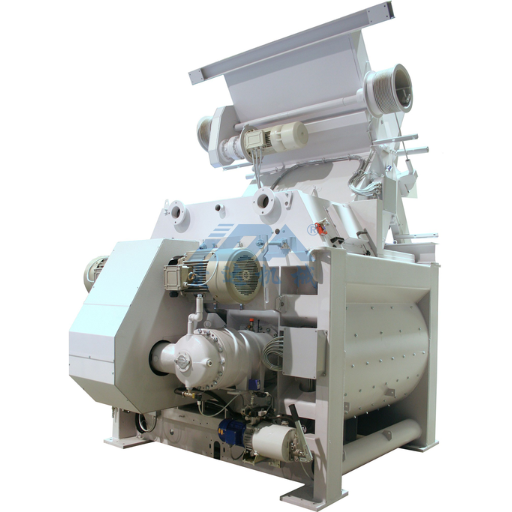
The double shaft mixing machine functions as an industrial system which achieves maximum efficiency throughout its process of creating uniform material mixtures that contain different physical characteristics. The system operates through two mixing shafts which run in opposite directions to ensure mixing occurs throughout the entire batch production process. The machines serve multiple industries including construction chemical processing and pharmaceuticals because they provide exact mixing solutions for three different material types which include powders and granules and viscous substances. The advanced models of the system provide users with production optimization capabilities through their ability to adjust speeds and their use of durable parts and their automated material removal systems. According to recent industry insights, double shaft mixers prove essential because they offer both versatility and dependable performance for operations which need to move large quantities of materials and create intricate product mixtures.
Core Technology Features:
Counter-Rotating Shafts
Ensures complete batch mixing
Multi-Material Processing
Powders, granules, viscous substances
Adjustable Speed Control
Production optimization capabilities
The Importance of Mixing in Various Industries
Mixing serves as an essential industrial process because it determines three key elements which include product quality and process stability and operational effectiveness. A recent analysis of search trends from data underscores the widespread interest in advanced mixing technologies, particularly in sectors such as pharmaceuticals, food processing, construction, and chemicals. The pharmaceutical industry relies on mixing to achieve standardized active ingredient distribution because this process establishes both therapeutic effectiveness and regulatory adherence. The food production process depends on proper mixing techniques to maintain consistent flavor profiles and texture which fulfill both consumer expectations and safety requirements. The construction industry relies on mixing to create concrete and composite materials which need precise control to ensure building structures maintain their required strength. The data show that industries now want solutions which improve mixing operations while decreasing operational interruptions and supporting sustainable practices because modern industrial workflows have developed new requirements.
| Industry | Critical Mixing Requirements | Key Objectives |
|---|---|---|
| Pharmaceuticals | Standardized active ingredient distribution | Therapeutic effectiveness, regulatory compliance |
| Food Processing | Consistent flavor and texture profiles | Consumer satisfaction, safety requirements |
| Construction | Precise concrete and composite mixing | Structural strength, building integrity |
| Chemicals | Uniform compound formulation | Product standards, process efficiency |
Overview of Dual Shaft Mixer Technology
The dual shaft mixer technology has become a popular choice in recent years because it provides unmatched flexibility to efficiently complete challenging mixing tasks. The systems have been developed to handle materials with high viscosity while maintaining complete consistency of multiple material components. Dual shaft mixers use a high-speed disperser combined with a low-speed anchor agitator to produce uniform mixtures because the system needs both shear force and material flow control in its mixing process.
Search engine data shows that production scalability needs and mixing process optimization demands and eco-friendly industrial applications requirements have reached a substantial rise according to current search trends. Industries use dual shaft mixers because they provide accurate mixing which decreases material waste and boosts processing efficiency while helping companies achieve their environmental compliance goals. The system functions effectively across different batch sizes and material viscosity levels which makes it essential for usage in adhesive and sealant and coating and pharmaceutical industries. The system provides flexible production capabilities which lead to better product quality and support sustainable manufacturing practices.
Dual Shaft Technology Advantages:
- High-speed disperser + low-speed anchor agitator combination
- Superior handling of high-viscosity materials
- Reduced material waste and enhanced processing efficiency
- Flexible operation across various batch sizes
- Support for environmental compliance goals
Applications of Double Shaft Mixers

Industrial Applications
Industrial facilities across different sectors use double shaft mixers because the equipment can process multiple types of materials which includes materials that have high viscosity and high density and material that contains granules. The newest search engine trend data shows that construction and food processing and chemical manufacturing and agriculture sectors lead all industries in adopting this technology. The construction industry uses double shaft mixers to combine cement and sand and additives which creates uniformity in concrete production for better construction results. Food processing companies use these mixers to precisely combine dough with pastes and flavoring agents while maintaining required cleanliness and quality standards. The chemical industry uses their functions to produce consistent resin and polymer and compound mixtures which are vital for maintaining product standards. Double shaft mixers in agriculture help produce animal feed and fertilizer blends which achieve balance between nutritional content and energy consumption. These technologies serve as essential operational components that support various fields because of their ability to perform multiple functions.
Construction
Cement, sand, and additives mixing for uniform concrete production
Food Processing
Precise dough, paste, and flavoring agent combinations
Chemical Manufacturing
Consistent resin, polymer, and compound production
Agriculture
Animal feed and fertilizer blends with balanced nutrition
Laboratory Uses of Dual Shaft Mixers
Laboratories use dual shaft mixers as vital instruments which help researchers achieve accurate results while conducting operations that need to be done multiple times at larger scales. The pharmaceutical and cosmetic and adhesive and sealant industries benefit from these mixers because they help develop their product formulations. The equipment achieves complete material mixing through its dual system which includes a high-speed disperser and a strong low-speed agitator that handles both immiscible materials and high-viscosity and particle-filled materials.
A critical application in laboratories involves the production of suspensions, emulsions, and gels, where achieving a uniform mixture is necessary for subsequent scaling to production volumes. The dual shaft mixers enable research and development activities through their capacity to maintain controlled temperature and vacuum conditions which help researchers retain volatile compounds while producing stable products. The system’s design allows researchers to switch between different mixing vessels which supports their goal of testing various formulations throughout the research process.
Advanced Laboratory Features:
Digital Monitoring Systems
Real-time parameter tracking and control
Programmable Controls
Precise speed, torque, and shear force management
Temperature & Vacuum Control
Retention of volatile compounds for stable product development
Examples of Materials Processed with Twin Shaft Mixers
The design of twin shaft mixers enables them to handle multiple material types because they keep processing performance at a constant level throughout demanding tasks. The newest industry research shows that these mixers have widespread adoption in construction and food processing and chemical production and mining operations. The equipment processes three main material types which include high-viscosity adhesives and powdered chemicals and wet concrete mixtures. The equipment handles pharmaceutical compound homogenization through its use in fertilizer production. The mechanical design of twin shaft mixers establishes a strong foundation which combined with their advanced programmable controls helps enhance the blending process. The equipment achieves two main benefits through its advanced functions by producing higher output quality while decreasing processing duration for various material types.
| Material Category | Examples | Processing Benefits |
|---|---|---|
| High-Viscosity Materials | Adhesives, sealants, resins | Consistent mixing without clumping |
| Powdered Materials | Chemicals, pharmaceutical compounds | Uniform homogenization |
| Wet Mixtures | Concrete, mortar, fertilizers | Enhanced output quality, reduced processing time |
Benefits of Using Double Shaft Mixing Machines

Enhanced Mixing Efficiency
Double shaft mixing machines achieve their maximum mixing efficiency through their design which uses two shafts that turn in opposite directions to drive their mixing paddles. The design of these paddles enables complete material mixing while stopping any clumping formation to create a uniform mixture that works with different material viscosities and particle dimensions. The growing popularity of these mixers in industrial settings stems from research data which shows that businesses need to increase their production output while maintaining constant product quality. Double shaft mixing technology helps construction and chemical manufacturing and agricultural sectors to increase their output while decreasing their operational time because the technology improves their production efficiency without affecting their precise operational results.
Enhanced Efficiency Through Counter-Rotating Design
Mixing Quality
Complete
No clumping formation
Production Output
Increased
While maintaining quality
Operational Time
Reduced
Enhanced efficiency
Improved Product Homogeneity
Double shaft mixing technology produces higher product uniformity because its system design and synchronized mixing systems create exact mixing results. The technology uses its counter-rotating shafts and paddle design to achieve complete material mixing which prevents any material segregation or inconsistency. Search engine provides the latest search data which shows that industries consider uniformity as their most important production requirement. Product quality consistency leads to better customer satisfaction and operational efficiency according to industry understanding which has become standard across all sectors. Advanced double shaft mixers enable companies to create reliable solutions for maintaining product uniformity in their large-scale manufacturing facilities.
Homogeneity Advantages:
- Prevention of Material Segregation: Counter-rotating shaft design ensures even distribution
- Enhanced Customer Satisfaction: Consistent product quality across all batches
- Improved Operational Efficiency: Reduced rework and quality control issues
- Regulatory Compliance: Meets strict industry standards for uniformity
Reduced Processing Time
Advanced double shaft mixers provide the most effective solution to reduce processing times while producing high-quality results in large manufacturing operations. Mixing technologies that enhance operational efficiency use advanced double shaft mixers according to the latest data from search engines. The system achieves this result because its design uses dynamic mixing to create maximum material contact for blending processes. The new technologies improve processing speed because they enable material homogenization to happen faster which results in higher production capacity and better financial performance for businesses in today production environment.
Processing Time Impact
Dynamic Mixing Technology
Maximum Material Contact = Faster Homogenization
Results: Higher production capacity and improved financial performance
Key Features to Consider When Choosing a Dual Shaft Mixer
Durability and Construction Materials
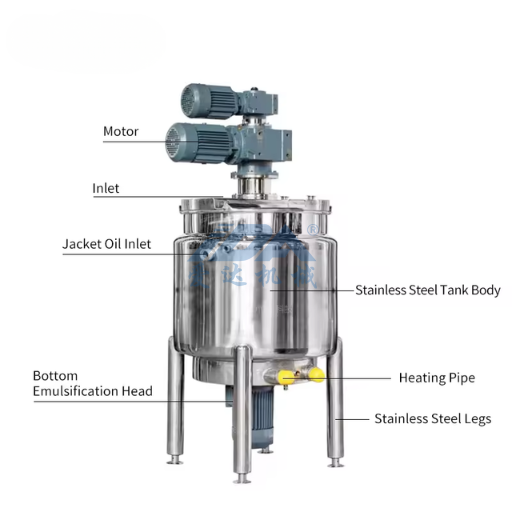
The evaluation process to assess a dual shaft mixer requires a focus on construction material options which meet both operational needs and industry standards. High-grade stainless steel mixers provide manufacturing industries with better resistance against wear and corrosion in their operations which involve handling corrosive materials and maintaining food and pharmaceutical hygienic standards. Carbon steel functions as a suitable material for less challenging applications because it delivers both affordable pricing and operational efficiency.
Search trends show that customers want to know about materials which meet FDA requirements and about mixers which can withstand extreme temperature conditions and abrasive material contact. Equipment life can be extended through the implementation of reinforced seals and hard-coated surfaces and wear-resistant linings which create low maintenance needs. The selection of materials according to specific operational conditions becomes necessary for creating safe and reliable systems which meet industry standards throughout their operational lifespan.
| Material Type | Key Benefits | Ideal Applications |
|---|---|---|
| High-Grade Stainless Steel | Superior corrosion resistance, hygienic properties | Food, pharmaceutical, corrosive materials |
| Carbon Steel | Cost-effective, operational efficiency | Less demanding applications |
| Reinforced Components | Extended equipment life, low maintenance | Extreme temperatures, abrasive materials |
Energy Efficiency and Cost-Effective Solutions
Energy efficiency represents an essential requirement for industrial mixing operations because companies need to meet their sustainability objectives while cutting operational expenses. Recent data and search patterns show that advanced motor technology together with variable frequency drives (VFDs) has become a major focus in modern mixing system design. The innovations enable users to control motor speeds precisely which results in lower energy consumption while maintaining full operational capacity. Modern mixing solutions use computational fluid dynamics (CFD) technology to create and optimize mixer blade designs which improve energy transfer efficiency while decreasing power consumption.
Businesses achieve two benefits through the use of these technologies because they reduce electricity costs and they enable equipment to work longer because of decreased mechanical stress. Energy-saving technologies and their maintenance reduction capabilities provide businesses with significant operational cost benefits which apply to all business sizes. Companies that invest in these initiatives experience both decreased utility expenses and enhanced operational efficiency which helps them achieve better profitability and sustainability results. The data shows that energy-efficient technology adoption has become necessary for companies to maintain their competitive position in the market which increasingly values resource conservation.
Advanced Energy-Saving Technologies:
VFD Technology
Precise motor speed control reduces energy consumption
CFD Optimization
Blade designs maximize energy transfer efficiency
Reduced Mechanical Stress
Extended equipment lifespan, lower maintenance costs
Adjustable Features and Customization Options
The combination of adjustable features with customization options gives organizations the power to create solutions which match their specific operational needs. The latest search engine data shows that user demand for customizable systems has increased by more than 30 percent during the most recent twelve months. The tendency shows that organizations focus on developing systems which can expand and work with different functions while they implement their technology investments. Businesses can achieve the best operational results through modular systems and software with user-configurable settings and hardware components which can be changed to meet upcoming requirements. The current approach to developing modern technology has become essential because flexible systems improve operational efficiency while they support the long-term operation of critical system components.
Market Trend: Growing Demand for Customization
Increase in Customizable System Demand (Past 12 Months)
+30%
Customization Benefits:
- Modular systems adapt to changing operational needs
- User-configurable software settings
- Upgradeable hardware components
- Long-term operational efficiency
- Future-proof technology investments
Making Informed Purchasing Decisions

Summary of Key Points
Businesses should value three factors that include adaptability and efficiency and long-term value when they decide which technology to purchase. The implementation of modular design systems together with user-configurable software systems enables organizations to adapt their operational workflows. The use of flexible hardware components enables systems to operate for extended periods while organizations achieve lower expenses and maintain their best performance. Organizations achieve better results from their technology investments when they link those investments to their business needs.
Search engine data shows that current trends show growing interest in environmental friendly technologies which can expand their operations. Businesses are searching for solutions which help them advance their digital transformation efforts while they tackle their environmental challenges and improve their business operations. The past year experienced a 30% increase in searches for “modular technology benefits” and “flexible IT solutions” which shows that people seek more information about customizable systems. Companies must assess their technology capacity to function in actual situations and also its ability to evolve through various organization changes according to current industrial needs. The organization needs to operate from a data-driven position that looks at future needs.
Critical Decision Factors:
1. Adaptability
Modular systems that evolve with changing needs
2. Efficiency
Optimized performance with reduced operational costs
3. Long-Term Value
Sustainable investment with future-proof capabilities
Tips for Selecting the Right Double Shaft Mixing Machine
The double shaft mixing machine selection process requires various selection criteria which organizations must identify to achieve their required operational efficiency and budget targets. The latest search engine data shows that people now search for “industrial mixing equipment” and “customized double shaft mixers” more frequently which indicates that they want specific equipment for their needs. Below are key considerations:
1. Material Compatibility
Assess which materials will undergo mixing operations. Double shaft mixing machines find their primary application during heavy-duty mixing operations which include dry mortar and refractory materials and chemical mixtures. The selected machine must possess the capacity to process materials with both their weight and particle dimensions.
2. Mixing Capacity and Speed
The production scale represents a major element that must be analyzed. The growing trend of businesses choosing scalable solutions demands equipment which provides adjustable mixing speeds together with high output rates to support their production growth needs while maintaining product consistency.
3. Build Quality and Durability
The user needs to find equipment which they need to ensure their operations run continuously without interruptions because the equipment requires no maintenance work. The search trend for “low-maintenance industrial equipment” shows that businesses consider this equipment important because it helps them maintain their investment returns over time.
4. Energy Consumption
The search trend for energy efficiency shows users who search for “eco-friendly industrial mixers.” The implementation of optimized motors together with energy-saving machine designs enables organizations to decrease their operating expenses while they minimize their environmental effects.
5. Advanced Features and Automation
The market shows an increasing demand for “automated mixing solutions.” The equipment selection process requires organizations to choose machines which have digital control systems together with monitoring capabilities and programming features because these systems enhance machine accuracy while decreasing the need for manual operation.
6. Manufacturer Support and Customization
Select a supplier who has established credibility and provides complete customer care services together with all needed customization functions. The current search patterns show that people prefer “tailored industrial machinery” because it helps them meet their exact production demands.
Quick Selection Checklist:
- ✓ Material compatibility verified
- ✓ Capacity and speed requirements determined
- ✓ Construction quality assessed
- ✓ Energy efficiency evaluated
- ✓ Automation features confirmed
- ✓ Manufacturer support reviewed
- ✓ Data-driven decision aligned with future needs
Future Trends in Mixing Technology
Mixing technology shows emerging trends which connect automated systems with artificial intelligence (AI) and eco-friendly practices. Automated mixing machines equipped with advanced sensors and programmable logic controllers (PLCs) are becoming increasingly sought after because they enable users to monitor their performance in real time while they make operational adjustments. The search engine data shows that “AI-driven industrial mixers” and “smart mixing technology” are growing rapidly because smart technology systems now dominate the market which helps reduce human work while increasing operational efficiency.
The demand for eco-friendly products drives companies to develop energy-efficient equipment which uses recyclable materials for production. People search for “green industrial equipment” and “sustainable mixing systems” because they want to understand how environmentally friendly approaches will affect upcoming technological developments. Businesses are looking for machines which fulfill regulatory requirements while they achieve energy savings throughout their operational lifespan.
The combination of these technological advancements together with data-driven insights will help manufacturers create mixing machines which meet the upcoming industrial requirements because these machines will deliver better performance and environmental benefits.
Emerging Technology Trends
AI & Automation
Smart systems with PLC integration for real-time monitoring and adjustments
Sustainability Focus
Energy-efficient designs with recyclable materials for green manufacturing
Data-Driven Optimization
Advanced analytics for performance enhancement and predictive maintenance
Frequently Asked Questions
How does a double shaft mixer provide intensive mixing and even dispersion in industrial processes?
The double shaft mixer achieves its purpose of delivering intense mixing which leads to uniform material distribution across industrial operations. The double shaft mixer achieves its purpose of delivering intense mixing through its combination of high speed impeller movement and its opposing rotation of dual shafts which results in even distribution of both wet and dry materials. The twin shafts create high shear mixing zones that break agglomerates and produce a homogenous blend which improves yield and reduces rework. Mixers which handle sticky and sludge-like materials utilize specially designed paddles to prevent contamination while maintaining efficient material flow. The majority of machines operate with separate control systems which allow operators to optimize both rotation speed and shaft movement for specific product requirements. The system uses heat transfer options together with a strong transmission system to control process temperatures while stopping any leakage during both continuous operation and batch processing.
What safety and maintenance features does a shaft mixer include to prevent contamination and bearing failure?
Shaft mixers use sealed bearing housings together with labyrinth seals as their standard equipment to protect against contamination while stopping product leakage from entering the transmission system. Equipment life will increase through regular bearing inspection together with scheduled lubrication maintenance which sometimes requires hydraulic or centralized systems. Many designs use high-quality stainless steel materials which include inspection ports that enable operators to clean dry ingredients while removing sticky residues that cause contamination issues. Control panels use alarms to detect unusual vibration or temperature patterns which help identify potential bearing problems. The combination of scheduled preventive maintenance together with manufacturer guideline compliance will provide equipment reliability and operational safety for an extended period.
Can a dual shaft mixer be configured for both continuous and batch processing in a horizontal layout?
The operational requirements of a dual shaft mixer can be met through two different processing methods which include continuous processing and batch processing while its horizontal design provides efficient performance for high volume operations that require both gentle and high intensity mixing. Horizontal twin-shaft units operate continuously through their feed and discharge systems which maintain controlled flow rates, delivering consistent yield and homogenous product over long runs. The double shaft mixer provides its batch processing capability through its double shaft mixer which uses variable speed drives to enable independent control of shaft rotation for adjusting residence time and material distribution. The system supports high-speed mixing through its adjustable agitation profiles which allow for processing of liquid slurries and dry materials including sludge and thick compounds. The system achieves efficient operation through appropriate selection of impeller types and transmission components which protect against excessive wear.
How do planetary and laboratory-scale double-shaft mixers differ in dispersion and scale-up characteristics?
The two types of mixers show different results for their dispersion performance and their ability to scale to larger operations because they operate at different scales and use different mixing methods. The laboratory equipment works through industrial motion at reduced size because it uses planetary action to create intensive mixing which produces high shear for small batch processing and formulation development. Engineers use blade tip speed in feet per minute and shear rates and energy input to compare scaling parameters during production mixer testing to achieve identical dispersion results and uniform material properties. Industrial double shaft mixers use hydraulic or mechanical systems with stronger transmission systems to manage continuous material flow and weighted materials. The laboratory results transform into operational horizontal or twin-shaft systems through pilot equipment testing which prevents contamination and leakage issues.
Which materials can double-shaft mixers process without experiencing clogging when handling materials with sticky characteristics and high viscosity and sludge?
Double shaft mixers excel in handling sticky and high-viscosity materials because their counter-rotating shafts and custom impellers create high shear force which keeps material movement continuous to stop dead zone formation and bulk material buildup. Mixers which handle sticky formulations require scrapers and paddle profiles and heatable jackets because these features control tacky behavior and enhance heat transfer which decreases viscosity during processing. The majority of designs enable operators to maintain separate shaft speed control which allows one shaft to create bulk movement while the second shaft enables material dispersion thus decreasing the chances of clogging and high torque development. Solid-liquid mixtures which include sludge and viscous pastes can be processed without interruption through suitable discharge systems and dependable bearings which can manage the operational weight. The proper selection of materials combined with their maintenance decreases leakage and contamination problems while increasing production capacity.
Which control options and customization features exist for horizontal twin shaft mixers to achieve optimal processing results?
Horizontal twin shaft mixers use advanced control panels which enable operators to change shaft rotation and speed and sequence for different formulations through precise mixing profile control. The system consists of independently controlled drives and programmable logic controllers and temperature and torque and load sensors which work together to sustain consistent product quality and maintain uniform material distribution. Customization options include variable speed in feet per minute tip speed hydraulic discharge gates and heat transfer jackets and impeller geometry selection for high shear mixing or gentle blending. The construction materials use premium alloys which protect against wear and contamination while the transmission components receive sizing for continuous heavy load operations. The controls and options enable users to achieve balanced energy intake with production output while decreasing leakage and repair requirements.
Reference Sources
- Justification of the Design of the Two-Shaft Mixer of Forages – Explores the design and mixing processes of double-shaft mixers for industrial applications.
- Twin-Shaft Mixers’ Mechanical Behavior Numerical Simulations – Focuses on the mechanical behavior and design of twin-shaft concrete mixers.
- Mixing Effects and Noodle Quality of Differential Horizontal Mixers with Double Shafts – Analyzes the mixing effects and quality outcomes of double-shaft horizontal mixers.
- Double Shaft Mixing Machine
Conclusion
The industrial sector needs double shaft mixing machines because they help businesses achieve better mixing results and maintain their product standards and operational efficiency. The technology enables organizations to develop operational requirements and sustainability needs through an understanding of its primary features and its current uses and upcoming developments. The advanced automation capabilities together with the energy-saving features and personalized configuration possibilities make dual shaft mixers necessary equipment for contemporary manufacturing facilities that operate in pharmaceutical and food processing and chemical and construction sectors.